Tag:

Summer

(DC.) Benth. 

BhutanPG2011 282
Bhutan Jule-Tso, 4100m June
Sikkim2003 110 P149
Sikkim Dzongri 3900m August
Nepal 95 161 P262 ergebnis
Nepal Rupien La 3900m October
Nepal 99 619 ergebnis
West-Nepal Kagmara-La 4300m, July

Description

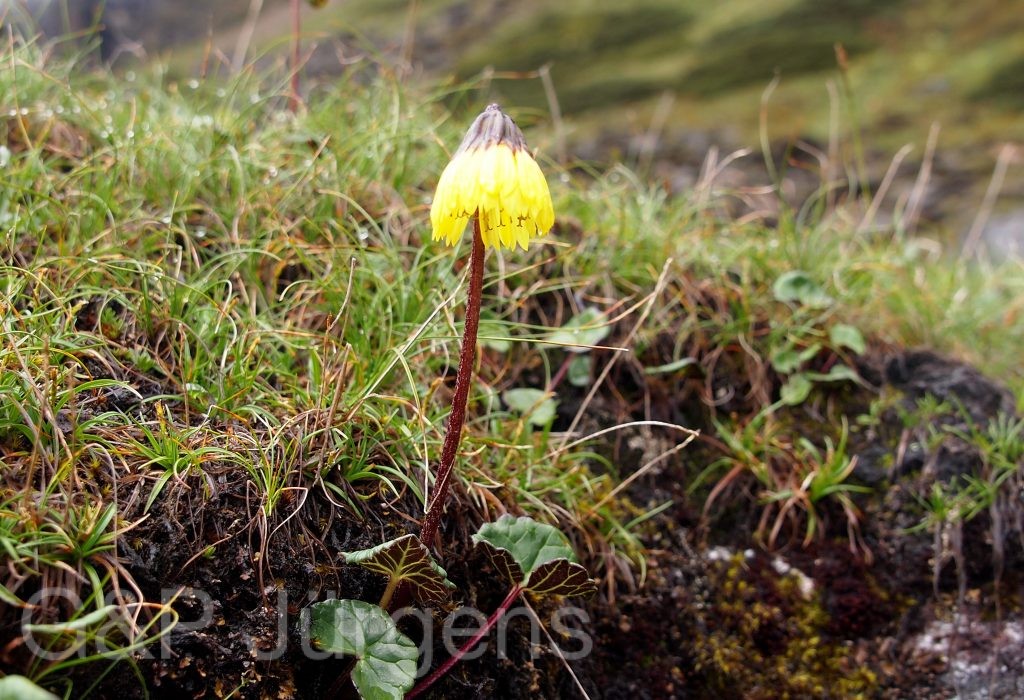
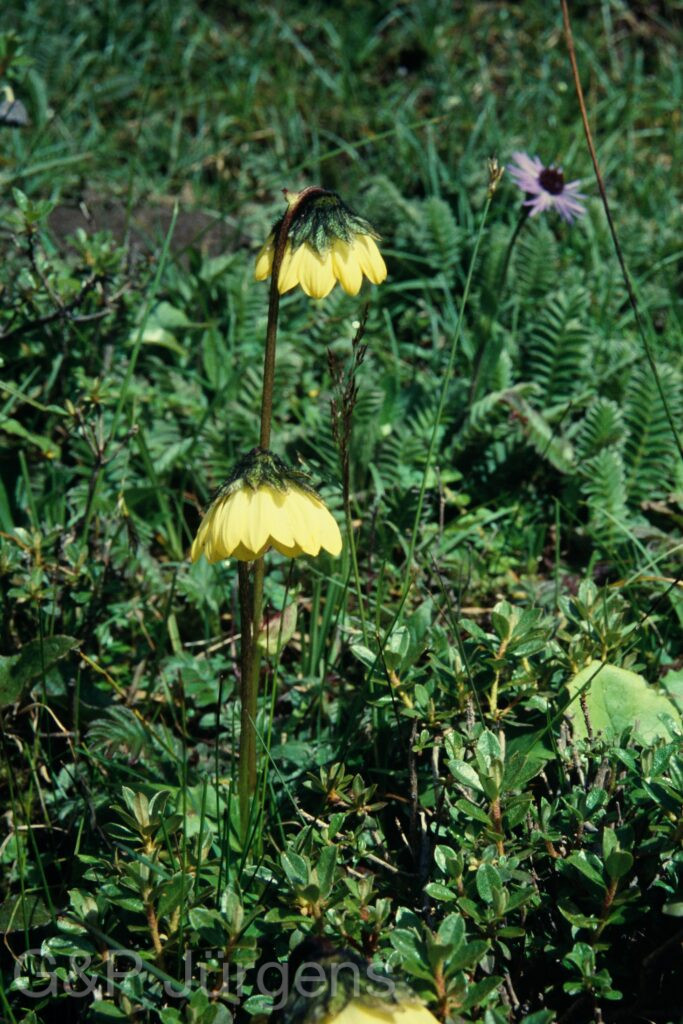
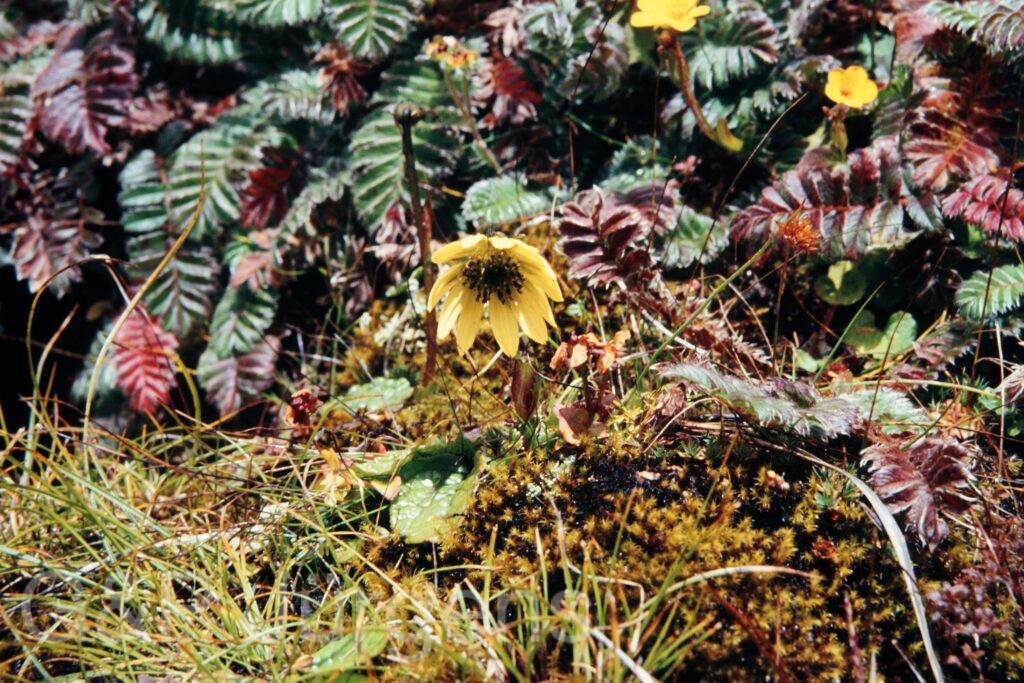
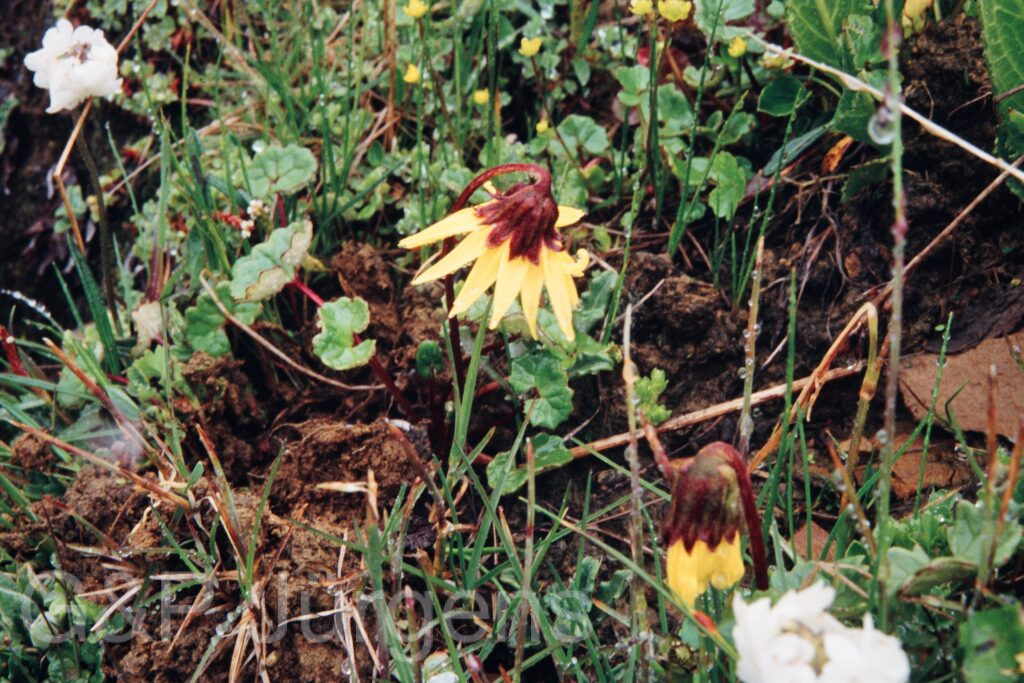
Cremanthodium reniforme is a high-alpine herb of the central and eastern Himalaya, distributed through Nepal, India (Sikkim), Bhutan and adjacent China; the 294 occurrences map a continuous Himalayan arc, with outlying records in New Zealand reflecting cultivated material. It grows on moist alpine meadows, rocky slopes, screes and streambanks, characteristically between about 3500 and 4800 m. The collated localities, from Bhutan's Jule-Tso at 4100 m and Sikkim's Dzongri at 3900 m to the Rupien La and the Kagmara-La in west Nepal at 3900–4300 m, span June to October, illustrating its strictly high-elevation distribution and protracted summer flowering in the snow-melt zone.

The species is a perennial herb with a short rhizome bearing fleshy roots and erect, often purplish, arachnoid scapose stems. The basal leaves are conspicuous, long-petiolate and reniform to cordate-orbicular, with a palmately veined, dentate blade; the cauline leaves are few and reduced. The capitula are large, solitary and nodding, radiate, with an involucre of blackish-hairy phyllaries. The ray florets are female and golden-yellow, the disc florets tubular and yellow. The cypselae are oblong and glabrous, bearing a pappus of soft, brownish or whitish barbellate bristles roughly equalling the corolla.

Cremanthodium is a Sino-Himalayan genus of about seventy species centred on the Hengduan Shan and Himalaya, segregated from Ligularia chiefly by its solitary nodding capitula, an adaptation that shields pollen and developing achenes from rain and intense alpine radiation. The reniform basal leaves make C. reniforme distinctive among its congeners. Restricted to high alpine habitats yet wide-ranging, it is not currently regarded as threatened, though such species are sensitive to climatic warming and upslope habitat compression.

Author: (DC.) Benth. · Sources: POWO (Kew), GBIF, Flora of China Vol. 20-21, Flora of Bhutan, Flora of Nepal, Good Revision of Cremanthodium
Roxb. ex Ker Gawl.

Bh09 390 G617
Bhutan Mo-Chu, 1500m June

Description

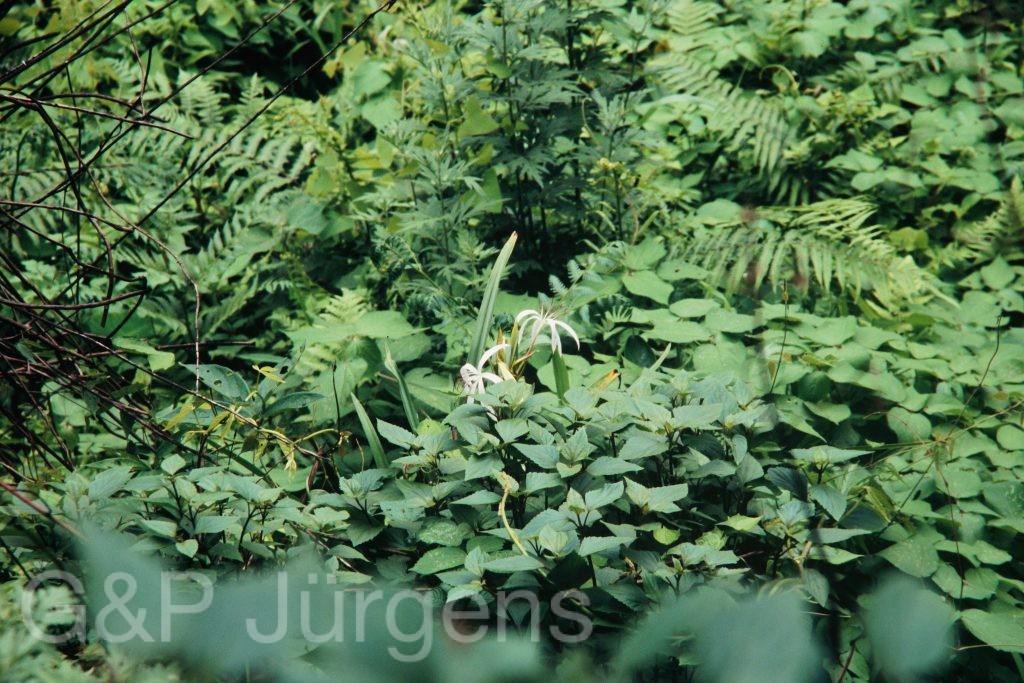
Crinum amoenum is a bulbous herb of the Himalayan foothills and adjacent Southeast Asia, distributed across India, Nepal, Bhutan, Thailand and Myanmar, with about 51 georeferenced occurrences in GBIF. It grows in moist grassland, forest clearings, stream banks and damp open ground in the subtropical lower montane belt, generally below about 1800 m, flowering with the onset of the summer monsoon. The plant illustrated was photographed along the Mo-Chu in Bhutan at about 1500 m in June, a characteristic riverine setting where it favours seasonally moist, humus-rich soils.

The species arises from a large, ovoid, tunicate bulb bearing a distinct neck, from which spring several strap-shaped, channelled leaves with somewhat undulate margins. The leafless flowering scape carries a terminal umbel of a few to several fragrant flowers subtended by membranous spathe bracts. Each flower has a slender, elongate perianth tube opening into six narrow, spreading to recurved tepals that are white, often flushed or striped with rose-pink along the keel, with six declinate stamens bearing versatile anthers and an inferior ovary. The fruit is an irregularly dehiscing capsule containing a few large, fleshy seeds.

Crinum (Amaryllidaceae, subfamily Amaryllidoideae) is a pantropical genus of bulbous geophytes whose tissues contain isoquinoline (crinine-type) alkaloids of pharmacological interest and considerable toxicity. The strongly scented, trumpet-shaped flowers are adapted to pollination by long-tongued moths and other nocturnal visitors, and several species are cultivated as ornamentals. Though not formally assessed as threatened, its lowland riparian and grassland habitats are vulnerable to agricultural conversion, drainage and bulb collection.

Author: Roxb. ex Ker Gawl. · Sources: POWO (Kew), GBIF, Flora of China, Flora of British India, Flora of Bhutan, Nordal Revision of African and Asian Crinum

(Edgew.) Al-Shehbaz, O’Kane & R.A.Price

Bh09 187 G324
Bhutan Phajoding, 3700m June
Nepal 99 155 ergebnis
West-Nepal South of Rara-Lake 3400m, June

Description

Crucihimalaya himalaica is a widespread alpine crucifer of the High Asian mountains, strongly represented in GBIF with about 704 occurrences spanning India, China, Nepal, Pakistan, Bhutan, Afghanistan, Iran and Myanmar. It is a plant of open, often disturbed high-elevation ground, growing on stony slopes, screes, moraine, grazed turf, fallow and the margins of cultivation in the subalpine and alpine belts. The plants photographed at Phajoding in Bhutan at about 3700 m and south of Rara Lake in West Nepal at 3400 m, both in June, illustrate its characteristic occupation of open alpine slopes early in the growing season across the breadth of the range.

It is an annual to short-lived perennial herb with a basal rosette of oblanceolate to spathulate leaves bearing toothed or lyrate-pinnatifid margins, the herbage often clothed in branched (stellate or dendritic) and simple hairs. The erect, sparingly leafy stems terminate in racemes of small flowers with four free sepals and four white to pale lilac petals arranged in the cruciform pattern of the family, and six stamens in the usual tetradynamous arrangement. The fruit is a slender, linear, elongate silique that ascends to spreading and dehisces by two valves from a persistent septum to release the seeds.

The genus Crucihimalaya was segregated from Arabis and allied genera on molecular and morphological grounds by Al-Shehbaz, O'Kane and R.A.Price, and it is closely related to Arabidopsis, making the group of interest in comparative and evolutionary genomics. As an abundant, ecologically flexible species thriving in both natural and anthropogenically disturbed alpine habitats, C. himalaica is of no conservation concern, and its wide range reflects effective dispersal and tolerance of harsh, open mountain conditions.

Author: (Edgew.) Al-Shehbaz, O'Kane & R.A.Price · Sources: POWO (Kew), GBIF, Flora of China, Flora of Bhutan, Flora of Pakistan, Al-Shehbaz Brassicaceae of the Himalaya

D.Don

Nepal 99 694 ergebnis ergebnis
West-Nepal Pugmo-Khola 3400m, July

Description

Cupressus torulosa D.Don, the Himalayan or Bhutan cypress, is a coniferous evergreen tree of the Cupressaceae native to the Himalaya and southwestern China. Its native range covers India, Nepal and China, while the large GBIF tally of 1,094 occurrences and many additional countries (New Zealand, USA, Britain, Germany, Australia, South Africa, Brazil and others) reflects its extensive cultivation as an ornamental and forestry tree. In the wild it grows on dry, calcareous and rocky slopes in temperate forests, typically between 1,800 and 3,300 m. The photographed tree from the Pugmo-Khola in West Nepal at 3,400 m, in July, marks the upper edge of its altitudinal distribution.

The plant is a tall, conical to broadly columnar tree reaching 20–45 m, with reddish-brown, fibrous, vertically peeling bark and spreading branches bearing slender, pendulous, terete branchlets. The leaves are scale-like, decussate, closely appressed, dark green and obtuse, lacking a conspicuous dorsal gland. It is monoecious, the small ovoid male cones terminal on lateral branchlets and the female cones globose, 1–2 cm across, composed of 8–12 woody peltate scales each bearing a small umbo and ripening from glaucous green to grey-brown in the second year, releasing numerous narrowly winged seeds.

The taxonomy of Asian Cupressus has been much debated, with several Himalayan and Chinese populations variously segregated or lumped, but C. torulosa is consistently accepted as the core western Himalayan species. Long valued for its durable, aromatic timber and planted around temples and monasteries, it is locally over-exploited; while not globally threatened, several native stands are fragmented, and it remains an important component of dry temperate conifer woodland.

Author: D.Don · Sources: POWO (Kew), GBIF, Flora of China Vol. 4, Flora of Bhutan Vol. 1, Flora of Pakistan (Cupressaceae), Farjon: A Monograph of Cupressaceae and Pinus

K.K.Shrestha

Sikkim2003 288 P391
Sikkim Saniti-Lake 4250m August

Description

Cyananthus himalaicus is a high-alpine perennial known from the central and eastern Himalaya, with GBIF records concentrated in Nepal (gbif_countries: NP) and only seven documented occurrences, indicating a narrowly recorded and infrequently collected taxon. Like its congeners it inhabits open alpine turf, rocky slopes, screes and the margins of glacial meltwater, growing well above treeline in the cool, short-season environments of the inner ranges. The illustrated material was gathered near Saniti Lake in Sikkim at about 4250 m in August, when the late-summer flush of alpine flowering coincides with the waning monsoon, a habitat typical for the genus along the moist Himalayan crest.

The plant forms low, often mat-like or loosely tufted growth from a slender woody rootstock, with prostrate to ascending stems bearing small, alternate, entire to shallowly toothed leaves that are frequently revolute and somewhat fleshy. The flowers are solitary and terminal, with a campanulate to tubular corolla that is typically blue to violet-blue, five-lobed, and bearded within the throat by a ring of hairs, a hallmark of Cyananthus. The calyx is tubular and densely hairy, and the fruit is a capsule enclosing numerous small seeds.

Cyananthus is a Sino-Himalayan genus of the bellflower family centred on the alpine zone, and C. himalaicus belongs to the assemblage of small-flowered, prostrate species adapted to exposed, well-drained high-mountain sites. Its limited occurrence data reflect under-collection in remote terrain rather than necessarily a restricted range; nonetheless its apparent rarity in records argues for attention to its alpine habitats, which are sensitive to grazing pressure and climatic warming.

Author: K.K.Shrestha · Sources: POWO (Kew), GBIF, Flora of Nepal, Flora of China, Annotated Checklist of the Flowering Plants of Nepal, Revision of the genus Cyananthus (Campanulaceae)

Hook.f. & Thomson

Bhutan2012 84
Bhutan Shele-La, 4100m September
Bhutan2012 87
Bhutan Shele-La, 4100m September
Sikkim2003 136 G184
Sikkim Dzongri 3950m, August

Description

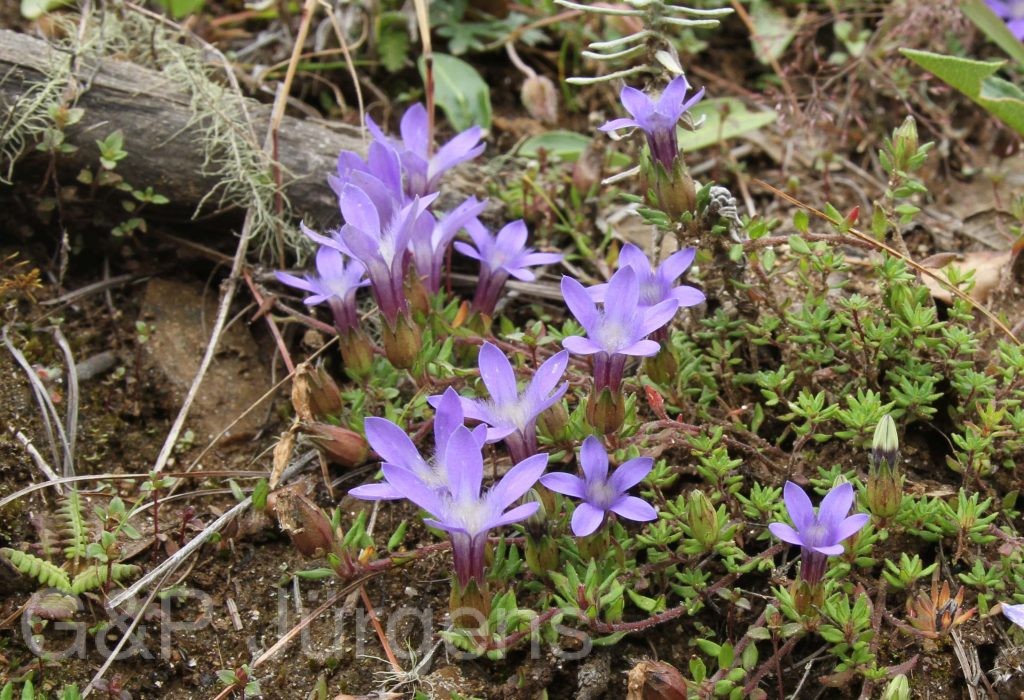
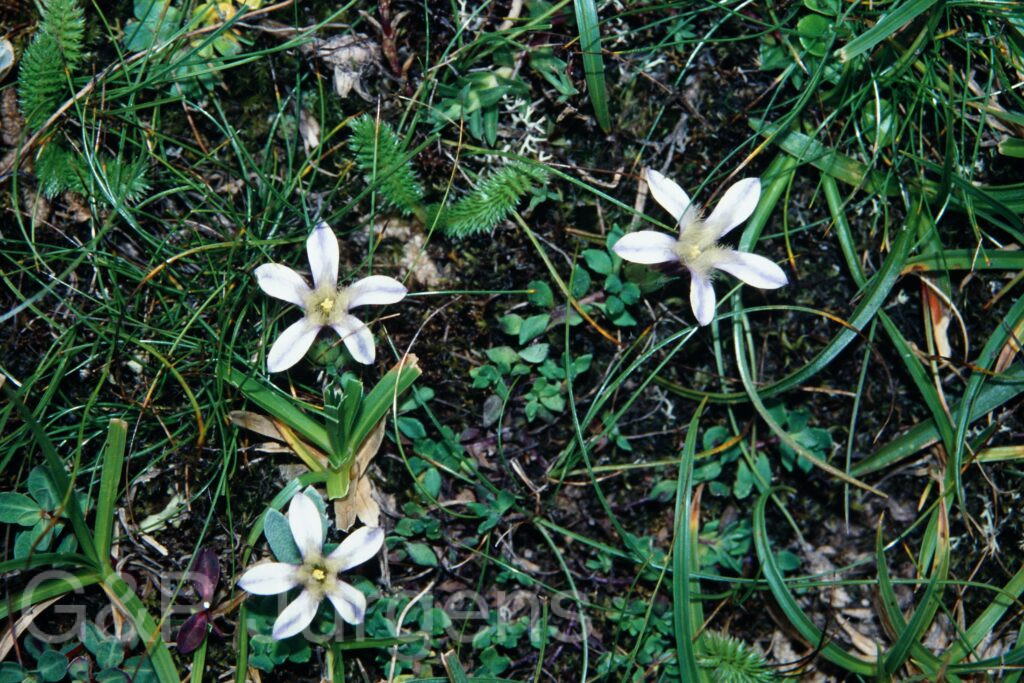
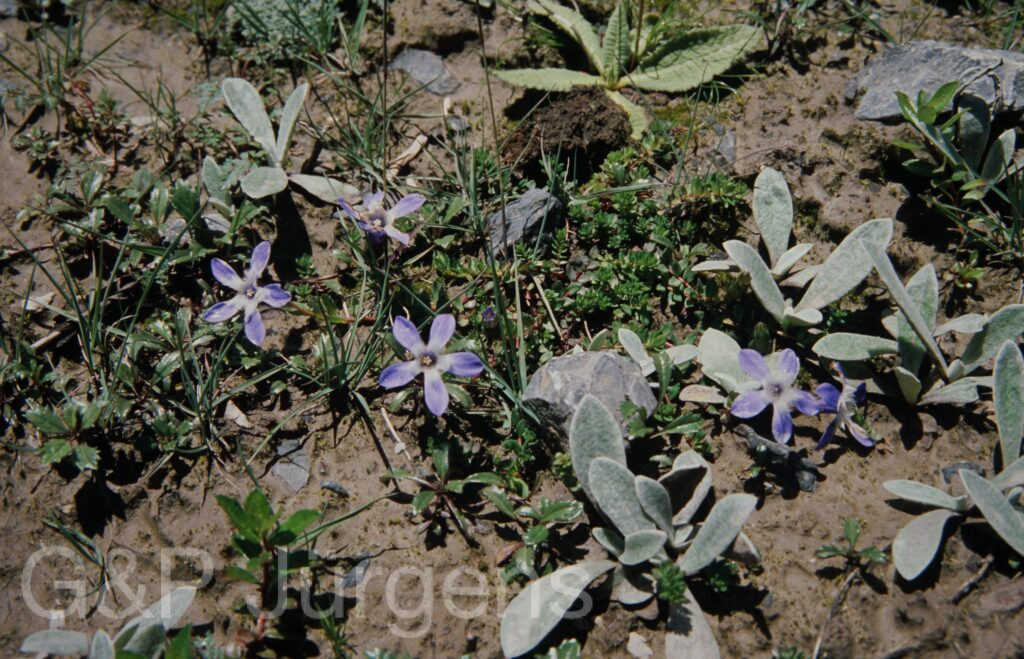
Cyananthus incanus is a low alpine perennial of the eastern Himalaya and adjacent Tibet, recorded from China, Nepal, India, Bhutan and Myanmar, with about 777 occurrences in GBIF. It grows on open alpine turf, stony slopes, screes and the margins of dwarf rhododendron scrub, generally between 3500 and 4500 m, in well-drained sites of the upper alpine zone. The photographs from the Shele La in Bhutan at about 4100 m in September and from Dzongri in Sikkim at about 3950 m in August show the plant flowering through the late-monsoon and early-autumn season typical of the high eastern Himalaya.

The plant is a mat-forming or loosely tufted perennial with a stout, woody rootstock from which radiate slender, prostrate to ascending stems. The small leaves are alternate, ovate to obovate, entire or slightly toothed, and clothed in greyish hairs, the indumentum reflected in the epithet incanus. The flowers are solitary and terminal, comparatively large for the plant; the calyx is densely hairy and tubular, and the broadly bell-shaped to funnelform corolla is blue to purplish-blue with five spreading lobes and a conspicuous tuft of hairs (a beard) closing the throat, a hallmark of the genus. The fruit is a capsule splitting from the apex to release numerous small seeds.

Cyananthus is a small Sino-Himalayan genus of the Campanulaceae distinguished from Campanula by its terminal solitary flowers, a deeply lobed corolla and the bearded throat. The cushion or mat habit and woolly leaves are typical adaptations to the cold, wind-exposed and sun-drenched conditions of the alpine zone. Several species, including C. incanus, are prized in alpine and rock gardens for their intense blue flowers. Locally frequent across its range, it is not regarded as threatened.

Author: Hook.f. & Thomson · Sources: POWO (Kew), GBIF, Flora of China, Flora of Bhutan, Annotated Checklist of the Flowering Plants of Nepal, Lammers' classification of the Campanulaceae

Edgew.

Garw 2005 300 ergebnis
India Garhwal Kunol 3100m, September
Nepal 99 855 ergebnis
West-Nepal Sanu Bheri 3850m, July
Nepal 99 856 ergebnis
West-Nepal Sanu Bheri 3850m, July
Garw 2005 44 ergebnis ergebnis
India Garhwal Valley of flowers 3150m, September

Description

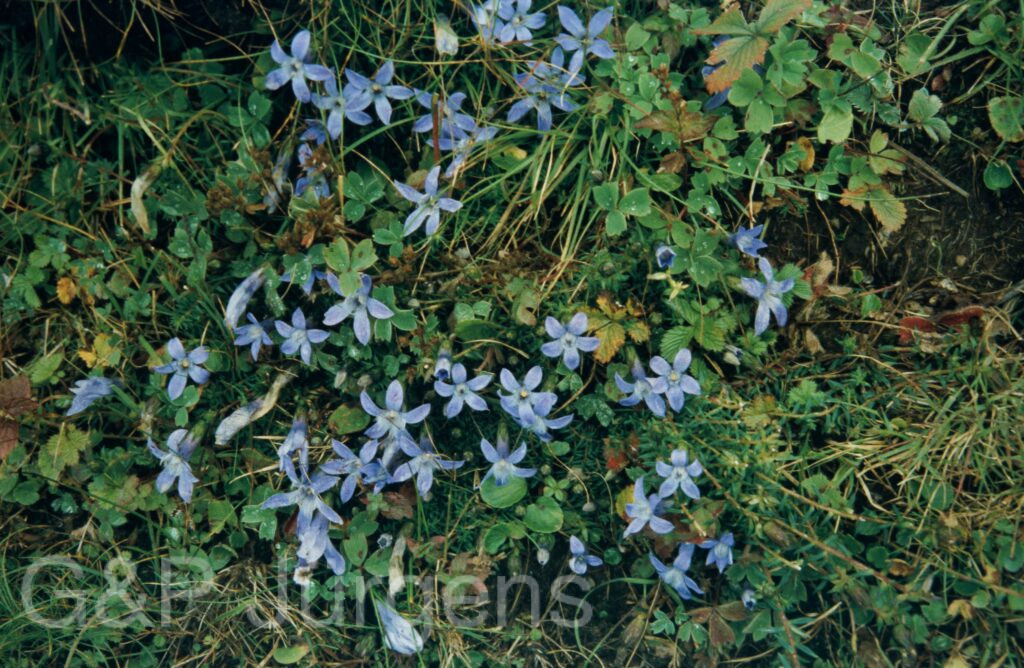
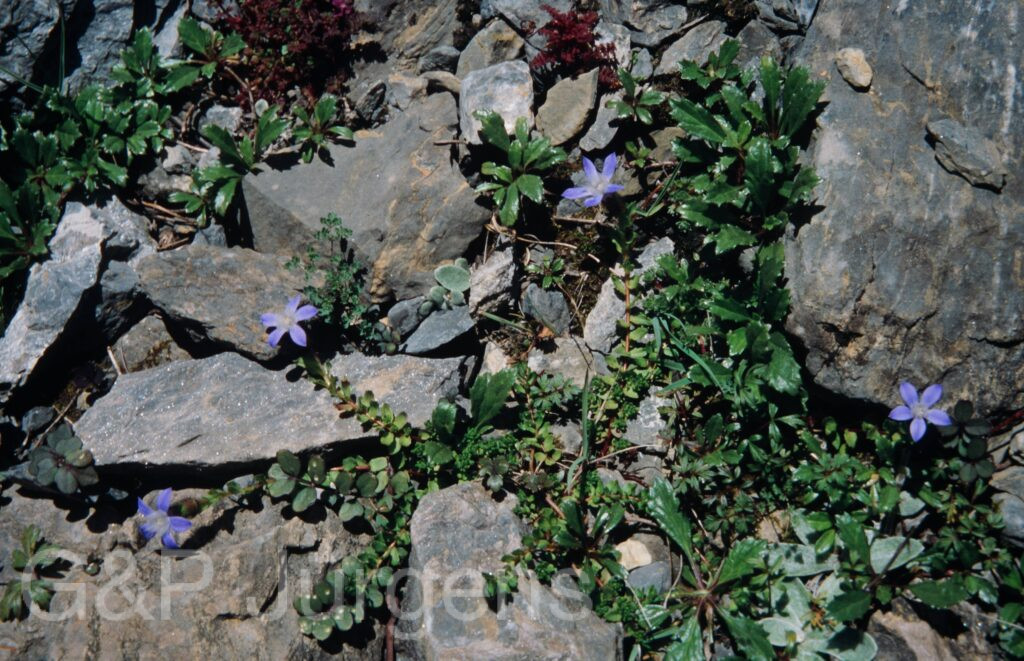
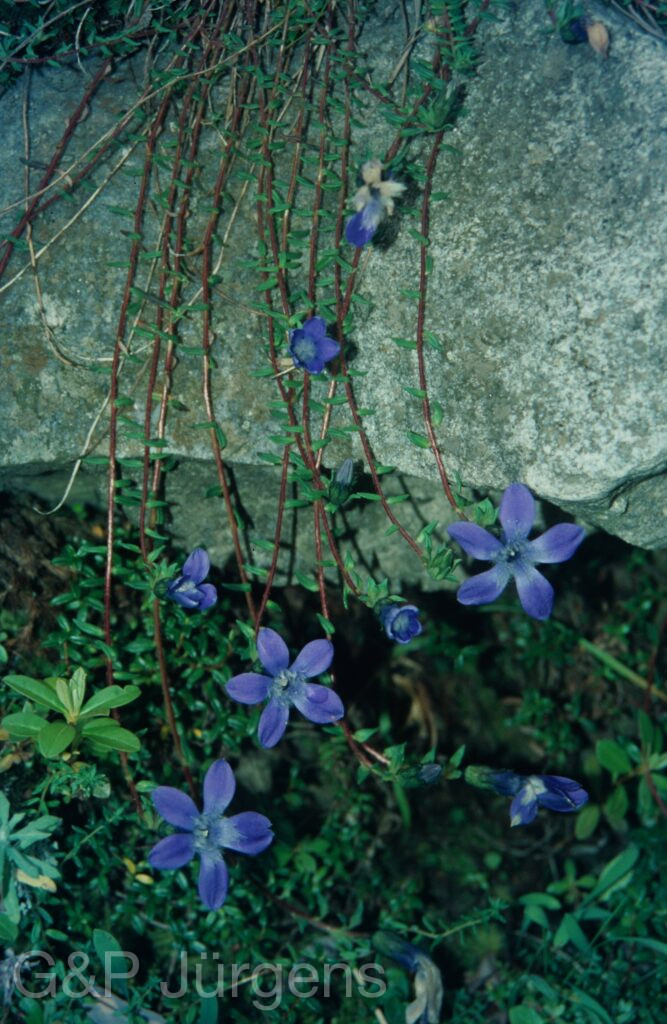
Cyananthus microphyllus is an alpine cushion-forming herb endemic to the Himalaya, documented from Nepal, India and China, with the available occurrence records concentrated along the central and western Himalayan arc. It grows in alpine meadows, on open stony slopes, rock ledges and the gravelly margins of glacial moraines, generally between about 3000 and 4500 m. The images, gathered at Kunol in Garhwal at 3100 m and in the Valley of Flowers at 3150 m in September and at Sanu Bheri in West Nepal at 3850 m in July, capture its late-monsoon flowering in high pastures and rocks where the mats anchor in thin, well-drained soils.

The plant forms low, much-branched, somewhat woody-based mats from a slender taproot. The wiry, prostrate to ascending stems are clothed in numerous small, alternate, ovate to elliptic leaves that are often revolute at the margin and sparsely hairy. The flowers are solitary and terminal, with a campanulate, conspicuously hairy calyx whose tube is shorter than the deeply five-lobed, blue corolla; the corolla throat bears a dense ring of white hairs, a defining feature of the genus. Five stamens alternate with the corolla lobes, and the inferior to half-inferior ovary develops into a capsule that exceeds the persistent calyx and dehisces to release numerous small seeds.

Cyananthus is a small Sino-Himalayan genus of perhaps two dozen species, allied to the bellflowers but distinguished by the bearded corolla throat and largely inferior ovary. Cyananthus microphyllus is recognised among the small-leaved, blue-flowered species by its diminutive, densely leafy mats. Its restricted high-elevation distribution makes it sensitive to climatic shifts and trampling by grazing livestock, and as a late-flowering alpine it provides an important resource for bumblebees and other cold-adapted pollinators.

Author: Edgew. · Sources: POWO (Kew), GBIF, Flora of China, Annotated Checklist of the Flowering Plants of Nepal, Flowers of the Himalaya (Polunin & Stainton), revision of Cyananthus (Campanulaceae)

G.Don

Garh 07 107 ergebnis
India Garhwal Mandakini 2900m, June
Garh 07 56 ergebnis
India Garhwal Mandakini 2900m, June

Description

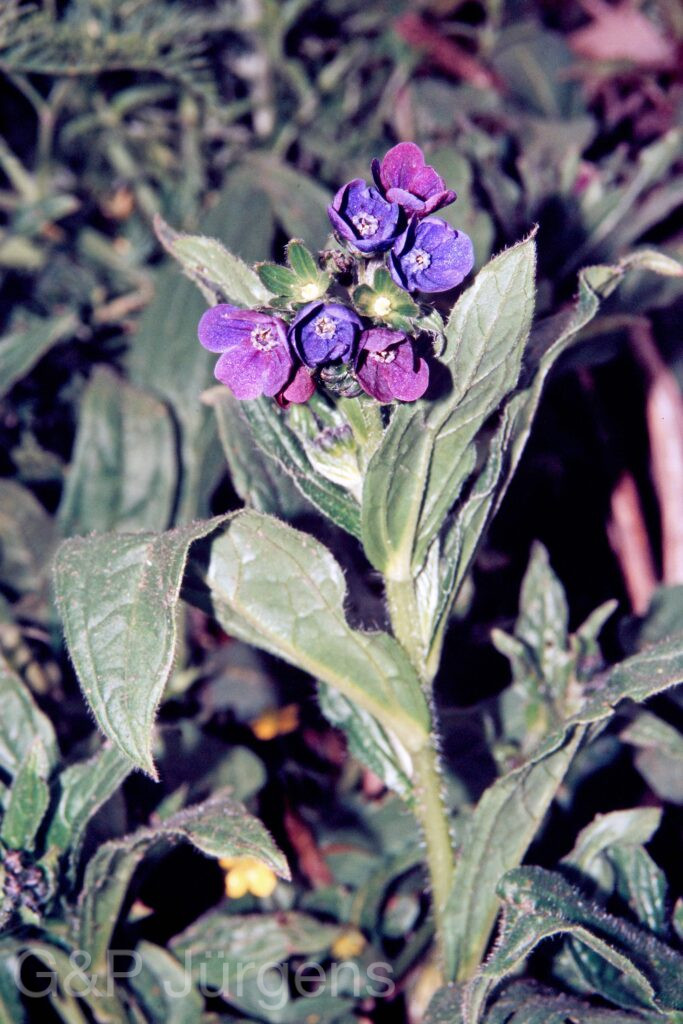
Cynoglossum wallichii is a widespread Asian herb recorded across China, India, Nepal, Pakistan, Bhutan and Afghanistan, with naturalised or casual occurrences in the United States and parts of Europe. GBIF treats the name as a synonym, with Cynoglossum wallichii accepted under that combination. It occupies open hill slopes, forest margins, grassy clearings, fallow ground and roadside banks from about 1500 to 3500 m. The depicted plant from the Mandakini valley in Garhwal, India, at around 2900 m and flowering in June, is characteristic of its preference for disturbed, sunny temperate slopes during the early monsoon.

The plant is an erect annual or biennial herb, the stems simple or branched above and clothed, like the foliage, in appressed to spreading hispid hairs. The leaves are alternate, the lower oblanceolate and narrowed to a petiole, the upper sessile, lanceolate and somewhat clasping. The inflorescence consists of elongating, ebracteate scorpioid cymes bearing small, pale to bright blue, salverform to funnelform flowers with prominent fornices closing the throat. The fruit separates into four ovoid nutlets densely covered with glochidiate (barbed) bristles, an epizoochorous adaptation that promotes dispersal on animal fur.

The epithet honours Nathaniel Wallich, the Danish botanist whose Himalayan collections underpin much early taxonomy of the region. Within Cynoglossum the species belongs to a critical complex whose delimitation has prompted segregation into related genera such as Lindelofia and Paracaryum. The barbed nutlets account for its readiness to colonise trampled and grazed ground, and its weedy tendencies explain the scattered extra-Asian records; it is of no conservation concern.

Author: G.Don · Sources: POWO (Kew), GBIF, Flora of China Vol. 16, Flora of Pakistan, Flora of Nepal, A Revision of Cynoglossum (Boraginaceae) (Brand)

(Sw. ex Lehm.) Thunb. ex Brand

Nepal 99 361 ergebnis
Nepal Kalomura 4050m, July
Nepal 99 556 ergebnis
Nepal Churta-Khola 3800m, July

Description

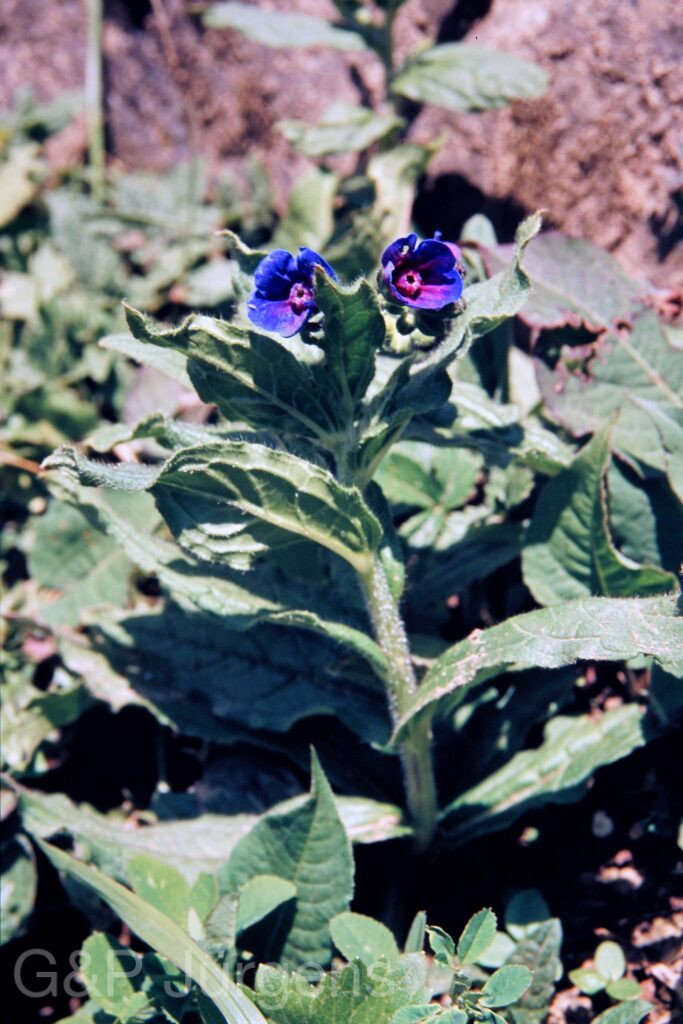
Cynoglossum zeylanicum (Sw. ex Lehm.) Thunb. ex Brand is a widely distributed herb of the borage family, ranging across tropical and warm-temperate Asia and now widely naturalised elsewhere. GBIF documents a very large number of records (c. 2,637) from China, India, Nepal, Sri Lanka, the Philippines, Japan, Korea and beyond, with introduced populations in the Americas and the Caucasus. In the Himalaya it ascends from foothill grasslands to subalpine meadows; the photographed material from west Nepal at Kalomura (c. 4,050 m) and Churta-Khola (c. 3,800 m), both flowering in July, shows it reaching the upper limits of its altitudinal range on open, disturbed slopes during the monsoon.

The plant is an erect biennial or short-lived perennial herb, 30–80 cm tall, clothed throughout in appressed to spreading hispid hairs. The leaves are alternate, the basal ones petiolate and oblong-lanceolate, the cauline leaves sessile and progressively reduced upward. The inflorescence is a scorpioid, bracteate cyme. Flowers are small with a five-lobed campanulate corolla, blue to pale blue with white fornices closing the throat. The fruit is a schizocarp splitting into four ovoid nutlets densely covered with glochidiate (barbed) bristles, an epizoochorous adaptation aiding dispersal on animal fur.

The species has at times been treated under Cynoglossum or segregated genera within tribe Cynoglosseae, and the glochidiate nutlets are diagnostic for the group. Its wide ecological amplitude and effective animal dispersal explain its near-cosmopolitan, often weedy distribution; it is of no conservation concern and is locally regarded as a minor pasture weed.

Author: (Sw. ex Lehm.) Thunb. ex Brand · Sources: POWO (Kew), Flora of China Vol. 16, Flora of Nepal, Flora of Pakistan, GBIF, Brand: Das Pflanzenreich – Borraginaceae

D.Don

Nepal 99 86 ergebnis
West-Nepal Bhulbhule 3200m, June
Nepal 99 383.JPG ergebnis
West-Nepal Linji-Khola 3200m, June
Garh 07 213 ergebnis
India Garhwal Panwali 3200m, June

Description

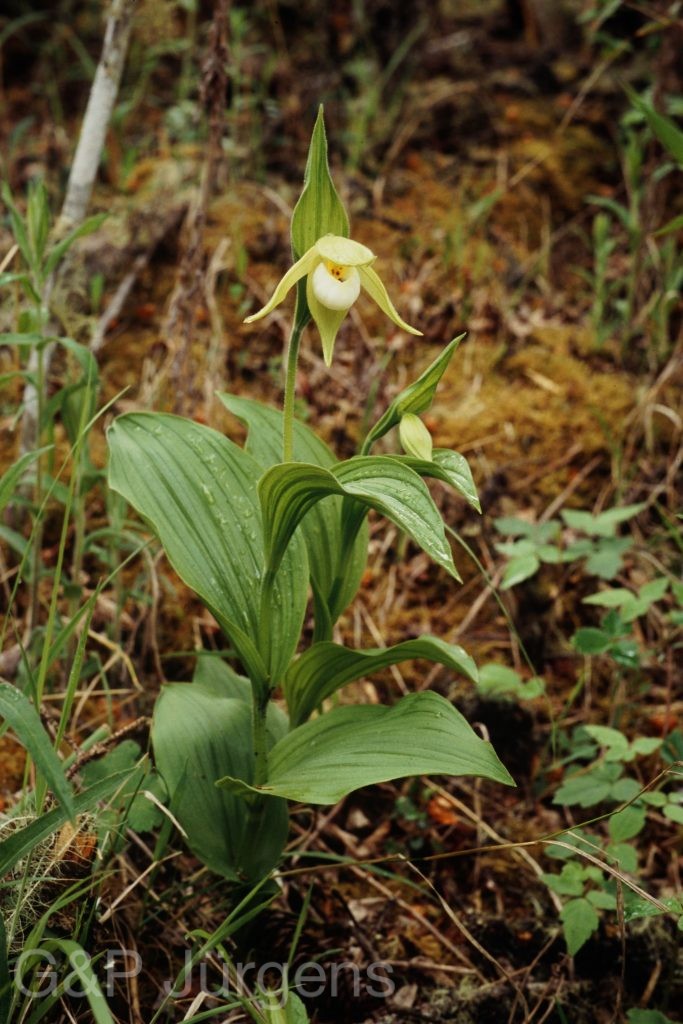
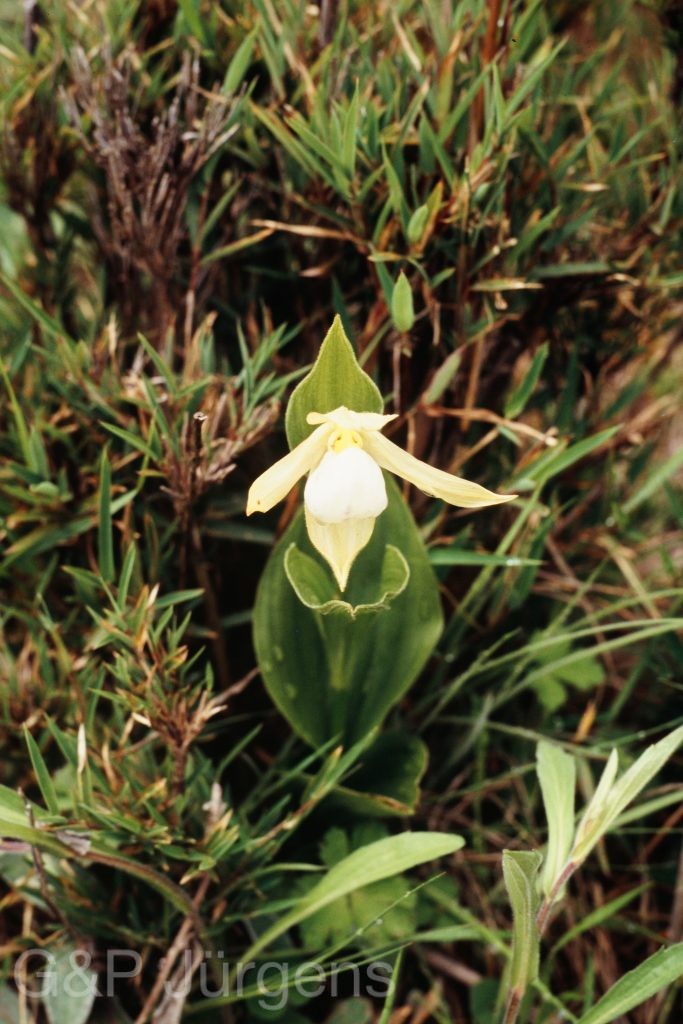
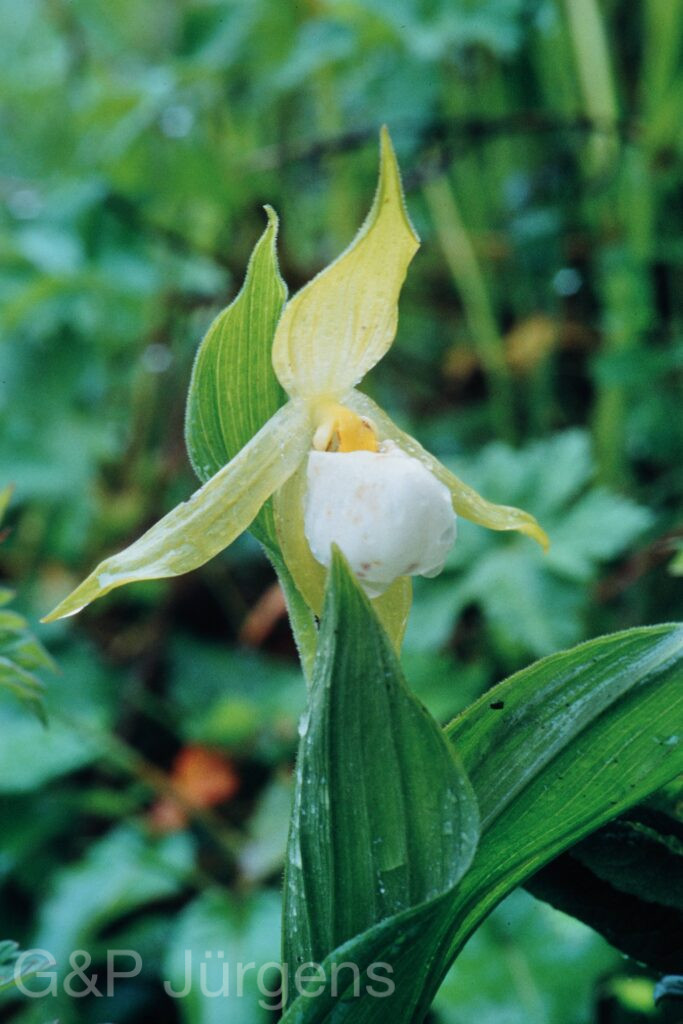
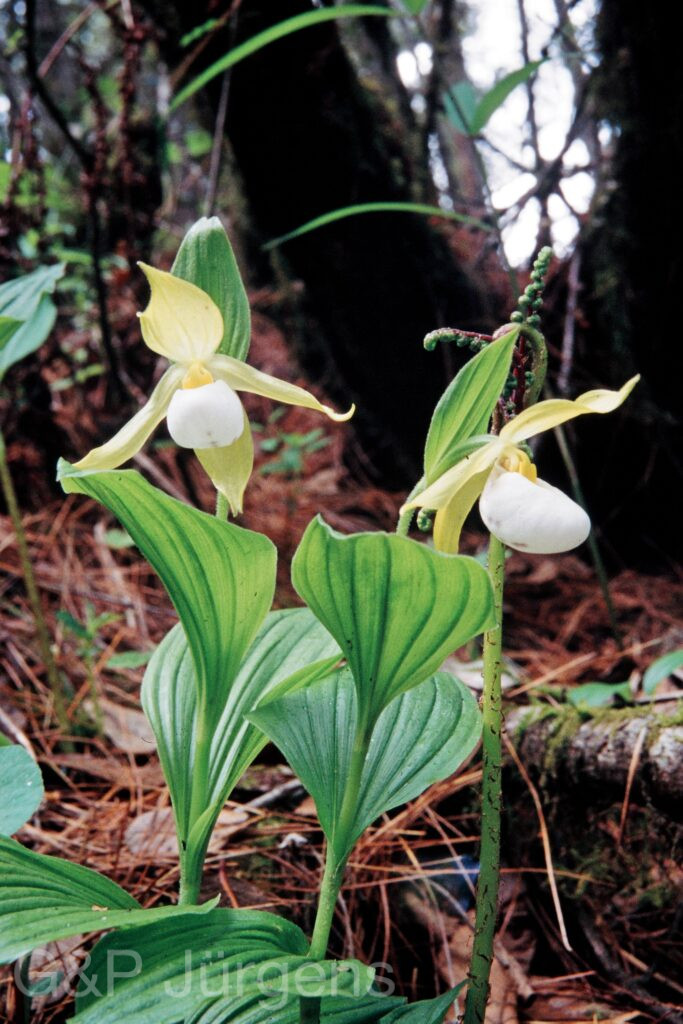
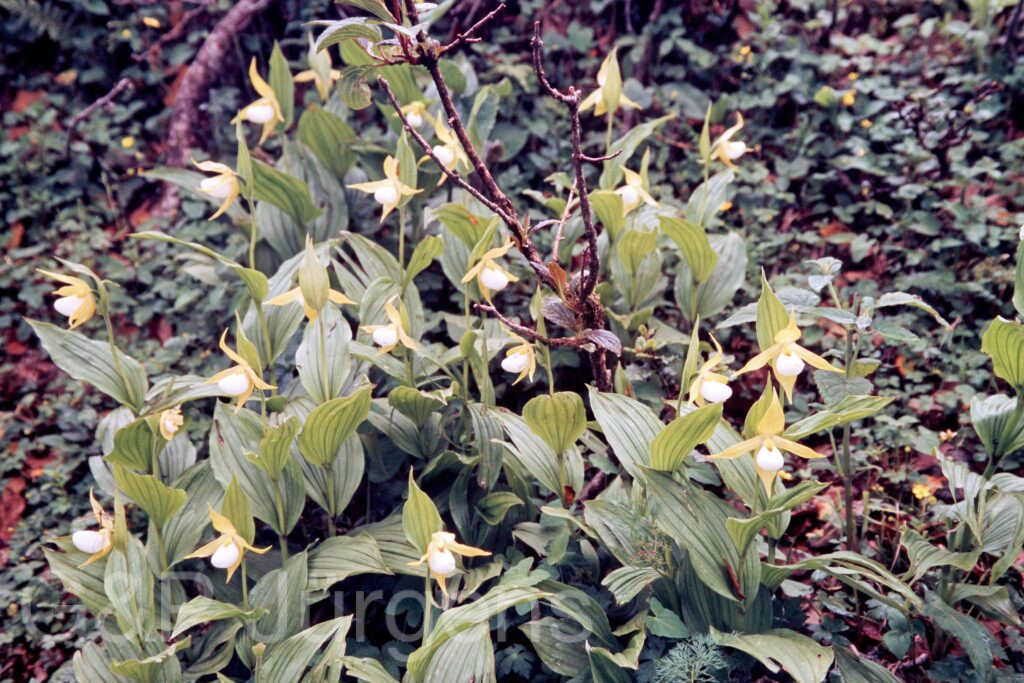
Cypripedium cordigerum, the Himalayan slipper orchid, ranges along the temperate Himalaya from Pakistan through India, Nepal and Bhutan into adjacent China, with 190 occurrences in GBIF. It grows in cool, humus-rich habitats: open coniferous and mixed forest, forest clearings, shrubberies and grassy alpine slopes, generally between 2700 and 4000 m. The gatherings figured span this band, from Bhutan's Yetong-La at 3000 m through West Nepal (Bhulbhule, Linji-Khola, 3200 m) to Garhwal's Panwali at 3200 m, all in June, illustrating its early-summer flowering on moist, partly shaded mountain soils as the growing season opens.

The plant arises from a short, creeping rhizome bearing thick fleshy roots, producing an erect, pubescent leafy stem 20-45 cm tall. The leaves are several, alternate, broadly elliptic to ovate, plicate (longitudinally folded) and clasping at the base. The flower is usually solitary and terminal, subtended by a leafy bract; the sepals and lateral petals are greenish to yellowish-white, lanceolate and somewhat twisted, while the labellum forms the characteristic inflated, slipper-shaped pouch, white often flushed pink within. The fertile anthers flank a shield-like staminode; the fruit is an erect, ribbed dehiscent capsule containing innumerable dust-like seeds.

Cypripedium (Orchidaceae, subfamily Cypripedioideae) comprises the temperate lady's-slipper orchids, employing deceptive trap-pollination whereby insects enter the pouch and exit past the anthers. The input family is given as "Orchideaceae"; the accepted family is Orchidaceae. Like its congeners, C. cordigerum depends on mycorrhizal associations and is slow to establish, making it vulnerable to collection and habitat loss; it is listed on CITES Appendix II and warrants conservation attention across its Himalayan range.

Author: D.Don · Sources: POWO (Kew), GBIF, Flora of Bhutan, Flowers of the Himalaya, The Genus Cypripedium (A Monograph)