Tag:

Summer

Hook.f. & Thomson

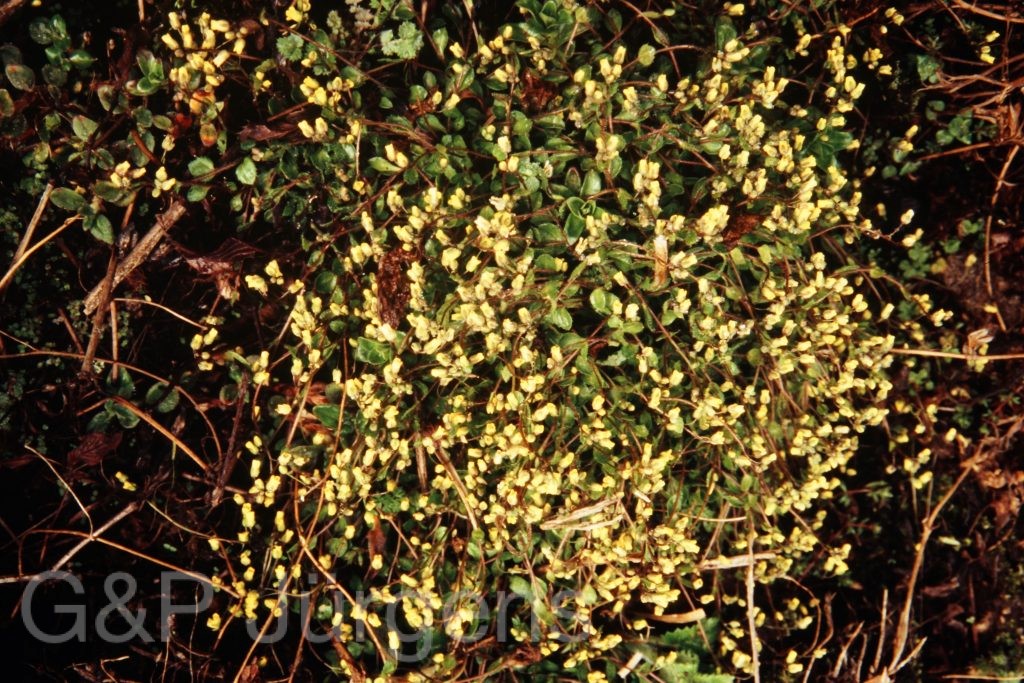
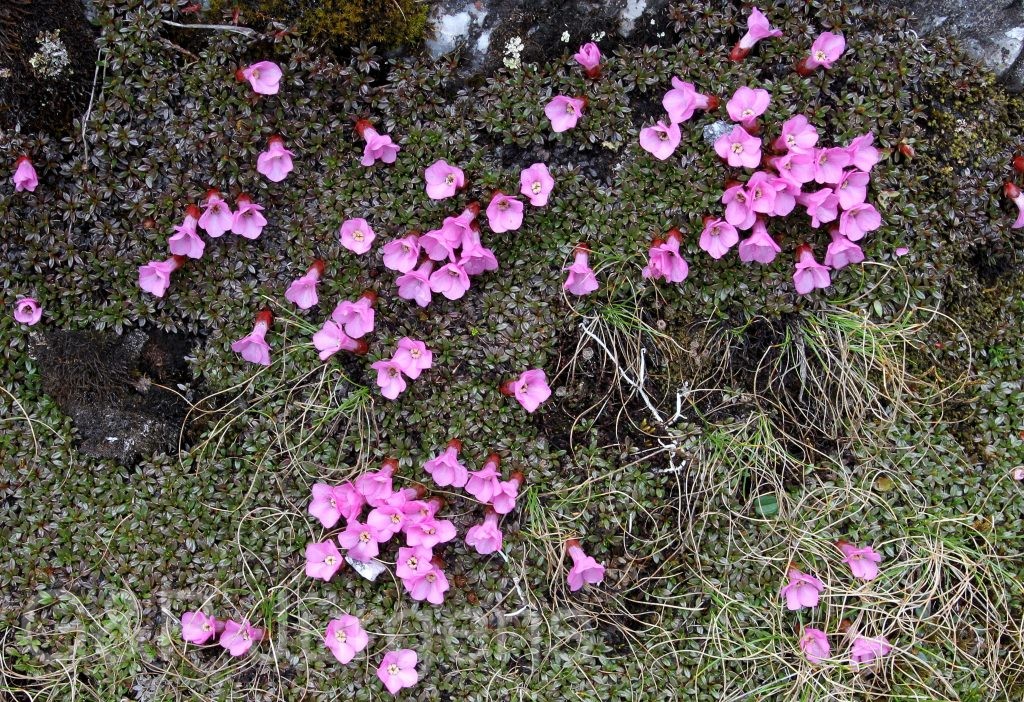
BhutanPG2011 447
Bhutan Jule-Tso, 4100m June

Description

Diapensia himalaica Hook.f. & Thomson is a high-alpine cushion plant of the Sino-Himalayan mountains, recorded from China, India, Nepal, Bhutan and Myanmar (CN, IN, NP, BT, MM), with GBIF documenting some 304 occurrences. It is a plant of the upper alpine and subnival belt, on exposed rocky ridges, gravelly slopes, moraines and turf margins, generally above 4000 m where wind exposure and a short growing season prevail. The Bhutanese material from Jule-Tso at 4100 m in June illustrates its early-summer flowering after snow-melt, when the cushions are studded with relatively large solitary flowers.

It forms a compact, evergreen, woody cushion of densely crowded shoots clothed in small, leathery, imbricate leaves. These are narrowly spathulate to oblong, sessile, with a thickened entire margin and a coriaceous texture resisting desiccation. The flowers are solitary and terminal on short stalks scarcely exceeding the cushion, actinomorphic and five-merous, with a persistent calyx and a campanulate to rotate corolla of fused white to pale pink petals; the five stamens are adnate to the corolla tube. The fruit is a small loculicidal capsule with numerous minute wind-dispersed seeds.

Diapensia is the type genus of the small, isolated family Diapensiaceae, an arctic-alpine lineage of ericalean affinity, and D. himalaica is the Himalayan vicariant of the circumboreal D. lapponica complex. The compact cushion habit is a classic adaptation to cold, wind-swept, nutrient-poor high mountains. Its biogeographic importance lies in linking the Himalayan high-alpine flora to arctic and boreal cushion-plant communities, and as a slow-growing specialist it is sensitive to climate change.

Author: Hook.f. & Thomson · Sources: POWO (Kew), GBIF, Flora of Bhutan Vol. 2, Flora of China Vol. 14, Flora of Nepal, Scott & Day monograph of the Diapensiaceae
(Forssk.) I.Darbysh.

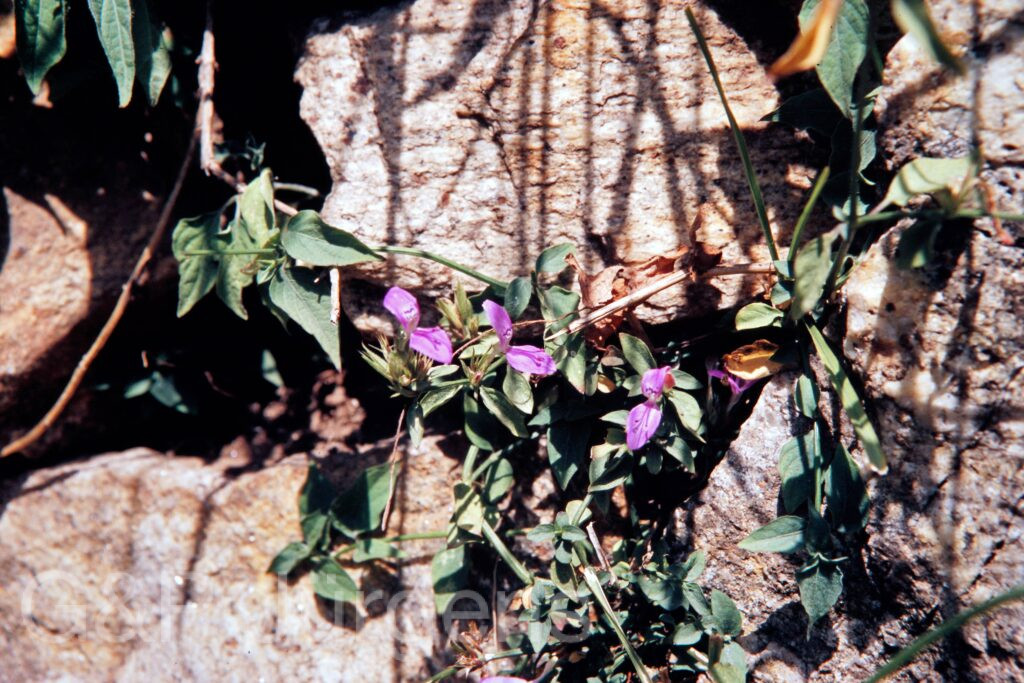
Garh 07 15 ergebnis
India Garhwal Uniana at Mandakini 1300m, June

Description

Dicliptera paniculata (Forssk.) I.Darbysh. is a widespread herb of the Acanthaceae with a remarkably broad palaeotropical distribution spanning Africa and southern Asia. Its more than two thousand georeferenced records extend from West and East Africa and the Arabian Peninsula across Pakistan, India and into China, with strong representation in arid and seasonally dry tropical environments. It is a plant of disturbed ground, scrub, dry hillsides, roadsides and the margins of cultivation, generally at low to moderate elevations. The population shown at Uniana on the Mandakini in Garhwal, photographed at 1,300 m in June, marks the foothill Himalayan extension of its range, where it flowers with the onset of the monsoon.

The plant is an erect to ascending annual or short-lived perennial herb with quadrangular, somewhat swollen-noded stems that are often sparsely pubescent. The leaves are opposite, ovate to lanceolate, entire and shortly petiolate, with the characteristic cystoliths of the family visible as fine streaks. The inflorescence is a lax, paniculately branched arrangement of cymose clusters, each subtended by paired bracts; the flowers have a slender, bilabiate corolla, typically pink to pinkish-purple, with two stamens. The fruit is the explosively dehiscent, clavate capsule typical of the family, ejecting seeds borne on hooked retinacula.

The species was long known under Forsskål's basionym and other generic placements before its current combination, reflecting ongoing reassessment of Dicliptera and allied genera within tribe Justicieae. Its wide ecological amplitude and tolerance of disturbance make it a successful colonist of human-modified landscapes, and it is nowhere considered at risk. As a nectar source it is visited by a range of insects, and within the Himalayan foothills it forms part of the seasonal weedy flora of the monsoon months.

Author: (Forssk.) I.Darbysh. · Sources: POWO (Kew), GBIF, Flora of China Vol. 19, Flora of Pakistan, Darbyshire et al.: Acanthaceae (Flora of Tropical East Africa)

Hook.f. & Thomson

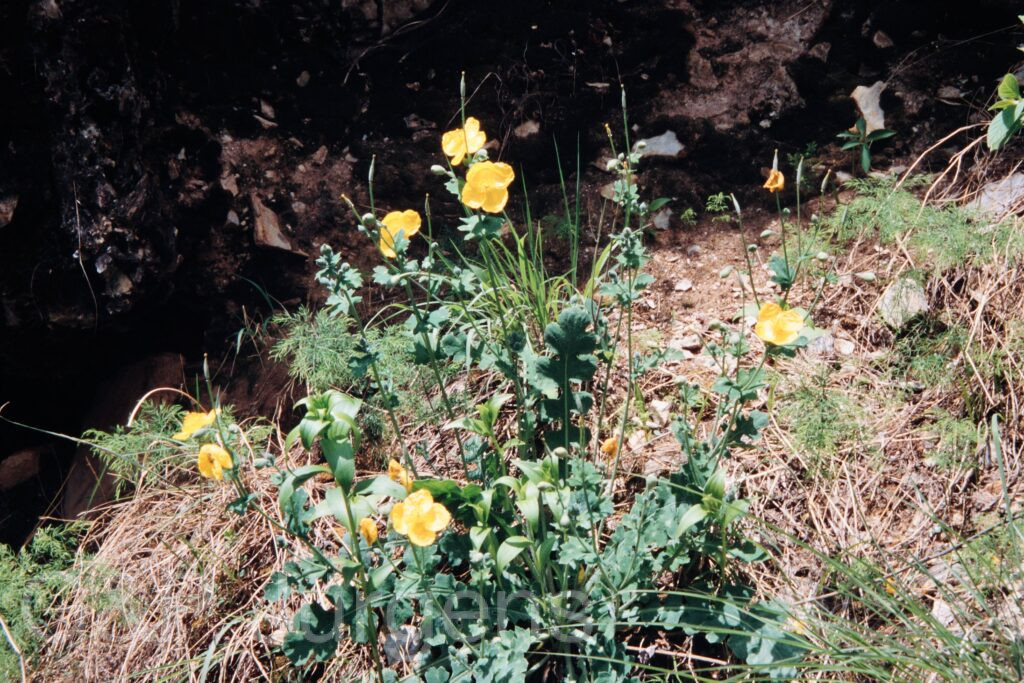
Nepal 99 399 ergebnis
West-Nepal Talphi 2830m, June
Nepal 99 551 ergebnis
West-Nepal Talphi 2830m, June
Nepal 99 552 ergebnis
West-Nepal Talphi 2830m, June

Description

Dicranostigma lactucoides Hook.f. & Thomson is a yellow-flowered Himalayan poppy relative known from about 145 records in Nepal, China, India and Bhutan. It is a plant of dry, open, often disturbed ground: stony slopes, rock crevices, river terraces, field margins and roadside banks in the inner valleys, generally in the warm-temperate to subalpine belt between roughly 2500 and 4000 m. The individual photographed at Talphi in West Nepal at 2830 m in June reflects its preference for sunny, well-drained, somewhat ruderal sites in the comparatively arid trans-Himalayan rain-shadow.

The species is an erect annual to short-lived perennial herb containing yellow to orange latex. The basal leaves form a rosette and are oblanceolate in outline, pinnately lobed to lyrate-pinnatifid with a large terminal lobe, glaucous and somewhat lettuce-like, whence the epithet "lactucoides." Cauline leaves are smaller and clasping. The flowers are borne on slender pedicels; two caducous sepals enclose four broad, crinkled, bright yellow petals surrounding numerous stamens. The fruit is the diagnostic feature of the genus: a slender, elongate, more or less cylindrical siliqua-like capsule dehiscing from the apex, crowned by a short style with a forked (bifid) stigma, and releasing many small seeds.

Dicranostigma is a small Asian genus close to Glaucium and Chelidonium in tribe Chelidonieae, distinguished by its elongate capsule and divided stigma; D. lactucoides is its principal Himalayan representative. Like its allies it contains benzylisoquinoline alkaloids and has been used locally in folk medicine. As a ruderal, weedy colonist of open ground it is resilient to moderate disturbance and is not regarded as threatened across its Sino-Himalayan range.

Author: Hook.f. & Thomson · Sources: POWO (Kew), GBIF, Flora of China, Flora of Nepal, Hooker's Flora of British India, monograph of Papaveraceae tribe Chelidonieae

C.B.Clarke

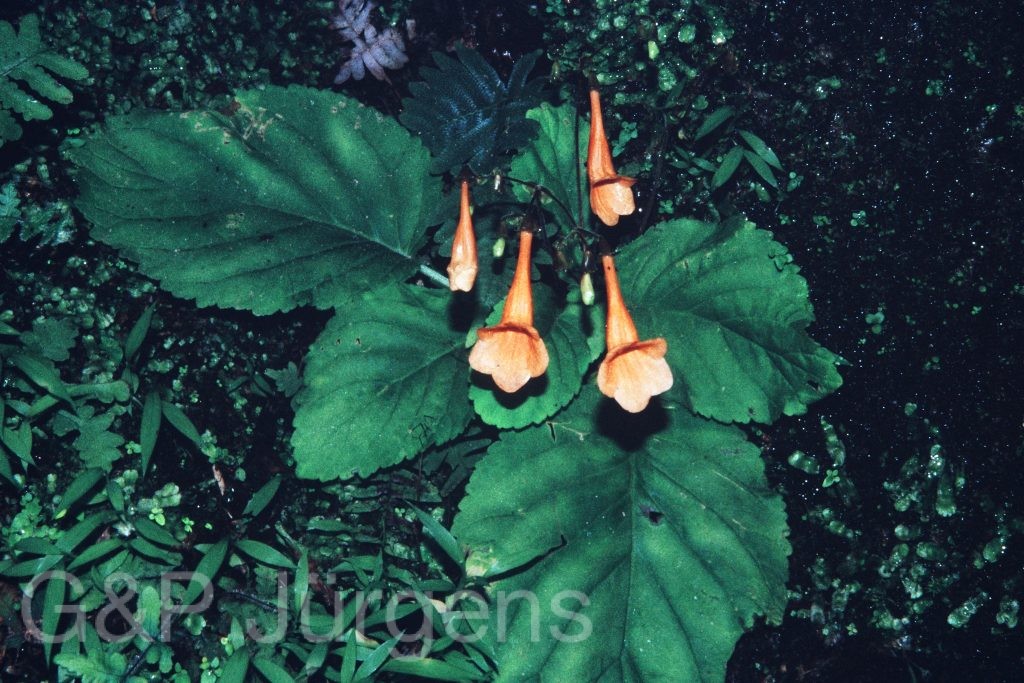
Sikkim2003 22 G26
Sikkim Rathong-Chu 1200 m, August

Description

Didymocarpus aurantiacus is an eastern Himalayan gesneriad recorded from India, Nepal and Bhutan, with around 33 occurrences concentrated in the wet, monsoon-drenched subtropical to lower temperate belt of Sikkim, Darjeeling and adjacent regions. It is a lithophyte and epipetric herb growing on shaded, moss-covered rocks, cliff faces and damp ravine walls within evergreen broad-leaved forest, typically between roughly 1000 and 2000 m. The illustrated material from the Rathong-Chu valley in Sikkim at 1200 m, flowering in August, reflects its main flowering during the rainy season, when the humid rock habitats it favours are kept constantly moist by mist and seepage.

It is a small perennial herb with a short rhizomatous base and crowded, opposite or subrosulate leaves. The lamina is ovate to elliptic, with a crenate-serrate margin, an acute to acuminate apex and a thinly hairy surface, the venation impressed above and prominent beneath. The inflorescence is an axillary cyme borne on a slender peduncle. The flowers have a tubular, lobed calyx and a tubular, somewhat ventricose corolla that is orange to orange-yellow (as the epithet aurantiacus indicates), two-lipped with a shorter upper and spreading lower lip. There are two fertile stamens with cohering anthers and staminodes; the gynoecium develops into the elongate, septicidal, two-valved capsule characteristic of the genus.

The input places this taxon under "Didymocarpinae", which is the subtribe within tribe Trichosporeae of the Gesneriaceae rather than a family; the species is correctly accommodated in the genus Didymocarpus. The name D. aurantiacus C.B.Clarke is accepted. As a narrow-ranged rock specialist tied to perhumid forest, it is dependent on intact, shaded microhabitats and is therefore potentially sensitive to deforestation and habitat drying, though it has not been formally assessed.

Author: C.B.Clarke · Sources: POWO (Kew), GBIF, Flora of Bhutan Vol. 2, Flora of Nepal, Weber Gesneriaceae of the World (monograph), Clarke Commelynaceae et Cyrtandreae Bengalenses

C.B.Clarke

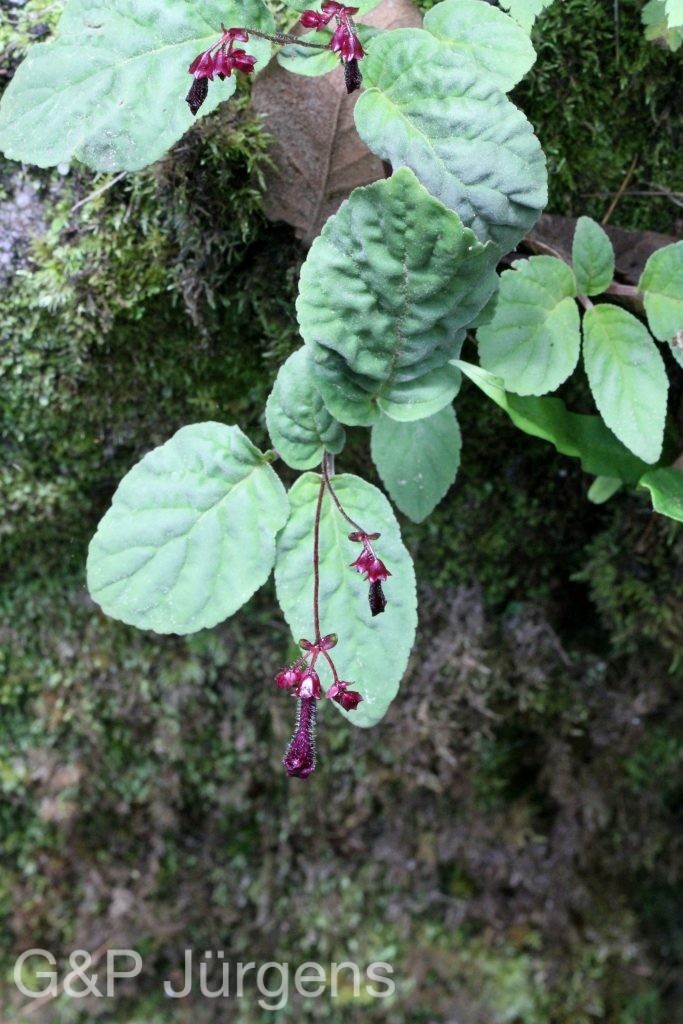
BhutanPG2011 78 ergebnis 1
Bhutan Menchuang, 2800m June

Description

Didymocarpus podocarpus is an eastern Himalayan gesneriad recorded from Nepal (NP), India (IN) and Bhutan (BT), with 59 GBIF occurrences reflecting its relatively localised montane distribution. It is a lithophyte and epiphyte of shaded, humid temperate forest, growing on moss-covered rocks, cliff faces and tree trunks where atmospheric humidity is high, typically in the 2000-3000 m belt. The illustrated material was gathered at Menchuang in Bhutan at about 2800 m in June, during the early monsoon when the genus comes into flower.

It is a perennial herb with a short rhizomatous base and erect to ascending stems bearing opposite or whorled leaves clustered toward the apex. The leaf blades are ovate to elliptic, crenate-serrate at the margin, and often somewhat fleshy with sparse hairs. The inflorescence is an axillary cyme of several flowers; the calyx is tubular and shortly lobed, while the corolla is tubular and two-lipped with a spreading limb in shades of purple to violet. Only two stamens are fertile, a diagnostic feature of Didymocarpus, the anthers cohering in pairs. The fruit is a slender, elongate, podocarpic (long-pointed) capsule that dehisces to release numerous minute seeds, the epithet alluding to this fruit form.

Didymocarpus is a large Asian genus centred on the Sino-Himalayan and Southeast Asian region, traditionally placed in subtribe Didymocarpinae of Gesneriaceae, the rank cited here verbatim as the family field. Many species are narrow-range rock specialists vulnerable to habitat disturbance, and several Himalayan taxa, including this one, are of biogeographic interest as components of the moist broadleaf forest gesneriad flora.

Author: C.B.Clarke · Sources: POWO (Kew), GBIF, Flora of Bhutan, Flora of Nepal, The Gesneriaceae of the Indian subcontinent, Monograph of the genus Didymocarpus (Weber & Burtt)

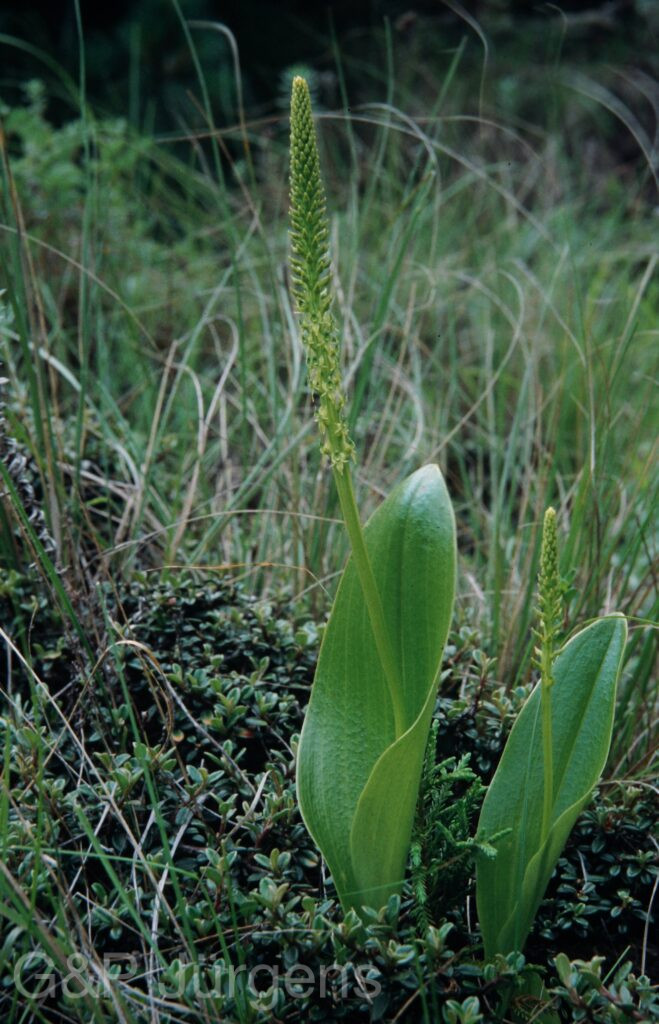
Lindl.

Nepal 99 891 ergebnis
West-Nepal Suli-Khola 2900m, July

Description

Dienia cylindrostachya is a terrestrial orchid distributed across the Himalaya and adjacent montane Asia, recorded from India, Nepal, Bhutan, China, Hong Kong, Myanmar and Pakistan, with GBIF documenting some 98 georeferenced occurrences. It favours humus-rich, shaded forest floors, mossy banks and damp grassy slopes in the temperate zone, typically between about 1500 and 3000 m. The photographed plant was found in West Nepal along the Suli-Khola at 2900 m in July, an elevation and season that coincide with its summer flowering during the monsoon, when soil moisture and atmospheric humidity are at a maximum.

The species is a small, glabrous herb arising from a fleshy, ovoid pseudobulb or thickened stem-base. It bears a few thin, plicate, ovate-elliptic to lanceolate leaves that are membranous and sheathing at the base. The inflorescence is an erect, slender, densely many-flowered cylindrical raceme, from which the epithet derives, carrying numerous minute, non-resupinate flowers in shades of greenish-yellow to purplish. The sepals and petals are small and spreading; the lip is broad, often auriculate or saccate at the base, and the column is short and stout. The fruit is a small, ellipsoid, ribbed capsule releasing dust-like seeds.

Long placed in Malaxis, the species is now treated in Dienia (Malaxidinae, Epidendroideae), a segregate distinguished by non-resupinate flowers and column structure. The family is rendered "Orchideaceae" in the source but the taxon belongs to the Orchidaceae. As an easily overlooked terrestrial of intact temperate forest, it is sensitive to deforestation, though its wide Asian range affords some resilience.

Author: Lindl. · Sources: POWO (Kew), GBIF, Flora of Nepal, Flora of China, Flora of Bhutan, Genera Orchidacearum (Pridgeon et al.)

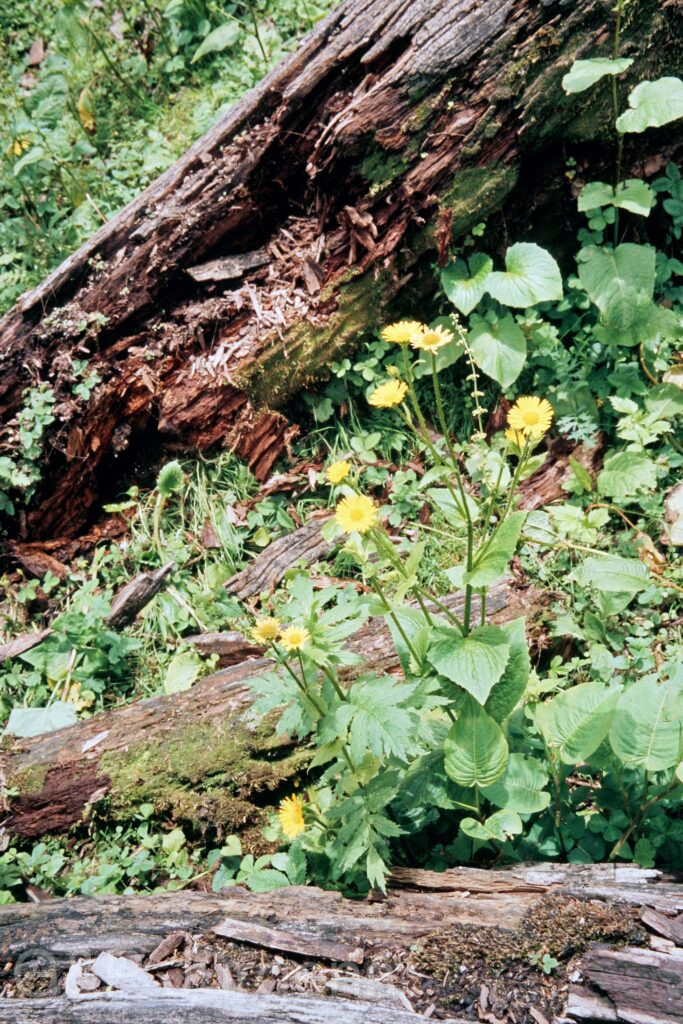
(DC.) Alv.Fern.

Garh 07 333 ergebnis
India Garhwal Mahji 2650m, June

Description

Doronicum kamaonense is a perennial herb of the temperate and subalpine Himalaya, distributed across India, Pakistan, Nepal, Bhutan and south-western China, with some 191 georeferenced occurrences documented in the GBIF network. It is a plant of moist alpine meadows, open grassy slopes, stream margins, the edges of birch and rhododendron scrub, and rocky pastures, typically occurring between about 2500 and 4000 m elevation. The plant photographed at Mahji in the Indian Garhwal Himalaya at 2650 m in June, when its golden flower heads coincide with the early monsoon flush of the high pastures, sits squarely within this favoured montane zone, where snowmelt keeps the substrate cool and humus-rich.

The species forms a short, ascending or erect stem 15–45 cm tall arising from a knotty, often shortly creeping rhizome bearing fibrous roots. The basal leaves are long-petiolate with ovate to cordate, crenate or sinuate-dentate blades, while the cauline leaves become sessile and clasping, reduced upwards. The stems and foliage are clothed in glandular and eglandular hairs. Flower heads are usually solitary, terminal and radiate, 3–5 cm across, subtended by a hemispherical involucre of narrow, acuminate, pubescent phyllaries. The bright yellow ray florets are ligulate and pistillate; the disc florets are tubular and hermaphrodite. The fruit is a ribbed cypsela, those of the ray often lacking a pappus while the disc achenes bear a pappus of barbellate bristles.

Within Doronicum, a Eurasian genus of the tribe Senecioneae, D. kamaonense belongs to the assemblage of Himalayan leopard's-banes that diversified along the great montane arc. Its combination of cordate basal leaves and typically single heads distinguishes it from related taxa, though intergrading populations and broad morphological plasticity have long complicated its circumscription. Like many high-altitude Senecioneae it is insect-pollinated and flowers with the brief alpine growing season. The species is widespread and locally common across its range and is not regarded as threatened, though grazing pressure and trampling locally affect meadow populations.

Author: (DC.) Alv.Fern. · Sources: POWO (Kew), GBIF, Flora of China Vol. 20-21, Flora of Bhutan Vol. 2, Flora of Pakistan, A Revision of the Genus Doronicum (Compositae)

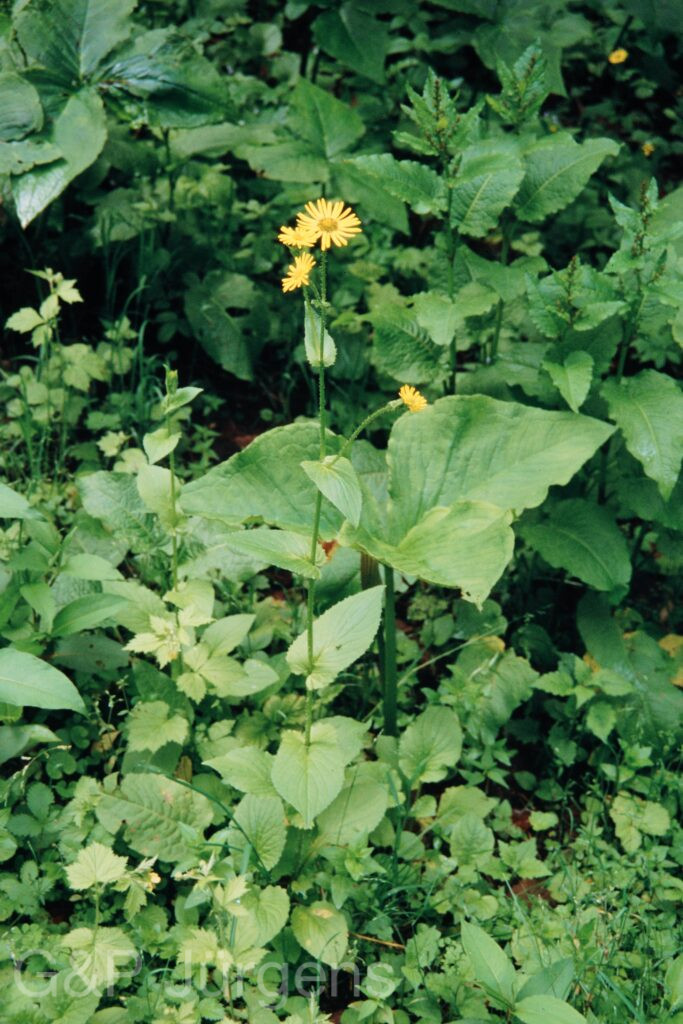
DC.

Nepal 99 467 ergebnis
West-Nepal Churta-Khola 3200m, June

Description

Doronicum roylei is a Himalayan leopard's-bane distributed from Pakistan and the Western Himalaya through India and Nepal into Bhutan, with GBIF recording 67 occurrences across PK, IN, NP and BT. It grows in subalpine and alpine meadows, on open grassy slopes, among shrubberies and along moist banks, broadly between about 3000 and 4200 m. The photographed plant was found in West Nepal at Churta-Khola near 3200 m, flowering in June. In the GBIF backbone the name is flagged as a SYNONYM, with Doronicum roylei itself given as the accepted name, so that binomial is retained here as the correct designation.

The species is a perennial herb arising from a short, often tuberous or knotty rhizome, with erect, simple or sparingly branched, glandular-hairy stems. The basal and lower leaves are petiolate, ovate to cordate and toothed, while the upper cauline leaves become sessile and amplexicaul, clasping the stem. The capitula are large, radiate and usually solitary (or few), with an involucre of narrow green phyllaries; the bright yellow ray florets are female and ligulate, surrounding numerous yellow, tubular, bisexual disc florets. The fruit is a cypsela, typically with a pappus of fine bristles on the disc florets, in the manner characteristic of the genus.

Doronicum is a genus of the tribe Senecioneae centred on the temperate mountains of Eurasia, with a notable Himalayan and Central Asian radiation. As a showy meadow composite it is a typical component of Himalayan summer-flowering alpine flora. It is locally common across its range and is not regarded as threatened, though grazing pressure affects accessible high pastures.

Author: DC. · Sources: POWO (Kew), GBIF, Flora of Pakistan, Annotated Checklist of the Flowering Plants of Nepal, Flora of China (Asteraceae: Senecioneae)

H.Hara 

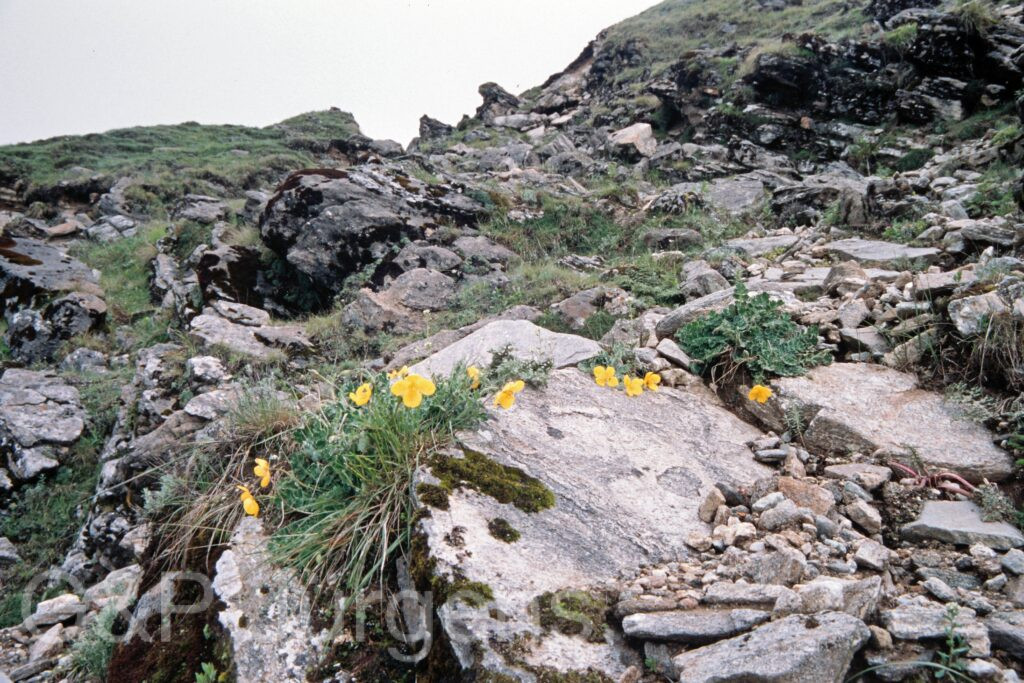
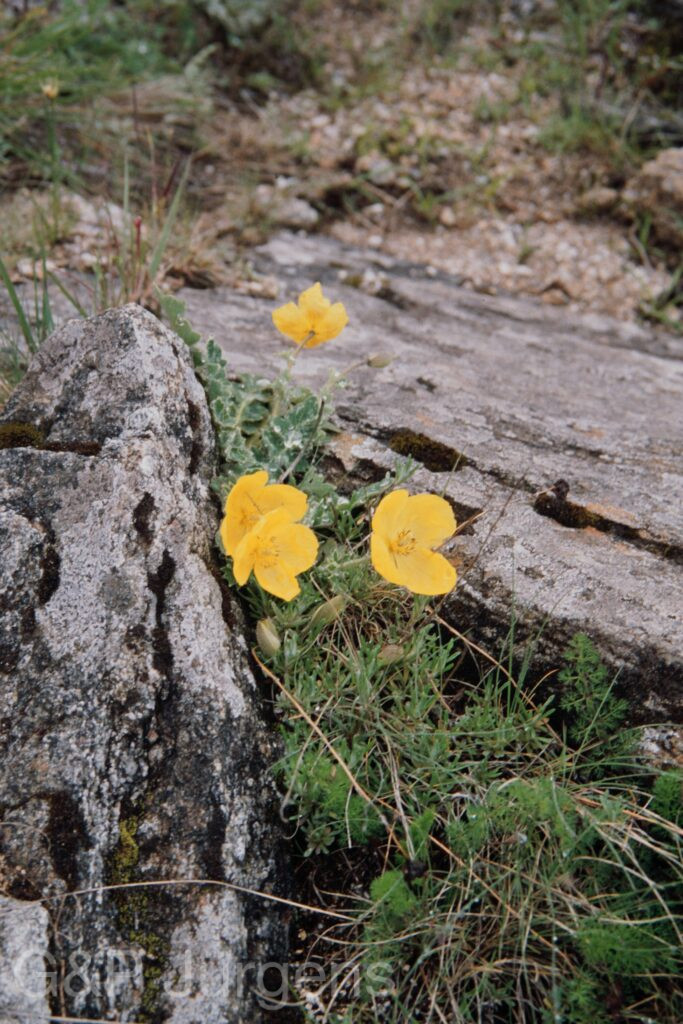
BhutanPG2011 418
Bhutan Ludlow-Sherriff-Trail Warrtlang-La, 4400m June

Description

Draba bhutanica H.Hara is a narrowly distributed alpine crucifer recorded only from Bhutan and adjacent China (gbif_countries: BT, CN), with a mere 13 occurrences in GBIF, marking it as a rare Eastern Himalayan high-mountain endemic. It occupies the upper alpine zone, growing on open stony slopes, scree, gravelly ridges and rock crevices near the limits of vascular plant life. The image record from the Ludlow-Sherriff Trail at Warrtlang-La in Bhutan at 4400 m, in June, situates it in the early-summer high alpine, where short-statured perennials flower briefly after snowmelt on exposed, well-drained ground.

It is a small, low, tufted or cushion-forming perennial herb, typically clothed in the branched, stellate or forked trichomes characteristic of the genus, giving a greyish indumentum. The leaves are small, entire to slightly toothed, crowded into basal rosettes. The flowering scapes are short and bear few-flowered terminal racemes. The flowers conform to the cruciferous plan, with four sepals, four clawed yellow (or whitish) petals in a cross, and tetradynamous stamens. The fruit is a small silicula, ovate to elliptic and somewhat flattened, dehiscing by two valves to release several seeds.

Draba is a large, predominantly arctic-alpine genus, and its Sino-Himalayan species are taxonomically intricate; D. bhutanica has been associated with the segregate Chrysobraya, reflecting unsettled generic limits in the region. Its cushion habit and dense indumentum are classic adaptations to cold, high-radiation, desiccating alpine environments. Given its extremely restricted range and few records, the species is of considerable conservation and biogeographic interest as a Bhutanese alpine endemic.

Author: H.Hara · Sources: POWO (Kew), GBIF, Flora of China (Brassicaceae), Flora of Bhutan, Al-Shehbaz systematic studies of Himalayan Draba and Cruciferae

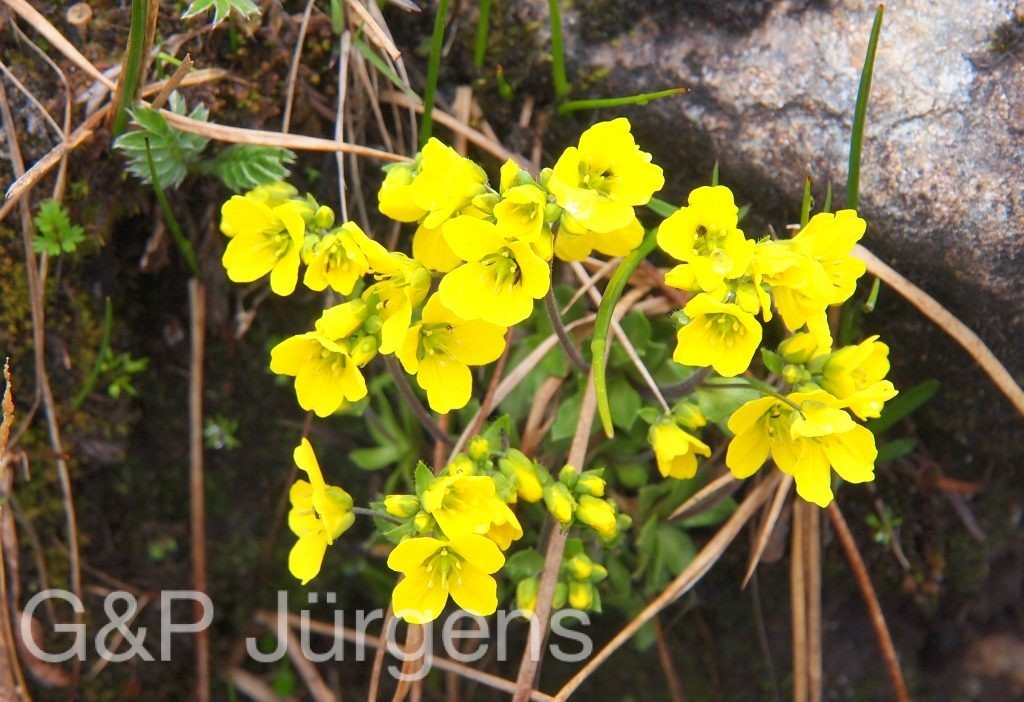
Hook.f. & Thomson

Bh09 156 G278
Bhutan Labana 4130m, June

Description

Draba gracillima is a slender alpine whitlow-grass of the Himalaya, distributed across the Indian Himalaya, Nepal, south-central China (Xizang) and Bhutan, with around one hundred and twenty-six GBIF records reflecting a continuous high-mountain range. It occupies alpine meadows, stony slopes, rock ledges, screes and crevices above the treeline, generally between about 3500 and 4500 m. The photographed plant from Labana in Bhutan at 4130 m, flowering in June, typifies its early-summer flowering and its preference for the open, well-drained mineral soils of the upper alpine zone.

The species is a slender, tufted perennial arising from a branched caudex and forming small basal rosettes of leaves, the lamina narrowly oblanceolate to spathulate and clothed, as is typical of Draba, in simple, forked and stellate hairs. The flowering stems are filiform and few-leaved, giving the plant its delicate, gracile appearance. The inflorescence is a lax raceme of small flowers with four free yellow (fading whitish) petals in the cruciferous arrangement and six tetradynamous stamens. The fruit is a small, flattened, lanceolate to elliptic silicula on a slender pedicel, dehiscing to release several seeds per locule.

Draba gracillima is an accepted species of the large genus Draba (Brassicaceae, tribe Arabideae), one of the most species-rich and taxonomically intricate genera of arctic and alpine regions, characterised by variable trichome morphology of diagnostic value. Its cushion-forming caudex, dense indumentum and short silicula are adaptations to cold, wind-exposed, high-radiation alpine habitats. The species is widespread and not regarded as threatened, although its specialised high-altitude niche is sensitive to climate-driven range shifts.

Author: Hook.f. & Thomson · Sources: POWO (Kew), GBIF, Flora of China, Flora of Bhutan, Jordal & Al-Shehbaz revision of Draba (Brassicaceae monograph)