Tag:

Summer

Hand.-Mazz.

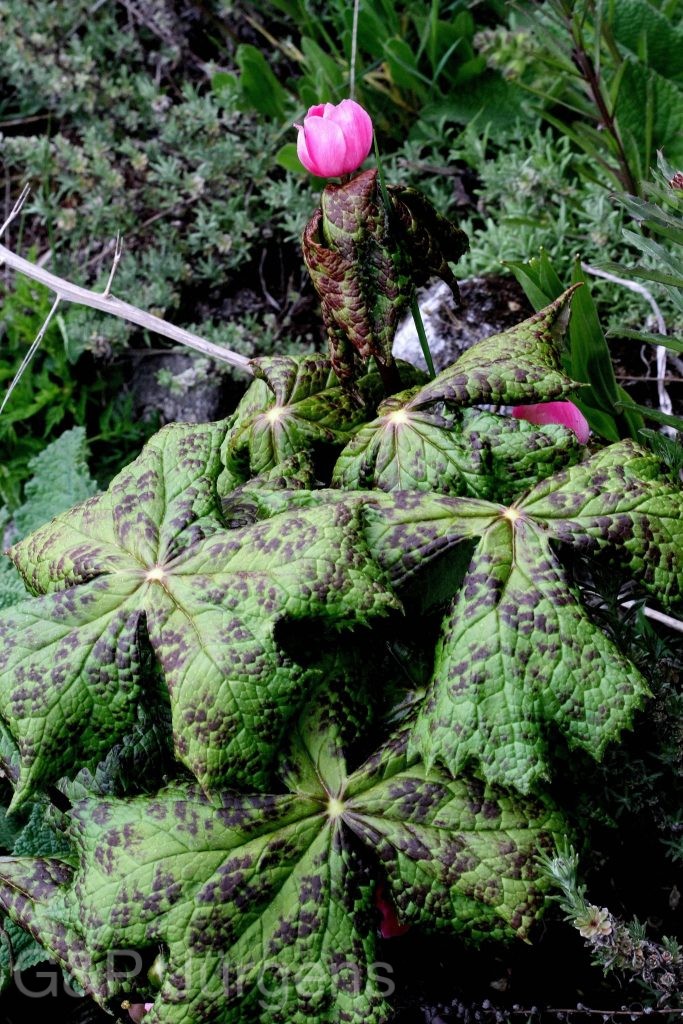
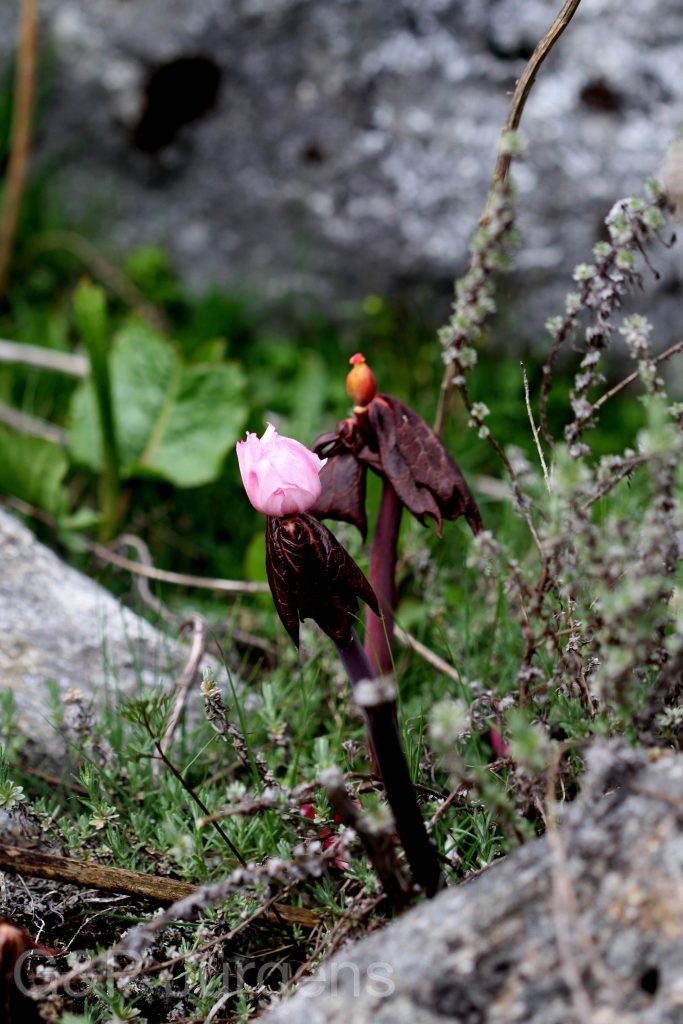
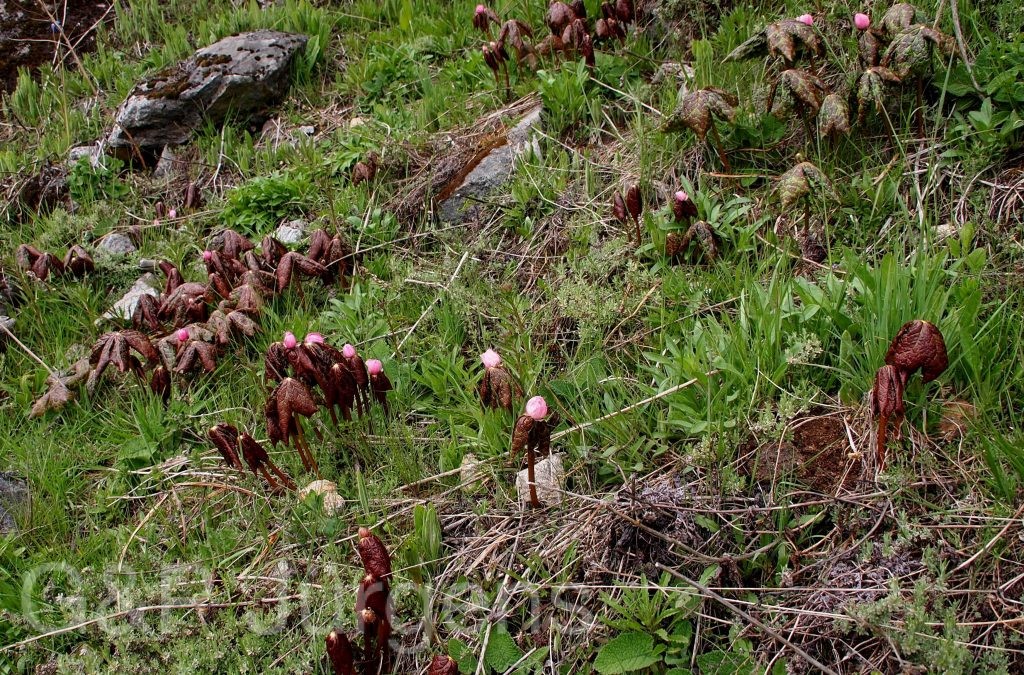
BhutanPG2011 57JPG
Bhutan Jakar 2600m June
Bh09 295 G486
Bhutan Pele-La, 3200m June
Bh09 296 G487
Bhutan Pele-La, 3200m June

Description

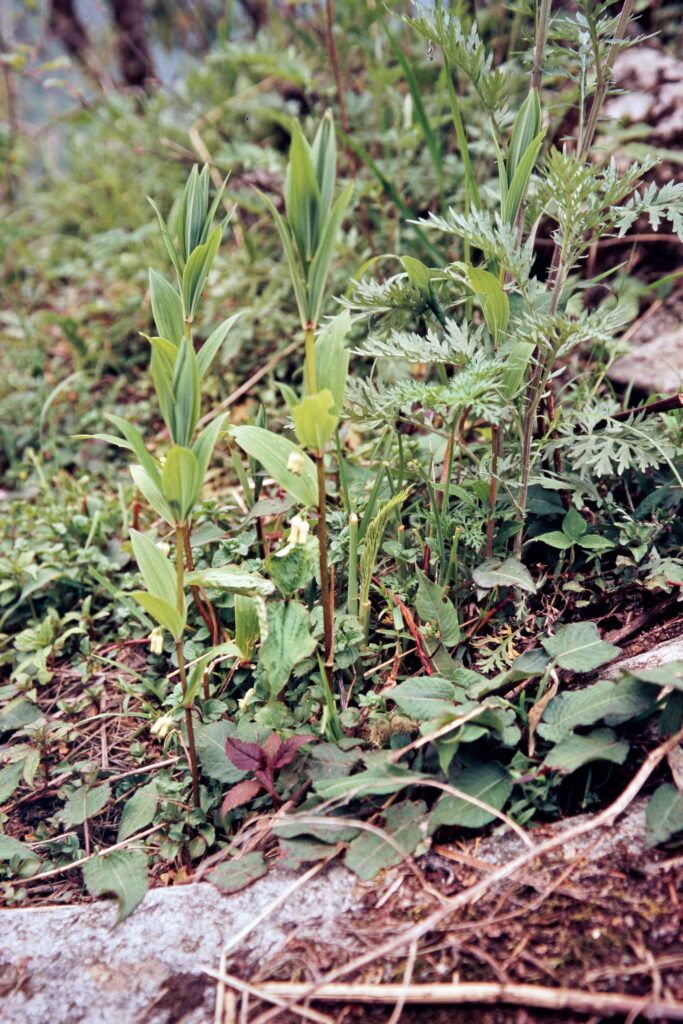
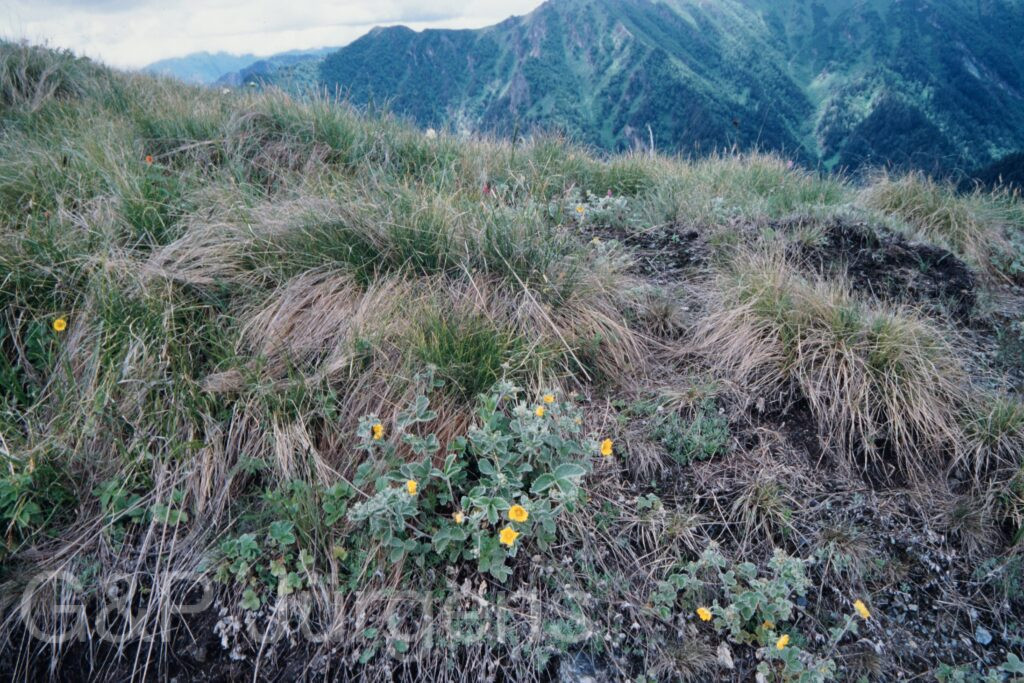
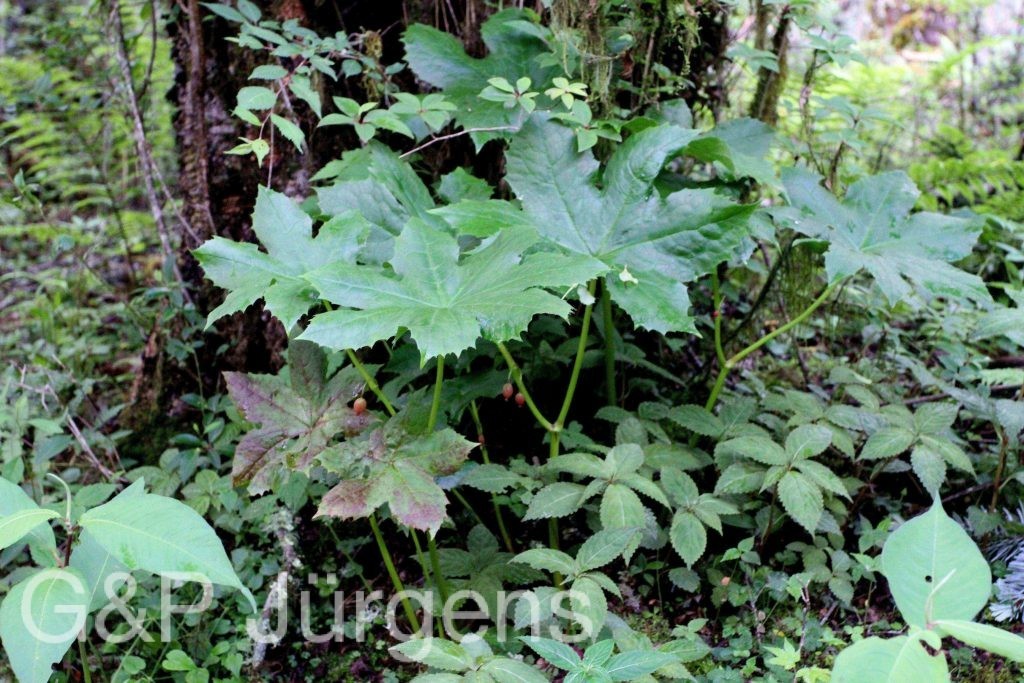
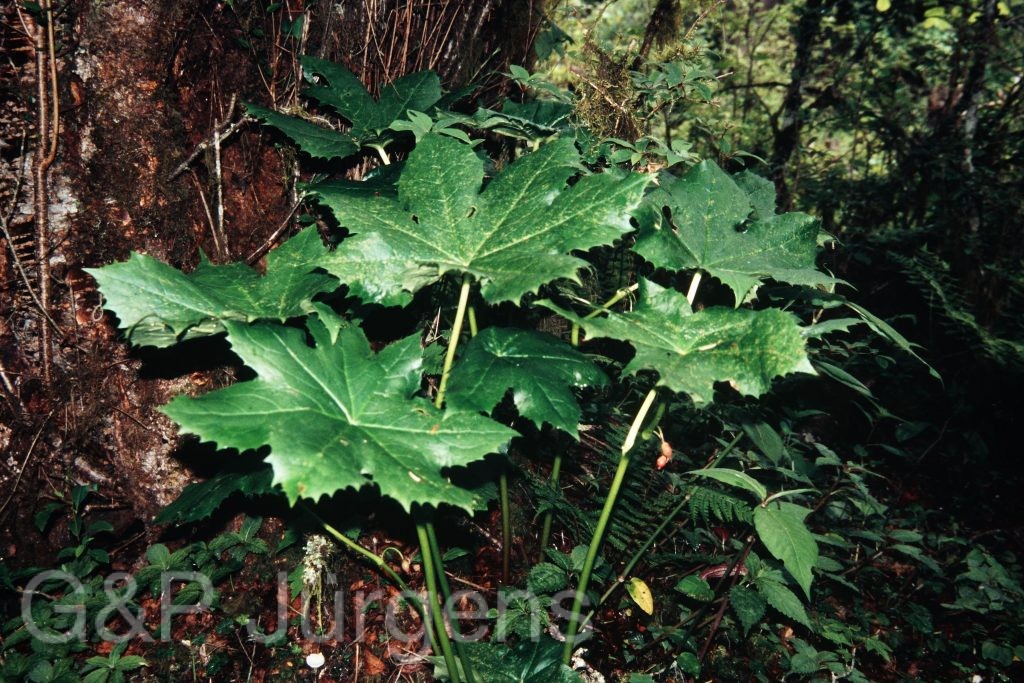
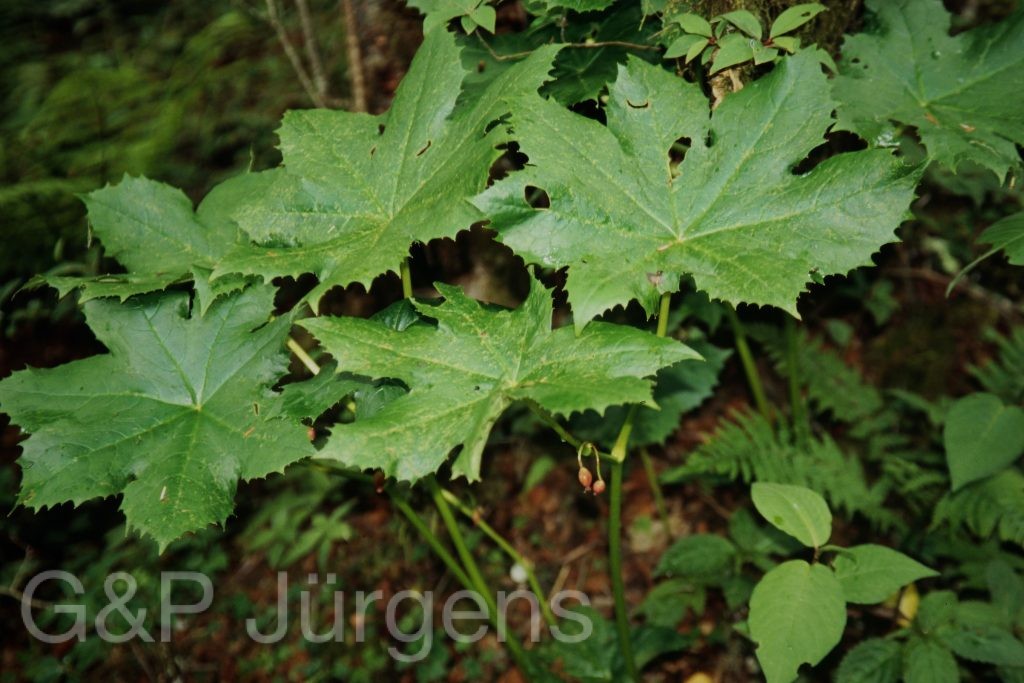
Podophyllum aurantiocaule is a Sino-Himalayan woodland herb recorded from China, Myanmar and India (with one extralimital cultivated record from the Netherlands), the c. 25 georeferenced occurrences reflecting a relatively narrow and uncommon distribution in the eastern Himalaya and adjacent mountains. It grows in the shade and humus of temperate broadleaved and conifer forest, on cool, moist, sheltered slopes and forest floor, generally between about 2400 and 3400 m. The illustrated plants were photographed at Jakar in Bhutan at 2600 m and at Pele-La at 3200 m, both in June, sites characteristic of the species, which emerges and flowers in early summer beneath the forest canopy. Under GBIF this name is treated as a synonym, with Podophyllum aurantiocaule itself recognised as the accepted name in that backbone.

It is a perennial herb arising from a stout creeping rhizome, sending up an erect, fleshy, often orange-tinted stem, the colouration reflected in the epithet aurantiocaule. The stem bears typically two large, long-petioled, peltate to deeply palmately lobed leaves whose margins are toothed. A single, rather large, nodding flower is borne at the fork between the leaves; it has free, somewhat fleshy petals in shades of dull red to purplish, numerous stamens and a single superior carpel. The fruit is a large fleshy berry containing many seeds embedded in pulp.

The Asian podophylloids, treated either in a broad Podophyllum or in the segregate genera Dysosma and Sinopodophyllum, are placed in Berberidaceae and are renowned for the lignan podophyllotoxin, precursor of the anticancer drugs etoposide and teniposide. As a slow-growing, rhizomatous, narrowly distributed forest herb subject to medicinal collection and habitat loss, P. aurantiocaule is intrinsically vulnerable, and members of this complex are widely flagged for conservation attention.

Author: Hand.-Mazz. · Sources: POWO (Kew), GBIF, Flora of China, Flora of Bhutan, Shaw monograph of the podophylloid Berberidaceae
Royle

Sikkim2011 57
Sikkim Tanghu 3900m, June
Sikkim2011 70
Sikkim Tanghu 3900m, June
Sikkim2011 72
Sikkim Tanghu 3900m, June

Description

Podophyllum hexandrum, the Himalayan mayapple, is a perennial herb of the high temperate and subalpine Himalaya, occurring through China, India, Pakistan, Nepal, Bhutan and Afghanistan, with around 860 occurrences in GBIF. It grows in moist alpine meadows, open fir and birch forest, shaded scrub and along the margins of melting snowfields, typically between about 2500 and 4500 m. The plant photographed at Tanghu in northern Sikkim at 3900 m in June, emerging and flowering as the snow recedes, is characteristic of its high-elevation niche, where the rich, moist humus of the upper forest and meadow ecotone supports dense local stands.

The species arises from a stout, creeping, knotty rhizome and produces a single erect aerial stem 15–50 cm tall bearing usually two large, long-petiolate leaves that are deeply palmately three- to five-lobed, the lobes themselves further cut and toothed, often bronze-mottled when young. A solitary, nodding to erect flower is borne at the fork of the leaves; it is cup-shaped with white to pale pink petals and (as the epithet indicates) commonly six stamens. The fruit is a large, fleshy, ovoid berry ripening to bright red and containing numerous seeds embedded in pulp.

GBIF flags the name as a synonym, the species being widely treated under the accepted name Podophyllum hexandrum, with the genus Sinopodophyllum (S. hexandrum) recognised by some authors to accommodate the Asian taxon apart from the North American Podophyllum peltatum; the source page links to that segregate name. The plant is the principal natural source of podophyllotoxin, a lignan of major pharmaceutical importance as a precursor of anticancer agents. Heavy harvesting of the rhizomes for this trade, together with habitat disturbance, has caused marked local declines, and the species is regarded as threatened and is subject to conservation and CITES-related concern across much of its range.

Author: Royle · Sources: POWO (Kew), GBIF, Flora of China Vol. 19, Flora of Bhutan Vol. 1, Flora of Pakistan, Medicinal Plants of the Himalaya: A Monograph of Podophyllum

Baker

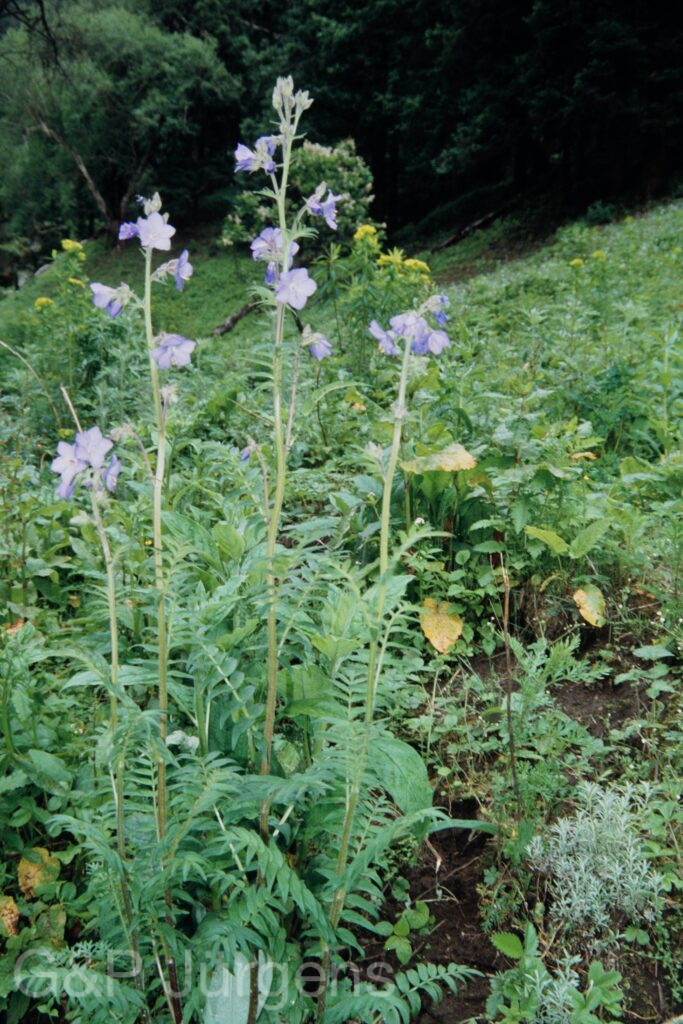
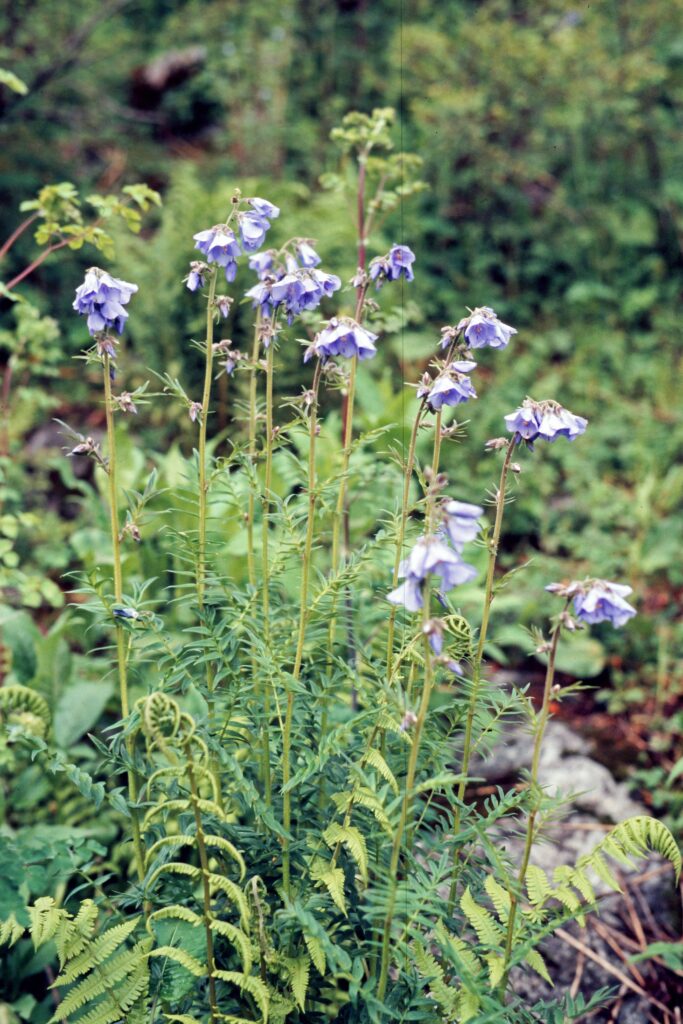
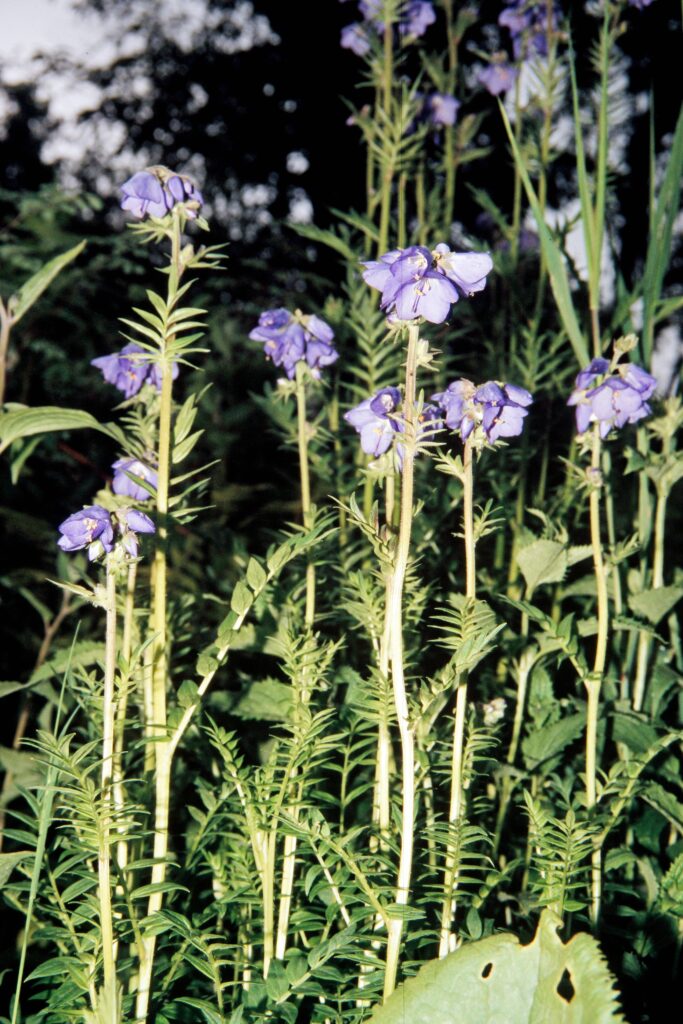
Nepal 99 85 ergebnis
West-Nepal Bhulbhule 3200m, June

Description

Polemonium caeruleum var. himalayanum is the Himalayan expression of the wide-ranging Jacob's ladder, here documented chiefly from Nepal, with only about 16 georeferenced GBIF occurrences reflecting its restricted recording rather than true rarity. It is a herb of moist alpine and upper-subalpine meadows, streambanks, open shrubberies and damp rocky slopes, typically between about 3000 and 4000 m. The populations noted at Bhulbhule in West Nepal at 3200 m and at Seema in Garhwal at 3400 m, both flowering in June at the start of the monsoon, are characteristic of its preference for cool, humus-rich, seasonally moist ground in the high western and central Himalaya.

It is an erect perennial herb arising from a short rhizome, the stems leafy and often glandular-pubescent above. The leaves are alternate and pinnately compound, the numerous lanceolate to ovate leaflets arranged ladder-like along the rachis, giving the plant its vernacular name. The flowers are borne in a terminal, somewhat congested panicle; each has a campanulate, glandular five-lobed calyx and a broadly campanulate to rotate blue corolla with five spreading lobes, the five stamens inserted in the throat with hairy filament bases, and a three-lobed style exserted. The fruit is an ovoid, three-valved loculicidal capsule containing several angular seeds.

GBIF treats the name as a synonym, with Polemonium caeruleum himalayanum recognised as the accepted infraspecific taxon within the circumboreal P. caeruleum complex. The protandrous, nectar-rich flowers are visited by bees and long-tongued insects, promoting outcrossing. As a high-altitude meadow plant it is sensitive to overgrazing, though not presently assessed as threatened.

Author: Baker · Sources: POWO (Kew), GBIF, Flora of Nepal, Flora of Bhutan Vol. 2, Flora of China Vol. 16, A Systematic Treatment of Polemonium (Polemoniaceae)

Decne.

Garh 07 101 ergebnis
India Garhwal Trijugin 2300m, June

Description

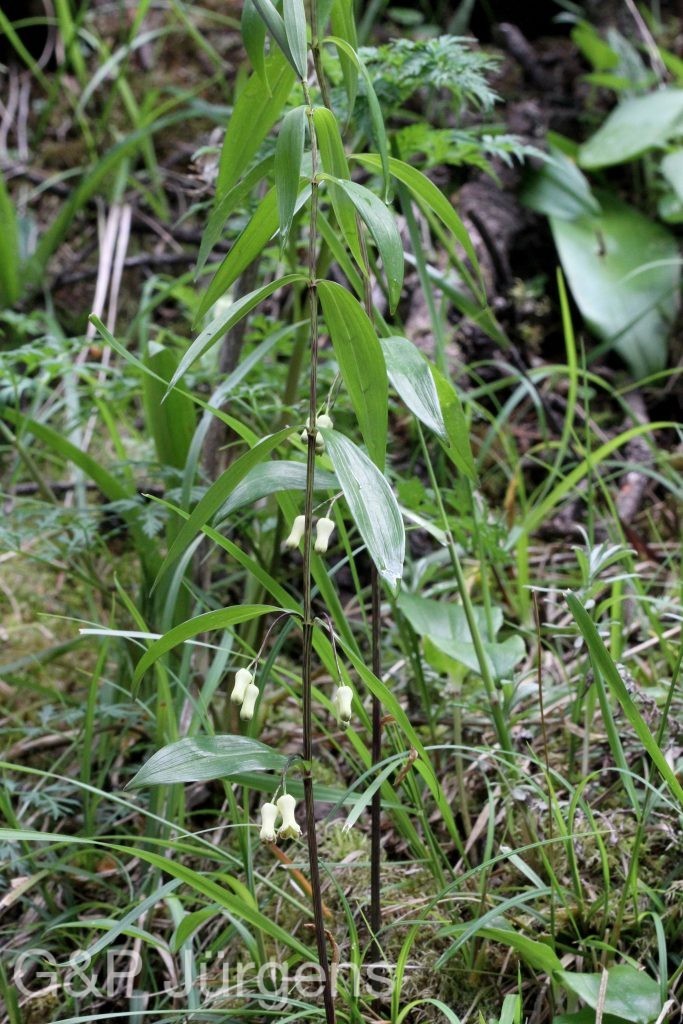
Polygonatum geminiflorum is a western Himalayan Solomon's seal distributed from Afghanistan and Pakistan through Kashmir, Himachal Pradesh, and Uttarakhand to western Nepal, with disjunct records from the Caucasus region (Georgia, Armenia). GBIF records 123 occurrences across this range. The species inhabits moist, shaded understorey habitats in temperate oak-conifer and mixed broadleaved forests at elevations of 1,800–3,200 m. It favours deep, humus-rich forest soils and is frequently found on north-facing slopes, along streams, and at the base of boulders under canopies of Quercus semecarpifolia, Cedrus deodara, and Abies pindrow.
Polygonatum geminiflorum is an erect, herbaceous perennial arising from a stout, horizontal, moniliform rhizome bearing conspicuous circular stem scars (Solomon's seals). Stems are simple, arching, 30–60 cm tall, glabrous, and angular in cross-section. Leaves are alternate, sessile, elliptic to ovate-lanceolate, 5–10 cm long, glaucous beneath, with parallel venation and slightly clasping bases. Flowers are typically borne in pairs (geminate) from leaf axils — the diagnostic character reflected in the epithet — occasionally solitary or in threes. Each flower is tubular-campanulate, 12–18 mm long, white to cream with green tips, pendulous on slender pedicels 1–2 cm long. The six tepals are fused for most of their length. The fruit is a globose berry, 8–10 mm in diameter, ripening from green to dark blue-black.
The photographed specimen from Trijugin in Garhwal at 2,300 m in June represents a characteristic occurrence in the west-central Himalayan forests during peak flowering season. Polygonatum geminiflorum is distinguished from the related P. verticillatum by its alternate (not whorled) leaves and consistently paired flowers. The Caucasian disjunction is biogeographically significant, representing a relictual Tertiary connection between the western Himalayan and Irano-Turanian floras. The rhizomes are used in traditional Ayurvedic medicine as a tonic and are locally harvested, which in some areas may impact wild populations.

Author: Decne. · Sources: POWO (Kew), GBIF, Flora of Pakistan (Liliaceae), Flora of British India Vol. 6, Tamura: Liliaceae in Flora of China Vol. 24

Hook.

Nepal 99 117 ergebnis
West-Nepal South of Rara-Lake 3750m, June

Description

Polygonatum graminifolium is a high-alpine Solomon's seal restricted to the Himalaya, recorded from Pakistan, India, Nepal and Bhutan; GBIF documents only about 18 occurrences, indicating a narrow range and limited collecting. It inhabits open alpine and subalpine slopes, rocky meadows, grassy turf and the margins of dwarf shrubberies, generally on stony, well-drained soils above the forest line. The plant photographed south of Rara Lake in western Nepal at 3750 m in June is characteristic of its elevation, roughly 3000-4300 m, where the short season compels rapid flowering soon after snowmelt in early summer.

It is a small, slender perennial herb growing from a short, knotted, horizontal rhizome bearing the circular scars that give the genus its name. The wiry, erect to arching stem is unbranched and bears narrow, grass-like (graminoid) leaves that are linear to linear-lanceolate, sessile and parallel-veined, arranged alternately or sometimes subverticillately, their slenderness giving the species its epithet. The flowers are small, tubular-campanulate and pendulous, solitary or paired in the leaf axils, white to greenish-white and often green-tipped, on short pedicels. The perianth tube is cylindrical with six short recurved lobes enclosing six included stamens, and the ovary develops into a small globose berry ripening bluish-black to red.

The epithet graminifolium, grass-leaved, distinguishes it from broader-leaved Himalayan congeners. Polygonatum is a north-temperate genus formerly placed in Liliaceae or Convallariaceae and now treated within an expanded Asparagaceae. Its restricted distribution and modest occurrence record suggest specialisation to alpine turf, though no formal conservation assessment exists; like related species its rhizomes have potential use in the regional pharmacopoeia.

Author: Hook. · Sources: POWO (Kew), GBIF, Flora of China, Flora of Pakistan, Flora of Bhutan, Jeffrey revision of Polygonatum

Baker

Sikkim2011 51
Sikkim Vista-valley 3800m, June
Bhutan2014 991
Bhutan Chele-La 4000m, May

Description

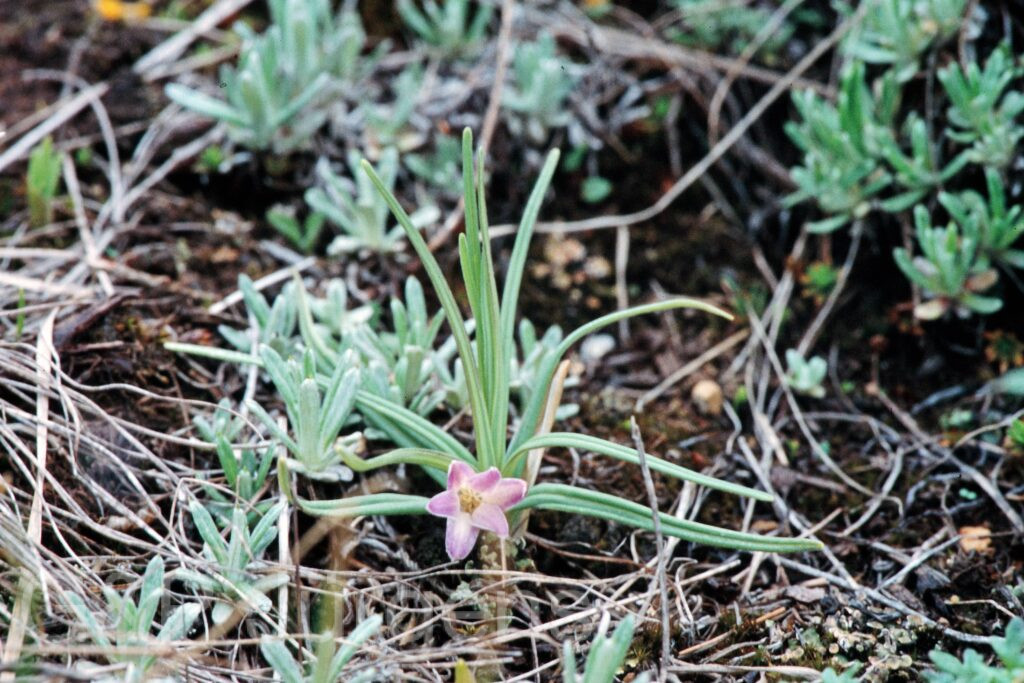
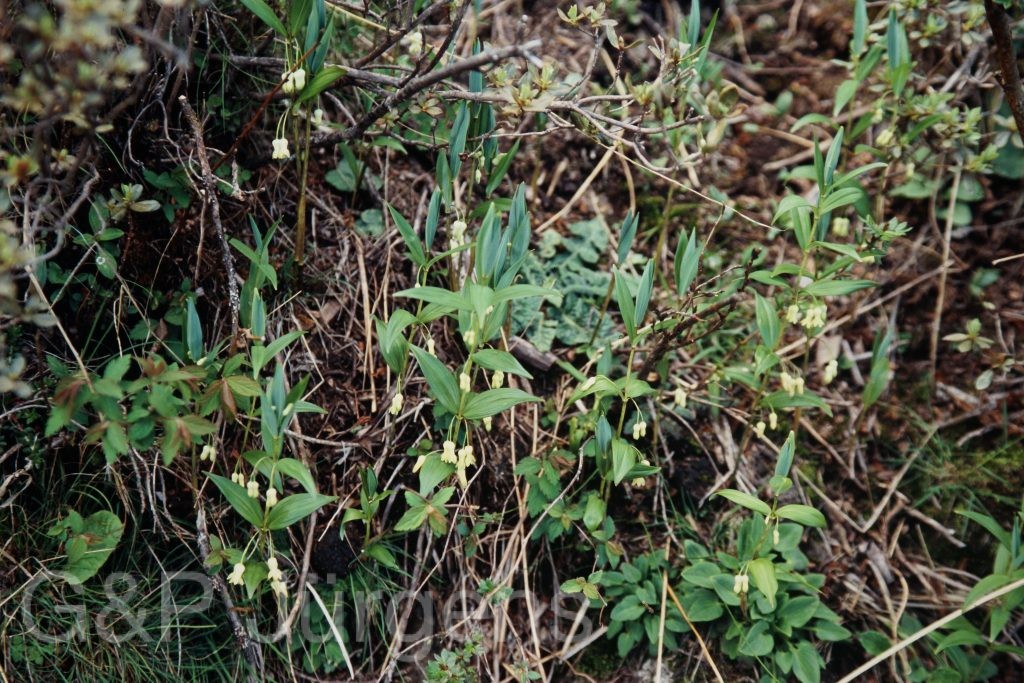
Polygonatum hookeri is a dwarf alpine Solomon's-seal of the Sino-Himalayan high mountains, recorded from China, Nepal, India, Bhutan and Pakistan across some 400 GBIF occurrences. The illustrated plants were photographed in the Vista-valley of Sikkim at 3800 m in June and on the Chele-La in Bhutan at 4000 m in May. It grows in open alpine turf, on grassy slopes, stony meadows and the margins of rhododendron scrub, typically between 3000 and 4500 m, forming low patches in short high-elevation vegetation where it flowers soon after snowmelt.

The plant is a diminutive rhizomatous perennial, spreading by a slender creeping rhizome and producing very short, sometimes almost stemless aerial shoots. The leaves are small, narrowly elliptic to oblong and crowded toward the top of the shoot. The flowers are solitary or paired and conspicuously large relative to the plant, bell- to funnel-shaped, lilac, rose-pink or purplish, borne low among the leaves; the perianth is tubular with six short lobes. The fruit is a small globose berry, ripening red, containing few seeds.

Long placed in the Liliaceae or Convallariaceae, Polygonatum is now treated in the Asparagaceae (subfamily Nolinoideae). P. hookeri is among the smallest and most alpine members of the genus, its dwarf cushion-like habit an adaptation to the harsh high-mountain environment, and it is much esteemed by rock-garden growers. The bird-dispersed berries aid colonisation of new ground. The species is widespread across the high Himalaya and of least conservation concern.

Author: Baker · Sources: POWO (Kew), GBIF, Flora of China, Flora of Bhutan, Flora of Nepal, Jeffrey – The Genus Polygonatum (Liliaceae/Asparagaceae) revision

H. Hara

BhutanPG2011 164
Bhutan Tsochenchen, 3600m June
Bh09 183 P318
Bhutan Phajoding, 3600m June

Description

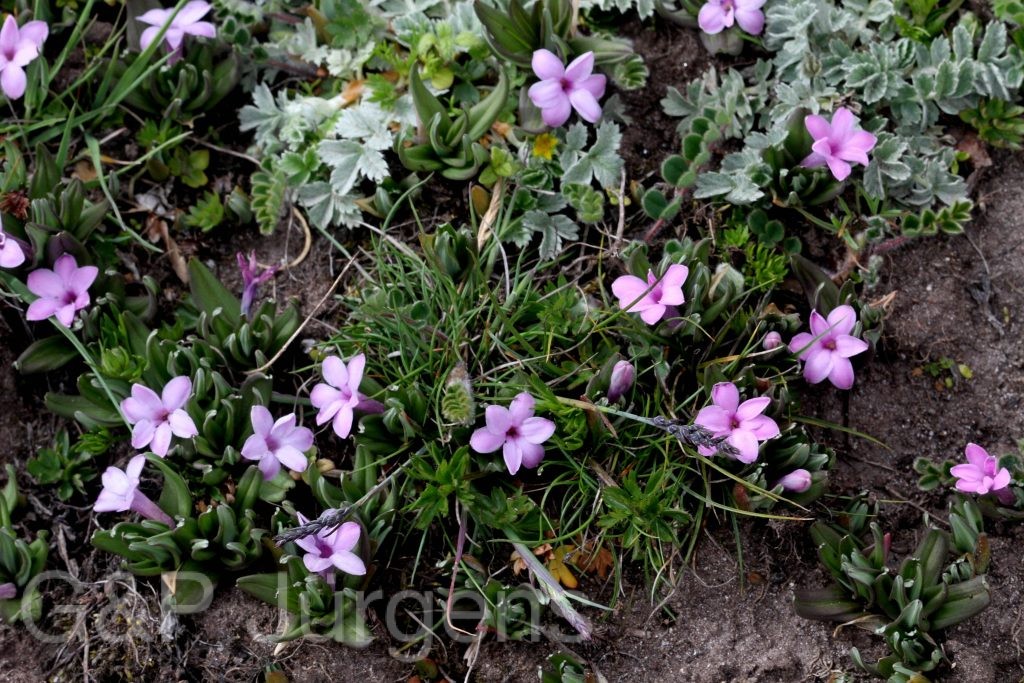
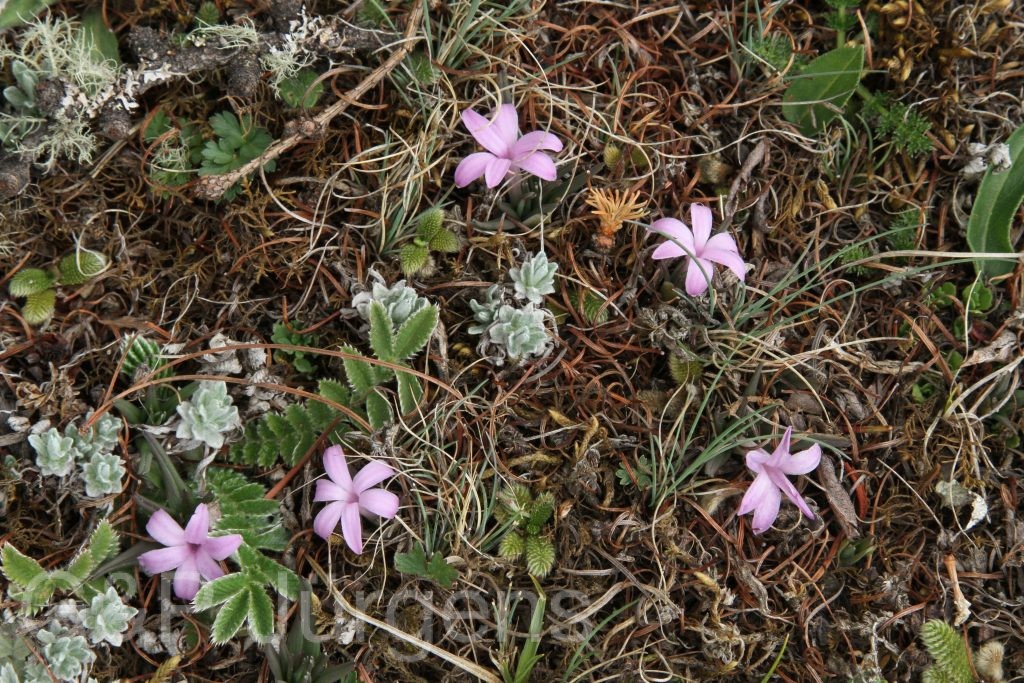
Polygonatum singalilense H.Hara is an alpine Solomon's-seal of the eastern Himalaya, named for the Singalila ridge and known from about 66 records in Nepal, India, Bhutan and adjacent China, with herbarium material in Great Britain. It occurs in moist alpine meadows, dwarf-shrub heath, rhododendron scrub and the edges of fir forest, typically among rocks and mossy banks in the upper temperate to subalpine zone. The plants illustrated from Tsochenchen and Phajoding in Bhutan, both near 3600 m in June, are characteristic of its cool, humid, snow-influenced habitats with a brief flowering season at the onset of the monsoon.

This is a small rhizomatous perennial herb growing from a knotty, horizontally creeping rhizome bearing the scars ("seals") of previous shoots. The stem is short, erect to arching and unbranched. Leaves are alternate to subverticillate, sessile or shortly petiolate, ovate to lanceolate, and glabrous. The flowers are solitary or few in the leaf axils, pendulous, with a tubular to campanulate, gamophyllous perianth that is whitish to greenish, often tinged purple; the six tepals are fused with short free lobes, the stamens inserted within the tube. The fruit is a small globose berry, ripening dark blue to blackish and containing few seeds.

The species belongs to a complex of dwarf, alpine Himalayan Polygonatum often confused with P. hookeri and relatives, distinguished by stature, leaf arrangement and perianth proportions. Its nectar-rich tubular flowers are bumblebee-pollinated, and the fleshy berries are bird-dispersed. As a narrow-range montane endemic of the eastern Himalaya, P. singalilense is potentially sensitive to grazing, collection and upward shifts of vegetation belts under climate warming, though it has not been formally assessed.

Author: H. Hara · Sources: POWO (Kew), GBIF, Flora of Bhutan, Flora of Nepal, Flora of China, Hara's Flora of Eastern Himalaya, monograph/revision of Polygonatum

Wall. ex Meisn.

Bh09 277 P456
Bhutan Phobjika 2800m, June

Description

Polygonum filicaule is a small Himalayan and East Asian knotweed ranging from the Himalaya through southern China to Taiwan and Japan; GBIF lists around 358 occurrences across China, India, Pakistan, Japan and Taiwan. It inhabits cool, moist temperate sites, growing in damp turf, moss carpets, stream banks, marshy meadows and seepage zones, often as a prostrate component of open subalpine grassland. The accompanying photograph from Phobjika in Bhutan at about 2800 m in early June shows the species at the start of its flowering season in the broad, marshy glacial valley floors for which that locality is well known. Under POWO this name is treated as a synonym, the accepted name being Persicaria filicaulis.

It is a delicate, creeping, mat-forming perennial herb with thread-like (filiform), much-branched stems that root at the lower nodes, the epithet filicaule alluding to these slender stems. The ochreae are membranous, tubular and shortly ciliate, sheathing the nodes. Leaves are small, ovate to oblong-lanceolate, shortly petiolate or subsessile, with entire margins and often a fine pubescence. Flowers are minute and few, borne in short, lax terminal or axillary clusters; the perianth is five-parted, white to pink, persistent and enclosing the fruit. The achene is small, trigonous, dark brown and lustrous.

The species belongs to a group of diminutive, mat-forming Asian polygonums now widely placed in Persicaria, distinguished from robust upright knotweeds by their creeping habit and reduced inflorescences. As a wetland and seepage specialist it contributes to high-altitude turf communities and is well adapted to grazed, trampled and seasonally waterlogged ground. It is not considered threatened, being widespread and tolerant of disturbance, though dependent on the persistence of moist montane grassland.

Author: Wall. ex Meisn. · Sources: POWO (Kew), GBIF, Flora of Bhutan, Flora of China (Polygonaceae), Hara & Williams Enumeration of the Flowering Plants of Nepal

Poir.

Sikkim2003 516 G716
Sikkim Yume Samdong 4700m August

Description

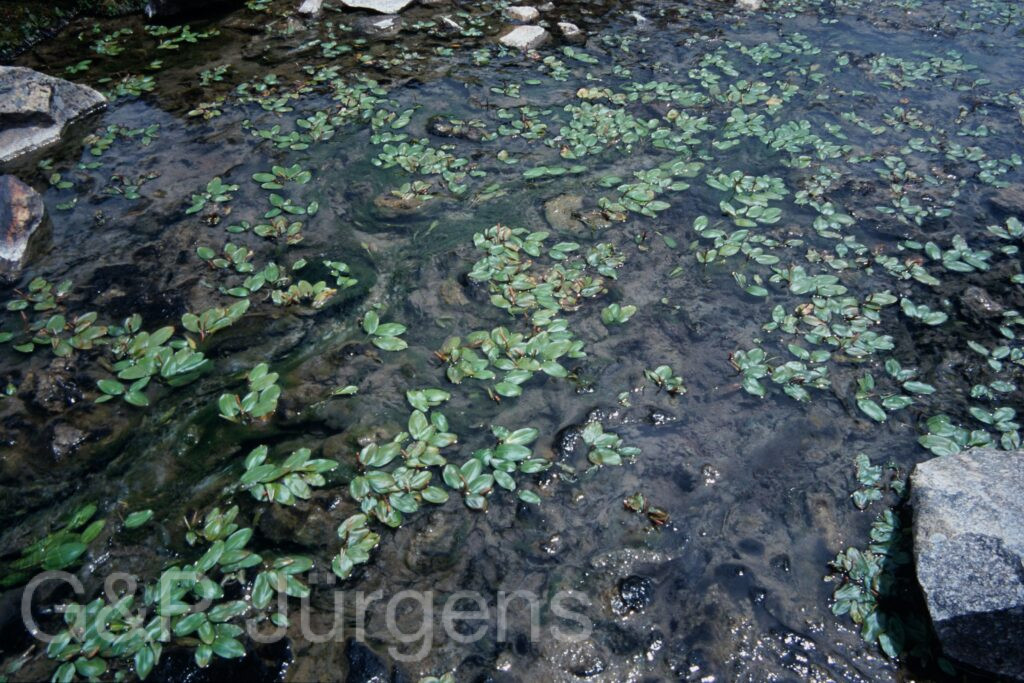
Potamogeton nodosus Poir. is a cosmopolitan aquatic perennial of the Potamogetonaceae, one of the most widely distributed pondweeds. Its extensive GBIF record (over 40,000 occurrences) spans Europe, the Americas, North Africa, the Middle East, and temperate Asia including China and Japan, reflecting a near-global range in suitable freshwater habitats. It was recorded in Sikkim at Yume Samdong at the remarkable altitude of 4,700 m in August, an unusually high station that illustrates the species' tolerance of cold, high-altitude standing and slow-flowing waters. It typically colonises ponds, ditches, lakes, and gently flowing rivers on fine, nutrient-rich substrates.

The plant is rooted, with a creeping rhizome bearing slender, branching stems. It is heterophyllous: the floating leaves are long-petiolate, elliptic to oblong, leathery and parallel-veined, while submerged leaves, when present, are narrower and more translucent. The membranous stipules are conspicuous and free from the leaf base. Small greenish flowers are borne in a dense, emergent, cylindrical spike on a stout peduncle; pollination is by wind and water, and the fruit is a small, beaked, dorsally keeled drupelet.

Potamogeton nodosus belongs to a taxonomically difficult genus prone to hybridisation, with broad-leaved species often requiring careful examination of fruit and stipule characters for identification. As a near-cosmopolitan generalist it is of no conservation concern; indeed it can become locally dominant in nutrient-enriched waters. Its presence provides oxygenation, food, and shelter within freshwater ecosystems.

Author: Poir. · Sources: POWO (Kew), Flora of China Vol. 23, Flora of Pakistan, GBIF, Wiegleb & Kaplan: Account of the Species of Potamogeton (1998)

Wall.

Nepal 99 360 ergebnis
West-Nepal Kalmura 3800m, June
Nepal 99 128 ergebnis
West-Nepal Kalmura 3800m, June

Description

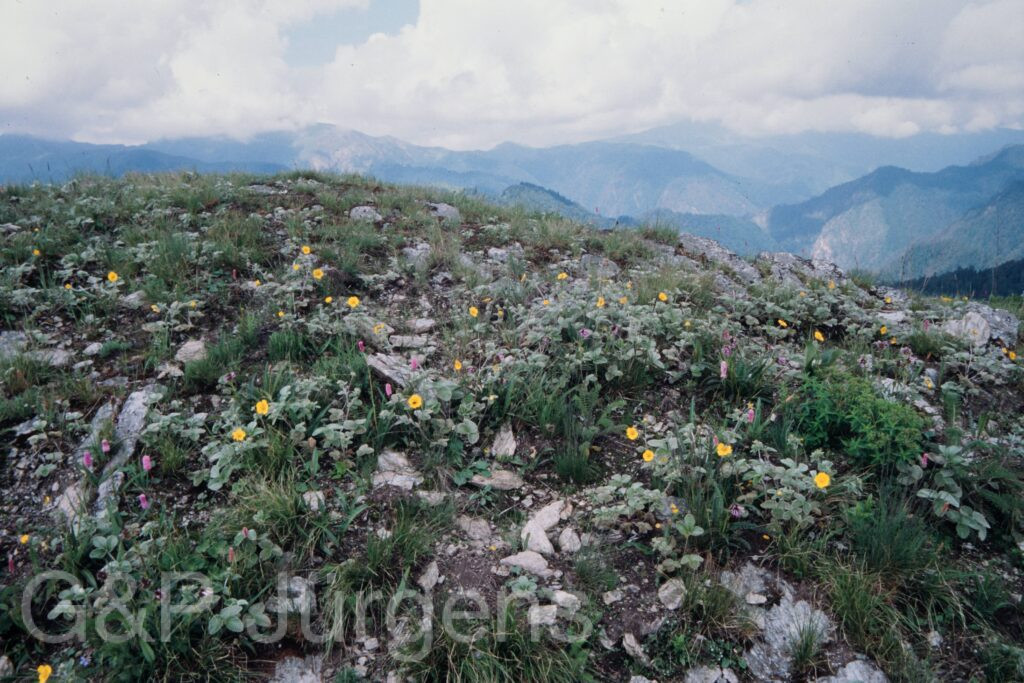
Potentilla argyrophylla is a showy alpine cinquefoil of the Himalaya, native across India, Nepal, Pakistan, Afghanistan and China. Its large GBIF tally (over 1300 occurrences) includes numerous European and North American records (Sweden, Germany, Norway, France, the United States and others) that reflect its long cultivation as a hardy garden perennial rather than any natural range there. In the wild it occupies open alpine meadows, grassy slopes, forest margins and rocky pastures of the upper subalpine and alpine zones. The illustrated plant was photographed in West Nepal at Kalmura at about 3800 m in June, a typical high-meadow station near the centre of its altitudinal range of roughly 3000 to 4500 m.

The plant is a tufted perennial herb arising from a stout, woody rootstock and bearing several ascending flowering stems. The leaves are pinnate or trifoliolate with three to several obovate, toothed leaflets, conspicuously silvery-white tomentose beneath (the epithet argyrophylla, silver-leaved) and greener above. The flowers are borne in loose, branched cymes; each has five green sepals alternating with an epicalyx, and five broad, obcordate petals that are typically golden-yellow but in some forms deep red or apricot. The numerous stamens surround a domed receptacle bearing many free carpels, which mature into a head of small, dry achenes.

Potentilla is a large, taxonomically complex genus of the Rosaceae, and P. argyrophylla together with the closely allied P. atrosanguinea forms a Himalayan group much hybridised in horticulture, where it has given rise to many garden cultivars. In the wild it is common and widespread, of no conservation concern, and an important nectar source for high-altitude bees and other insects.

Author: Wall. · Sources: POWO (Kew), GBIF, Flora of Pakistan, Flora of China, Annotated Checklist of the Flowering Plants of Nepal, Soják's revisional studies of Potentilla (Rosaceae)