
Baker
Description
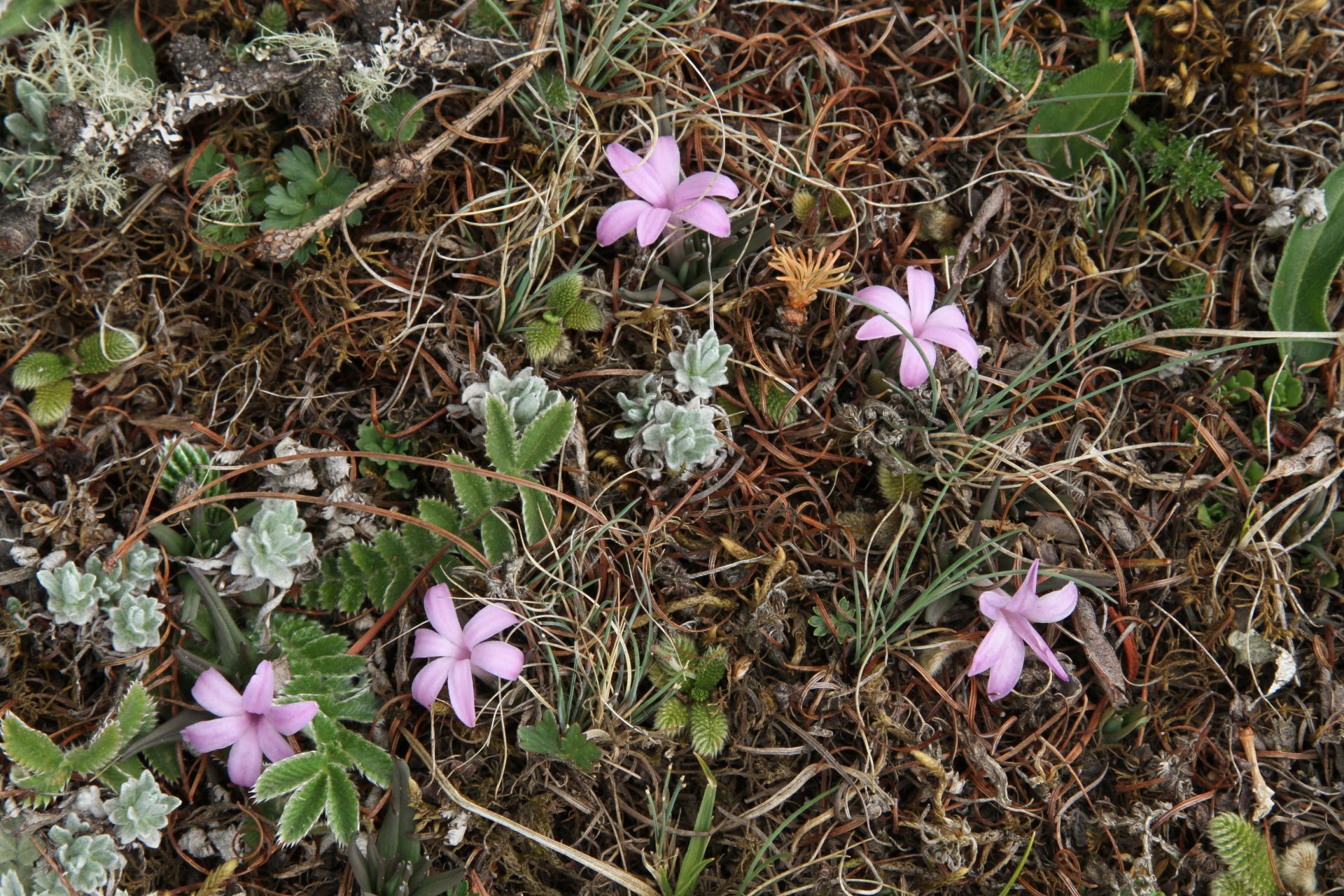
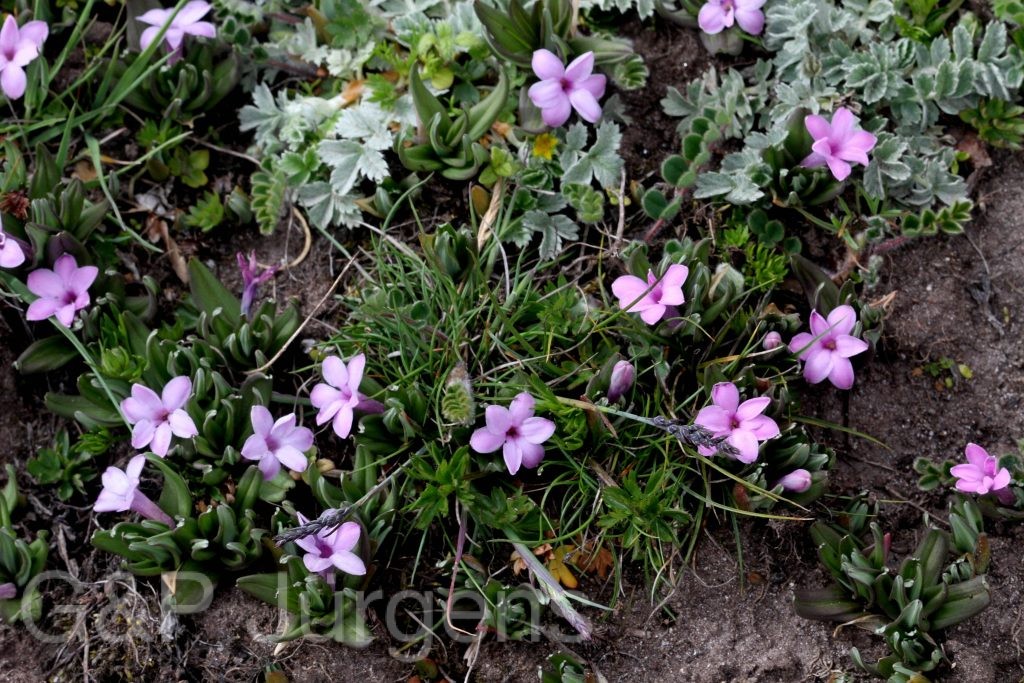
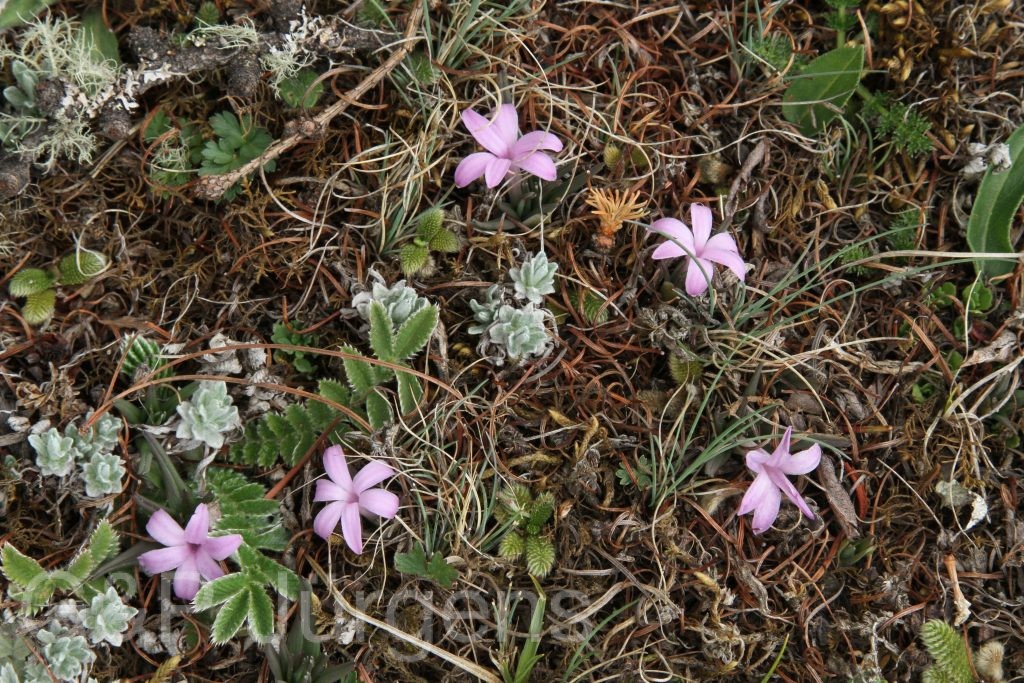
Polygonatum hookeri is a dwarf alpine Solomon's-seal of the Sino-Himalayan high mountains, recorded from China, Nepal, India, Bhutan and Pakistan across some 400 GBIF occurrences. The illustrated plants were photographed in the Vista-valley of Sikkim at 3800 m in June and on the Chele-La in Bhutan at 4000 m in May. It grows in open alpine turf, on grassy slopes, stony meadows and the margins of rhododendron scrub, typically between 3000 and 4500 m, forming low patches in short high-elevation vegetation where it flowers soon after snowmelt.
The plant is a diminutive rhizomatous perennial, spreading by a slender creeping rhizome and producing very short, sometimes almost stemless aerial shoots. The leaves are small, narrowly elliptic to oblong and crowded toward the top of the shoot. The flowers are solitary or paired and conspicuously large relative to the plant, bell- to funnel-shaped, lilac, rose-pink or purplish, borne low among the leaves; the perianth is tubular with six short lobes. The fruit is a small globose berry, ripening red, containing few seeds.
Long placed in the Liliaceae or Convallariaceae, Polygonatum is now treated in the Asparagaceae (subfamily Nolinoideae). P. hookeri is among the smallest and most alpine members of the genus, its dwarf cushion-like habit an adaptation to the harsh high-mountain environment, and it is much esteemed by rock-garden growers. The bird-dispersed berries aid colonisation of new ground. The species is widespread across the high Himalaya and of least conservation concern.
Author: Baker · Sources: POWO (Kew), GBIF, Flora of China, Flora of Bhutan, Flora of Nepal, Jeffrey – The Genus Polygonatum (Liliaceae/Asparagaceae) revision