
Poir.
Description
Potamogeton nodosus Poir. is a cosmopolitan aquatic perennial of the Potamogetonaceae, one of the most widely distributed pondweeds. Its extensive GBIF record (over 40,000 occurrences) spans Europe, the Americas, North Africa, the Middle East, and temperate Asia including China and Japan, reflecting a near-global range in suitable freshwater habitats. It was recorded in Sikkim at Yume Samdong at the remarkable altitude of 4,700 m in August, an unusually high station that illustrates the species' tolerance of cold, high-altitude standing and slow-flowing waters. It typically colonises ponds, ditches, lakes, and gently flowing rivers on fine, nutrient-rich substrates.
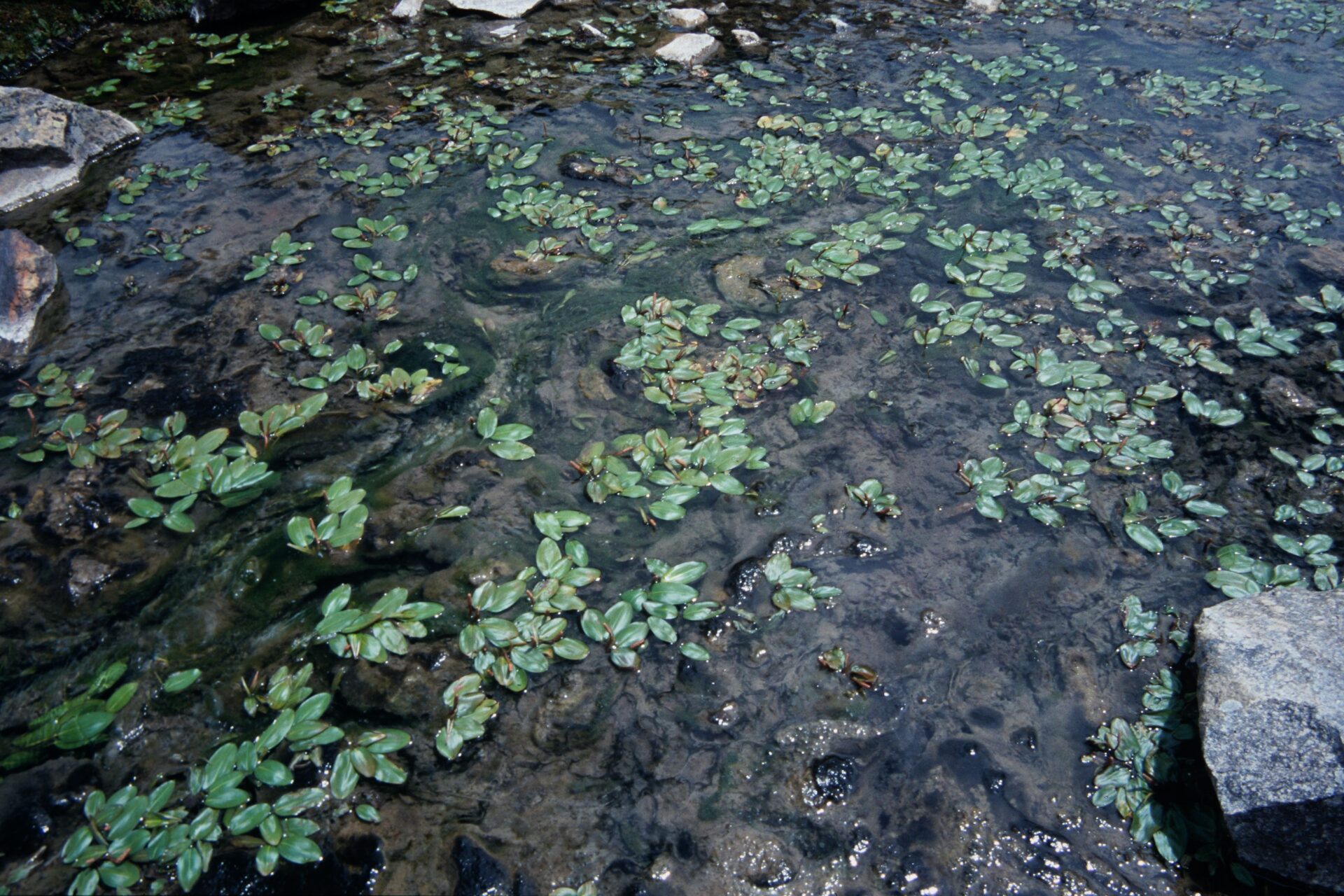
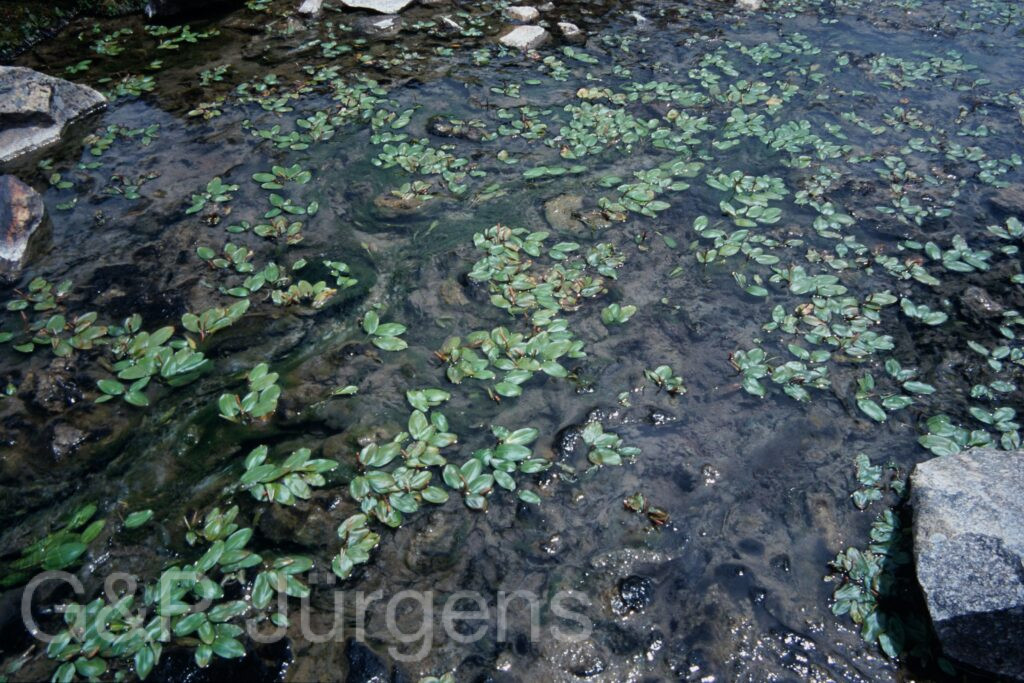
The plant is rooted, with a creeping rhizome bearing slender, branching stems. It is heterophyllous: the floating leaves are long-petiolate, elliptic to oblong, leathery and parallel-veined, while submerged leaves, when present, are narrower and more translucent. The membranous stipules are conspicuous and free from the leaf base. Small greenish flowers are borne in a dense, emergent, cylindrical spike on a stout peduncle; pollination is by wind and water, and the fruit is a small, beaked, dorsally keeled drupelet.
Potamogeton nodosus belongs to a taxonomically difficult genus prone to hybridisation, with broad-leaved species often requiring careful examination of fruit and stipule characters for identification. As a near-cosmopolitan generalist it is of no conservation concern; indeed it can become locally dominant in nutrient-enriched waters. Its presence provides oxygenation, food, and shelter within freshwater ecosystems.
Author: Poir. · Sources: POWO (Kew), Flora of China Vol. 23, Flora of Pakistan, GBIF, Wiegleb & Kaplan: Account of the Species of Potamogeton (1998)