
Baker
Description
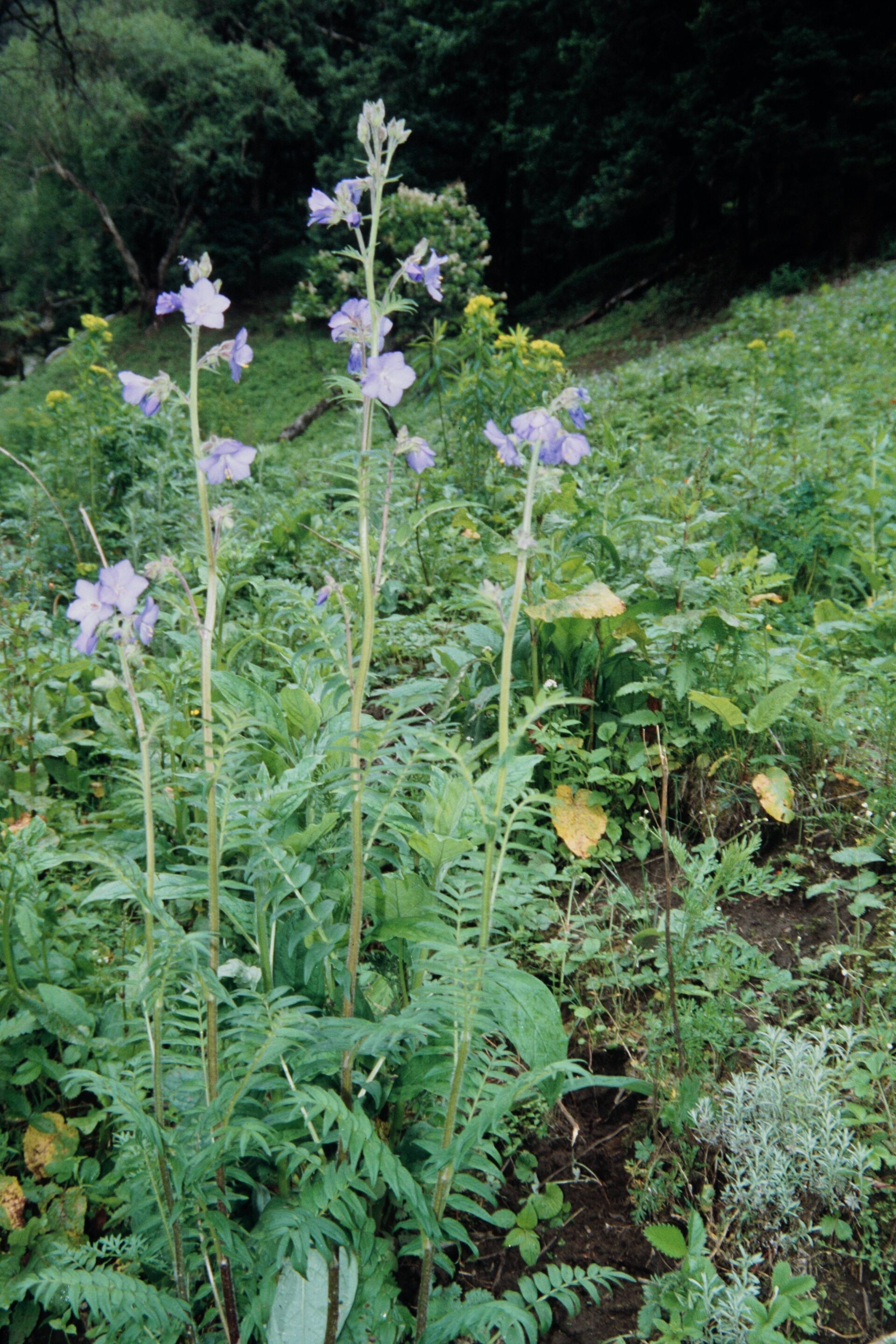
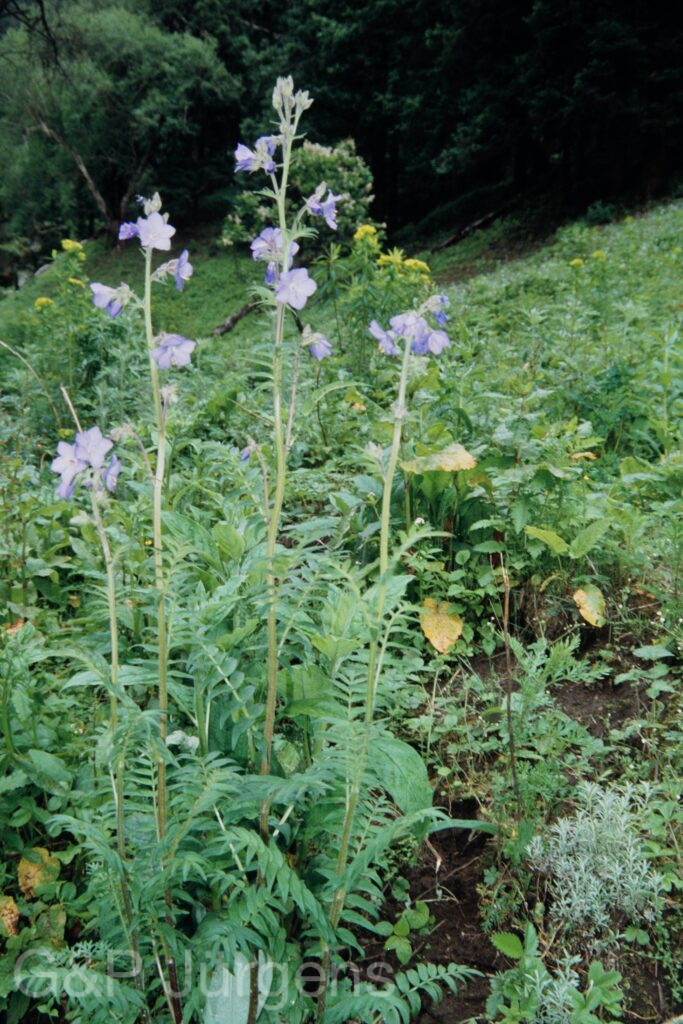
Polemonium caeruleum var. himalayanum is the Himalayan expression of the wide-ranging Jacob's ladder, here documented chiefly from Nepal, with only about 16 georeferenced GBIF occurrences reflecting its restricted recording rather than true rarity. It is a herb of moist alpine and upper-subalpine meadows, streambanks, open shrubberies and damp rocky slopes, typically between about 3000 and 4000 m. The populations noted at Bhulbhule in West Nepal at 3200 m and at Seema in Garhwal at 3400 m, both flowering in June at the start of the monsoon, are characteristic of its preference for cool, humus-rich, seasonally moist ground in the high western and central Himalaya.
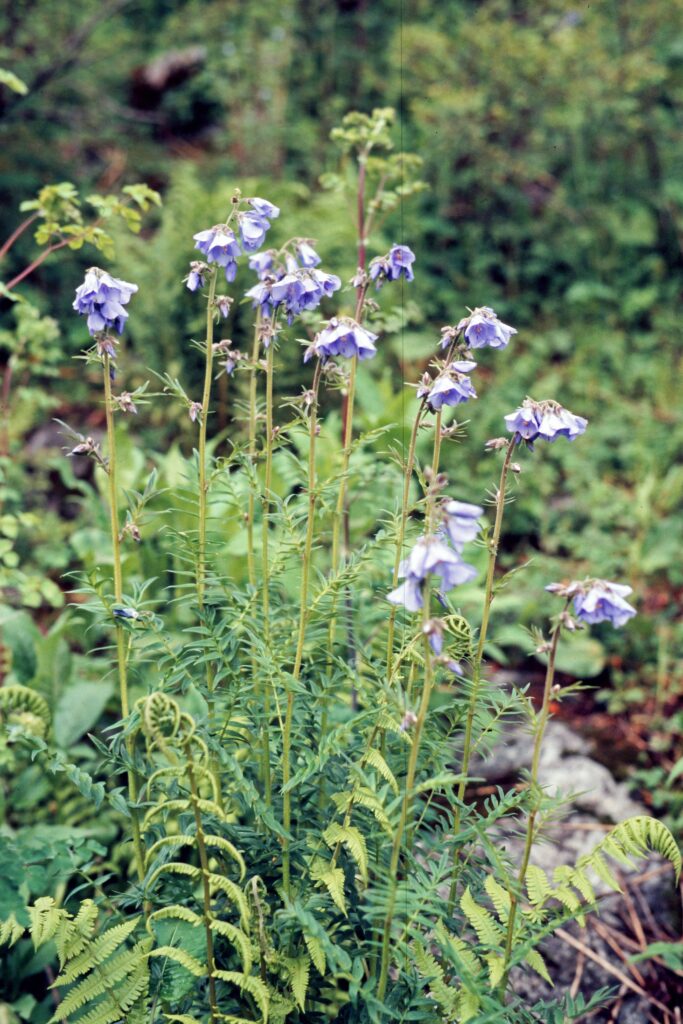
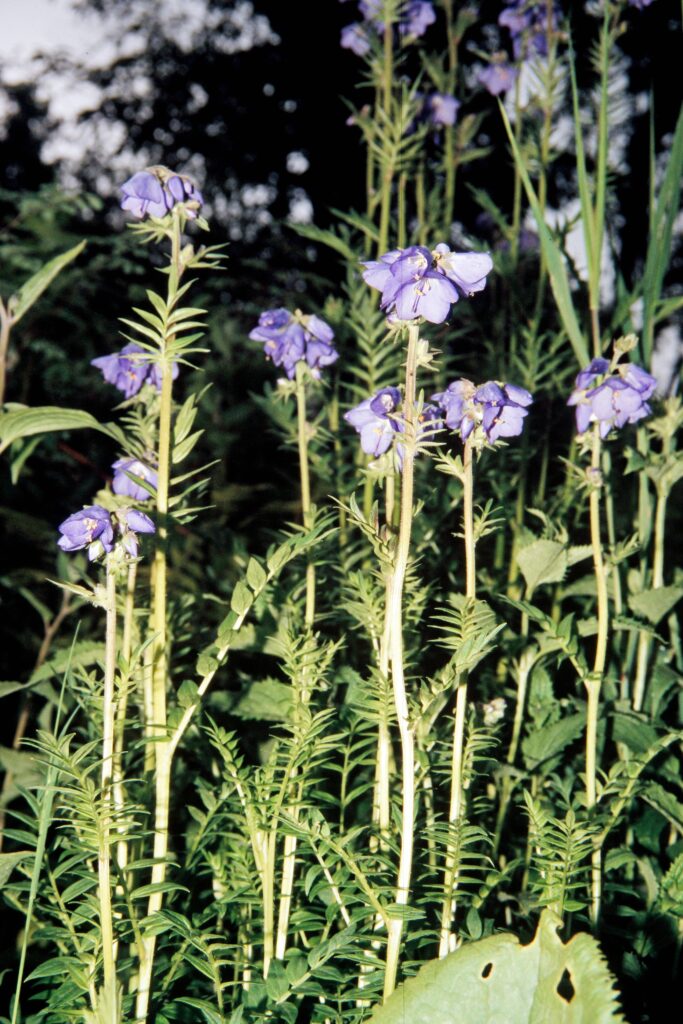
It is an erect perennial herb arising from a short rhizome, the stems leafy and often glandular-pubescent above. The leaves are alternate and pinnately compound, the numerous lanceolate to ovate leaflets arranged ladder-like along the rachis, giving the plant its vernacular name. The flowers are borne in a terminal, somewhat congested panicle; each has a campanulate, glandular five-lobed calyx and a broadly campanulate to rotate blue corolla with five spreading lobes, the five stamens inserted in the throat with hairy filament bases, and a three-lobed style exserted. The fruit is an ovoid, three-valved loculicidal capsule containing several angular seeds.
GBIF treats the name as a synonym, with Polemonium caeruleum himalayanum recognised as the accepted infraspecific taxon within the circumboreal P. caeruleum complex. The protandrous, nectar-rich flowers are visited by bees and long-tongued insects, promoting outcrossing. As a high-altitude meadow plant it is sensitive to overgrazing, though not presently assessed as threatened.
Author: Baker · Sources: POWO (Kew), GBIF, Flora of Nepal, Flora of Bhutan Vol. 2, Flora of China Vol. 16, A Systematic Treatment of Polemonium (Polemoniaceae)