Author

GP Jürgens

Edgew. & Hook. f.

Bh2008 308 G476
Bhutan Tongsa, 3300m April

Description

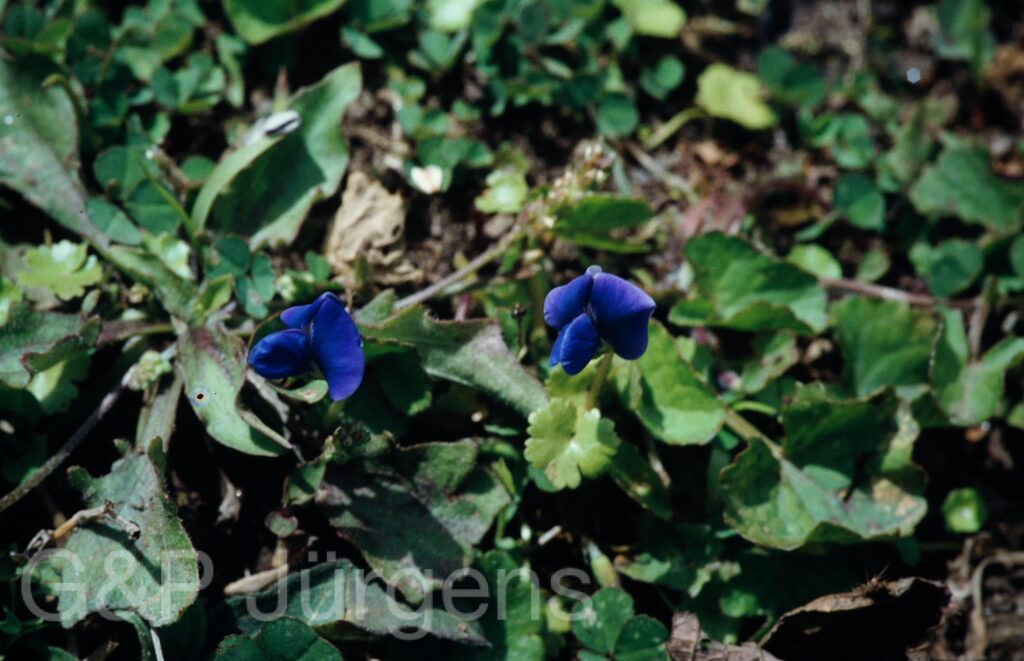
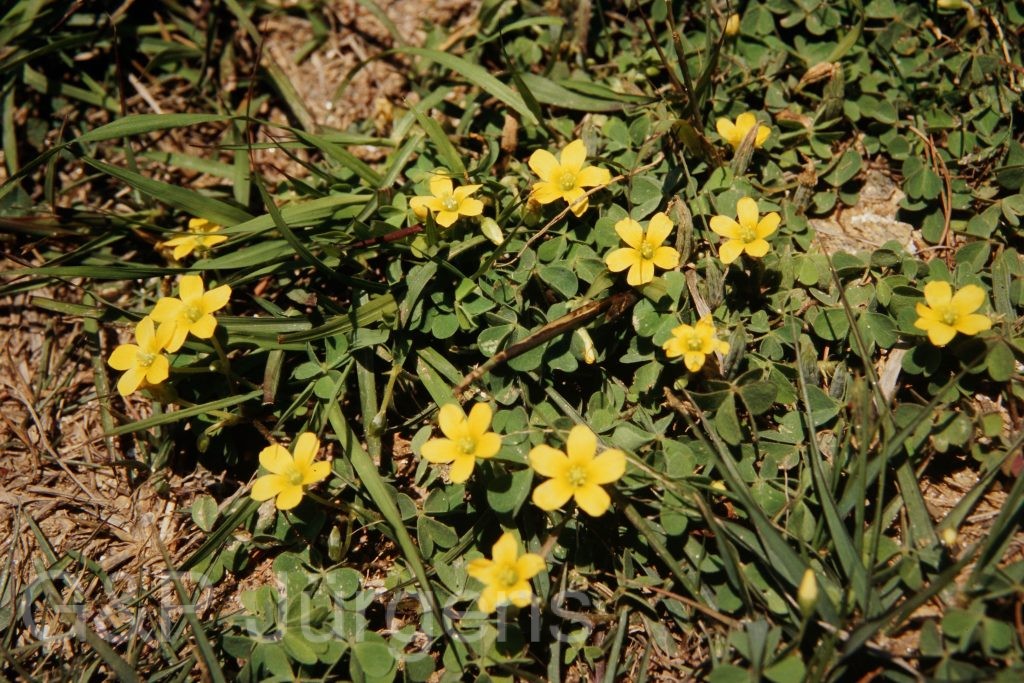
Oxalis griffithii is a woodland herb widely distributed across temperate eastern and southern Asia, ranging from the Himalaya (India, Nepal, Bhutan) through China, Taiwan, Japan, Korea, Myanmar and into Russia, with numerous cultivated and naturalised European records; GBIF logs 6798 occurrences across this broad area. It is a plant of shaded, humus-rich habitats, growing on the floor of temperate broad-leaved and conifer forests, on mossy banks and beside streams, chiefly between about 1500 and 3500 m. The photographed plant from Tongsa (Trongsa) in central Bhutan at 3300 m in April shows it flowering in early spring beneath the still-leafless forest canopy, when light reaches the understorey.

It is a small, delicate perennial herb arising from a slender, scaly, creeping rhizome or bulbil-bearing rootstock. The long-petiolate leaves are basal and trifoliolate, the leaflets obtriangular (broadly obcordate) and notched at the apex, folding downward at night and in dull weather (nyctinasty). The flowers are solitary on slender axillary scapes, with five sepals and five white petals usually marked with fine yellow or pinkish-purple veins at the base. The fruit is an elongate, cylindrical, five-angled loculicidal capsule that dehisces explosively, ejecting the small seeds whose fleshy aril everts to fling them from the parent plant.

The species belongs to Oxalis (Oxalidaceae), the largest genus of its family and the only one of the wood-sorrels well represented in temperate Asia. Its tissues are rich in oxalic acid and soluble oxalates, giving the characteristic sour taste. The explosive ballistic seed dispersal, nyctinastic leaf movements and capacity for vegetative spread by rhizomes and bulbils underlie its wide distribution and ready naturalisation. Common and ecologically adaptable, it is of least conservation concern.

Author: Edgew. & Hook. f. · Sources: POWO (Kew), GBIF, Flora of China Vol. 11, Flora of Bhutan Vol. 1, Flora of Nepal, Monograph of the Oxalidaceae (Knuth, Das Pflanzenreich)
Wall.

Bhutan2012 27
Bhutan Shele-La, 3500m September

Description

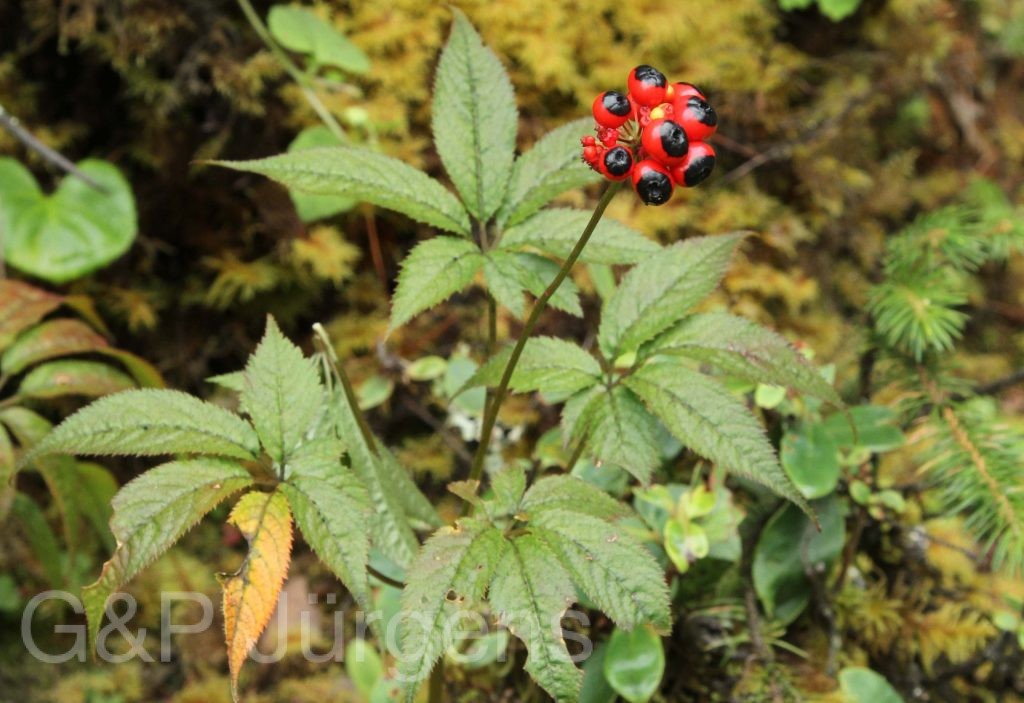
Panax pseudoginseng is a rhizomatous perennial herb of the eastern Himalaya and Sino-Himalayan region, distributed across Nepal, India, Bhutan, China and Myanmar; its c. 255 georeferenced records define a temperate to subalpine forest range (records from Japan, North America, Russia and Europe largely reflect cultivation and study collections). It grows in shaded, humus-rich understorey of broadleaf and mixed forest, on mossy banks and in damp ravines, typically between 2500 and 4000 m. The plant photographed at Shele-La in Bhutan at 3500 m in September grows in the cool, moist upper-temperate to subalpine forest where the genus reaches its Himalayan optimum.

It is a slender erect herb 30-70 cm tall arising from a knotted, often elongate fleshy rhizome bearing prominent stem scars. A single whorl of palmately compound leaves crowns the stem, each leaf with three to five serrate, obovate to oblong leaflets, the terminal ones largest. From the centre rises a long peduncle bearing a solitary terminal umbel of small greenish flowers, each with five petals, five stamens and an inferior two-carpellate ovary with two recurved styles. The fruit is a small, fleshy red drupe, sometimes black-tipped, containing two flattened seeds.

Described by Wallich (as Wall.), P. pseudoginseng is the Himalayan representative of Panax, the ginseng genus of the Araliaceae, and a close relative of the medicinally renowned P. ginseng and P. notoginseng. Its rhizome contains ginsenosides and is harvested in traditional Himalayan and Chinese medicine, exposing wild populations to over-collection. The brightly coloured drupes are bird-dispersed. Because of its slow growth, narrow forest habitat and medicinal value, the species is regarded as conservation-sensitive and locally depleted by harvesting.

Author: Wall. · Sources: POWO (Kew), GBIF, Flora of Bhutan, Flora of China, Flora of Nepal, Wen's revision of Panax (Araliaceae)

(Rchb.f.) Garay

Bh2008 319 G494
Bhutan Jakar, 2950m April

Description

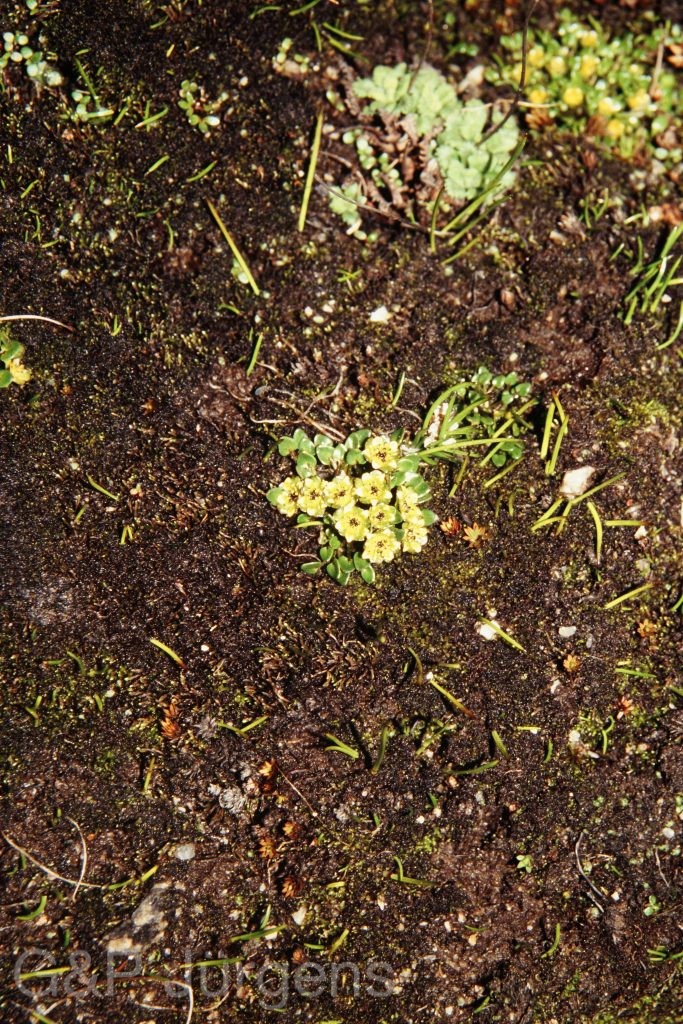
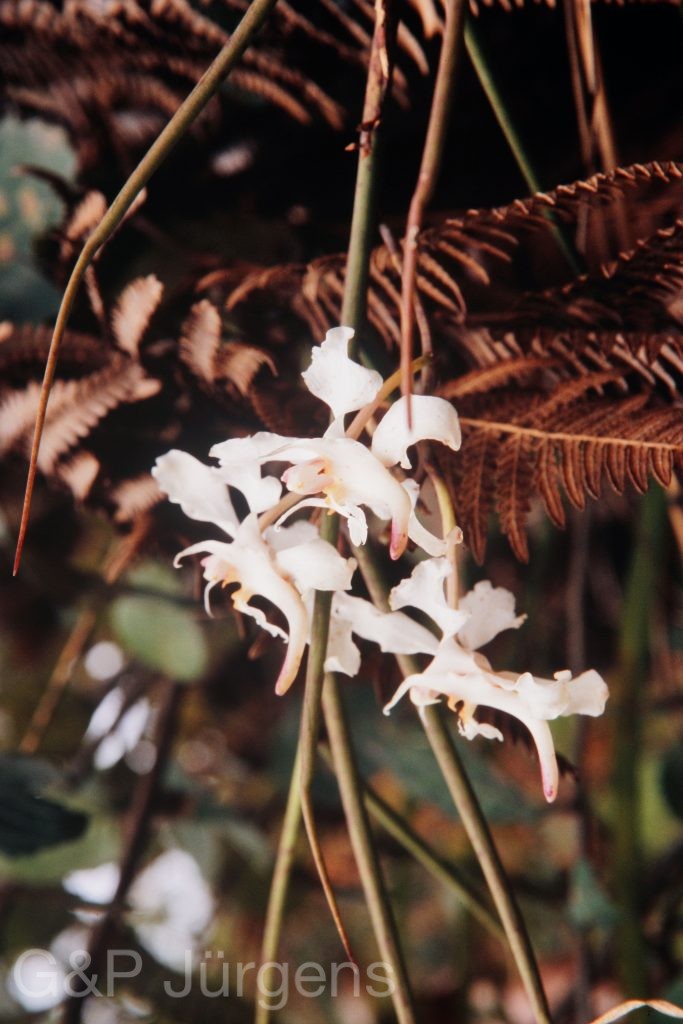
Papilionanthe vandarum is an epiphytic orchid distributed across the eastern Himalaya and adjoining Indo-Burmese ranges, with records from India, Nepal, Bhutan and Myanmar; GBIF documents some 49 occurrences, the additional points from Belgium, the United States and Great Britain reflecting cultivated material in botanical collections. It grows on tree trunks and mossy branches in humid broad-leaved and coniferous forest, frequently in the montane belt between roughly 1500 and 3000 m, where seasonal monsoon moisture alternates with a drier cool season. The photographed plant from Jakar in central Bhutan at about 2950 m, flowering in April, is typical of its upper elevational range, where it flowers before the summer rains.

The species is readily recognised by its monopodial, scrambling habit and slender, terete (pencil-like) leaves that replace the flattened laminae of most orchids, an adaptation reducing water loss in exposed epiphytic sites. Stems are elongate, branching and rooting freely along their length by means of thick, greyish aerial roots. The inflorescences are short, few-flowered racemes bearing large, showy flowers; sepals and petals are white to pale, broad and somewhat undulate, while the trilobed labellum is prominent, with a spurred base and a coloured throat. The fruit is a dry, elongate dehiscent capsule releasing innumerable dust-like seeds.

Formerly placed in Aerides and Vanda, the species was transferred to Papilionanthe (a small Asian genus of terete-leaved monopodial orchids) by Garay; its terete foliage and pendent habit distinguish it from true Vanda. Like all wild orchids it is listed on CITES Appendix II, and populations are locally threatened by forest clearance and over-collection, though it remains fairly widespread across its Himalayan range.

Author: (Rchb.f.) Garay · Sources: POWO (Kew), GBIF, Flora of Bhutan, Orchids of Bhutan, Genera Orchidacearum (Pridgeon et al.)

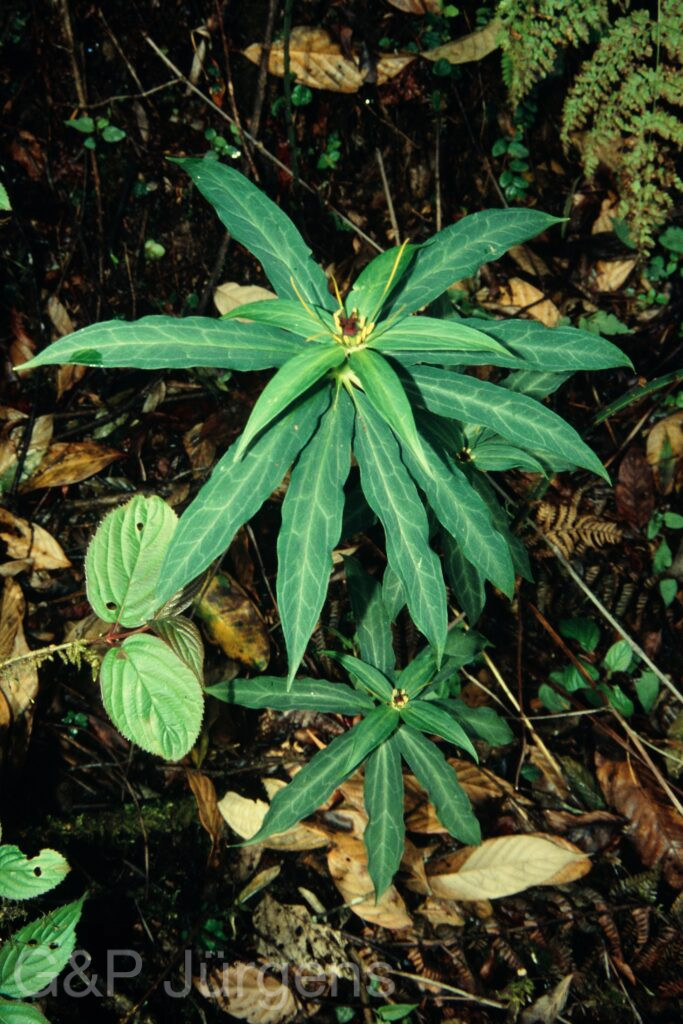
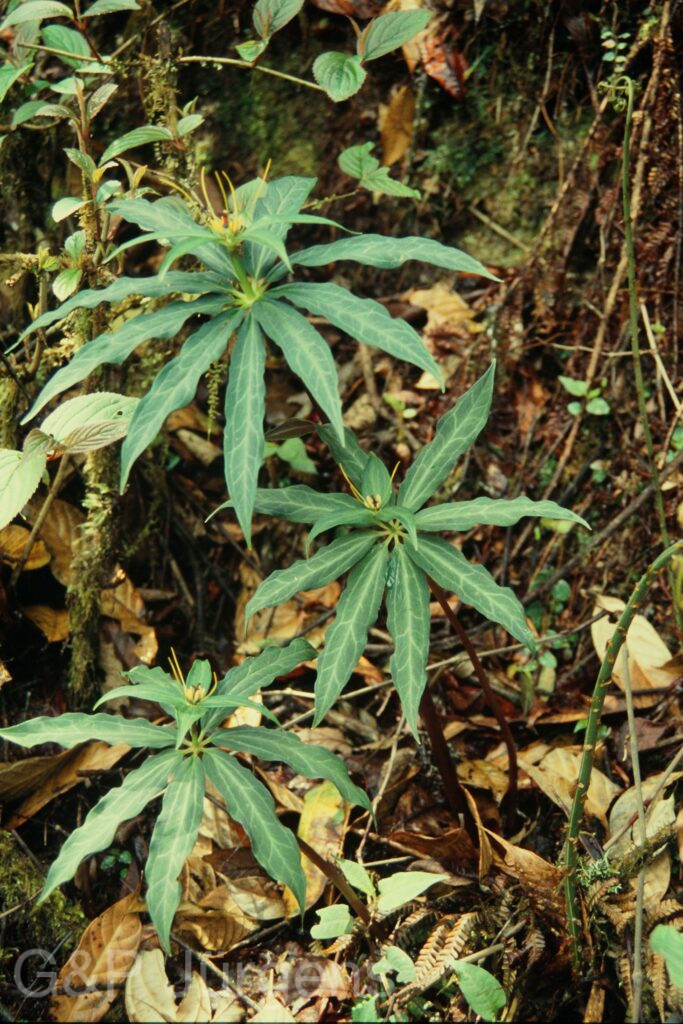
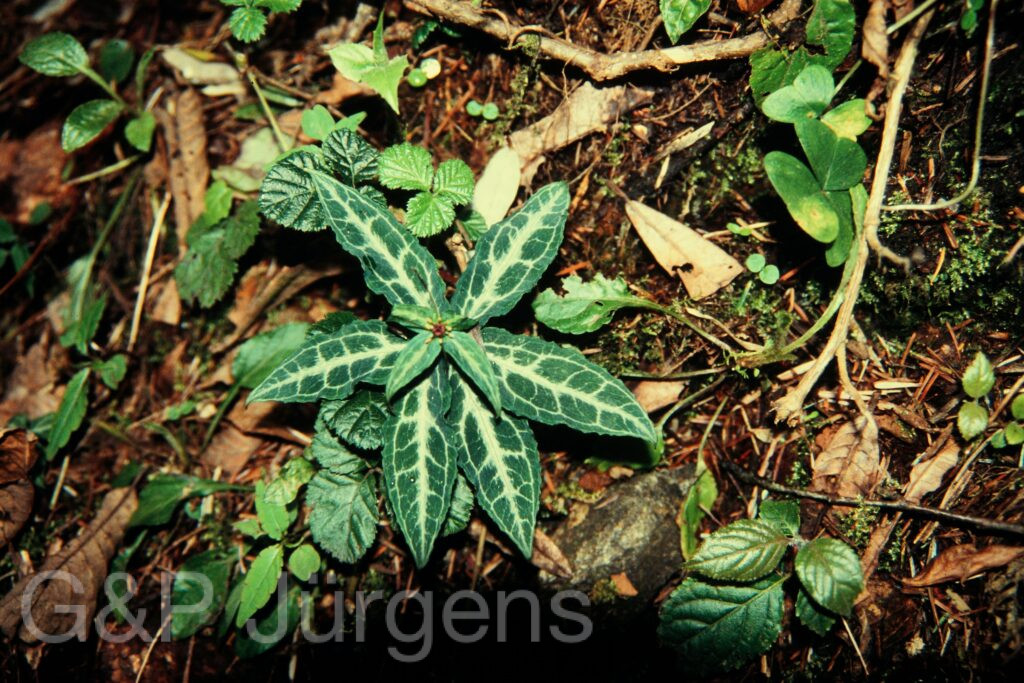
Paris mairei

by GP Jürgens

H.Lév.

Sikkim2004 7 G12
Sikkim West-Bengal, Sambon 1800m April
Sikkim2004 115 P196
Sikkim West-Bengal, Sambon 1800m April
Nepal 97 265 G547
Nepal Bagong-Khola 2700m May

Description

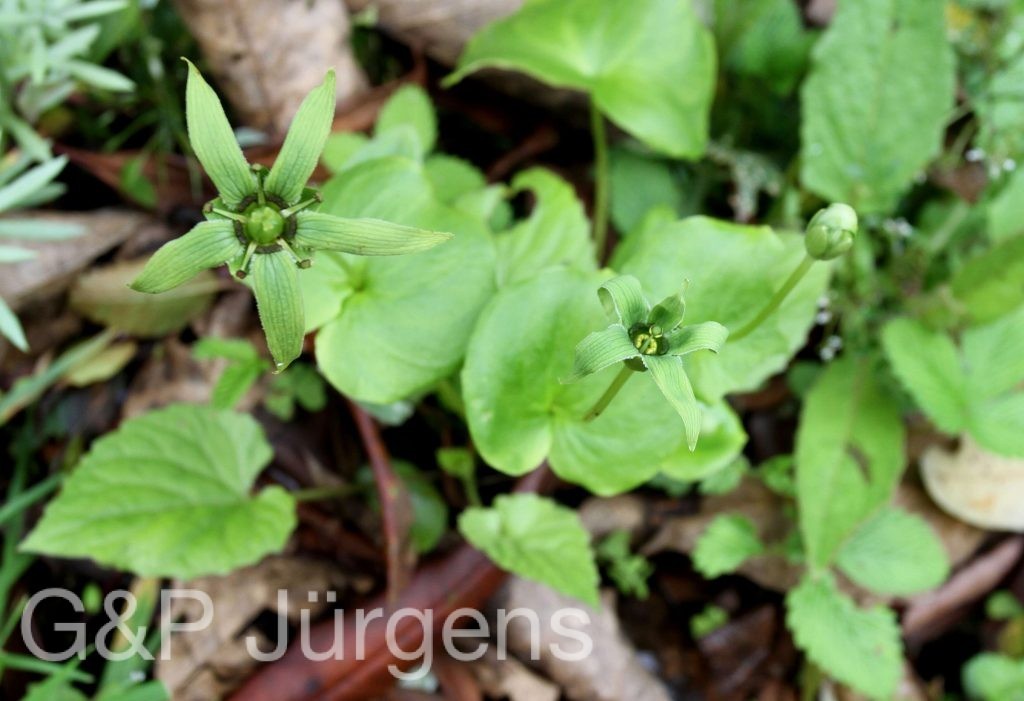
Paris mairei is a rhizomatous woodland herb of the Sino-Himalayan region, distributed across SW China, Nepal, NE India and Bhutan, with GBIF documenting around 269 records. It is a plant of shaded, humus-rich forest, growing in moist broadleaved and coniferous woodland, thickets and shady ravines of the temperate zone. The photographed populations at Sambon in the Sikkim–West Bengal hills (1,800 m, April) and at Bagong Khola in Nepal (2,700 m, May) reflect its altitudinal span from the warm temperate to the upper temperate forest belt, where it flowers in spring as the canopy leafs out.

It is an erect perennial arising from a creeping, knotty rhizome, bearing a single terminal whorl of stalkless or shortly petiolate, ovate to lanceolate, net-veined leaves. From the centre of the whorl rises a solitary, long-pedicellate flower with the parts in the characteristic Paris arrangement: a whorl of green, leaf-like outer perianth segments (sepals), filiform or narrowly linear inner segments (petals), prominent stamens with the connective often produced beyond the anther, and a central ovary crowned by spreading stigmas. The fruit is a capsule that splits to expose seeds with a coloured fleshy aril.

The genus Paris (now placed in Melanthiaceae rather than the former Trilliaceae) is renowned for its steroidal saponins, several Asian species being important in traditional Chinese medicine, which has driven heavy wild collection and conservation concern in parts of the range. The single leaf whorl and solitary, spider-like flower make the genus instantly recognisable, while the contrast between broad sepaloid and thread-like petaloid segments is diagnostic at species level. P. mairei is distinguished within the genus by its leaf and floral proportions and stamen connective form.

Author: H.Lév. · Sources: POWO (Kew), Flora of Nepal, GBIF, Flora of China Vol. 24, Li: The Genus Paris (Paridaceae)

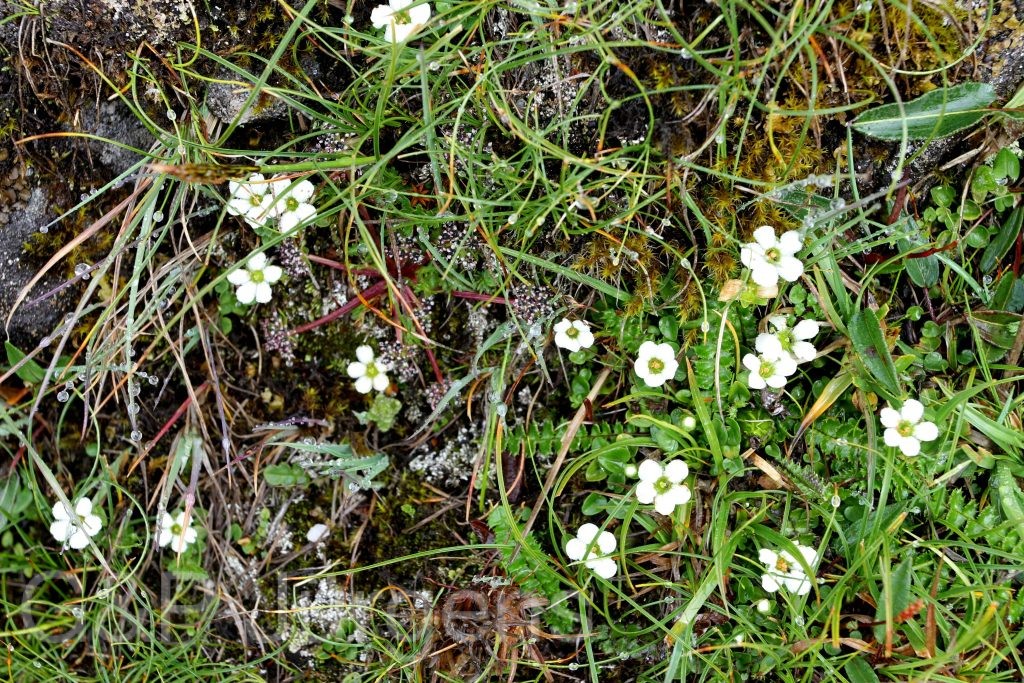
Franch

BhutanPG2011 548
Bhutan Ludlow-Sherriff-Trail Dem-Tso, 4650m June

Description

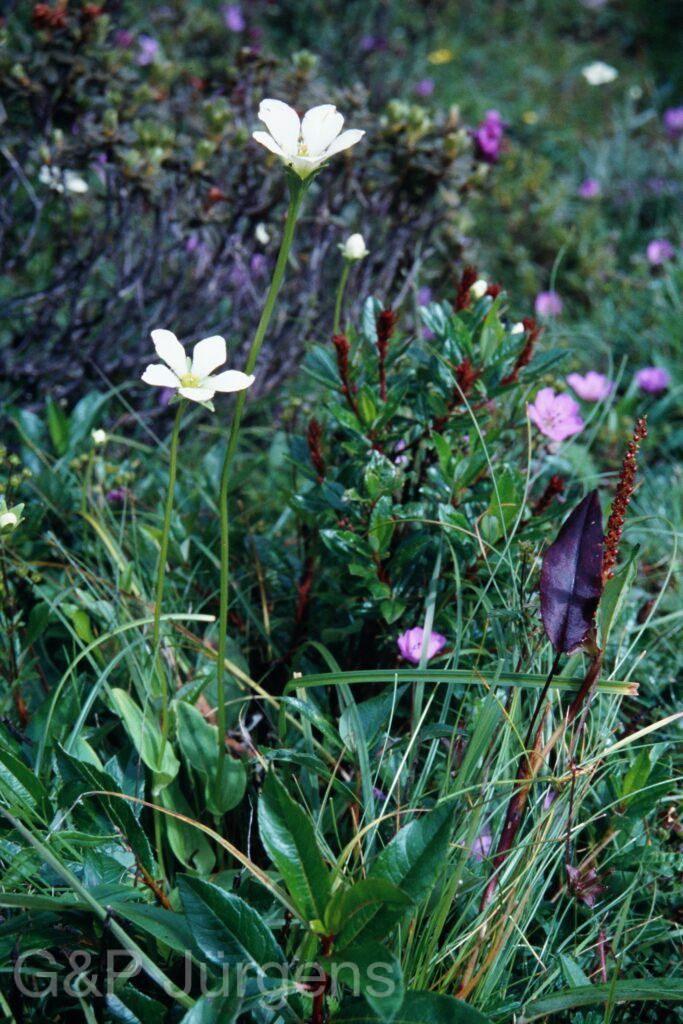
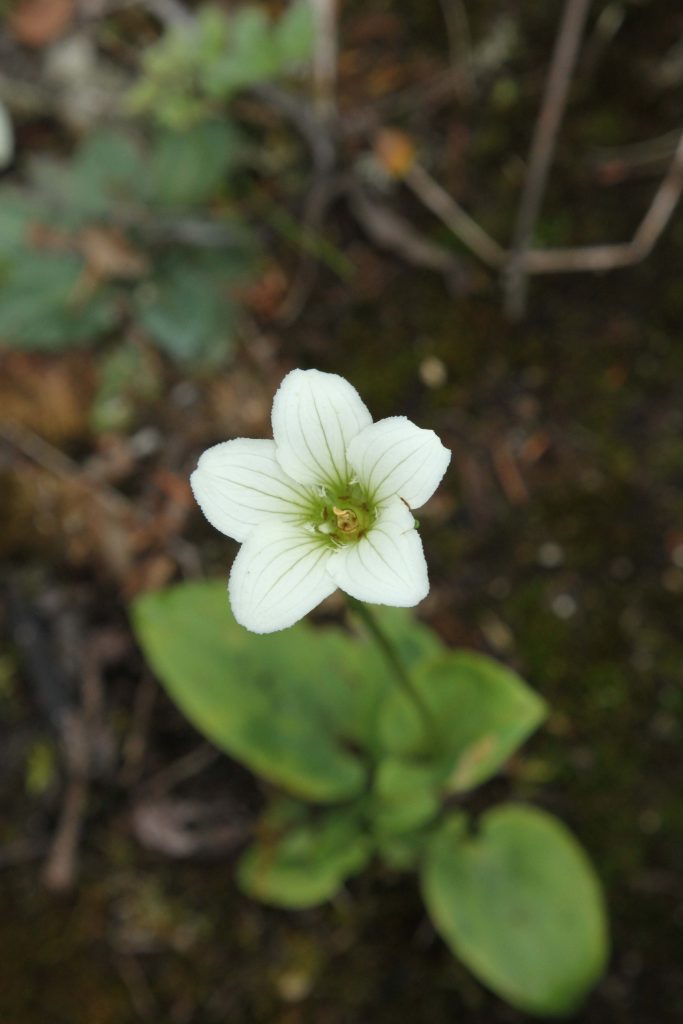
Parnassia delavayi is an alpine perennial herb of the eastern Himalaya and southwestern China, recorded by GBIF from China, Bhutan and India across roughly 1128 occurrences. It is a plant of cold, moist alpine habitats, growing in wet meadows, marshy turf, streamsides, seepage zones and damp grassy slopes within the alpine belt. The photographed individual was found in Bhutan along the Ludlow-Sherriff Trail near Dem-Tso at 4650 m in June, a high glacial-lake margin that exemplifies the species' affinity for saturated, peaty alpine ground.

It forms tufted perennials arising from a short rhizome, with basal leaves that are long-petiolate and cordate-ovate to reniform with an entire margin. The flowering stem is erect and bears a single, sessile or clasping cauline leaf below the solitary terminal flower. Each flower has five free, white petals, often delicately veined, alternating with five green sepals. Characteristic of the grass-of-Parnassus group are the conspicuous fimbriate staminodes positioned opposite the petals and dissected into gland-tipped filaments, which alternate with five fertile stamens surrounding a superior ovary; the fruit is a loculicidal capsule containing many small winged seeds.

GBIF accepts the name. Though long placed in Saxifragaceae or its own family Parnassiaceae, Parnassia is now embedded within Celastraceae on molecular grounds, the family label given here reflecting that modern circumscription. The elaborate fringed staminodes function as nectar-mimicking attractants for fly and small-bee pollinators. With a wide montane range in remote alpine terrain, P. delavayi faces no significant conservation threat.

Author: Franch · Sources: POWO (Kew), GBIF, Flora of China, Flora of Bhutan, monograph of Parnassia

Hand.-Mazz.

BhutanPG2011 706 01 01
Bhutan Pele-La, 3000m July

Description

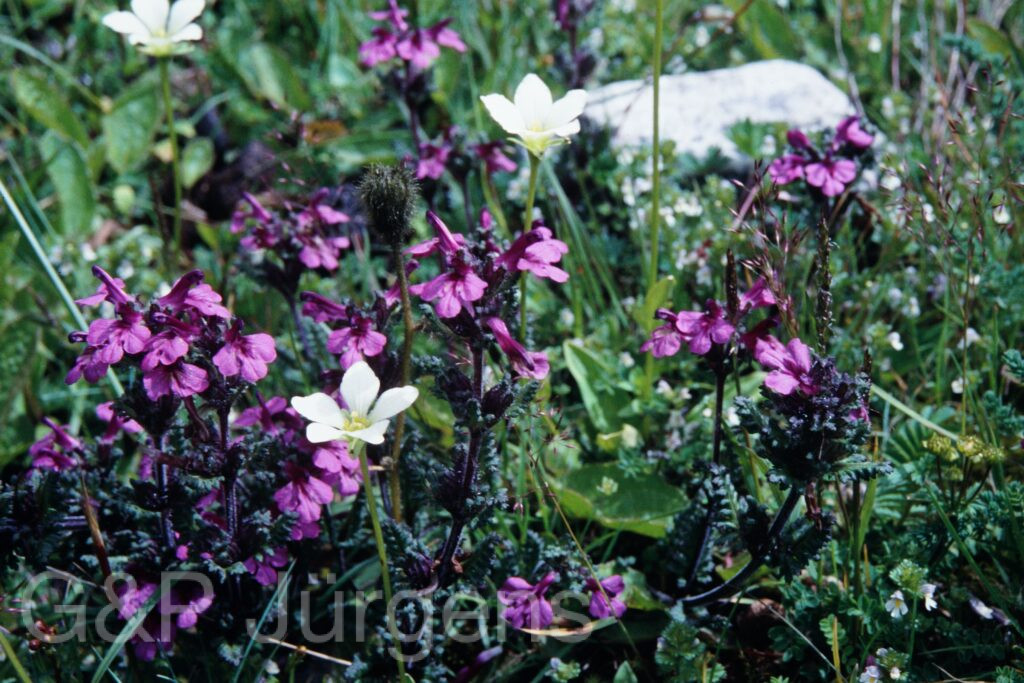
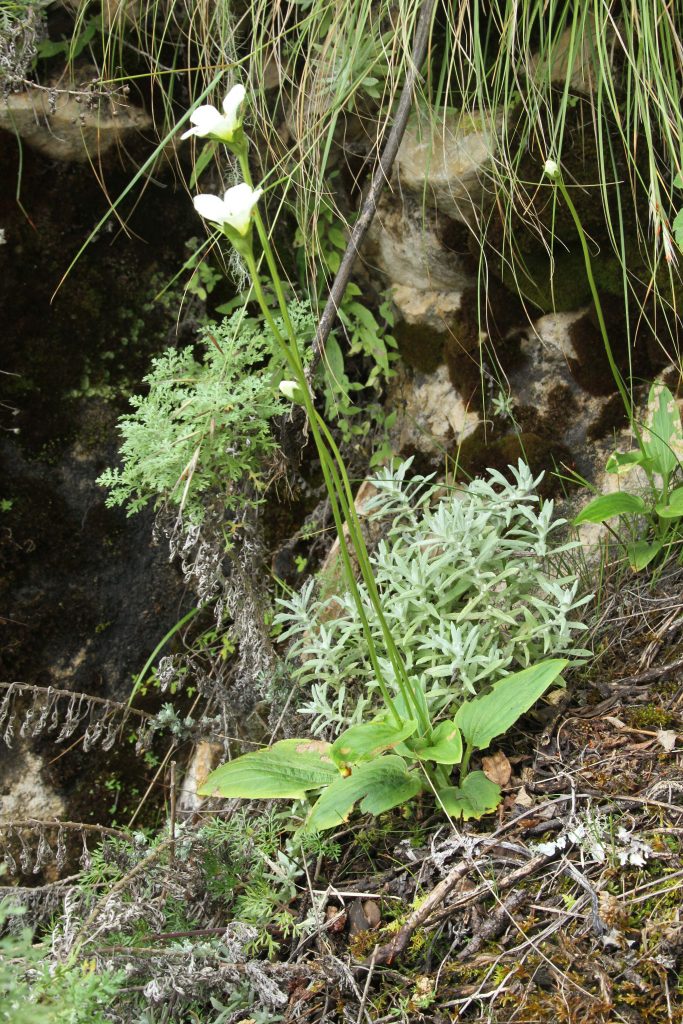
Parnassia longipetala is a perennial herb of the eastern Himalaya and adjacent China; GBIF data, comprising around 85 occurrences, attribute the species principally to China (notably south-western provinces and Xizang), with field records extending into Bhutan. It is a plant of moist alpine and subalpine habitats, growing in wet meadows, grassy seepages, streamsides and among rocks where the substrate remains damp through the growing season. The population photographed at Pele-La in central Bhutan (3000 m, July) is characteristic of its occurrence in the cool, humid pastures and flushes of the eastern Himalaya, flowering during the monsoon-fed summer.

The plant forms a small rosette from a short rootstock, the basal leaves long-petiolate with ovate to cordate, entire blades. The flowering stem is erect, usually bearing a single sessile or shortly clasping cauline leaf below the solitary terminal flower. The flower has five green sepals and five free, white petals; in this species the petals are conspicuously long, narrowed and often fringed or attenuate, giving the epithet. Alternating with the fertile stamens are the characteristic Parnassia staminodes, divided into gland-tipped filaments. The superior to half-inferior ovary develops into a capsule splitting into valves and releasing numerous small seeds.

The family placement given here (Celastraceae) follows the broad APG circumscription, under which Parnassia and its allies (formerly Parnassiaceae) are treated within an enlarged Celastraceae; older floras place the genus in its own family. P. longipetala, described by Handel-Mazzetti, is distinguished within the Himalayan Parnassia complex by its elongate petals and staminode form. Given its restricted documented range and specialised wetland-meadow habitat, the species warrants attention, as such high-elevation flush communities are vulnerable to grazing, drainage and climatic change.

Author: Hand.-Mazz. · Sources: POWO (Kew), GBIF, Flora of China, Flora of Bhutan, Annotated Checklist of the Flowering Plants of Nepal, monograph of the genus Parnassia (Wu & Gu)

Wall. ex Royle

Sikkim2003 258 P353
Sikkim Dzongri 4200m August
Sikkim2003 261 P360
Sikkim Dzongri 4200m August

Description

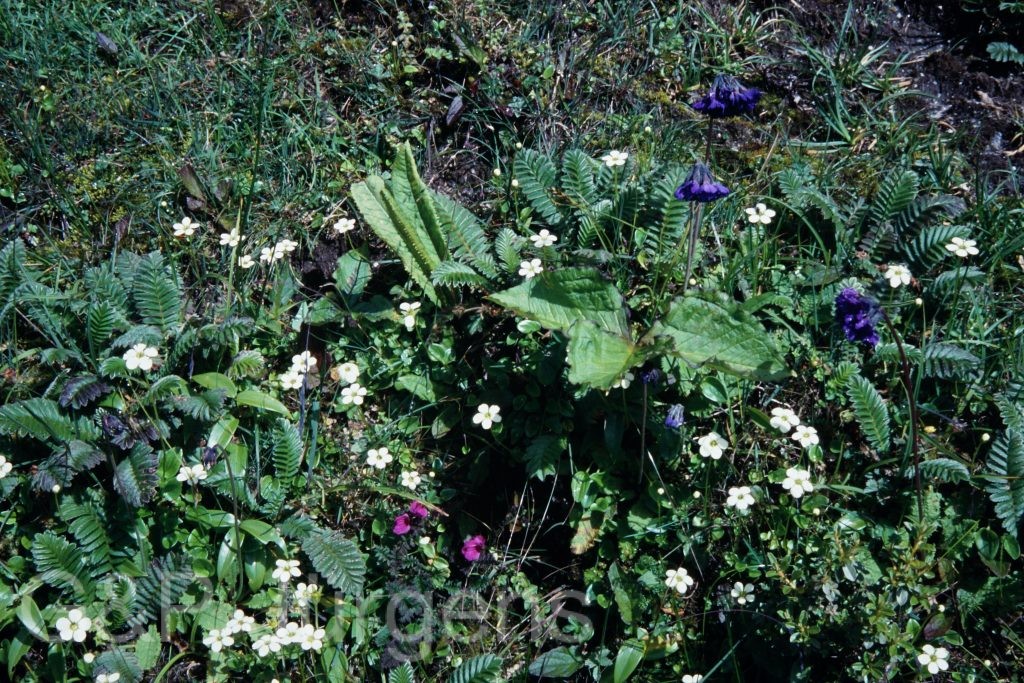
Parnassia nubicola Wall. ex Royle is a perennial herb of moist alpine habitats distributed along the Himalaya and into adjoining Central Asia, recorded from China, India, Nepal, Pakistan, Afghanistan and Bhutan, with around 182 georeferenced occurrences clustered in the high Sino-Himalayan ranges. It favours wet alpine meadows, marshy turf, seepage slopes, streamsides and the moist margins of snowmelt flushes, where soils remain saturated through the growing season. The photographed plants from Dzongri in Sikkim at about 4,200 m in August and from the Shele-La in Bhutan at about 4,000 m in September show its preference for the upper subalpine to alpine zone, where it flowers in late summer.

It grows from a short rhizome as a rosette of long-petioled basal leaves with ovate to cordate, entire blades. The flowering stems are erect and bear usually a single clasping, sessile cauline leaf below the solitary terminal flower. Each flower has five green sepals and five white petals conspicuously veined with green or yellowish lines. Between the fertile stamens lie five fringed staminodes divided into numerous gland-tipped filaments, a hallmark of the genus; the superior ovary ripens into a capsule splitting into four valves to release many small seeds.

The family attribution to Celastraceae follows recent molecular classifications, in which Parnassia (formerly placed in Saxifragaceae or its own Parnassiaceae) is treated within an expanded Celastraceae. The conspicuous nectar-secreting staminodes are associated with generalist insect pollination. Widespread and locally common across its broad range, P. nubicola is not considered threatened, though wetland alpine populations are sensitive to drainage, trampling and grazing.

Author: Wall. ex Royle · Sources: POWO (Kew), Flora of China Vol. 8, Flora of Bhutan Vol. 1, GBIF, Simmons: Celastraceae (in Kubitzki, 2004)

Wall.

Sikkim2003 111 P151
Sikkim below Dzongri 3950m 08.2003

Description

Parnassia pusilla is a diminutive grass-of-Parnassus distributed through the central and eastern Himalaya, recorded from China, Nepal, India, Bhutan and Myanmar and represented by some 177 georeferenced occurrences. It is a plant of cold, wet, open high-elevation ground, characteristically inhabiting alpine seepages, marshy meadows, dripping rock ledges and the gravelly margins of snowmelt streams where the substrate remains saturated through summer. The specimen photographed below Dzongri in Sikkim at about 3950 m in August illustrates its strong affinity for the upper alpine flush zone, where it flowers during the brief monsoon-fed growing season among low cushion vegetation and short turf.

It is a small, glabrous perennial herb arising from a short rootstock, forming a basal rosette from which slender, single-flowered scapes emerge. The basal leaves are long-petiolate with ovate to cordate blades, while each flowering stem bears a single sessile, clasping cauline leaf below the flower. The solitary flower is regular and pentamerous, with five free white petals that are conspicuously veined. Characteristic of the genus, alternating with the fertile stamens are five fringed staminodes, each dissected into gland-tipped filaments that serve as pseudonectaries to attract pollinators. The superior ovary develops into a capsule that splits to release numerous small seeds.

Despite its placement here under Celastraceae, Parnassia is morphologically distinctive, and the family circumscription reflects modern molecular treatments that subsume the former Parnassiaceae within an enlarged Celastraceae. The elaborate gland-tipped staminodes are a notable adaptation for insect pollination, offering visual and possibly olfactory rewards without true nectar. As a specialist of high-altitude wetlands, P. pusilla is sensitive to drainage, trampling by livestock and the desiccation of alpine seeps, so it serves as a useful indicator of intact high-mountain mire habitat.

Author: Wall. · Sources: POWO (Kew), GBIF, Flora of China Vol. 8, Flora of Bhutan Vol. 1, Flora of Nepal, Wu Phylogeny and Biogeography of the Genus Parnassia

Buch.-Ham. ex D.Don

Nepal 97 497 G979
Nepal Arun-Valley 1750m May
Nepal 97 336 P666
Nepal Arun-Valley 1750m May
Nepal 1994 58 ergebnis
Ost-Nepal Bhalukhob 
1900m April

Description

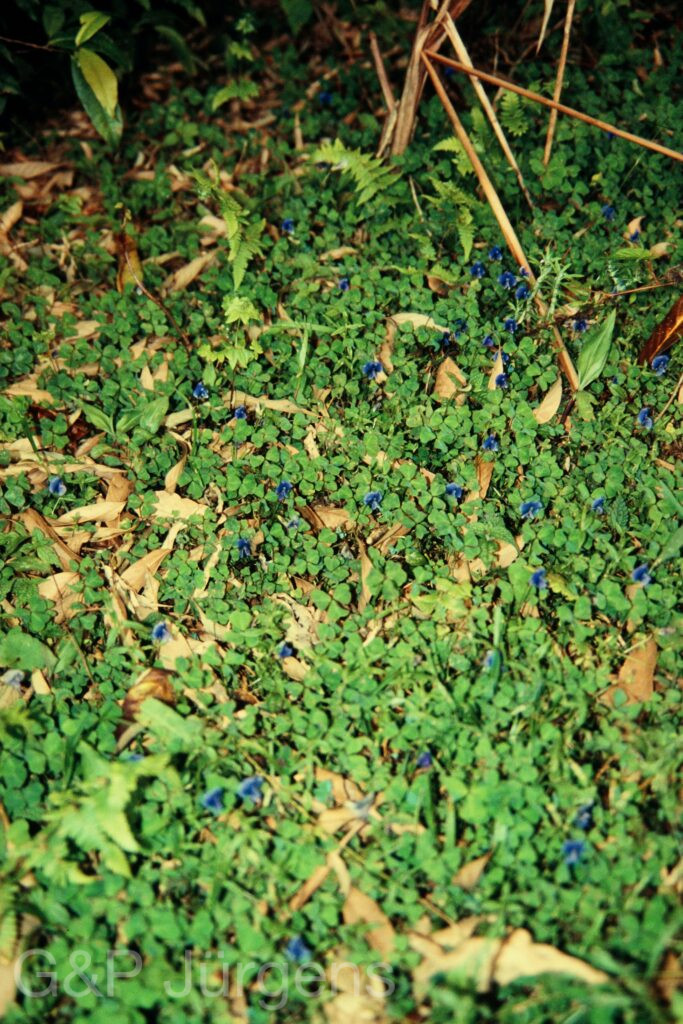
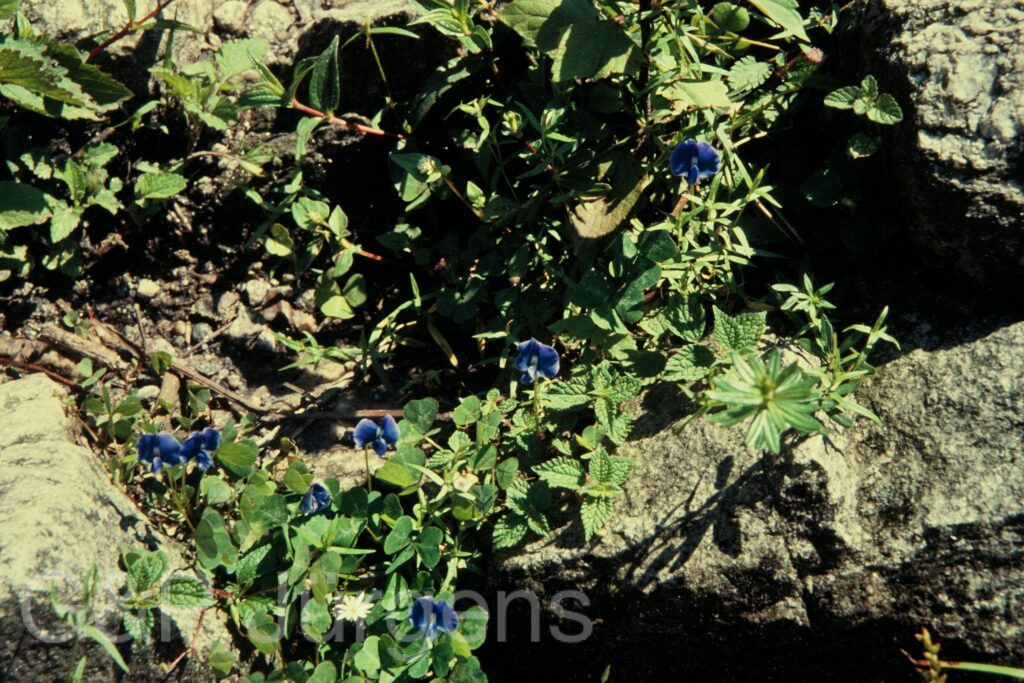
Parochetus communis, the shamrock pea, is a creeping perennial legume with a remarkably wide Afro-Asian montane distribution. GBIF documents around 1730 occurrences spanning the Himalaya (Nepal, India, Bhutan, China), Southeast Asia (Myanmar, Thailand, Vietnam, Malaysia, Indonesia, Sri Lanka), the East African highlands (Ethiopia, Kenya, Tanzania, Uganda, Rwanda, Burundi, DR Congo, Malawi) and naturalised in New Zealand. It grows in moist grassland, forest clearings, streambanks, terrace edges and shaded turf, generally between 1500 and 3000 m. The photographed plants are from eastern Nepal at Bhalukhob (1900 m, April) and the Arun Valley (1750 m, May), where it carpets damp banks in spring.

The plant forms prostrate, rooting stems that spread into loose mats and root at the nodes. The leaves are trifoliolate and clover-like, the obcordate leaflets often marked with a darker band, borne on slender petioles with small stipules. The flowers are solitary or paired in the leaf axils, papilionaceous with a standard, wing and keel; the corolla is a vivid cobalt to gentian-blue, occasionally with paler markings, exceeding the tubular calyx. The fruit is a slender, linear-oblong legume that dehisces to release several small seeds.

Parochetus (Fabaceae, subfam. Faboideae) is a small genus historically treated as monotypic until the segregation of the African P. africanus, leaving Asian material under P. communis. GBIF treats the name as accepted. Its disjunct, sky-island range across Asian and African mountains makes it a classic subject in studies of tropical-alpine biogeography. Widespread and adaptable, it is of least concern and is also cultivated as an ornamental groundcover.

Author: Buch.-Ham. ex D.Don · Sources: POWO (Kew), GBIF, Flora of China, Annotated Checklist of the Flowering Plants of Nepal, Polhill studies of Papilionoid legumes

W.W.Sm.

Bh09 155 G277
Bhutan Jimilangtso, 4100m June

Description

Paroxygraphis sikkimensis is a rare alpine member of the buttercup family endemic to the Eastern Himalaya, recorded from Nepal, Sikkim and adjacent India, Bhutan and southern Tibet (China), with GBIF documenting only 24 occurrences across NP, IN, BT and CN. It inhabits open alpine turf, moist meadows and damp gravelly slopes near the upper limit of vegetation, generally between about 3800 and 4500 m. The photographed plant was found in Bhutan near Jimilangtso (Jimilang Tsho) at around 4100 m, flowering in June at the start of the brief alpine growing season.

The plant is a small, low perennial herb forming a basal rosette of leaves from a slender rootstock, with short, few-flowered stems. The leaves are simple, spathulate to obovate, entire or shallowly toothed toward the apex, and somewhat fleshy. The flowers are solitary or few, with a calyx of sepals and a corolla of small white to yellowish petals each bearing a basal nectary, surrounding numerous free stamens and an apocarpous gynoecium of many separate carpels. The fruit is a head of achenes, each tipped with a short style, in the manner of the closely allied genus Ranunculus.

Paroxygraphis is a small, segregate genus erected by W.W. Smith and traditionally placed near Oxygraphis and Ranunculus within the Ranunculeae; molecular studies have prompted discussion of its relationships and possible inclusion in a broadly circumscribed Ranunculus. Its very restricted range, low number of recorded occurrences and specialised high-alpine habitat make P. sikkimensis a taxon of biogeographic interest and potential conservation concern, though it has not been formally assessed.

Author: W.W.Sm. · Sources: POWO (Kew), GBIF, Flora of Bhutan, Annotated Checklist of the Flowering Plants of Nepal, Flora of China (Ranunculaceae)