Author

GP Jürgens

(L.) Gaertn.

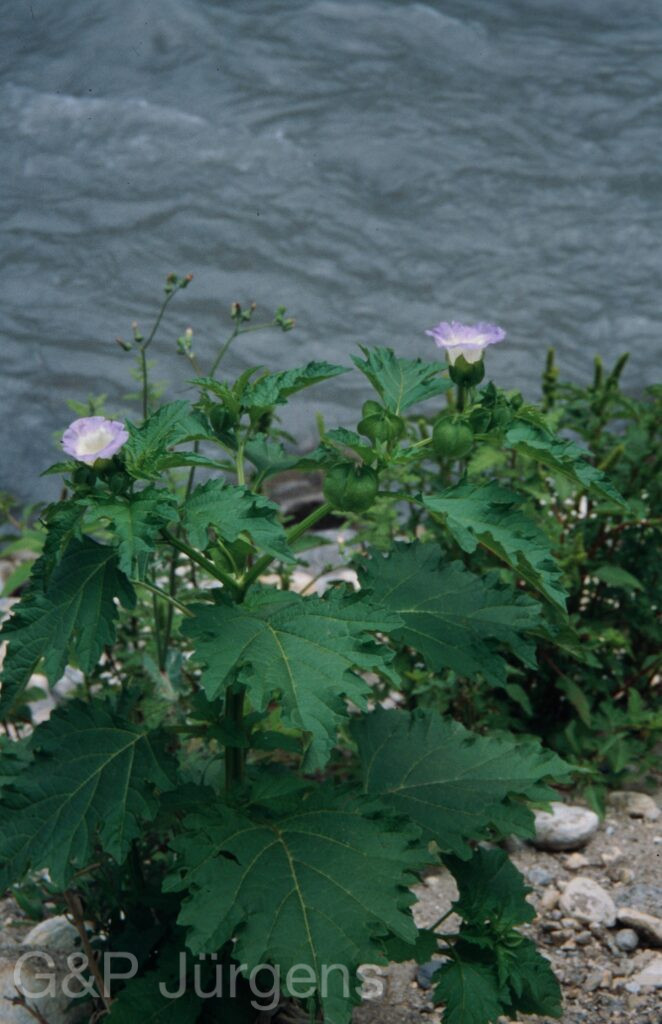
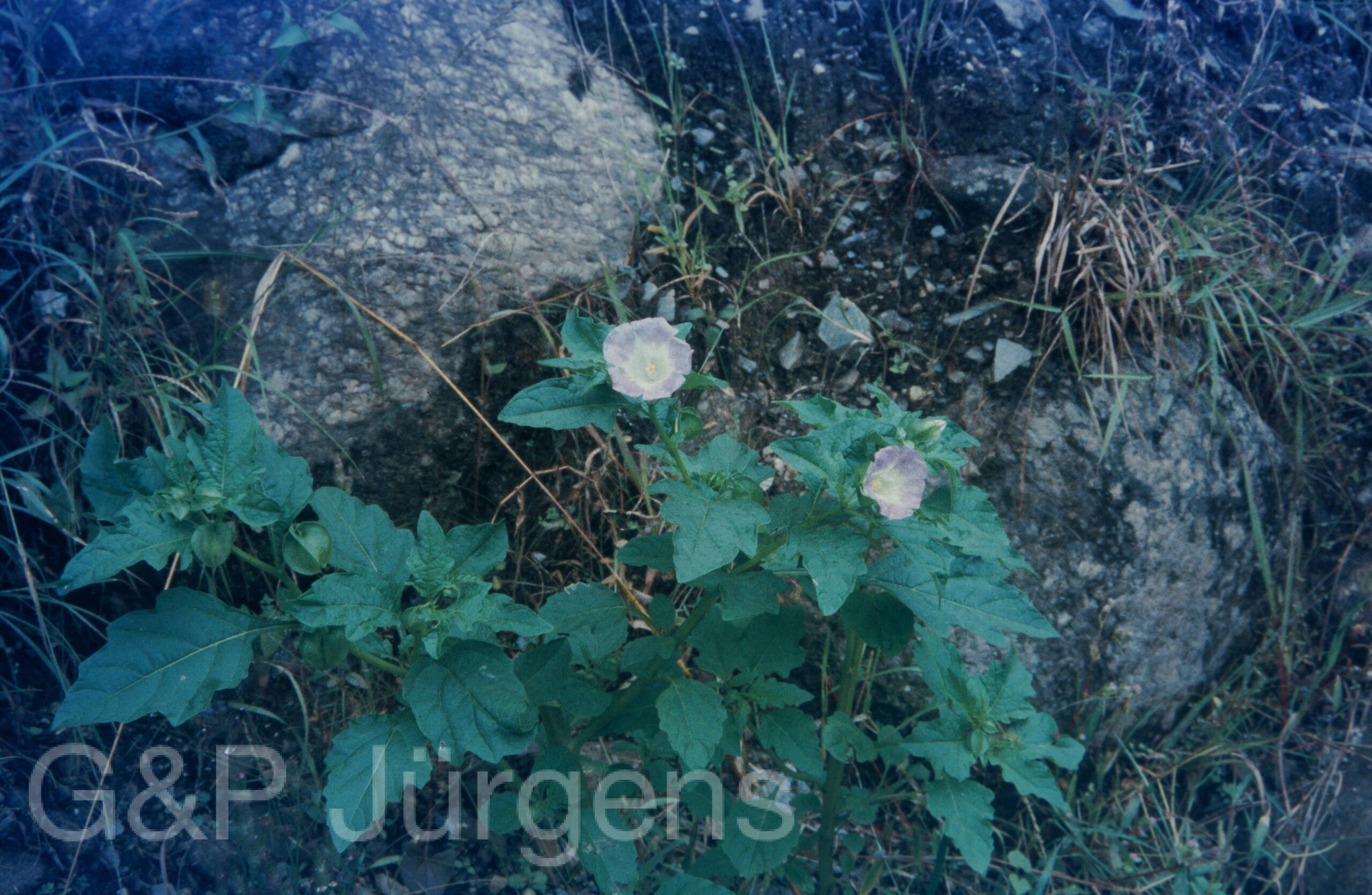
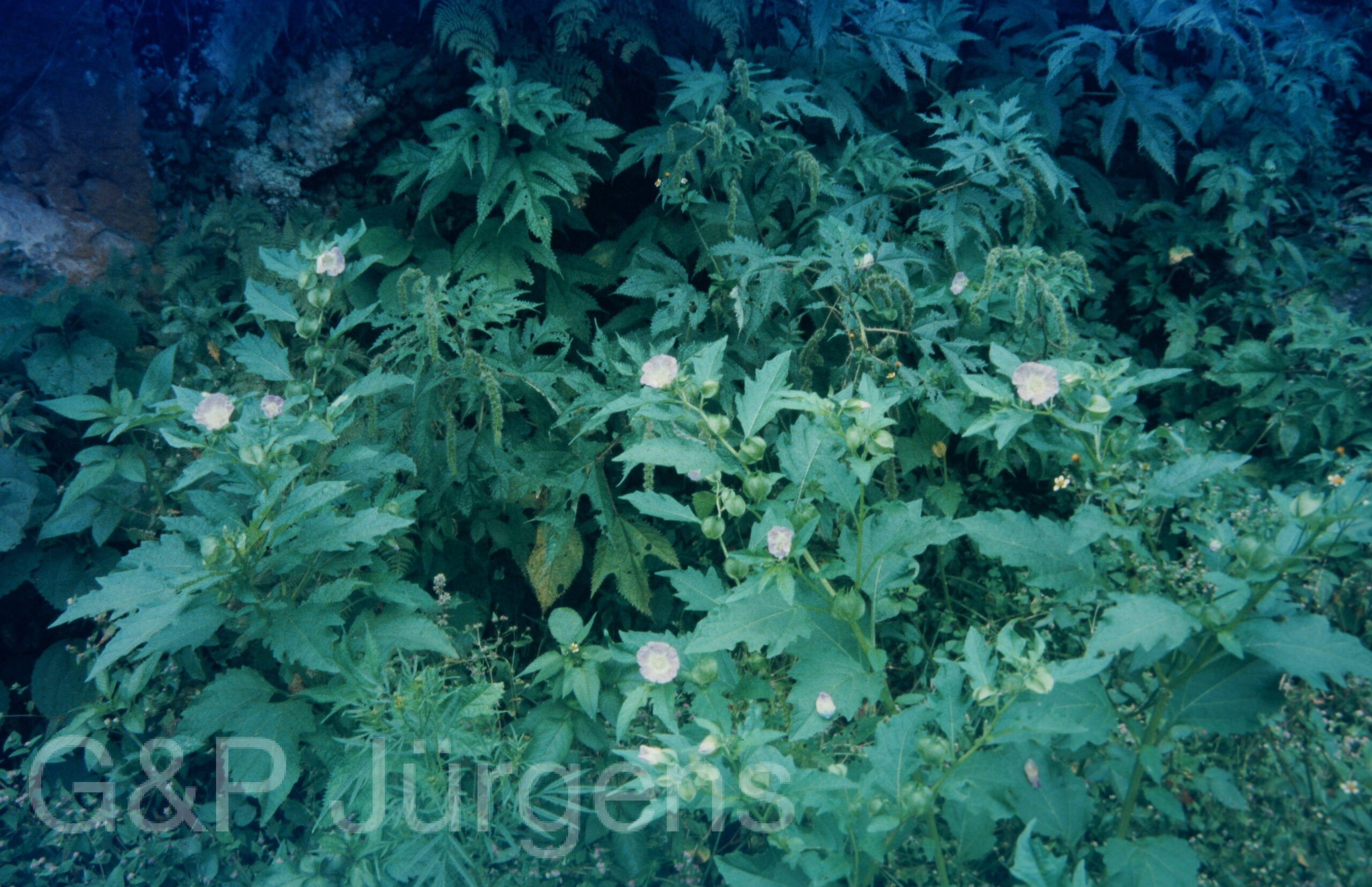
Nepal 99 955 ergebnis
West-Nepal Dunai 2150m, July

Description

Nicandra physalodes (L.) Gaertn., the shoo-fly plant or apple-of-Peru, is an annual herb native to the Andean region of South America (notably Peru) but now naturalised almost worldwide as a weed of cultivation and waste ground. The very large GBIF occurrence record spans Europe, North and South America, southern Africa, Australasia, China and beyond, reflecting its cosmopolitan ruderal status. In the Himalaya it is a familiar plant of cultivated fields, village margins and disturbed ground; the records from Dunai in west Nepal at 2,150 m in July and from Sitel in Garhwal, India, at 1,850 m in September document its occurrence as a monsoon-season weed in the western and central Himalayan hill zone.

Nicandra is a robust, erect, glabrous annual reaching up to 1–1.5 m, with stout, angular, branching stems. The leaves are alternate, ovate to elliptic, with coarsely sinuate-dentate or lobed margins. The solitary, axillary flowers are pale blue to lilac with a paler, often whitish throat; the corolla is broadly campanulate and shallowly five-lobed. Most distinctive is the persistent, accrescent calyx with five deeply sagittate-cordate, sharply angled lobes that enlarge and become inflated and papery, enclosing the dry, many-seeded berry in a manner resembling the husk of Physalis, hence the epithet physalodes.

The genus Nicandra is monotypic and forms an isolated lineage within Solanaceae, placed in its own subfamily Nicandroideae and of long-standing interest in phylogenetic studies of the family. The plant is mildly toxic, containing withanolide-type compounds, and has been used traditionally as an insect repellent, accounting for the vernacular name shoo-fly. Its remarkable success as a global colonist makes it a textbook example of a New World species turned cosmopolitan agricultural weed.

Author: (L.) Gaertn. · Sources: POWO (Kew), GBIF, Flora of China Vol. 17, Flora of Pakistan (Solanaceae), Hunziker: The Genera of Solanaceae
(Hook. f. & Thomson) Al-Shehbaz

BhutanPG2011 286
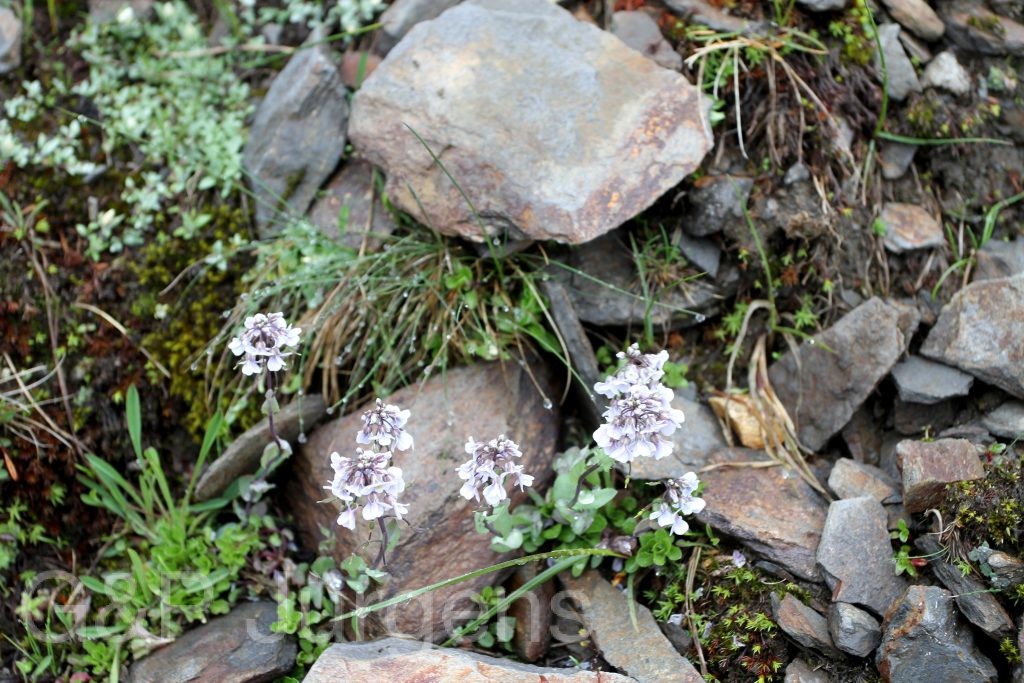
Bhutan Jule-Tso, 4200m June
Sikkim 2006 129 ergebnis
India West-Bengal, Molley 3630m, May

Description

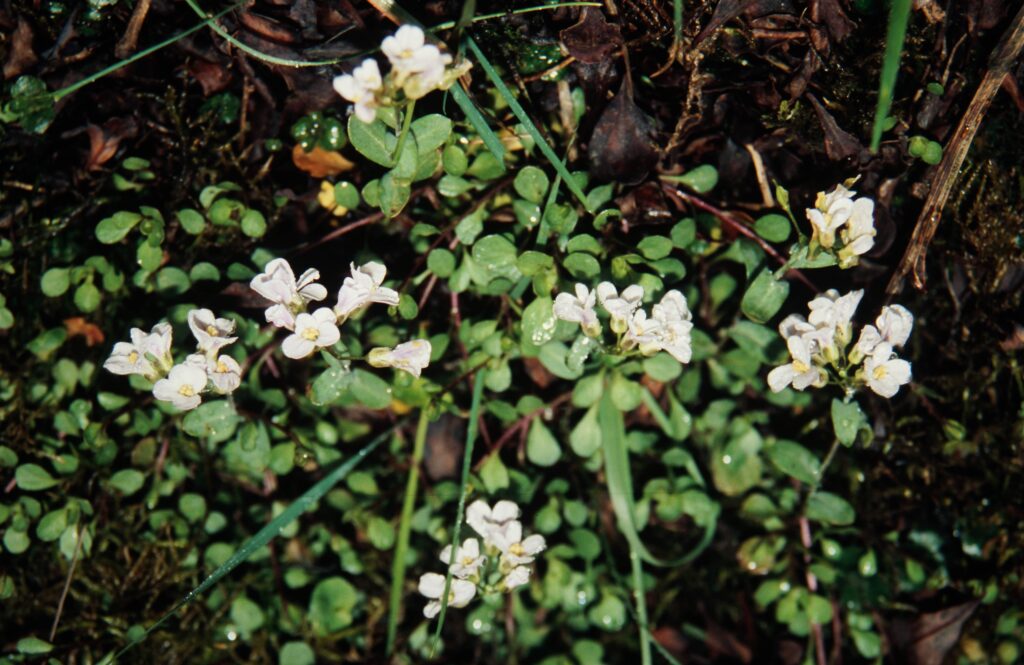
Noccaea cochlearioides (Hook. f. & Thomson) Al-Shehbaz is a high-alpine crucifer of the Himalaya and adjacent Central Asia, recorded from India, Nepal, Pakistan, Bhutan, Afghanistan, southern China and the Russian mountains, with about 93 GBIF occurrences reflecting its restricted, high-elevation niche. It grows on stony alpine slopes, screes, moraines and rock crevices, characteristically between about 3500 and 4800 m. The cited gatherings from Jule-Tso in Bhutan at around 4200 m in June and from Molley in West Bengal at 3630 m in May exemplify its presence in cold, open subnival habitats where the snow-free season is brief.

The species is a small, glabrous, somewhat fleshy perennial herb with a branched caudex bearing rosettes of entire to obscurely toothed, often spathulate basal leaves; the cauline leaves are sessile and amplexicaul with auriculate-sagittate bases. The flowers are arranged in a short corymbose raceme and have four white to pale lilac petals in the typical cruciform arrangement. The fruit is a flattened, obcordate to obovate silicula, narrowly winged and notched at the apex, containing few smooth seeds in each locule.

The taxon was transferred from Thlaspi to the segregate genus Noccaea by Al-Shehbaz in his molecular-based recircumscription of the Thlaspi alliance (Brassicaceae, tribe Coluteocarpeae). Its auriculate cauline leaves and winged, notched silicles are diagnostic. A narrow alpine endemic of restricted range, it is uncommon but not assessed as threatened.

Author: (Hook. f. & Thomson) Al-Shehbaz · Sources: POWO (Kew), GBIF, Flora of Bhutan, Flora of China, Flora of Pakistan, Al-Shehbaz revisions of Thlaspi and allied Brassicaceae

Boiss.

BhutanPG2011 710 01 01 2
Bhutan Pele-La, 2900m July
Nepal 99 31 ergebnis
West-Nepal Chere 2850m June
Nepal 99 32 ergebnis
West-Nepal Chere 2850m June
Nepal 99 379 ergebnis
West-Nepal Chere 2850m June

Description

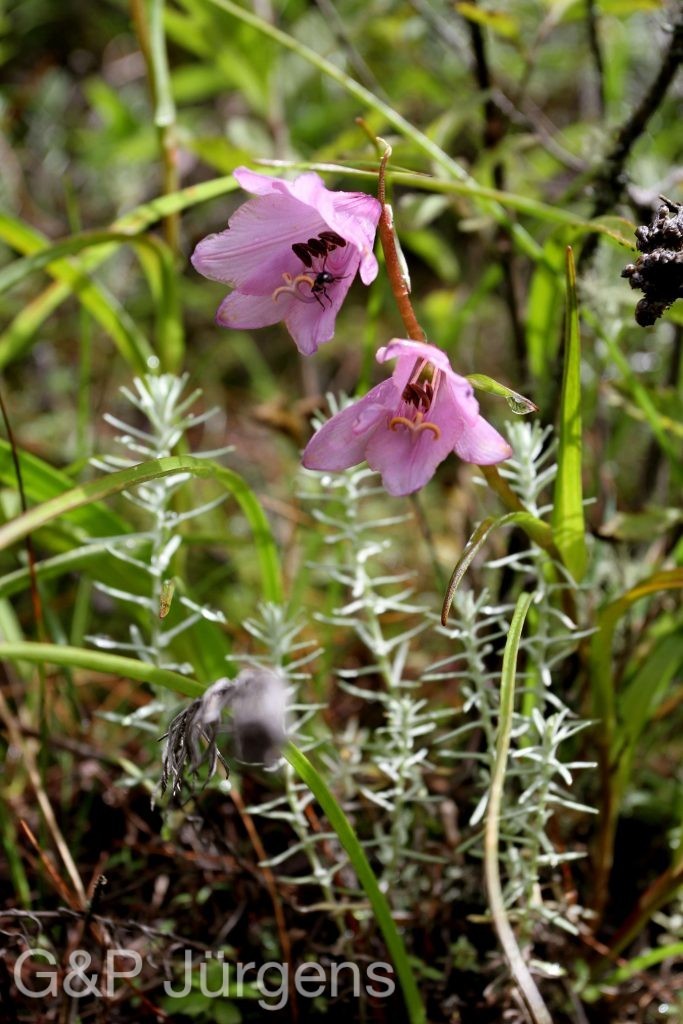
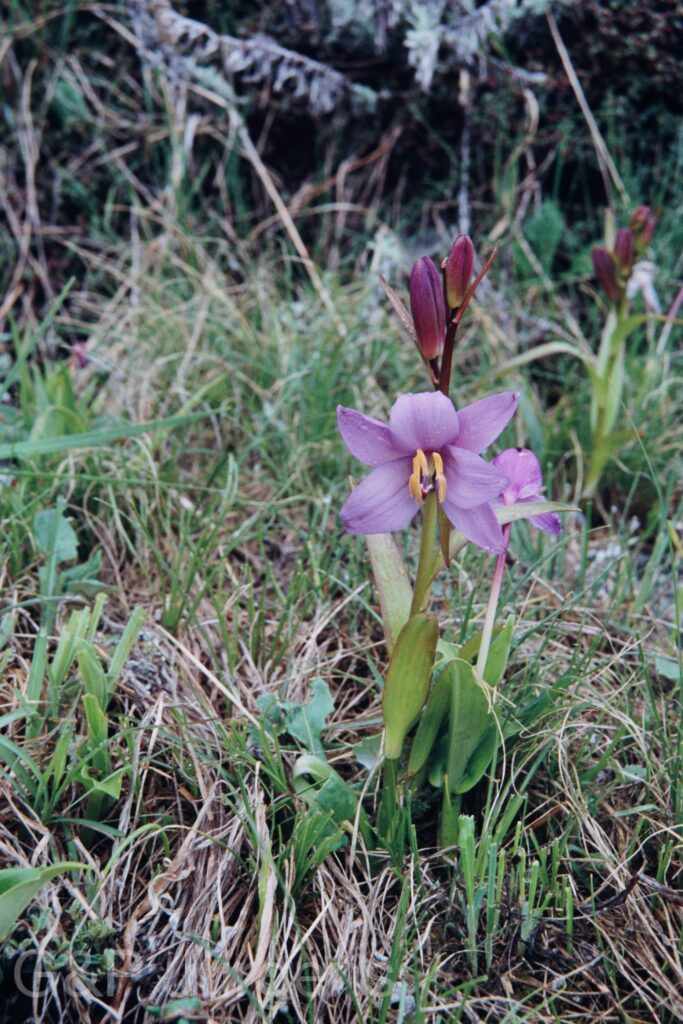
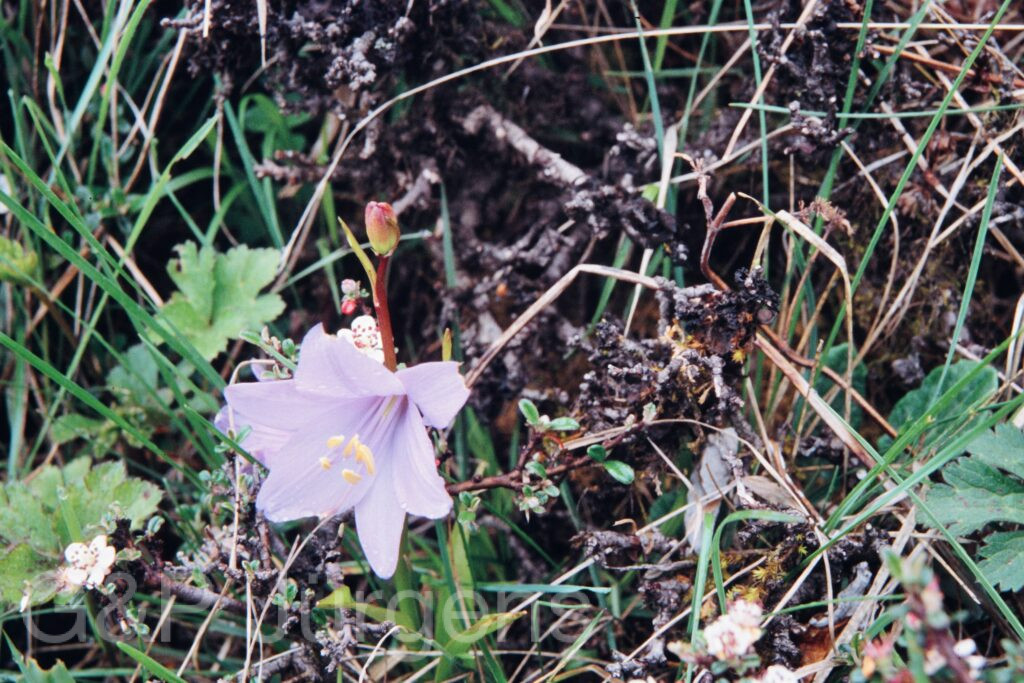
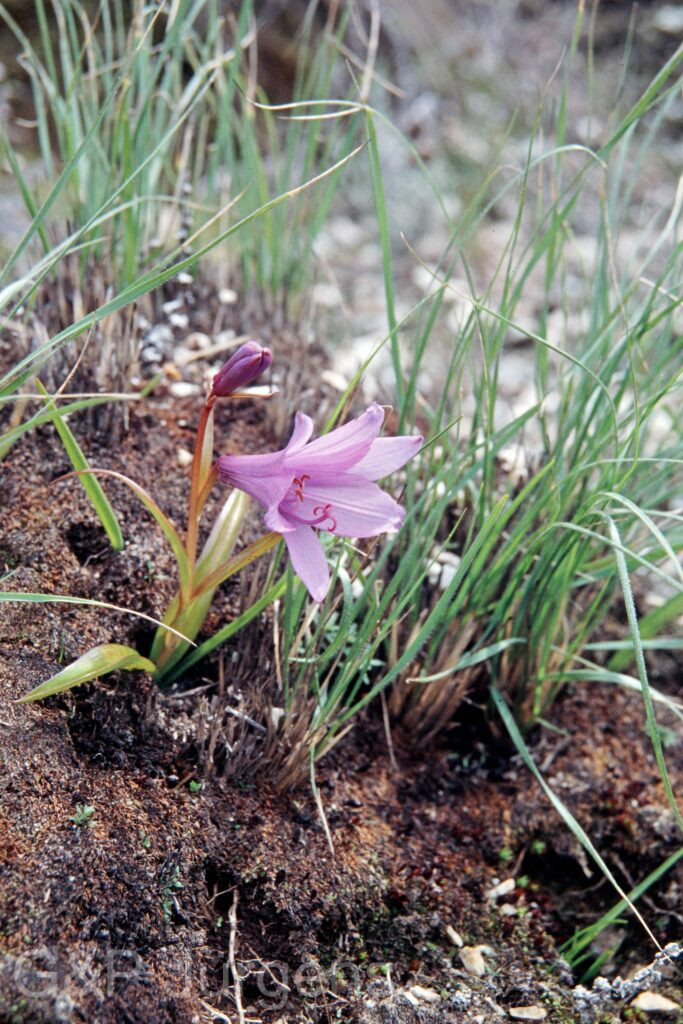
Notholirion macrophyllum is a Sino-Himalayan bulbous lily ranging through Nepal, Bhutan, northern India and south-western China, with GBIF documenting roughly 189 occurrences across this arc. It favours cool, humid subalpine to lower alpine habitats, occurring on open forest margins, shrubby slopes, grassy banks and moist meadows, often beneath Rhododendron and conifer cover on humus-rich soils. The collections cited from Bhutan at Pele-La around 2900 m in July and western Nepal at Chere near 2850 m in June illustrate its characteristic mid-montane elevation and its phenology, flowering during the early to mid monsoon when ground moisture is abundant.

The plant grows from a small ovoid bulb whose outer scales decay to leave numerous bulblets at the base, a feature typical of the genus and important for vegetative spread. The flowering stem is slender and erect, bearing linear-lanceolate radical leaves and reduced bract-like cauline leaves. The inflorescence is a lax few-flowered raceme of nodding, broadly funnel-shaped flowers; the six tepals are rose-pink to pale lilac or mauve, oblanceolate, spreading at the tips and often darker-veined. Six stamens with versatile anthers surround a slender style ending in a three-lobed stigma. The superior ovary matures into a three-valved loculicidal capsule releasing flat, winged, wind-dispersed seeds.

Notholirion, described in its species by Boissier among others, is a small genus of four to five species allied to Lilium and Fritillaria but distinguished by its monocarpic main bulb that dies after flowering, persisting through offset bulblets. N. macrophyllum is the smallest-flowered member and the most widespread in the central Himalaya. Its reliance on undisturbed subalpine vegetation makes it susceptible to grazing, trampling and forest disturbance, although it remains locally frequent and is sometimes cultivated by enthusiasts of Himalayan bulbs.

Author: Boiss. · Sources: POWO (Kew), GBIF, Flora of Bhutan, Flora of China, Stainton Flowers of the Himalaya, Sealy revision of Notholirion

King & Pantl.

Nepal 1994 27 ergebnis
Ost-Nepal Kandbari 600m April

Description

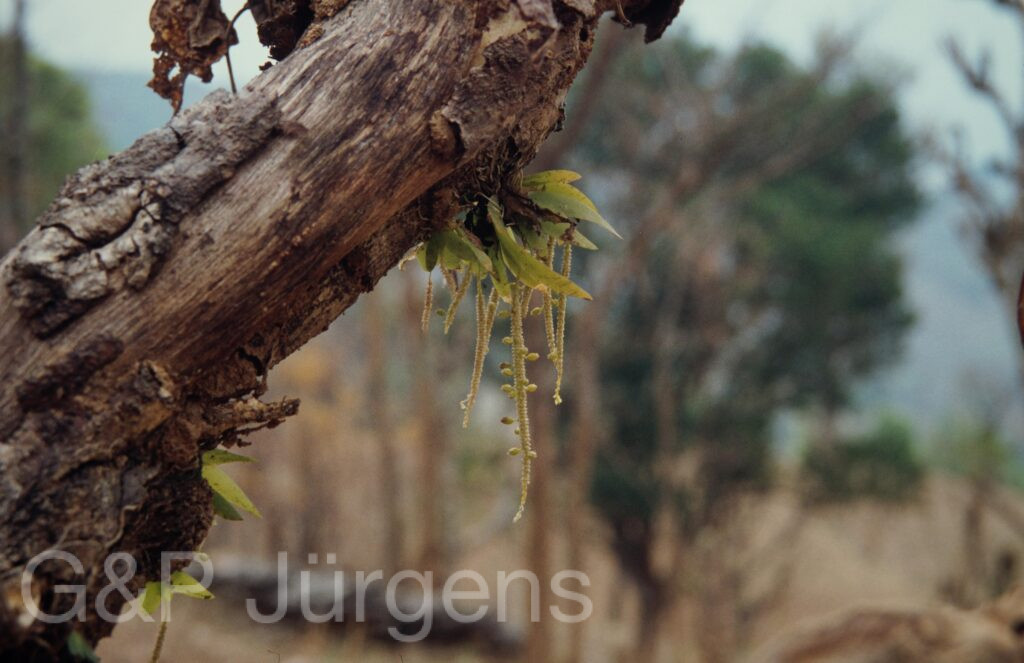
Oberonia falcata is a small epiphytic orchid ranging through the lowland and submontane forests of the eastern Himalaya and Southeast Asia, recorded from India, Nepal, Bhutan, Myanmar (implied regionally), Thailand, Cambodia, Vietnam, Taiwan and Malaysia, with a modest 67 occurrences in GBIF. It grows on the trunks and branches of trees in warm, humid evergreen and semi-evergreen forest, generally at low to moderate elevations. The illustrated plant was collected in eastern Nepal near Kandbari (Khandbari) at about 600 m in April, a typically low, frost-free station consistent with the genus's preference for sheltered, shaded humid forest.

Like other Oberonia, the species is a tufted, stemless to short-stemmed epiphyte with a fan of distichous, laterally flattened (equitant), fleshy leaves that are falcate (sickle-shaped), as the epithet records. From the centre of the leaf-fan arises a slender erect to arching inflorescence densely covered with minute flowers arranged in whorls along the rachis. The individual flowers are tiny and inconspicuous, orange to brownish, with a deeply lobed lip characteristic of the genus; the column is very short. The fruit is a small ellipsoid capsule releasing dust-fine seeds.

Oberonia is a large pantropical Old World genus distinguished by its iris-like flattened leaf-fans and miniature whorled flowers, and species delimitation rests largely on lip morphology. As an epiphyte dependent on undisturbed humid forest canopy, O. falcata is vulnerable to deforestation and the harvesting of host trees across its range. Its minute, scentless flowers are thought to be pollinated by small insects, and like nearly all orchids it relies on mycorrhizal fungi for seed germination and establishment.

Author: King & Pantl. · Sources: POWO (Kew), GBIF, Flora of Bhutan, Orchids of Nepal, Genera Orchidacearum (Oberonia)

R.R.Mill

BhutanPG2011 712 01 01
Bhutan Phobjika 2800m July

Description

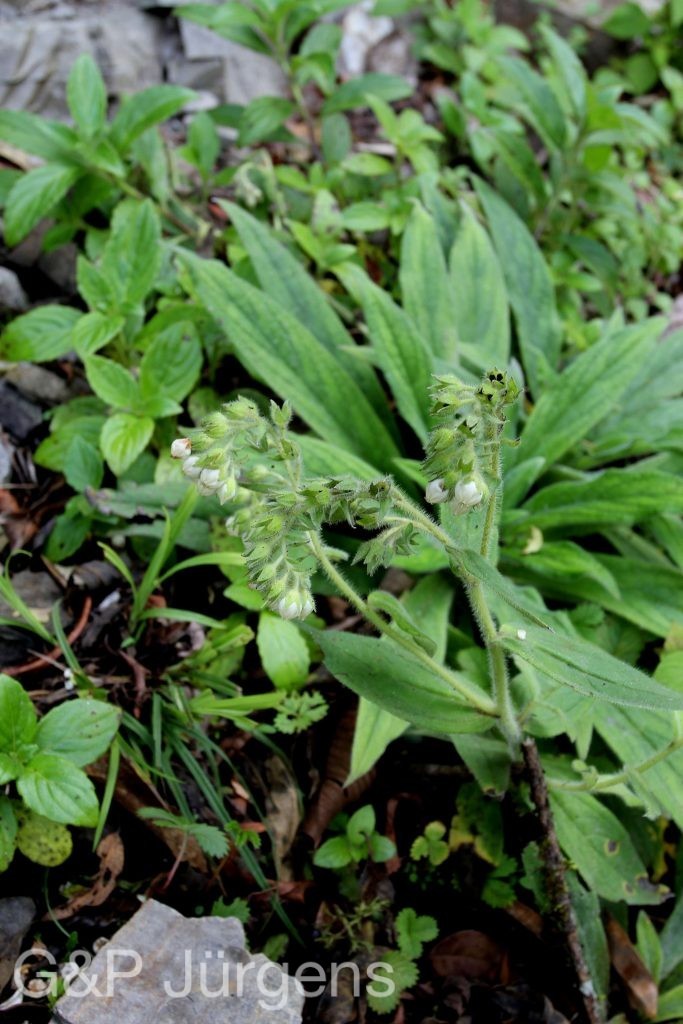
Onosma griersonii is a narrowly distributed Himalayan herb known from the temperate mountains of Bhutan, the only country from which it is recorded in GBIF, where its three occurrences reflect the rarity of collections of this localised taxon. It is a plant of open, dry, sunny banks, grassy slopes and stony ground in the inner valleys of the central Himalaya, favouring well-drained sites in the broad montane belt. The photographed plant from the Phobjika valley in Bhutan at 2800 m, flowering in July, typifies its occurrence in the cool-temperate mid-elevation zone, where it blooms during the summer monsoon. Though GBIF treats the name as a synonym, current taxonomic opinion accepts Onosma griersonii as the correct name for the entity.

Like other members of its genus it is a coarse, bristly-hairy perennial or biennial herb, the whole plant clothed in stiff, often tubercle-based setae that give it a harsh texture. The leaves are narrowly oblong to linear-lanceolate, entire and sessile, the basal ones forming a rosette. The flowers are borne in terminal scorpioid cymes that uncoil as they open; each flower has a tubular to narrowly campanulate corolla, typically yellow, with included or shortly exserted stamens and a deeply five-lobed calyx. The fruit comprises four hard, smooth nutlets.

Onosma is a large Old World genus centred on the mountains of Central and Southwest Asia, with a number of restricted endemics in the Himalaya. O. griersonii, named for the botanist A. J. C. Grierson, co-author of the Flora of Bhutan, is one such local endemic. Its bristly indumentum and tap-rooted habit are adaptations to dry, exposed montane microhabitats, while its tubular corollas suit pollination by long-tongued bees. As a narrow-range endemic it warrants conservation attention.

Author: R.R.Mill · Sources: POWO (Kew), GBIF, Flora of Bhutan, Boraginaceae of the Sino-Himalaya, Revision of Onosma (Riedl & Mill)

Lindl.

Garh 07 88 ergebnis
India Garhwal Trijugi Narayan 2500m, June
Garh 07 89 ergebnis
India Garhwal Trijugi Narayan 2500m, June

Description

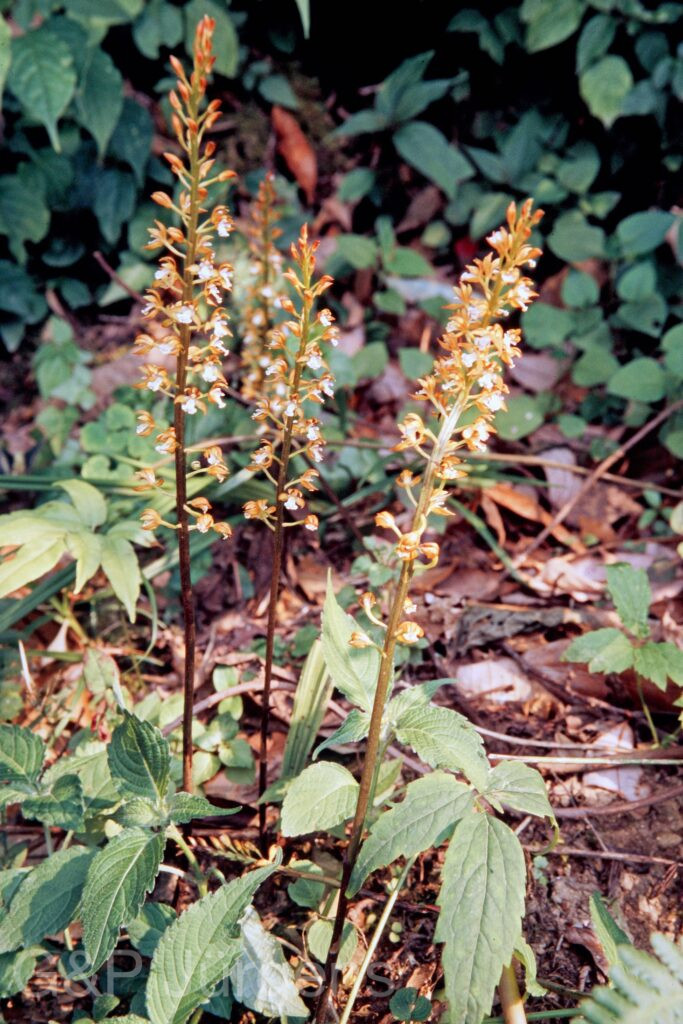
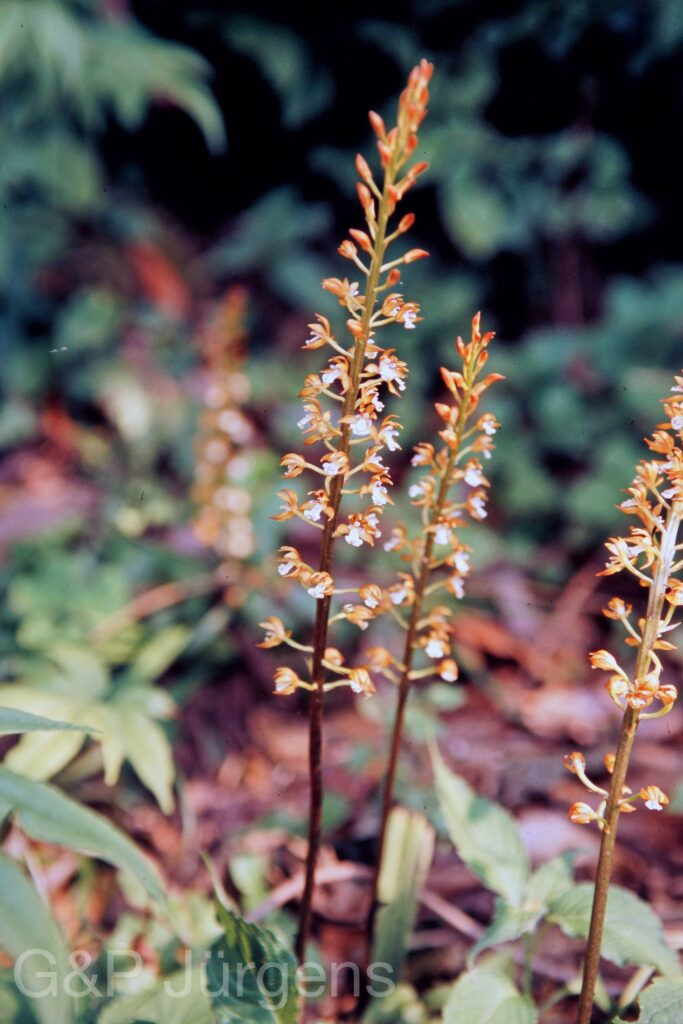
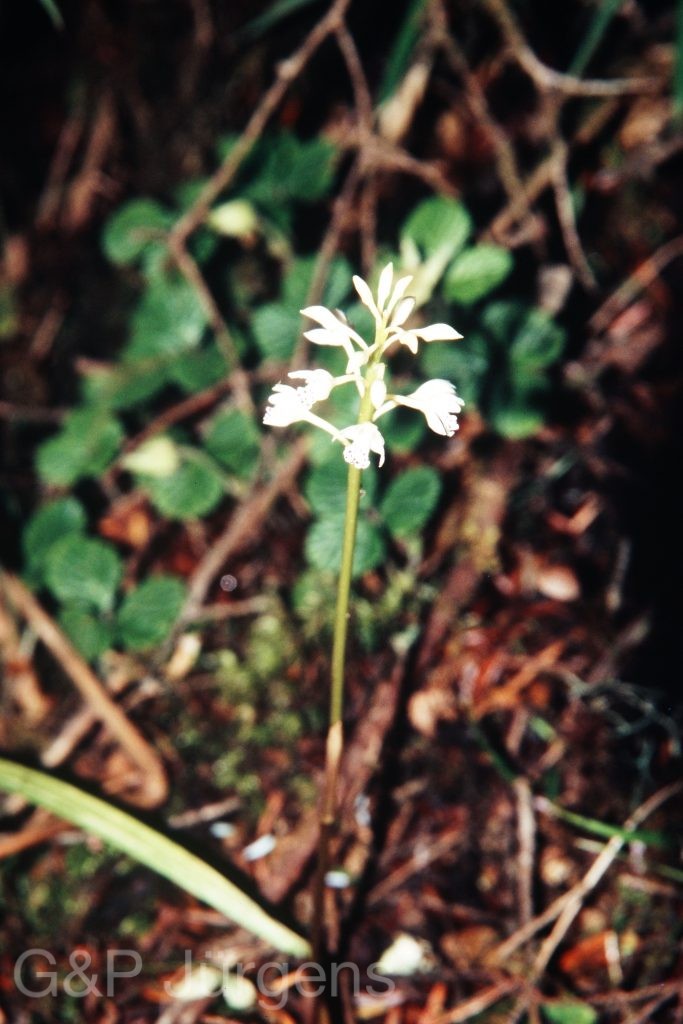
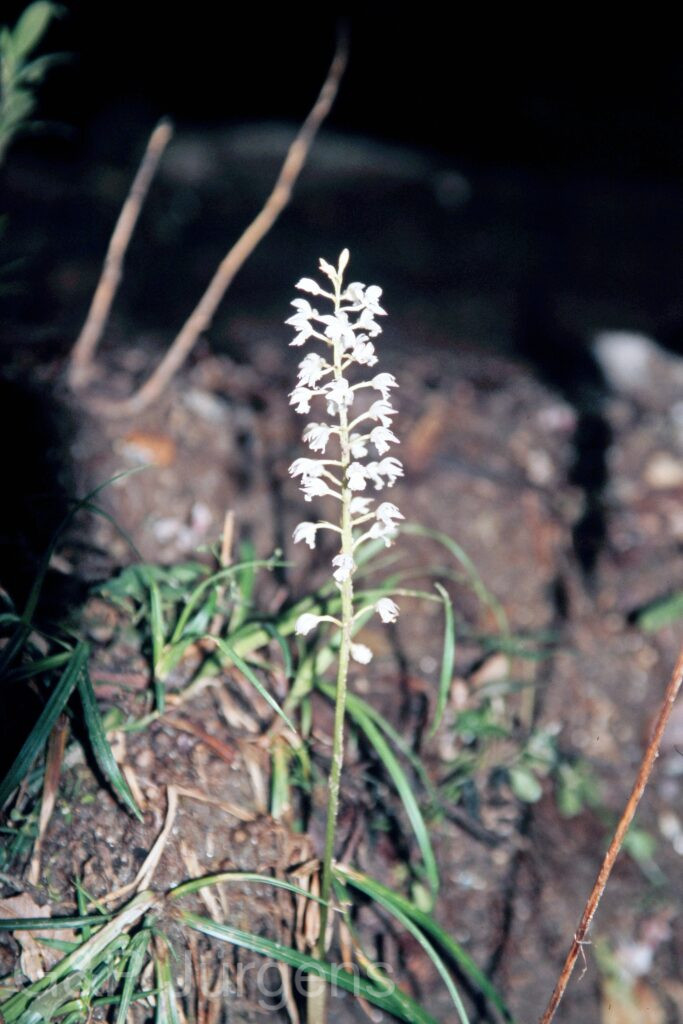
Oreorchis foliosa is a terrestrial orchid distributed across the Himalaya and into south-western China, with verified occurrences in China, India, Nepal, Bhutan and Myanmar. It grows in the humus-rich shade of temperate broadleaved and coniferous forest, on mossy banks and among leaf litter, generally between about 2400 and 3500 m. The material illustrated, from Trijugi Narayan in Garhwal (India) at around 2500 m and from the Dochu-La in Bhutan near 3000 m, both in June, shows the species flowering in the pre- to early-monsoon period in its characteristic moist, lightly shaded forest-floor habitat.

The plant grows from a chain of subterranean corm-like pseudobulbs (corms) that store reserves through the dormant season. From these arise one or two narrowly lanceolate, plicate (longitudinally pleated) leaves, the foliose character noted in the epithet. The erect scape bears a many-flowered raceme of small flowers; the spreading sepals and petals are yellowish to brownish, and the three-lobed labellum is paler, marked with reddish to purple spots or streaks, with a small basal callus or short spur-like base. The fruit is a pendulous dehiscent capsule releasing the dust-fine seeds typical of the family.

The family is written here as in the source as "Orchideaceae"; the correctly formed family name is Orchidaceae. Oreorchis is a small Asian genus of subfamily Epidendroideae allied to Corallorhiza and Cremastra, and like many forest orchids depends on mycorrhizal fungi for germination and establishment. O. foliosa, described by Lindley, is widespread but typically thinly scattered; while not formally assessed as threatened, such forest-dwelling orchids are sensitive to habitat loss and to collection pressure.

Author: Lindl. · Sources: POWO (Kew), GBIF, Flora of China, Flora of Bhutan, Genera Orchidacearum (Pridgeon et al.)

Hook.

Nepal 95 22 P31 ergebnis
Nepal Darondi-Khola 630m, Octobre

Description

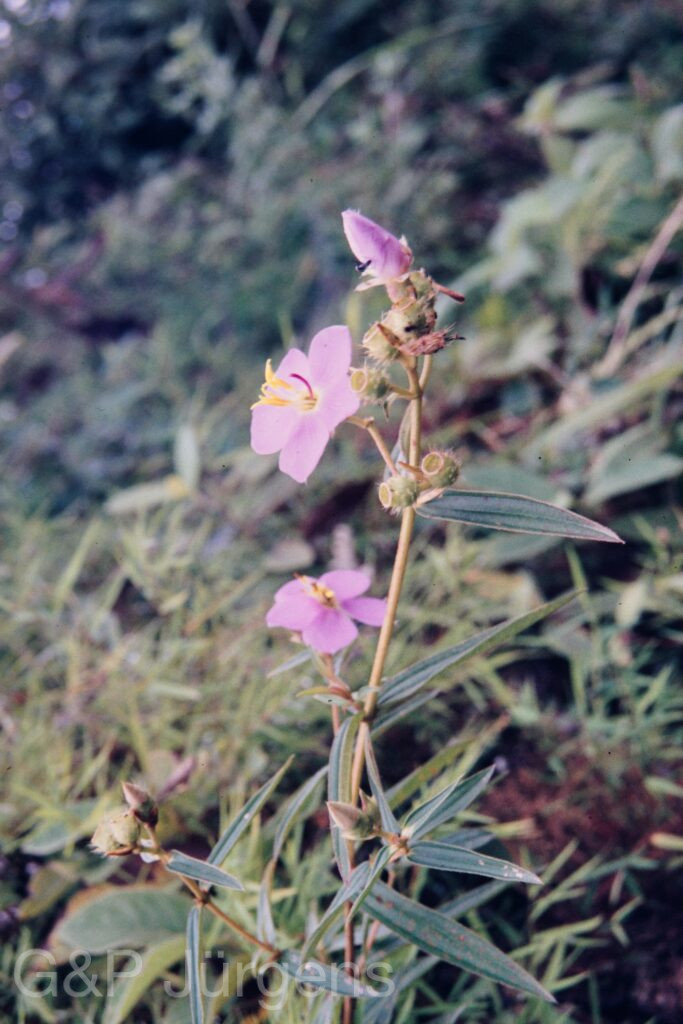
Osbeckia nepalensis is a subtropical to warm-temperate herb or subshrub of the eastern Himalaya and southeastern Asia, ranging through China, Nepal, India, Bhutan, Bangladesh, Myanmar, Thailand, Vietnam, Malaysia and Indonesia; its roughly 563 GBIF occurrences trace a broad Sino-Himalayan to Indochinese arc. In Nepal it descends to low elevations along river valleys, as recorded along the Darondi Khola at about 630 m in October, when the post-monsoon period brings peak flowering. It favours open, sunny situations on grassy hillsides, forest margins and roadside banks, behaving as an early-successional colonist of seasonally humid foothill habitats.

The plant is an erect, branched herb or soft subshrub with four-angled stems clothed, like the foliage, in stiff bristly hairs. The leaves are opposite, ovate-lanceolate, and bear the curved-parallel primary veins diagnostic of Melastomataceae. The handsome flowers are clustered in terminal heads, each with a bristly urn-shaped hypanthium and usually four broad, rounded petals of rich rose-purple to magenta; within are twice as many stamens with geniculate filaments and elongate, beaked, poricidal anthers adapted for buzz-pollination by bees. The fruit is a bristly capsule enclosed in the persistent hypanthium, releasing many minute seeds.

Osbeckia is closely allied to Melastoma, from which it is separated by its smaller, dry, poricidal capsules rather than fleshy berries. O. nepalensis is among the most ornamental species of the genus, valued horticulturally and used locally in herbal medicine. As a common, weedy coloniser of disturbed ground over a very large area, it carries no significant conservation concern.

Author: Hook. · Sources: POWO (Kew), GBIF, Flora of China Vol. 13, Flora of Bhutan Vol. 2, Flora of Nepal, A Revision of Osbeckia (Melastomataceae)

King ex C.B.Clarke

Bh2008 14 G24
Bhutan Thimphu-Chu, 2800m April
Nepal 2001 110 ergebnis ergebnis
East-Nepal Gupka Pokhari 3200m, April

Description

Osmanthus suavis King ex C.B.Clarke is an evergreen shrub or small tree of the olive family endemic to the eastern Himalaya and adjacent mountains, recorded from Nepal, India, Bhutan, China and Myanmar (158 GBIF occurrences). It grows in the understorey and margins of temperate broad-leaved and mixed conifer forest, on slopes, ridges and forest edges roughly between 2400 and 3500 m. It was documented in Bhutan along the Thimphu-Chu at 2800 m in April and in eastern Nepal at Gupka Pokhari around 3200 m, also in April, its flowering coinciding with the spring warming of the mid-montane forest belt.

It forms a densely branched shrub with grey, lenticellate bark. The leaves are opposite, coriaceous, elliptic to ovate-lanceolate, the margins entire or sparsely spinulose-serrate, glossy dark green above and dotted with minute glands beneath. The fragrant flowers are small and clustered in short axillary fascicles or cymes; the corolla is white to cream, gamopetalous with four spreading lobes united into a short tube, bearing two stamens, and the whole shrub is sweetly scented in flower, as the epithet suavis records. The fruit is an ovoid drupe ripening blue-black, with a single hard-walled stone.

Osmanthus belongs to tribe Oleeae and is centred on East and Southeast Asia, with O. suavis representing the Himalayan extension of this largely Sino-Japanese genus, allied to the fragrant cultivated O. fragrans. Its scented insect-pollinated flowers and drupaceous bird-dispersed fruits are typical of the genus. While not formally threatened, it is dependent on intact temperate forest and is locally valued as an ornamental and for its aromatic blossoms.

Author: King ex C.B.Clarke · Sources: POWO (Kew), GBIF, Flora of China, Flora of Bhutan, Flora of Nepal, Oleaceae monograph (Green revision of Osmanthus)

Ototropis conferta

by GP Jürgens

 (DC.) H.Ohashi & K.Ohashi.

Bhutan2012 958
Bhutan Trithangebe 1200m, October
Bhutan2012 959
Bhutan Trithangebe 1200m, October
Bhutan2012 1004
Bhutan Trithangebe 1400m, October

Description

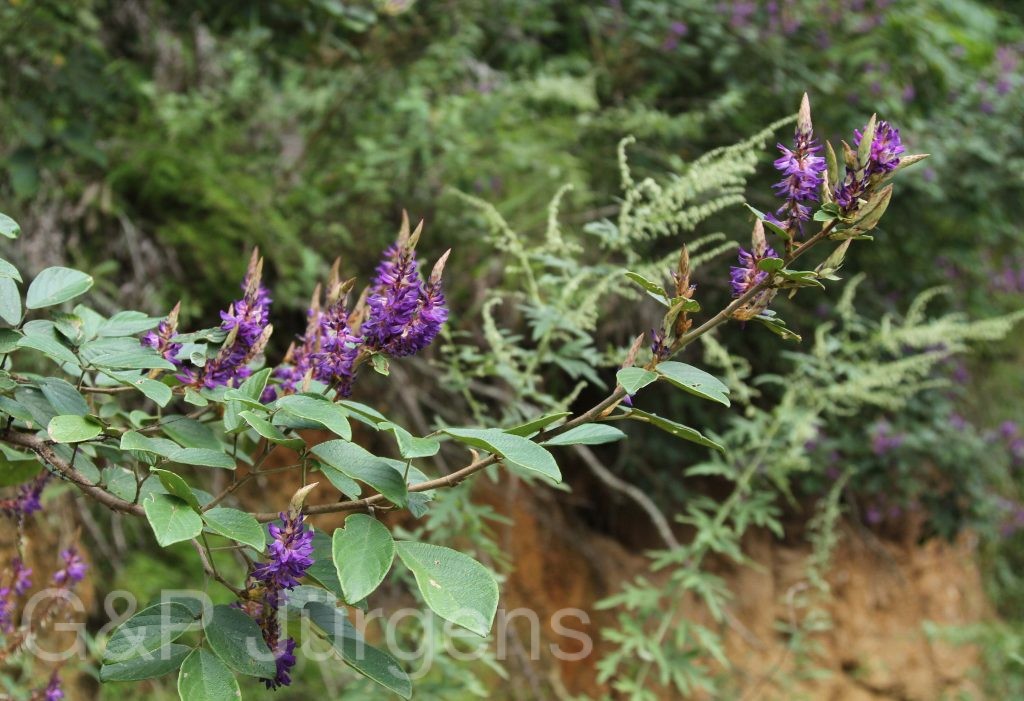
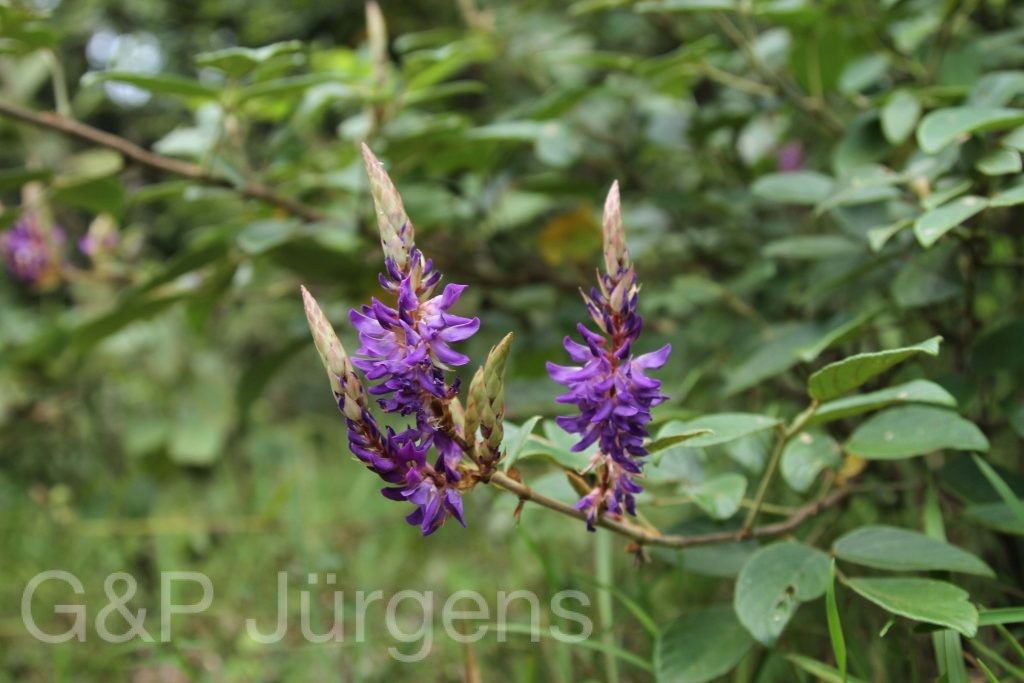
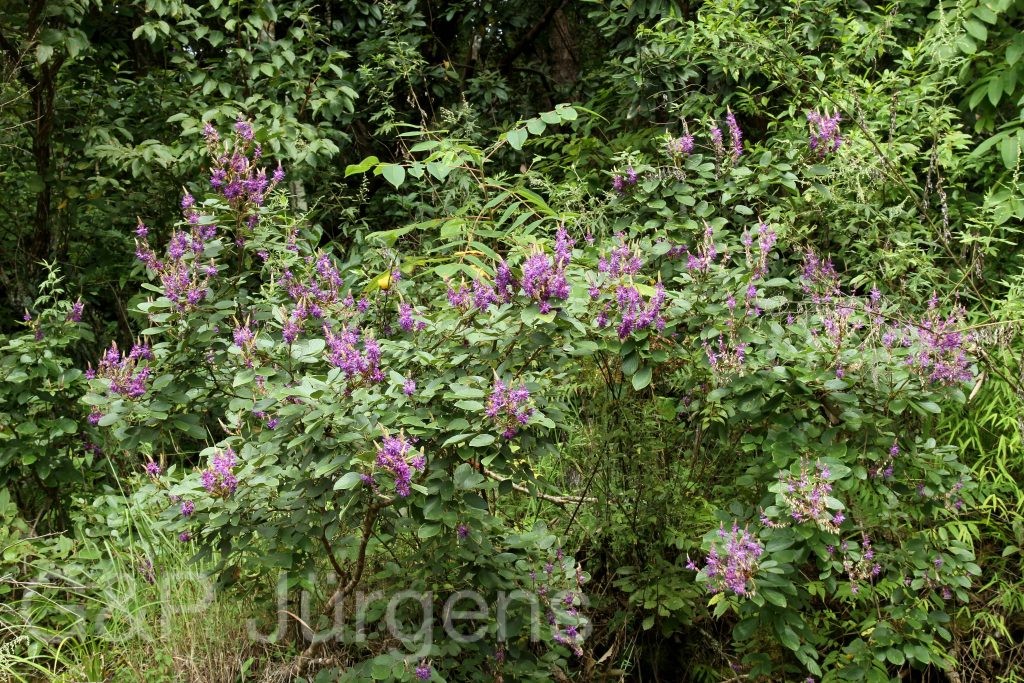
Ototropis conferta is a Himalayan legume distributed through Nepal, India and Bhutan, with GBIF recording about 112 occurrences across the central and eastern ranges. It is a shrub of warm temperate and subtropical hill forest, growing on open slopes, forest edges, scrub and roadside banks typically between roughly 1000 and 2000 m. The accompanying records from Trithangebe in southern Bhutan at 1200 and 1400 m, flowering in October, capture its characteristic autumn flowering in the lower-montane belt, where it forms part of the shrubby understorey and edge vegetation alongside other broom-like legumes on well-drained, often disturbed ground.

It is a woody shrub with slender, sometimes arching branches that are finely pubescent when young. The leaves are pinnately trifoliolate, the leaflets elliptic to ovate with entire margins and an appressed indumentum, subtended by small stipules. The inflorescences are dense, many-flowered terminal and axillary racemes or panicles, the epithet referring to the crowded arrangement of the flowers. Each papilionaceous flower has a campanulate calyx and a corolla of standard, wings and keel, coloured pink to purple, fading as it ages. The diadelphous stamens are enclosed within the keel. The fruit is a flattened, several-jointed loment that breaks at maturity into one-seeded articles, their surfaces clad in hooked hairs that promote epizoochorous dispersal.

The species was long placed in the large genus Desmodium as D. confertum, and was transferred to Ototropis by H.Ohashi and K.Ohashi following molecular and morphological revision of the Desmodieae, which fragmented the traditional broad Desmodium into several segregate genera. As a nitrogen-fixing pioneer of forest edges and disturbed slopes it contributes to soil enrichment and early successional cover, and its adhesive loment articles make it an effective colonist of new ground. It is neither rare nor of particular conservation concern across its Himalayan range.

Author: (DC.) H.Ohashi & K.Ohashi. · Sources: POWO (Kew), GBIF, Flora of Bhutan, Annotated Checklist of the Flowering Plants of Nepal, Ohashi & Ohashi revision of the Desmodium group, Legumes of the World

(DC.) H.Ohashi & K.Ohashi

Bhutan2012 985
Bhutan Trithangebe 1050m, October
Bhutan2012 986
Bhutan Trithangebe 1050m, October

Description

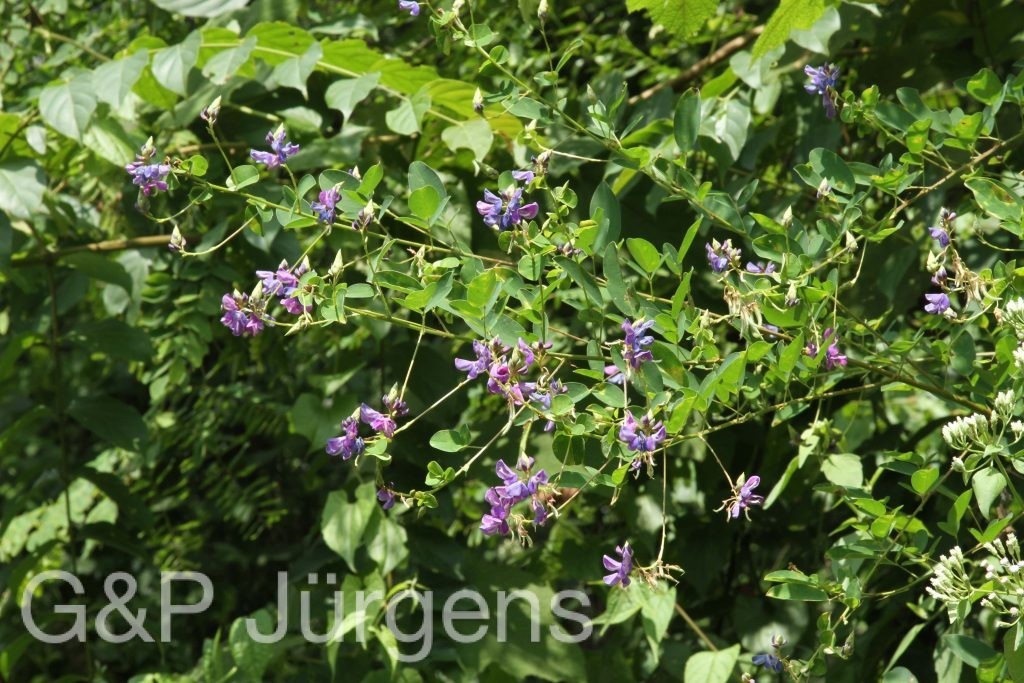
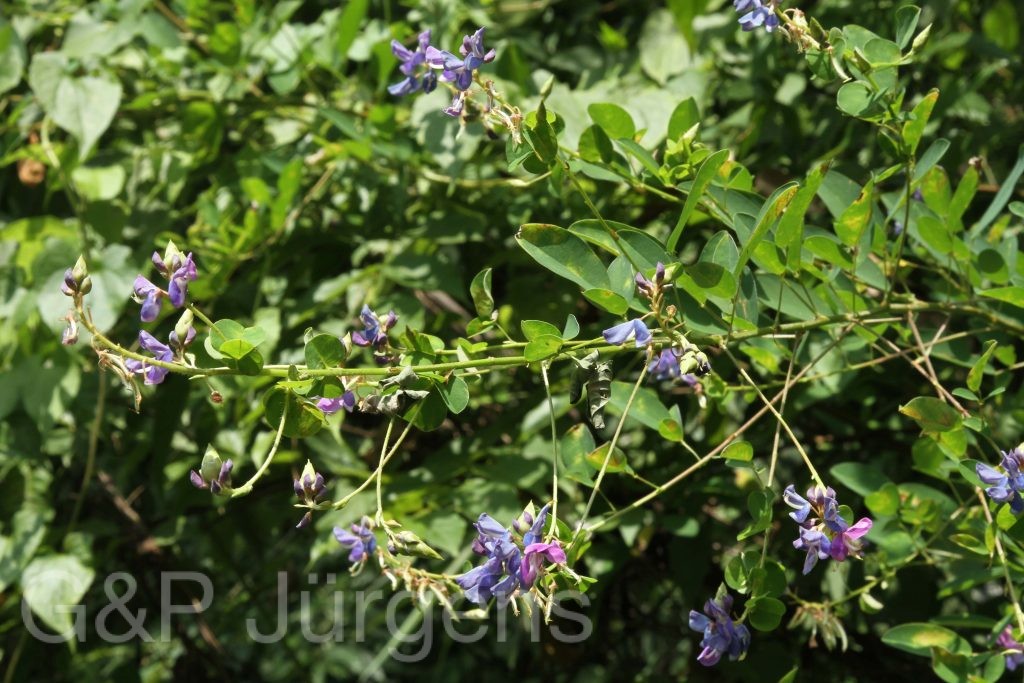
Ototropis multiflora (DC.) H.Ohashi & K.Ohashi, long familiar as Desmodium multiflorum, is a shrubby legume widely distributed through tropical and subtropical Asia. GBIF records (over 1400 occurrences) extend from Pakistan, Nepal, northern India and Bhutan eastward through southern China, Taiwan, Myanmar, Thailand, Laos, Vietnam and Malaysia. It grows in open forest, scrub, forest margins, roadsides and grassy hill slopes at lower and middle elevations, broadly from near sea level to about 2400 m. The specimen photographed at Trithangebe in Bhutan at 1050 m in October, flowering late in the warm season, typifies its preference for warm, well-lit subtropical foothill habitats.

It is an erect, much-branched shrub up to about 1-2 m tall, with young stems and foliage softly pubescent. The leaves are pinnately trifoliolate; leaflets are ovate to elliptic, the terminal one largest, densely soft-hairy beneath, and subtended by persistent stipules. Flowers are borne in many-flowered terminal and axillary racemes or panicles, each papilionaceous corolla pink to purple, the keel enclosing the diadelphous stamens. The fruit is a flattened, several-jointed loment, the segments shallowly constricted and clothed in hooked uncinate hairs that adhere to fur and clothing, promoting epizoochorous dispersal.

The segregation of Ototropis from the broadly defined Desmodium follows molecular work by H. Ohashi and K. Ohashi that resolved tribe Desmodieae into several well-supported genera; Ototropis multiflora is therefore the currently accepted name. As a nitrogen-fixing legume it contributes to soil fertility on disturbed slopes and is used locally as fodder and in traditional medicine. Widespread, weedy and adaptable, it is of least conservation concern and readily colonises secondary habitats.

Author: (DC.) H.Ohashi & K.Ohashi · Sources: POWO (Kew), GBIF, Flora of China, Flora of Bhutan, Ohashi & Ohashi revision of tribe Desmodieae, Annotated Checklist of the Flowering Plants of Nepal