
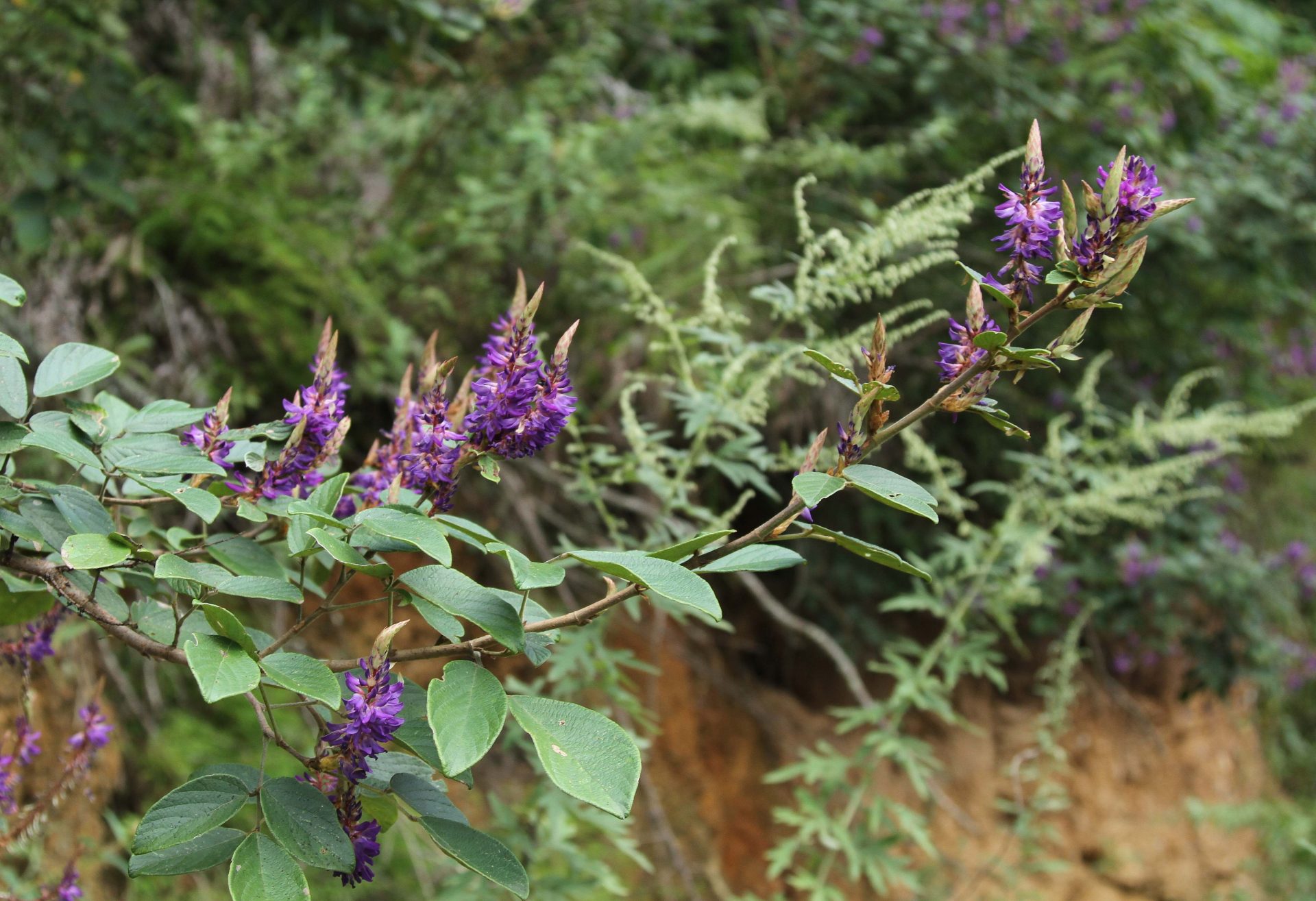
(DC.) H.Ohashi & K.Ohashi.
Description
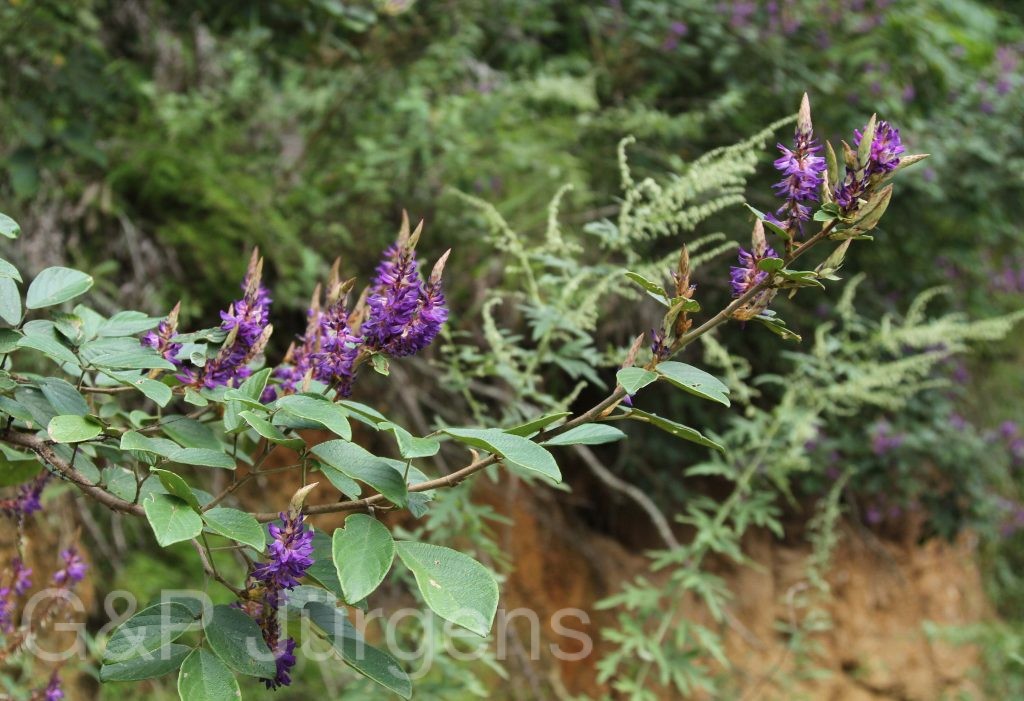
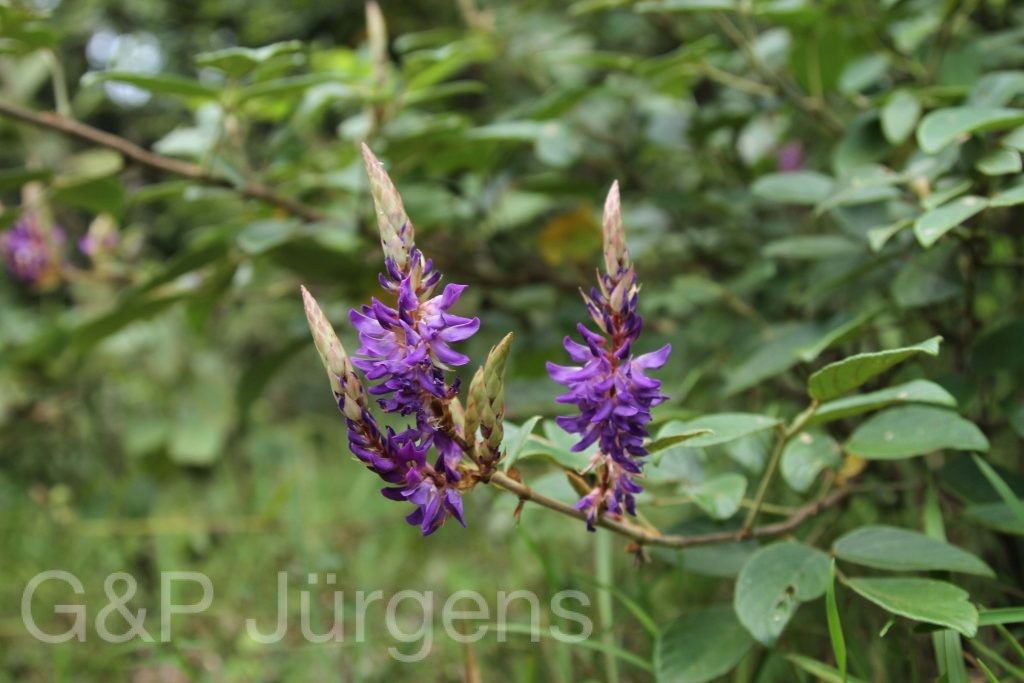
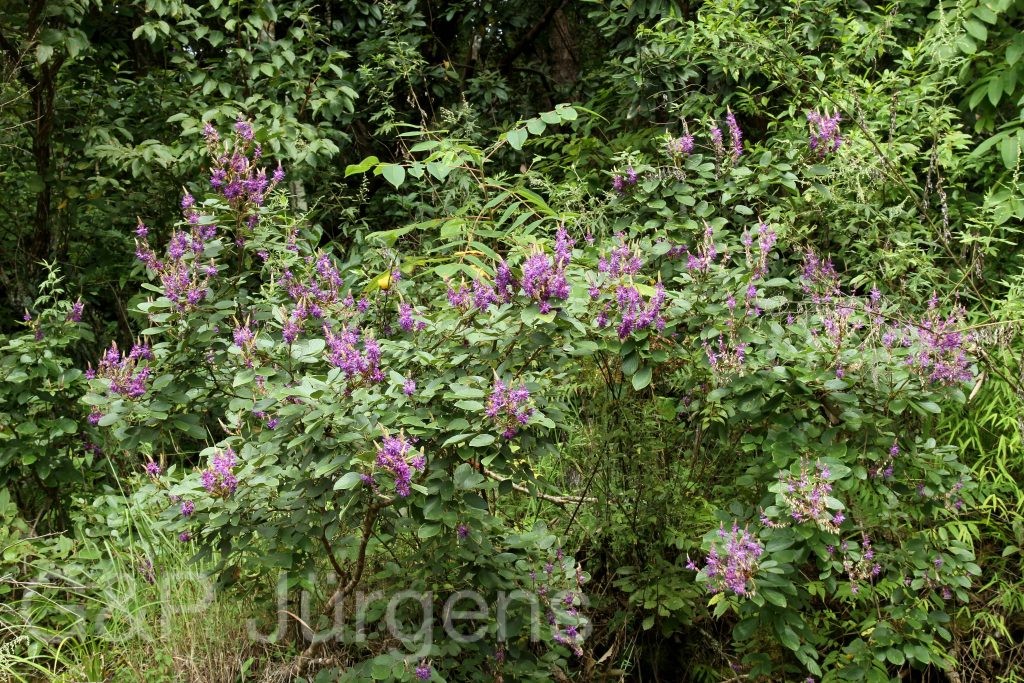
Ototropis conferta is a Himalayan legume distributed through Nepal, India and Bhutan, with GBIF recording about 112 occurrences across the central and eastern ranges. It is a shrub of warm temperate and subtropical hill forest, growing on open slopes, forest edges, scrub and roadside banks typically between roughly 1000 and 2000 m. The accompanying records from Trithangebe in southern Bhutan at 1200 and 1400 m, flowering in October, capture its characteristic autumn flowering in the lower-montane belt, where it forms part of the shrubby understorey and edge vegetation alongside other broom-like legumes on well-drained, often disturbed ground.
It is a woody shrub with slender, sometimes arching branches that are finely pubescent when young. The leaves are pinnately trifoliolate, the leaflets elliptic to ovate with entire margins and an appressed indumentum, subtended by small stipules. The inflorescences are dense, many-flowered terminal and axillary racemes or panicles, the epithet referring to the crowded arrangement of the flowers. Each papilionaceous flower has a campanulate calyx and a corolla of standard, wings and keel, coloured pink to purple, fading as it ages. The diadelphous stamens are enclosed within the keel. The fruit is a flattened, several-jointed loment that breaks at maturity into one-seeded articles, their surfaces clad in hooked hairs that promote epizoochorous dispersal.
The species was long placed in the large genus Desmodium as D. confertum, and was transferred to Ototropis by H.Ohashi and K.Ohashi following molecular and morphological revision of the Desmodieae, which fragmented the traditional broad Desmodium into several segregate genera. As a nitrogen-fixing pioneer of forest edges and disturbed slopes it contributes to soil enrichment and early successional cover, and its adhesive loment articles make it an effective colonist of new ground. It is neither rare nor of particular conservation concern across its Himalayan range.
Author: (DC.) H.Ohashi & K.Ohashi. · Sources: POWO (Kew), GBIF, Flora of Bhutan, Annotated Checklist of the Flowering Plants of Nepal, Ohashi & Ohashi revision of the Desmodium group, Legumes of the World