Author

G & P Jürgens

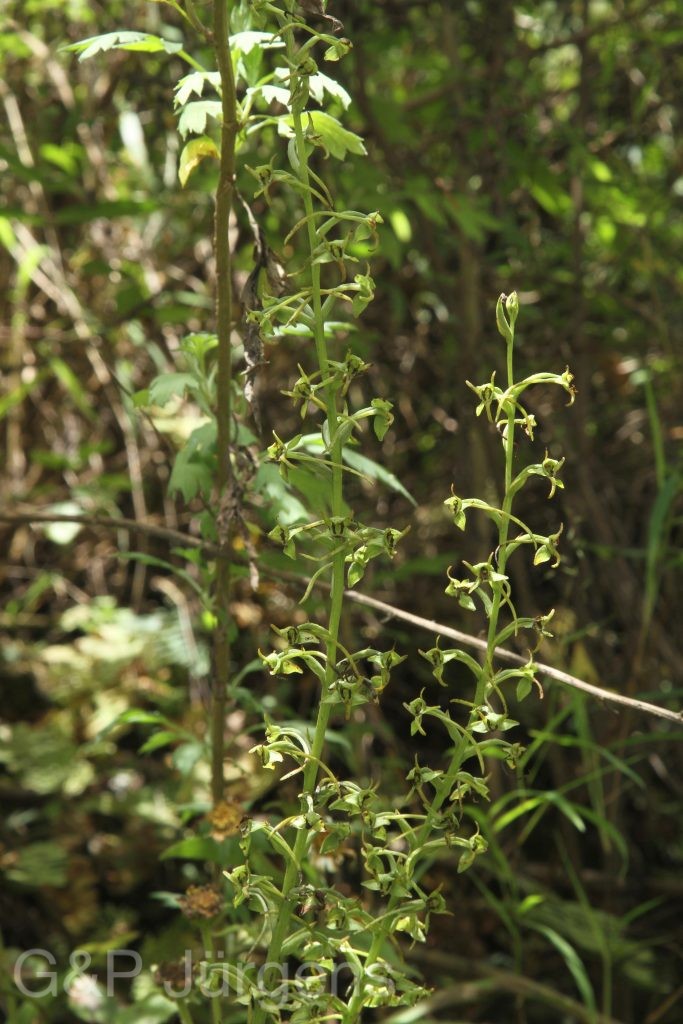
(Duthie) Tang & F.T.Wang
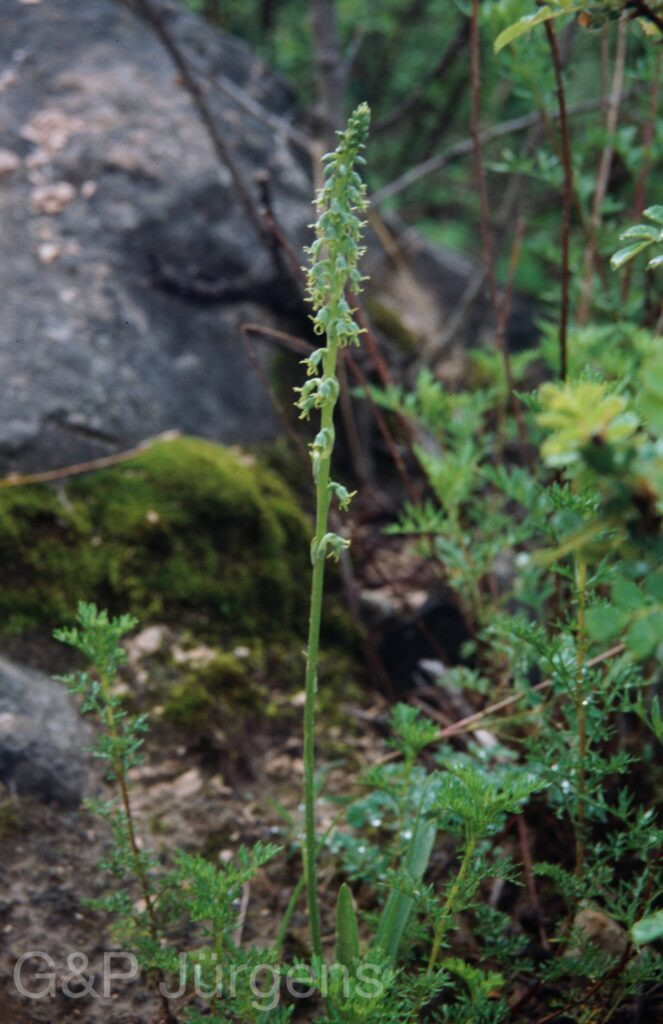
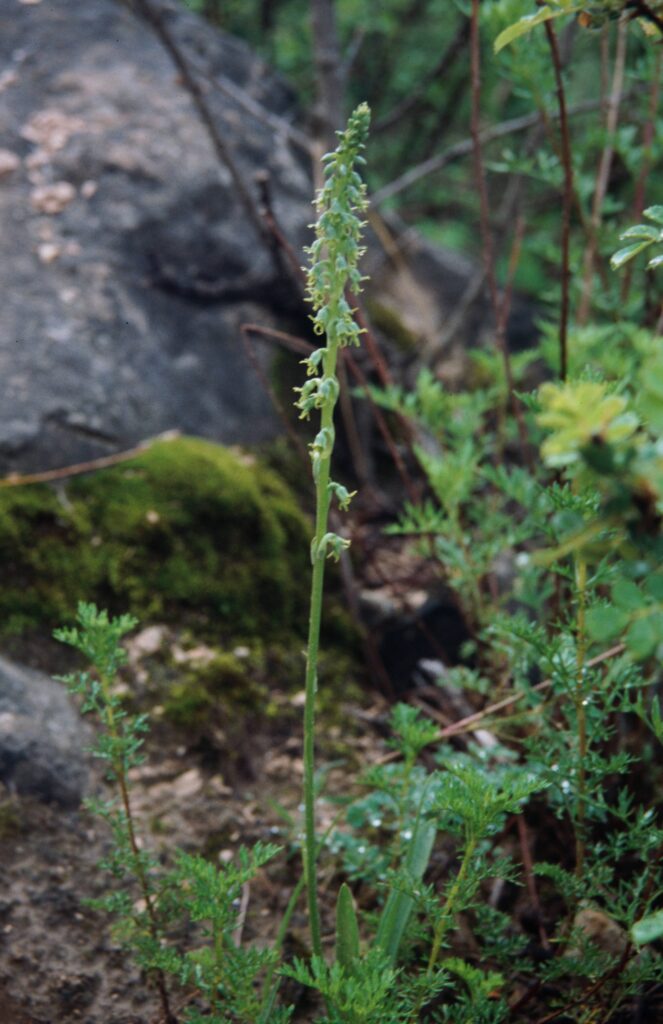
Nepal 99 706 ergebnis
West-Nepal, Pungmo-Khola 3800m, July

Description

Herminium elisabethiae (Duthie) Tang & F.T.Wang is a small terrestrial orchid of the Himalaya, formerly treated under Peristylus, as its synonymy and the source URL indicate. Although GBIF currently holds no georeferenced occurrence records for the name, the species is known from the western and central Himalaya, where it grows in alpine and subalpine grassland, open turf and grassy slopes. It was photographed in West Nepal along the Pungmo-Khola at 3800 m in July, during the summer monsoon flowering period typical of high-elevation Himalayan terrestrial orchids.

The plant is a slender, glabrous geophyte arising from small ovoid or spherical underground tubers. The stem bears a few narrow, lanceolate to linear leaves clustered near the base, grading into bract-like cauline leaves above. The inflorescence is a slender, cylindrical, many-flowered raceme of small greenish to yellowish-green flowers, each subtended by a narrow bract. The flowers show the dorsal sepal and petals converging into a hood over the column, with a small spurred or saccate, often three-lobed labellum characteristic of the Herminium-Peristylus alliance. The fruit is a small ellipsoid capsule releasing abundant dust-like seeds.

The genus Herminium, in tribe Orchideae of subfamily Orchidoideae, comprises small alpine and subalpine orchids of temperate Eurasia, and molecular work has repeatedly transferred species between Herminium and Peristylus, explaining the nomenclatural history here. The original family field is given verbatim as "Orchideaceae", though the correct spelling is Orchidaceae. As with most terrestrial orchids it depends on mycorrhizal fungi for germination, and its grassland habitat is vulnerable to grazing intensification and land-use change. The species is poorly documented and merits further field survey.

Author: (Duthie) Tang & F.T.Wang · Sources: POWO (Kew), GBIF, Flora of China, Flora of Nepal, Orchidaceae of the Himalaya (Tang & Wang; X. H. Jin revision of Herminium)
King & Pantl.

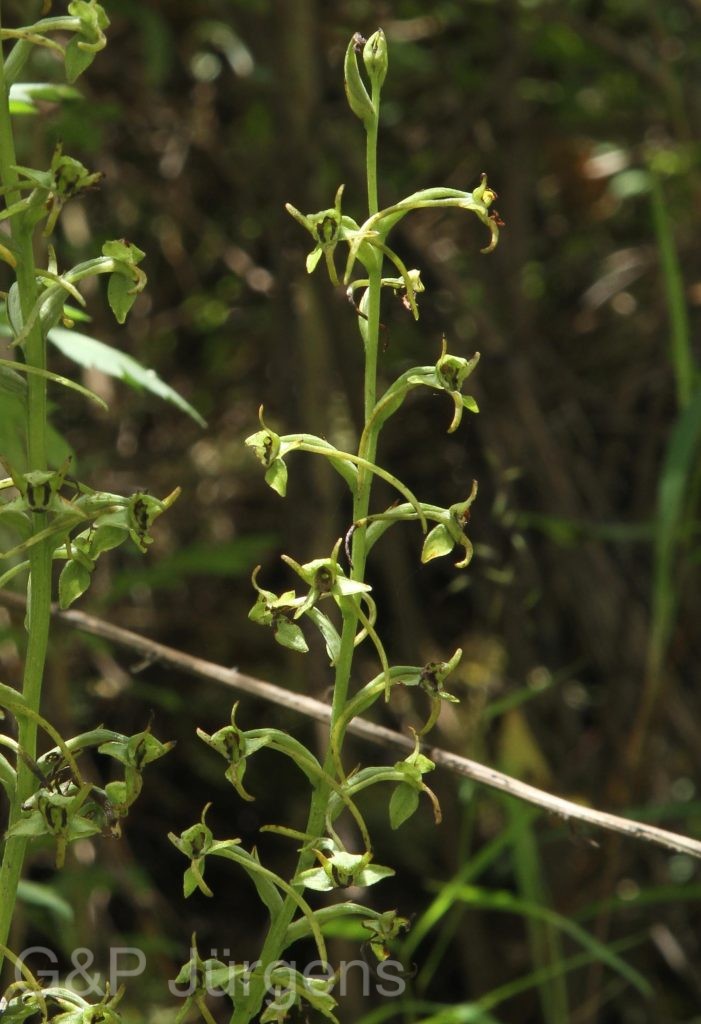
Nepal 99 706 ergebnis
Nepal Pugmo 3210m, July

Description

Herminium jaffreyanum is a terrestrial orchid native to the central and eastern Himalayas, distributed across Nepal, northeast India (Sikkim, Darjeeling), Bhutan, and adjacent parts of southern China (Xizang). The species occurs in montane meadows, grassy slopes, and open scrubland at elevations of 2,800–4,200 m, favouring well-drained, humus-rich soils. It is a component of the subalpine herbaceous flora, as evidenced by collections from Pugmo in Nepal at 3,210 m, where it flowers during the monsoon season in July.
The plant arises from a small, ovoid tuber and produces slender, erect stems 10–25 cm tall. The basal leaves are typically two, oblong-elliptic to lanceolate, 3–8 cm long, sheathing the stem at the base. The inflorescence is a lax, elongate raceme bearing numerous small, greenish-yellow flowers approximately 3–4 mm across. Each flower has a trilobed lip with a short, saccate spur; the lateral lobes are linear and divergent, while the mid-lobe is tongue-shaped. The column is short with two widely separated pollinia. Fruits are small, erect capsules containing dust-like seeds.
Herminium jaffreyanum belongs to a taxonomically complex genus within the subtribe Orchidinae, and its delimitation from allied species such as H. mackinnonii requires careful examination of lip morphology and spur structure. The species is relatively poorly collected, with only about 25 occurrence records documented in GBIF, suggesting it may be genuinely scarce or under-surveyed across its range. Its dependence on intact subalpine grasslands makes it potentially vulnerable to overgrazing and habitat conversion. Like all orchids, it falls under CITES Appendix II, and further field surveys across the Nepal–Sikkim corridor are needed to clarify its conservation status.

Author: King & Pantl. · Sources: POWO (Kew), GBIF, Flora of Bhutan Vol. 3, Pearce & Cribb: The Orchids of Bhutan (2002), King & Pantling: The Orchids of the Sikkim-Himalaya (1898)

(Lindl.) X.H.Jin, Schuit., Raskoti & Lu Q.Huang

Bhutan2012 1324
Bhutan Pemagatse, 1800m October
Bhutan2012 1323
Bhutan Pemagatse, 1800m October

Description

Herminium latilabre is a terrestrial orchid widely distributed across the Himalaya and Sino-Himalayan region, recorded from China, India, Nepal, Bhutan, Pakistan and Myanmar, with GBIF logging 414 occurrences, making it among the better-collected taxa in this group. It grows in moist montane forest, grassy slopes, mossy banks and forest margins. The illustrated plant was photographed at Pemagatse in Bhutan at about 1800 m, flowering in October, a humid mid-montane setting under partial shade.

It is a small, slender tuberous geophyte arising from a subterranean tuberoid. One or a few narrow, lanceolate to elliptic leaves are borne low on the stem, which terminates in a slender raceme of numerous small, greenish to yellowish-green flowers. The flowers are non-resupinate to weakly so, with a broad, often expanded labellum (the epithet latilabre, broad-lipped) and a reduced or absent spur, the column short and characteristic of the genus. The fruit is a small dehiscent capsule releasing dust-like seeds.

The species is accepted. Its present circumscription reflects recent molecular and morphological work by X.H. Jin, Schuiteman, Raskoti and colleagues, who have reorganised the boundaries between Herminium and allied genera such as Androcorys and Monorchis. Like most temperate terrestrial orchids it depends on mycorrhizal fungi for germination and establishment, and is pollinated by small insects attracted to the inconspicuous flowers. Its broad range and frequency suggest a secure status, though grassland conversion poses local pressures.

Author: (Lindl.) X.H.Jin, Schuit., Raskoti & Lu Q.Huang · Sources: POWO (Kew), GBIF, Flora of China, Flora of Bhutan, Raskoti's Orchids of Nepal

(D.Don) Dandy

Bhutan2012 251
Bhutan Shele-La, 4000m September

Description

Herminium macrophyllum is a terrestrial orchid of the Himalaya and southwestern China, recorded from Nepal, China, India and Bhutan, with 160 occurrences in GBIF. It grows on alpine and subalpine meadows, grassy slopes and open turf, generally between 3000 and 4300 m. The plant photographed at Shele-La in Bhutan at about 4000 m in September is characteristic of the cool, moist high-altitude grassland where the species flowers in the late monsoon, its slender spikes rising among low alpine herbs and sedges on damp peaty soil.

The species is a small deciduous terrestrial herb arising from a pair of ovoid to globose underground tubers. The stem bears a few leaves, with one or two comparatively large, broadly elliptic to ovate basal leaves (the macrophyllum referring to this enlarged foliage) sheathing the base. The inflorescence is a slender, many-flowered cylindrical raceme of small greenish to yellowish-green flowers; each has a hooded dorsal sepal and petals forming a loose galea, spreading lateral sepals, and a labellum that is typically three-lobed with a short saccate or scarcely spurred base, the column short as is usual in the genus. The fruit is a small erect dehiscent capsule releasing copious minute seeds.

Herminium (subtribe Orchidinae, tribe Orchideae of the Orchidoideae) is a genus of small Eurasian terrestrial orchids centred on the Sino-Himalayan region, distinguished by their tuberous habit and inconspicuous green flowers; H. macrophyllum is set apart by its enlarged leaves. Like other terrestrial orchids it requires mycorrhizal fungi for seed germination and is pollinated by small insects attracted to the modest flowers. The species is locally frequent in intact alpine meadow but, as with all orchids, is listed under CITES Appendix II and is sensitive to grazing and habitat disturbance.

Author: (D.Don) Dandy · Sources: POWO (Kew), GBIF, Flora of China, Flora of Bhutan, Orchids of Bhutan, Genera Orchidacearum (Pridgeon et al.)

Retz.

Bhutan2015 276
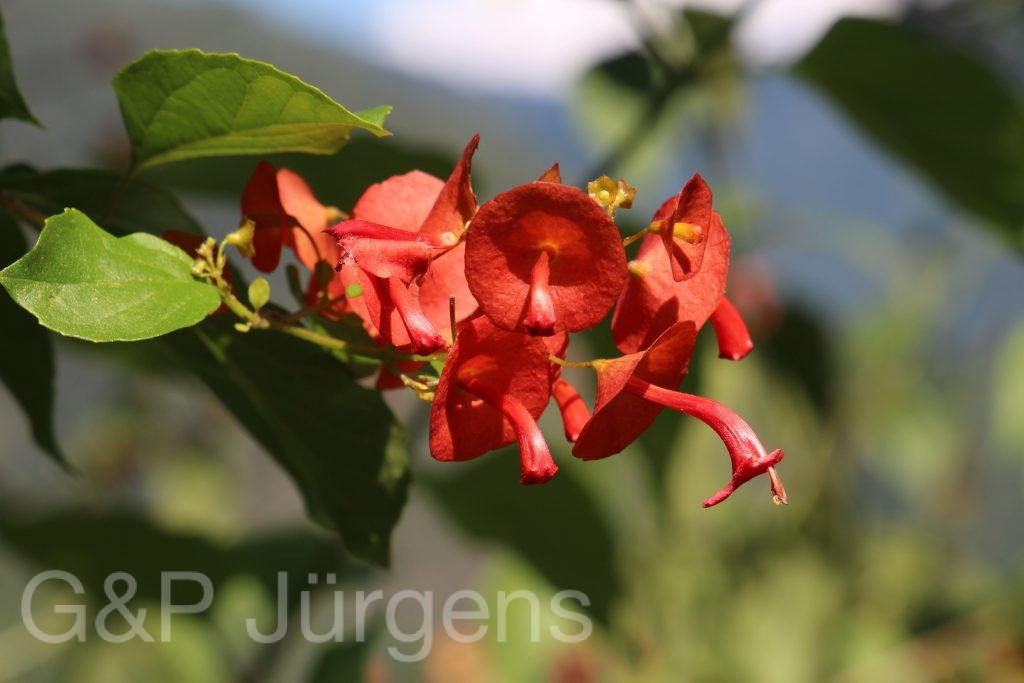
Bhutan Zhemgang 1000m, October
Bhutan2012 1040
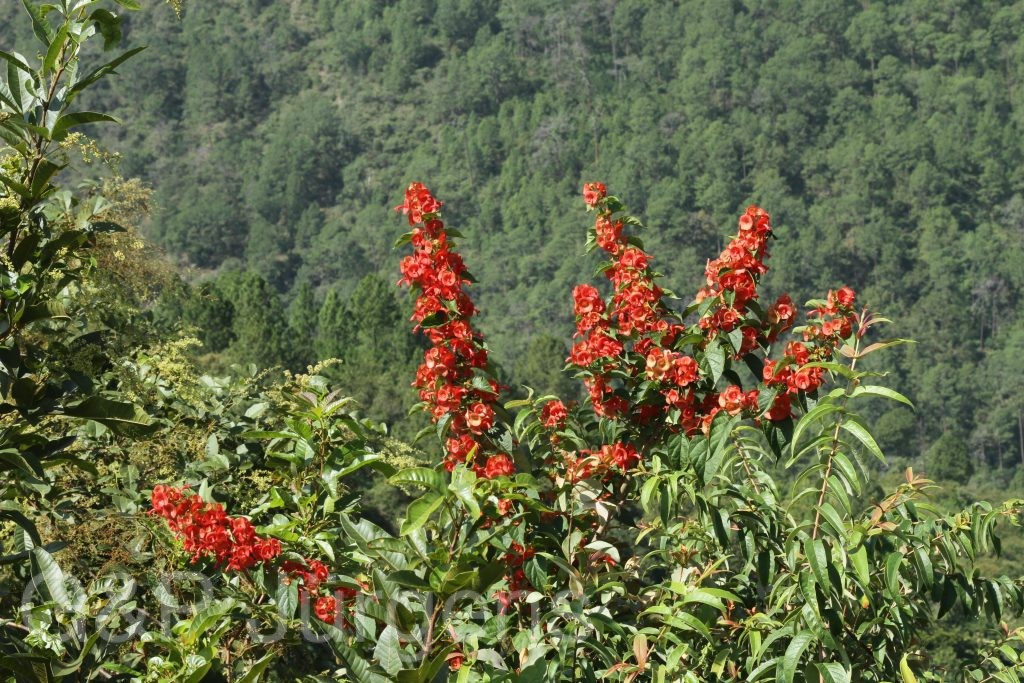
Bhutan Trithangebe 900m, October
Bhutan2012 1042
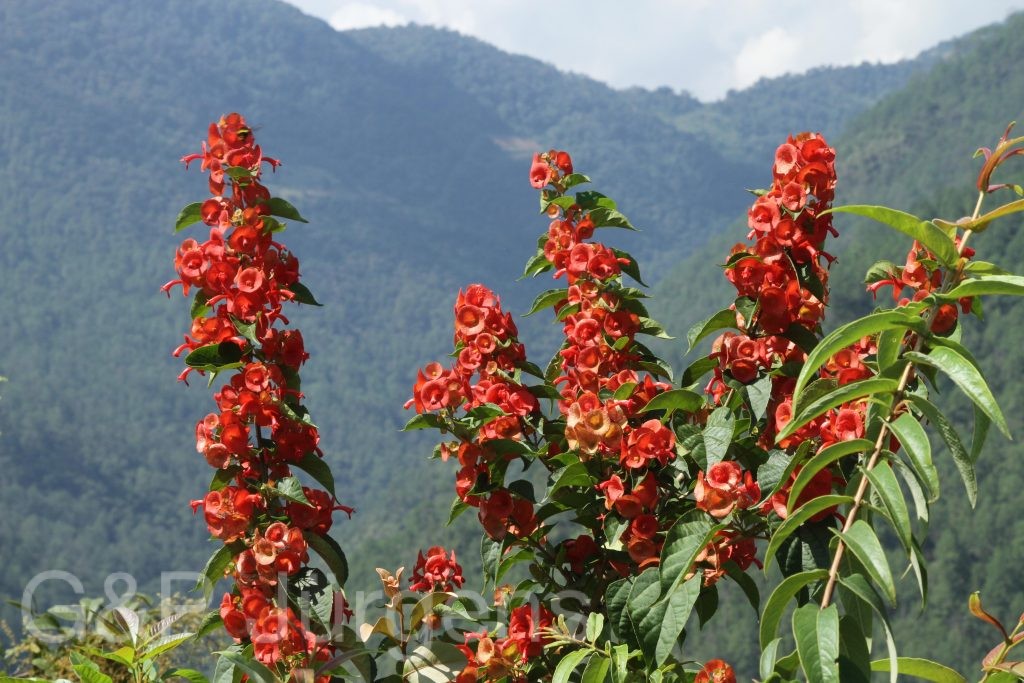
Bhutan Trithangebe 900m, October

Description

Holmskioldia sanguinea Retz., the Chinese hat plant or cup-and-saucer plant, is a subtropical shrub native to the foothills of the Himalaya in India, Nepal and Bhutan; GBIF lists nearly 1995 occurrences, the great majority from cultivation across the tropics, with records from the Americas, the Caribbean, the Philippines, Mauritius and Reunion attesting to its global ornamental dispersal. In its native range it grows along forest margins, ravines and warm valley slopes in the subtropical zone, generally below about 1500 m. The Bhutan records from Zhemgang at 1000 m and Trithangebe at 900 m, flowering in October, exemplify its occurrence in warm, low-elevation submontane habitats.

The species is a straggling to scandent evergreen shrub with quadrangular branches. The leaves are opposite, ovate, acuminate and serrate. The conspicuous flowers are borne in axillary cymes and are remarkable for the large, brick-red to orange, persistent, saucer-shaped calyx, from the centre of which the slender, curved, tubular corolla projects like a cup upon a saucer, with exserted stamens; this striking calyx accounts for both the common and specific names. The fruit is a small, four-lobed schizocarp seated within the persistent calyx.

Formerly placed in Verbenaceae, Holmskioldia is now classified in the Lamiaceae (subfamily Viticoideae) following molecular reappraisal of the verbenoid genera. Widely cultivated as a flowering ornamental in warm climates, it is of no conservation concern and occasionally naturalises beyond its native range.

Author: Retz. · Sources: POWO (Kew), GBIF, Flora of Bhutan, Flora of British India, Flora of China, Harley et al. Labiatae treatment in The Families and Genera of Vascular Plants

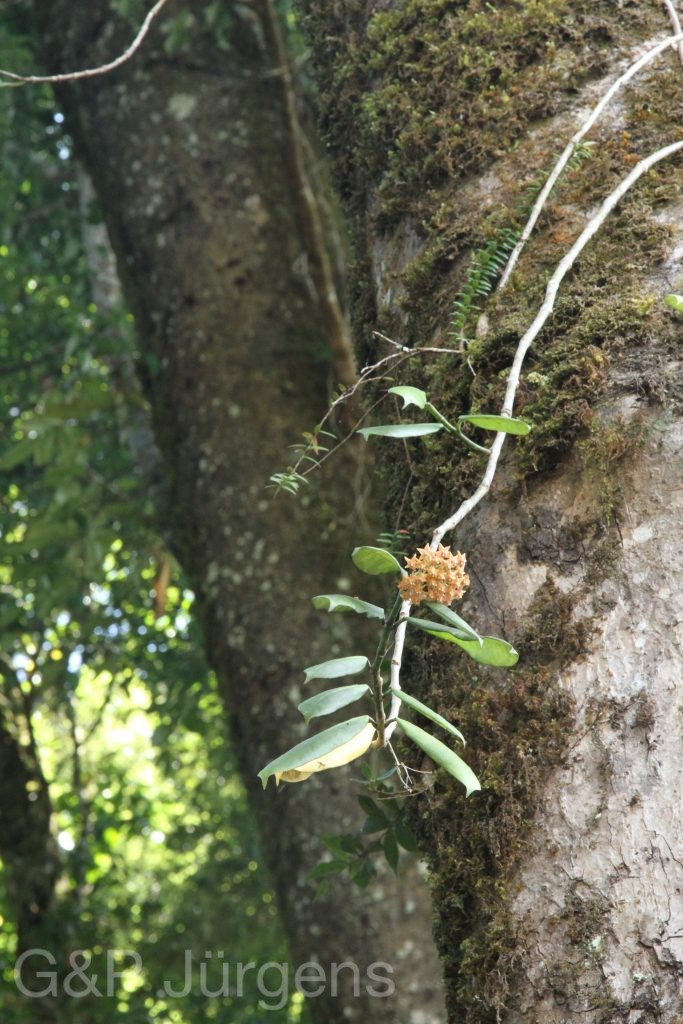
Hook.f.

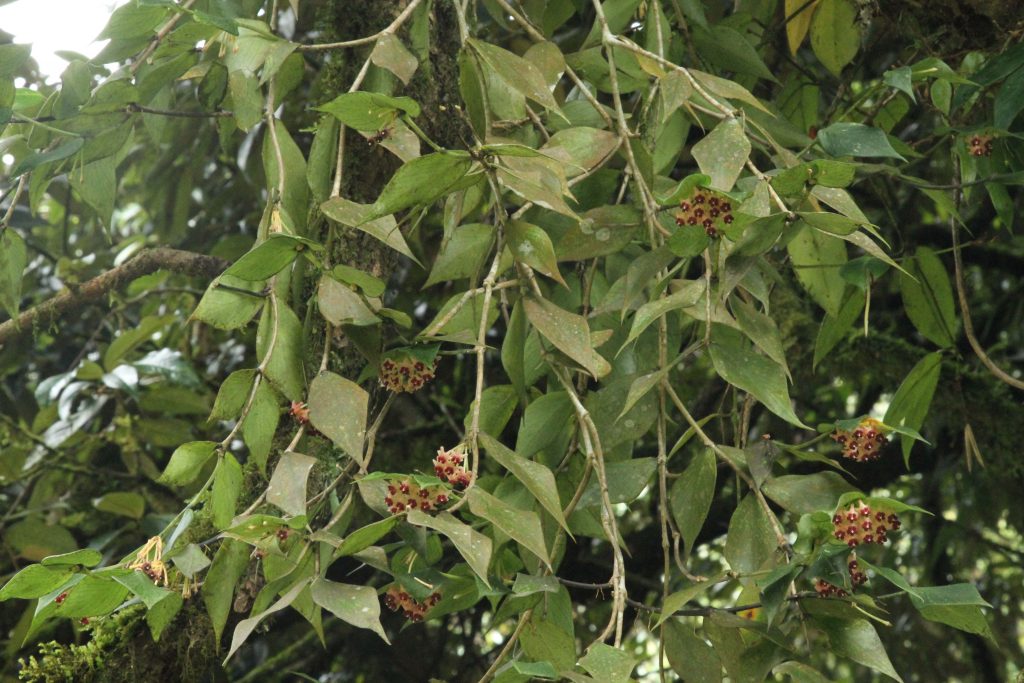
Bhutan2015 213
Bhutan Zhemgang 910m, October

Description

Hoya globulosa Hook.f. is an epiphytic climber of the eastern Himalaya and adjoining Indochina, recorded from India, Bhutan, China and Vietnam, with scattered cultivated material elsewhere; the GBIF total of about 115 occurrences reflects its moderately frequent presence in warm, humid montane forest. It grows as an epiphyte on mossy trunks and branches, occasionally as a lithophyte, in subtropical to warm-temperate broad-leaved evergreen forest, broadly between 700 and 1800 m. The photographed plant from Zhemgang in central Bhutan at about 910 m, flowering in October, typifies its occurrence in the moist, shaded foothill forests of southern Bhutan during the post-monsoon season.

The species is a robust, woody, climbing or pendent epiphytic vine with stout stems rooting at the nodes and exuding milky latex when broken. The leaves are opposite, thick and coriaceous, large, elliptic to oblong-lanceolate, acuminate, with a stout midrib and prominent, somewhat impressed lateral venation. The inflorescence is a dense, many-flowered, globose, umbelliform cyme on a persistent peduncle — the rounded flower-head giving the epithet globulosa. The flowers are small, with a fleshy, reflexed, hairy-margined corolla, pale yellow to greenish-white often suffused pink, surmounted by the characteristic waxy, glistening, star-shaped staminal corona. Pollen is borne in paired pollinia, and the fruit is a slender, elongate paired follicle releasing plumed seeds.

Hoya (Apocynaceae, subfamily Asclepiadoideae) is a large palaeotropical genus distinguished by its waxy coronate flowers and pollinarial reproduction; H. globulosa belongs to the large-leaved, dense-umbelled Himalayan-Indochinese assemblage. Its bold foliage and tight spherical flower-heads have made it sought-after in specialist Hoya cultivation. As a forest-dependent epiphyte it is potentially threatened by lowland deforestation and collection pressure, although formally unassessed and locally not uncommon within intact forest.

Author: Hook.f. · Sources: POWO (Kew), GBIF, Flora of China, Flora of Bhutan, Flora of British India, Surveswaran et al. — Phylogeny and revision of Hoya

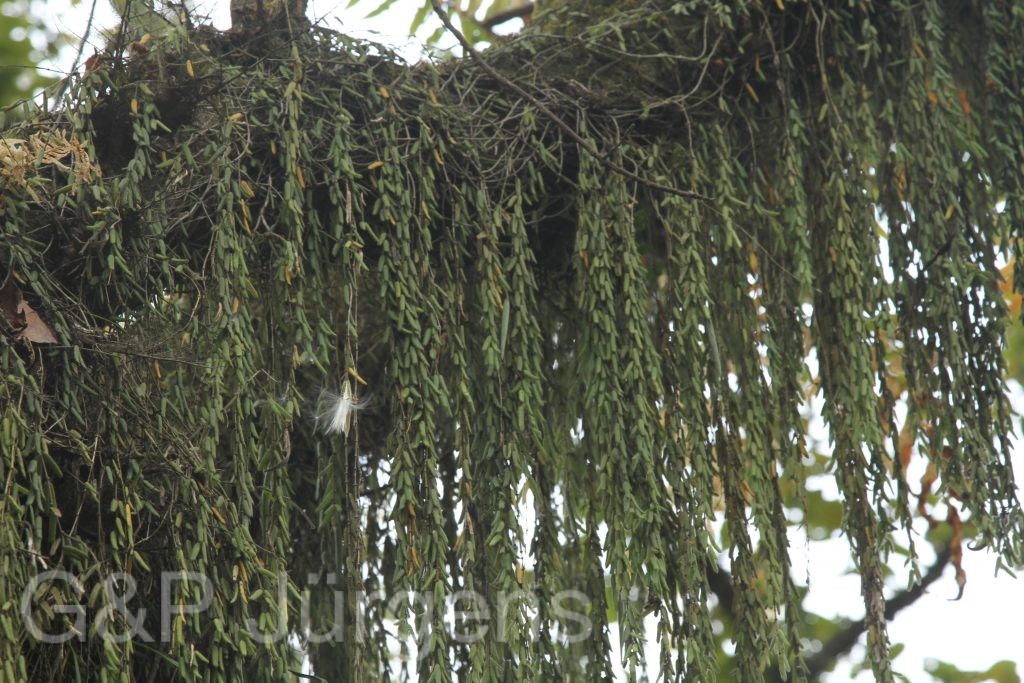
Wall. ex D.Don

Bhutan2012 1175
Bhutan Trashiyantse 1780m, October
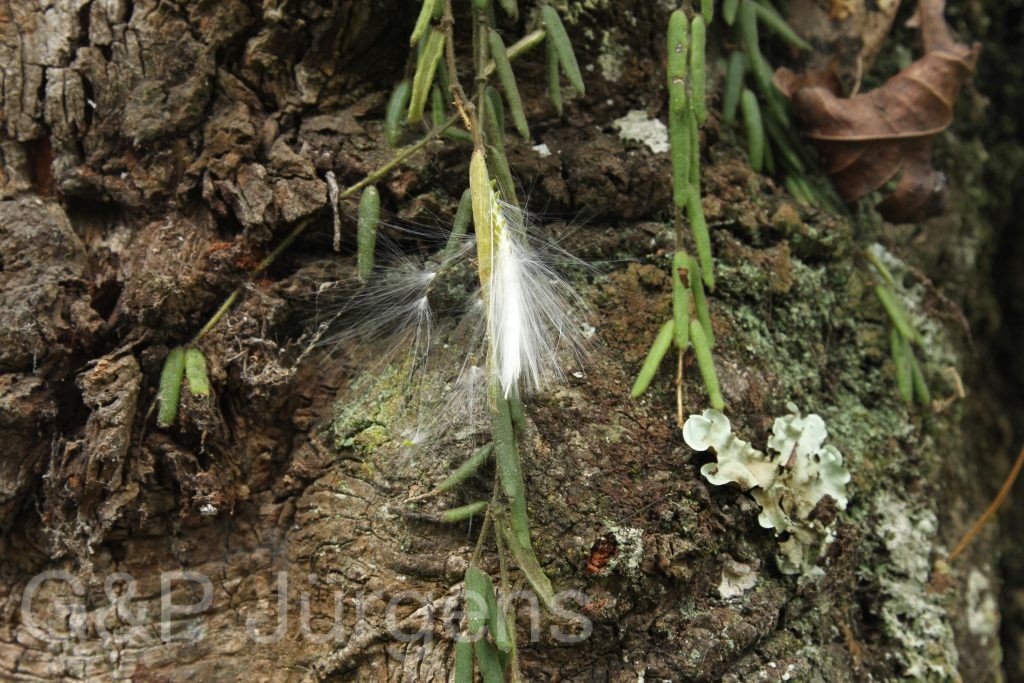
Bhutan2012 1177
Bhutan Trashiyantse 1780m, October

Description

Hoya linearis is a Himalayan epiphytic wax-plant, GBIF recording around 106 occurrences from India, Bhutan, Nepal, China and Myanmar, the remaining records (US, ZA, FI, VN) representing cultivated material of this popular ornamental. It grows as a pendent epiphyte on mossy tree trunks and branches in humid, shaded broadleaved and evergreen montane forest, generally between about 1500 and 2500 m, where persistent cloud and high humidity sustain its succulent foliage. The plant photographed from Trashiyangtse (Trashiyantse) in eastern Bhutan at 1780 m, flowering in October, typifies its occurrence in cool, moist mid-montane forest where it festoons the canopy in long hanging masses.

It is a glabrous to softly hairy epiphytic subshrub with slender, trailing or pendent stems rooting at the nodes. The leaves are distinctive: linear, narrow, soft, slightly fleshy and grooved above, hanging in dense curtains quite unlike the broad succulent leaves of most Hoya. The flowers are borne in pendent umbellate cymes; each has a small calyx and a fleshy, white, five-lobed, star-shaped corolla with a central corona typical of the asclepiad group, sweetly fragrant especially in the evening. The fruit is a slender paired follicle releasing comose seeds dispersed by wind.

Described by Wallich (ex D. Don), H. linearis is placed in Hoya within Apocynaceae (subfamily Asclepiadoideae, formerly Asclepiadaceae). Its specialised epiphytic, narrow-leaved habit makes it readily recognisable and a much-grown houseplant, though wild populations depend on intact humid montane forest and are vulnerable to deforestation and over-collection. Ecologically its fragrant flowers attract insect pollinators, while its plumed seeds exploit air currents to colonise new host trees.

Author: Wall. ex D.Don · Sources: POWO (Kew), GBIF, Flora of Bhutan, Flora of China, The Genus Hoya (Asclepiadaceae) – Kleijn & van Donkelaar monograph

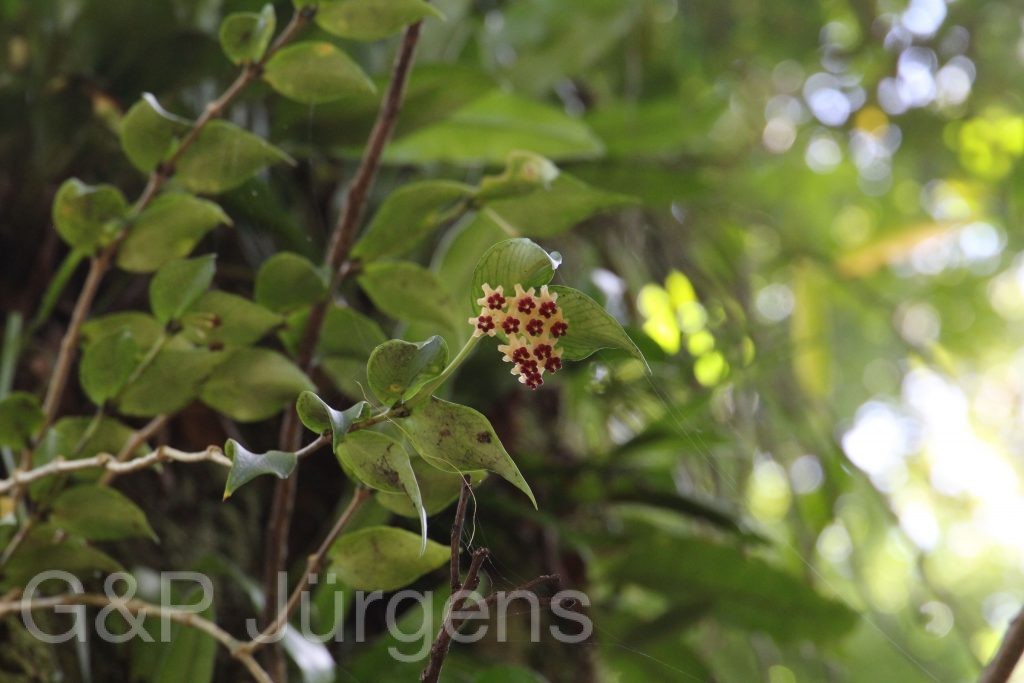
Hook.f.

Bhutan2015 202
Bhutan Zhemgang 1000m, October
Bhutan2012 764
Bhutan Zemgang 1400m, October

Description

Hoya polyneura Hook.f. is an epiphytic vine of the eastern Himalaya and adjoining ranges, recorded from India, Bhutan, Nepal and China, with disjunct material from Japan; the GBIF total of about 59 occurrences reflects its scattered, locally frequent presence in humid mid-montane forest. It grows as an epiphyte or lithophyte on mossy trunks and damp rock faces in subtropical to warm-temperate broad-leaved evergreen forest, broadly between 800 and 2000 m. The photographed plants from Zhemgang in central Bhutan at about 1000 and 1400 m, flowering in October, illustrate its occurrence in the moist, shaded forest interior of the southern Bhutanese foothills.

The species is a slender, twining to pendent epiphytic subshrub with thin, flexible stems rooting at the nodes and exuding milky latex when cut. The leaves are opposite, distinctly thin-textured and elliptic to ovate, with a prominent, fish-bone-like venation of fine, parallel lateral nerves arching to the margin — the feature giving the epithet polyneura. The inflorescence is an axillary, umbelliform cyme of few to several flowers; each has a fleshy, reflexed, five-pointed corolla, cream to yellowish often marked with red, surmounted by the waxy, star-shaped, glistening staminal corona typical of the genus. Pollen is aggregated into paired pollinia, and the fruit is a slender paired follicle releasing comose seeds.

Hoya (Apocynaceae, subfamily Asclepiadoideae) is a large palaeotropical genus distinguished by its waxy, coronate flowers and pollinarial pollination. H. polyneura is among the most distinctive Himalayan species owing to its conspicuously veined, almost translucent leaves, a prized character in cultivation where it is grown as the "fishtail Hoya." As a forest-dependent epiphyte it is sensitive to deforestation and over-collection for the ornamental trade, though formally unassessed and locally not uncommon within intact montane forest.

Author: Hook.f. · Sources: POWO (Kew), GBIF, Flora of China, Flora of Bhutan, Flora of British India, Surveswaran et al. — Phylogeny and revision of Hoya

D. Don

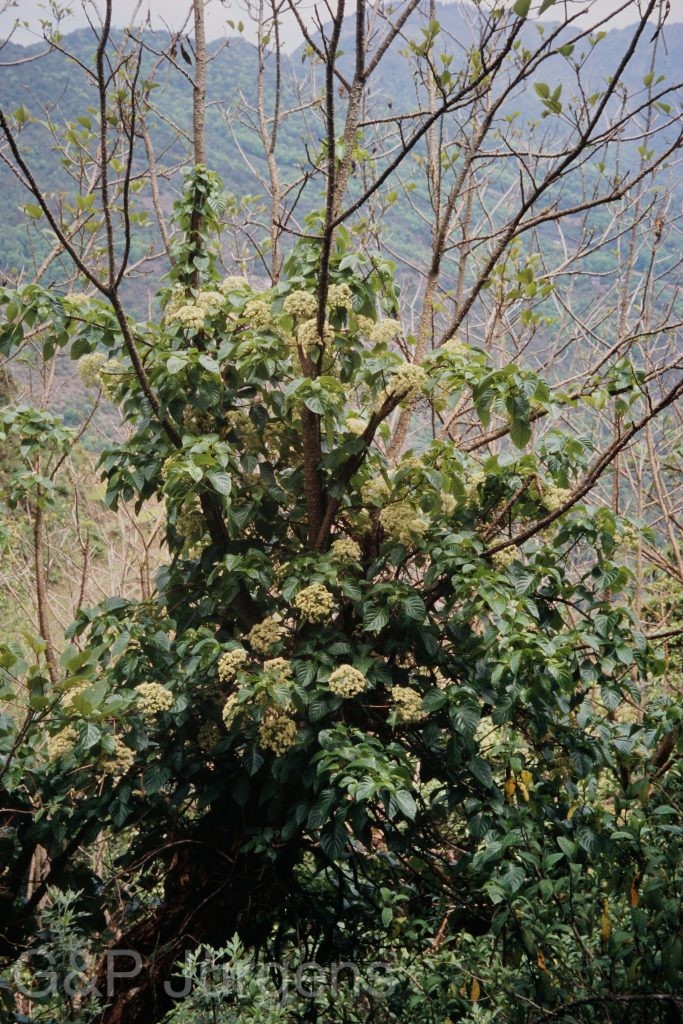
Bh2008 472 P734
Bhutan Samtengang, 2040m April
Bh2008 473 P736
Bhutan Samtengang, 2040m April
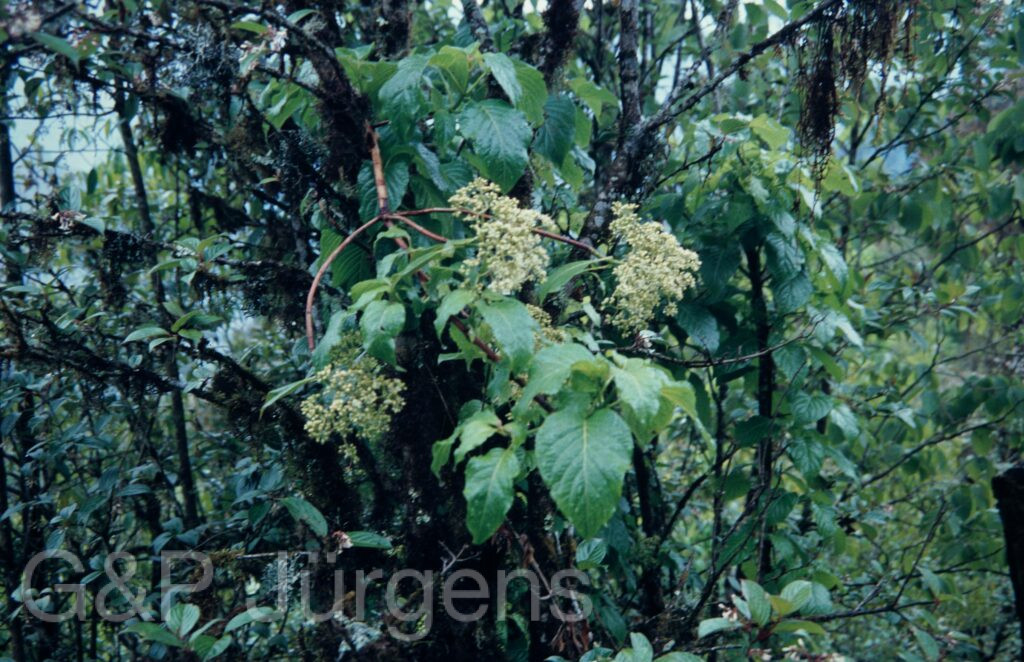
Nepal 1994 251 ergebnis
Ost-Nepal Milka-Danda 2400m April 

Description

Hydrangea anomala is a climbing shrub of temperate montane forests, one of the most widely recorded species in this group with over 2000 GBIF occurrences. Its native range extends along the Himalaya and through China, Taiwan, Myanmar, Japan and Korea, and it is widely grown in temperate gardens, generating cultivated records across Europe, North America and beyond. It inhabits moist broadleaved and mixed forest, climbing tree trunks and rock faces by adventitious aerial roots. It was photographed at Samtengang in Bhutan at about 2040 m and on the Milka-Danda ridge of eastern Nepal at about 2400 m, both in April, when the flat inflorescences open in the spring forest.

It is a deciduous, root-climbing liana with peeling, reddish-brown bark, attaching by clinging rootlets along the stems. The leaves are opposite, ovate to elliptic, acuminate, serrate and glabrescent, on slender petioles. The inflorescence is a broad, flattened corymb in which numerous small fertile flowers, with minute whitish petals and stamens, are surrounded by a marginal ring of showy sterile flowers bearing three to four enlarged, petaloid white sepals. The fruit is a small, ribbed, urn-shaped capsule opening between the persistent styles to release many minute seeds.

Hydrangea (Hydrangeaceae) comprises shrubs, climbers and small trees of east Asia and the Americas; the climbing species, including H. anomala, are sometimes placed in subgenus Calyptranthe, and H. petiolaris is often regarded as an allied subspecies. Long cultivated as an ornamental climber, H. anomala is widespread and secure across its native range, and is of biogeographic interest within the disjunct Sino-Himalayan to Japanese temperate forest flora.

Author: D. Don · Sources: POWO (Kew), GBIF, Flora of China, Flora of Bhutan, Annotated Checklist of the Flowering Plants of Nepal, McClintock's monograph of Hydrangea (Hydrangeaceae)

D. Don

Sikkim2011 179
Sikkim Lachen 2760m, June

Description

Hydrangea heteromalla is a deciduous shrub or small tree of the Himalaya and central China, with GBIF returning over 1600 occurrences spanning its native range in China, Nepal, India, Bhutan and Myanmar as well as numerous cultivated and naturalised records from Europe and North America. In the wild it grows in cool temperate forest, on open slopes, forest margins, ravines and shrubberies, typically between about 1500 and 3500 m. The plant photographed near Lachen in northern Sikkim at about 2760 m, flowering in June, occupies the moist temperate montane belt where the species is a frequent understorey and edge shrub.

The plant has stout, spreading branches with peeling bark and opposite leaves that are ovate to elliptic, acuminate, finely serrate, and characteristically discolorous, dark green above and densely pale-tomentose to whitish beneath, the indumentum giving the epithet heteromalla. The inflorescence is a broad, flat-topped to slightly domed corymb bearing many small fertile flowers surrounded at the margin by larger, showy, sterile ray-florets with four enlarged white sepaloid segments. The fertile flowers are small, white, with five petals and numerous stamens. The fruit is a small ribbed capsule opening at the apex to release numerous tiny seeds.

Hydrangea heteromalla is a variable and widespread species, the subject of much horticultural selection and the source of cultivated forms grown for their lacecap inflorescences, which explains its scattered records across temperate gardens worldwide. Within Hydrangea section Hydrangea it represents the principal Himalayan-Chinese montane lineage. Ecologically the marginal sterile florets serve to attract pollinators to the inconspicuous fertile flowers. The species is common and not threatened, and its wide ecological amplitude and ornamental value have ensured both its persistence in the wild and its global cultivation.

Author: D. Don · Sources: POWO (Kew), GBIF, Flora of China, Flora of Bhutan, McClintock "A Monograph of the Genus Hydrangea", Annotated Checklist of the Flowering Plants of Nepal