
D. Don

Description
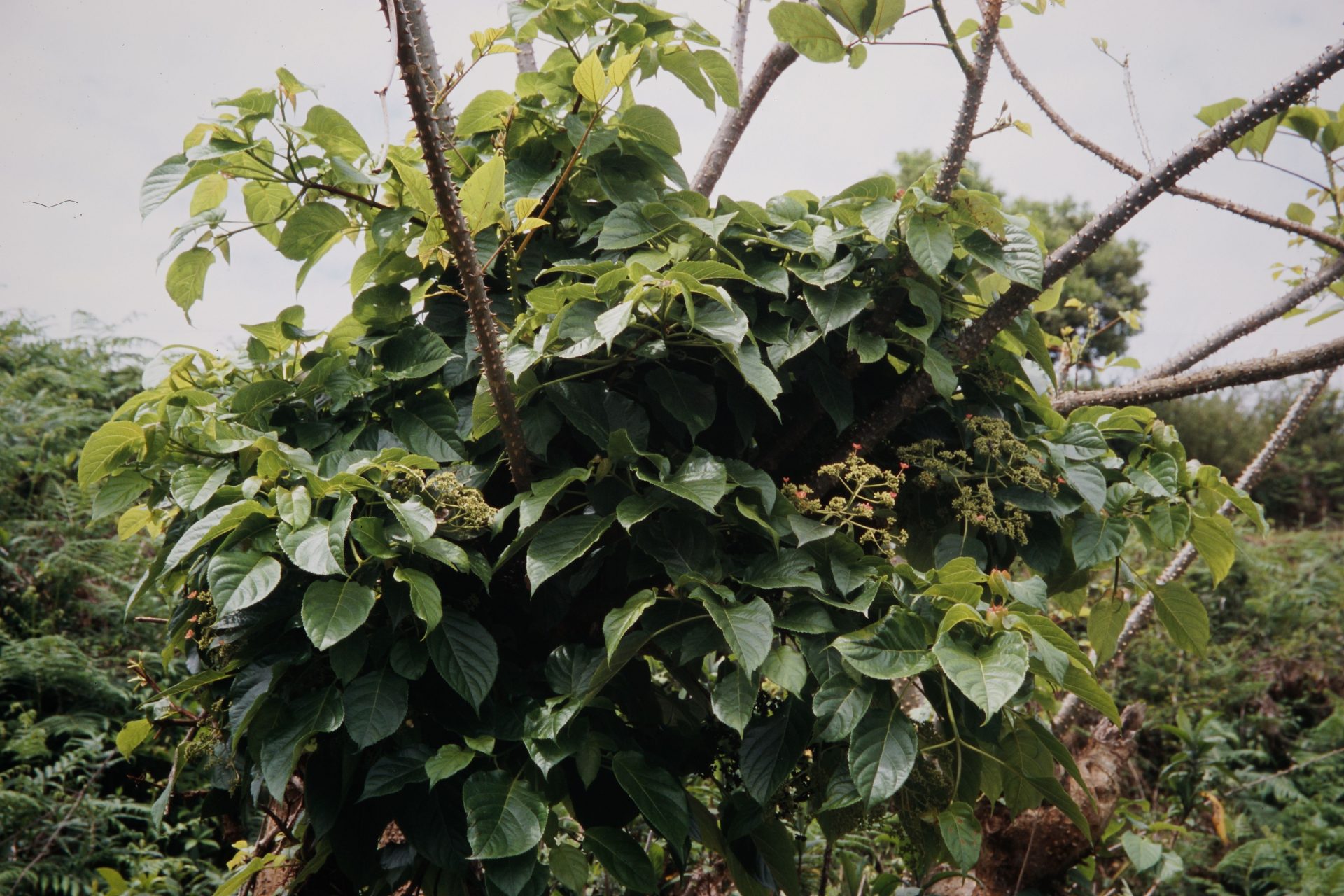
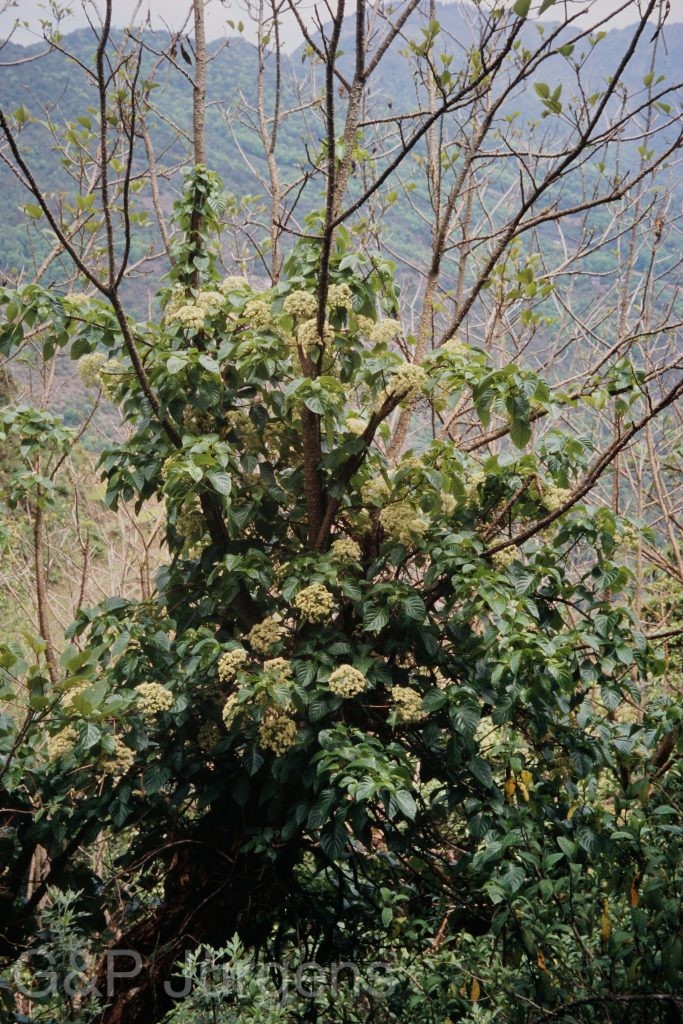
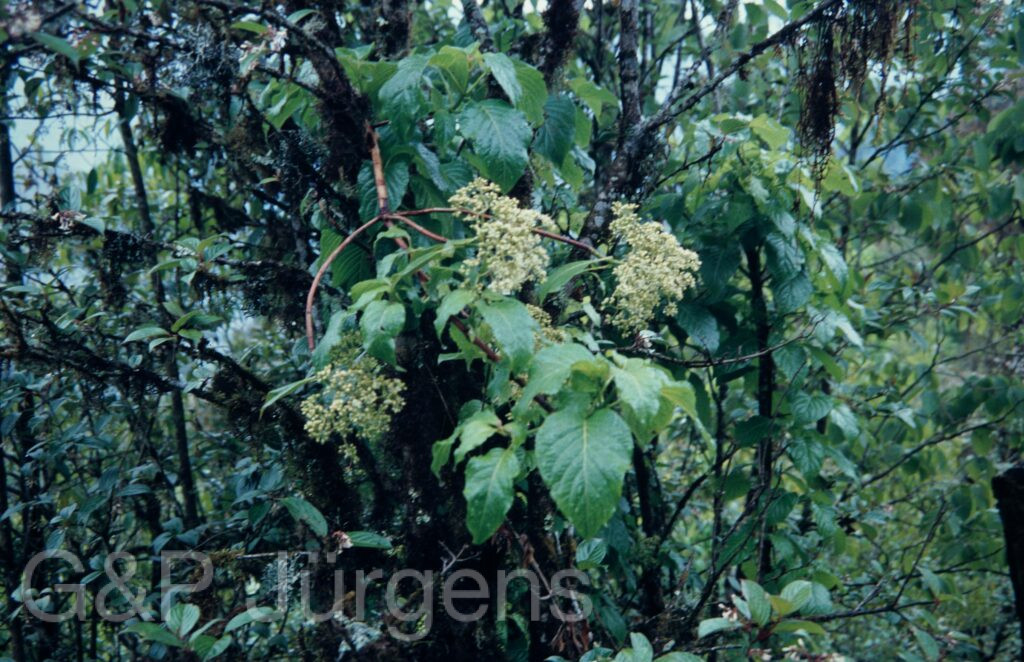
Hydrangea anomala is a climbing shrub of temperate montane forests, one of the most widely recorded species in this group with over 2000 GBIF occurrences. Its native range extends along the Himalaya and through China, Taiwan, Myanmar, Japan and Korea, and it is widely grown in temperate gardens, generating cultivated records across Europe, North America and beyond. It inhabits moist broadleaved and mixed forest, climbing tree trunks and rock faces by adventitious aerial roots. It was photographed at Samtengang in Bhutan at about 2040 m and on the Milka-Danda ridge of eastern Nepal at about 2400 m, both in April, when the flat inflorescences open in the spring forest.
It is a deciduous, root-climbing liana with peeling, reddish-brown bark, attaching by clinging rootlets along the stems. The leaves are opposite, ovate to elliptic, acuminate, serrate and glabrescent, on slender petioles. The inflorescence is a broad, flattened corymb in which numerous small fertile flowers, with minute whitish petals and stamens, are surrounded by a marginal ring of showy sterile flowers bearing three to four enlarged, petaloid white sepals. The fruit is a small, ribbed, urn-shaped capsule opening between the persistent styles to release many minute seeds.
Hydrangea (Hydrangeaceae) comprises shrubs, climbers and small trees of east Asia and the Americas; the climbing species, including H. anomala, are sometimes placed in subgenus Calyptranthe, and H. petiolaris is often regarded as an allied subspecies. Long cultivated as an ornamental climber, H. anomala is widespread and secure across its native range, and is of biogeographic interest within the disjunct Sino-Himalayan to Japanese temperate forest flora.
Author: D. Don · Sources: POWO (Kew), GBIF, Flora of China, Flora of Bhutan, Annotated Checklist of the Flowering Plants of Nepal, McClintock's monograph of Hydrangea (Hydrangeaceae)