Author

G & P Jürgens

H.J.P.Winkl

Bhutan2012 1036
Bhutan Trithangebe 900m, October

Description

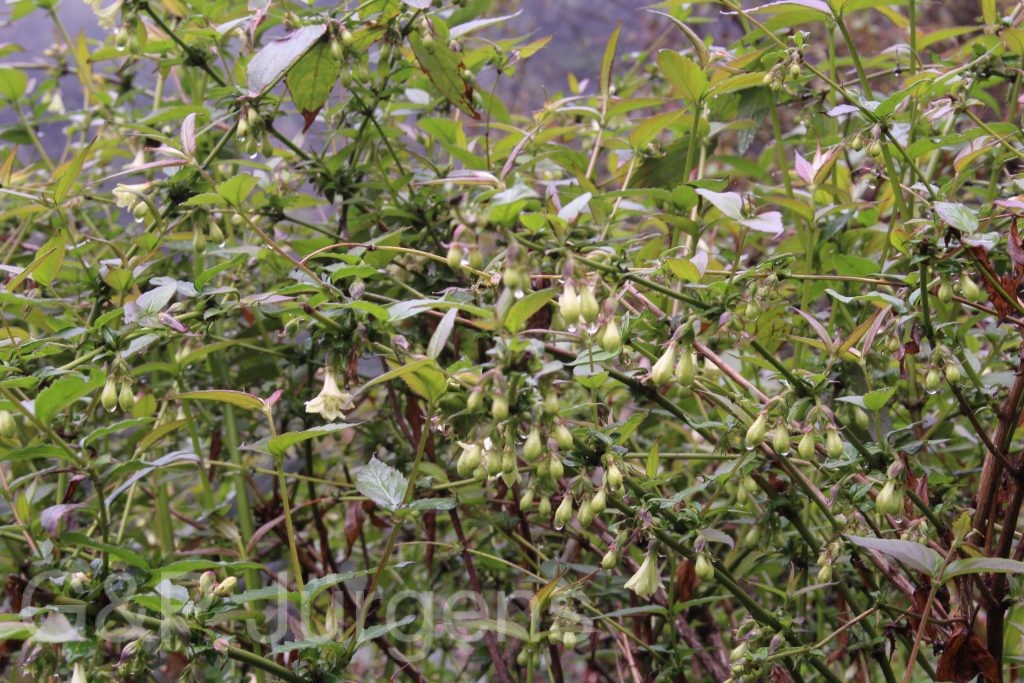
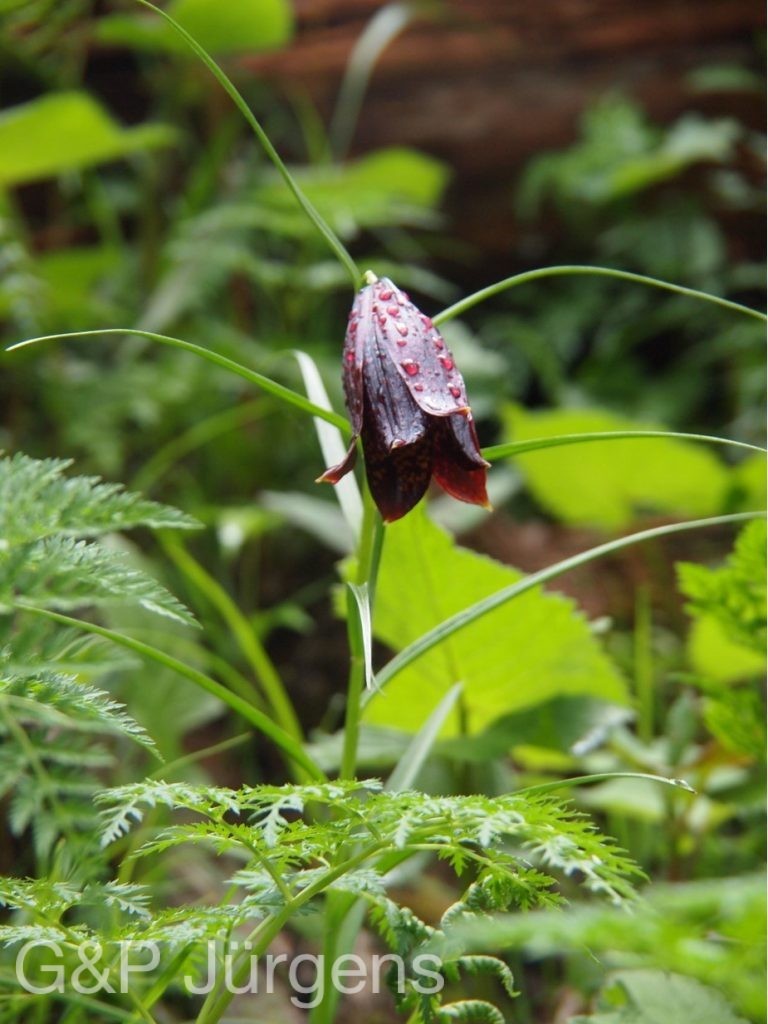
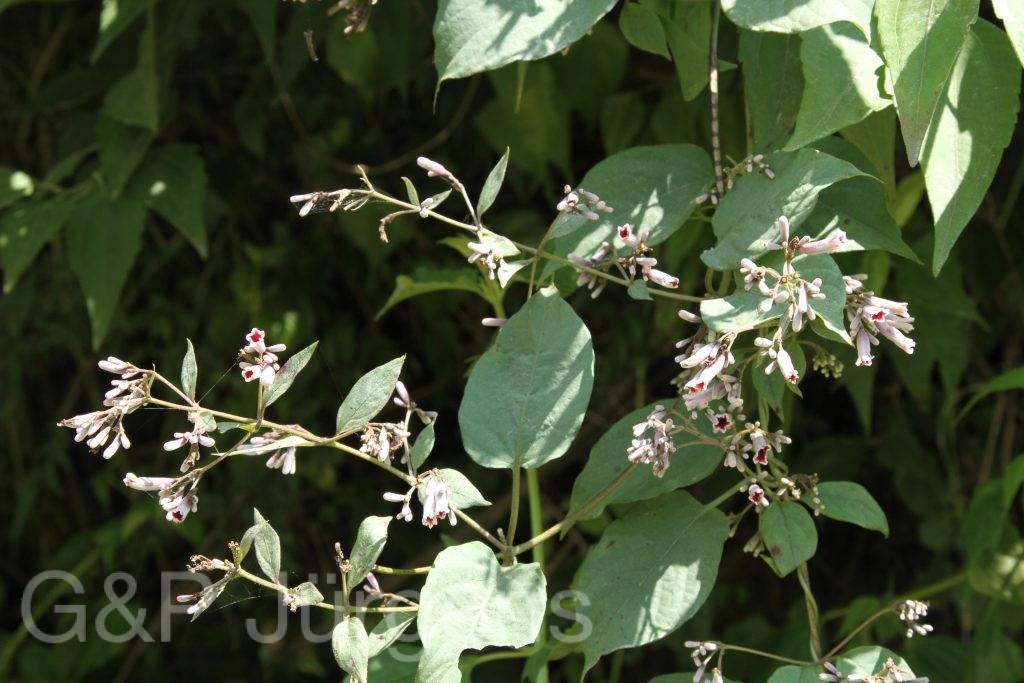
Leptodermis stapfiana H.J.P.Winkl. is a shrub of the Rubiaceae distributed through the central and eastern Himalaya and into adjacent China. GBIF records it from Nepal, Bhutan, India and China, with 76 georeferenced occurrences. The species favours warm to cool temperate slopes, forest margins, scrub and roadside thickets, typically on well-drained, often rocky ground. The illustrated plant from Trithangebe in Bhutan at 900 m, flowering in October, reflects its preference for the lower montane belt, where it can form conspicuous patches of bloom late in the growing season after the main monsoon.

The plant is an erect to spreading, much-branched shrub with slender, greyish, often finely pubescent branchlets. The leaves are opposite, small, ovate to lanceolate, entire, shortly petiolate, and subtended by triangular, aristate stipules characteristic of the genus. Flowers are sessile and clustered in the leaf axils and at the branch tips; the corolla is narrowly funnel-shaped, white to pale lilac or pinkish, with five (rarely four) spreading lobes that are valvate and crisped-pubescent within the throat. The species is typically heterostylous, and the fruit is a small dry capsule splitting into valves to release angular seeds enclosed in a delicate membranous testa, the feature that gives Leptodermis its name.

Leptodermis is a taxonomically difficult Sino-Himalayan genus in which species are separated largely by leaf size, calyx-lobe number and indumentum, and L. stapfiana sits within this radiation centred on the eastern Himalaya and southwest China. It is not regarded as threatened, but as a hardy, late-flowering nectar source it contributes to montane pollinator networks and to the structural diversity of Himalayan scrub vegetation.

Author: H.J.P.Winkl · Sources: POWO (Kew), GBIF, Flora of China Vol. 19, Flora of Bhutan Vol. 2, Flora of Nepal, Deb & Rout: Studies in Indian Leptodermis (Rubiaceae)
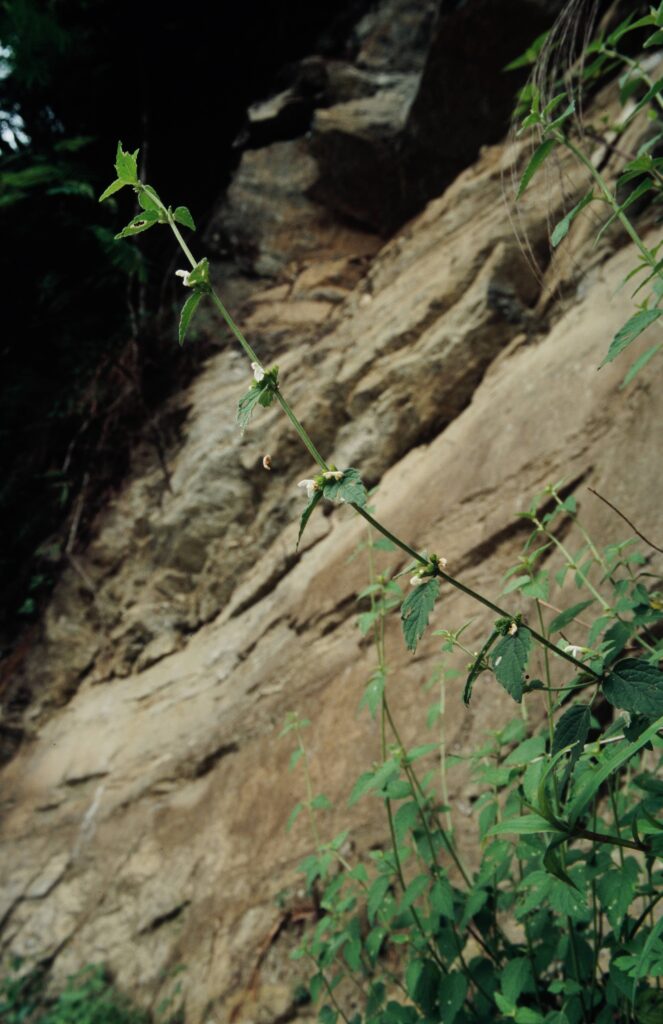
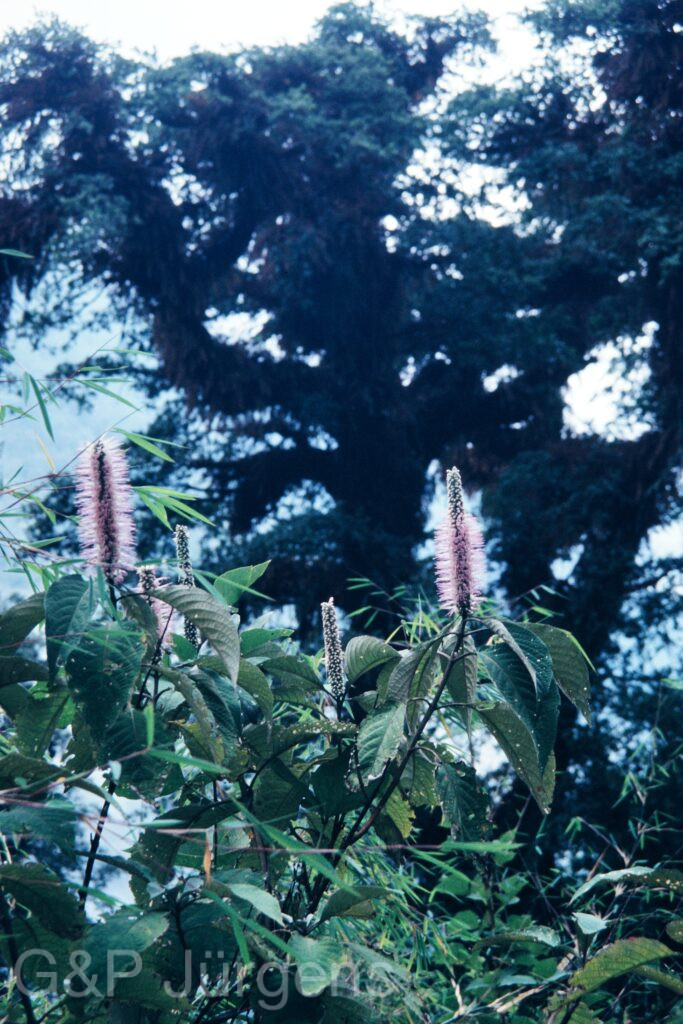
Leucas ciliata

by G & P Jürgens

Benth.

Bhutan2015 62
Bhutan Wangdi Phodrang 2000m, October
Bhutan2015 460
Bhutan Wangdi Phodrang 2000m, October

Description

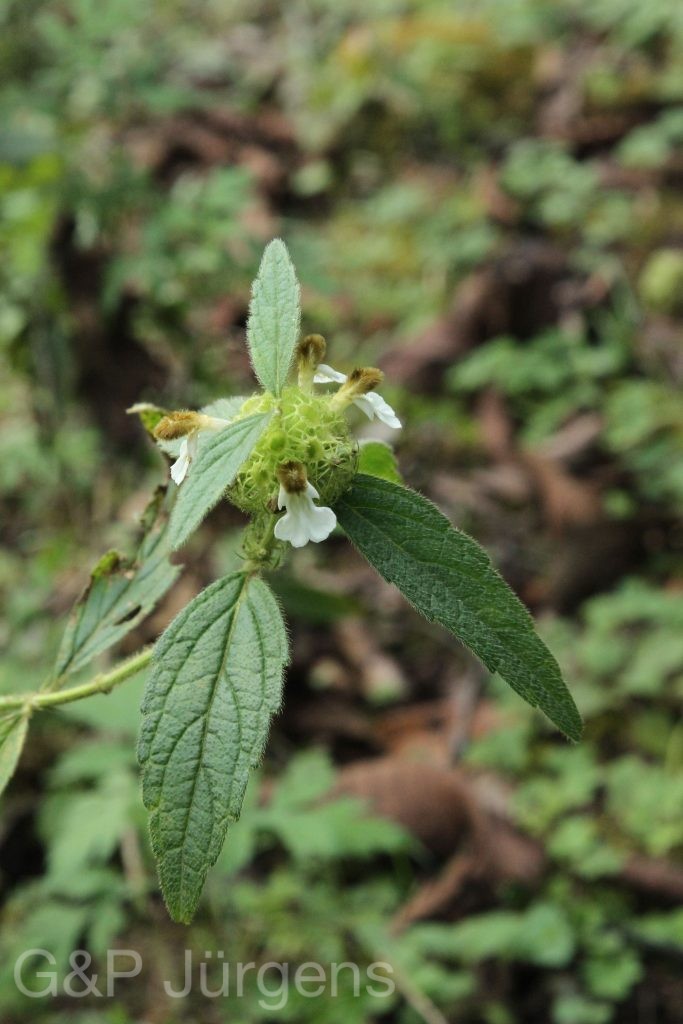
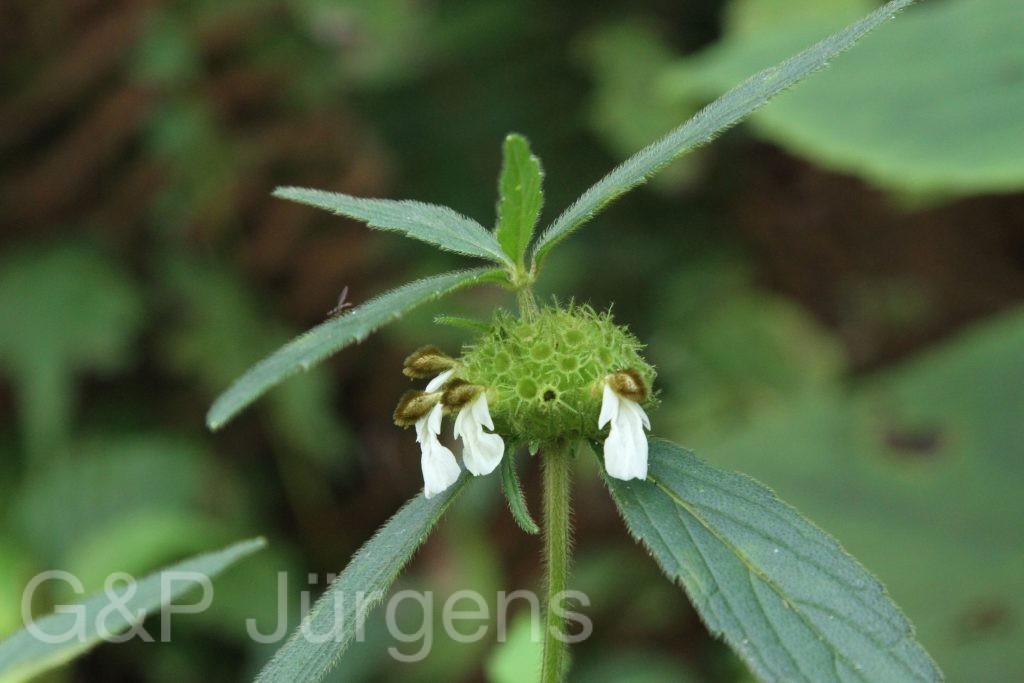
Leucas ciliata is a widely distributed Asian herb ranging across the Himalaya and into China, mainland Southeast Asia (Myanmar, Thailand, Laos, Vietnam), Bangladesh and beyond, with GBIF logging 573 occurrences over a broad set of countries including CN, IN, NP, BT, TH, MM, VN and BD. It is a plant of open, disturbed and seasonally moist ground, occurring on grassy slopes, forest margins, roadsides, scrub and cultivated land at low to mid elevations, generally up to about 2500 m. The photographed plant was recorded at Wangdi (Wangdue) Phodrang in west-central Bhutan around 2000 m, flowering in October at the close of the monsoon.

The species is an erect annual or short-lived perennial herb with the quadrangular stems typical of the Lamiaceae, clothed in spreading, often ciliate hairs. The leaves are opposite, ovate to lanceolate, toothed (crenate-serrate) and short-petiolate. The flowers are aggregated into dense, globose axillary whorls (verticillasters) subtended by bristly, ciliate bracts. Each flower has a tubular, ribbed calyx with spine-tipped teeth and a two-lipped white corolla in which the small upper lip is hooded and densely woolly outside while the larger lower lip is three-lobed; the four didynamous stamens lie beneath the galea. The fruit comprises four smooth nutlets enclosed in the persistent calyx.

Leucas is a large Old World genus of the subfamily Lamioideae, well represented in tropical Asia and Africa and characterised by woolly white corollas adapted to insect pollination. Several species, including L. ciliata, are used in traditional medicine. As a ruderal colonist of open and anthropogenic habitats it is common and widespread, and faces no conservation concern.

Author: Benth. · Sources: POWO (Kew), GBIF, Flora of Bhutan, Flora of China (Lamiaceae), Sebald revision of Leucas (Labiatae)

(Willd.) Sm.

Sikkim 2006 260 ergebnis
India West-Bengal, Lingza 1300m, May

Description

Leucas decemdentata is one of the most widely distributed members of its genus, ranging across tropical and subtropical Asia and out into the western Pacific. GBIF records, totalling more than 1,600 occurrences, document its presence in India, Nepal, Pakistan and Myanmar through China, Taiwan and Japan to Thailand, the Philippines, Indonesia, Timor-Leste and Papua New Guinea, and onward to Australia, Fiji, Tonga, Samoa, the Cook Islands and French Polynesia, as well as Christmas Island. In the eastern Himalaya it is a plant of warm-temperate to subtropical situations, frequenting open hillsides, roadside banks, cultivated margins, fallow fields and other disturbed ground. The photographed plant from Lingza in West Bengal, India, at about 1300 m and flowering in May, is typical of its lower montane occurrence, where it behaves as a weedy ruderal of sunny, well-drained slopes.

The species is an erect or ascending annual to short-lived perennial herb, usually 30-100 cm tall, with quadrangular stems that are retrorsely hairy along the angles. Leaves are opposite and decussate, ovate to lanceolate, with a crenate-serrate margin, an acute apex and a cuneate to attenuate base, the lamina sparsely pubescent and borne on short petioles. The white flowers are crowded into dense, globose, axillary verticillasters subtended by linear bracts. Each flower has a tubular, ten-toothed calyx with subequal spinescent teeth and a strongly two-lipped corolla, the upper lip arched and densely white-villous, the lower lip three-lobed with a larger middle lobe; the four didynamous stamens lie beneath the hood. The fruit comprises four smooth, trigonous nutlets enclosed in the persistent calyx.

The ten conspicuous calyx teeth give the species its epithet decemdentata and are a useful diagnostic character within the large, taxonomically intricate genus Leucas. Long included with the white-flowered, capitate-inflorescenced "thumbergia group" of species, it has frequently been confused with L. ciliata, L. mollissima and other allies, and several Asian names have been treated as synonyms. Ecologically it is a pioneer of open, disturbed habitats and a minor melliferous plant visited by bees and other insects. It carries no conservation concern, being abundant and adaptable across an enormous geographic range, and like many Leucas species it is used locally in folk medicine for fevers and skin complaints.

Author: (Willd.) Sm. · Sources: POWO (Kew), GBIF, Flora of China Vol. 17, Flora of Bhutan Vol. 2, Flora of Nepal, Flora of Pakistan, Revision of the genus Leucas (Lamiaceae) by Ryding

Sm.

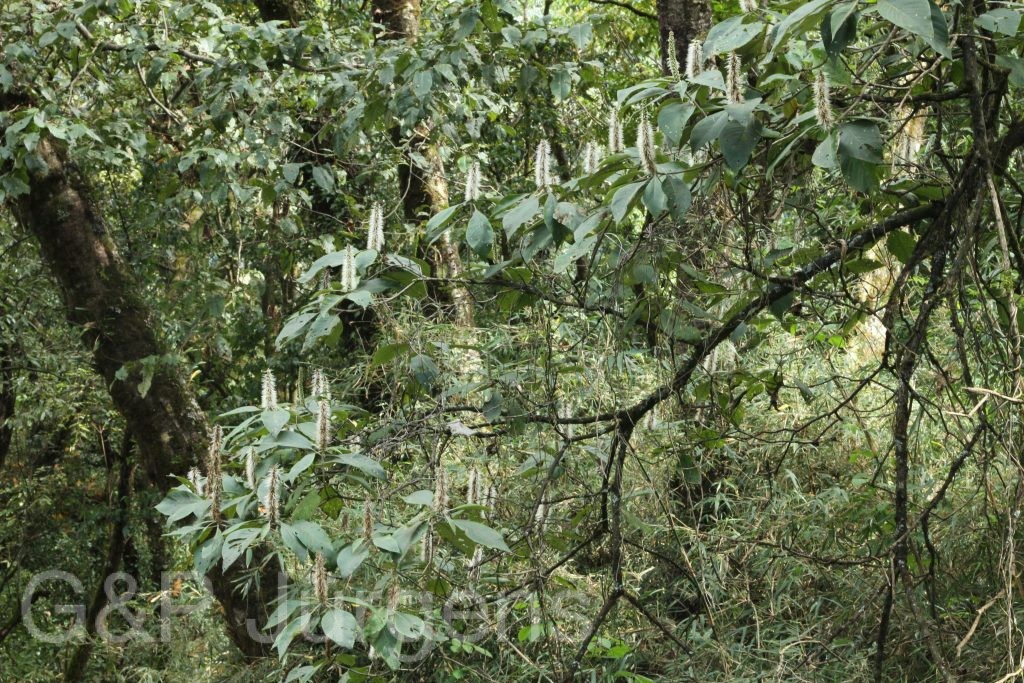
Bhutan2015 595
Bhutan Mo-Chu 1900m, October
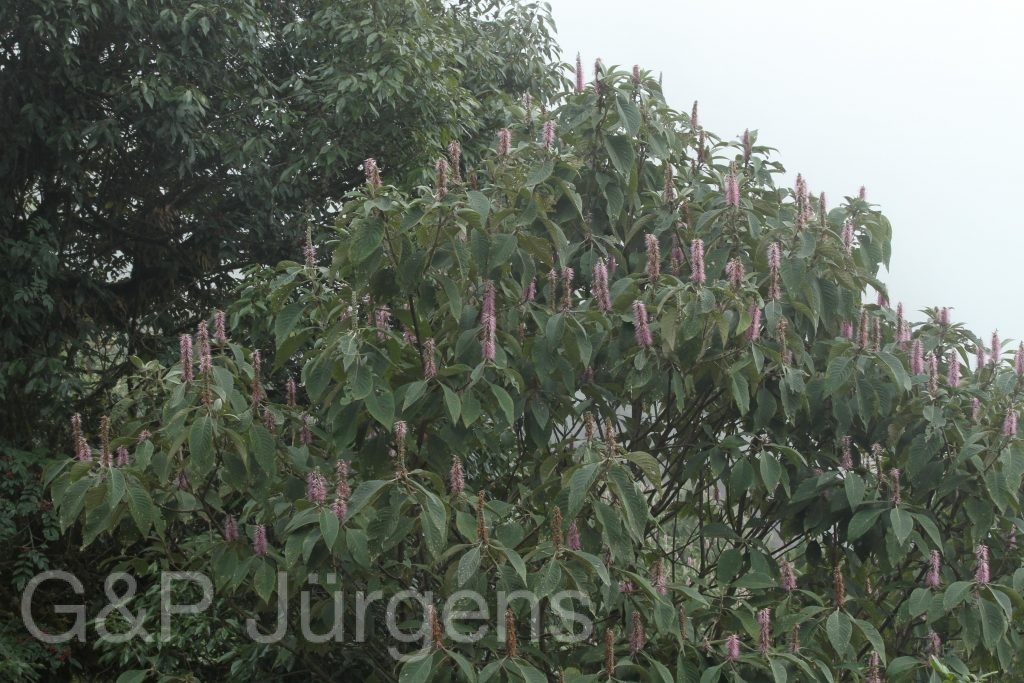
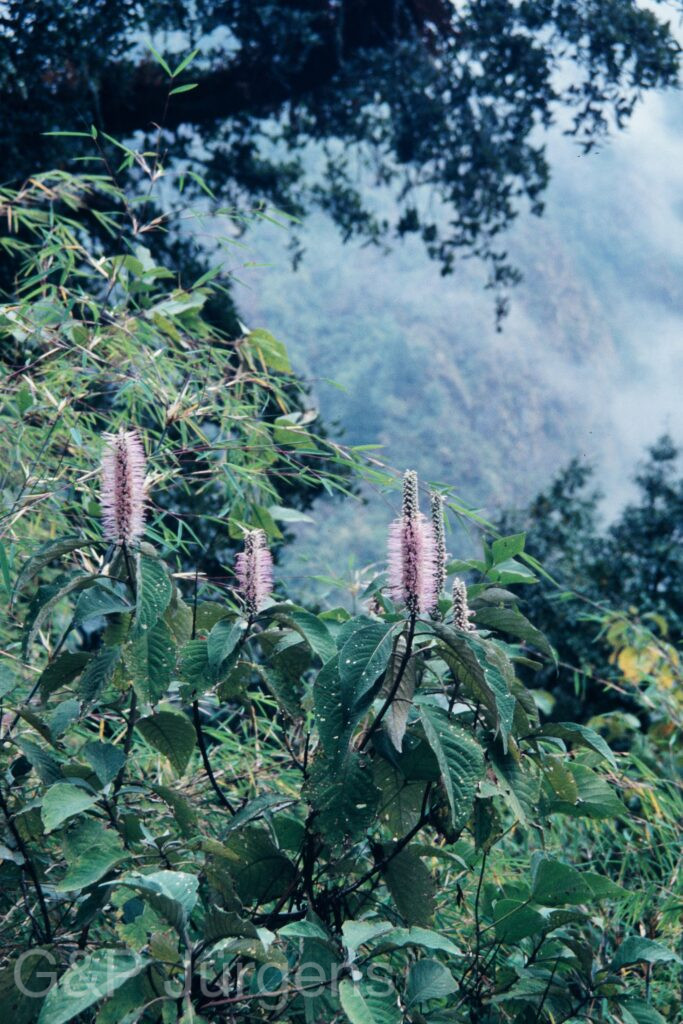
Bhutan2012 1307
Bhutan Mo-Chu 1900m, October

Description

Leucosceptrum canum is a soft-wooded shrub or small tree of the Himalaya and southwestern China, distributed through China, Nepal, India, Bhutan and Myanmar and east to Indochina (CN, NP, IN, BT, MM, VN, TH, BD, LA, with further records), one of the more frequently collected species here with about 515 occurrences. It grows in moist temperate forest, on shaded slopes, ravine sides, forest margins and clearings, typically in the warm- to cool-temperate belt. The gatherings cited are from the Mo-Chu valley in Bhutan at 1900 m and from Trisuli in Nepal at 2700 m, both flowering in October, reflecting its autumn-to-early-winter blooming in the mid-montane forest zone.

The plant is a coarse shrub or small tree with stout, four-angled young branches densely clothed, like the leaf undersides and inflorescence, in a greyish (canous) tomentum from which the epithet derives. The leaves are large, opposite, elliptic to oblong-lanceolate, with a serrate margin, an acuminate apex and prominent venation. The flowers are crowded into a dense, terminal, cylindrical spike-like thyrse with conspicuous bracts; the calyx is tubular and five-toothed, and the white to pale yellow, two-lipped corolla has a short tube and exserted, declinate stamens. The fruit comprises four small nutlets (an eremocarp) enclosed in the persistent calyx.

Leucosceptrum is a small genus placed in the subfamily Lamioideae (or basal lineages) of the Lamiaceae and is of phylogenetic interest as part of an early-diverging Asian woody assemblage allied to Comanthosphace. The conspicuous, nectar-rich autumn inflorescences attract bees, butterflies and birds, and the species is notable for the production of defensive sesquiterpenes secreted by glandular trichomes. Widespread and common across the Himalaya into China, L. canum is of no conservation concern and is locally valued for fuel and as a bee plant.

Author: Sm. · Sources: POWO (Kew), GBIF, Flora of Bhutan, Flora of China, Labiatae of the Himalaya (Lamiaceae revision)

Wall.

Nepal 2009 106 ergebnis
Nepal Helambu Indrawati 2000, May
Nepal 2009 107 ergebnis
Nepal Helambu Indrawati 2000, May

Description

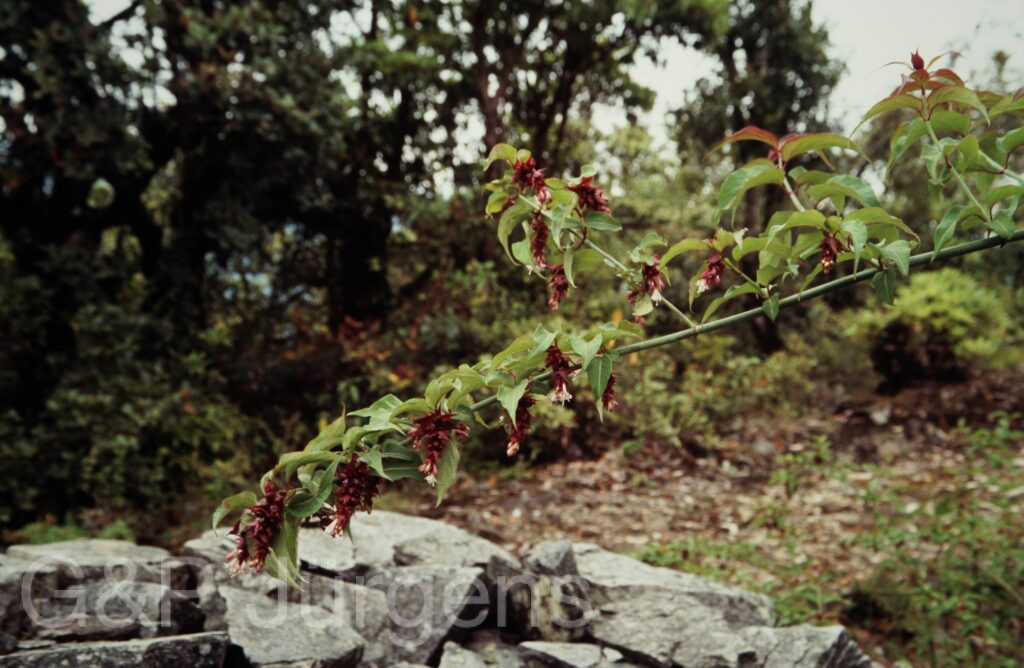
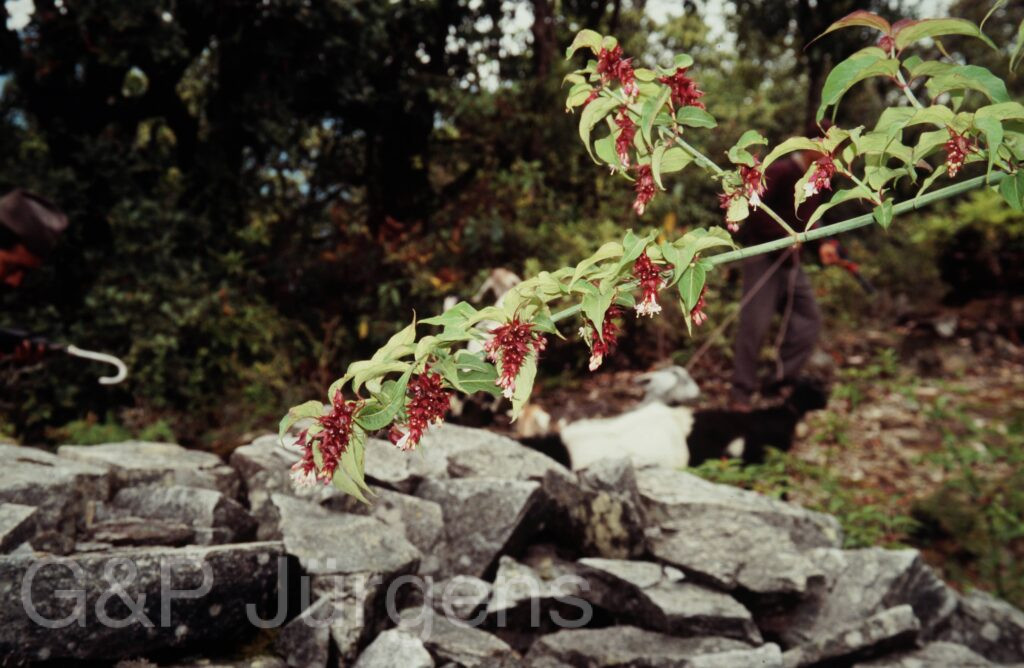
Leycesteria formosa is a Himalayan shrub native to the temperate forests of Nepal, India, Bhutan, Pakistan and southwestern China, where it grows in moist montane woodland, forest margins, ravines, streamsides and shrubby clearings, typically between about 1500 and 3000 m. The photographed plant from the Indrawati drainage in the Helambu region of Nepal, recorded in May, is characteristic of these cool, humid mid-elevation habitats. Far beyond its native range, however, the species is among the most frequently recorded plants in GBIF, with over 42,000 occurrences, the great majority from regions where it has become naturalised after cultivation as an ornamental, notably Great Britain, Ireland, France, the Netherlands, Belgium, Germany, Switzerland, Spain, Portugal, the United States, Australia and New Zealand, where it is regarded as an invasive woodland weed.

It is a deciduous, hollow-stemmed shrub 1-2.5 m tall, with erect, glaucous, bamboo-like green canes that are conspicuously jointed and unbranched or sparingly branched. The leaves are opposite, ovate to ovate-lanceolate, long-acuminate, entire to slightly toothed and often weakly cordate at the base, frequently with a few basal lobes. The inflorescences are pendent, interrupted spike-like racemes of whorled flowers subtended by showy, claret-purple, leaf-like bracts. Each funnel-shaped corolla is white flushed with purple-pink and five-lobed; the ovary is inferior. The fruit is a many-seeded berry that ripens from green through reddish-purple to a glossy deep maroon-black, soft and sweetish, much sought by birds, which disperse the abundant small seeds.

The genus Leycesteria, named for the Bengal magistrate William Leycester, comprises a small group of Sino-Himalayan shrubs traditionally placed in Caprifoliaceae (Lonicereae) near Lonicera. Bird-mediated seed dispersal underlies both the plant's ecological success and its problematic naturalisation abroad, where it colonises disturbed woodland and riparian thickets; in New Zealand in particular it is listed as an environmental weed. Within its native Himalayan range it is common and of no conservation concern, valued horticulturally for its colourful pendent inflorescences and ornamental berries, sometimes grown under the names "Himalayan honeysuckle" or "pheasant berry."

Author: Wall. · Sources: POWO (Kew), GBIF, Flora of China Vol. 19, Flora of Bhutan Vol. 2, Flora of Nepal, Flora of Pakistan, Airy Shaw's revision of Leycesteria

(Hook. f. & Thomson) Hook.f.

Bhutan2014 312
Bhutan Tumching-La 2600m, May

Description

Leycesteria glaucophylla is an eastern Himalayan shrub distributed across India, China, Bhutan and Nepal and into Myanmar; GBIF documents about 113 occurrences, including a few cultivated records in Great Britain and New Zealand. It is a plant of temperate montane forest, occurring at forest margins, in shrubberies, along stream sides and in clearings, generally between about 2000 and 3000 m. The photographed individual grows in Bhutan at Tumching La at around 2600 m in May, a setting typical of this shade-tolerant honeysuckle relative within the cool, humid forests of the eastern Himalaya during the pre-monsoon period.

The species is an erect, deciduous shrub with hollow, often glaucous young stems. The leaves are opposite, ovate to lanceolate, acuminate, entire to slightly toothed, and conspicuously glaucous, particularly beneath, a feature reflected in the epithet glaucophylla. The flowers are borne in pendulous, bracteate terminal and axillary inflorescences subtended by leafy bracts; each has a tubular, funnel-shaped, white to pinkish corolla with five short lobes. The fruit is a many-seeded berry ripening to a dark purplish colour, attractive to birds which act as the principal seed dispersers.

Leycesteria glaucophylla (Hook.f. & Thomson) Hook.f. belongs to a small genus of Himalayan and Sino-Himalayan shrubs allied to Lonicera, placed in Caprifoliaceae; its showy bracts and pendulous spikes give the genus ornamental interest, and several species are cultivated. The species is restricted to the eastern Himalaya and adjacent ranges but is locally frequent in montane forest and not currently regarded as threatened. Its bird-dispersed berries aid colonisation of forest gaps and margins.

Author: (Hook. f. & Thomson) Hook.f. · Sources: POWO (Kew), GBIF, Flora of Bhutan, Flora of China, taxonomic revisions of Leycesteria (Caprifoliaceae)

DC.

Garw 2005 33 ergebnis ergebnis
India Garhwal Valley of flowers 3050m, September
Garw 2005 34 ergebnis ergebnis
India Garhwal Valley of flowers 3050m, September

Description

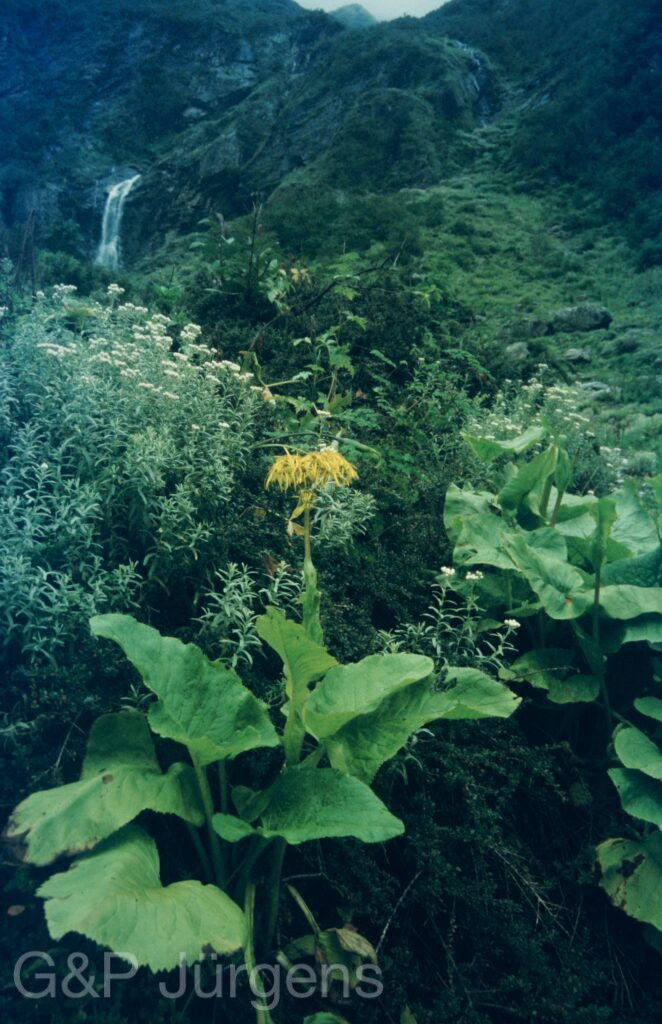
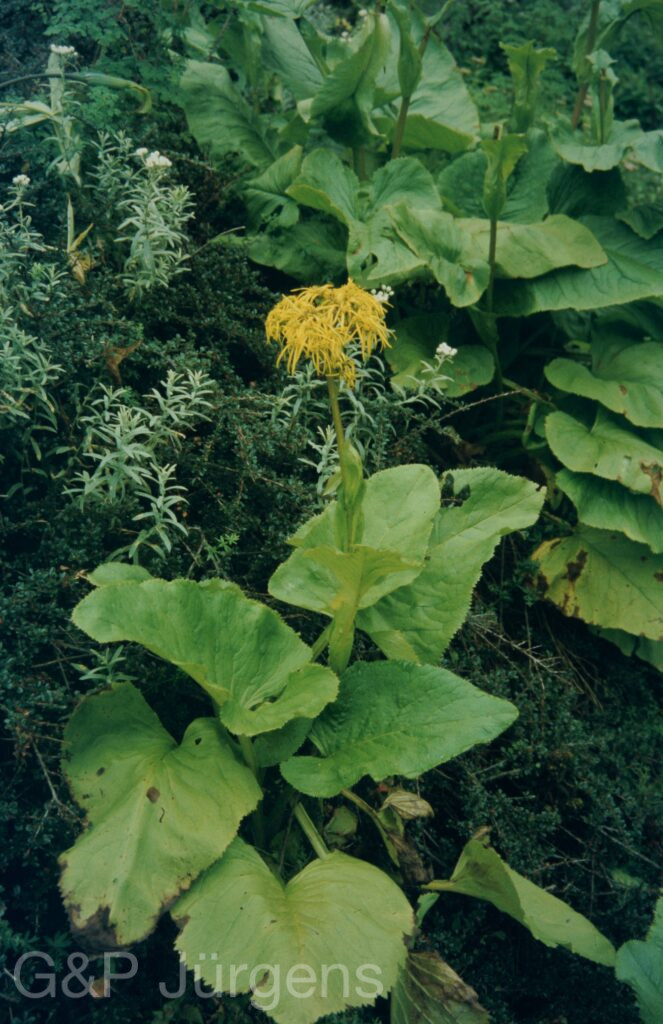
Ligularia amplexicaulis DC. is a robust Himalayan composite ranging from Pakistan and northern India through Nepal and Bhutan into southwestern China (gbif_countries: NP, IN, BT, CN, PK, plus collection records coded US and CA), with around 271 occurrences in GBIF. It is characteristic of moist alpine and subalpine meadows, tall-herb slopes, forest clearings and streamside grassland, typically between about 2800 and 4300 m. The photographed plant from the celebrated Valley of Flowers in Garhwal at 3050 m, flowering in September, exemplifies its late-season presence in the rich monsoon-fed herb meadows for which that valley is famous.

It is a stout perennial herb arising from a short rhizome with fibrous roots. The lower leaves are large, reniform to broadly cordate and long-petiolate, the cauline leaves becoming sessile and conspicuously amplexicaul (stem-clasping), as the epithet records. The inflorescence is an elongate terminal raceme of numerous radiate capitula. Each head bears yellow ray florets and yellow tubular disc florets, subtended by a campanulate involucre of few subequal phyllaries; the achenes are glabrous and cylindric, crowned by a pappus of soft barbellate bristles.

Ligularia (tribe Senecioneae) is a large Sino-Himalayan genus centred on the eastern alpine flora, and the present species is part of the racemose-headed Himalayan assemblage. Like its relatives it accumulates pyrrolizidine alkaloids, deterring herbivory and rendering it of pharmacological and toxicological interest. The species is widespread and locally abundant in protected alpine areas such as Nanda Devi and the Valley of Flowers, and is not considered threatened.

Author: DC. · Sources: POWO (Kew), GBIF, Flora of China (Asteraceae: Senecioneae), Flora of Bhutan, Annotated checklist of the flowering plants of Nepal

(C.B.Clarke) Hand.-Mazz.

Sikkim2003 242 G332
Sikkim Dzongri 4100m, August

Description

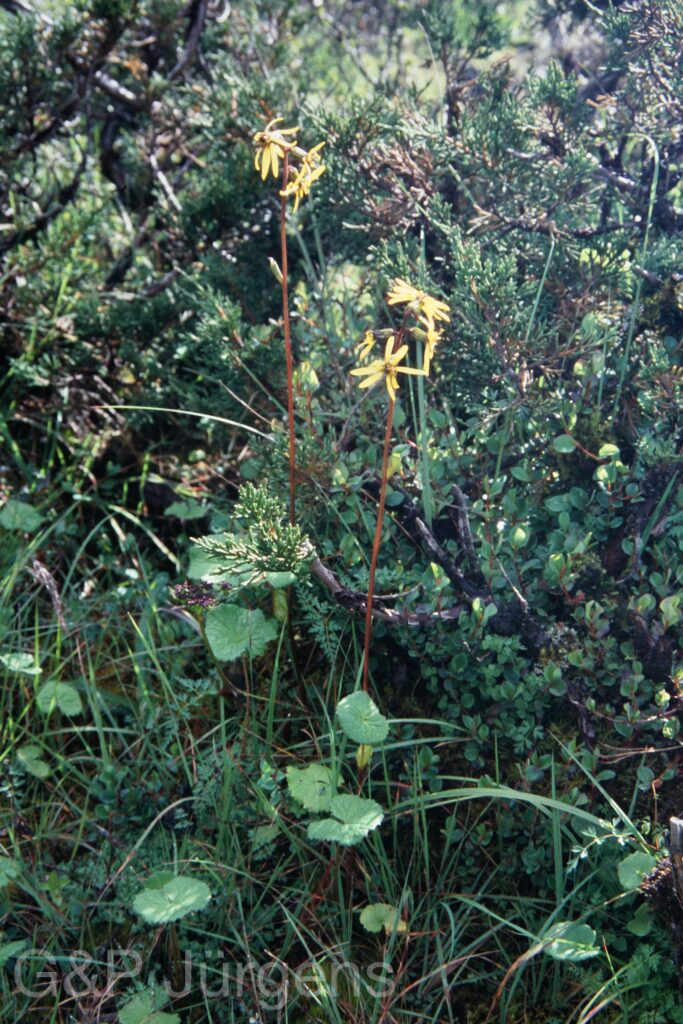
Ligularia hookeri is a robust perennial herb of the eastern Himalaya and adjacent China, recorded from China, Nepal, India, Bhutan and Myanmar, with around 574 georeferenced records spanning the subalpine and alpine zones. It inhabits alpine meadows, open grassy slopes, forest margins and damp, rocky ground, often in seepage areas and along streams. The plant photographed at Dzongri in Sikkim at 4100 m, flowering in August, is characteristic of its high-elevation summer habitat, where it flowers at the height of the monsoon among other tall meadow herbs.

It arises from a stout rootstock and produces a cluster of large basal leaves on long, sometimes purplish petioles; the blades are broadly reniform to orbicular-cordate, palmately veined and toothed at the margin. The flowering stem is erect and stout, bearing few to several large capitula in a lax raceme or corymb. Each head has an involucre of broad bracts and is radiate, with conspicuous yellow to orange-yellow ligulate ray florets surrounding numerous tubular yellow disc florets. The fruit is a glabrous cylindrical cypsela crowned by a pappus of fine bristles.

Ligularia, of tribe Senecioneae, is distinguished from related Senecio and Cremanthodium by its radiate, erect, large-headed inflorescences and broad cordate leaves; C. B. Clarke first described this taxon, later combined in Ligularia by Handel-Mazzetti. The showy heads are pollinated by bumblebees, butterflies and flies of the high meadows, and the pappose cypselae are wind-dispersed. The species is widespread across the eastern Himalaya and of no current conservation concern, though it forms a conspicuous and ecologically important element of alpine pastures.

Author: (C.B.Clarke) Hand.-Mazz. · Sources: POWO (Kew), GBIF, Flora of China, Flora of Bhutan, Annotated Checklist of the Flowering Plants of Nepal, Liu monograph of Ligularia

Baker

Garh 07 146 ergebnis
India Garhwal Kinkhola 3500m, June

Description

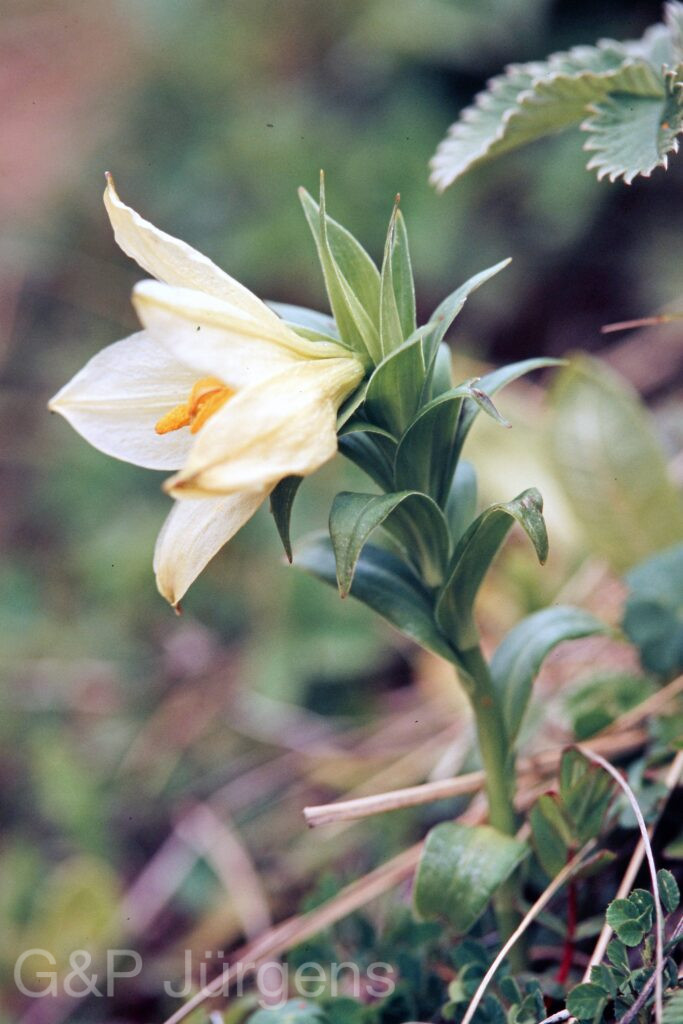
Lilium oxypetalum is a small subalpine lily restricted to the western and central Himalaya, with native occurrences in northern India and Nepal (the remaining GBIF country codes reflect cultivated or naturalised records outside the native range). It grows in open coniferous and birch-rhododendron forest, forest margins and grassy slopes, typically between 3,000 and 4,000 m. The photographed plant was found at Kinkhola in Garhwal at about 3,500 m in June, flowering as the snow retreats and the subalpine meadows green up early in the growing season.

The plant arises from a small, ovoid bulb of loose, white scales and produces a slender, erect, unbranched stem 15-40 cm tall. The leaves are scattered along the stem, lanceolate to elliptic, sessile and few in number. The flower is usually solitary and nodding, broadly campanulate rather than reflexed, with six tepals that are pale yellow to greenish-yellow, sometimes flushed purplish, and taper to acute, recurving tips. The six stamens are shorter than the tepals and bear versatile anthers; the superior ovary develops into an erect, oblong, three-valved loculicidal capsule with flat, winged seeds.

With its solitary, bell-shaped flower and short stature, L. oxypetalum is morphologically distinctive among Himalayan lilies and has at times been segregated in the genus Nomocharis-allied groups, reflecting the close relationship between Lilium and Nomocharis now confirmed by molecular work. The yellow-flowered var. insigne extends the variation. As a narrowly distributed, attractive bulb, the species faces localised pressure from collection and grazing, and its restricted alpine range warrants monitoring under a warming climate.

Author: Baker · Sources: POWO (Kew), GBIF, Flora of China Vol. 24 (Liliaceae), Flora of Nepal, Comber: A New Classification of the Genus Lilium

Stearn

A3EB14BDCA574E78ABE6D96A22255803
Bhutan Tsochenchen, 3550m June

Description

Lilium sherriffiae is a slender bulbous perennial endemic to the eastern Himalaya, restricted to Bhutan and adjacent Nepal and known from only about 13 documented occurrences, making it one of the rarer Himalayan lilies. It grows among subalpine scrub, in open coniferous forest, on grassy slopes and at meadow margins, typically between 3000 and 3900 m. The illustrated material was gathered at Tsochenchen in Bhutan at 3550 m in June, during the short alpine flowering season that follows snowmelt at these elevations.

The plant arises from a small ovoid bulb of imbricate scales and produces a single erect, wiry stem 30-70 cm tall bearing scattered, narrowly linear-lanceolate leaves. The flower is usually solitary and pendent, the perianth campanulate with six segments that are strongly recurved only at the tips. The colouring is highly distinctive: the segments are dull purplish-maroon outside and conspicuously chequered or tessellated with yellow-green within, recalling a Fritillaria. The six stamens bear versatile anthers and the superior ovary develops into an erect, ribbed loculicidal capsule containing flat, papery, wind-dispersed seeds.

Named for the collector George Sherriff, the species is prized horticulturally yet remains scarce in cultivation owing to its specialised requirements. Its fritillary-like nodding flower is adapted to pollination by bumblebees active in the cool subalpine climate. Given its narrow geographic range, small number of known populations and the pressures of grazing and collection, L. sherriffiae is of genuine conservation concern and merits formal assessment and in-situ protection.

Author: Stearn · Sources: POWO (Kew), GBIF, Flora of Bhutan, Annotated Checklist of the Flowering Plants of Nepal, The Genus Lilium (Jefferson-Brown), RHS Lily species monograph