Asteraceae

(Royle) X.D.Xu & V.A.Funk
Garw 2005 419 ergebnis
India Garhwal Didina 2470m, September
Garh 07 70 ergebnis
India Garhwal Nanu Mandakini 2300m, June

Description

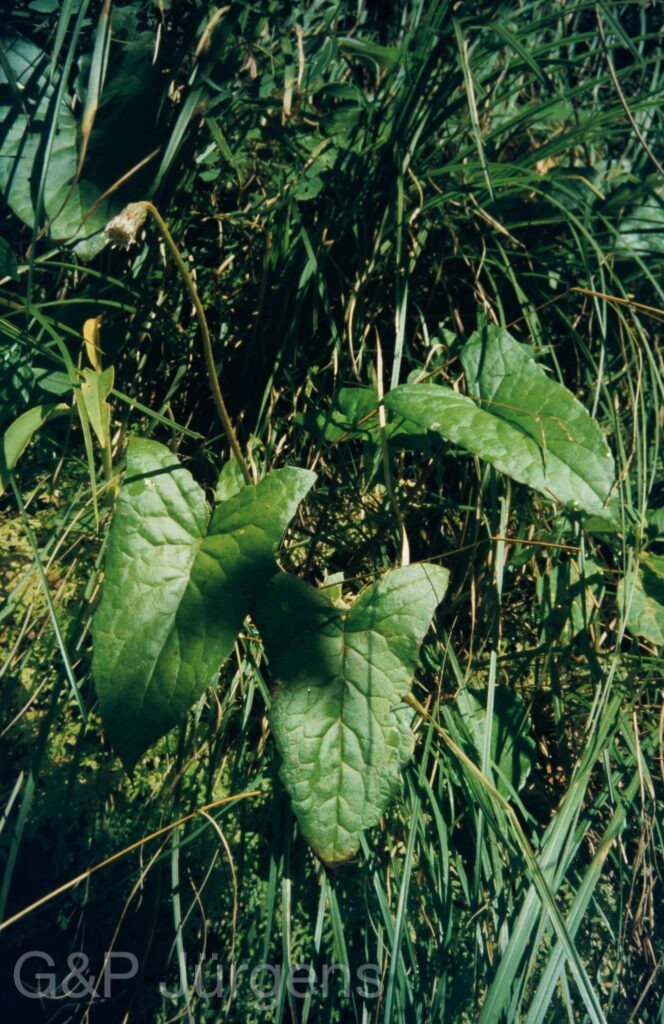
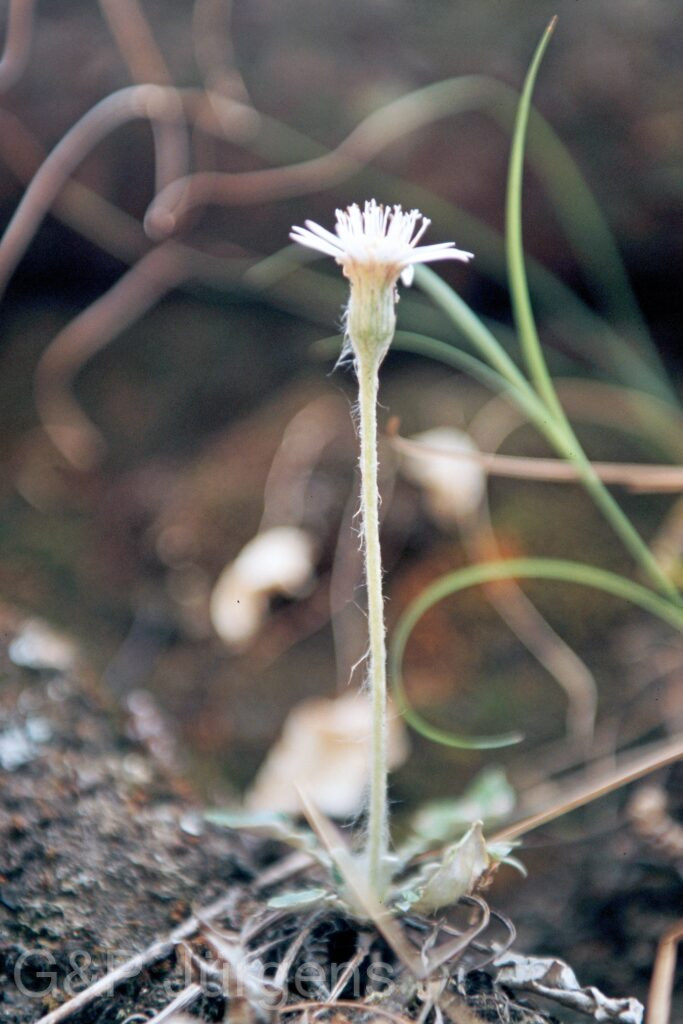
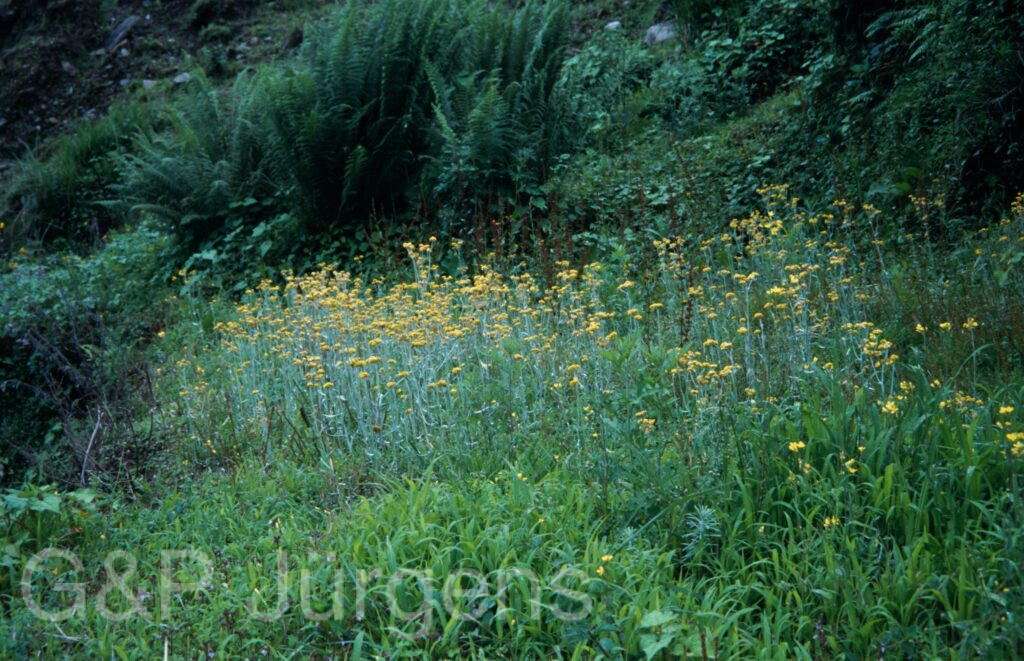
Oreoseris gossypina is a rosette-forming perennial herb of the temperate and subalpine Himalaya, recorded from Pakistan, India, Nepal, China and Bhutan across more than 300 occurrences. It typically inhabits open grassy slopes, rocky banks and forest margins, often on disturbed or grazed ground, at elevations of roughly 1800 to 3500 m. The documented collections derive from Garhwal in India, at Didina (2470 m, September) and the Nanu Mandakini valley (2300 m, June), the two dates spanning much of its long flowering and fruiting season in the Western Himalaya.

The plant produces a basal rosette of obovate to oblanceolate leaves that are conspicuously white-woolly beneath, the dense cottony indumentum giving rise to the epithet gossypina. The leaf margins are sinuate-dentate and the lamina narrows into a winged petiole. Solitary capitula are borne on slender, bracteate scapes; each head is heterogamous and radiate, with an involucre of imbricate, often arachnoid-hairy phyllaries. The marginal ray florets are ligulate and pale, the disc florets tubular; the achenes are ribbed and surmounted by a pappus of barbellate bristles aiding wind dispersal.

The species was long placed in Gerbera and is also encountered under Leibnitzia; its current placement in Oreoseris (Mutisieae) reflects molecular and morphological revision by X.D. Xu and V.A. Funk. As a member of an early-diverging composite lineage it is of phylogenetic interest, and its mutisioid floral structure attracts a range of pollinating insects. The species is widespread and faces no recognised threat.

Author: (Royle) X.D.Xu & V.A.Funk · Sources: POWO (Kew), GBIF, Flora of China, Flora of Pakistan, Annotated Checklist of the Flowering Plants of Nepal, Xu & Funk revision of Mutisieae
L.

Bhutan2015 523
Bhutan Wangdi 1800m, October

Description

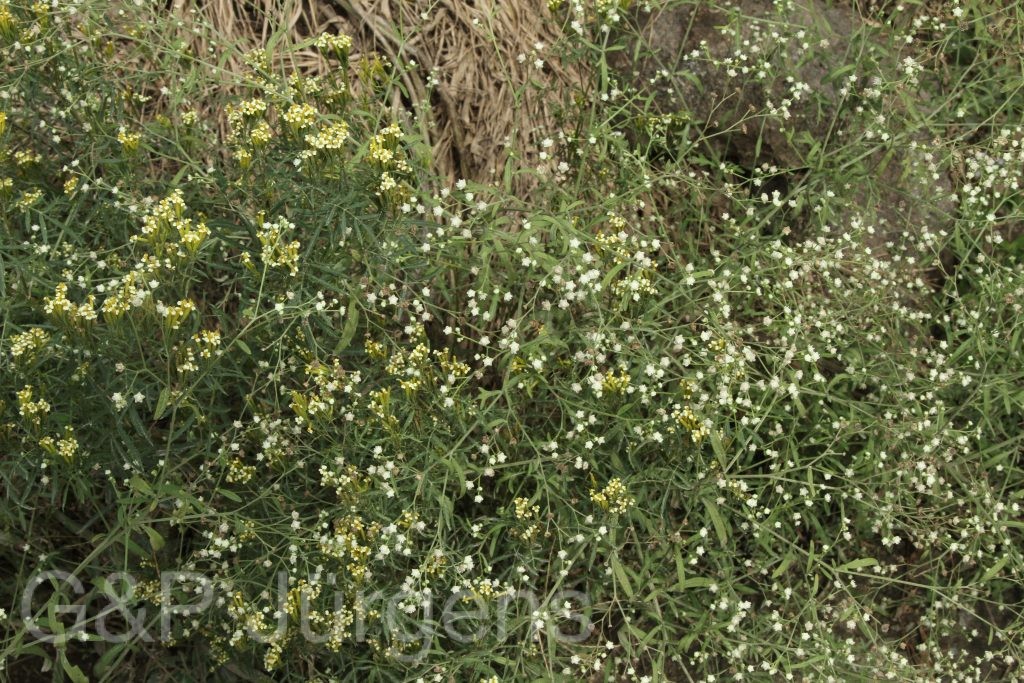
Parthenium hysterophorus is a neotropical annual of Central American and Caribbean origin that has become one of the world's most aggressive invasive weeds, GBIF recording nearly 39,000 occurrences spanning the Americas, Africa, the Middle East, South Asia and Australasia. It colonises waste ground, roadsides, overgrazed pasture, field margins and other disturbed, open habitats from the lowlands to mid-elevations, thriving on a wide range of soils. In the Eastern Himalaya it has spread along valley roads and settlements, the figured plant from Wangdi in central Bhutan at about 1800 m, photographed in October, documenting its ongoing upward and eastward expansion into mountain agricultural landscapes.

It is an erect, much-branched annual herb with longitudinally grooved, pubescent stems. The lower leaves are deeply bipinnatisect and form a basal rosette, while the upper leaves become smaller and less divided; all are softly hairy and bear glandular trichomes. The numerous small, whitish capitula are arranged in lax terminal panicles, each head containing five short, female ray florets and many functionally male disc florets. The involucre is shallow with two series of phyllaries. At maturity each ray achene falls together with two adjacent sterile disc florets and subtending bracts as a wedge-shaped dispersal unit bearing two small scale-like pappus elements.

A member of tribe Heliantheae, Parthenium hysterophorus is notorious for its prolific seed output, allelopathic suppression of neighbouring vegetation, and production of the sesquiterpene lactone parthenin, which causes contact dermatitis and respiratory allergy in humans and is toxic to livestock. Its invasion degrades rangeland and crops across the tropics and is the target of biological control using host-specific beetles and rusts. In the Himalayan region it is regarded as a serious emerging threat to biodiversity and pastoral livelihoods rather than a species of conservation concern.

Author: L. · Sources: POWO (Kew), GBIF, Flora of Bhutan, Flora of China, CABI Invasive Species Compendium, Navie's monograph of Parthenium hysterophorus

(D.Don) Anderb.

Nepal 2001 436 ergebnis ergebnis
Nepal (Gorkha) Gunda 1850m, May

Description

Pseudognaphalium affine is a widespread woolly cudweed of East Asia and the Indo-Himalaya, ranging across China, Japan, Korea, Taiwan, the Himalaya (Nepal, India, Bhutan, Pakistan, Afghanistan), Myanmar, Thailand, Sri Lanka and South-East Asia, and now naturalised more widely (with records as far afield as Argentina and Georgia); its very large dataset of over 7400 georeferenced occurrences confirms its abundance and weedy success. It grows on open grassy slopes, field margins, fallow ground, roadsides and other disturbed sites from the lowlands to the mid-montane belt, broadly from near sea level to about 2500 m. The plant recorded near Gunda in Gorkha, Nepal, at 1850 m in May is typical of such open, sunny, anthropogenic habitats.

It is an annual or biennial herb with erect, simple or branched stems clothed, like the foliage, in dense white-woolly (arachnoid) tomentum. The leaves are alternate, oblanceolate to spathulate, sessile and somewhat decurrent, grey-green and persistently woolly on both surfaces. The numerous small, discoid capitula are aggregated into dense terminal corymbs; each head is enclosed by several rows of pale yellow to straw-coloured, scarious involucral bracts, the florets all tubular, the outer female and filiform, the inner bisexual. The fruit is a tiny oblong cypsela bearing a pappus of slender, basally connate bristles aiding wind dispersal.

Formerly placed in Gnaphalium, this species was transferred to Pseudognaphalium on the basis of capitulum and pappus characters within tribe Gnaphalieae. It is used in East Asian cuisine and folk medicine and is a familiar ruderal weed; its broad ecological tolerance and prolific seed make it abundant and entirely unthreatened.

Author: (D.Don) Anderb. · Sources: POWO (Kew), GBIF, Flora of China, Flora of Nepal, Flora of Bhutan, Anderberg's monograph of the Gnaphalieae

Krasch.

Sikkim 2006 178 ergebnis
India West-Bengal, Samadan 2400m, May

Description

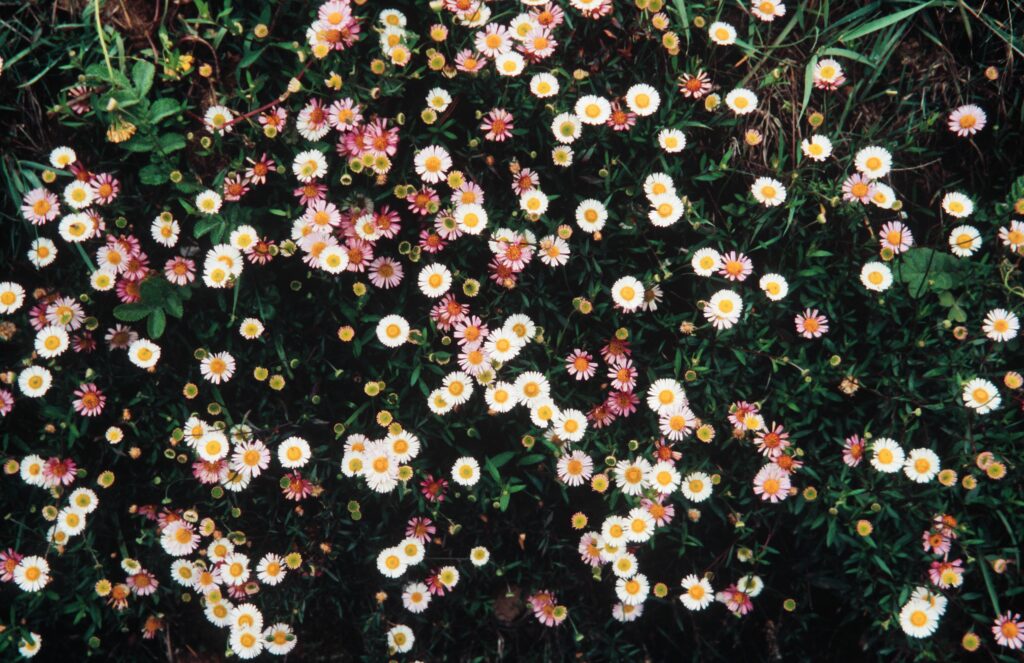
Psychrogeton alexeenkoi is a high-mountain composite of the arid ranges of Central and South-West Asia, its georeferenced records concentrated in Afghanistan, Kazakhstan, Tajikistan, Iran, Pakistan and Turkey, GBIF accumulating some 58 occurrences that reflect a narrow, sparsely collected range. It grows on stony slopes, rock crevices, gravelly screes and dry alpine to subalpine meadows, typically on calcareous or schistose substrates. The population recorded in May at Samadan in West Bengal, India, near 2400 m marks an eastern, lower-elevation extension where it occupies open, well-drained sunny situations subject to strong diurnal temperature fluctuation.

The species is a perennial herb forming a woody caudex from which arise several ascending leafy stems clothed in spreading eglandular and gland-tipped hairs. The basal and lower cauline leaves are oblanceolate to spathulate, entire or obscurely toothed and narrowed to a winged petiole, the upper ones smaller and sessile. The solitary or few terminal capitula are radiate: numerous slender lilac to pale violet ray florets surround a disc of yellow tubular perfect florets, the involucral bracts linear-lanceolate, herbaceous and pubescent in subequal series. Achenes are flattened, oblong and pubescent, crowned by a pappus of fine barbellate bristles aiding anemochory.

Psychrogeton is a small Asiatic genus segregated from Erigeron, distinguished by habit and pappus and frequently treated as transitional to Aster within tribe Astereae. P. alexeenkoi, described by Krascheninnikov, is endemic to the mountains of Middle Asia and the Hindu Kush-Karakoram and is adapted to cold continental conditions, as its name ("cold-dweller") implies. No formal conservation assessment exists, but its restricted range and reliance on undisturbed montane habitat warrant monitoring of overgrazing and degradation.

Author: Krasch. · Sources: POWO (Kew), GBIF, Flora of Pakistan, Flora Iranica, Conspectus Florae Asiae Mediae, Nesom monograph of Astereae

(Decne.) Sch.Bip.

Garw 2005 170 ergebnis
India Garhwal Simka 2800m, October

Description

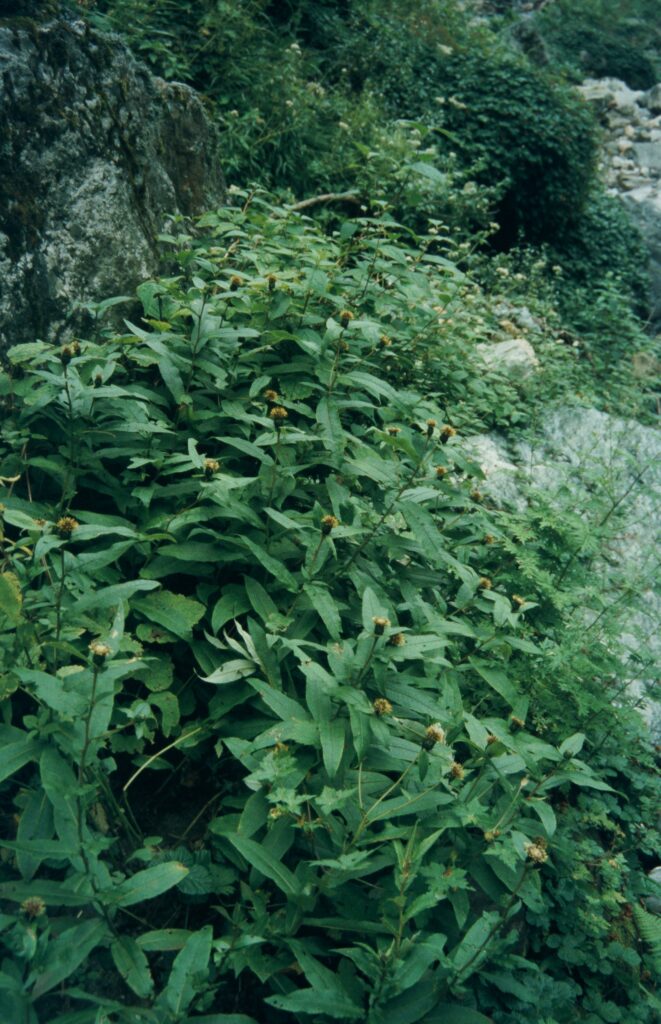
Saussurea fastuosa is a Sino-Himalayan species distributed across the high mountain ranges of China, India, Nepal and Bhutan, with around 94 georeferenced occurrences documenting a coherent eastern Himalayan to southwest Chinese range. It is a plant of temperate and subalpine zones, favouring forest margins, moist grassy slopes, scrub and stream banks, typically between roughly 2500 and 3800 m. The photographed material from Simka in Indian Garhwal at 2800 m, flowering in October, is representative of its autumn-flowering behaviour in the western part of its range, where it occupies cool, humid clearings within mixed conifer and broad-leaved forest.

It is a robust perennial herb with an erect, leafy, often glandular-pubescent stem arising from a stout rootstock. The leaves are alternate, the lower ones petiolate and lyrate-pinnatifid to broadly ovate, the upper progressively smaller, sessile and somewhat amplexicaul, with dentate margins and a thinly arachnoid-hairy lamina beneath. The capitula are medium-sized and aggregated in a corymbose synflorescence, each surrounded by an ovoid to campanulate involucre of imbricate, often purple-tinged, frequently squarrose phyllaries. The florets are all tubular and purple; the achenes are glabrous and crowned by a double pappus, the outer row scabrid and caducous, the inner of plumose, basally connate bristles.

Within the very large and taxonomically complex genus Saussurea, this species belongs to the broad-leaved, lowland-to-subalpine assemblage rather than the cushion-forming snow lotuses of the highest alpine zone. The name S. fastuosa (Decne.) Sch.Bip. is the accepted name. As an entomophilous late-season nectar source it is visited by bumblebees and other long-tongued insects, and like its congeners it disperses by anemochory via the plumose pappus. It is locally frequent and not regarded as threatened.

Author: (Decne.) Sch.Bip. · Sources: POWO (Kew), GBIF, Flora of China Vol. 20-21, Flora of Bhutan Vol. 2, Flora of Nepal, Lipschitz Genus Saussurea (monograph)

Franch.

Sikkim2003 293 P407
Sikkim Samiti-Lake 4400m, August
Nepal 99 626 ergebnis
West-Nepal Kagmara-La 4900m, July

Description

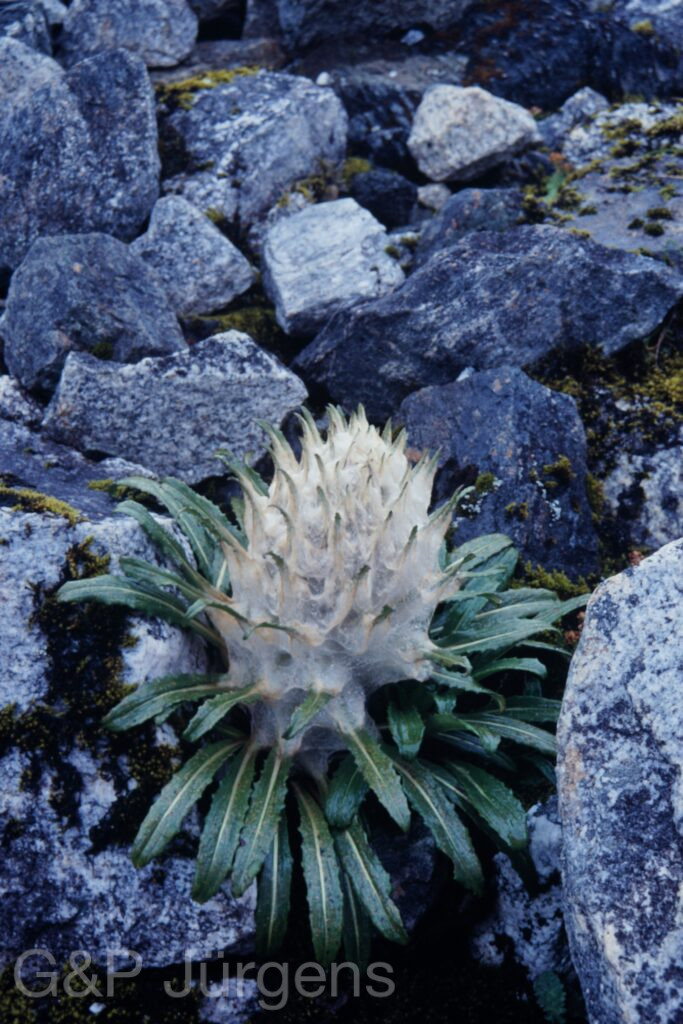
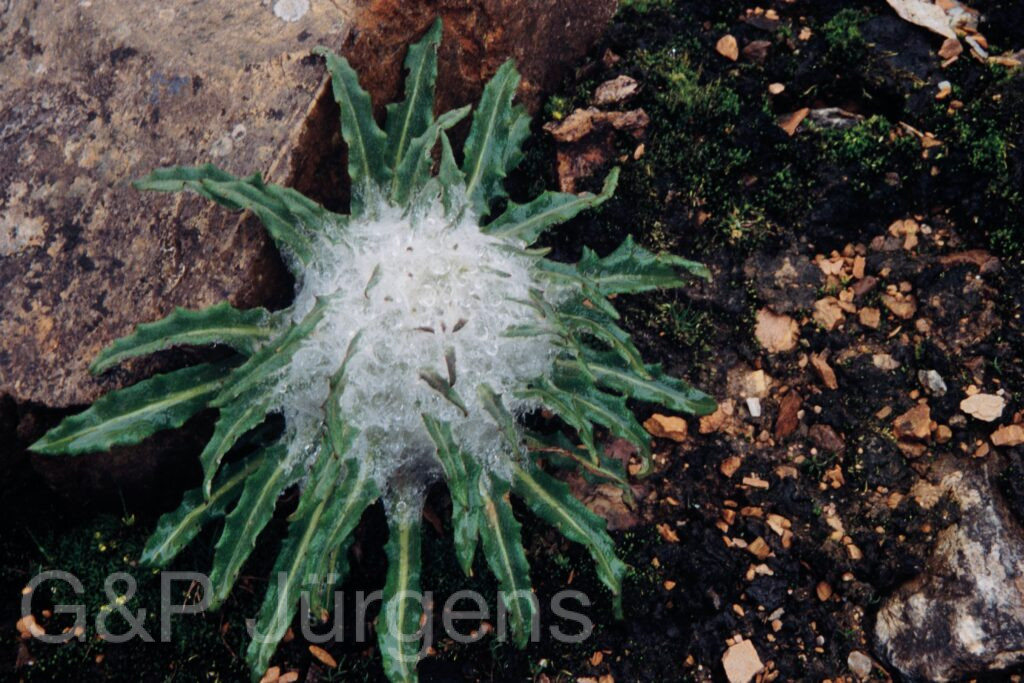
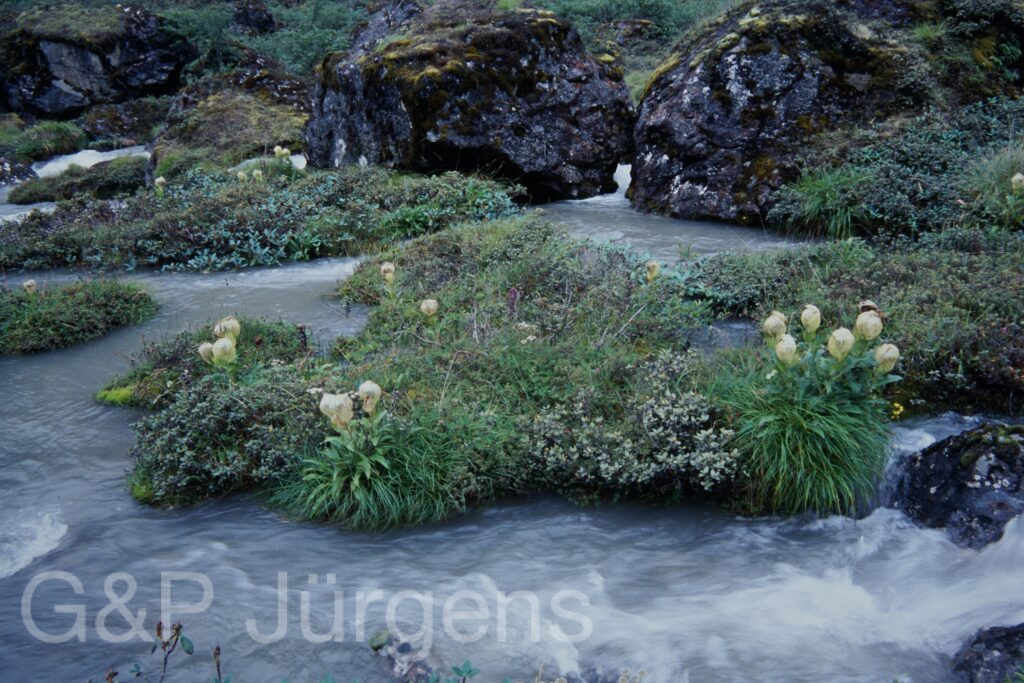
Saussurea gossypiphora, the snowball or cotton-headed saussurea, is a remarkable high-alpine herb of the Himalaya and adjacent Tibetan China, recorded only from China and Nepal in GBIF with a mere 26 occurrences, reflecting both its extreme habitat and its restricted, fragmented distribution. It is among the highest-growing flowering plants, inhabiting open scree, moraine, gravelly alpine slopes and the margins of glacial debris in the upper alpine and subnival zone. The images document it in Sikkim near Samiti Lake at about 4400 m in August and in West Nepal on the Kagmara-La at around 4900 m in July, among the most extreme elevations at which it grows.

It is a stout, dwarf perennial herb forming a dense rosette, in which the upper leaves and the capitula are enveloped in a thick mass of long white woolly hairs forming a globose, cotton-wool-like dome. Beneath this insulating covering the leaves are oblanceolate, deeply toothed and arachnoid-hairy. The numerous small discoid capitula are clustered at the apex within the wool, each with purplish tubular florets and a multiseriate involucre. The fruit is a glabrous achene crowned by a feathery, plumose pappus aiding wind dispersal once the protective wool opens.

The dense lanate indumentum is a celebrated adaptation to the subnival environment, trapping heat, buffering night frost and ultraviolet radiation, and sheltering pollinating insects, paralleling the "glasshouse" and "woolly" growth forms found in other high-elevation Saussurea and Rheum. As a slow-growing, habitat-specialised plant of limited range it is potentially vulnerable to climate warming and collection pressure, though it has not been formally assessed.

Author: Franch. · Sources: POWO (Kew), GBIF, Flora of China, Flora of Nepal, Annotated Checklist of the Flowering Plants of Nepal, Lipschitz Monograph of the Genus Saussurea

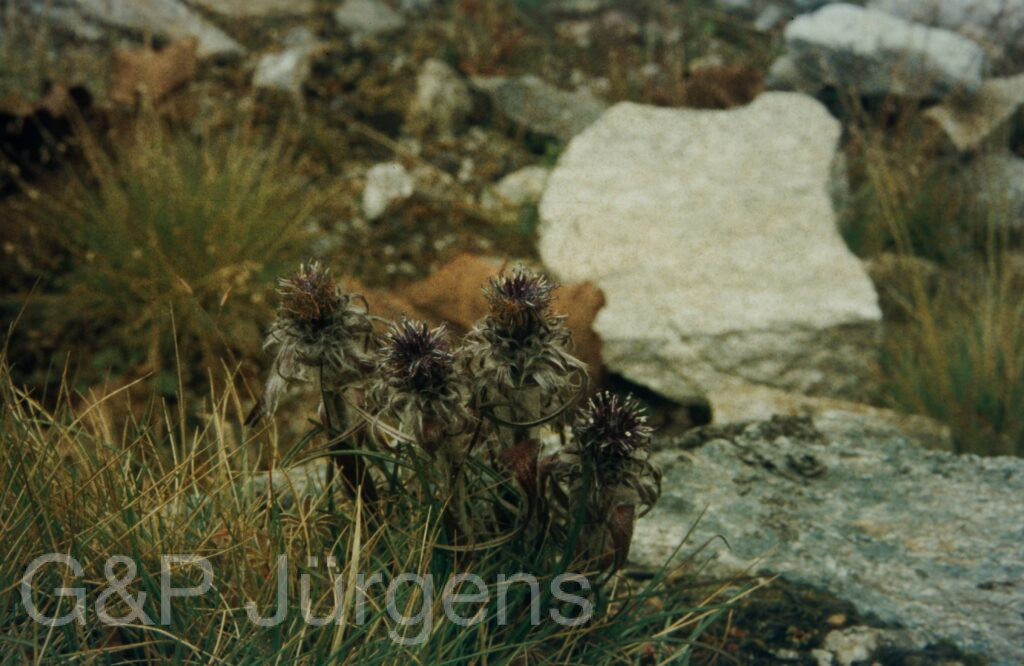
Wall. ex DC.

Garw 2005 328 ergebnis
India Garhwal Bagubasa 4100m, September

Description

Saussurea graminifolia is a high-alpine composite of the Himalaya and Tibetan borderlands, distributed across Nepal, India, China and Bhutan, with about 127 GBIF occurrences. It is a true plant of the upper alpine zone, occupying screes, fine gravel, glacial moraine, stony meadows and exposed ridges generally above 4000 m and reaching well over 4500 m. The collection from Bagubasa in Garhwal, India, at 4100 m in September corresponds to its late-season flowering, when these wind-swept slopes near the limit of vascular plant life carry the characteristic cushion and rosette flora of the region.

It is a low, tufted perennial herb growing from a stout rootstock, with very narrow, grass-like (graminifolious) basal leaves that form a dense rosette, the epithet alluding to this distinctive linear foliage. One or few short scapes bear a cluster of capitula crowded among the leaves and often partly enveloped by them. The flower heads are discoid, containing only tubular florets that are purple to violet, surrounded by overlapping involucral bracts. As in Saussurea generally the fruit is an achene topped by a pappus of feathery (plumose) inner bristles and shorter outer ones.

Saussurea belongs to tribe Cardueae of the Asteraceae and is a hallmark genus of the Sino-Himalayan alpine zone, where many species show adaptations such as woolly indumentum or translucent bracts (the "snowball" and "glasshouse" plants) that buffer the harsh, cold, high-radiation environment. Though not formally threatened, such specialised high-elevation endemics are sensitive to climate warming and to harvesting where Saussurea species are used medicinally.

Author: Wall. ex DC. · Sources: POWO (Kew), GBIF, Flora of China, Flora of Bhutan, Saussurea monograph (Lipschitz)

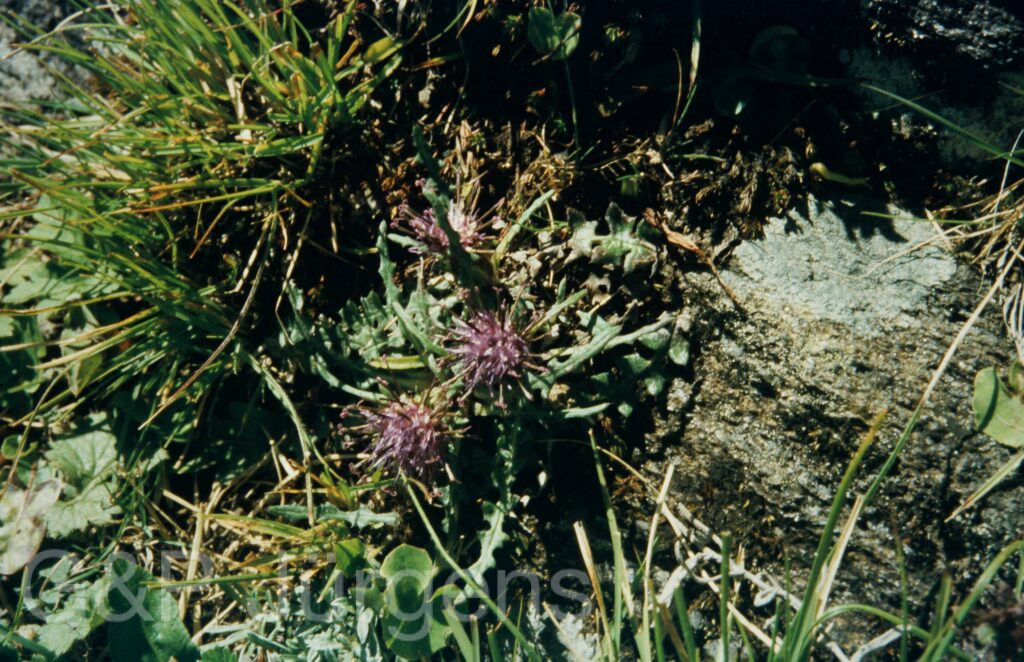
(DC.) Sch.Bip.

Garw 2005 104 ergebnis ergebnis
India Garhwal Gaushon 3200m, September
Nepal 95 160 P261 ergebnis
Nepal South of Rupina La October

Description

Saussurea leontodontoides is a widespread high-alpine composite of the Himalaya and the Tibetan plateau, distributed through China, India, Nepal, Myanmar and Bhutan and well documented with some 683 GBIF records. It colonises stony alpine slopes, screes, gravelly pastures and open turf, generally between about 3000 and 5000 m. The cited material from Garhwal at Gaushon (3200 m, September) and from south of the Rupina La in Nepal (October) illustrates its broad longitudinal range and its late-summer to autumn flowering, when the rosettes persist on exposed, well-drained substrates baked by intense montane sun and chilled by night frosts.

The plant is a low, more or less stemless perennial herb forming a flat basal rosette from a stout, often woody taproot. The leaves, evoking those of Leontodon as the epithet implies, are oblanceolate in outline and deeply pinnatifid to runcinate, with the surfaces frequently grey-tomentose, and they spread radially against the ground. The capitula are sessile or shortly stalked at the rosette centre, solitary or few, with imbricate, often purple-tinged involucral bracts. The florets are all tubular (discoid) and purple to pink-purple, characteristic of the genus, and the cypselae bear a feathery, plumose pappus aiding wind dispersal.

Saussurea belongs to tribe Cardueae of the Asteraceae, and S. leontodontoides sits among the cushion- and rosette-forming alpine snow-line species adapted to extreme cold, desiccation and high irradiance. Its tap-rooted, ground-hugging habit and woolly indumentum are classic alpine survival traits. Pollination is by alpine insects, and the plumed achenes disperse readily on mountain winds. The species is common and not of conservation concern, though, like related Saussurea, it may be gathered locally for traditional medicinal use.

Author: (DC.) Sch.Bip. · Sources: POWO (Kew), GBIF, Flora of China (Asteraceae), Annotated Checklist of the Flowering Plants of Nepal, Lipschitz Saussurea monograph

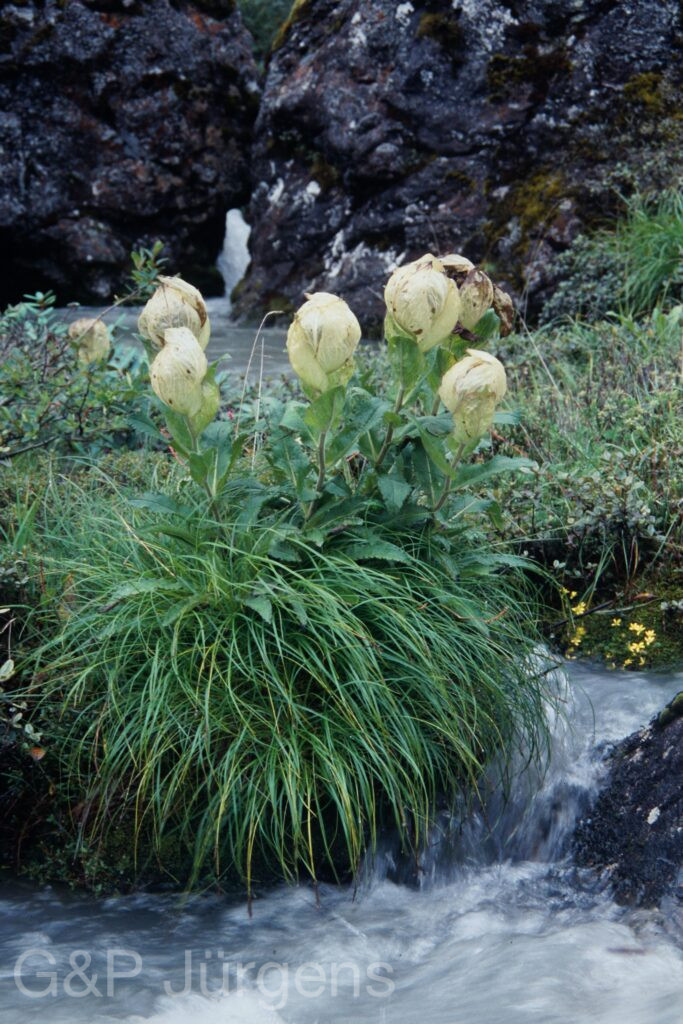
(DC.) Edgew.

Sikkim2003 453 G623
Sikkim Chopta Valley 3800m August
Sikkim2003 451 P628
Sikkim Chopta Valley 3800m August

Description

Saussurea obvallata is a high-alpine herb of the Sino-Himalayan region, distributed across the mountains of China, India, Bhutan, Nepal, Myanmar and Pakistan, with some 350 georeferenced records documenting a broadly continuous arc along the Greater Himalaya. It is a plant of open alpine meadows, moraines, scree slopes and rocky pastures, typically between about 3500 and 4800 m. The photographed material from the Chopta Valley in Sikkim at 3800 m, flowering in August, is characteristic of its preferred late-monsoon habitat on moist, well-drained alpine turf where snow lies long into early summer.

The species is a stout perennial arising from a thick taproot, with an erect, simple, leafy stem. The lower leaves are oblanceolate and dentate, narrowing to a winged petiole, while the upper leaves grade into membranous, pale, semi-translucent bracts that arch inward to enclose the inflorescence. These greenish-straw involucral bracts form the conspicuous globose to urn-shaped "lantern" that almost entirely hides the cluster of dark purple capitula within. The florets are tubular and purple-black, and the achenes bear a feathery, plumose pappus that aids wind dispersal.

The enclosing bract chamber is widely interpreted as an adaptation that buffers temperature, protects pollinating insects from cold and wind, and shelters developing florets at extreme elevation, a striking example of greenhouse-like alpine convergence shared with Rheum nobile. Long known in Himalayan tradition as the sacred "Brahma Kamal," the plant is heavily collected for ornament and medicine, and populations near pilgrimage routes face local pressure of regional conservation concern.

Author: (DC.) Edgew. · Sources: POWO (Kew), GBIF, Flora of China, Flora of Bhutan, Annotated Checklist of the Flowering Plants of Nepal, Lipschitz monograph of Saussurea

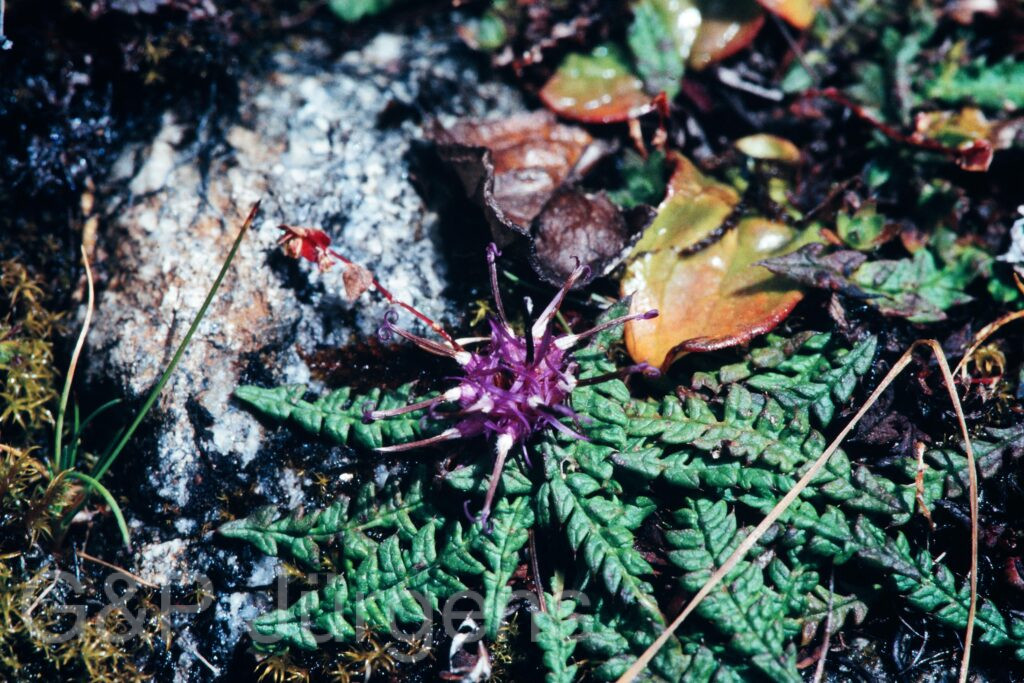
Hook.f.

Sikkim2003 307 P433
Sikkim Saniti-Lake 4250m August

Description

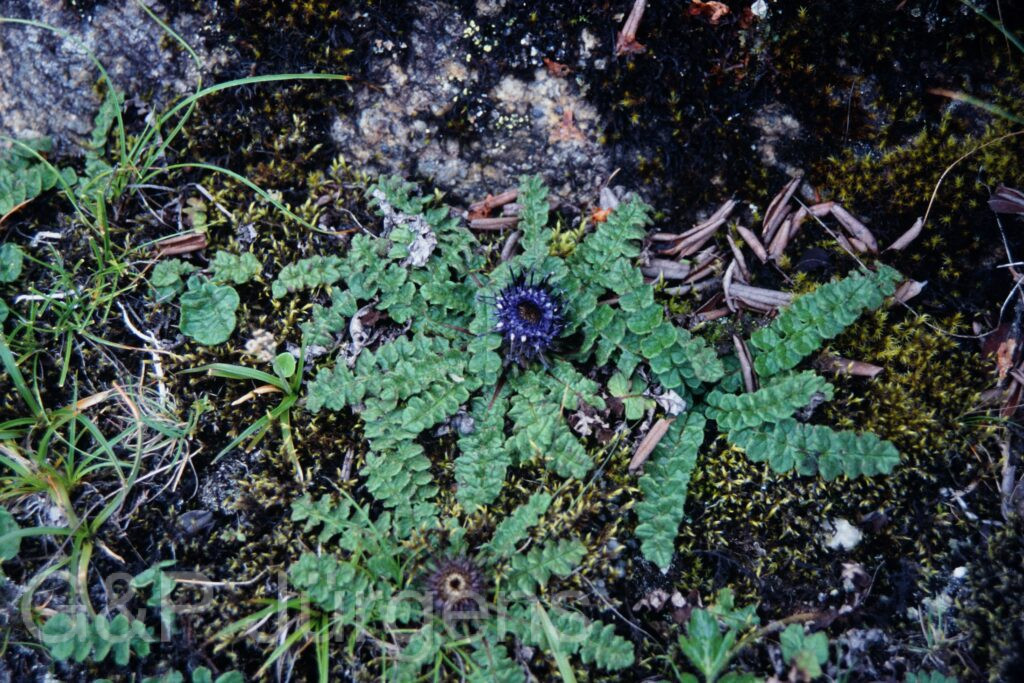
Saussurea polystichoides is a high-alpine perennial herb of the eastern and central Himalaya, recorded from Nepal, northern India, Bhutan and adjacent south-western China, with a small documented base of about 43 occurrences consistent with its restricted, high-elevation habitat. It grows on open alpine turf, screes, moraines and rocky slopes, typically between roughly 4000 and 4800 m. The specimen shown was photographed near Saniti Lake in Sikkim at about 4250 m in August, when these short-season alpines flower during the brief post-monsoon window above the treeline.

The plant is a low, cushion-forming or tufted herb arising from a stout caudex clothed in old leaf bases, the name polystichoides alluding to the fern-like, many-ranked rosette of finely divided leaves. The leaves are pinnately lobed to pinnatisect, narrow and densely arranged, often white-woolly to give protection against cold and intense radiation. The capitula are sessile or shortly stalked and aggregated within the leaf rosette; each head bears tubular, purple to violet disc florets enclosed by imbricate, often lanate phyllaries. The fruit is a glabrous cypsela crowned by a feathery, plumose pappus.

Saussurea (Asteraceae, tribe Cardueae) is a large Asian genus particularly diversified in the high Himalaya and Tibetan Plateau, where many species have evolved dense indumentum or translucent bracts as adaptations to extreme alpine conditions. S. polystichoides belongs to the group of cushion- or rosette-forming saw-worts of the highest screes. Pollinated by alpine insects and wind-dispersed via its plumose pappus, it is a narrow-range, habitat-specialist endemic of conservation interest given its limited area and sensitivity to climatic warming.

Author: Hook.f. · Sources: POWO (Kew), GBIF, Flora of China, Flora of Bhutan, Annotated Checklist of the Flowering Plants of Nepal, Lipschitz monograph of Saussurea