Asteraceae

Gaertn.

Nepal 97 49 P74
Nepal Mewa-Khola 1100m April

Description

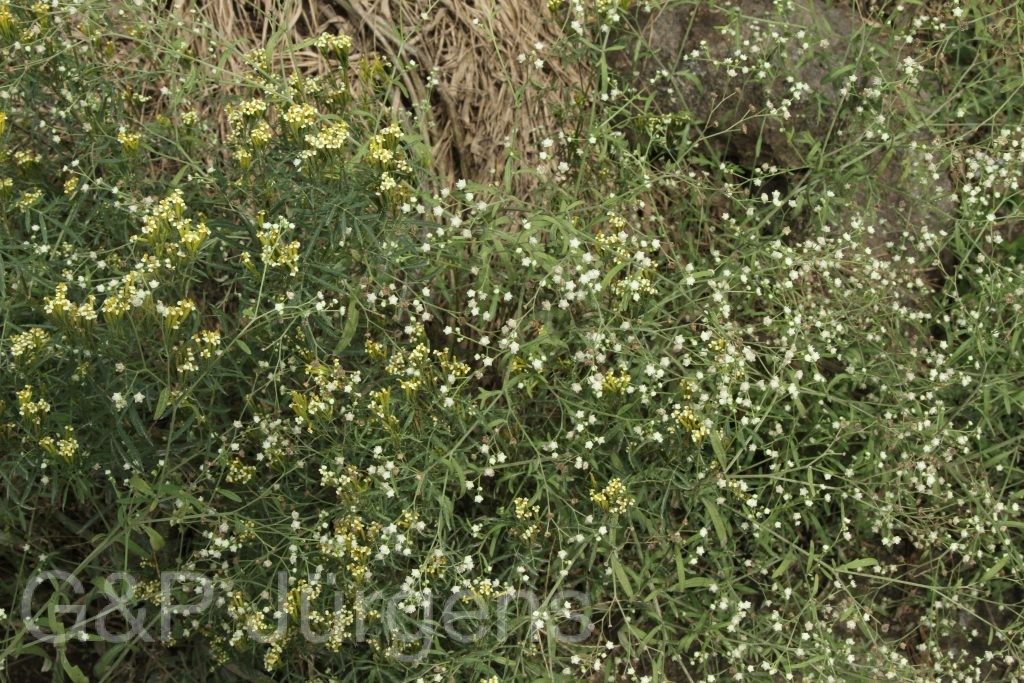
Sphaeranthus indicus Gaertn. is a widespread weedy annual of the Old World tropics and subtropics, with a very broad GBIF footprint (over 1200 occurrences) spanning India, Sri Lanka, Bangladesh, Nepal, Bhutan, Myanmar, Thailand, Laos, Vietnam, southern China and Indonesia, and extending to Australia, Madagascar, Kenya and Ethiopia. It is a plant of seasonally wet, open ground: rice-field margins, fallows, ditches, damp wastelands and the receding edges of pools and tanks, mostly at low elevations. The specimen photographed at Mewa-Khola in Nepal at 1100 m in April occurs in the warm subtropical foothill belt at the upper margin of its lowland range, where post-monsoon wet ground provides its preferred germination sites.

It is a strongly aromatic annual herb with a much-branched, often reddish, ascending to spreading stem bearing conspicuous toothed or undulate wings formed by the decurrent leaf bases. The leaves are obovate to oblanceolate, sessile, and serrate-dentate. The diagnostic feature is its compound capitulescence: numerous tiny, narrow secondary heads are aggregated into a dense, globose to ovoid, purple to violet compound head terminating each branch. Each small head contains a few peripheral female florets and central bisexual florets with tubular corollas. The fruit is a minute, oblong cypsela lacking a conspicuous pappus.

The genus Sphaeranthus is distinctive within tribe Inuleae for its glomerulate, second-order capitula, and S. indicus is its most familiar and economically significant species, valued throughout South Asia in Ayurvedic and folk medicine for its essential oils and bioactive sesquiterpenoids and flavonoids. Ecologically it behaves as a pioneer of disturbed, periodically inundated soils and is locally abundant; it is of least conservation concern and indeed often regarded as a ruderal weed across its pantropical range.

Author: Gaertn. · Sources: POWO (Kew), GBIF, Flora of China, Flowers of the Himalaya, Annotated Checklist of the Flowering Plants of Nepal, Anderberg monograph of tribe Inuleae

(Wall. ex DC.) C.Shih

Bhutan2012 428
Bhutan Wangdi 3300m, June

Description

Stenoseris graciliflora is a slender herbaceous composite of the temperate to subalpine Himalaya, ranging through China, India, Nepal, Myanmar and Bhutan, with 160 GBIF records tracing its distribution along the moist montane forest belt and adjoining clearings. It typically grows in forest margins, shrubberies and grassy openings on humus-rich soils between roughly 2500 and 3800 m. The illustrated plant was collected near Wangdi in western Bhutan at about 3300 m in June, in the upper temperate zone where the monsoon supports a tall-herb flora amid fir and rhododendron forest.

In GBIF the name is treated as a synonym, with Stenoseris graciliflora maintained as the accepted name for this entity. The plant is an erect perennial with slender, often leafy and branching stems exuding milky latex when broken, as is typical of the lettuce tribe. The leaves are thin, the lower ones often lyrate-pinnatifid and narrowing to a winged petiole, the upper smaller and clasping. The inflorescence is a lax, narrow panicle of small, few-flowered capitula, each enclosed by a cylindrical involucre of imbricate phyllaries; the florets are all ligulate and pale blue to lilac. The fruit is a flattened, ribbed cypsela bearing a soft white pappus of fine bristles.

Stenoseris is a small genus of the tribe Cichorieae (Lactuceae), segregated from Cicerbita and Lactuca on the basis of its slender capitula, achene morphology and pappus characters. The basionym authority (Wall. ex DC.) C.Shih reflects the species' long taxonomic passage among these closely allied genera. As a widespread montane herb it is not regarded as threatened, though it serves as a useful indicator of intact, humid temperate forest understorey.

Author: (Wall. ex DC.) C.Shih · Sources: POWO (Kew), GBIF, Flora of China, Flora of Bhutan, Compositae of the Himalaya (Cichorieae monographs)

(L.) Á.Löve & D.Löve

Bhutan2012 1254
Bhutan Trashigang 1720m, October

Description

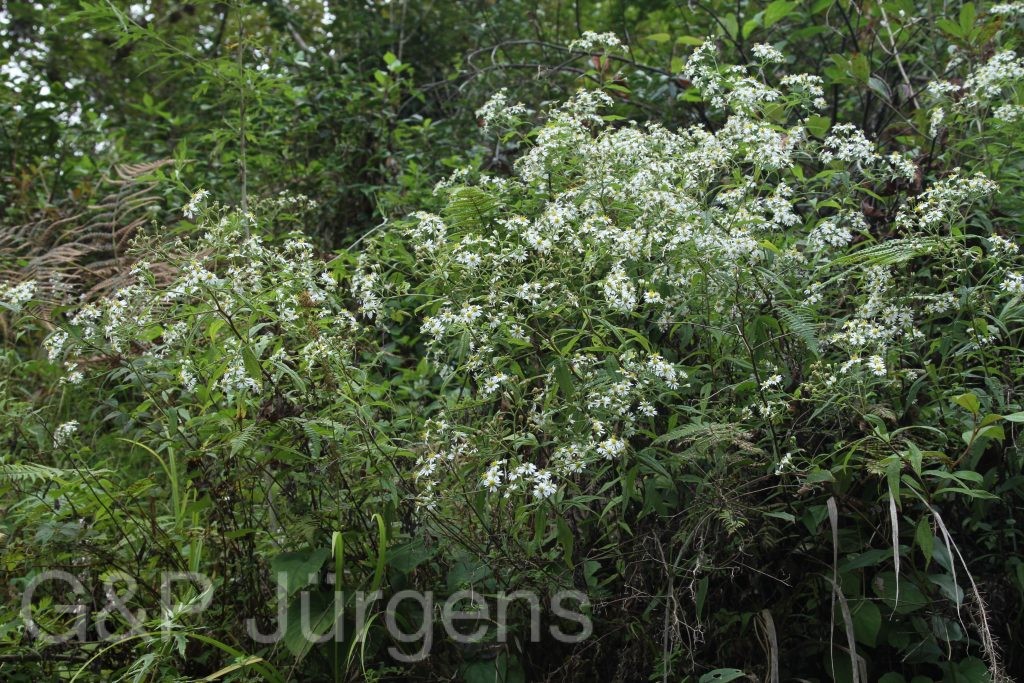
Symphyotrichum laeve, the smooth blue aster, is native to North America, where GBIF records its overwhelming abundance (15,822 occurrences) across the United States, Canada and Mexico. It is also widely naturalised in Europe (Germany, Netherlands, Sweden, France, Britain, Belgium and beyond) and is recorded as an introduced ornamental elsewhere. In its native range it occupies dry to mesic prairies, open woodland, glades and roadsides. The image was taken at Trashigang in eastern Bhutan at 1720 m in October, where the plant occurs as a cultivated or escaped garden ornamental rather than as a member of the indigenous Himalayan flora.

It is a glabrous, often glaucous perennial herb arising from a short rhizome or caudex, with erect stems to about 1 m. The leaves are alternate, firm and smooth, the lower oblanceolate and tapering to a winged petiole, the upper sessile and clasping with an auriculate base, the margins entire to remotely toothed. The inflorescence is an open paniculiform array of numerous capitula subtended by appressed, imbricate phyllaries with diamond-shaped green tips. Each head bears blue to violet ray florets surrounding yellow disc florets that age to purplish; the achenes are ribbed and crowned by a tawny pappus of capillary bristles.

Formerly placed in Aster, the species was transferred to Symphyotrichum by Á. Löve & D. Löve following molecular evidence dismantling the broad genus Aster, which is now restricted to Old World taxa. Smooth aster is a popular late-season ornamental and pollinator plant. It is secure throughout its native range and behaves as a benign garden escape in temperate regions worldwide.

Author: (L.) Á.Löve & D.Löve · Sources: POWO (Kew), GBIF, Flora of North America, Flora of Bhutan, Symphyotrichum revision (Nesom), Asteraceae of North America

(Wall. ex DC.) C.Jeffrey & Y.L.Chen

Garw 2005 172 ergebnis ergebnis
India Garhwal Shertoli 3100m, September

Description

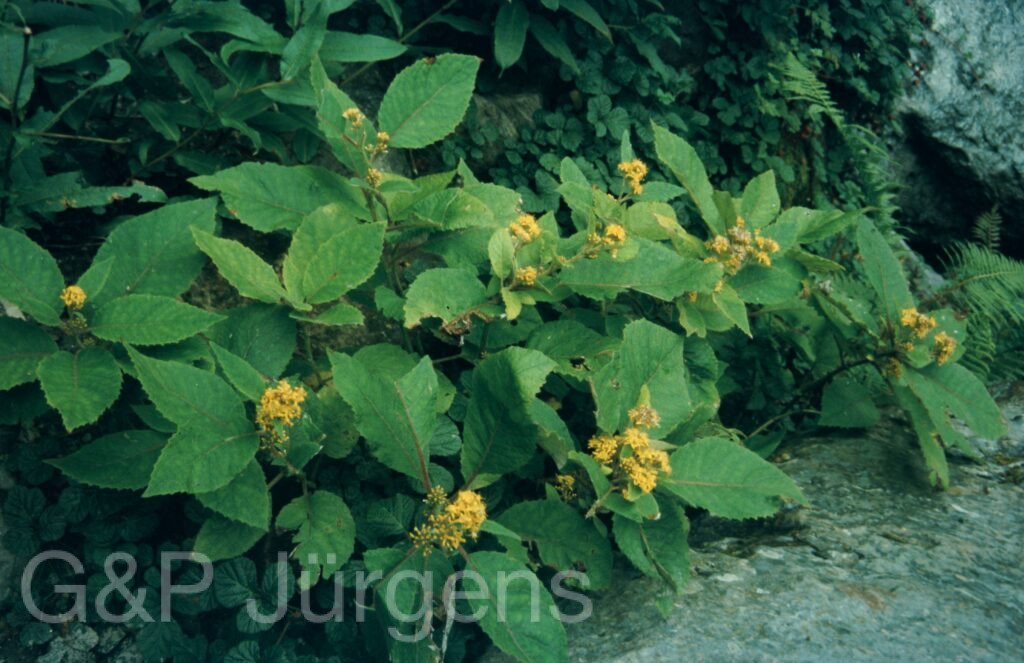
Synotis alata is a robust ragwort-allied composite of the Himalaya and southwestern China, documented by GBIF (330 occurrences) from Nepal, India, Bhutan, Myanmar and China. It grows in forest clearings, shrubberies, along streamsides and on grassy slopes within the upper temperate and subalpine zones, typically between about 2500 and 3500 m. The plant photographed at Shertoli in Garhwal, India, at 3100 m in September captures its late-monsoon to autumn flowering, when these tall herbs come into bloom along moist montane margins after the rains.

The species is a perennial herb with erect, often winged or narrowly alate stems, a feature reflected in the epithet "alata". The leaves are alternate, ovate to elliptic-lanceolate, sharply toothed and frequently decurrent down the stem to form the characteristic wings, with a thinly hairy lower surface. The capitula are numerous and arranged in a broad terminal corymbose panicle; each head is radiate with a few yellow ligulate ray florets surrounding a disc of yellow tubular florets, subtended by an involucre of uniseriate phyllaries with small calyculate bracts. The fruit is a cylindrical, ribbed cypsela bearing a copious white pappus of fine barbellate bristles that aids wind dispersal.

Synotis was segregated from the vast genus Senecio by C. Jeffrey and Y. L. Chen, who recognised its distinctive style and pollen characters; S. alata is a typical member of this Sino-Himalayan group. The wind-borne pappus permits rapid colonisation of disturbed and successional ground, and the bright capitula attract a range of generalist butterfly and bee pollinators. The species is common and widespread across its range and is not considered to be of conservation concern.

Author: (Wall. ex DC.) C.Jeffrey & Y.L.Chen · Sources: POWO (Kew), GBIF, Flora of China, Flora of Bhutan, Annotated Checklist of the Flowering Plants of Nepal, The Senecioneae of the Himalaya (Jeffrey)

(Wall. ex DC.) C.Jeffrey & Y.L.Chen

Garw 2005 51 ergebnis ergebnis
India Garhwal Valley of flowers 3400m, September

Description

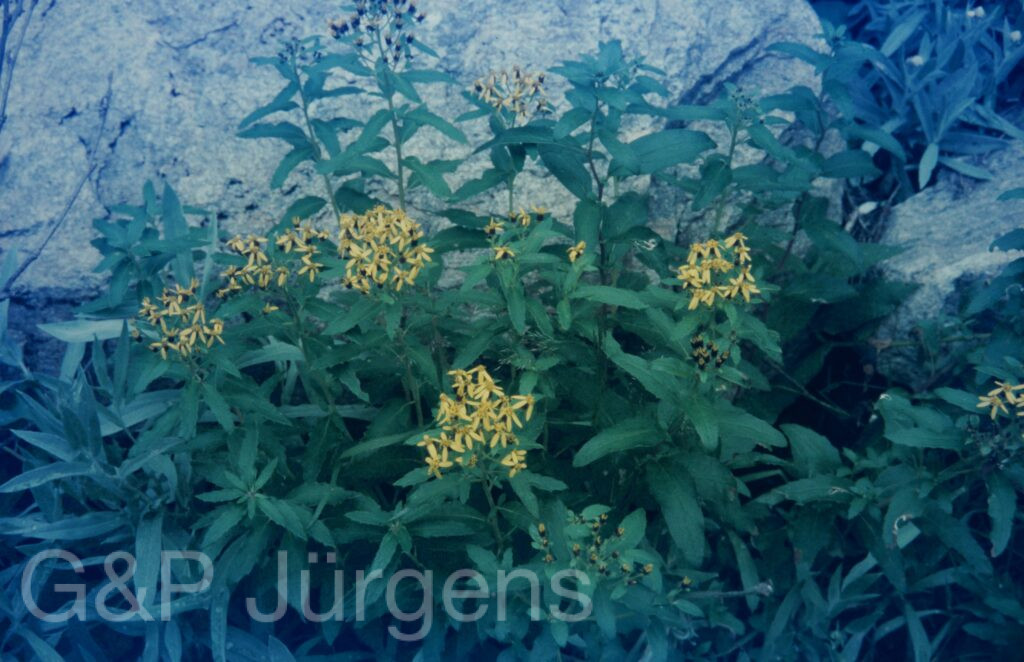
Synotis kunthiana is a Sino-Himalayan composite distributed across the central and eastern Himalaya, with verified records from India, Nepal and Bhutan and roughly 56 georeferenced occurrences in GBIF. It is a plant of the upper temperate and subalpine zones, typically occupying moist forest margins, shrubberies, streamsides and open herb-rich slopes between about 2800 and 3800 m. The photographed population in the Garhwal Himalaya, in the renowned Valley of Flowers at around 3400 m, flowering in September, exemplifies its late-season phenology in tall-herb communities flushed by the receding monsoon.

It is a perennial herb with erect, often somewhat woody-based stems arising from a short rhizome, the stems leafy and frequently floccose-tomentose when young. The leaves are alternate, ovate to elliptic-lanceolate, acuminate, with a serrate to denticulate margin and a thinly arachnoid-pubescent abaxial surface. The capitula are numerous, small and arranged in lax terminal corymbose-paniculate cymes; each head bears an involucre of uniseriate phyllaries subtended by a few calyculate bracteoles, with yellow radiate ray florets surrounding the disc. The fruit is a cylindrical, ribbed cypsela crowned by a copious white pappus of fine barbellate bristles.

The genus Synotis was segregated from Senecio sensu lato by C. Jeffrey and Y. L. Chen on the basis of style-branch and capitular characters, and S. kunthiana is based on the Wallichian Senecio kunthianus. The species remains locally common across its range and is not considered threatened, though its dependence on intact subalpine tall-herb meadows makes it a useful indicator of grazing pressure and habitat continuity.

Author: (Wall. ex DC.) C.Jeffrey & Y.L.Chen · Sources: POWO (Kew), GBIF, Flora of Bhutan, Flora of China, Jeffrey & Chen revision of Asiatic Senecioneae (Synotis)

L.

Bhutan2015 523
Bhutan Phobjika 2410m, October

Description

Tagetes minuta L. is native to the temperate grasslands and lower Andes of southern South America but is now a pantropical and warm-temperate weed; GBIF lists over 16,000 occurrences spanning Argentina, Bolivia, Brazil, Ecuador, the United States, Spain, France, Belgium, the Netherlands, South Africa, Kenya, Tanzania, Namibia, Zimbabwe, Ethiopia, India, Korea, Saudi Arabia and Australia. It is a ruderal colonist of cultivated ground, roadsides, waste places and field margins. The record from Phobjika at 2410 m in October shows its naturalisation in the Bhutan Himalaya, where it flowers late in the season on disturbed and abandoned ground.

It is a tall erect annual herb reaching well over a metre, with a strongly aromatic, glandular-punctate foliage. The stems are ribbed and branched above; the leaves are opposite below and alternate above, pinnately divided into numerous lanceolate, sharply serrate leaflets dotted with conspicuous oil glands. The small, narrow, cylindrical capitula are clustered in dense flat-topped corymbs; each head has a single series of fused involucral bracts, few inconspicuous pale-yellow ray florets and several tubular disc florets. The fruit is a slender black cypsela bearing a pappus of a few short scales, some awned.

The oil glands yield the volatile "tagetes oil" used commercially and in traditional medicine, and the plant has well-documented allelopathic and nematicidal properties exploited in companion planting. A highly successful colonising annual, T. minuta is classed as an invasive or noxious weed in several regions and is of no conservation concern.

Author: L. · Sources: POWO (Kew), GBIF, Flora of China, Flora of North America, Soule taxonomic revision of Tagetes

(C.B.Clarke) Kitam.

Sikkim2003 135 P183
India Sikkim Dzongri 4000m, August

Description

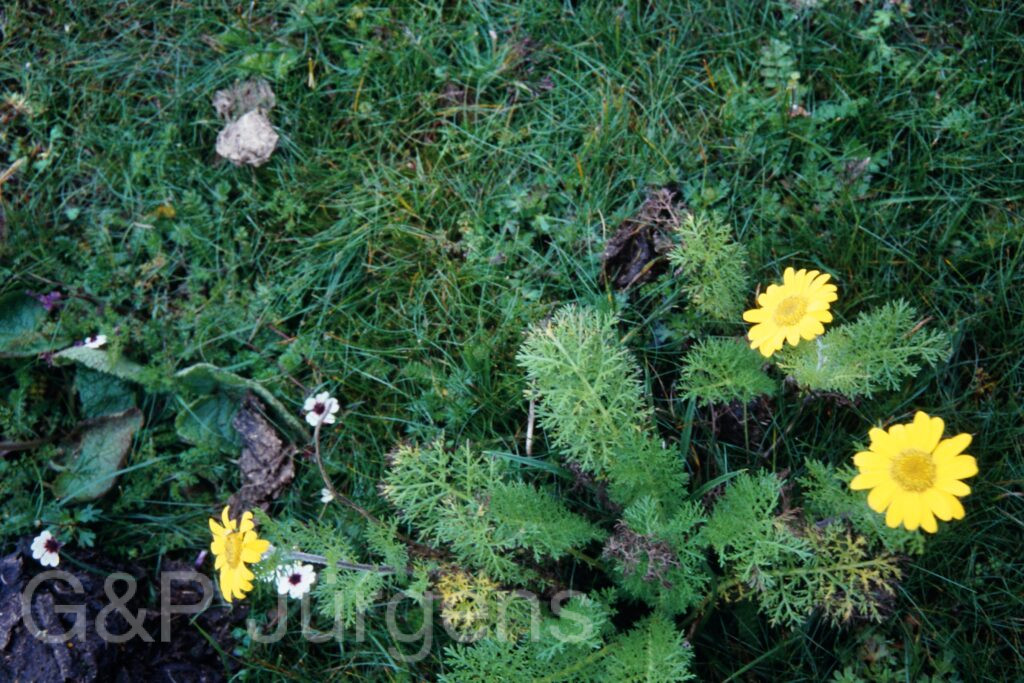
Tanacetum atkinsonii is an aromatic alpine composite of the Himalaya, recorded from Nepal, India, Bhutan and southern China, with GBIF holding around 102 occurrences across this range. It grows on open, stony alpine slopes, rocky pastures, screes and dry grassy banks in the high alpine zone, generally between about 3500 and 4500 m, where it tolerates strong insolation, cold and free-draining substrates. The illustrated plant from Dzongri in Sikkim at 4000 m, flowering in August, is characteristic of these exposed high-altitude habitats and of its late-summer flowering after the monsoon.

It is a perennial, aromatic herb with a woody rootstock producing erect to ascending stems and finely divided, pinnately dissected or bipinnatisect leaves that are grey-green and often hairy, releasing a tansy-like scent when crushed. The capitula (flower heads) are borne in a terminal corymb; each head has an involucre of imbricate, scarious-margined bracts and the typical Tanacetum structure of yellow disc florets, with the marginal florets reduced or shortly rayed rather than conspicuously ligulate. The fruit is a small, ribbed, glandular cypsela, usually with a short membranous corona rather than a true pappus.

Transferred to Tanacetum by Kitamura from an original placement under Chrysanthemum/Pyrethrum by C.B. Clarke, the species sits within the taxonomically fluid tansy group of the tribe Anthemideae, distinguished by its dissected aromatic foliage and reduced ray florets. A widespread high-Himalayan element, it is of no particular conservation concern.

Author: (C.B.Clarke) Kitam. · Sources: POWO (Kew), GBIF, Flora of Bhutan, Flora of China, Compositae of the Himalaya (specialist treatments)

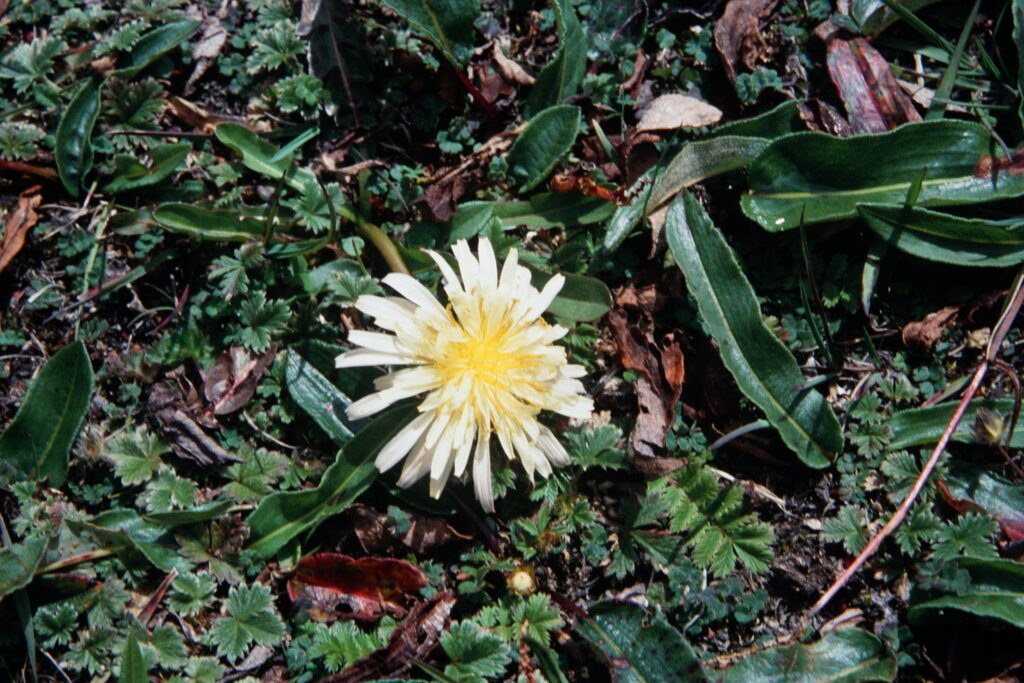
Hand.-Mazz.

Sikkim2003 512 G712 2 ergebnis
Sikkim Yumedzandong 4500m, August

Description

Taraxacum sikkimense is a high-alpine dandelion of the Himalaya and Tibetan Plateau margins, recorded from China, India, Nepal, Bhutan and Pakistan, with a modest set of records (c. 128 in GBIF) reflecting its restricted high-elevation range. It occupies alpine meadows, turfy slopes, moist gravelly ground and the surrounds of snowmelt flushes, typically between about 4000 and 4800 m. The photographed plant from Yumedzandong in Sikkim, at 4500 m and flowering in August, exemplifies the species in its short alpine growing season, when warmth and meltwater briefly permit growth and flowering near the upper limit of vascular plant life.

The plant is a small, acaulescent, rosette-forming perennial herb with a thick, often blackened taproot and a milky white latex characteristic of the tribe Cichorieae. The leaves are all basal, runcinate to pinnatifid or shallowly toothed, sometimes nearly entire in dwarfed alpine forms. The flowering scapes are short, each bearing a single capitulum subtended by an involucre of imbricate phyllaries, the outer often appressed or recurved with a coloured margin. The capitulum is homogamous, composed entirely of yellow ligulate (ray) florets; the fruit is a ribbed, spinulose-muricate cypsela narrowed above into a slender beak that bears a pappus of simple white bristles, dispersed by wind.

Taraxacum is a taxonomically formidable genus owing to widespread apomixis (agamospermy) and polyploidy, which generate innumerable stable microspecies; the Himalayan high-elevation taxa form a distinctive assemblage that remains incompletely revised. Taraxacum sikkimense belongs to this alpine radiation. As a specialised high-altitude plant with a naturally fragmented distribution, it is potentially sensitive to alpine habitat change, though it has not been formally assessed.

Author: Hand.-Mazz. · Sources: POWO (Kew), GBIF, Flora of China (Asteraceae), Flora of Bhutan, Taraxacum: A monograph (Richards)

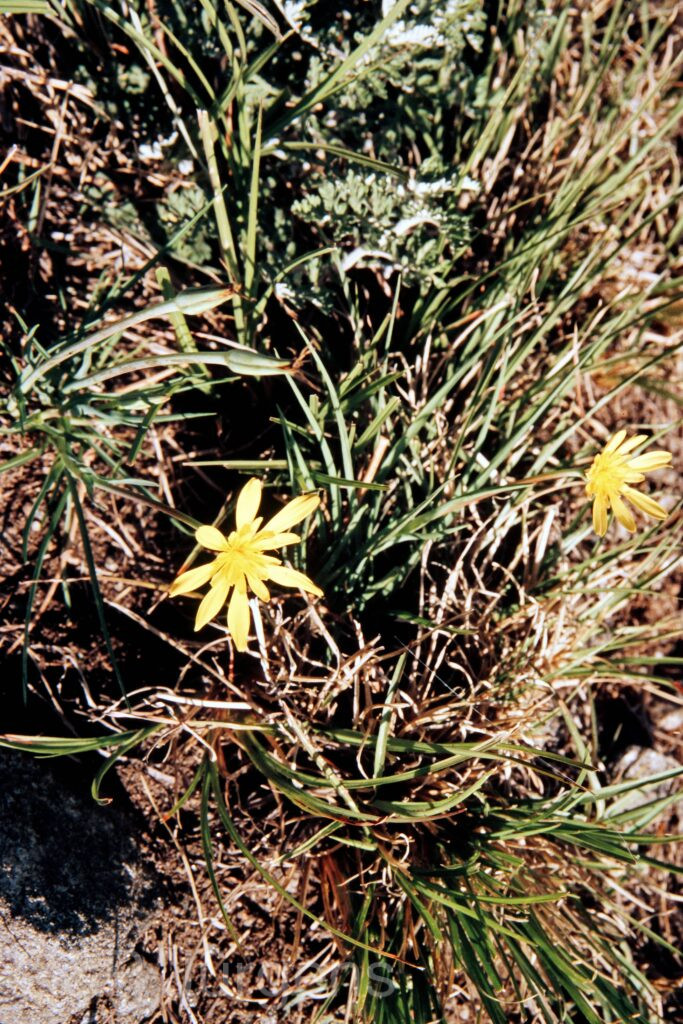
D.Don

Garh 07 34 ergebnis
India Garhwal Ransi at Mandakini 2000m, June

Description

Tragopogon gracilis is a slender goatsbeard of the western and central Asian mountains, distributed from Afghanistan (AF), Pakistan (PK) and the western Himalaya of India (IN) and Nepal (NP) through China (CN), Tajikistan (TJ), Kyrgyzstan (KG) and Iraq (IQ) into Russia (RU), with 312 GBIF occurrences. It grows on open grassy slopes, meadows, fields and disturbed ground in the temperate and subalpine zones. The illustrated plant was recorded in the Indian Garhwal Himalaya at Ransi above the Mandakini at about 2000 m in June, where it flowers in early summer.

It is an erect annual to biennial or short-lived perennial herb with milky latex and a slender, often sparingly branched stem. The leaves are linear to linear-lanceolate, grass-like, sheathing at the base and tapering to a fine point. The capitula are solitary and terminal, subtended by a single row of lanceolate involucral bracts that frequently exceed the ligules; all florets are ligulate (the head homogamous), yellow and sometimes purple-tinged on the outer face. The fruit is a long, beaked cypsela bearing a feathery, plumose pappus of plumose bristles that forms the conspicuous spherical seed-head typical of the genus.

Tragopogon belongs to tribe Cichorieae of Asteraceae, a group characterised by latex and ligulate florets. The genus is well known to botanists for recurrent allopolyploid speciation, and its Central Asian and Irano-Turanian species, including T. gracilis, form part of the steppe and mountain-meadow flora at the Himalayan range margin, of biogeographic interest as a western element extending into the high Himalaya.

Author: D.Don · Sources: POWO (Kew), GBIF, Flora of Pakistan, Flora of China, Flora Iranica, Monograph of the genus Tragopogon

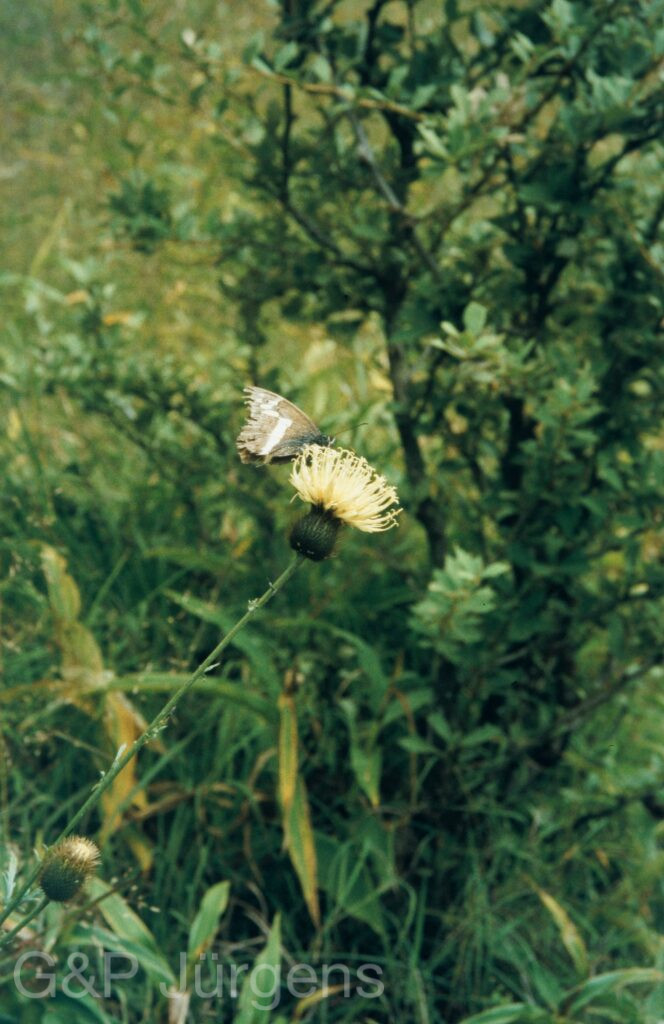
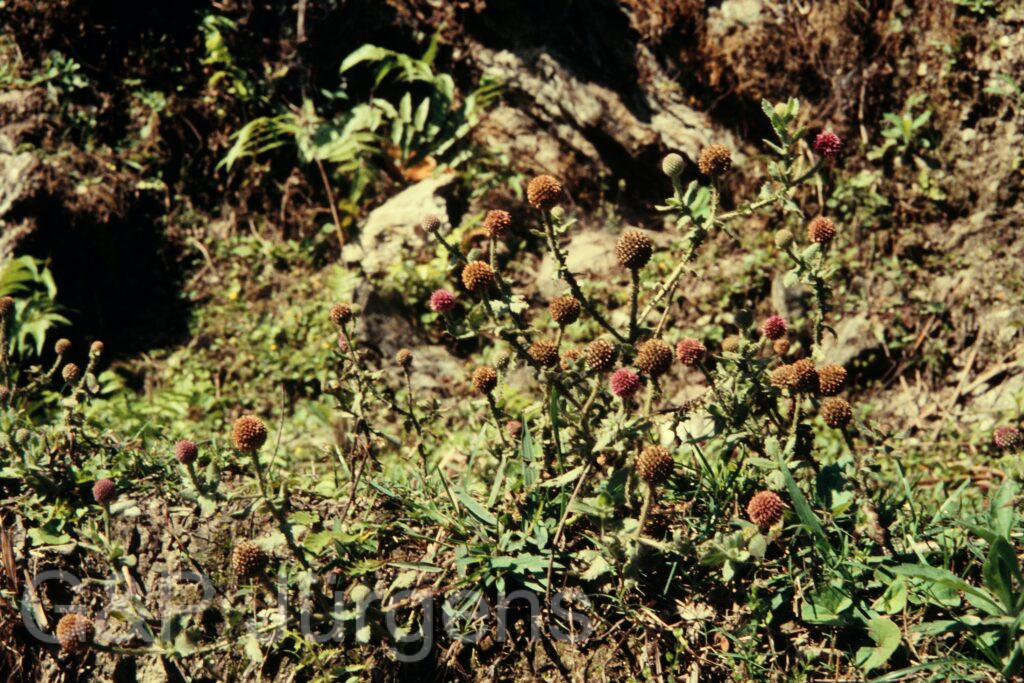
DC.

Garw 2005 274 ergebnis
India Garhwal Kunol 2550m, September

Description

Tricholepis elongata is a thistle-like composite of the Himalaya and adjacent regions, with roughly 120 GBIF occurrences recorded chiefly from India, Nepal and Pakistan. It is a plant of warm to cool temperate slopes, favouring open, sunny, often dry and somewhat rocky or grassy ground, scrub margins, banks and disturbed sites in the montane zone. The specimen photographed at Kunol in Garhwal, India, at about 2550 m in September was recorded toward the close of the monsoon, the late-summer to autumn flowering period when many montane thistle relatives in this elevational band come into bloom.

It is an erect, branched perennial or biennial herb, the stems slender and elongate as the epithet suggests, bearing alternate leaves that are linear to lanceolate, entire to toothed or somewhat divided, and frequently roughened. The capitula are solitary or few at the branch tips and are homogamous, composed wholly of slender tubular disc florets, pink to purple in colour. The involucral bracts (phyllaries) are numerous, narrow and tapering, often with finely fringed or hair-tipped margins, a feature reflected in the generic name. The fruit is a small cypsela crowned by a pappus of fine bristles or scales that promotes wind dispersal.

Tricholepis belongs to tribe Cardueae, the thistle tribe, and is distinguished by its finely dissected or ciliate phyllary appendages and bristly pappus. The genus is centred on the Indian subcontinent and the Himalaya. As a species of open and frequently disturbed montane habitats, T. elongata is not of conservation concern; such thistle-relatives provide nectar and pollen to a range of insect pollinators and contribute to the herbaceous flora of dry temperate slopes.

Author: DC. · Sources: POWO (Kew), GBIF, Flora of Pakistan, Hooker Flora of British India, Flora of Nepal, Susanna & Garcia-Jacas Cardueae systematics