
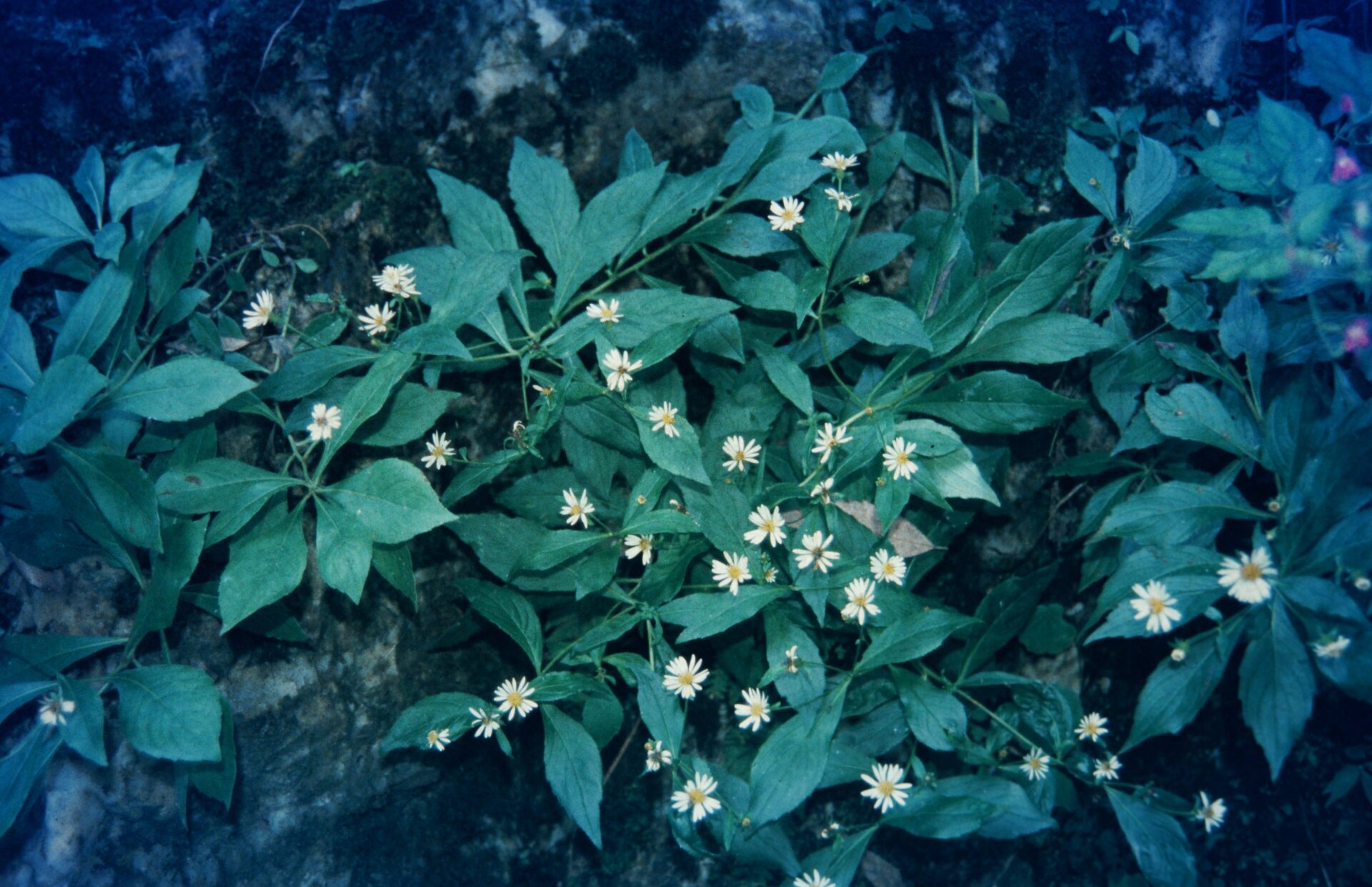
Wall.
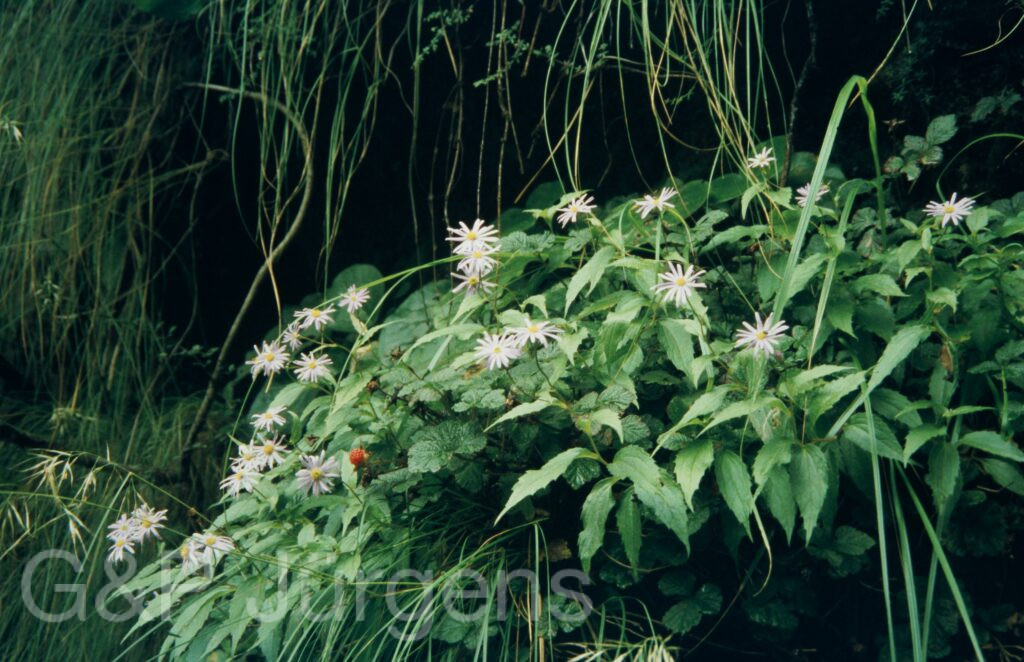
Description
Aster peduncularis is a western and central Himalayan daisy recorded from India, Nepal and Pakistan, with about 76 GBIF occurrences. It occupies the temperate to subalpine zone, growing in open forest, grassy slopes, meadows, clearings and shrubby banks, broadly between about 2500 and 3800 m. The collection from Shertoli in Garhwal, India, at 3200 m in September corresponds to its late-summer to autumn flowering, when such mid-montane meadows of the western Himalaya are bright with composites following the monsoon rains.
It is a perennial herb with erect or ascending stems arising from a rootstock, bearing alternate, ovate to lanceolate leaves that diminish upwards, the lower ones petiolate and the upper sessile and sometimes clasping. The capitula are radiate and borne on conspicuously long peduncles, the feature evoked by the epithet "peduncularis". Each head has an involucre of several rows of graded bracts; the ray florets are ligulate and bluish-purple to mauve, encircling a disc of yellow tubular florets. The achenes are compressed and crowned by a pappus of fine barbellate bristles aiding wind dispersal.
In GBIF this name is treated as a synonym, with the accepted taxon being the same epithet under current circumscription; placement of Himalayan asters has shifted considerably as the broad genus Aster has been split into segregate genera, several Sino-Himalayan species moving to allied groups within tribe Astereae. Pollination is by a range of generalist insects, and the plumose pappus disperses the seed on wind. The species is widespread and not regarded as threatened.
Author: Wall. · Sources: POWO (Kew), GBIF, Flora of China, Flora of Pakistan, Asteraceae of the Himalaya (Grierson / Nesom)