
D.Don
Description
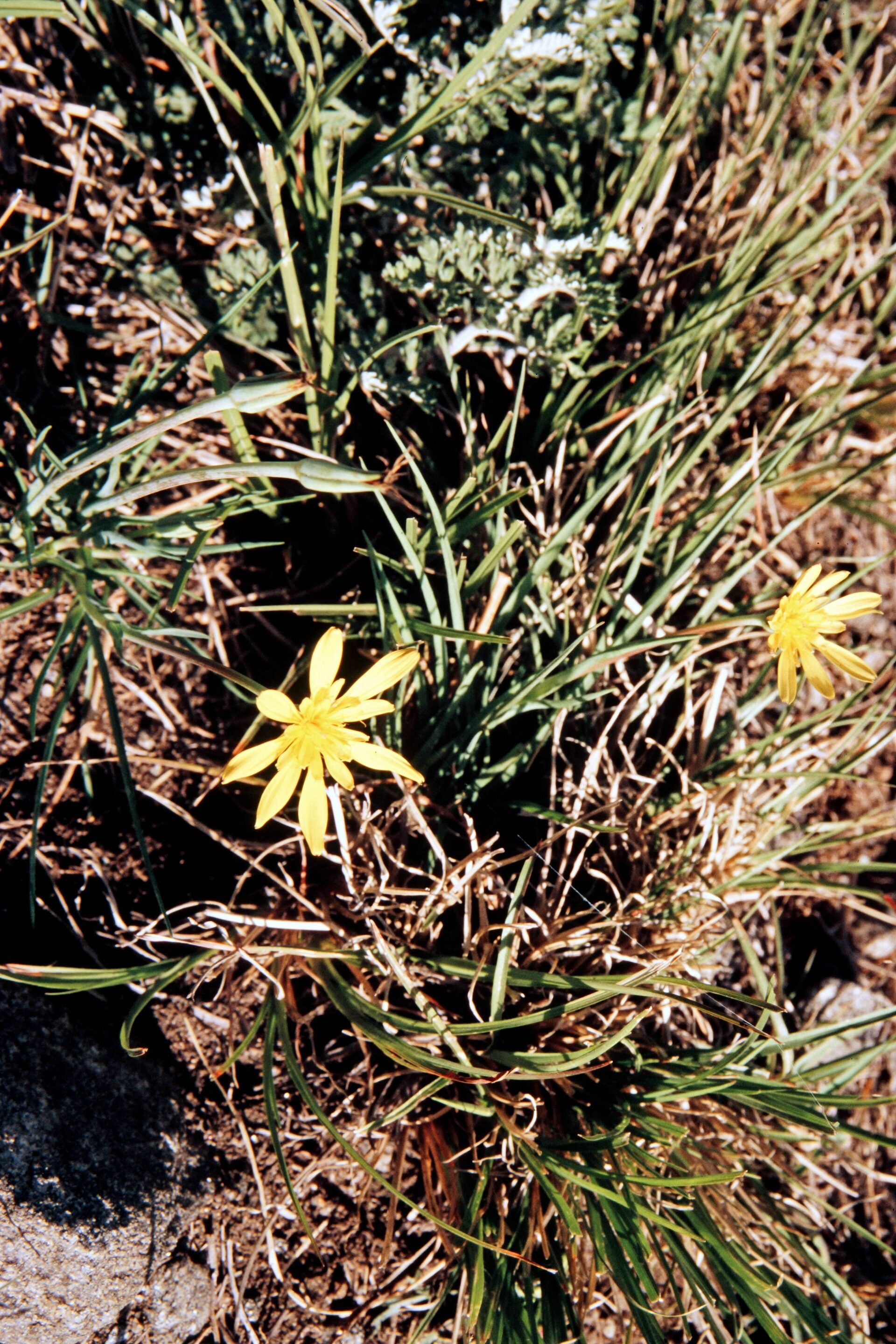
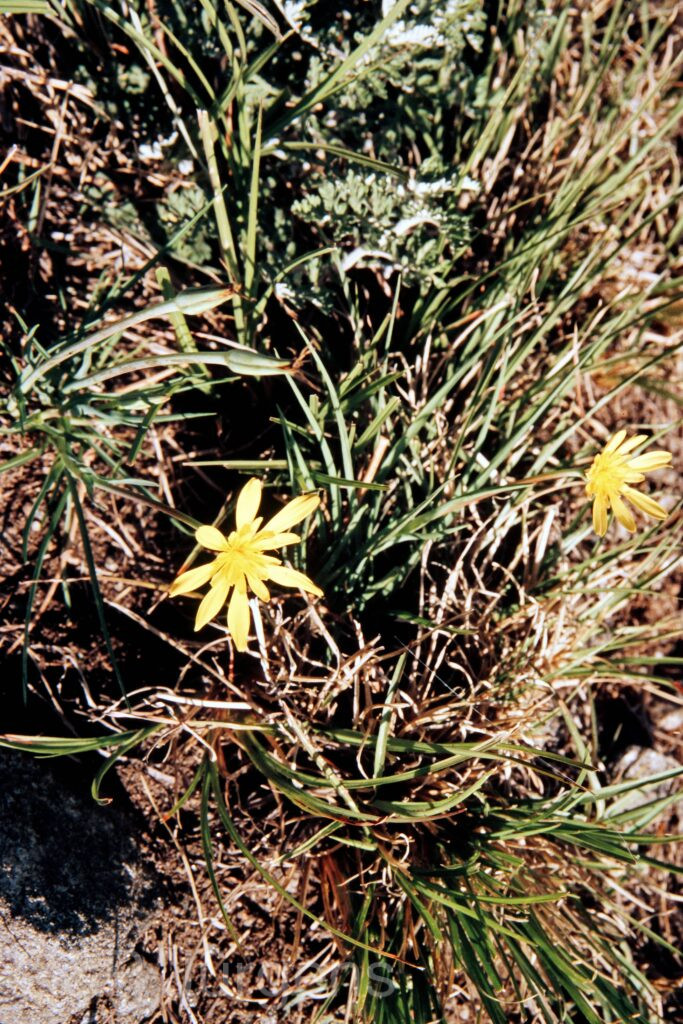
Tragopogon gracilis is a slender goatsbeard of the western and central Asian mountains, distributed from Afghanistan (AF), Pakistan (PK) and the western Himalaya of India (IN) and Nepal (NP) through China (CN), Tajikistan (TJ), Kyrgyzstan (KG) and Iraq (IQ) into Russia (RU), with 312 GBIF occurrences. It grows on open grassy slopes, meadows, fields and disturbed ground in the temperate and subalpine zones. The illustrated plant was recorded in the Indian Garhwal Himalaya at Ransi above the Mandakini at about 2000 m in June, where it flowers in early summer.
It is an erect annual to biennial or short-lived perennial herb with milky latex and a slender, often sparingly branched stem. The leaves are linear to linear-lanceolate, grass-like, sheathing at the base and tapering to a fine point. The capitula are solitary and terminal, subtended by a single row of lanceolate involucral bracts that frequently exceed the ligules; all florets are ligulate (the head homogamous), yellow and sometimes purple-tinged on the outer face. The fruit is a long, beaked cypsela bearing a feathery, plumose pappus of plumose bristles that forms the conspicuous spherical seed-head typical of the genus.
Tragopogon belongs to tribe Cichorieae of Asteraceae, a group characterised by latex and ligulate florets. The genus is well known to botanists for recurrent allopolyploid speciation, and its Central Asian and Irano-Turanian species, including T. gracilis, form part of the steppe and mountain-meadow flora at the Himalayan range margin, of biogeographic interest as a western element extending into the high Himalaya.
Author: D.Don · Sources: POWO (Kew), GBIF, Flora of Pakistan, Flora of China, Flora Iranica, Monograph of the genus Tragopogon