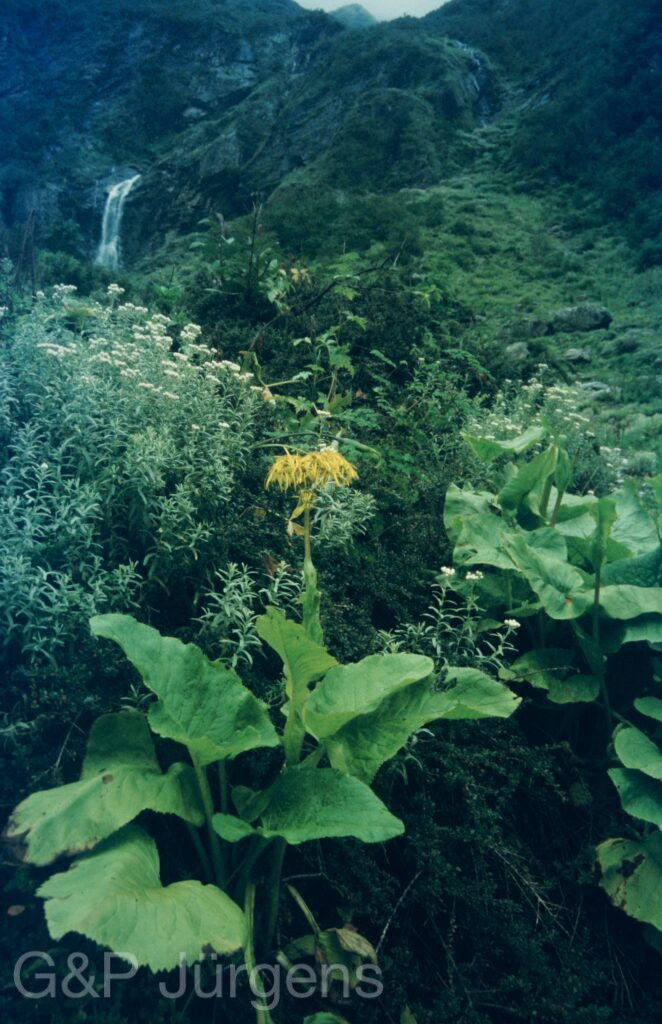
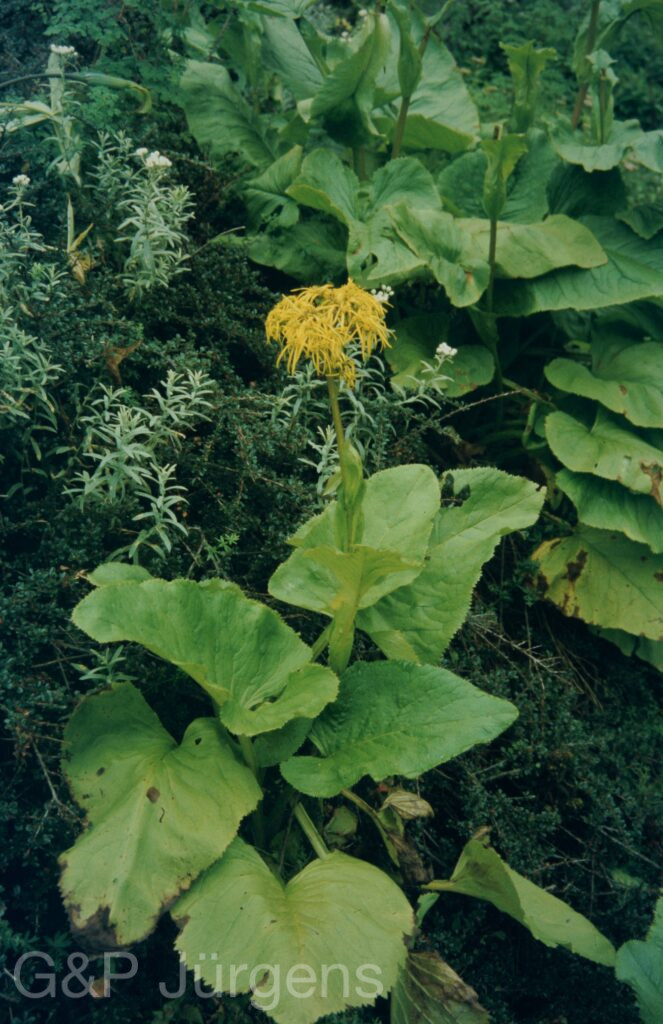
Willd.
Description
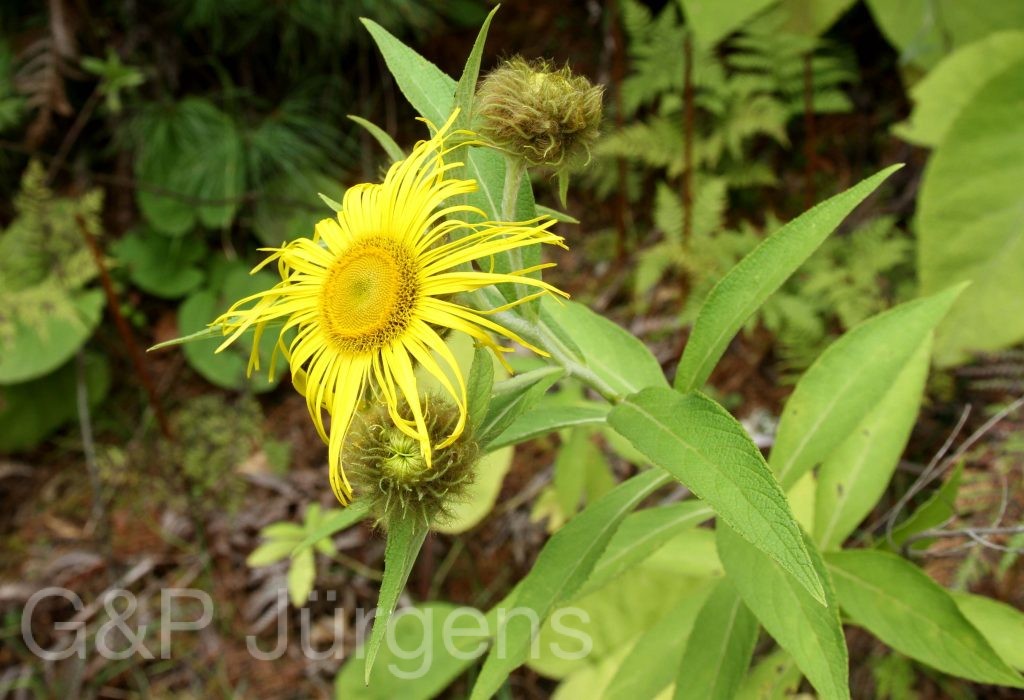
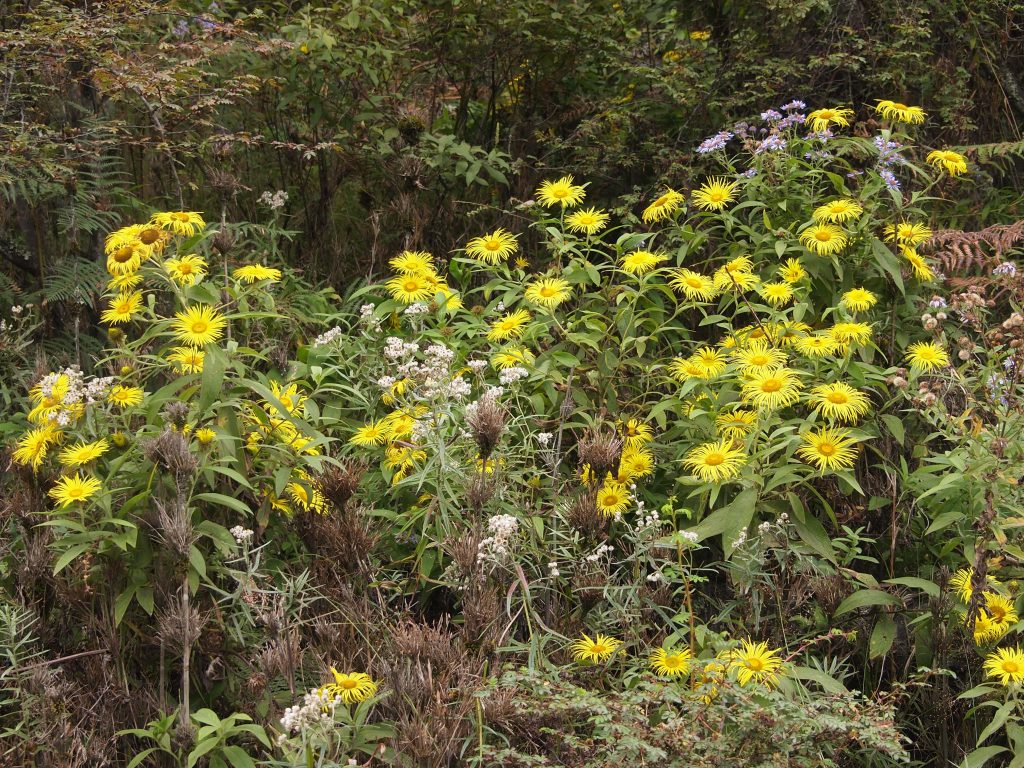
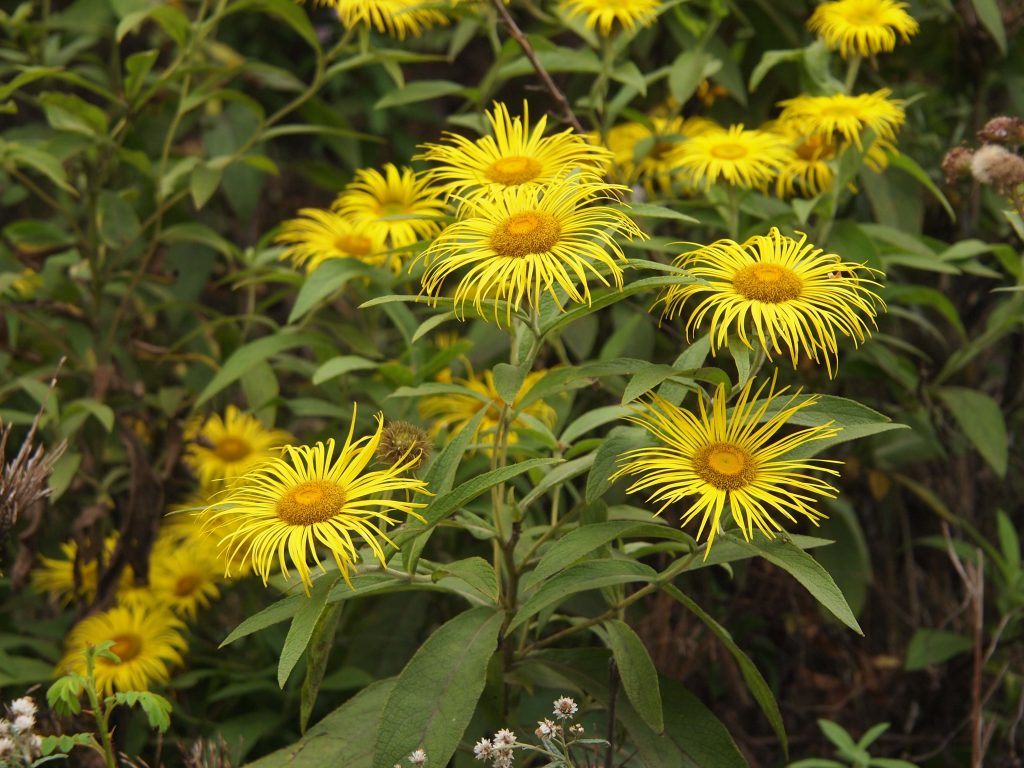
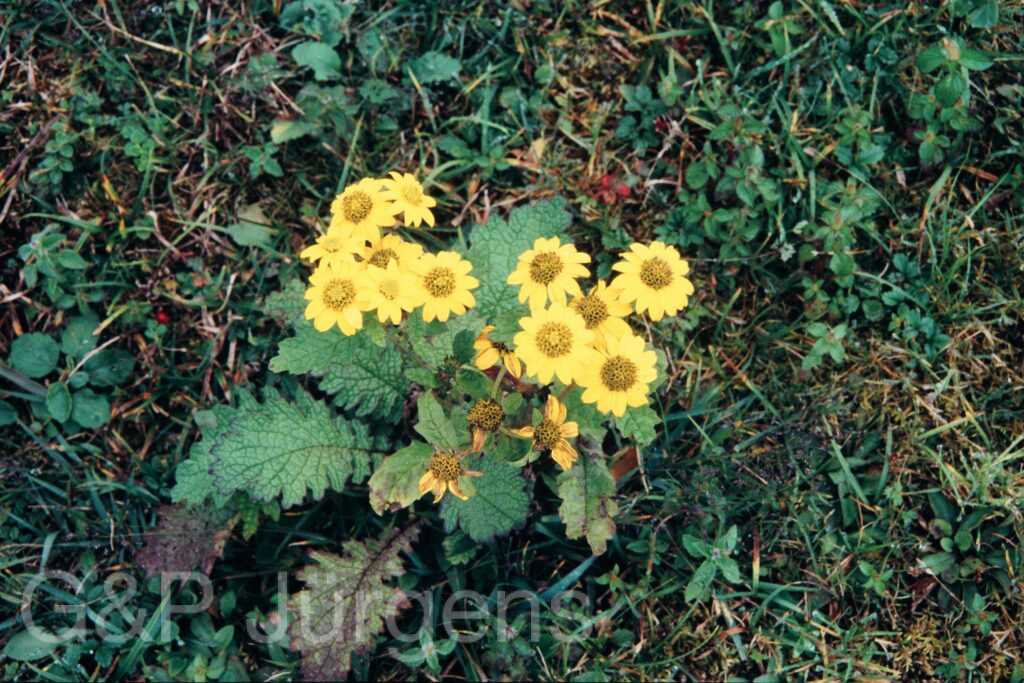
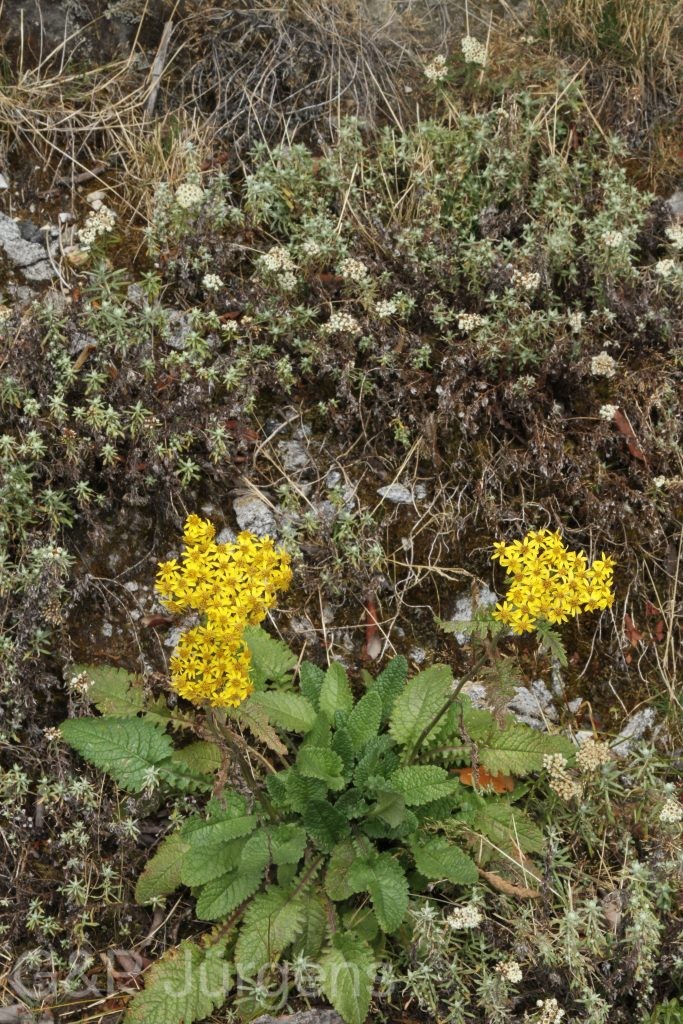
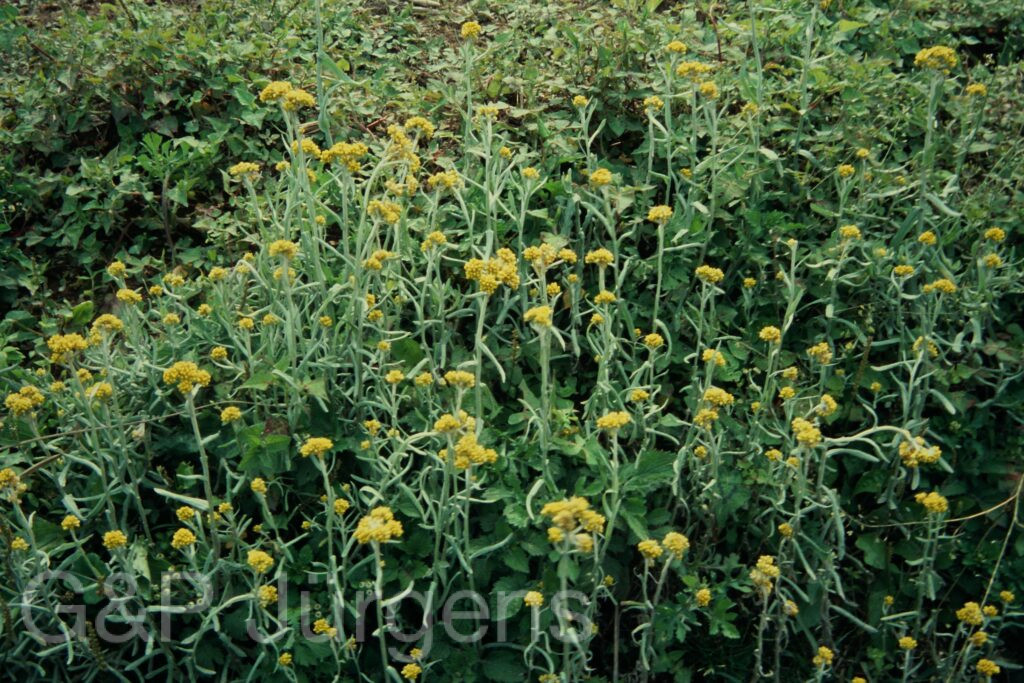
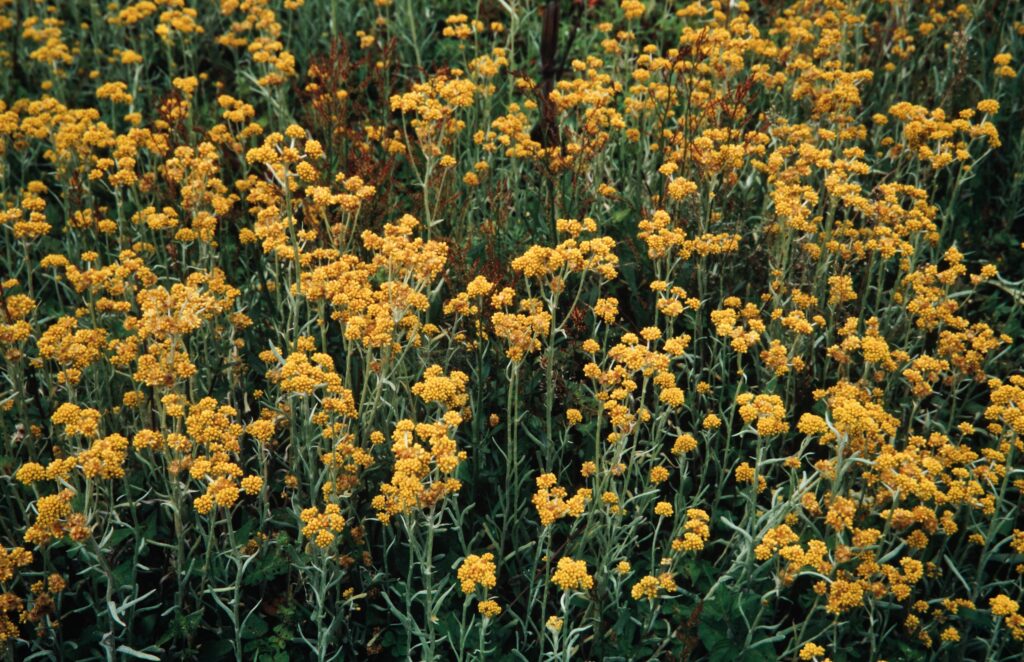
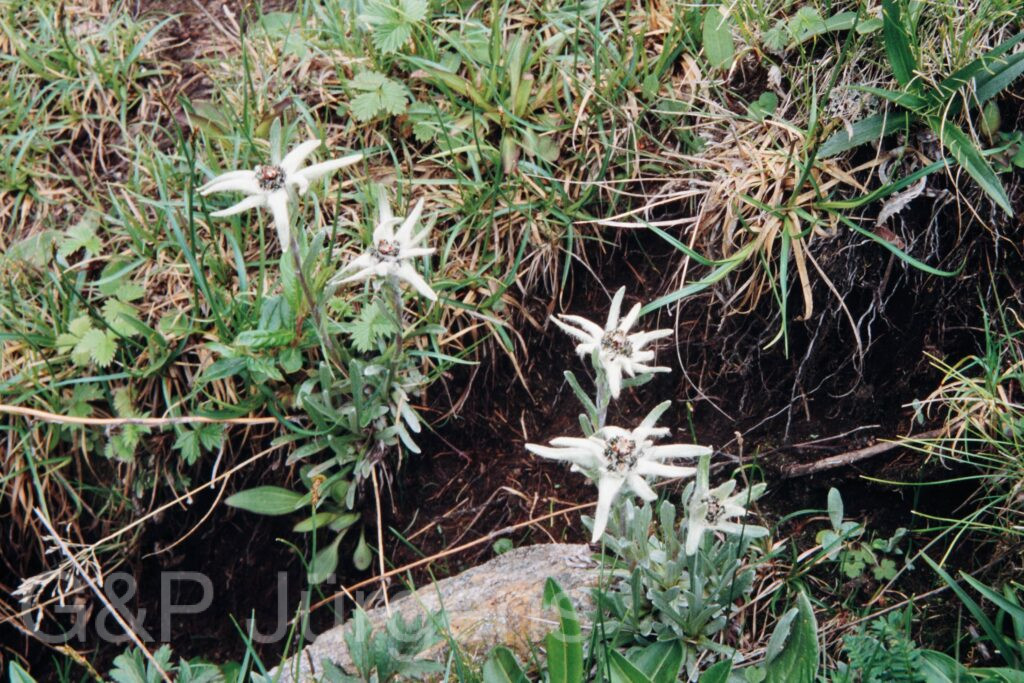
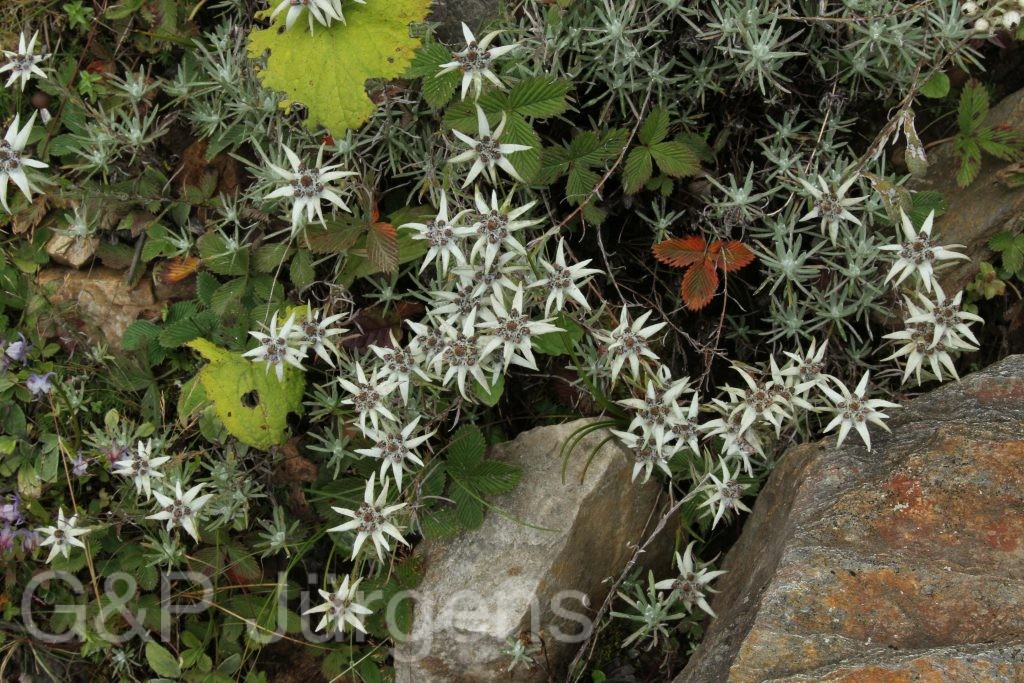
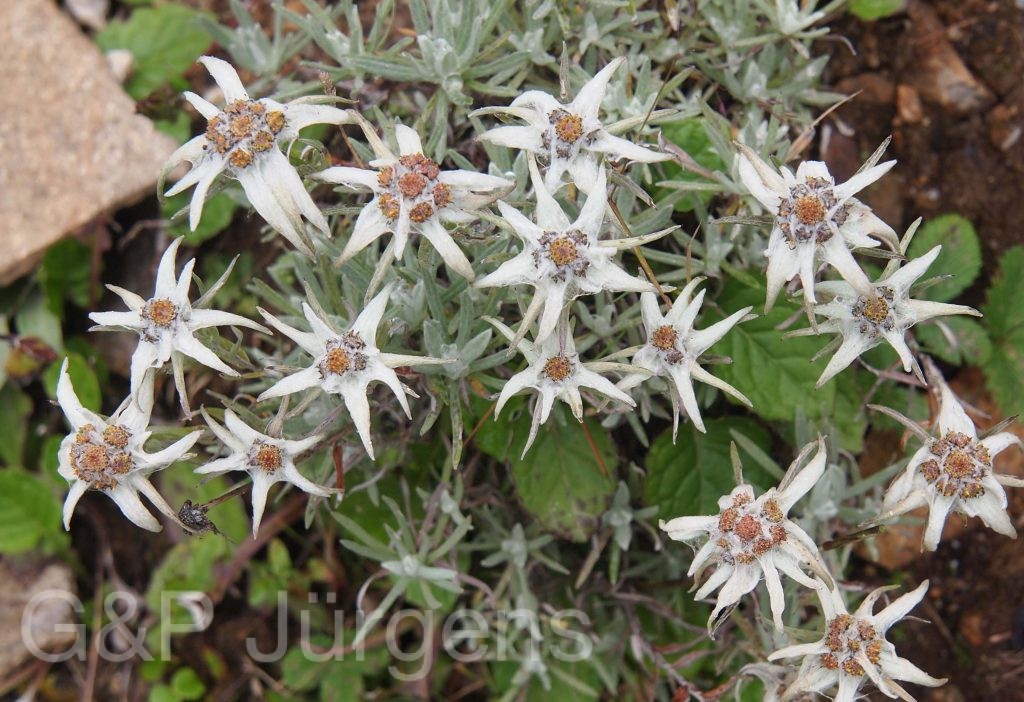
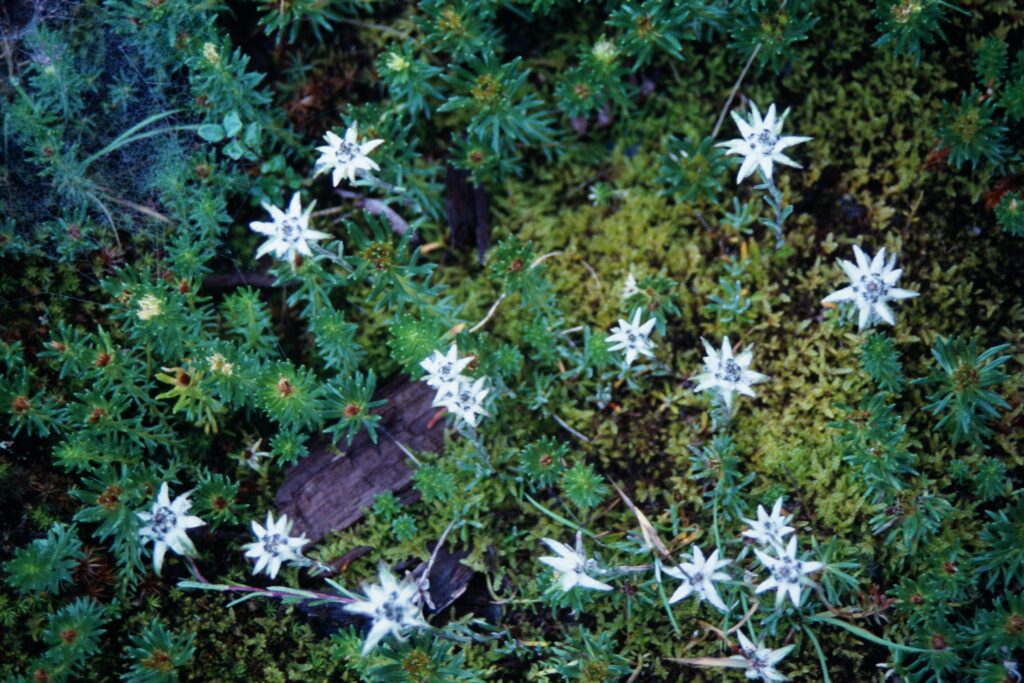
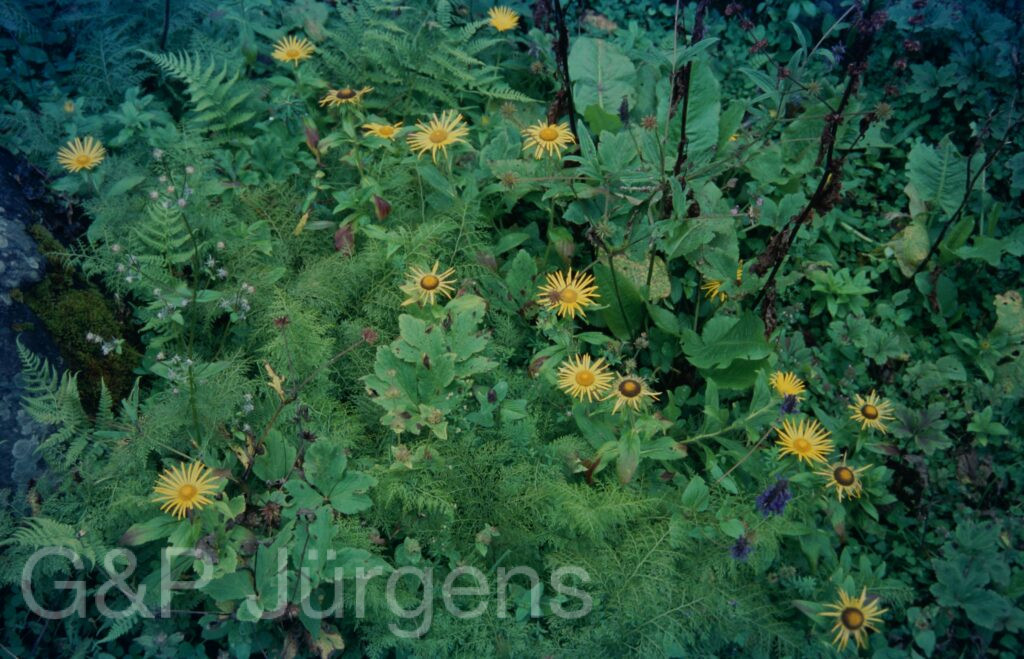
Inula grandiflora Willd. is a stout perennial composite of the western and central Himalaya, ranging from Pakistan and northern India through Nepal, with related records extending into the wider Irano-Turanian and Caucasian region (Turkey, Georgia, Armenia). It occupies open subalpine and alpine slopes, grassy meadows, forest clearings and rocky banks in the upper-temperate to alpine belt. The photographed plants from Garhwal in the Indian Himalaya at 2950 m, flowering in September, exemplify its preference for sunny, well-drained montane grassland where it flowers late in the season as the monsoon eases, frequently forming conspicuous stands on open hillsides.
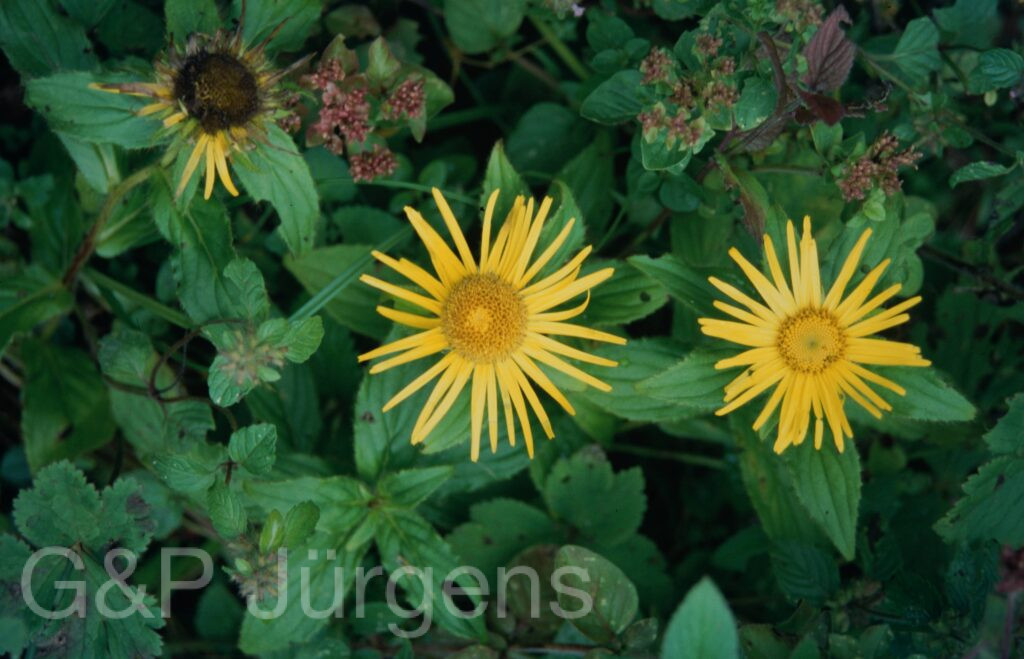
The plant produces erect, leafy, often somewhat hairy stems from a woody rootstock. The alternate leaves are oblong to elliptic-lanceolate, sessile and frequently half-clasping the stem, with finely toothed margins and a roughened or pubescent surface. The inflorescence is a large, solitary or few-headed terminal capitulum (the epithet grandiflora referring to its size), subtended by overlapping herbaceous involucral bracts; the head bears numerous narrow, spreading golden-yellow ray florets surrounding a central disc of tubular florets. The fruit is a ribbed, cylindrical cypsela crowned by a pappus of fine bristles that aids wind dispersal.
Within the genus Inula (Asteraceae, tribe Inuleae) this is one of the showiest Himalayan species, valued horticulturally and used locally in traditional medicine. Its large, nectar- and pollen-rich heads attract bees, butterflies and other insects, making it an important late-season forage plant. Though not globally threatened and locally common, its alpine grassland habitats are subject to grazing and climate-driven upslope vegetation shifts.
Author: Willd. · Sources: POWO (Kew), GBIF, Flora of Pakistan, Annotated Checklist of the Flowering Plants of Nepal, Flora of China (Asteraceae), Compositae of the Himalaya