
C.B.Clarke
Description
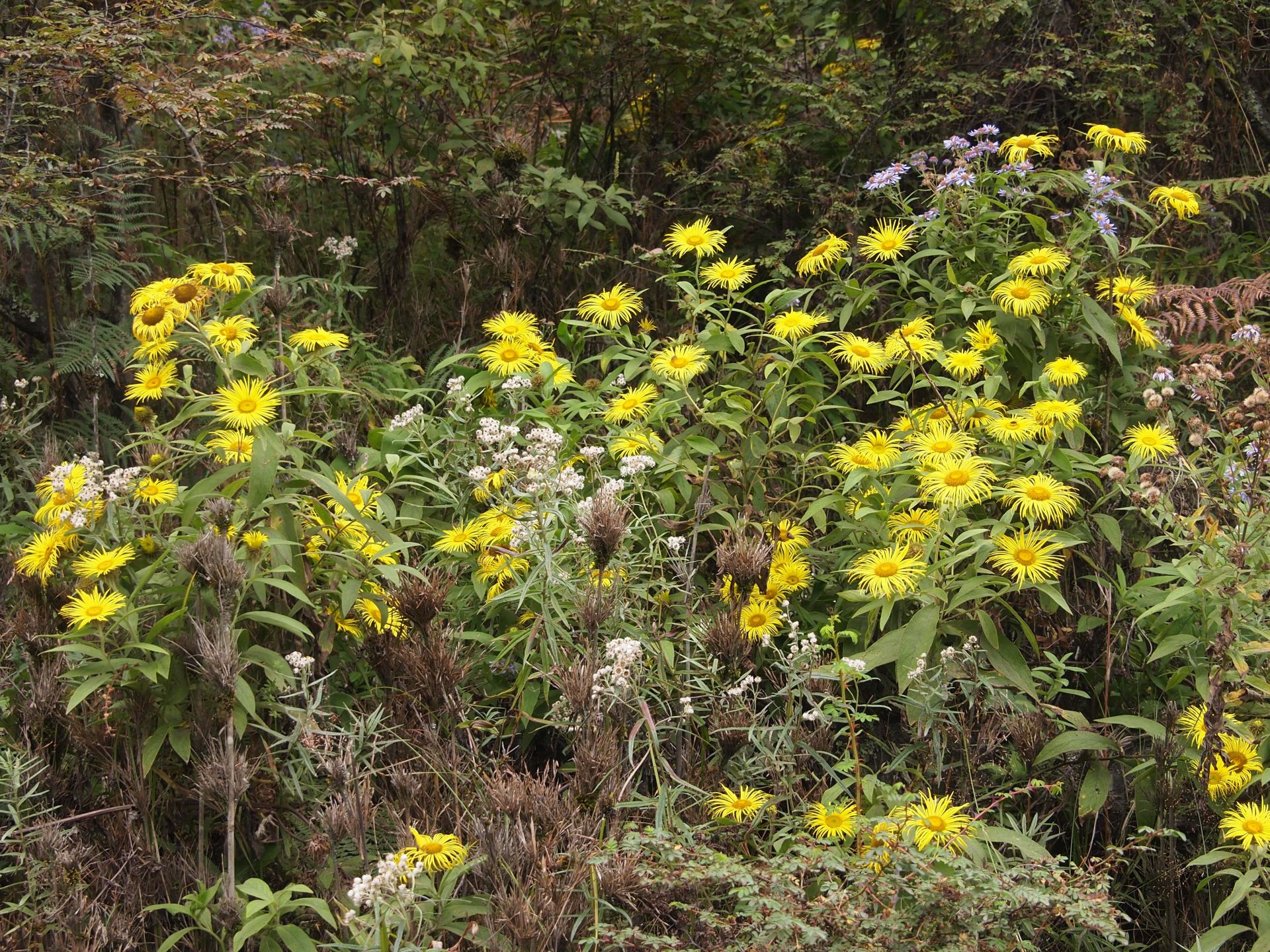
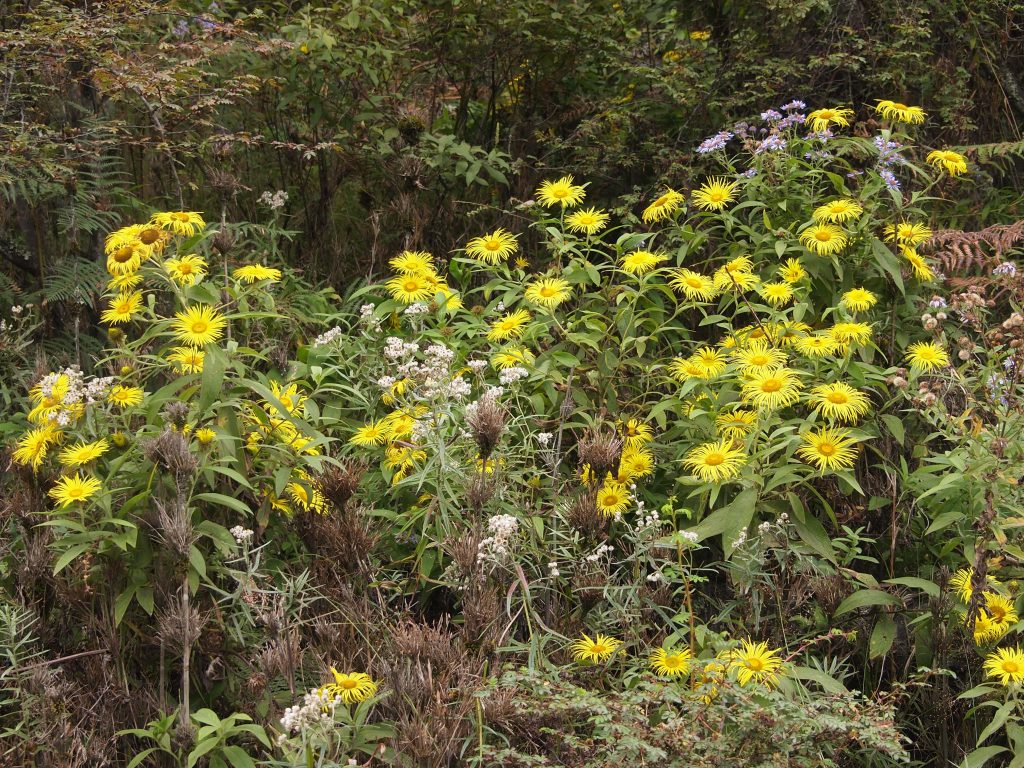
Inula hookeri is a showy yellow-flowered composite of the eastern Himalaya, native to China, Bhutan, Nepal, India and Myanmar, and frequently cultivated in temperate gardens, which accounts for British, Irish, North American and Antipodean records; GBIF lists about 383 occurrences. It grows in subalpine meadows, open forest, shrubby slopes and grassy clearings, mostly between about 2400 and 3600 m. The photographed plants are from the Haar valley in Bhutan at 3200 m in September and from Nangsephal at 2700 m in October, flowering through the late monsoon into autumn.
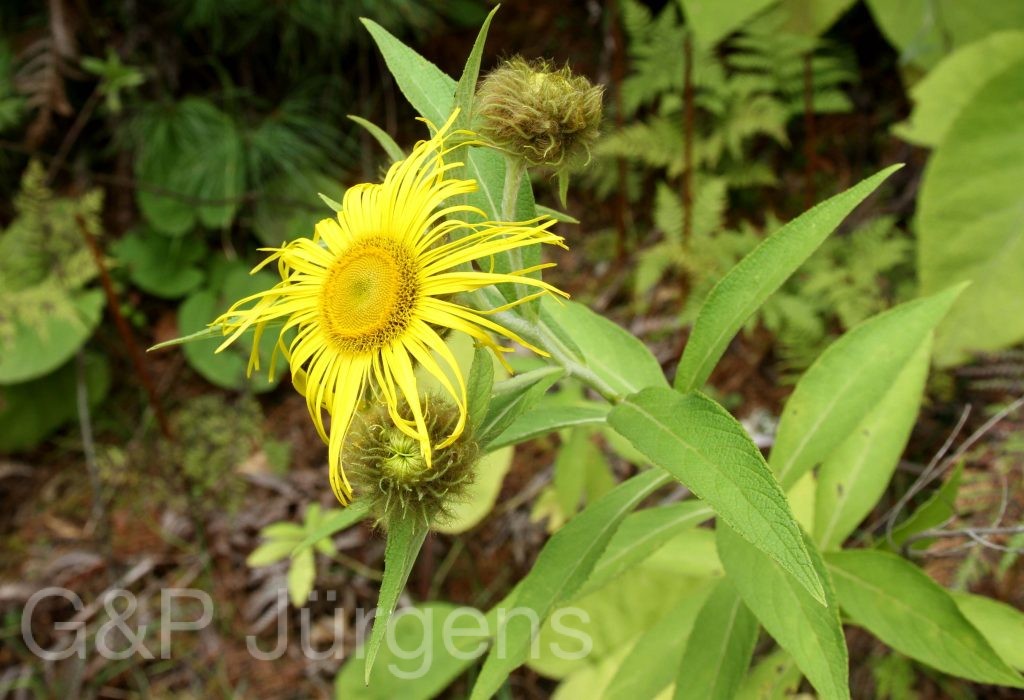
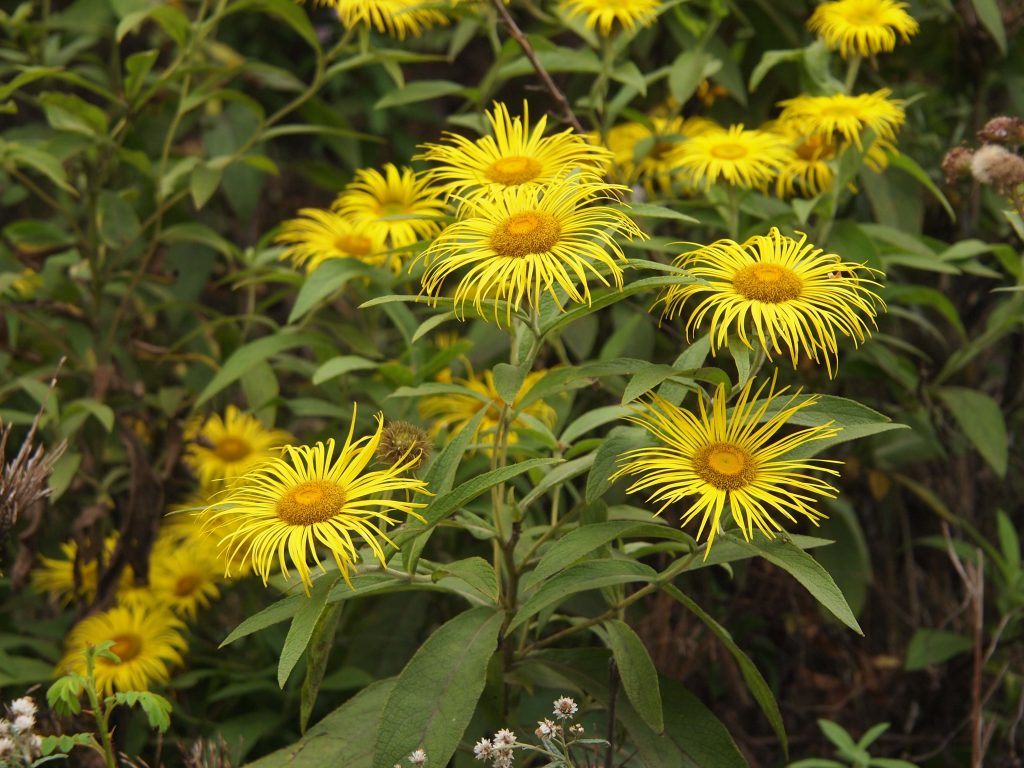
The plant is an erect, hairy perennial herb arising from a short rhizome, with leafy, softly pubescent stems. The leaves are alternate, oblong-lanceolate to elliptic, acuminate, finely toothed and clasping or sessile at the base, hispid on both surfaces. The capitula are large and solitary or few at the stem tips, radiate, with numerous very narrow, thread-like, pale to greenish-yellow ray florets spreading in a fringed circle around a disc of deeper yellow tubular florets; the involucre is hemispherical with linear, leafy, spreading phyllaries. The fruit is a small ribbed cypsela bearing a pappus of a single row of barbellate bristles.
Inula belongs to the tribe Inuleae, and I. hookeri, named for J. D. Hooker, is distinctive for its softly spidery, narrow-rayed heads that open from woolly buds. Valued in horticulture for its long flowering and attractiveness to pollinators, it is common in the wild and not considered threatened.
Author: C.B.Clarke · Sources: POWO (Kew), GBIF, Flora of Bhutan, Flora of China, Annotated Checklist of the Flowering Plants of Nepal, Systematics of Inula and allied genera (Inuleae)