Asteraceae

DC.

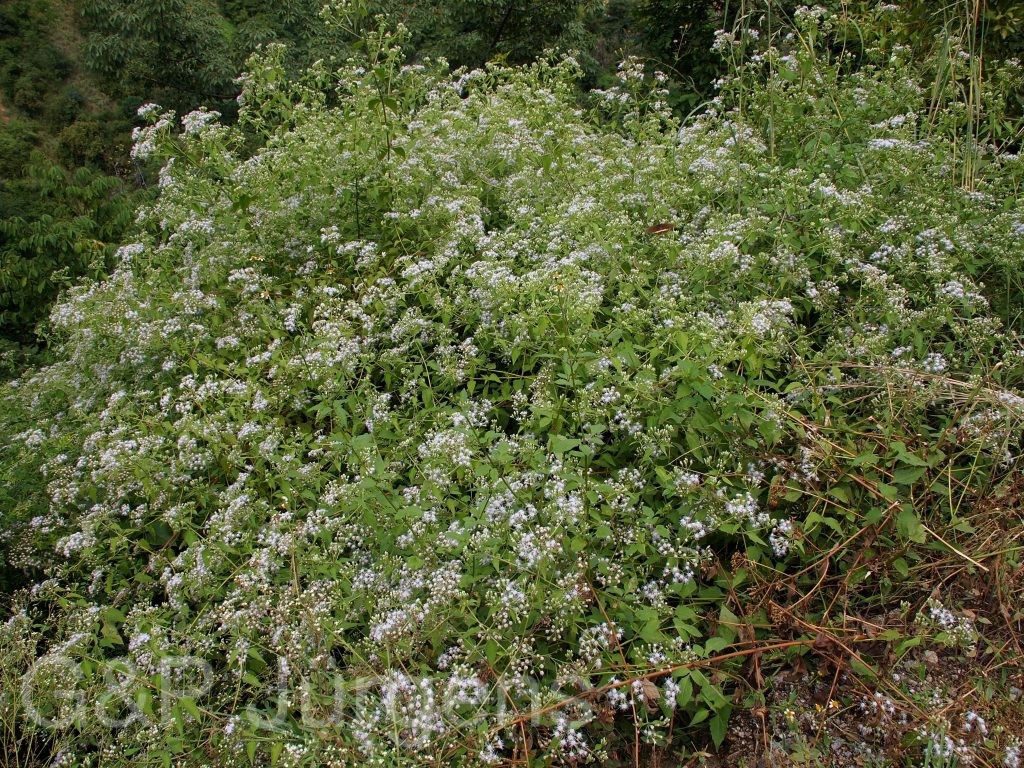
Sikkim2004 3 G4
Sikkim West-Bengal, Sambon 1750m April
Sikkim2004 4 P5
Sikkim West-Bengal, Sambon 1750m April

Description

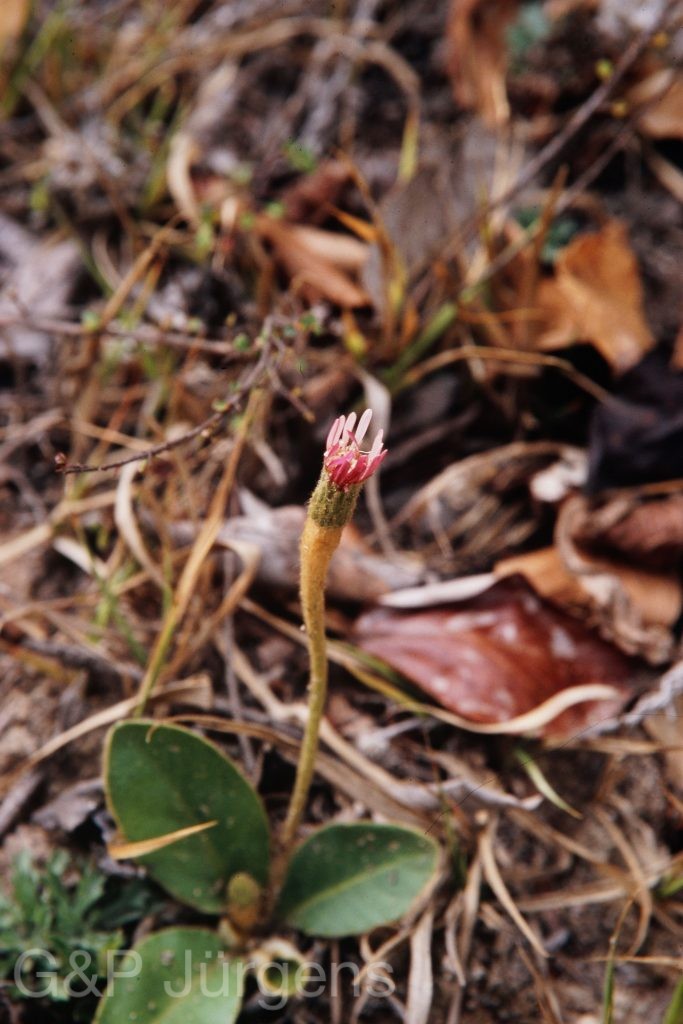
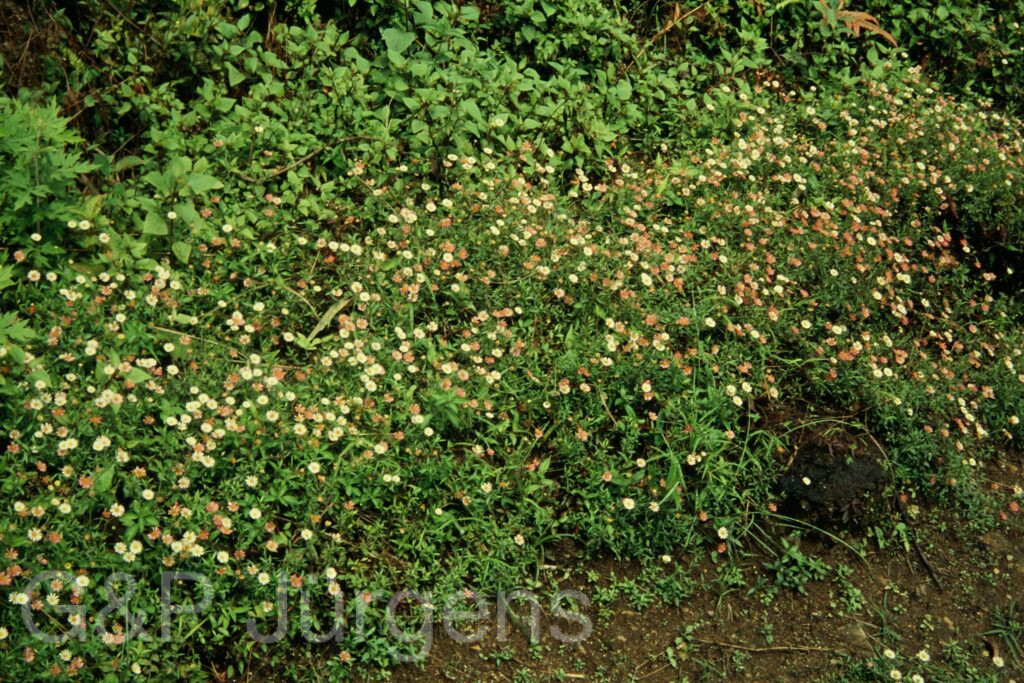
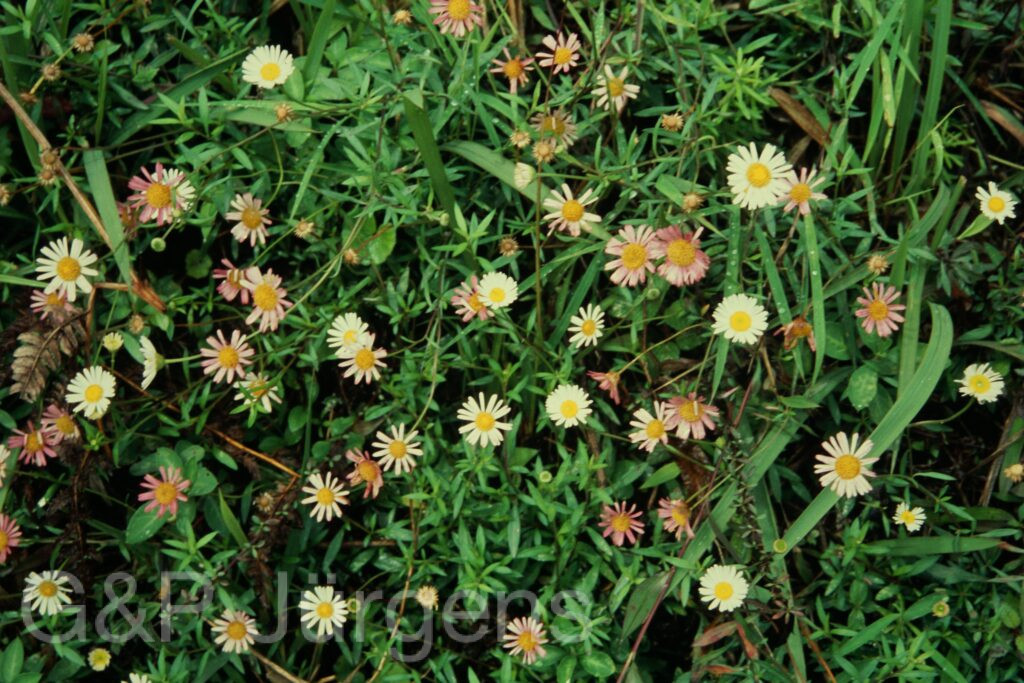
Erigeron karvinskianus, the Mexican fleabane, is a sprawling daisy native to Mexico and Central America but now naturalised across much of the temperate and subtropical world. GBIF documents it from Britain, France, the Netherlands, Spain, Italy, the United States, Mexico, New Zealand, Australia, South Africa, Japan and India, among many others, with over 67,000 occurrences reflecting its status as a cosmopolitan introduced species. It colonises walls, rocky banks, paths, terraces and disturbed slopes from sea level to about 2500 m. The plant illustrated was photographed near Sambon in the Sikkim/West Bengal hills at 1750 m in April, where it has become established as a garden escape along walls and roadsides.

It is a slender, much-branched, mat-forming perennial with wiry, decumbent to ascending stems. The lower leaves are oblanceolate and few-toothed or trilobed, the upper entire and reduced. The numerous small capitula are borne on slender peduncles; each head has a single series of narrow ray florets that open white and age through pink to purplish-red, so that a plant simultaneously bears flowers of several hues, surrounding a central disc of yellow tubular florets. The fruit is a small ribbed achene crowned by a pappus of fine bristles that facilitates wind dispersal.

A member of tribe Astereae, E. karvinskianus is valued horticulturally for its long, profuse flowering and self-seeding habit, the very trait underlying its weediness. In parts of Australia, New Zealand and South Africa it is regarded as an invasive environmental weed escaping gardens to colonise native rock and cliff habitats. In the Himalaya it is a naturalised alien rather than an indigenous element, of no conservation interest but of some invasion-ecology concern.

Author: DC. · Sources: POWO (Kew), GBIF, Flora of China, Flora of North America, Annotated Checklist of the Flowering Plants of Nepal, Erigeron (Asteraceae: Astereae) systematic monograph

(Lindl. ex DC.) Benth. & Hook.f.

BhutanPG2011 371
Bhutan Dur-Tso, 4000m June
Sikkim2003 429 G596
Sikkim Chopta Valley 4100m August

Description

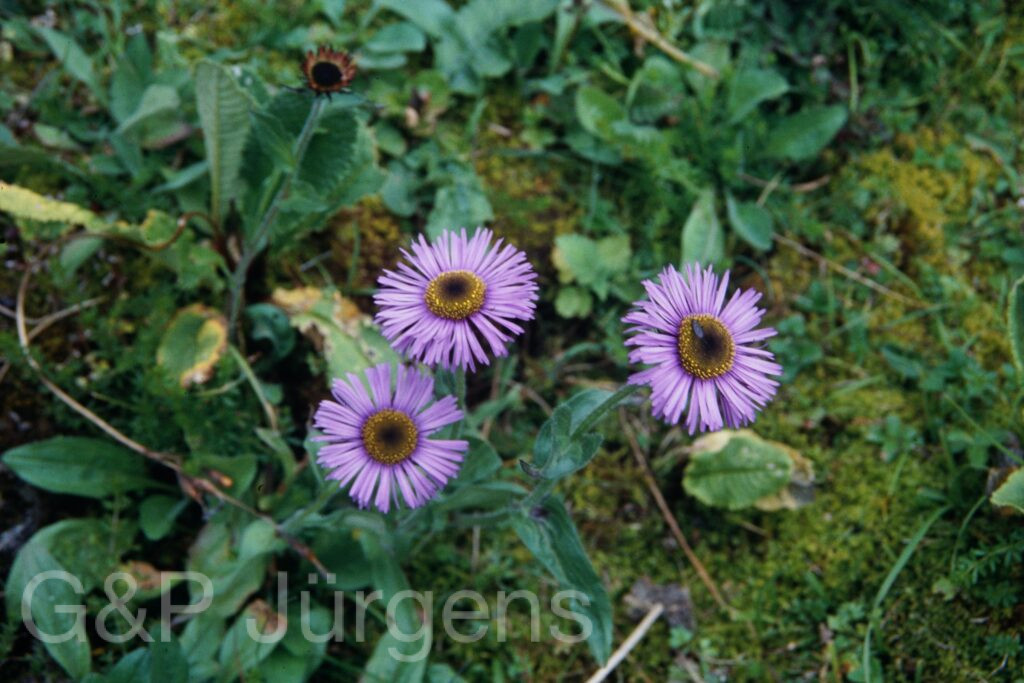
Erigeron multiradiatus (Lindl. ex DC.) Benth. & Hook.f. is a Himalayan and Sino-Himalayan fleabane distributed through China, Nepal, India, Pakistan, Afghanistan and Bhutan, with around 1400 georeferenced occurrences in GBIF. It is a plant of alpine and subalpine meadows, open grassy slopes, rocky ground and forest clearings, generally between about 2700 and 4500 m. The collections from Dur-Tso at 4000 m in June and the Chopta valley in Sikkim at 4100 m in August are characteristic of its high-altitude summer flowering across the central and eastern Himalaya.

It is a tufted perennial herb arising from a short rhizome, with erect, simple or sparingly branched stems bearing spreading hairs. The basal leaves are oblanceolate to spatulate, narrowed to a petiole and entire to slightly toothed, forming a rosette; the cauline leaves are smaller, sessile and clasping. The solitary or few terminal capitula are large and showy, with an involucre of narrow, hairy, somewhat purplish phyllaries; the numerous, very fine ray florets, alluded to in the epithet multiradiatus, are pinkish-purple to violet and surround a central disc of yellow tubular florets. The fruit is a small, compressed, hairy cypsela topped by a double pappus of fine bristles.

Erigeron is a large, taxonomically intricate genus, and the densely many-rayed alpine Himalayan species form a distinctive assemblage within it, recognised by their broad showy heads and high-elevation habitat. A widespread and locally common alpine herb, E. multiradiatus is of no particular conservation concern, though it is valued horticulturally and in regional traditional medicine.

Author: (Lindl. ex DC.) Benth. & Hook.f. · Sources: POWO (Kew), GBIF, Flora of China, Flora of Bhutan, Grierson & Long Flora of Bhutan Compositae account

L.

Bhutan2012 1208
Bhutan Trashigang 1150m, October

Description

Eupatorium cannabinum, hemp-agrimony, is a wide-ranging temperate herb whose centre of distribution lies across Europe and western Asia; GBIF records overwhelmingly from France, Britain, the Netherlands, Germany, Belgium, Austria and many other European countries total over 687,000 occurrences, attesting to its abundance. In Asia related populations extend into the Himalaya, and the species was photographed at Trashigang in eastern Bhutan at 1150 m in October, in the warm subtropical lower valleys. Throughout its range it favours damp, fertile ground: marsh margins, ditches, wet meadows, streambanks and moist woodland clearings, flowering in late summer and autumn.

It is a robust erect perennial herb 0.5 to 1.5 m tall, with stout, often reddish, finely downy stems arising from a short rhizome. The opposite leaves are palmately divided into three to five lanceolate, toothed, hemp-like segments (hence cannabinum), the uppermost sometimes simple. The numerous small flower heads are crowded into dense, flat-topped terminal corymbs; each narrow head contains only a few tubular florets, discoid and dull pink to mauve, with conspicuously exserted bifid style branches giving the inflorescence a soft fuzzy appearance. The fruit is a small black five-angled cypsela bearing a pappus of fine white bristles.

The species belongs to tribe Eupatorieae; following segregation of many New World species into other genera, Eupatorium s.str. is now a small mainly Eurasian and North American group, of which E. cannabinum is the principal European representative. Its nectar-rich heads are heavily visited by butterflies, hoverflies and bees, an important late-season pollinator resource. It contains pyrrolizidine alkaloids and has a long history in folk medicine. Common on damp disturbed ground, it is of no conservation concern.

Author: L. · Sources: POWO (Kew), GBIF, Flora Europaea, Flora of Bhutan, Eupatorieae systematics (King & Robinson monograph)

(Royle) Raizada & Saxena

Garh 07 20 ergebnis
India Garhwal Ransi at Mandakini 1800m, June

Description

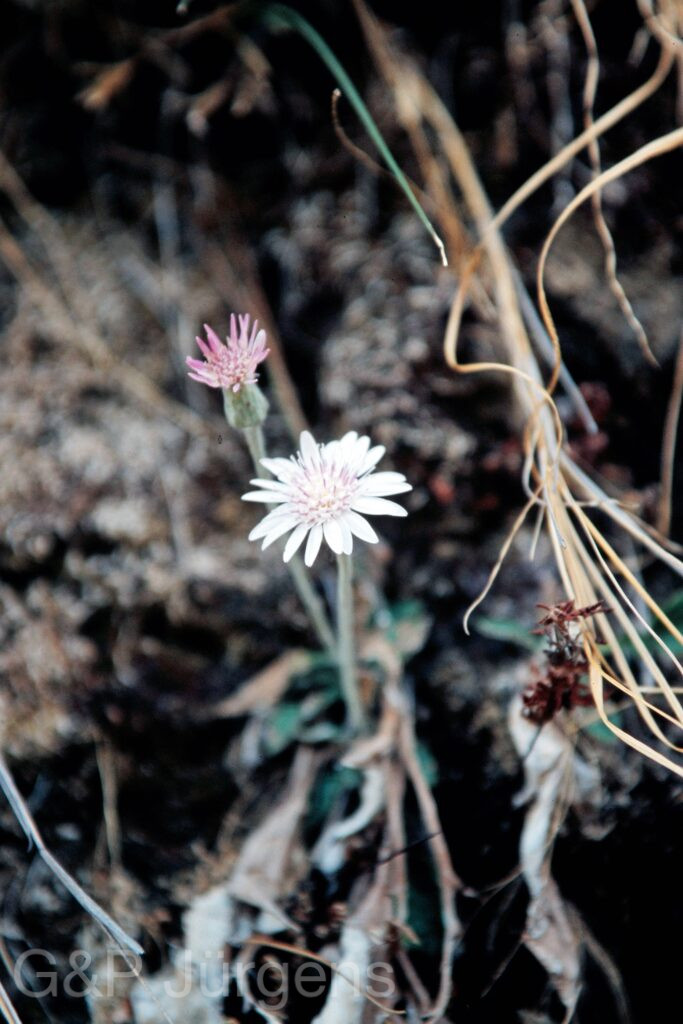
Gerbera gossypina is a western Himalayan herb recorded by GBIF from India and Pakistan, with only about 10 documented occurrences, reflecting both its restricted range and sparse collection history. It grows on open grassy slopes, sunny banks, forest clearings and rocky hillsides in the temperate zone, generally between about 1500 and 2800 m. The photographed plant was found in Garhwal, India, at Ransi by the Mandakini river at around 1800 m in June, a habitat characteristic of this woolly-leaved species among the herb-rich meadows of the western Himalayan foothills before the monsoon.

The species is a stemless or short-stemmed perennial forming a basal rosette from a thick rootstock. The leaves are oblong to obovate or lyrate, narrowed to a winged petiole, and densely clothed beneath with white to greyish cottony tomentum, the feature that gives the epithet gossypina. The flowering heads are solitary on long, erect, woolly scapes overtopping the rosette. Each radiate capitulum has an outer series of strap-shaped ligulate florets, white to pinkish above and often reddish beneath, surrounding numerous tubular disc florets within an involucre of imbricate bracts. The fruit is a ribbed, hairy cypsela bearing a pappus of fine bristles.

Gerbera gossypina (Royle) Raizada & Saxena is one of few representatives of this largely African and Asian genus in the Himalaya and a western-Himalayan element of phytogeographic interest. The very small number of records suggests it is genuinely localised, and its limited known range and scant documentation indicate its conservation status merits assessment, with field survey needed across Garhwal, Himachal and adjoining Pakistan.

Author: (Royle) Raizada & Saxena · Sources: POWO (Kew), GBIF, Flora of British India, Polunin & Stainton: Flowers of the Himalaya, taxonomic revisions of Gerbera (Asteraceae)

Beauverd

Description

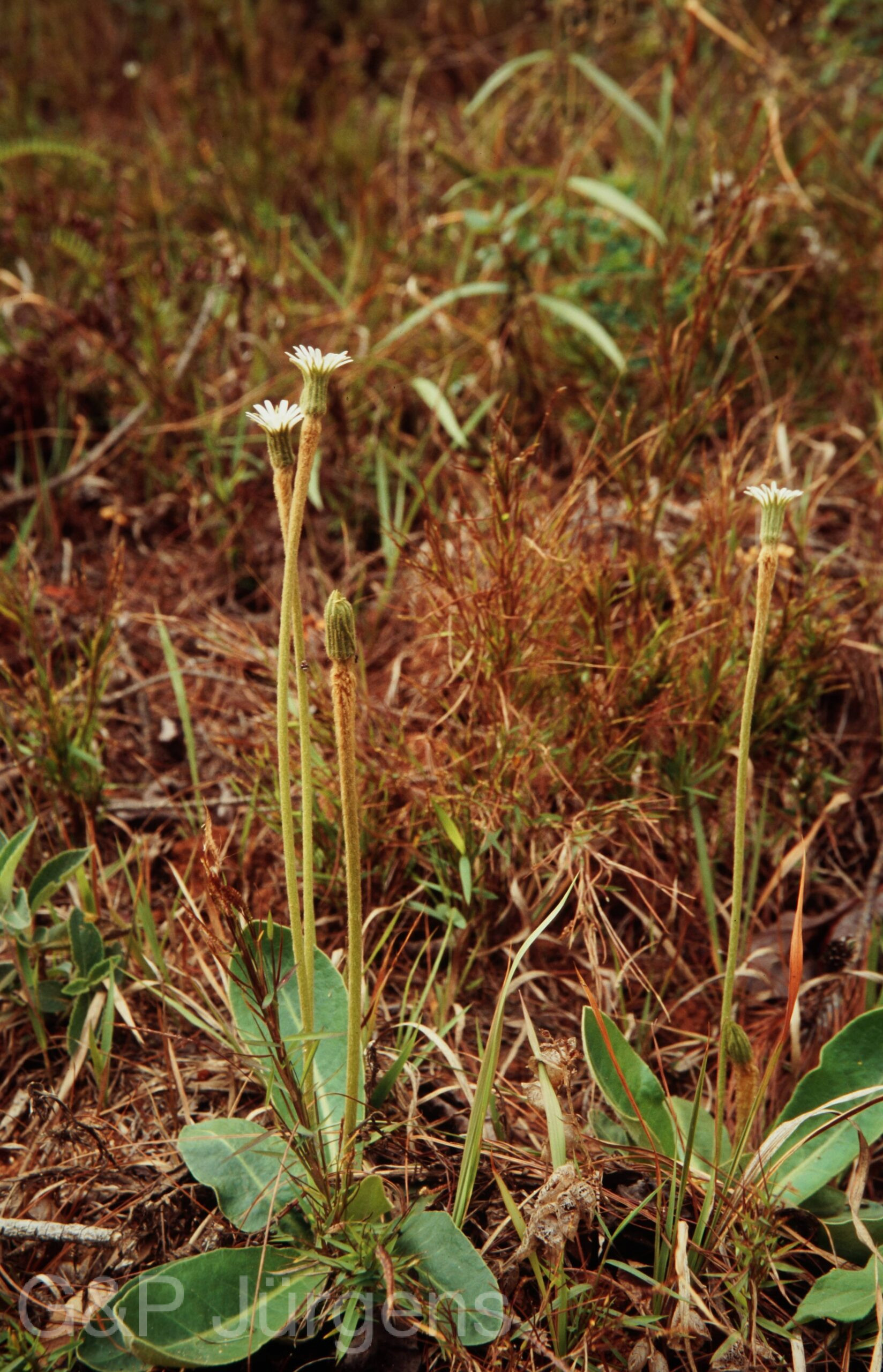
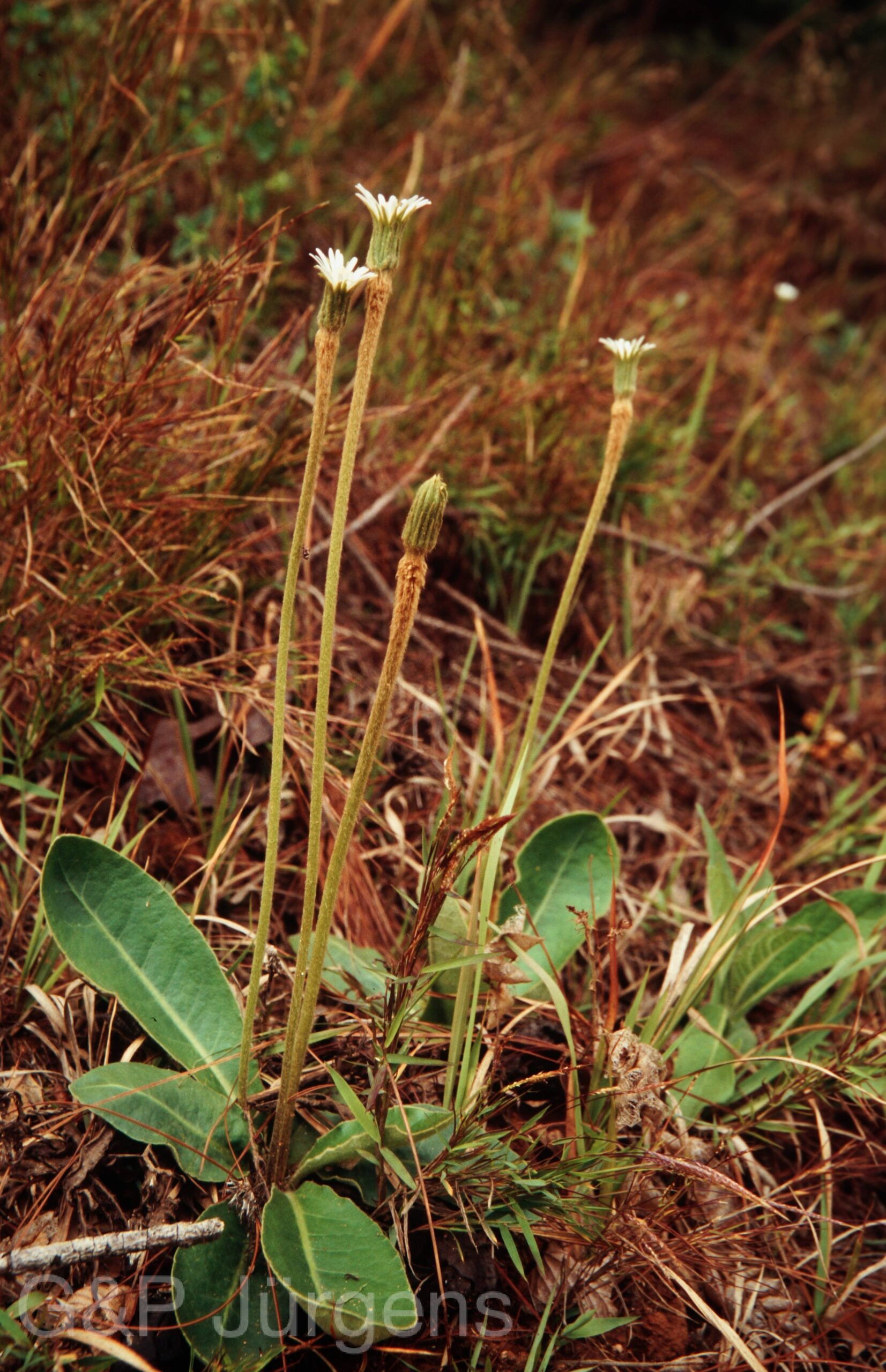
Gerbera maxima is an eastern Himalayan perennial herb distributed across Nepal, northern India, Bhutan and adjacent south-central China (Yunnan, Xizang), the modest tally of around seventeen georeferenced GBIF records reflecting its scattered occurrence rather than true rarity. It favours open grassy hillsides, forest margins, terraced banks and disturbed sunny slopes in the subtropical to lower temperate belt. The photographed plant, from the Indrawati-Khola valley in the Helambu region of central Nepal at roughly 1750 m and flowering in May, typifies its mid-montane preference for warm, well-drained, often grazed openings.

The species forms a stout caudex from which arises a basal rosette of large, lyrate-pinnatifid to broadly obovate leaves that are densely white-tomentose beneath and greener above, the margins sinuate-dentate and the petioles winged. From the rosette a leafless, woolly scape bears a solitary, comparatively large radiate capitulum. The involucral bracts are imbricate and tomentose; the ray florets are bilabiate, typically pale pink to whitish or yellowish, surrounding numerous tubular disc florets. The fruit is a slender, ribbed cypsela tapering into a beak and crowned by a pappus of barbellate bristles, adapted to wind dispersal.

Gerbera (Asteraceae, tribe Mutisieae) is an Old World genus centred on Africa and Asia, and G. maxima is here treated as the accepted name. The two-lipped ray corollas place it within the mutisioid lineage, and its tomentose indumentum is a xeromorphic adaptation to insolated, seasonally dry montane slopes. No formal conservation assessment exists; its tolerance of grazing and disturbance suggests local resilience, though habitat conversion across the mid-hills warrants monitoring.

Author: Beauverd · Sources: POWO (Kew), GBIF, Flora of China, Annotated Checklist of the Flowering Plants of Nepal, Hand-Mazzetti revision of Asian Gerbera (Mutisieae monograph)

Cass.

Bh2008 487 P756
Bhutan Samtengang 2100, May
Bh09 355 G572
Bhutan Samtengang 2100, May

Description

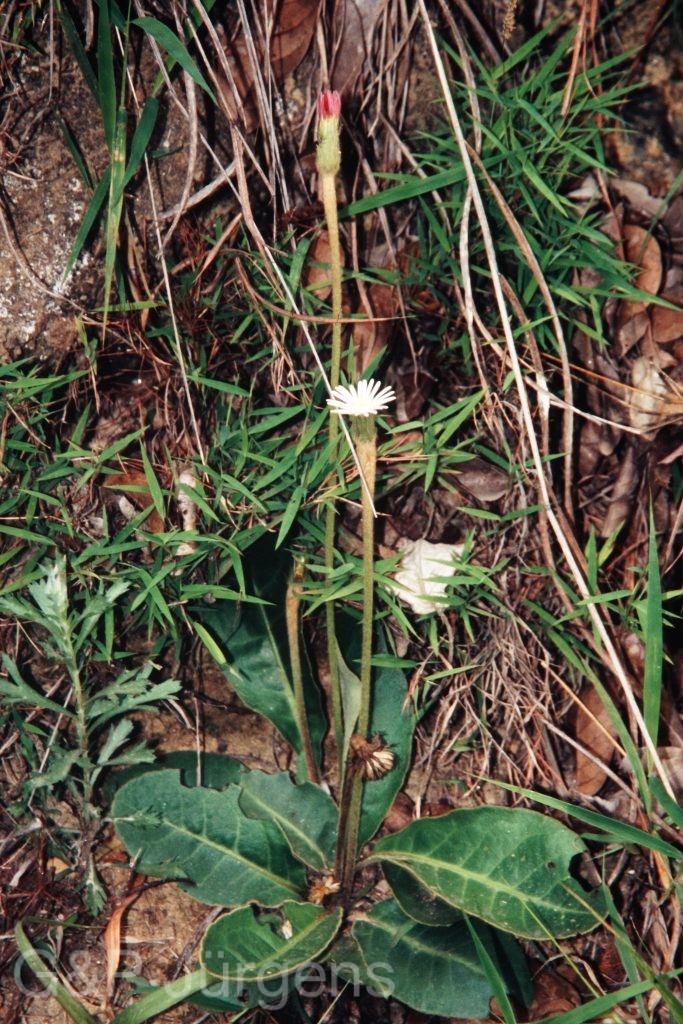
Gerbera piloselloides is a remarkably wide-ranging species spanning the palaeotropics, with GBIF recording over 2780 occurrences from South Africa, Madagascar and tropical East and Central Africa eastward through the Himalaya and southern China to Myanmar and Thailand. Across this disjunct Afro-Asian range it occupies open grassland, sunny hill slopes, sparse pine forest, roadsides and disturbed pasture, generally on well-drained, often acidic soils. In the Eastern Himalaya it occurs in the subtropical to lower temperate zone, the figured plant from Samtengang in central Bhutan at about 2100 m flowering in May, a season coinciding with the onset of the warm months when the basal rosettes throw up their solitary scapes.

The species is a stemless perennial herb forming a flat rosette from a short rhizome. The leaves are entire, oblanceolate to obovate-spathulate, narrowed to the base, green and thinly hairy above but conspicuously white-tomentose beneath. From the rosette centre arise one or more slender, leafless, woolly scapes each terminating in a single heterogamous capitulum. The involucre is campanulate with imbricate phyllaries; the outer female florets are bilabiate, white to pinkish above and reddish beneath, encircling tubular bisexual disc florets. The fruit is a narrowly fusiform, beaked, hairy cypsela bearing a pappus of numerous barbellate bristles.

Referable to Cassini, the binomial Gerbera piloselloides is accepted by GBIF; it has at times been segregated into the genus Piloselloides, and the name is treated here as accepted following current consensus. Within the tribe Mutisieae, Gerbera is noted for its bilabiate marginal florets, and the broad Old World distribution of this taxon reflects both ancient biogeographic connections and tolerance of disturbed, fire-maintained grassland. Its colonising ability in open habitats makes it secure across its range, and it is of no conservation concern.

Author: Cass. · Sources: POWO (Kew), GBIF, Flora of Bhutan, Flora of China, Flora Zambesiaca, Hansen's revision of Gerbera (Mutisieae)

(Roxb. ex Willd.) DC.

Bhutan2012 1313
Bhutan Pemagatse 1800m, October

Description

Gynura bicolor is a soft-stemmed composite of warm-temperate to subtropical Asia, native through China, Taiwan, Japan, India, Nepal, Thailand, Myanmar and Bhutan, and very widely cultivated and naturalised across the Pacific, Americas and elsewhere; GBIF lists over 600 occurrences reflecting both wild and grown plants. It occupies forest margins, moist shaded slopes, streamsides and disturbed ground, generally below about 2000 m. The photographed plant is from Pemagatse in Bhutan at 1800 m in October, growing in humid subtropical hill forest at the lower edge of the survey area.

The species is an erect to ascending perennial herb with fleshy, somewhat succulent, often purplish stems. The leaves are alternate, ovate to oblong-lanceolate, irregularly toothed to lyrately lobed, and strikingly bicolorous, green above and deep purple beneath, the source of the epithet. The capitula are discoid, lacking ray florets, and gathered in lax terminal corymbs; each head holds numerous orange to reddish tubular florets within a cylindrical involucre of narrow phyllaries, the long styles exserted with hairy, recurved branches. The fruit is a ribbed cypsela bearing a copious white pappus of fine bristles.

Gynura belongs to the tribe Senecioneae, and G. bicolor is well known as the edible "Okinawan spinach" or hong feng cai, grown as a leaf vegetable and used in traditional medicine, which accounts for its extensive cultivated distribution. It is of no conservation concern, being a vigorous, easily propagated plant tolerant of disturbance.

Author: (Roxb. ex Willd.) DC. · Sources: POWO (Kew), GBIF, Flora of China, Flora of Bhutan, Annotated Checklist of the Flowering Plants of Nepal, Revision of the Genus Gynura (Senecioneae)

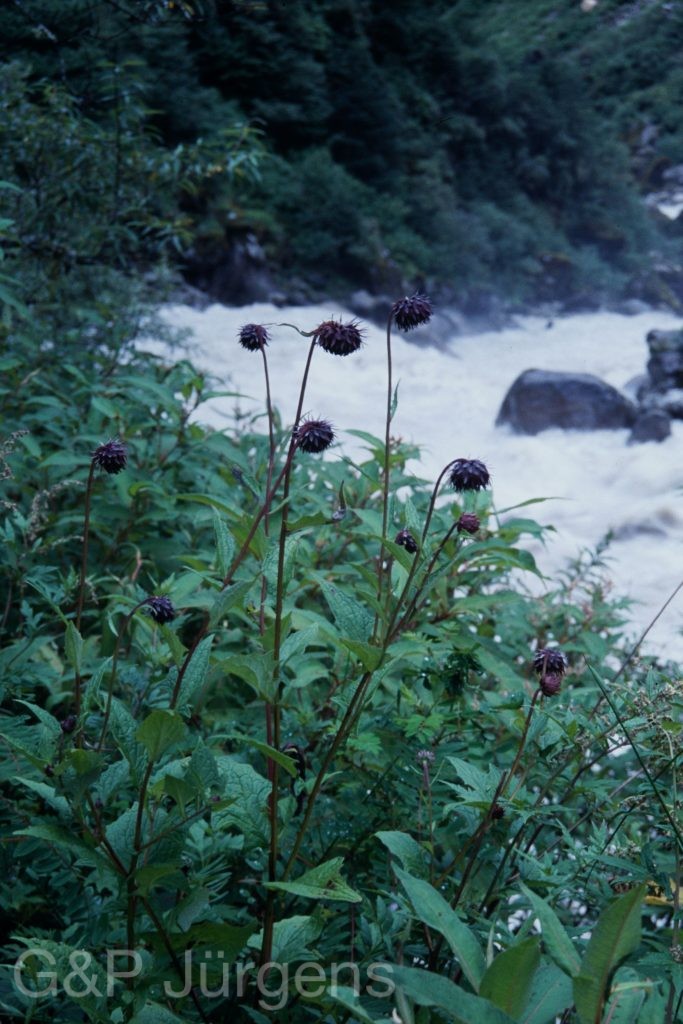
(DC.) Raab-Straube

Sikkim2003 103 P141
Sikkim below Dzongri 3900m 08.2003
Sikkim2003 408 P567
Sikkim below Dzongri 3900m 08.2003
Bhutan2012 493
Bhutan Pele-La 3000m, September

Description

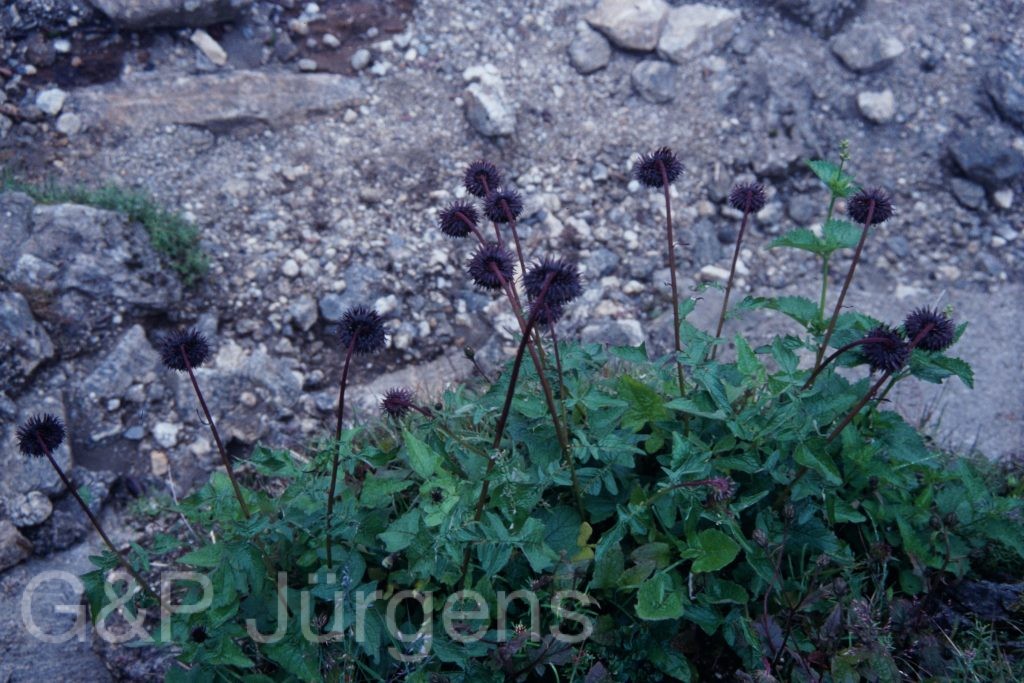
Himalaiella auriculata is a perennial thistle-like composite of the temperate to subalpine zone of the eastern Himalaya, native to India, Nepal and China, with around 27 documented occurrences. It grows on open slopes, forest clearings, meadow margins and disturbed ground, broadly between about 3000 and 4000 m. The photographed plants were recorded below Dzongri in Sikkim at 3900 m in August and at the Pele-La in Bhutan at 3000 m in September, flowering in the late-monsoon and early-autumn period typical of the genus in the region. The name supplied, Himalaiella auriculata, is recorded by GBIF as a synonym, with the same epithet treated as the accepted name; the species was long placed in Saussurea as S. auriculata.

The species is an erect herb with a leafy, often winged stem arising from a perennial rootstock, the herbage thinly cobwebby-arachnoid. The leaves are elliptic to lanceolate, the basal narrowed to a petiole and the cauline sessile and conspicuously auriculate-clasping at the base, the auricles giving the epithet. The capitula are discoid, solitary or few in a loose terminal cluster, with an ovoid to campanulate involucre of imbricate, often purple-tipped phyllaries; the florets are all tubular and purple to mauve. The fruit is a glabrous cypsela bearing a double pappus, the inner bristles plumose, as is diagnostic of the alliance.

Himalaiella is a small Sino-Himalayan genus segregated from Saussurea (tribe Cardueae) on molecular and morphological grounds, characterised by the auriculate, decurrent leaves and feathery inner pappus. Restricted in range and represented by relatively few collections, it is a regional endemic of the eastern Himalaya whose populations warrant monitoring, though it has not been formally assessed.

Author: (DC.) Raab-Straube · Sources: POWO (Kew), GBIF, Flora of Bhutan, Flora of China, Saussurea monograph (Lipschitz)

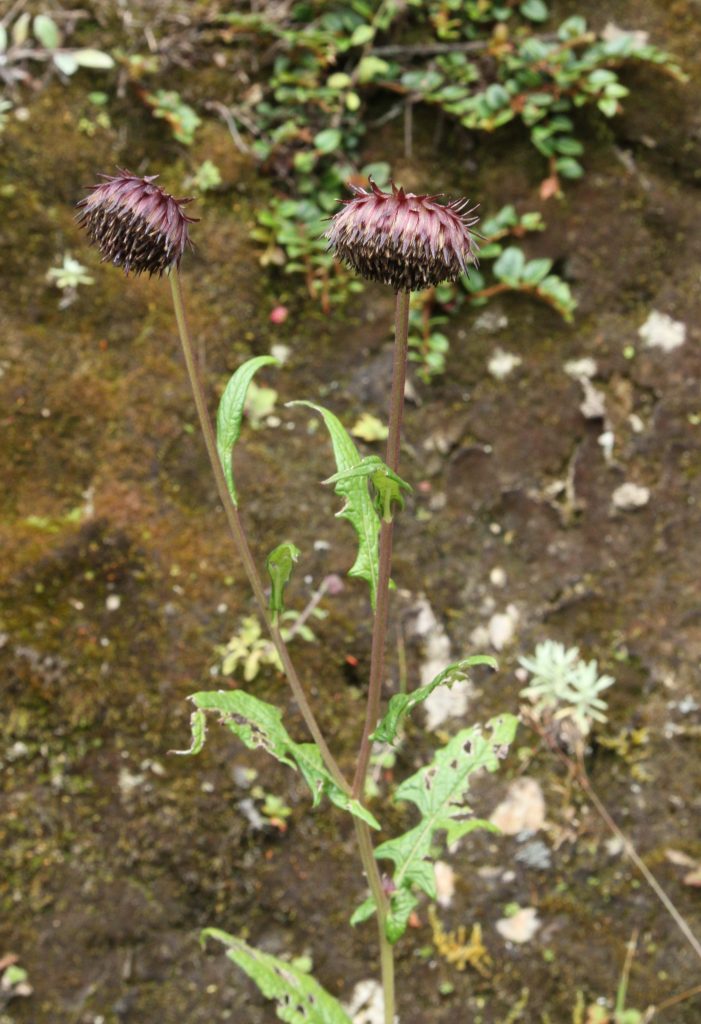
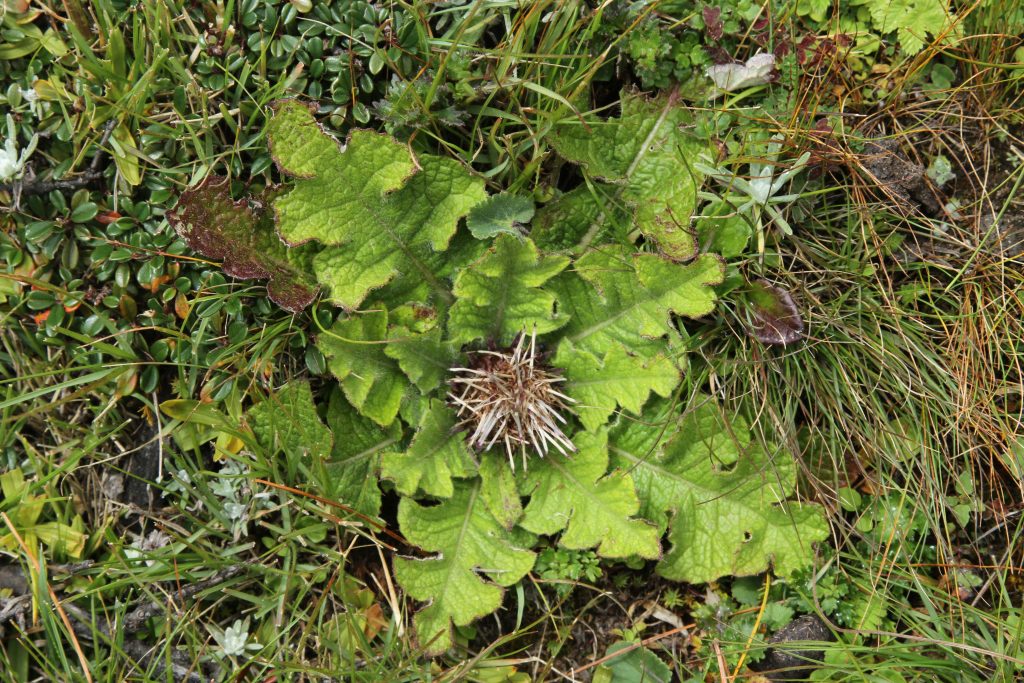
(C.B.Clarke) Fujikawa & H.Ohba

Bhutan2012 256
Bhutan Shele-La, 4000m September

Description

Himalaiella yakla is a high-alpine thistle-like composite of the Eastern Himalaya, recorded from China and Nepal and extending into Bhutan, where it is very seldom collected, the aggregated databases holding only a handful of occurrences. It is a plant of the upper alpine zone, growing on open stony slopes, scree, rocky pastures and exposed ridges generally near and above 4000 m. The specimen illustrated was photographed at Shele-La in Bhutan at about 4000 m in September, its late-season flowering reflecting the short growing window of these cold, wind-swept high passes.

The plant is a perennial herb with a stout caudex and an erect, often somewhat woolly stem, frequently clothed in white arachnoid or floccose tomentum that mitigates intense alpine radiation and desiccation. The leaves are oblong to lanceolate, sessile or shortly petiolate, with toothed to pinnatifid, sometimes spinulose margins, green above and greyer beneath. The capitula are discoid, solitary or few, with an ovoid involucre of imbricate, often spine-tipped phyllaries. The florets are tubular, bisexual and purple to violet, and the achenes are crowned by a pappus of plumose or barbellate bristles in series, adapted to wind dispersal across open terrain.

The name appears in GBIF as a synonym, with Himalaiella yakla treated as the accepted name; the taxon was segregated from the large genus Saussurea, under which it long stood as Saussurea yakla, following molecular studies that resolved Himalaiella as a distinct Sino-Himalayan lineage. Its rarity, restricted high-elevation range and sensitivity to climatic shifts and grazing render it of biogeographic significance and best regarded as data-deficient pending targeted survey.

Author: (C.B.Clarke) Fujikawa & H.Ohba · Sources: POWO (Kew), GBIF, Flora of China, Flora of Bhutan, Saussurea and Himalaiella systematic studies, Compositae of the Himalaya

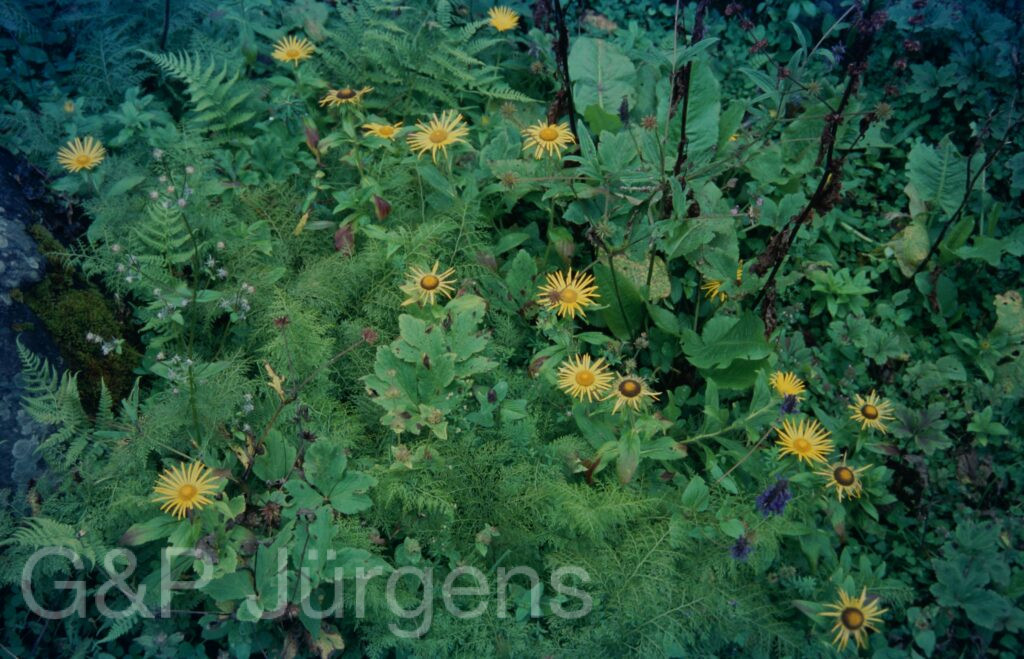
Willd.

Garw 2005 26 ergebnis ergebnis
India Garhwal 2950m, September
Garw 2005 27 ergebnis ergebnis
India Garhwal 2950m September

Description

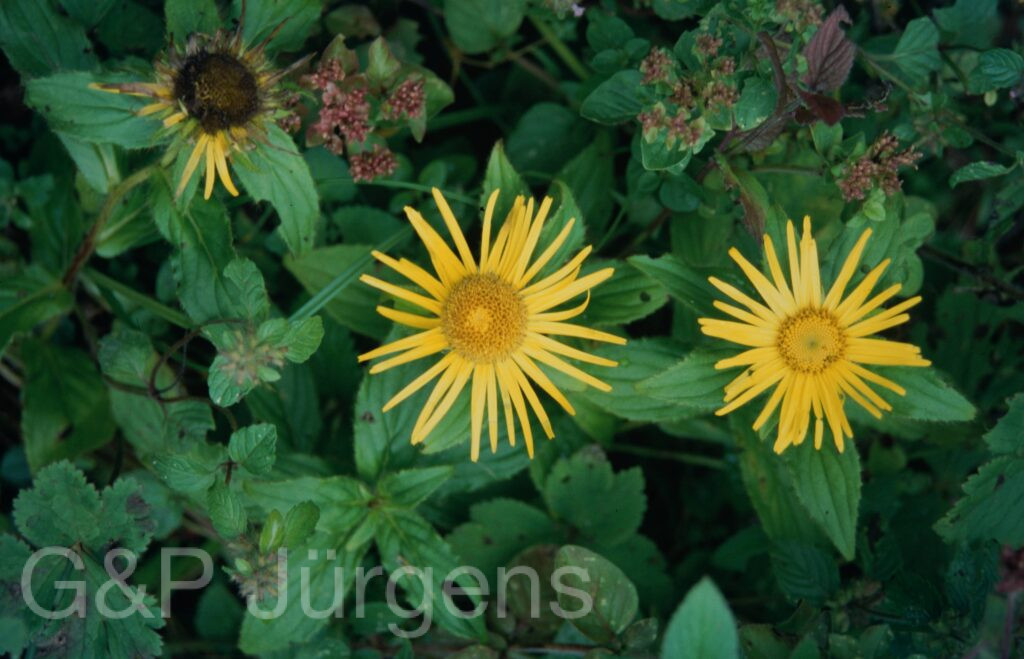
Inula grandiflora Willd. is a stout perennial composite of the western and central Himalaya, ranging from Pakistan and northern India through Nepal, with related records extending into the wider Irano-Turanian and Caucasian region (Turkey, Georgia, Armenia). It occupies open subalpine and alpine slopes, grassy meadows, forest clearings and rocky banks in the upper-temperate to alpine belt. The photographed plants from Garhwal in the Indian Himalaya at 2950 m, flowering in September, exemplify its preference for sunny, well-drained montane grassland where it flowers late in the season as the monsoon eases, frequently forming conspicuous stands on open hillsides.

The plant produces erect, leafy, often somewhat hairy stems from a woody rootstock. The alternate leaves are oblong to elliptic-lanceolate, sessile and frequently half-clasping the stem, with finely toothed margins and a roughened or pubescent surface. The inflorescence is a large, solitary or few-headed terminal capitulum (the epithet grandiflora referring to its size), subtended by overlapping herbaceous involucral bracts; the head bears numerous narrow, spreading golden-yellow ray florets surrounding a central disc of tubular florets. The fruit is a ribbed, cylindrical cypsela crowned by a pappus of fine bristles that aids wind dispersal.

Within the genus Inula (Asteraceae, tribe Inuleae) this is one of the showiest Himalayan species, valued horticulturally and used locally in traditional medicine. Its large, nectar- and pollen-rich heads attract bees, butterflies and other insects, making it an important late-season forage plant. Though not globally threatened and locally common, its alpine grassland habitats are subject to grazing and climate-driven upslope vegetation shifts.

Author: Willd. · Sources: POWO (Kew), GBIF, Flora of Pakistan, Annotated Checklist of the Flowering Plants of Nepal, Flora of China (Asteraceae), Compositae of the Himalaya