Benth.
Description
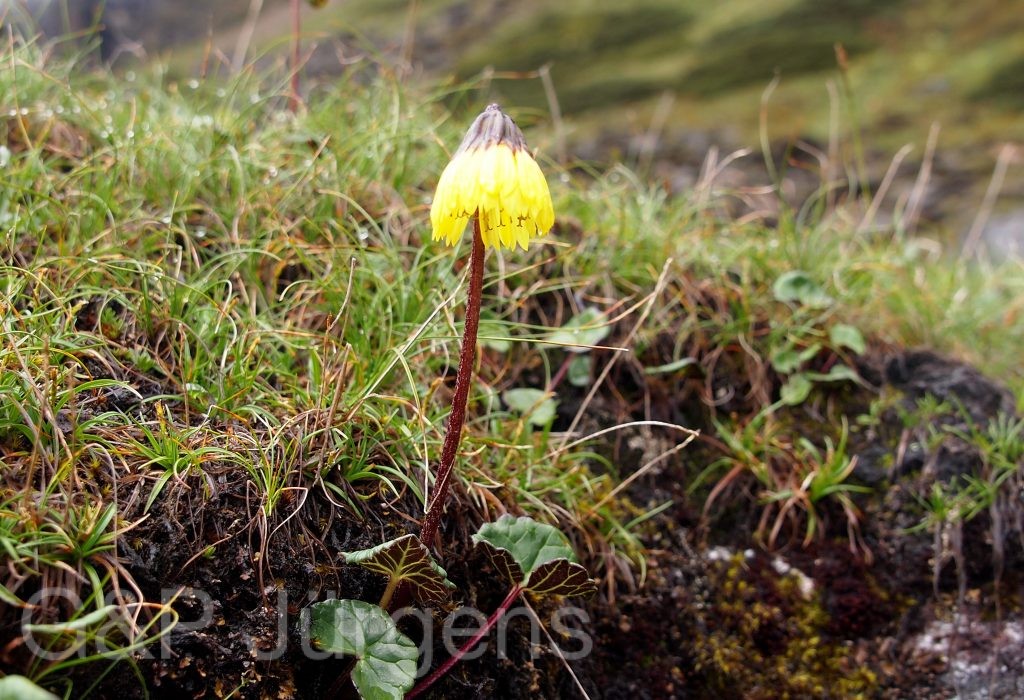
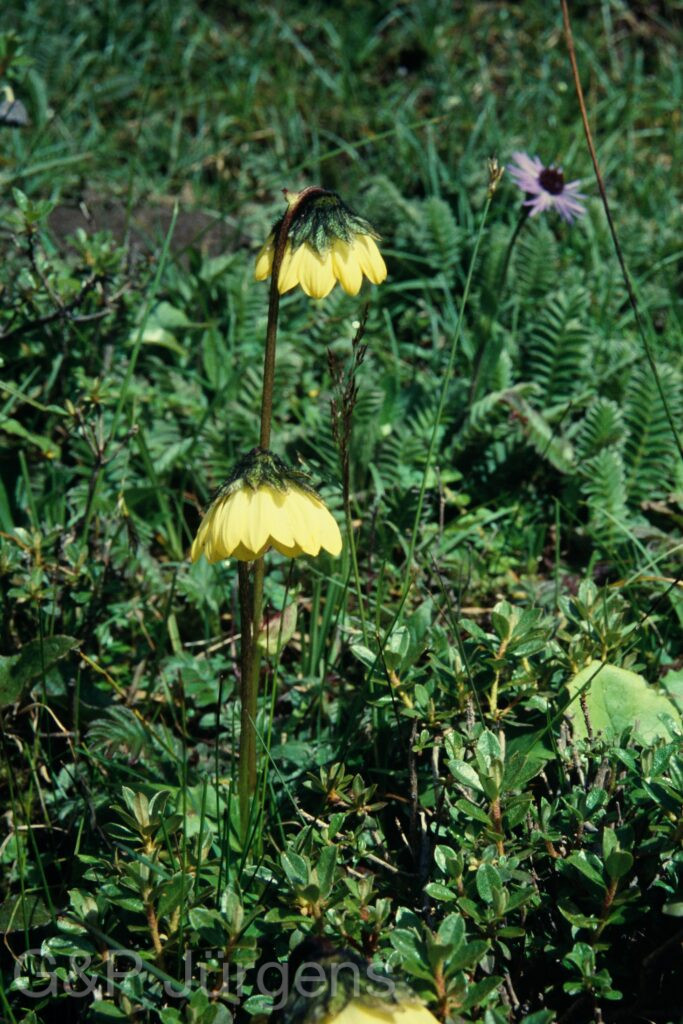
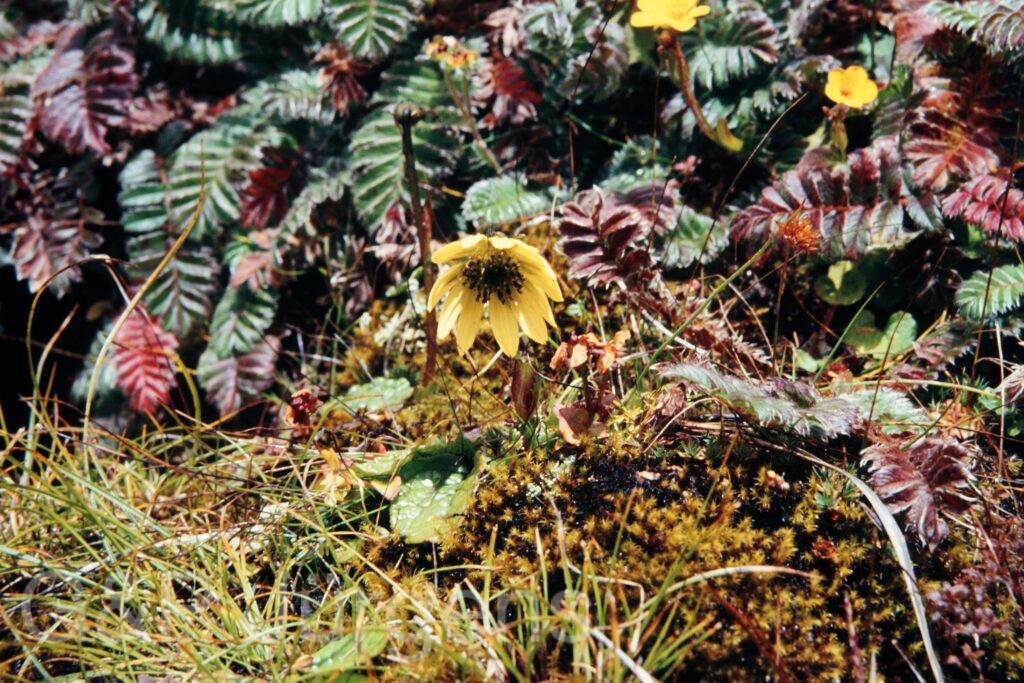
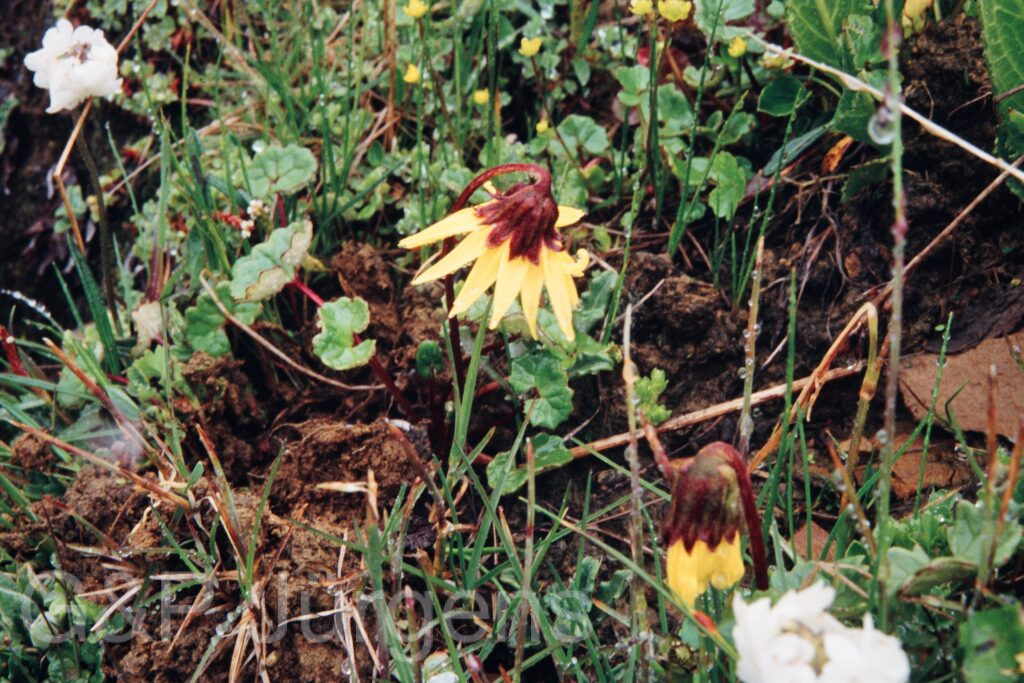
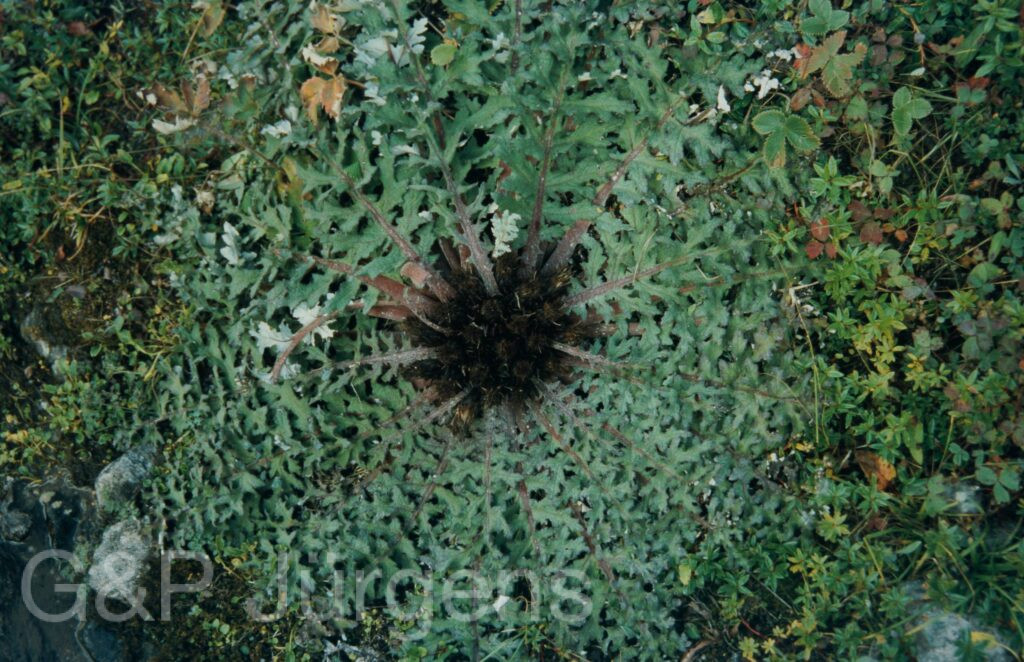
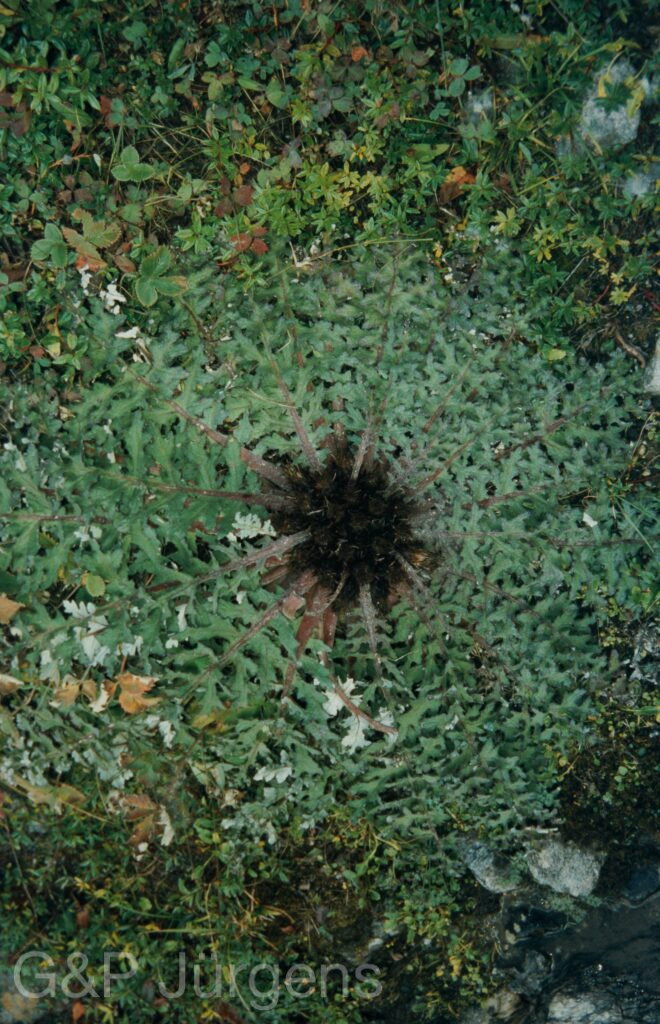
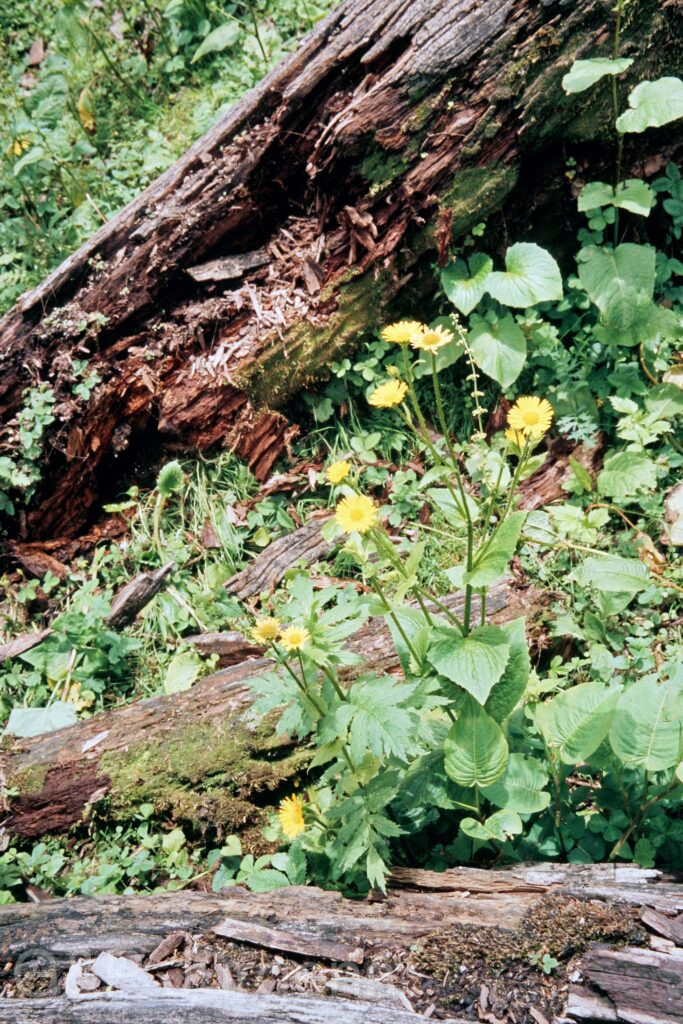
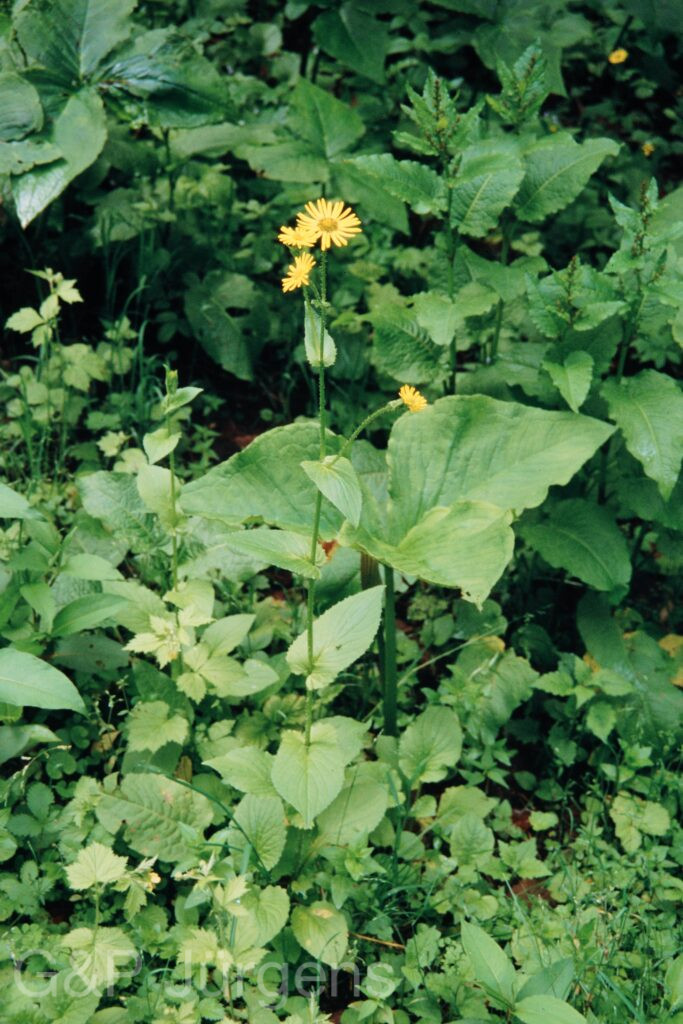
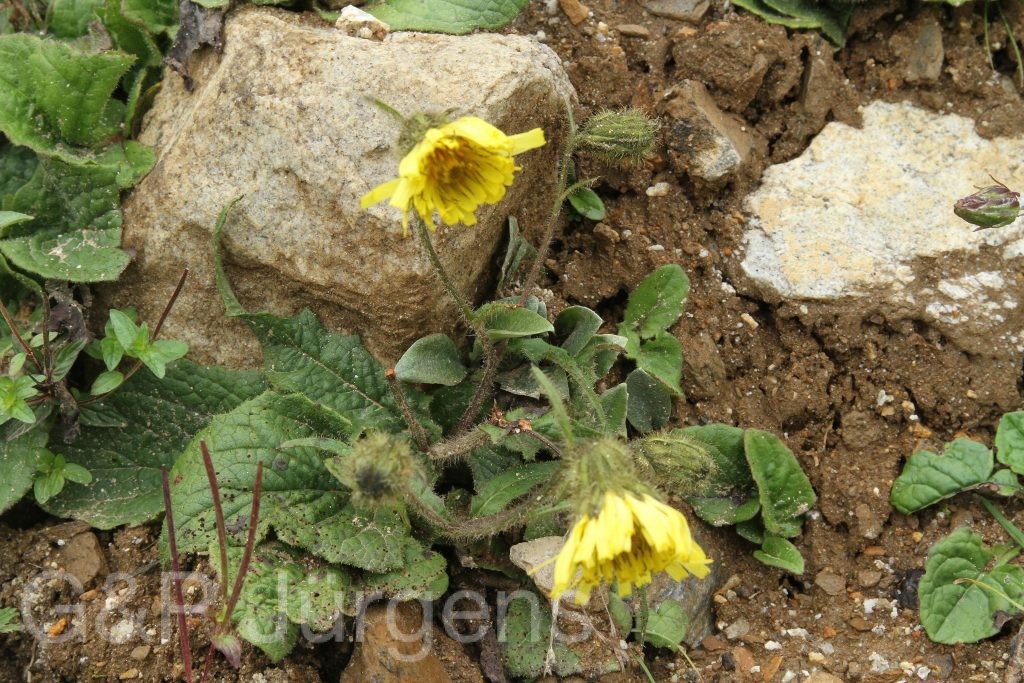
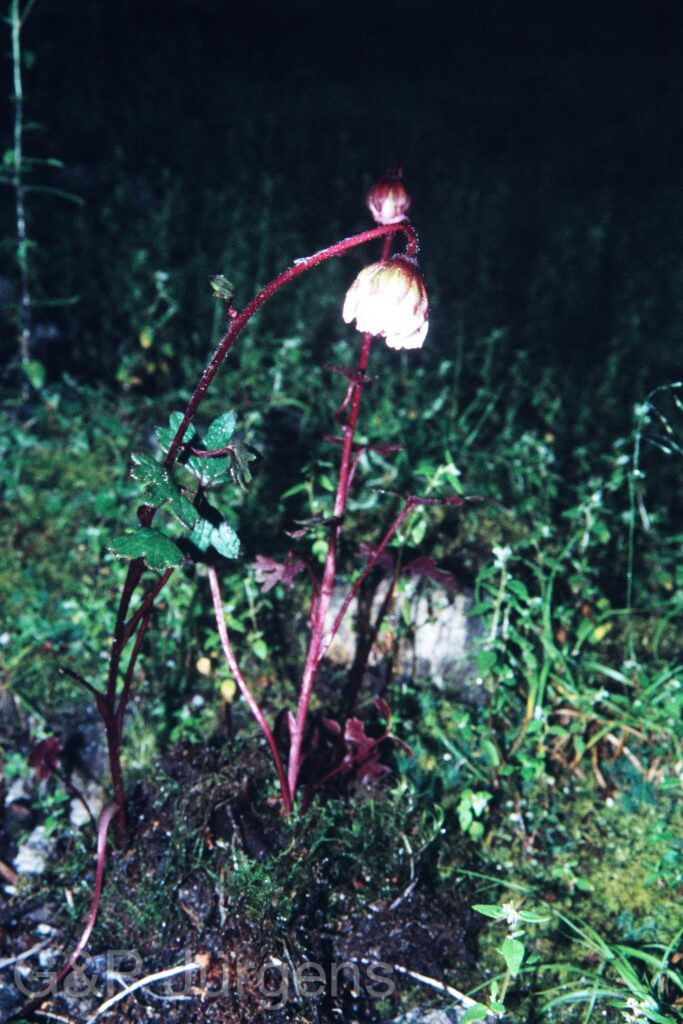
Cremanthodium palmatum is an alpine herb of the eastern Himalaya and adjacent Sino-Himalayan mountains, recorded in GBIF (about 330 occurrences) from China, India, Bhutan, Myanmar, Nepal and Taiwan. It inhabits moist alpine meadows, streamsides, seepage slopes and rocky turf, generally between 3500 and 4500 m, where late-summer monsoon moisture sustains lush herbaceous growth. The photographed population at Saniti Lake in Sikkim at 4100 m in August typifies its preferred high-elevation, snowmelt-fed habitat, flowering as the brief alpine summer reaches its peak.
It is a perennial with a short rhizome and fibrous roots, producing erect, somewhat glandular-hairy stems. The basal leaves are long-petiolate and palmately lobed or divided, the blade reniform to orbicular in outline with toothed segments, recalling the foliage of a buttercup; the stem leaves are reduced and sessile upwards. The capitula are usually solitary and nodding, characteristic of the genus, with broad campanulate involucres of subequal, often dark-margined bracts. The ray florets are yellow, ligulate and spreading, surrounding numerous yellow tubular disc florets; the fruit is a cylindrical, glabrous achene crowned by a pappus of fine white bristles.
Cremanthodium belongs to tribe Senecioneae of the Asteraceae and is closely allied to Ligularia and Parasenecio, distinguished by its predominantly nodding, solitary alpine capitula. The genus is centred on the Hengduan Shan and eastern Himalaya, where rapid diversification has accompanied uplift and glacial cycling, making C. palmatum part of a characteristic high-alpine endemic radiation. Restricted to specialised cold, wet habitats but locally frequent across its range, it is not regarded as globally threatened, though such alpine specialists are sensitive to climatic warming.
Author: Benth. · Sources: POWO (Kew), GBIF, Flora of China, Flora of Bhutan, Annotated Checklist of the Flowering Plants of Nepal, Good revision of Cremanthodium