
DC. ex Royle
Description
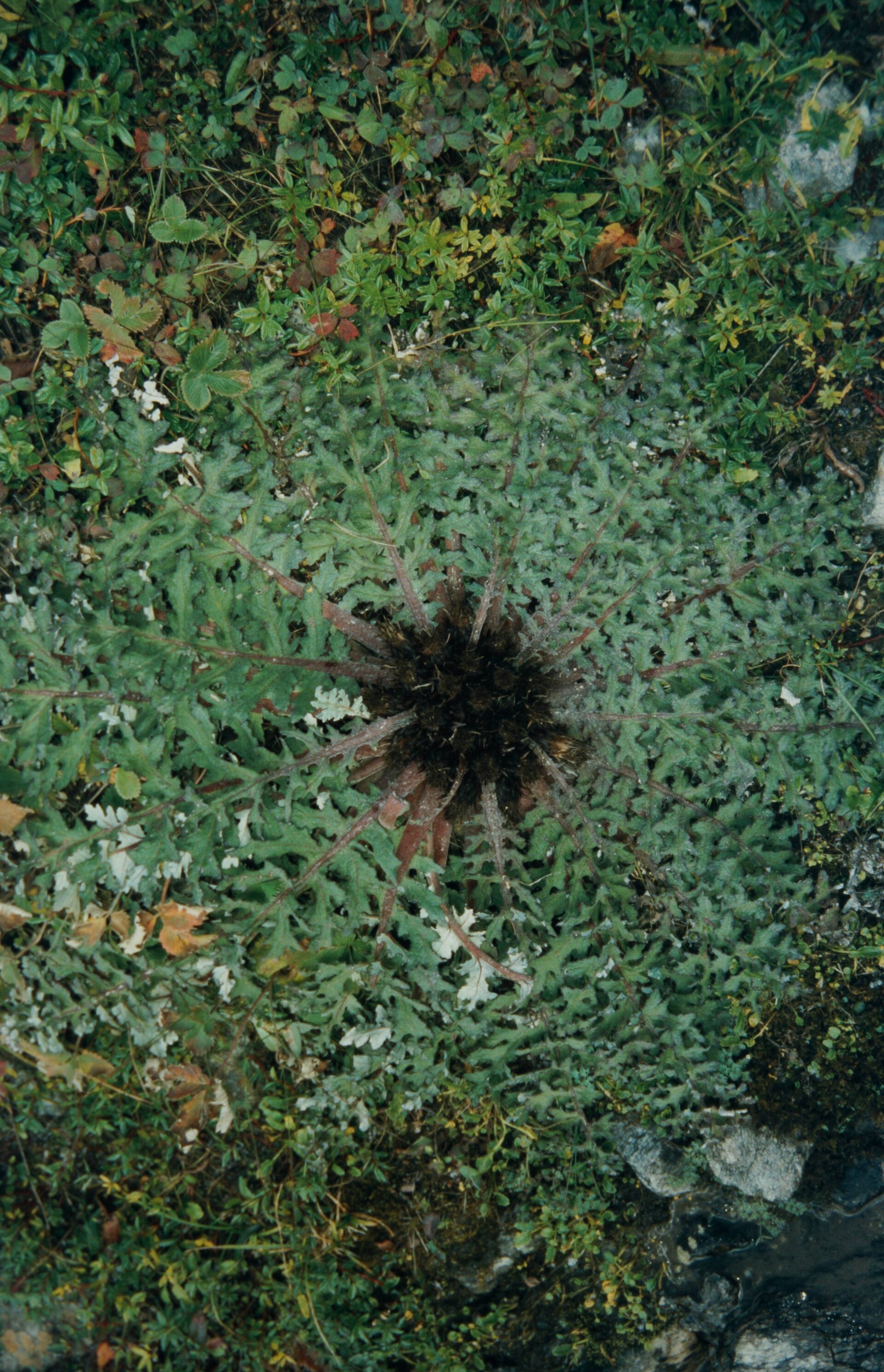
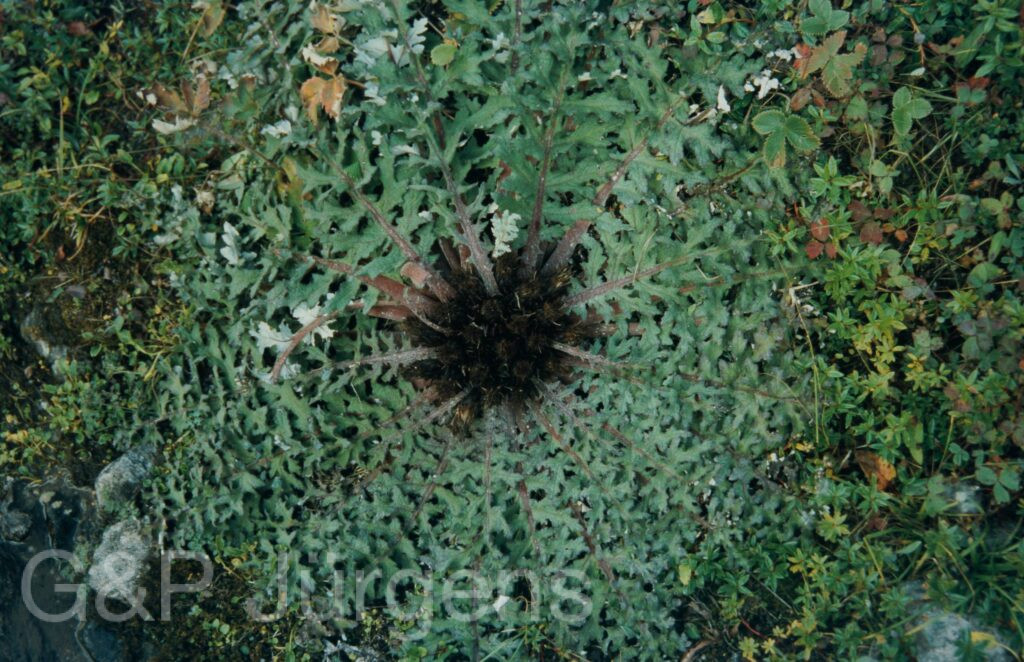
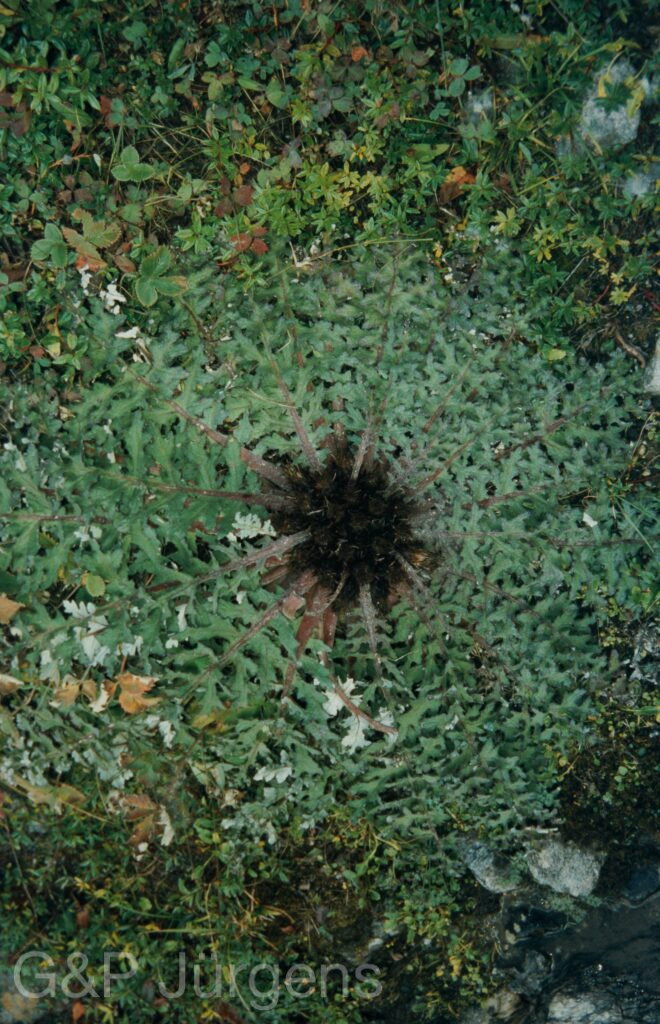
Dolomiaea macrocephala is a stemless alpine thistle-relative of the western and central Himalaya and adjacent Central Asian highlands, recorded from India, Nepal, Pakistan, China, Iran and Mongolia, with about 131 occurrences in GBIF. It grows on open alpine slopes, stony pastures and grazed meadows of the upper subalpine and alpine zones, generally between 3000 and 4500 m, often in well-drained turf exposed to full sun. The photograph from the Kuari Pass in Garhwal, India, at about 3700 m in September shows the plant in fruit late in the alpine season among the short turf of the high-meadow belt.
The species is a perennial, essentially acaulescent herb arising from a stout taproot and a short rootstock. The leaves form a flat or appressed basal rosette and are pinnatifid to lyrate with spiny-toothed margins, green above and frequently white-tomentose beneath. As the specific epithet indicates, the conspicuously large flower heads are sessile or nearly so, sitting in the centre of the rosette; the involucre bears numerous imbricate, often spine-tipped phyllaries surrounding a head of purple, tubular disc florets. The achenes are oblong and crowned by a pappus of plumose or barbellate bristles aiding wind dispersal.
The genus Dolomiaea was long included within Jurinea and Saussurea and belongs to the thistle tribe Cardueae of the Asteraceae; molecular studies support its recognition as a distinct Sino-Himalayan and Central Asian lineage. The ground-hugging rosette and centrally clustered heads represent a typical adaptation to wind exposure and heavy grazing at high elevation. Several species, including this one, have a history of use in Tibetan and Himalayan herbal medicine. Widespread across its montane range, D. macrocephala is not regarded as threatened.
Author: DC. ex Royle · Sources: POWO (Kew), GBIF, Flora of China, Flora of Pakistan, Annotated Checklist of the Flowering Plants of Nepal, Susanna and Garcia-Jacas revisions of the Cardueae