
Beauverd
Description
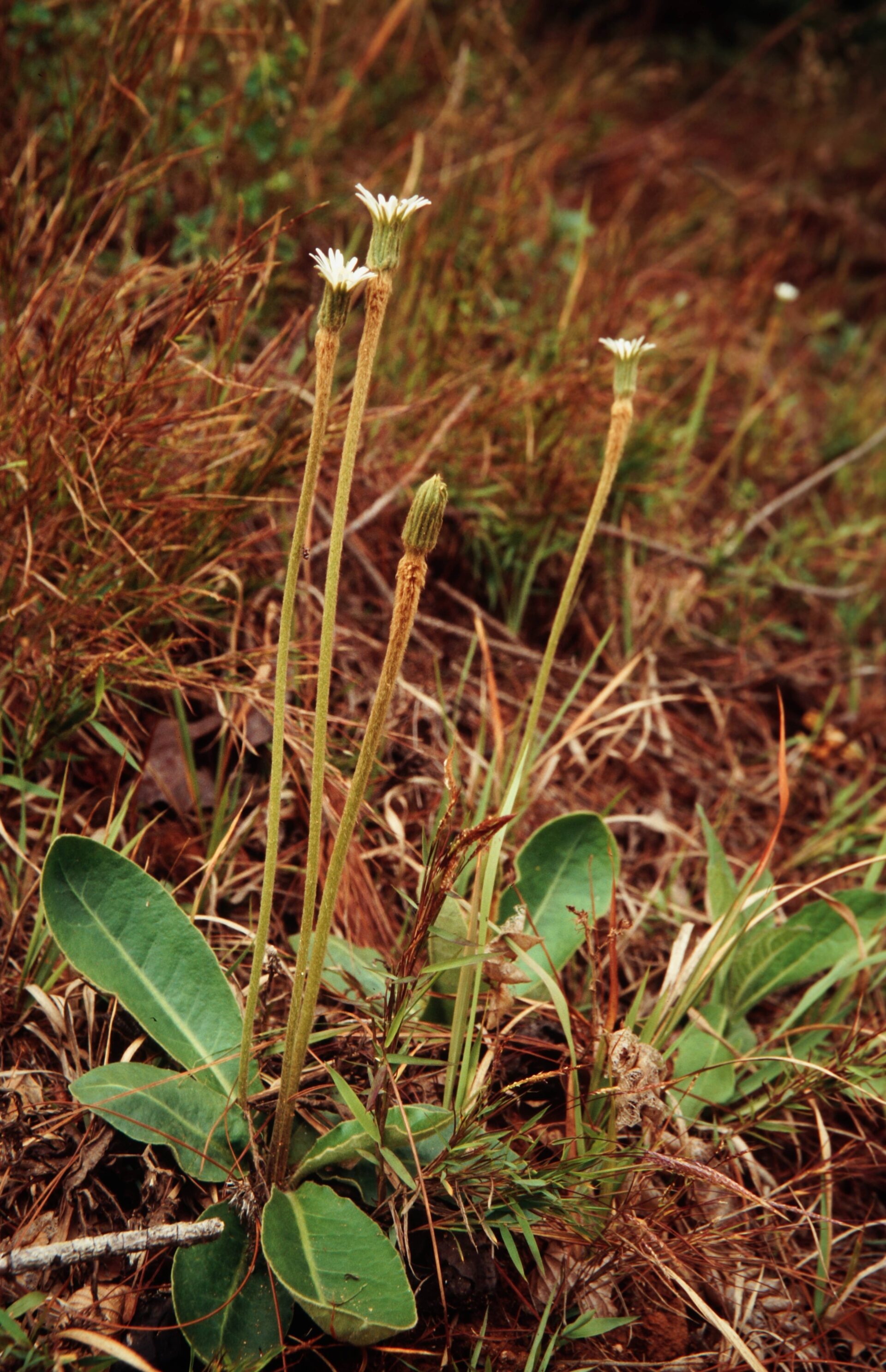
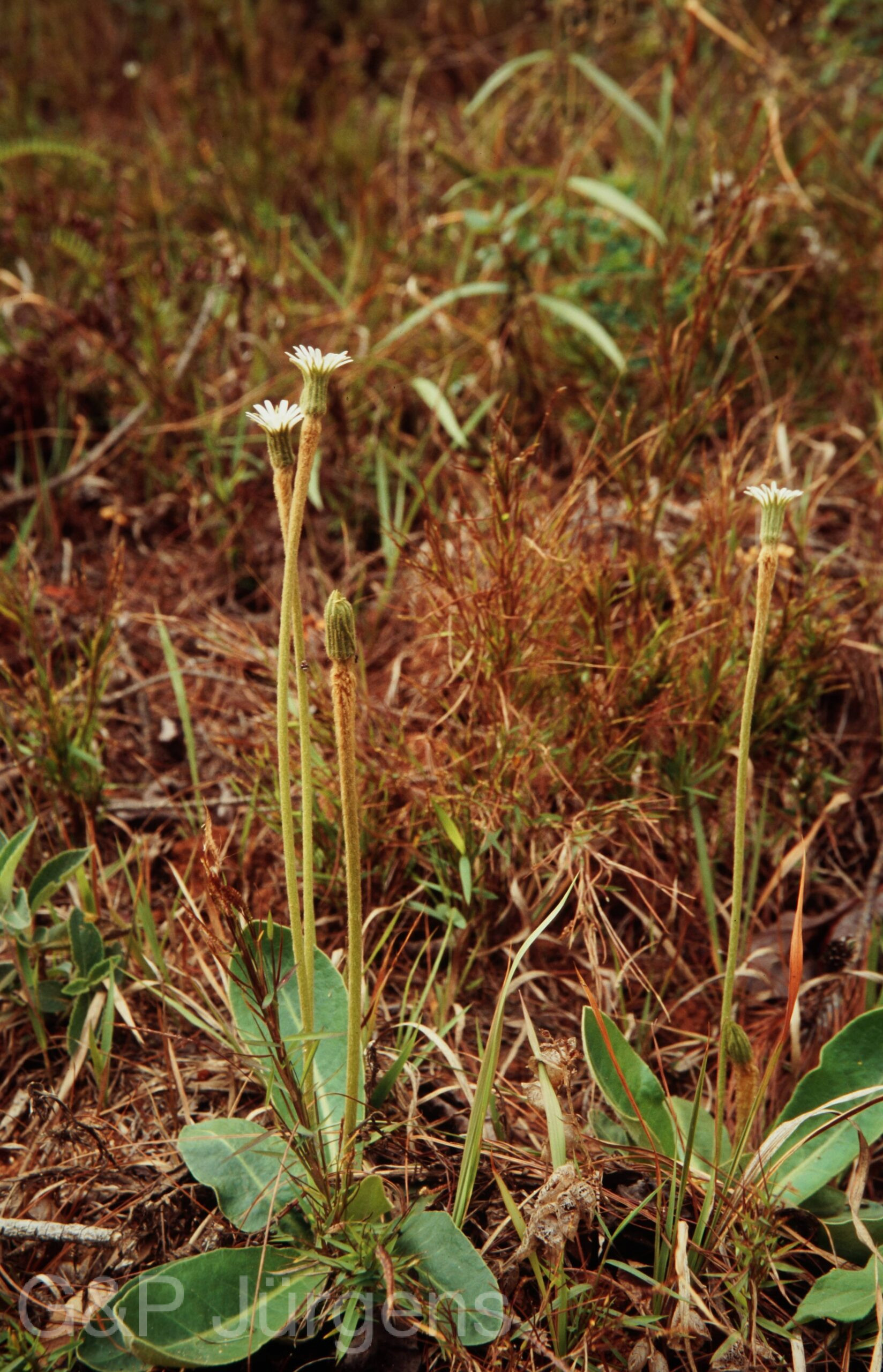
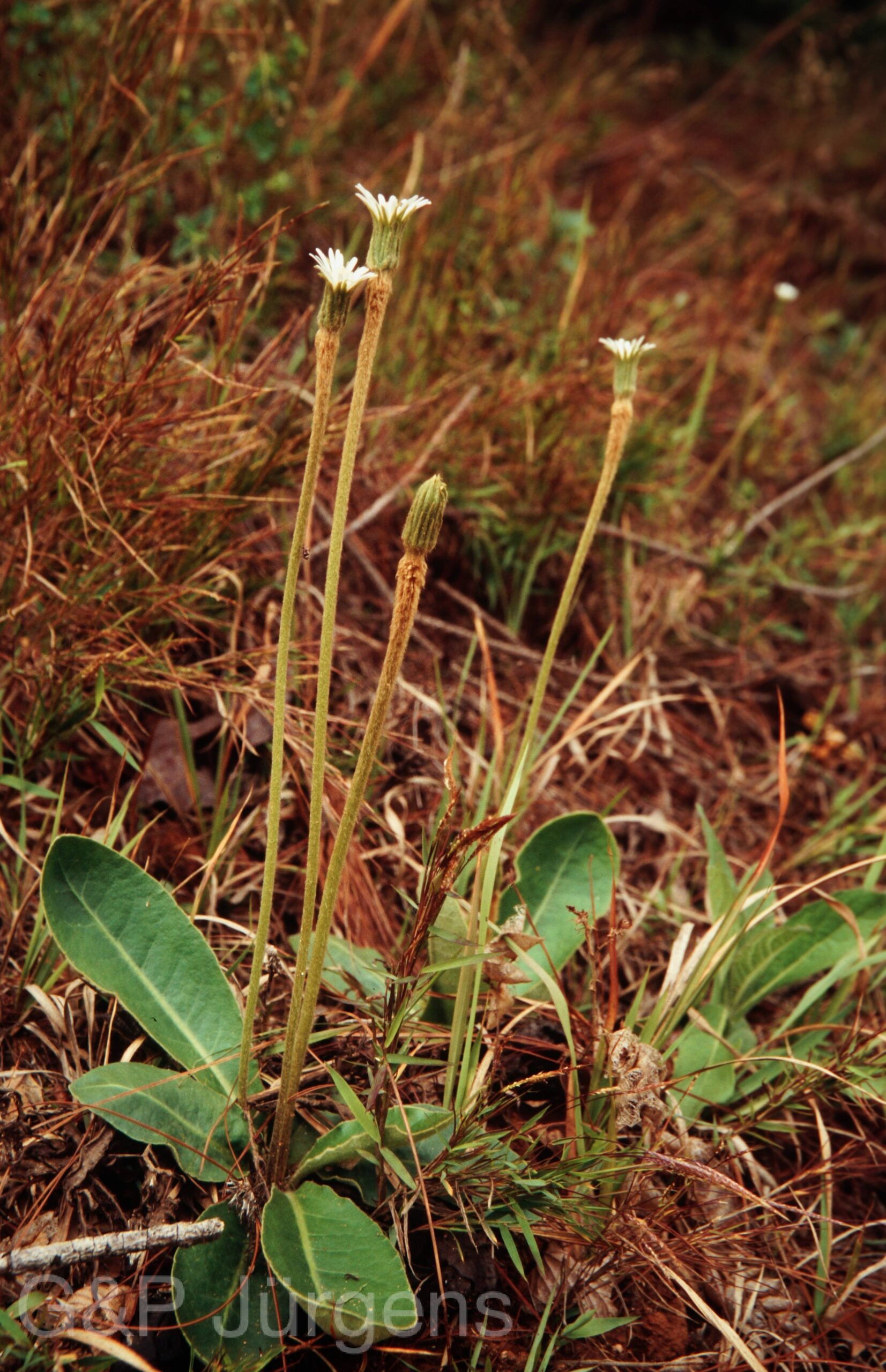
Gerbera maxima is an eastern Himalayan perennial herb distributed across Nepal, northern India, Bhutan and adjacent south-central China (Yunnan, Xizang), the modest tally of around seventeen georeferenced GBIF records reflecting its scattered occurrence rather than true rarity. It favours open grassy hillsides, forest margins, terraced banks and disturbed sunny slopes in the subtropical to lower temperate belt. The photographed plant, from the Indrawati-Khola valley in the Helambu region of central Nepal at roughly 1750 m and flowering in May, typifies its mid-montane preference for warm, well-drained, often grazed openings.
The species forms a stout caudex from which arises a basal rosette of large, lyrate-pinnatifid to broadly obovate leaves that are densely white-tomentose beneath and greener above, the margins sinuate-dentate and the petioles winged. From the rosette a leafless, woolly scape bears a solitary, comparatively large radiate capitulum. The involucral bracts are imbricate and tomentose; the ray florets are bilabiate, typically pale pink to whitish or yellowish, surrounding numerous tubular disc florets. The fruit is a slender, ribbed cypsela tapering into a beak and crowned by a pappus of barbellate bristles, adapted to wind dispersal.
Gerbera (Asteraceae, tribe Mutisieae) is an Old World genus centred on Africa and Asia, and G. maxima is here treated as the accepted name. The two-lipped ray corollas place it within the mutisioid lineage, and its tomentose indumentum is a xeromorphic adaptation to insolated, seasonally dry montane slopes. No formal conservation assessment exists; its tolerance of grazing and disturbance suggests local resilience, though habitat conversion across the mid-hills warrants monitoring.
Author: Beauverd · Sources: POWO (Kew), GBIF, Flora of China, Annotated Checklist of the Flowering Plants of Nepal, Hand-Mazzetti revision of Asian Gerbera (Mutisieae monograph)