
DC.
Description
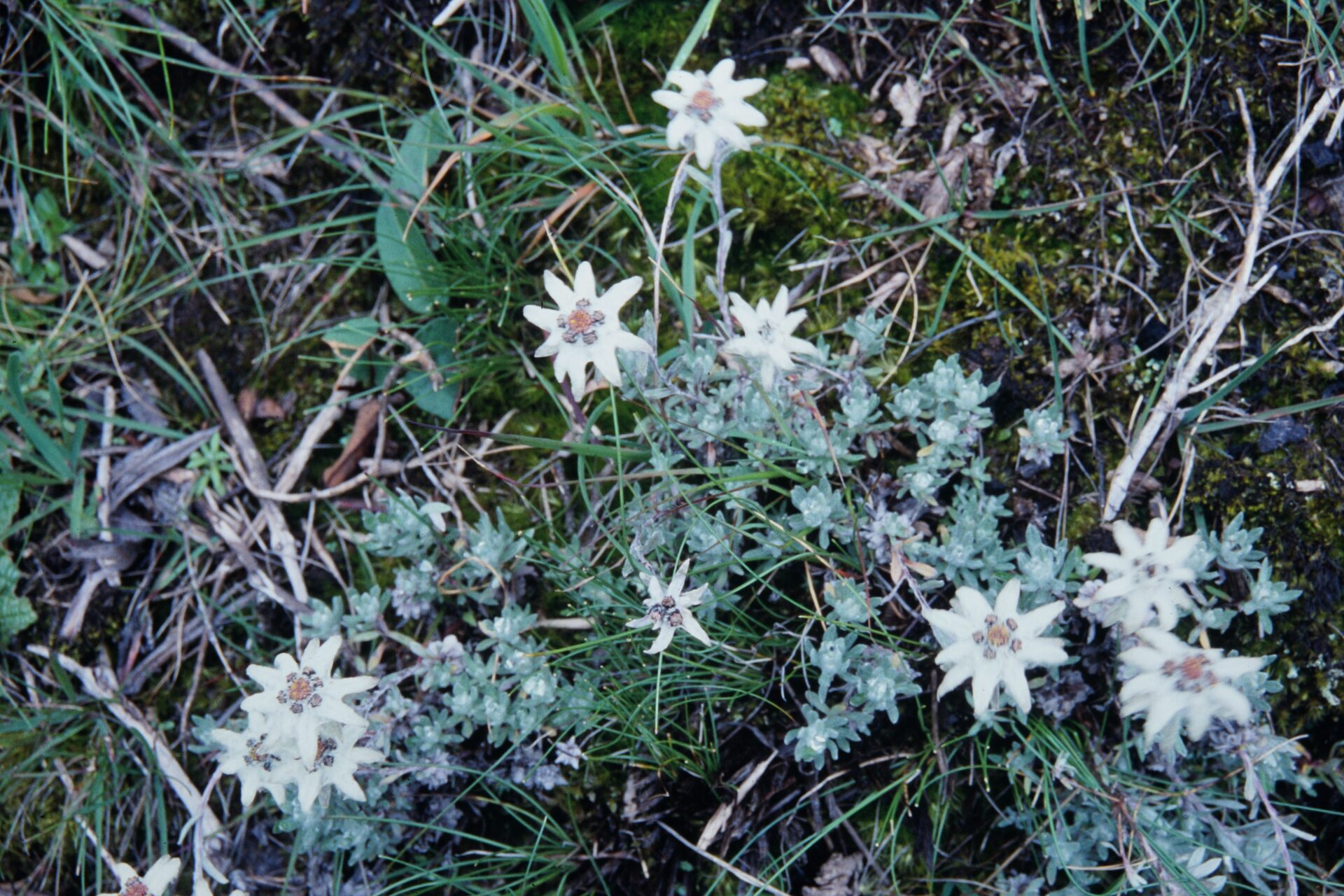
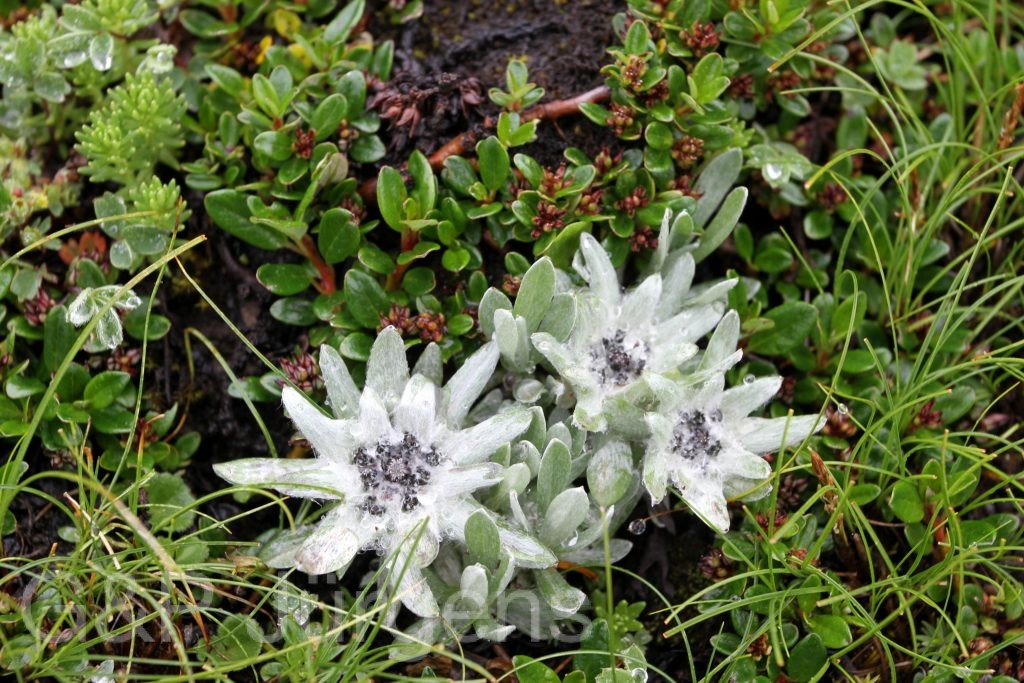
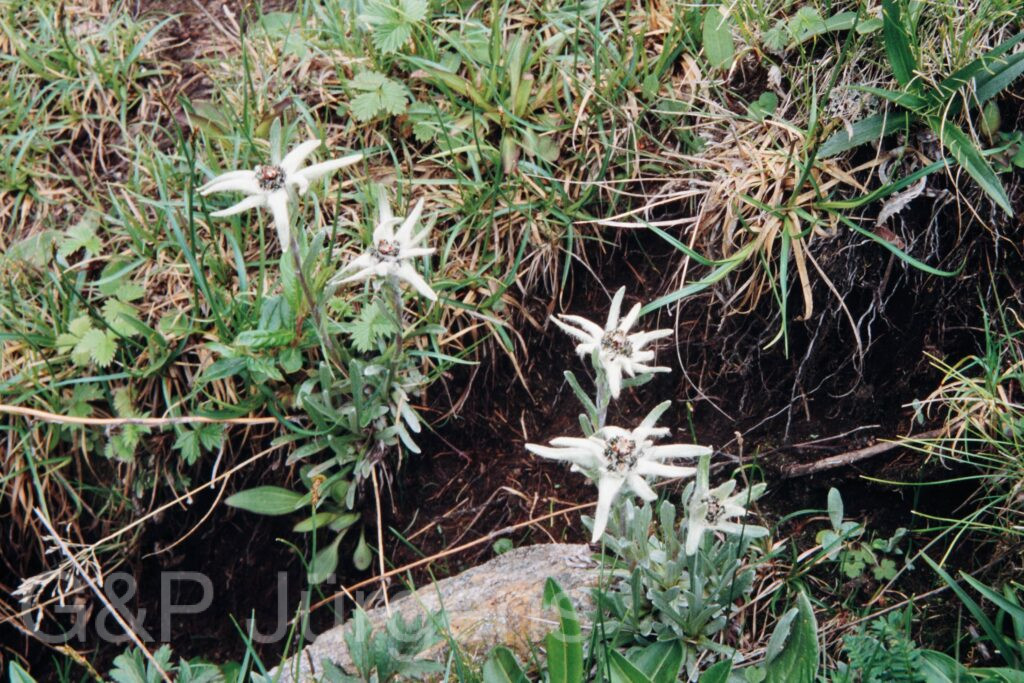
Leontopodium himalayanum is the characteristic Himalayan edelweiss, distributed across China, Nepal, India, Bhutan, Pakistan and Myanmar (CN, NP, IN, BT, PK, MM), with about 437 GBIF occurrences mapping a broad but strictly montane range along the chain. It occupies alpine and subalpine meadows, open grassy and stony slopes, screes and rocky banks, generally above the forest limit. The photographed plants were recorded on the Ludlow-Sherriff Trail at Shashuna in Bhutan at 4000 m and at the Churta-Khola in West Nepal at 3800 m, both in June, flowering early in the high-mountain season on exposed turf.
It is a tufted perennial herb growing from a short branched rhizome, producing several erect or ascending flowering stems 5–30 cm tall, the herbage greyish with a dense appressed white tomentum. The leaves are linear, linear-lanceolate or oblong-spathulate, sessile, woolly especially beneath. The inflorescence is crowned by a spreading rosette of lanceolate floral bracts much more densely white-lanate than the foliage, forming the radiating star that distinguishes the edelweiss. Several small subglobose capitula are clustered at the centre of this ruff; the heads bear yellowish tubular florets and are functionally subdioecious. The fruit is a minute cypsela tipped with a pappus of slender, barbellate to subplumose bristles facilitating wind dispersal.
Within Leontopodium (tribe Gnaphalieae) the Himalayan species form a closely allied group differentiated chiefly by indumentum density and bract proportions, and L. himalayanum (described by DC.) is the most widespread representative across the range. Its conspicuous woolly star is a classic alpine adaptation buffering the reproductive organs against ultraviolet exposure, cold and water loss. The species is common and not regarded as threatened, although picking and collection have locally reduced populations near trekking routes.
Author: DC. · Sources: POWO (Kew), GBIF, Flora of China Vol. 20-21, Flora of Bhutan, Flora of Nepal, Leontopodium monograph (Handel-Mazzetti, revision of the genus)