
(Wall. ex DC.) B.Nord.
Description
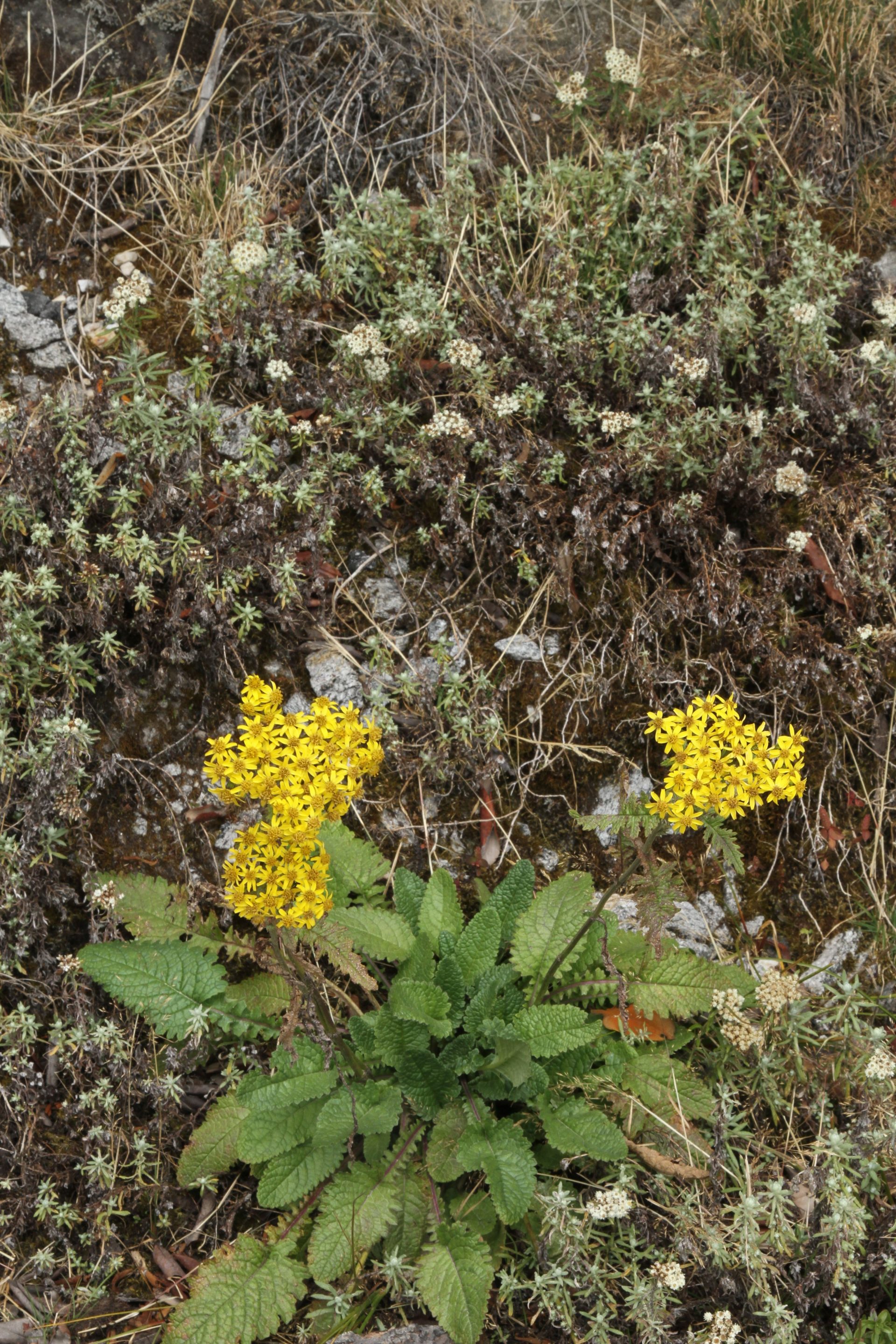
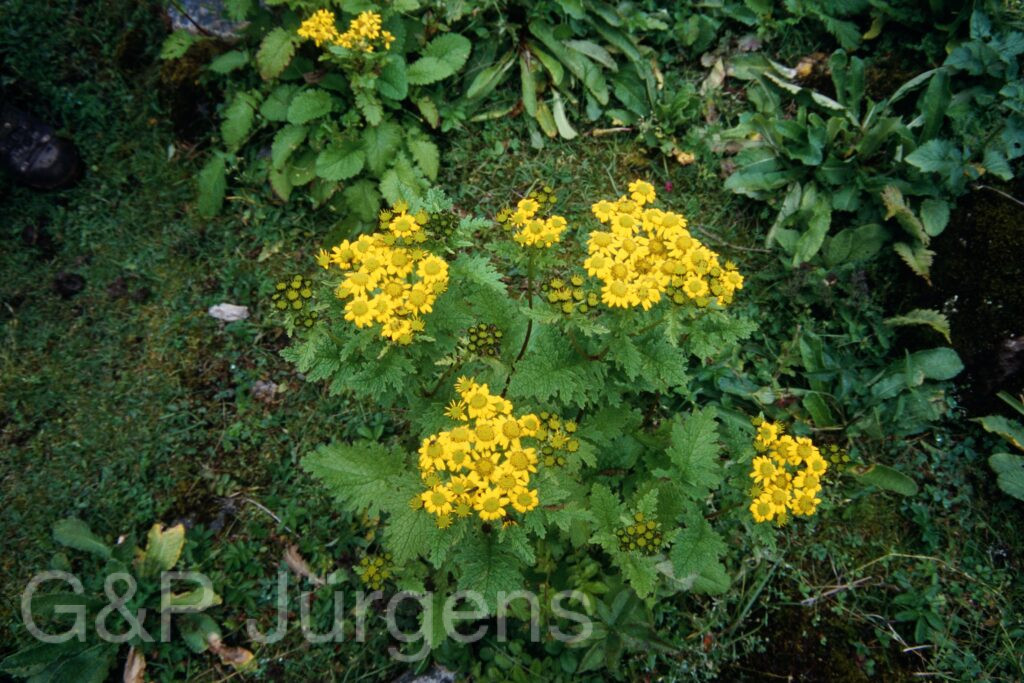
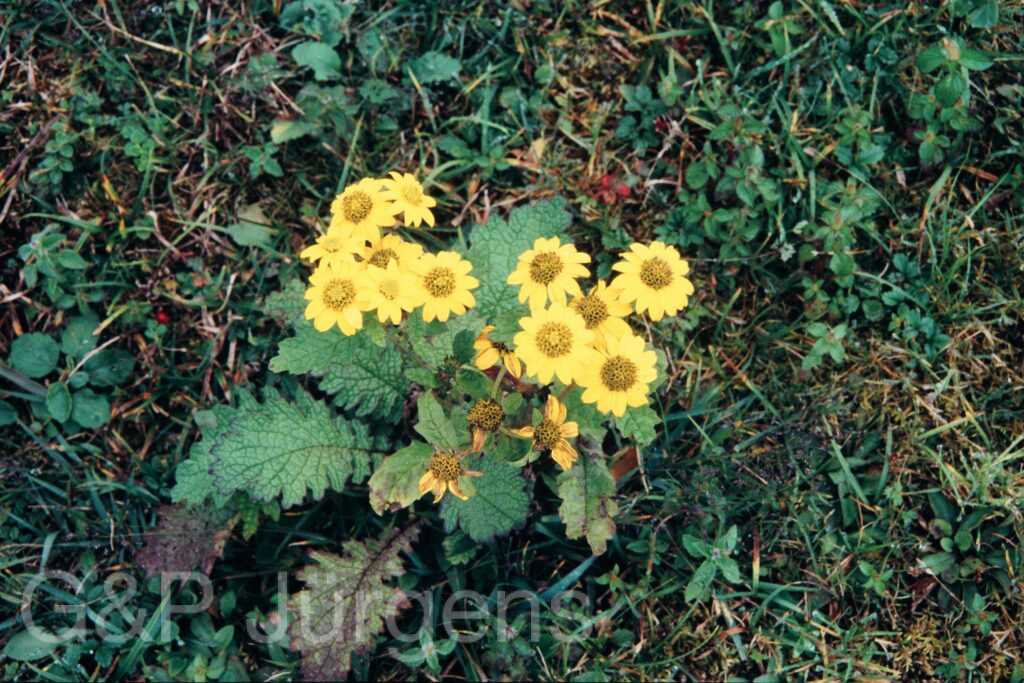
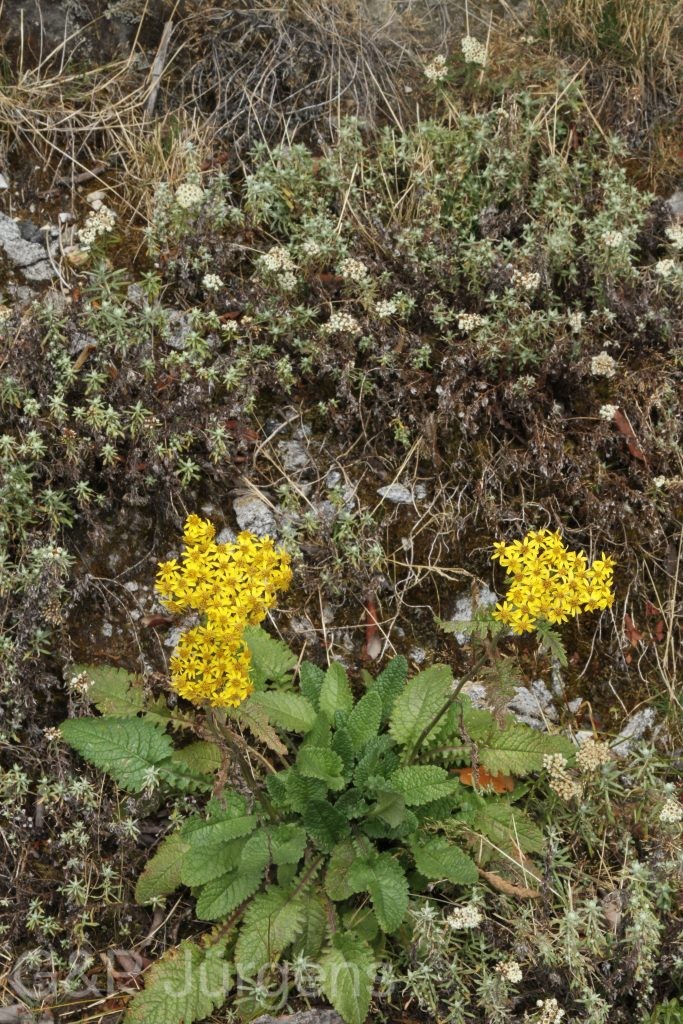
Jacobaea raphanifolia is a perennial herb of the high Himalaya and adjoining mountains of central Asia, recorded by GBIF (some 202 occurrences) from Nepal, India, China, Bhutan, Afghanistan, Pakistan and Myanmar, with scattered records reaching Kenya and South Africa that probably reflect cultivated or naturalised material. It is a plant of the upper subalpine and alpine zones, favouring moist meadows, streamsides, open scrub and damp rocky slopes. The species was photographed across a broad altitudinal band, in the Chopta Valley of Sikkim at about 3900 m in August, south of the Rupien La in Nepal at 3600 m in October, and on the Tumching La in Bhutan near 4000 m, a range centred between roughly 3500 and 4200 m.
It forms an erect, somewhat stout herb arising from a short, fibrous-rooted rhizome, with simple or branched leafy stems. The lower leaves are lyrate-pinnatifid to runcinate with a large terminal lobe, recalling a radish (raphanifolia), the margins toothed and the surfaces sparsely hairy; cauline leaves become smaller, sessile and often auriculate upwards. The capitula are radiate, several to many in a loose terminal corymb, subtended by a single row of narrow green phyllaries with a few short calyculate bracts. Ray florets are yellow, female and ligulate; the disc florets yellow, tubular and bisexual. The fruit is a ribbed, cylindrical cypsela crowned by a pappus of fine white capillary bristles.
The species belongs to a complex of montane ragworts segregated from Senecio into Jacobaea on molecular and morphological grounds. As a wide-ranging meadow herb of the alpine pastures it is locally common and of no conservation concern, though like many Senecioneae it contains pyrrolizidine alkaloids and is generally avoided by grazing stock, a trait that may favour its persistence in heavily pastured high valleys.
Author: (Wall. ex DC.) B.Nord. · Sources: POWO (Kew), GBIF, Flora of Bhutan, Flora of China, Annotated Checklist of the Flowering Plants of Nepal, Nordenstam's revision of Jacobaea and the Senecioneae