Tag:

Alpine (>3500 m)

Balf. f. & R.E. Cooper
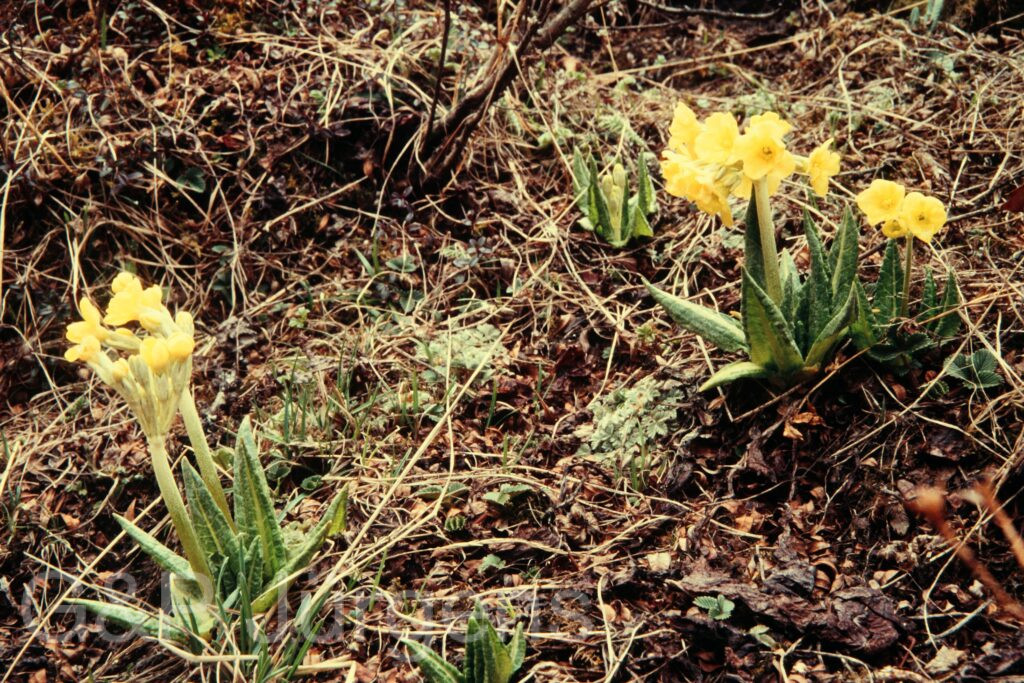
Nepal 97 199 P408
Nepal Topke Gholam 3850m April
Nepal 97 164 G321
Nepal Topke Gholam 3850m April

Description

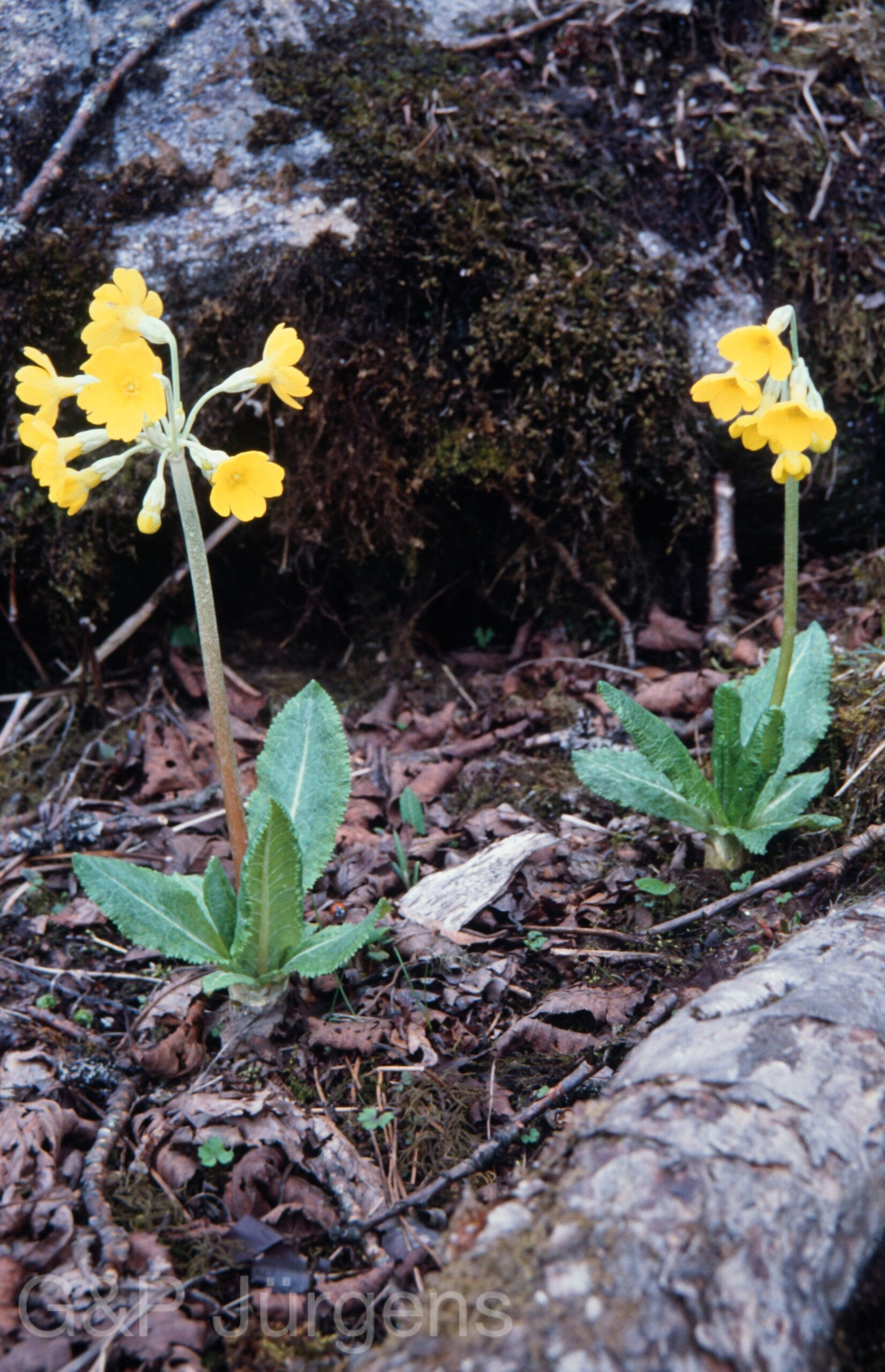
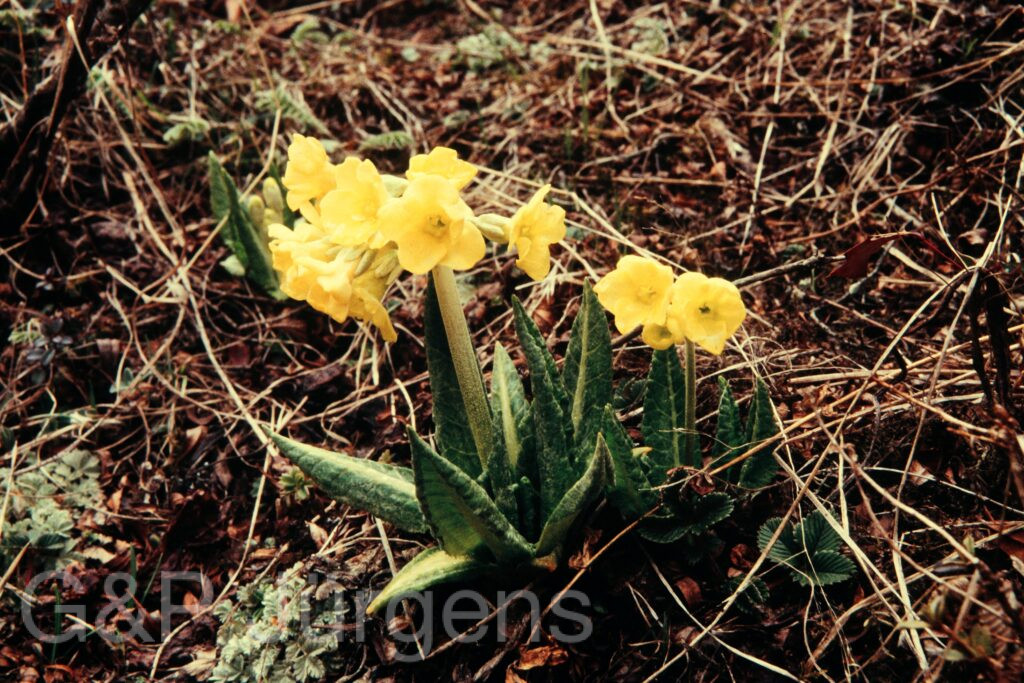
Primula strumosa is a Himalayan primrose recorded from Nepal, India, China, Bhutan and Japan, with about 152 GBIF occurrences along the central and eastern Himalaya. It grows in moist alpine and subalpine meadows, damp grassy slopes, rhododendron scrub and streamsides, typically between roughly 3300 and 4300 m. The plants photographed at Topke Gholam (about 3850 m, April) and at Rupina-La in Gorkha (about 3350 m, May) in Nepal exemplify its habit of flowering early in the season in wet montane turf, often soon after snowmelt when the yellow heads emerge above the developing foliage.

The species is a perennial rosette herb with a short rootstock and basal leaves that are oblong to oblanceolate, with crenate to denticulate margins, the blade narrowing into a winged petiole and frequently dusted with pale farina (meal) beneath. The flowering scape is erect and bears a terminal umbel of several flowers subtended by bracts. The corolla is yellow, salverform with a slender tube and spreading, notched lobes, the calyx campanulate and often farinose. The fruit is a capsule containing numerous small seeds, the flowers typically heterostylous with pin and thrum forms promoting outcrossing.

Primula strumosa belongs to the yellow-flowered Himalayan assemblage of section Petiolares and allies, a group of meal-bearing primroses centred on the high rainfall ranges from Nepal to Bhutan and adjacent China. These primroses are closely tied to permanently moist, cool habitats and to insect pollination of their distylous flowers. With a moderately wide range across the central-eastern Himalaya the species is not regarded as threatened, though as a moisture-demanding alpine specialist it is sensitive to changes in snow cover and meadow hydrology.

Author: Balf. f. & R.E. Cooper · Sources: POWO (Kew), GBIF, Flora of China, Flora of Bhutan, Annotated Checklist of the Flowering Plants of Nepal, Richards' monograph Primula
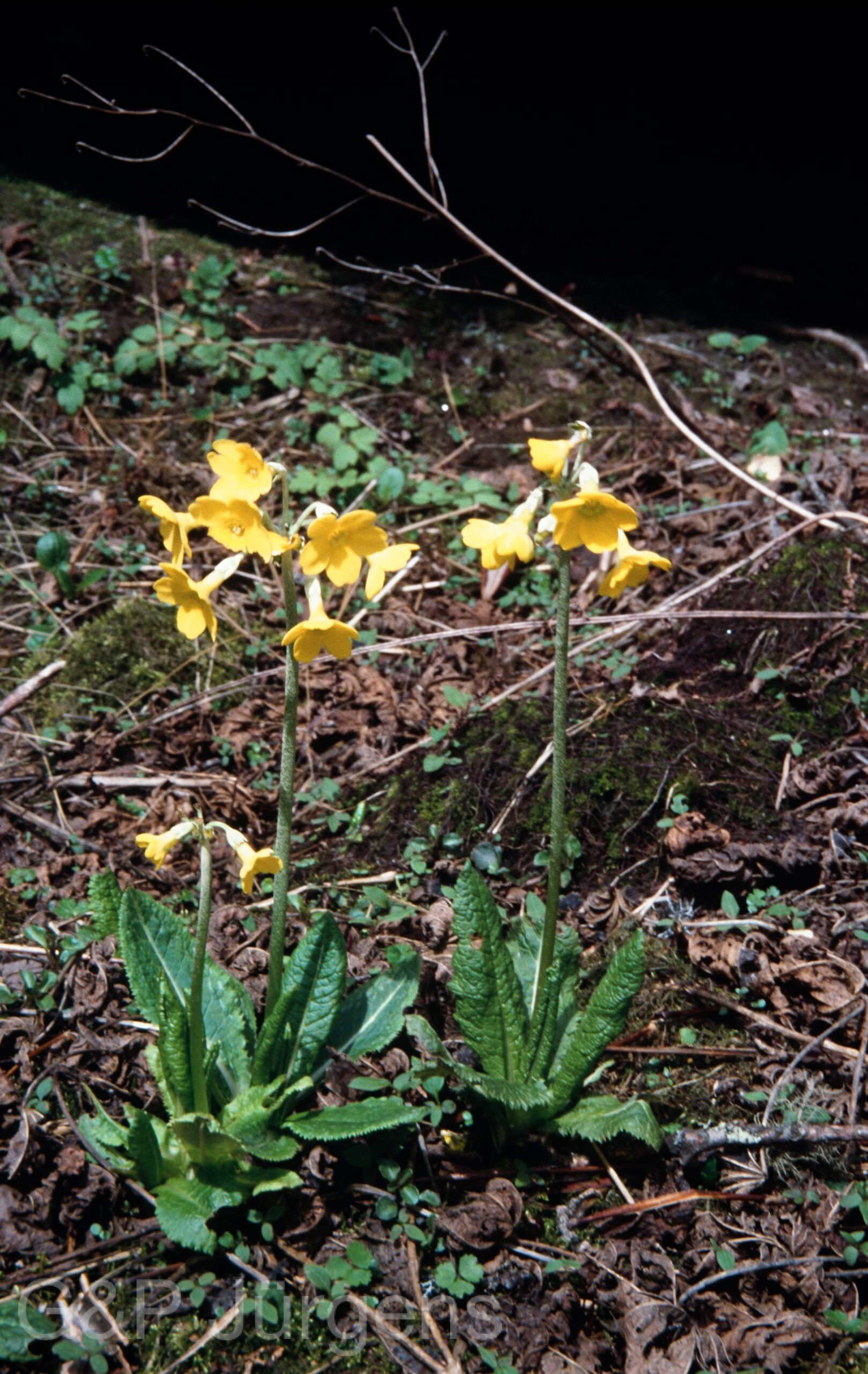
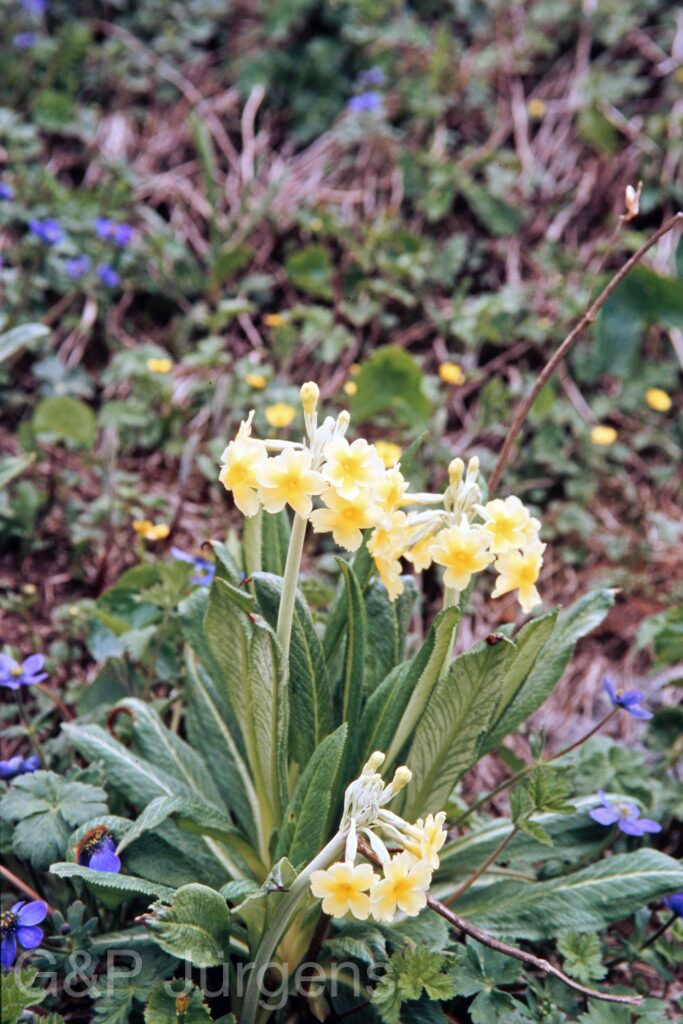
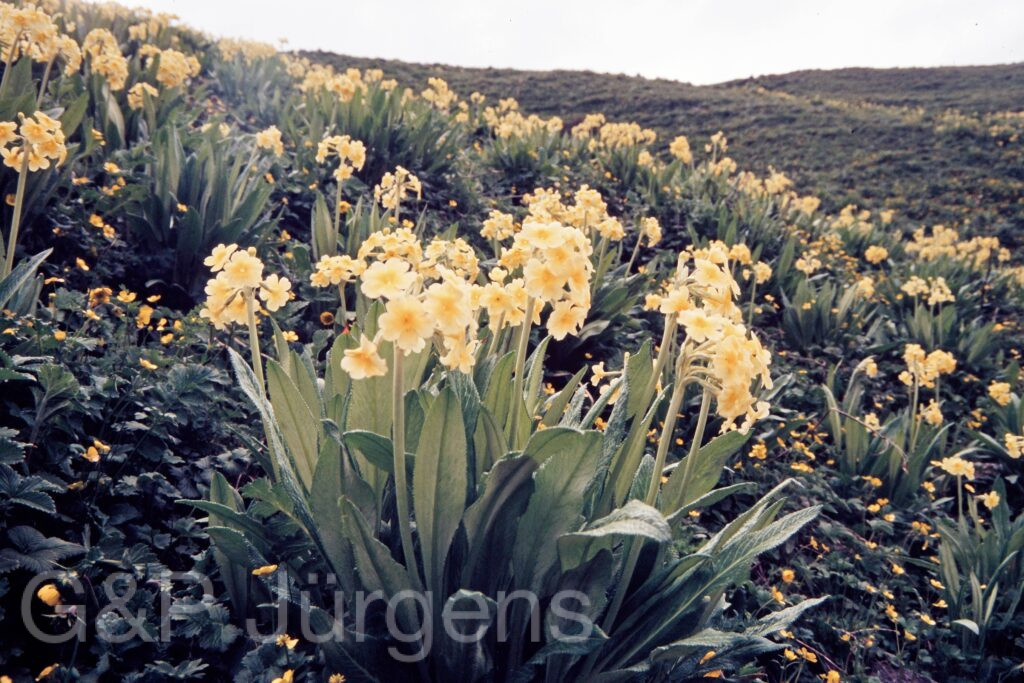
Wall.

Description

Primula stuartii is a high-alpine perennial distributed across the Himalayan arc, with georeferenced records (some 140 occurrences) from Nepal, India, China and Bhutan. It is a plant of open, moist alpine meadows, rocky slopes and the margins of melting snow-beds, typically occurring between roughly 3000 and 4500 m. The population photographed in the Garhwal Himalaya of northern India at about 3900 m in June represents its characteristic habitat, flowering as the snow recedes and the short summer growing season begins on humus-rich, well-drained but seasonally saturated substrates.

The species forms a stout perennial rosette arising from a short, farinose-coated rootstock. The leaves are oblong to oblanceolate, narrowing into a winged petiole, with finely toothed margins and a conspicuous mealy-yellow farina coating the lower surface. A robust scape bears a terminal umbel of several to many flowers; the calyx is tubular-campanulate and the corolla is bright golden-yellow with a distinct annulate throat, the limb divided into spreading, often emarginate lobes. The capsule is cylindrical, exceeding the calyx, and dehisces by apical valves to release numerous small angular seeds.

Primula stuartii belongs to the large and taxonomically complex genus Primula, within which yellow-flowered farinose Himalayan species have long posed problems of delimitation; several segregates and varieties have been recognised in the regional literature. As a snow-bed and alpine-meadow specialist it is sensitive to grazing pressure and to shifts in snow-cover duration, making it a useful indicator of alpine ecosystem change. It remains locally frequent across much of its range and is not presently regarded as threatened.

Author: Wall. · Sources: POWO (Kew), GBIF, Flora of Nepal, Flora of Bhutan, Flora of China, Smith & Fletcher's monograph of Primula

A.J.Richards

BhutanPG2011 270
Bhutan Jule-Tso, 3900m June

Description

Primula tanneri subsp. nepalensis is a subalpine to alpine primula of the Himalaya; under the GBIF backbone the name is treated as a synonym, with Primula tanneri nepalensis given as the accepted name. The GBIF records, though few (around ten occurrences) and centred on Nepal, accompany a wider distribution of the species through the Central and Eastern Himalaya including Bhutan. It grows in moist alpine and subalpine habitats, among open Rhododendron scrub, damp turf and shaded rocky slopes near the treeline. The plant figured was recorded at Jule-Tso in Bhutan at about 3,900 m in June, flowering early in the growing season.

It is a glabrous perennial herb with a basal rosette of obovate to oblong-spathulate leaves, the margins toothed and the blade tapering to a winged petiole, often more or less efarinose. The flowering scape is erect and bears a terminal umbel of several flowers, each subtended by linear bracts. The corolla is deep purple to violet, somewhat funnelform, with a short tube and a spreading limb of five emarginate lobes, the throat marked by a paler or yellowish eye. As typical of the genus the species is heterostylous, producing distinct pin and thrum morphs, and the fruit is a many-seeded capsule.

Primula tanneri belongs to the petiolarid alliance of Himalayan primulas, and subsp. nepalensis represents the western, Nepalese-centred expression of this variable species, distinguished by leaf and farina characters from the typical eastern subspecies. The heterostylous breeding system promotes obligate outcrossing by insects. With a restricted range and few documented populations it is naturally local; while not formally evaluated, such narrowly distributed alpine taxa warrant monitoring against climatic shifts.

Author: A.J.Richards · Sources: POWO (Kew), GBIF, Flora of Bhutan, Annotated Checklist of the Flowering Plants of Nepal, Richards' Primula (monograph), Smith & Fletcher revision of Asiatic Primula

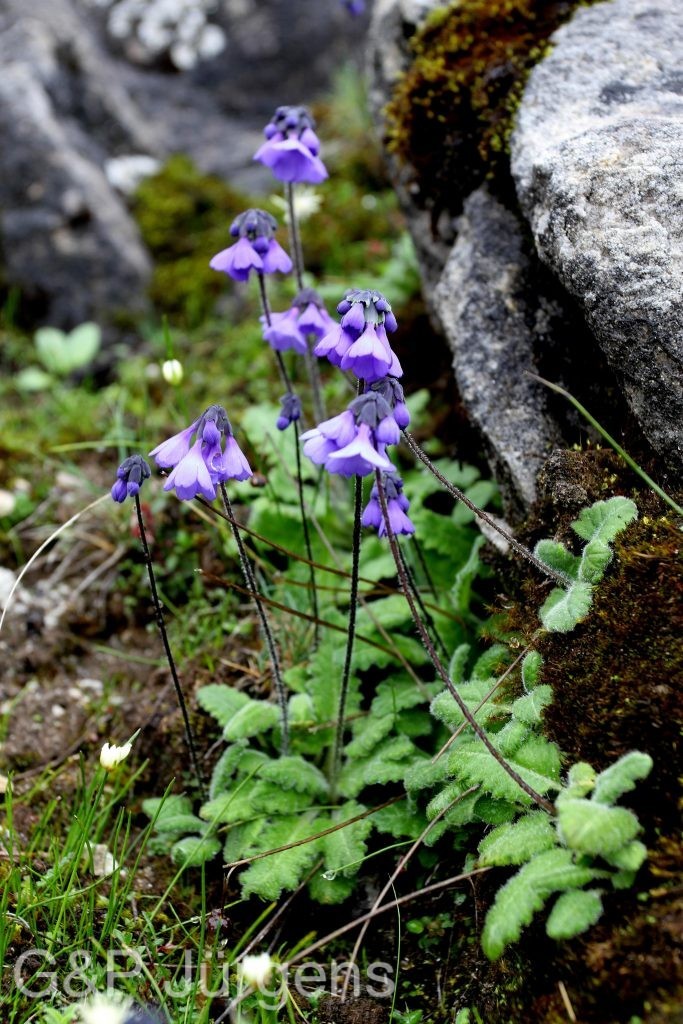
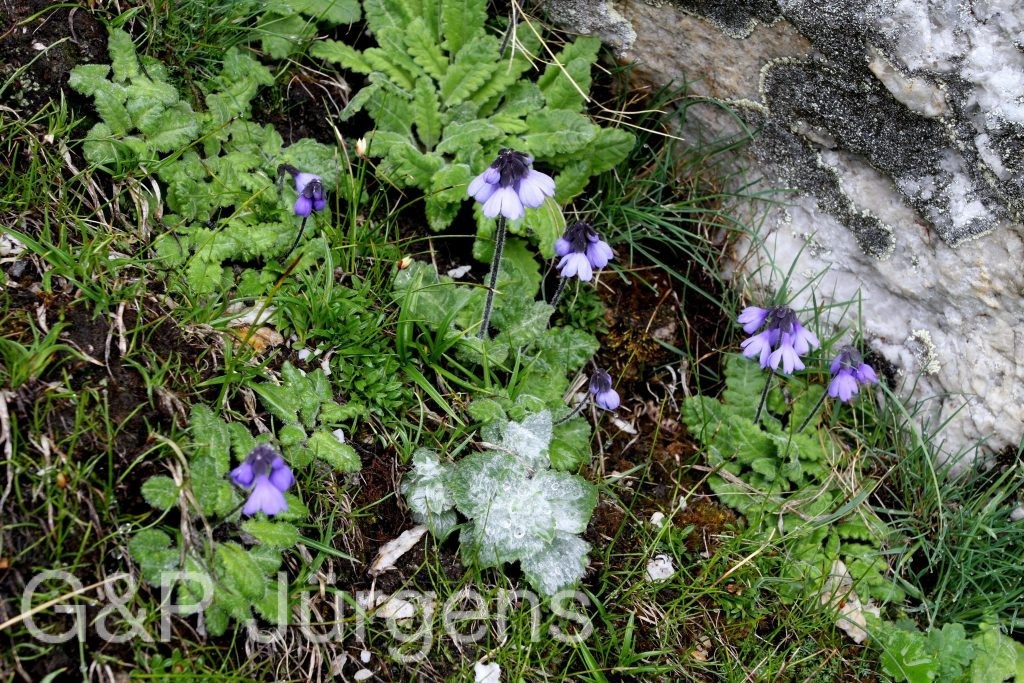
(G.Watt) Pax

BhutanPG2011 456
Bhutan Jule-Tso, 4000m June
BhutanPG2011 561 1
Bhutan Jule-Tso, 4000m June

Description

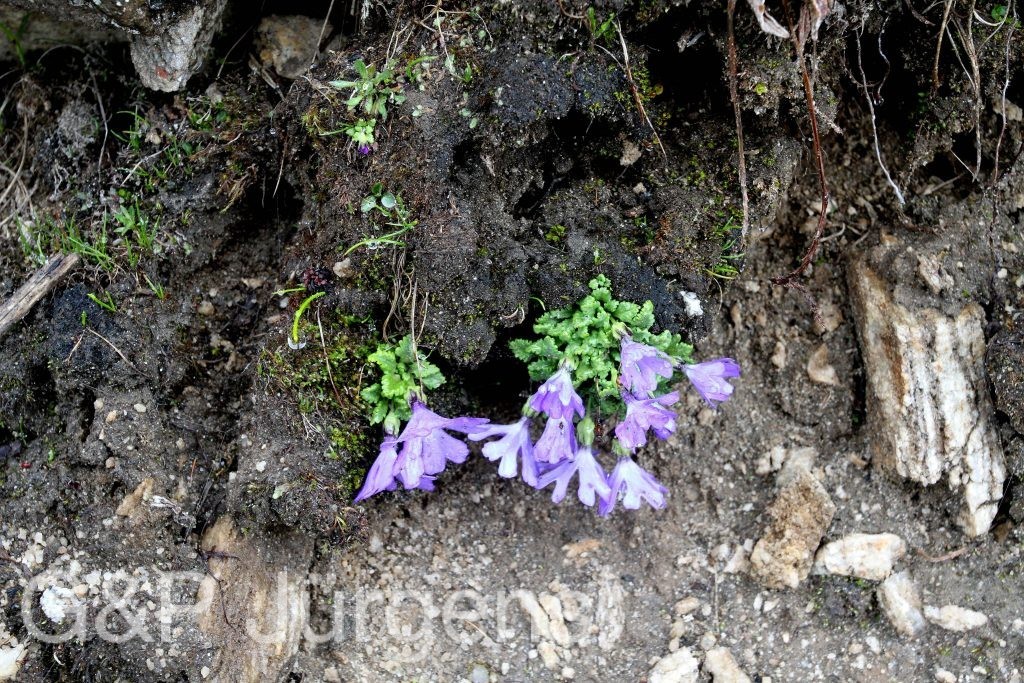
Primula tenuiloba is a diminutive cushion-forming primula of the high Eastern Himalaya, recorded from Nepal, India and Bhutan, with an outlying GBIF citation referable to Japan; the species is documented from some 92 occurrences. It is a plant of the upper alpine zone, occupying moist rocky ledges, gritty turf, screes and snowmelt-irrigated crevices well above the treeline, typically around 4,000 m and higher. The illustrated material was gathered at Jule-Tso in Bhutan at about 4,000 m in June, where it blooms in the brief early-summer window as the alpine slopes thaw.

It is a small, glabrous to farinose perennial herb forming compact tufts or low cushions from a short rootstock. The leaves are crowded in a basal rosette, the blades oblong-spathulate and, as the epithet implies, divided into narrow lobes or pinnatifid-toothed segments, often with a dusting of white or yellowish farina. The flowers are borne singly or in a small umbel on a short scape, occasionally almost sessile among the leaves; the corolla is rose-purple to violet with a contrasting yellow eye, the limb of five obcordate, emarginate lobes spreading from a slender tube. As in the genus the species is heterostylous, and the fruit is a small globose capsule.

Primula tenuiloba is placed in section Minutissimae, the dwarf, cushion-forming Himalayan primulas, characterised by tiny stature, farinose lobed leaves and short-scaped flowers, allying it with P. reptans and P. minutissima. Heterostyly enforces outcrossing by alpine insects. Restricted to a narrow high-altitude band and naturally localised, it is uncommon though not formally assessed; like other obligate alpines its snow-bed habitat is vulnerable to climatic warming.

Author: (G.Watt) Pax · Sources: POWO (Kew), GBIF, Flora of Bhutan, Annotated Checklist of the Flowering Plants of Nepal, Richards' Primula (monograph), Smith & Fletcher revision of Asiatic Primula

W.W.Sm.

Sikkim2011 353
Sikkim, Lada-La 3900m, June

Description

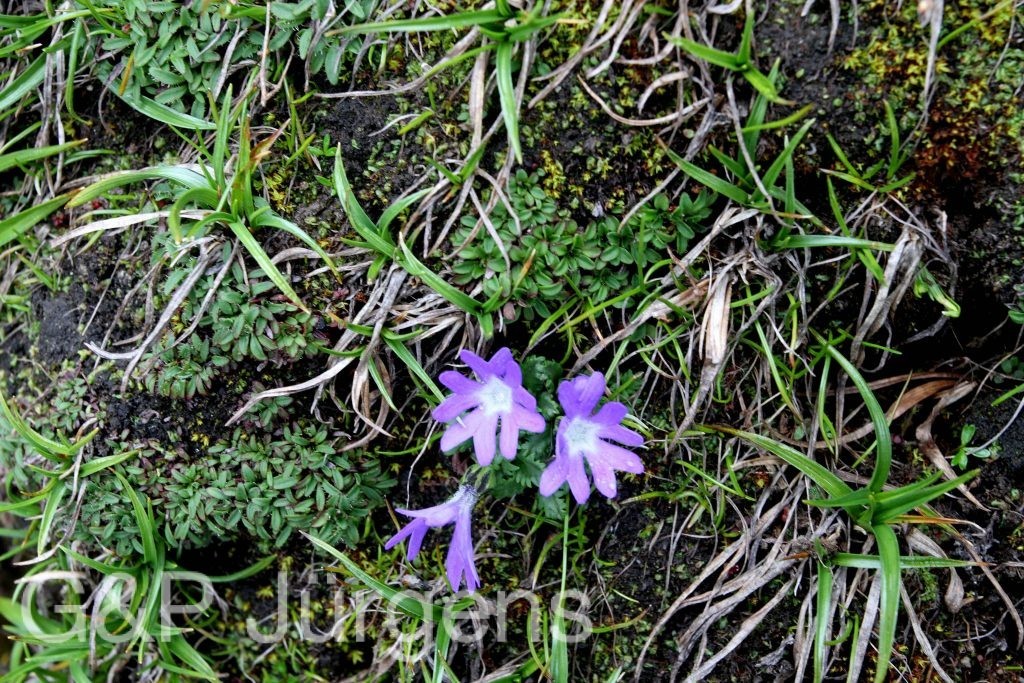
Primula tsariensis is an alpine perennial endemic to the eastern Himalaya, with a distribution centred on the borderlands of Bhutan, southern Xizang (Tibet) and adjacent NE India, and recorded from Sikkim, where the photographed plant was found near the Lada-La pass at about 3,900 m in June. GBIF documents this distribution across Bhutan (BT), China (CN) and India (IN) on the basis of roughly 67 occurrence records. It is a plant of the upper alpine zone, frequenting moist turf, scree margins and seepage slopes among dwarf rhododendron, typically between 3,800 and 4,500 m.

The species forms a small rosette-forming herb arising from a short rhizome with fibrous roots. The leaves are oblanceolate to spathulate, narrowed to a winged petiole, with a crenate to denticulate margin and an efarinose to thinly farinose surface. The slender scape bears a terminal umbel of few flowers; the calyx is tubular-campanulate and divided into narrow lobes, while the corolla is violet to purple-blue with a paler or yellowish eye, the limb of five obcordate, emarginate lobes spreading from a narrow tube. The species is heterostylous, producing pin and thrum forms, and the fruit is a small capsule shorter than or equalling the persistent calyx, dehiscing to release numerous angular seeds.

Primula tsariensis belongs to the section Petiolares, a complex and taxonomically intricate assemblage of Sino-Himalayan primulas distinguished by their farinose tissues and early-spring flowering close to the receding snow. Its narrow range across the Assam Himalaya and southern Tibet makes it a useful biogeographic marker of this high-rainfall sector. Although not formally assessed as threatened, such localised alpine endemics are inherently vulnerable to climate-driven upward shifts of the snowline and to habitat disturbance from grazing.

Author: W.W.Sm. · Sources: POWO (Kew), Flora of China Vol. 15, Flora of Bhutan Vol. 2, GBIF, John Richards: Primula (2003)

Balf.f. & R.E.Cooper

BhutanPG2011 604 01 1
Bhutan Jule-Tso, 4200m June
BhutanPG2011 563 01
Bhutan Jule-Tso, 4200m June
Also: Eriopyton wallichii Benth.

Description

Primula umbratilis is a high-alpine primrose endemic to Bhutan, a narrow-range species known only from that country, where all 33 GBIF records are concentrated. It is a plant of the cool, moist alpine zone, growing among rocks, in damp turf, and in the sheltered shade implied by its epithet (umbratilis, 'of shady places'), often near snowmelt and seepage. The illustrated material comes from Jule-Tso at about 4200 m in June, a glacial lake basin in the high alpine where the species flowers shortly after snow retreat alongside other cushion and rosette plants of the moist eastern Himalayan tops.

The plant is a small herbaceous perennial forming a basal rosette of leaves that are commonly farinose, with a mealy white or yellowish powder on the undersurface and within the flowers, a frequent feature of the genus. From the rosette arises a slender scape bearing an umbel of a few stalked flowers. The corolla is heterostylous, salverform with a slender tube expanding into a flat limb of five obcordate, notched lobes, the colour ranging through pink to violet with a contrasting eye; the calyx is tubular and the fruit a small capsule dehiscing to release numerous minute seeds.

Primula is one of the largest genera of the northern temperate flora, and the Sino-Himalayan region is its centre of diversity, particularly in the high mountains of Bhutan and adjacent China. The historical synonym Eriopyton wallichii Benth. noted in the caption reflects an early generic placement now subsumed under Primula. As a single-country endemic restricted to the alpine zone, P. umbratilis is potentially vulnerable to climate-driven upward range contraction and to grazing pressure, warranting monitoring despite its remote habitat.

Author: Balf.f. & R.E.Cooper · Sources: POWO (Kew), GBIF, Flora of Bhutan, The Genus Primula (Richards), Primulas of the Himalaya

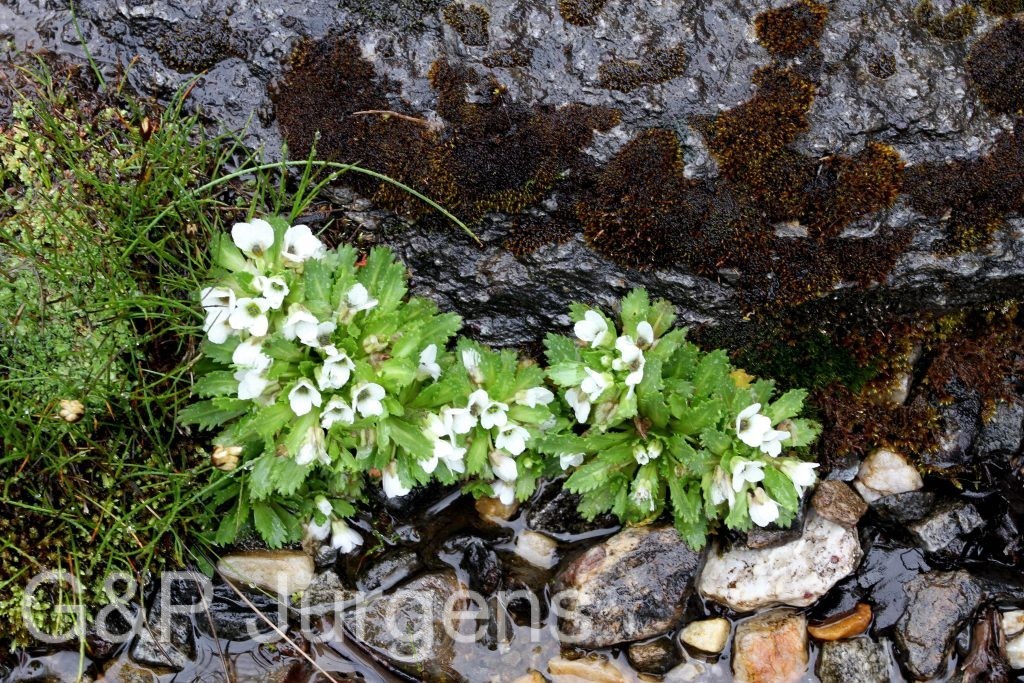
Jafri 

BhutanPG2011 253
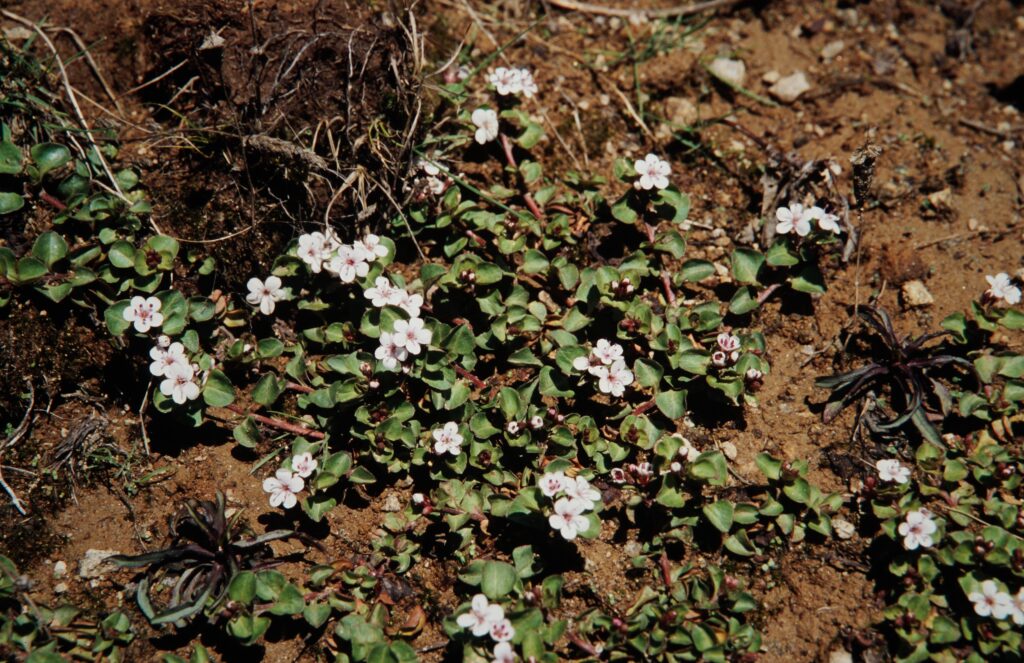
Bhutan Jule-Tso, 4000m June

Description

Pycnoplinthopsis bhutanica is a high-alpine crucifer endemic to the eastern Himalaya, recorded from Bhutan, Nepal and India, and one of the rarer plants in this group with only about 33 GBIF occurrences. It is confined to open alpine habitats — stony turf, screes, moraines and rock crevices — at very high elevations, generally around and above 4000 m. The plant photographed at Jule-Tso in Bhutan at about 4000 m in June represents its characteristic setting in cold, well-drained alpine ground near glacial lakes, flowering in early summer as the snow retreats.

The species is a small, cushion- or rosette-forming perennial herb with a stout, often woody taproot crowned by a dense tuft of leaves. The leaves are entire to slightly toothed, somewhat fleshy and crowded, frequently appressed to the ground. The flowers are borne close to the rosette on very short pedicels, with four white to pale lilac or pinkish petals arranged in the cruciform pattern typical of the family and six tetradynamous stamens. The fruit is a short silicula characteristic of the genus, retaining a persistent style and dehiscing to release the seeds.

Pycnoplinthopsis is a small Himalayan genus closely allied to Pycnoplinthus, both being dwarf, cushion-forming high-alpine Brassicaceae adapted to the harsh conditions of the upper alpine and subnival zone. The compact rosette habit, woody rootstock and reduced inflorescence are adaptations to cold, wind exposure and a brief growing season. As a narrow eastern Himalayan endemic of restricted, fragile high-elevation habitats, it is of biogeographic and conservation interest and potentially vulnerable to climate-driven contraction of the alpine zone, although it has not been formally assessed.

Author: Jafri · Sources: POWO (Kew), GBIF, Flora of China, Flora of Bhutan, Annotated Checklist of the Flowering Plants of Nepal, Al-Shehbaz systematics of Brassicaceae

Freyn

Sikkim2011 55
Sikkim Vista-valley 3800m, June
Sikkim2003 300 P429
Sikkim Saniti-Lake 4300m August

Description

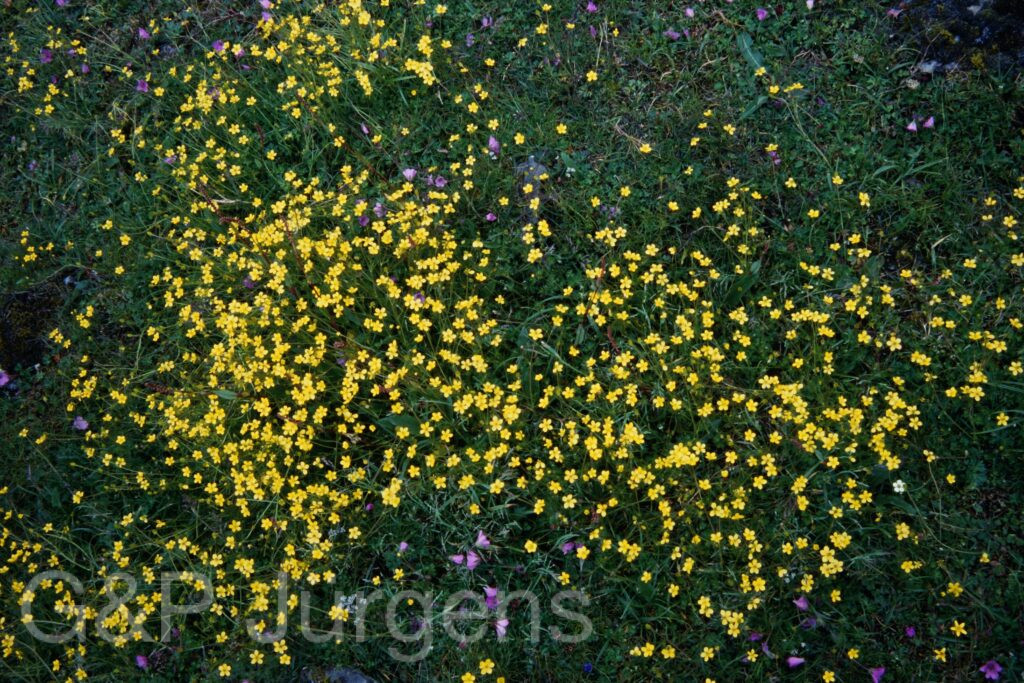
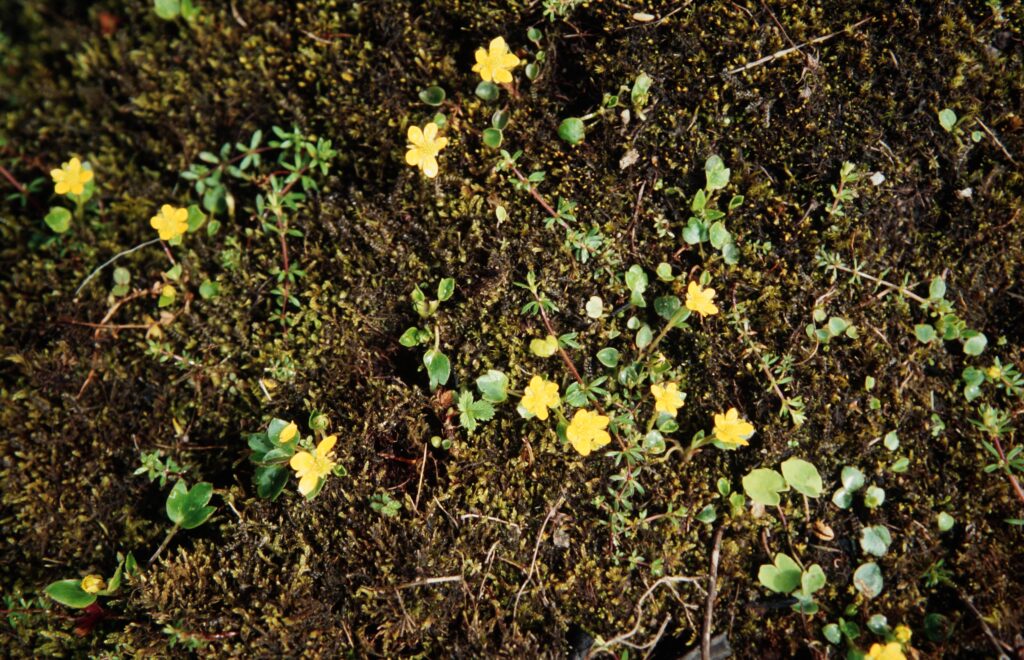
Ranunculus brotherusii is a widespread alpine buttercup of Central Asia and the Himalaya, recorded from China, Nepal, India, Bhutan, Pakistan, Mongolia, Russia and Kyrgyzstan, with additional collections in European herbaria. Its roughly 1756 georeferenced records reflect a common and broadly distributed high-mountain species. It grows in damp alpine meadows, marshy ground, streamsides and snow-flush hollows, typically at about 3000-5000 m. The Sikkim gatherings cited above, from the Vista valley at 3800 m in June and from Saniti Lake at 4300 m in August, are characteristic, the species flowering through the short alpine summer on moist, well-watered turf.

It is a small, tufted perennial herb arising from a fibrous root system, the stems erect to ascending and sparsely appressed-hairy. The basal leaves are long-petiolate with reniform to orbicular blades that are three-lobed or further divided into crenate segments, while the cauline leaves are smaller and more deeply cut, becoming sessile above. The flowers are solitary or few, with five greenish, often pubescent sepals and five glossy yellow obovate petals each bearing a small nectary scale. The numerous stamens surround a globose to ovoid head of carpels, the fruit an aggregate of small glabrous achenes with a short curved or hooked beak.

Ranunculus is a large, cosmopolitan genus particularly diverse in cold temperate and alpine regions, and R. brotherusii belongs to its assemblage of small-flowered Asian alpine buttercups. Like its relatives it contains acrid protoanemonin compounds rendering it unpalatable and toxic to livestock, which favours its persistence on grazed pasture. Pollination is by generalist alpine flies and bees. Its extensive transboundary range and ecological tolerance place it well outside any conservation concern.

Author: Freyn · Sources: POWO (Kew), GBIF, Flora of China, Flora of Pakistan, Ranunculus of Central Asia monograph

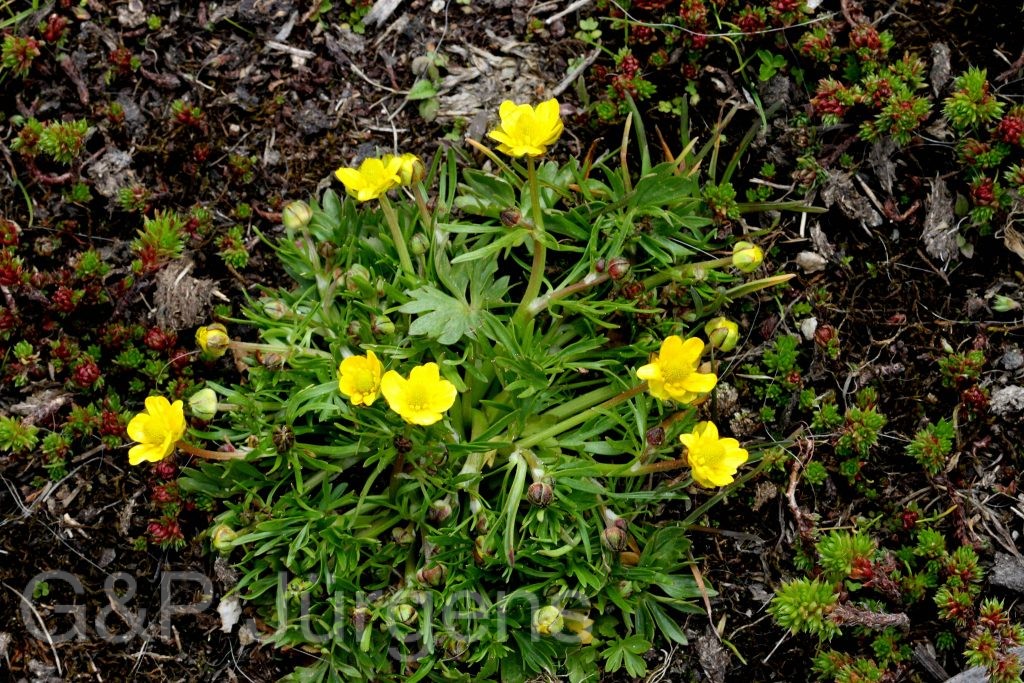
Hand.-Mazz.

Sikkim2011 233
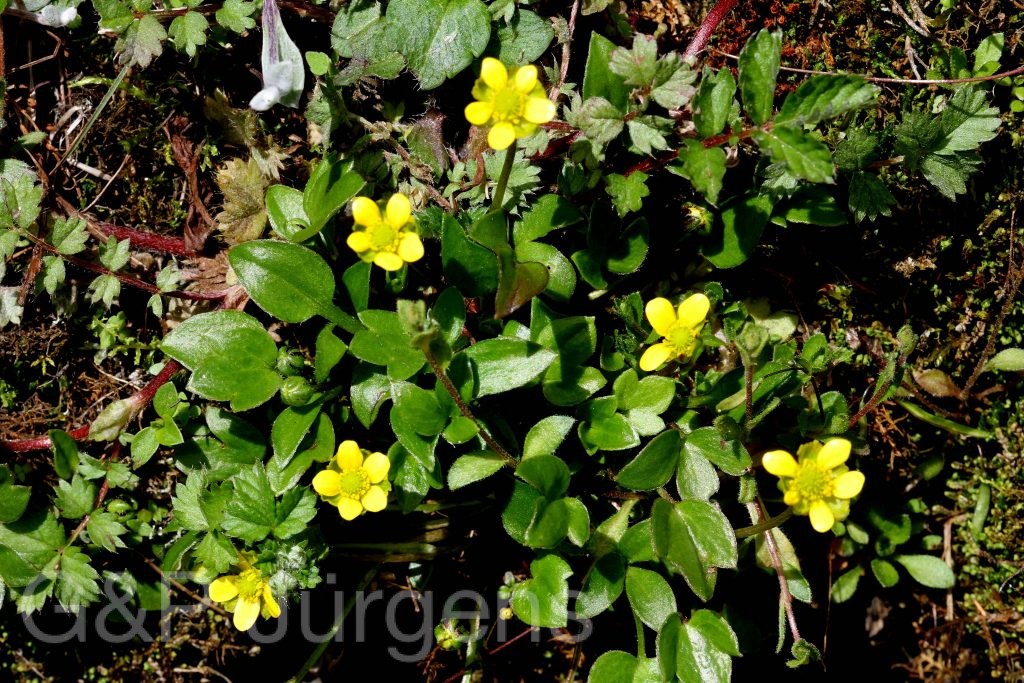
Sikkim Yumthang 3700m, June
Nepal 2001 304 ergebnis ergebnis
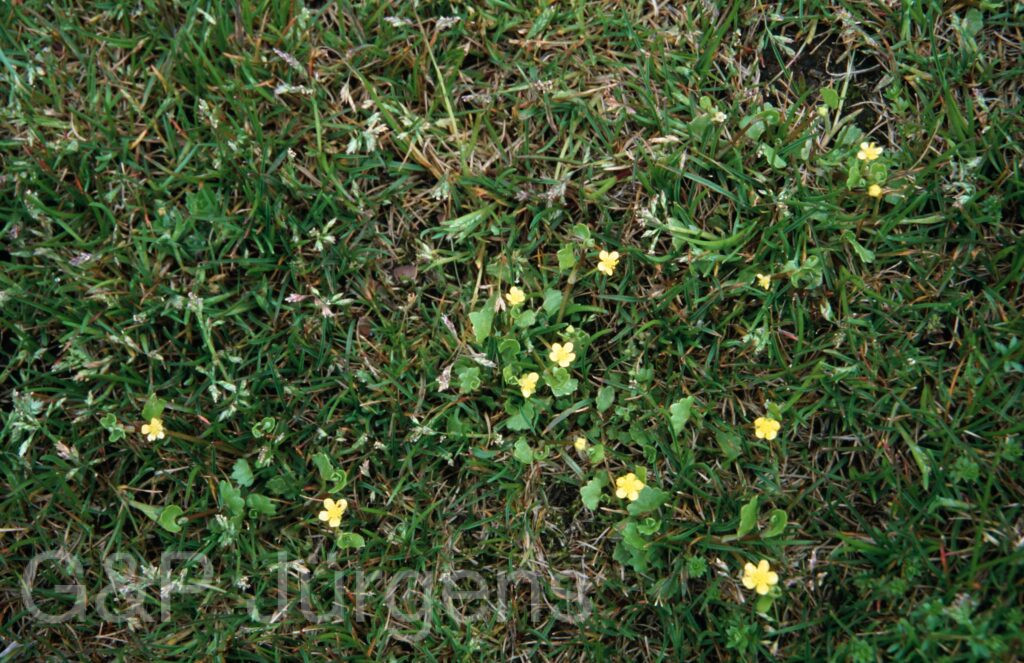
Nepal (Gorkha) Lambra Kharka 3200m, May

Description

Ranunculus microphyllus is a Sino-Himalayan alpine buttercup whose core GBIF range (c. 399 occurrences) lies in China, Nepal, India and Bhutan, with scattered records elsewhere reflecting cultivated or misdetermined material. It grows in open alpine turf, moist meadows, snowmelt flushes, damp rock ledges and stream banks, typically between about 3000 and 4200 m. The cited localities—Yumthang in Sikkim at 3700 m in June, Lambra Kharka in the Nepalese Gorkha at 3200 m, and Sandakphu in West Bengal at 3200 m, both in May—illustrate its spring-to-early-summer flowering across moist, cool, high-elevation grasslands and seepage of the central and eastern Himalaya.

It is a small, tufted perennial herb, the stems low and ascending, often somewhat hairy, arising from a fibrous-rooted base. As the epithet implies the leaves are small; the basal leaves are petiolate and shallowly to deeply three-lobed or crenate, while the stem leaves are reduced and more dissected. The flowers are solitary or few, with the typical buttercup plan: five green sepals, five glossy bright-yellow petals each with a basal nectary, and numerous spirally arranged stamens and free carpels. The fruit is a globose head of small, slightly beaked achenes.

Described by Handel-Mazzetti, R. microphyllus belongs to the large, taxonomically intricate genus Ranunculus, in which the small-leaved Himalayan alpines form a closely related and often confused complex. It is locally common and not of conservation concern, though confined to moist high-altitude habitats sensitive to warming. Ecologically it is characteristic of snowmelt-fed alpine meadows, its open flowers offering accessible nectar and pollen to flies and other high-altitude insects.

Author: Hand.-Mazz. · Sources: POWO (Kew), GBIF, Flora of China, Annotated Checklist of the Flowering Plants of Nepal, Tamura monograph of Ranunculaceae

Hook. f. & Thomson

BhutanPG2011 778 01 01
Bhutan Chele-La, 3900m July
Sikkim2003 485 P673
Sikkim Lachung Valley 3500m August

Description

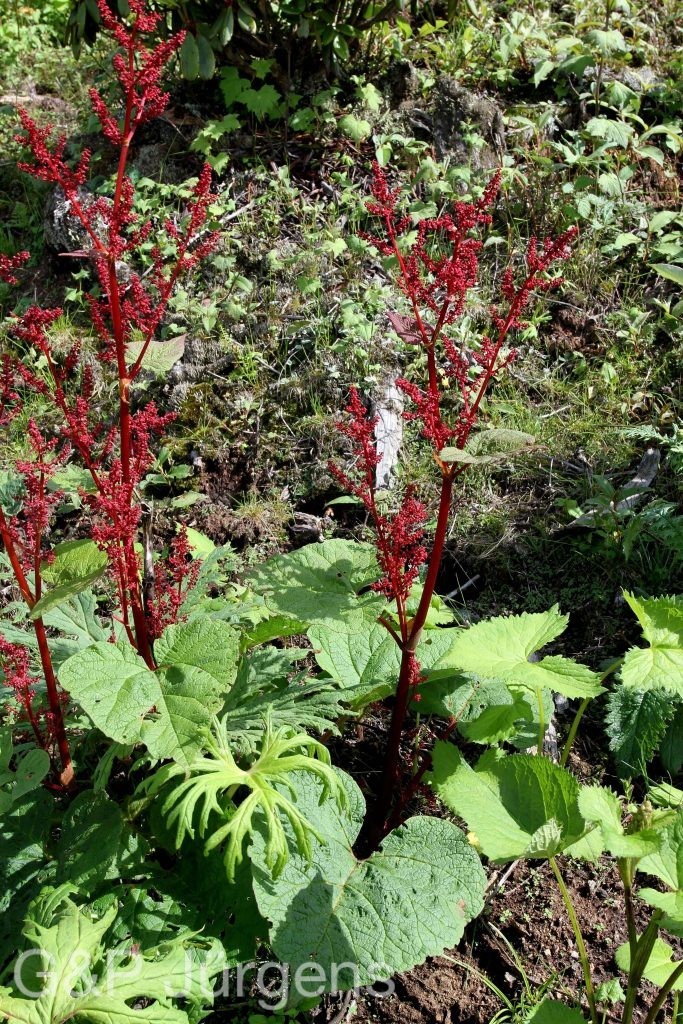
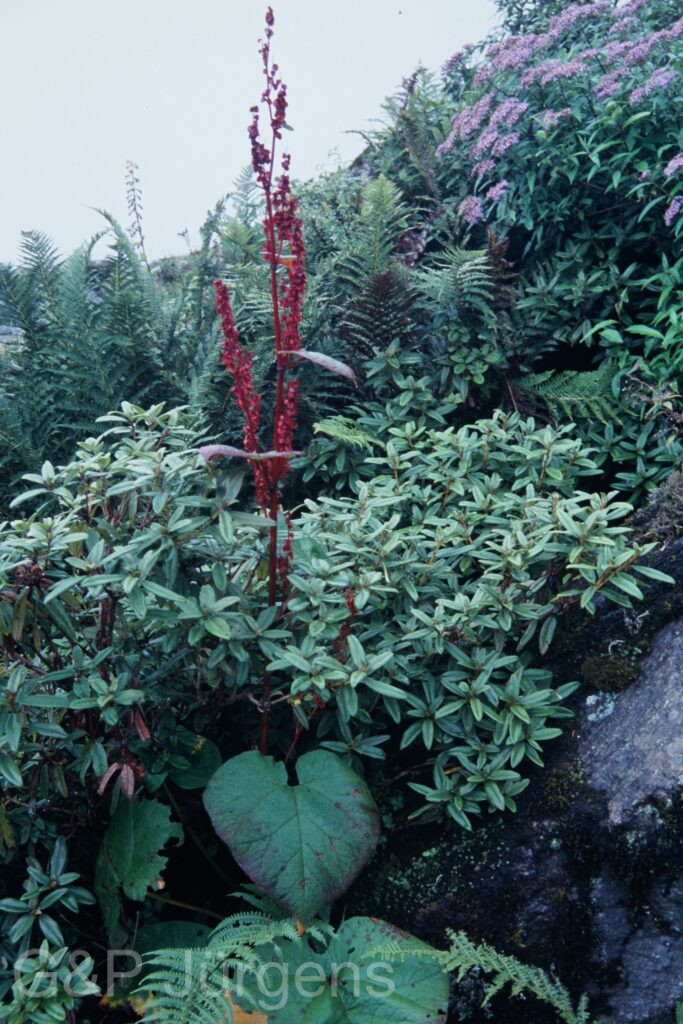
Rheum acuminatum is a stout perennial wild rhubarb of the eastern and central Himalaya, distributed through China, Nepal, India, Bhutan and Myanmar, with some 370 documented records. It is a plant of subalpine and alpine slopes, rocky meadows, open shrubberies and stream margins, generally growing between 3000 and 4300 m. The illustrated plants come from Chele-La in Bhutan at 3900 m in July and the Lachung Valley in Sikkim at 3500 m in August, spanning the high-summer flowering and fruiting period characteristic of the species at these elevations.

The plant arises from a thick woody rhizome and produces erect, often reddish, hollow stems up to a metre or more tall. The basal leaves are large, long-petiolate and broadly ovate-cordate with an acuminate apex giving the epithet, the blade more or less glabrous above and with prominent venation; an ochrea sheaths the stem at each node. The inflorescence is a tall, branched panicle bearing numerous small flowers with a coloured perianth of six segments, white to greenish or reddish. The fruit is a broadly winged triangular achene (a three-angled, three-winged nutlet) adapted to wind and water dispersal.

The genus Rheum reaches its richest diversity in the Himalaya and the Qinghai-Tibetan plateau, where high-altitude rhubarbs show striking adaptations to cold, exposed habitats. R. acuminatum lacks the inflated bracts of the alpine glasshouse rhubarbs but shares the family's ochreate, trigonous-fruited architecture. The rhizomes have a history of local medicinal use, and although the species is widespread and not threatened, related wild rhubarbs are subject to harvesting pressure across the region.

Author: Hook. f. & Thomson · Sources: POWO (Kew), GBIF, Flora of China, Flora of Bhutan, Annotated Checklist of the Flowering Plants of Nepal, Losina-Losinskaja revision of Rheum