
(G.Watt) Pax
Description
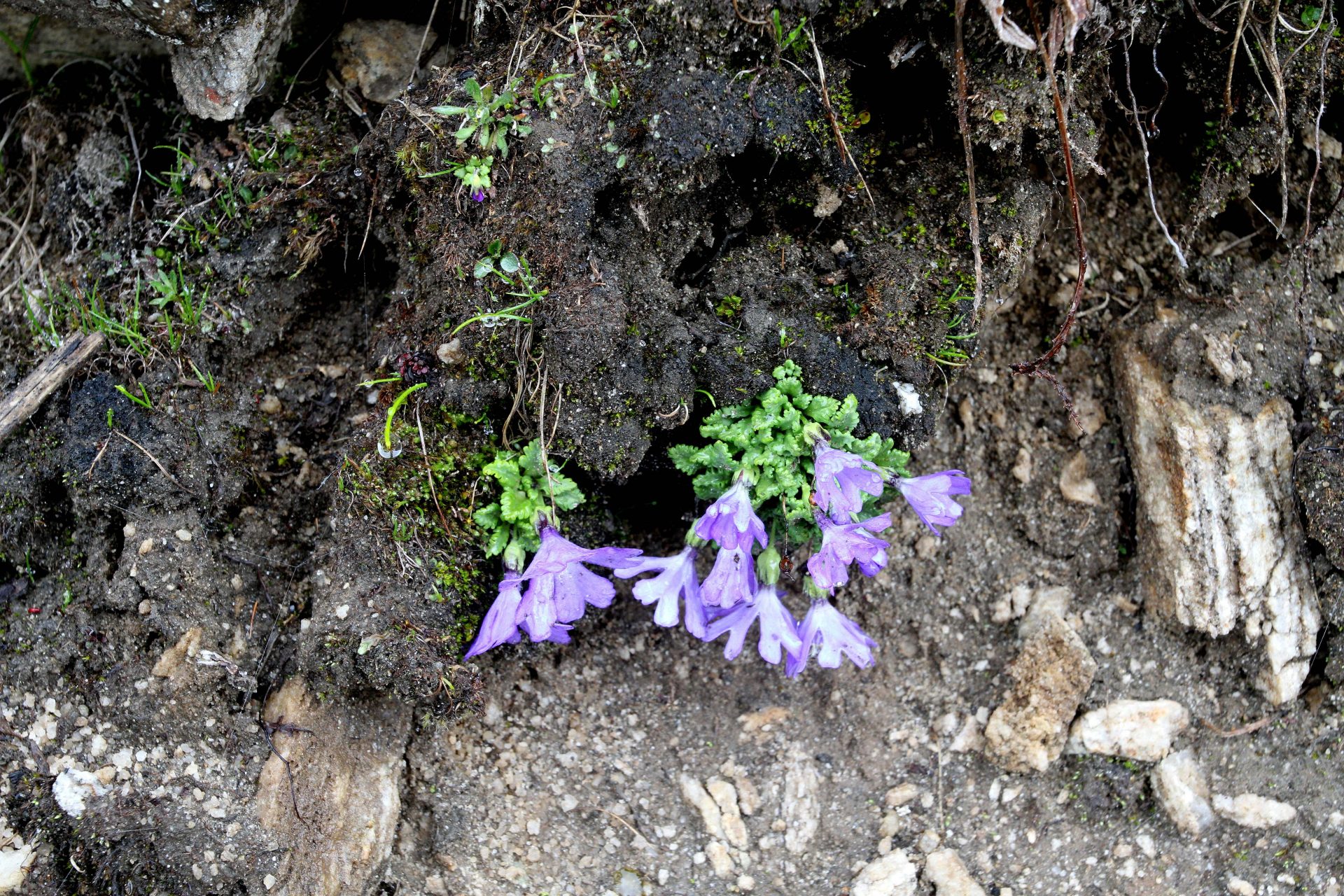
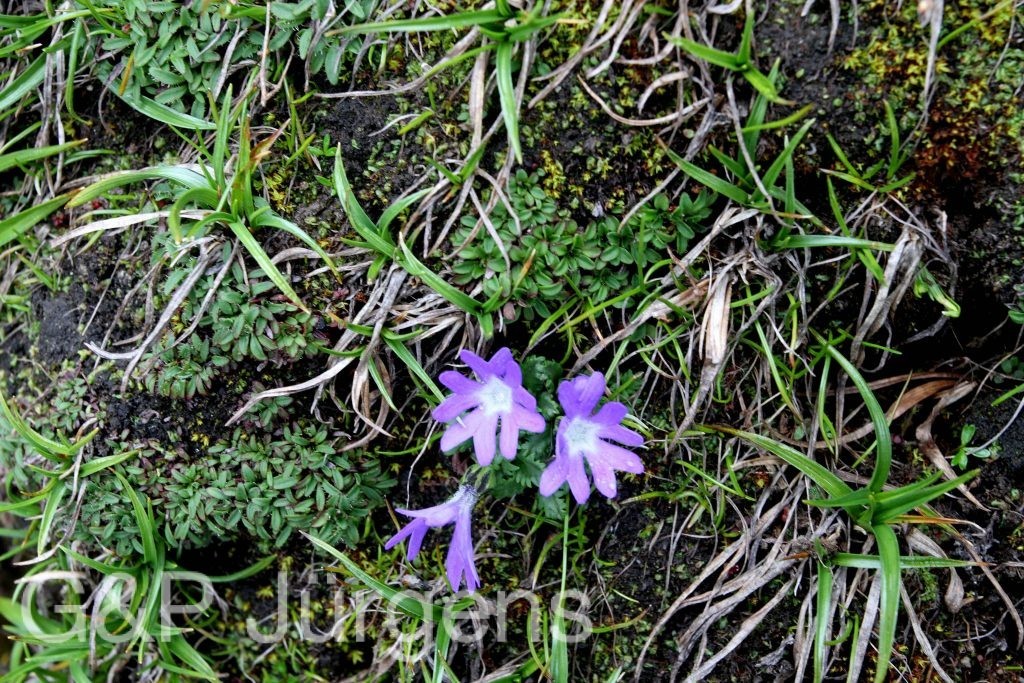
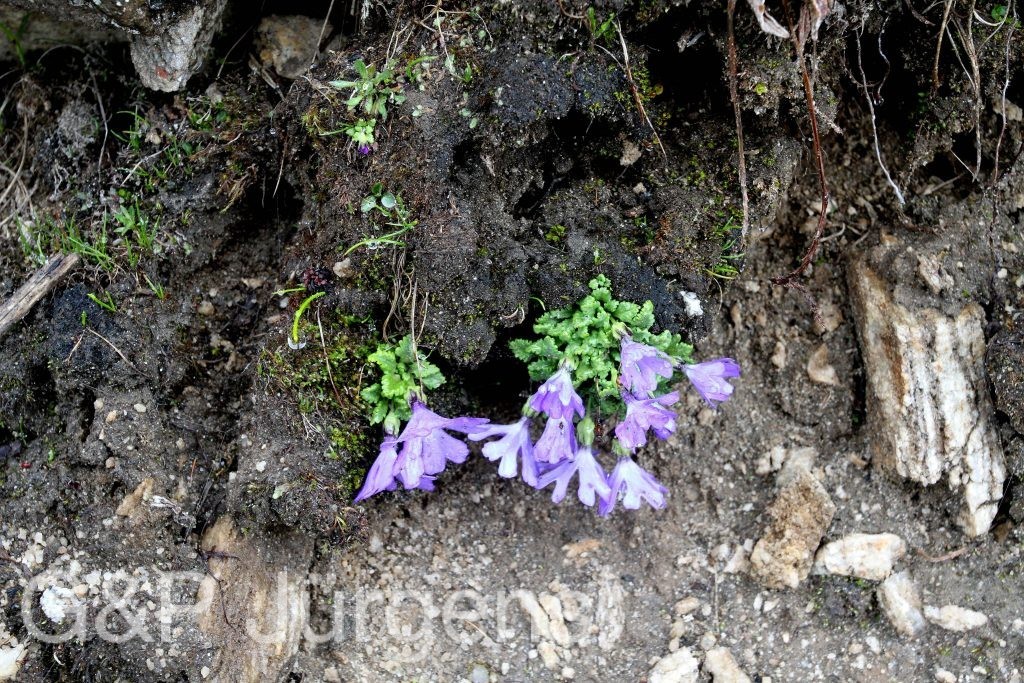
Primula tenuiloba is a diminutive cushion-forming primula of the high Eastern Himalaya, recorded from Nepal, India and Bhutan, with an outlying GBIF citation referable to Japan; the species is documented from some 92 occurrences. It is a plant of the upper alpine zone, occupying moist rocky ledges, gritty turf, screes and snowmelt-irrigated crevices well above the treeline, typically around 4,000 m and higher. The illustrated material was gathered at Jule-Tso in Bhutan at about 4,000 m in June, where it blooms in the brief early-summer window as the alpine slopes thaw.
It is a small, glabrous to farinose perennial herb forming compact tufts or low cushions from a short rootstock. The leaves are crowded in a basal rosette, the blades oblong-spathulate and, as the epithet implies, divided into narrow lobes or pinnatifid-toothed segments, often with a dusting of white or yellowish farina. The flowers are borne singly or in a small umbel on a short scape, occasionally almost sessile among the leaves; the corolla is rose-purple to violet with a contrasting yellow eye, the limb of five obcordate, emarginate lobes spreading from a slender tube. As in the genus the species is heterostylous, and the fruit is a small globose capsule.
Primula tenuiloba is placed in section Minutissimae, the dwarf, cushion-forming Himalayan primulas, characterised by tiny stature, farinose lobed leaves and short-scaped flowers, allying it with P. reptans and P. minutissima. Heterostyly enforces outcrossing by alpine insects. Restricted to a narrow high-altitude band and naturally localised, it is uncommon though not formally assessed; like other obligate alpines its snow-bed habitat is vulnerable to climatic warming.
Author: (G.Watt) Pax · Sources: POWO (Kew), GBIF, Flora of Bhutan, Annotated Checklist of the Flowering Plants of Nepal, Richards' Primula (monograph), Smith & Fletcher revision of Asiatic Primula