
Balf.f. & R.E.Cooper
Also: Eriopyton wallichii Benth.
Description
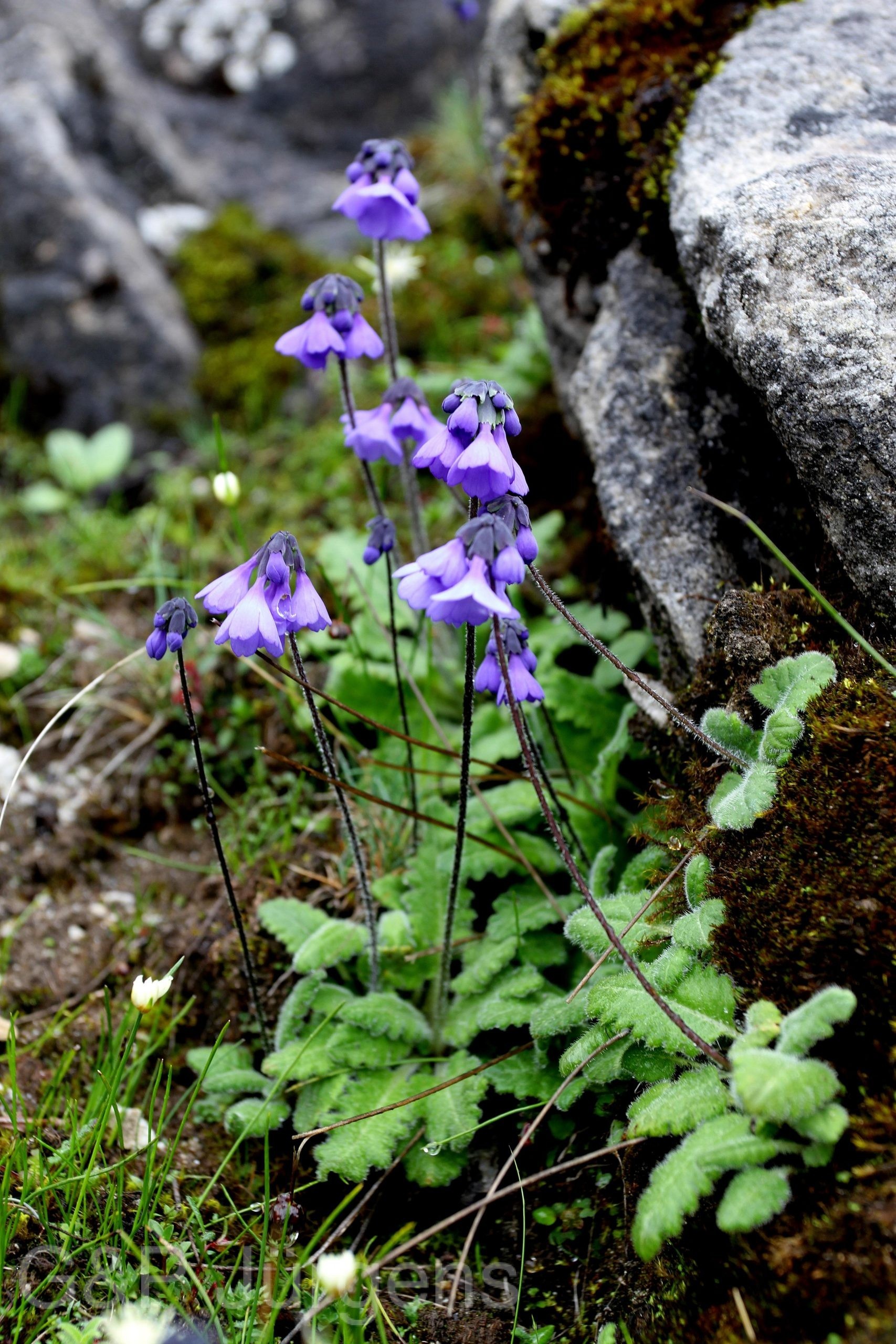
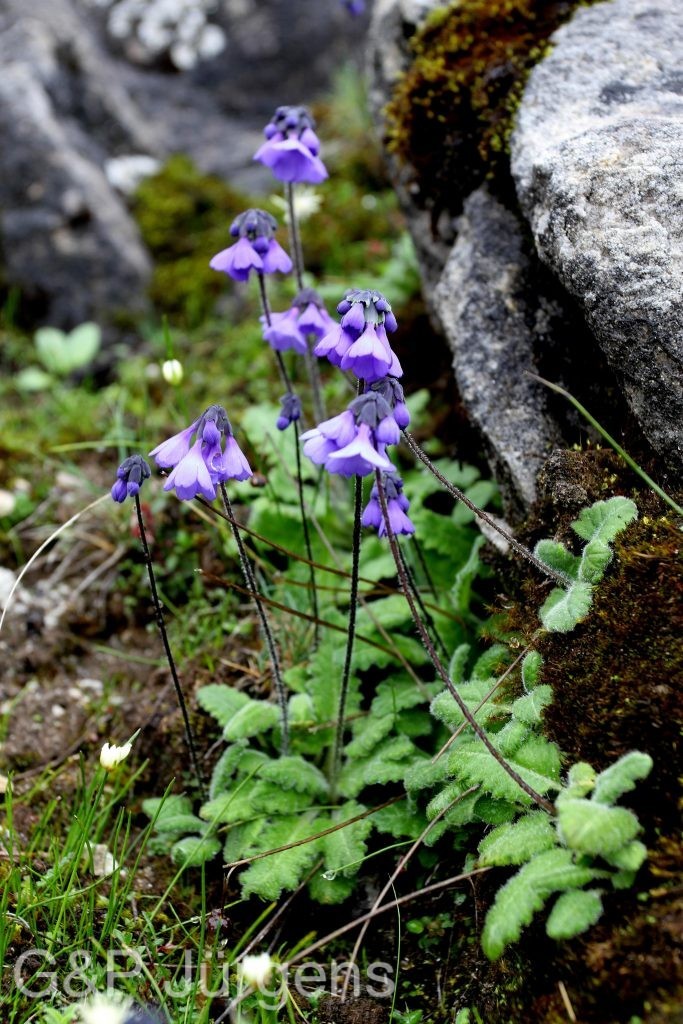
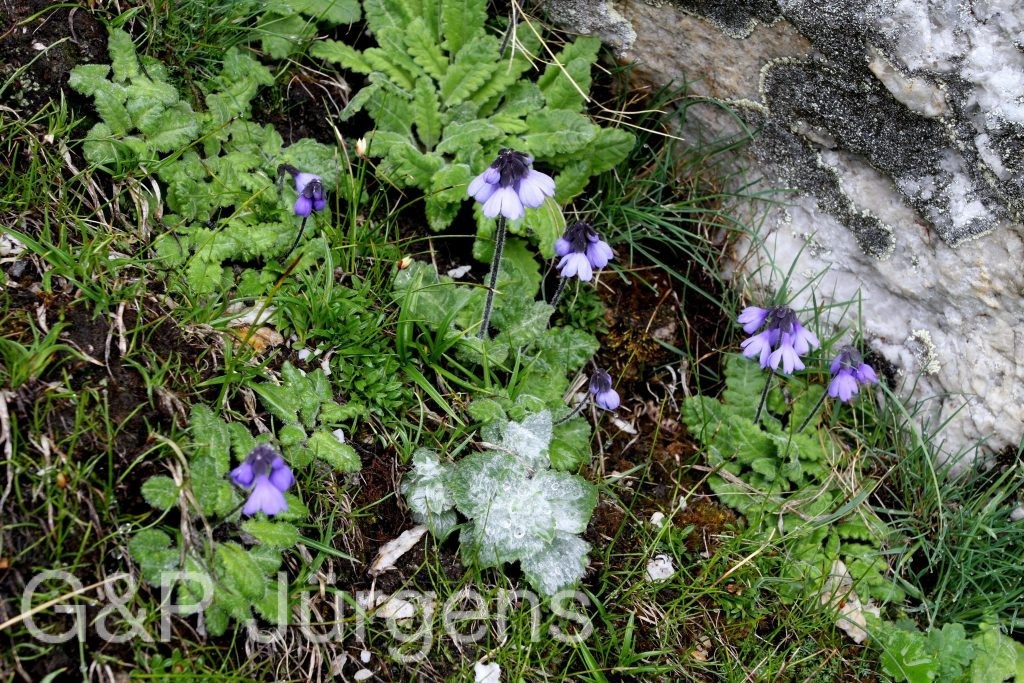
Primula umbratilis is a high-alpine primrose endemic to Bhutan, a narrow-range species known only from that country, where all 33 GBIF records are concentrated. It is a plant of the cool, moist alpine zone, growing among rocks, in damp turf, and in the sheltered shade implied by its epithet (umbratilis, 'of shady places'), often near snowmelt and seepage. The illustrated material comes from Jule-Tso at about 4200 m in June, a glacial lake basin in the high alpine where the species flowers shortly after snow retreat alongside other cushion and rosette plants of the moist eastern Himalayan tops.
The plant is a small herbaceous perennial forming a basal rosette of leaves that are commonly farinose, with a mealy white or yellowish powder on the undersurface and within the flowers, a frequent feature of the genus. From the rosette arises a slender scape bearing an umbel of a few stalked flowers. The corolla is heterostylous, salverform with a slender tube expanding into a flat limb of five obcordate, notched lobes, the colour ranging through pink to violet with a contrasting eye; the calyx is tubular and the fruit a small capsule dehiscing to release numerous minute seeds.
Primula is one of the largest genera of the northern temperate flora, and the Sino-Himalayan region is its centre of diversity, particularly in the high mountains of Bhutan and adjacent China. The historical synonym Eriopyton wallichii Benth. noted in the caption reflects an early generic placement now subsumed under Primula. As a single-country endemic restricted to the alpine zone, P. umbratilis is potentially vulnerable to climate-driven upward range contraction and to grazing pressure, warranting monitoring despite its remote habitat.
Author: Balf.f. & R.E.Cooper · Sources: POWO (Kew), GBIF, Flora of Bhutan, The Genus Primula (Richards), Primulas of the Himalaya