Tag:

Alpine (>3500 m)

Maxim.

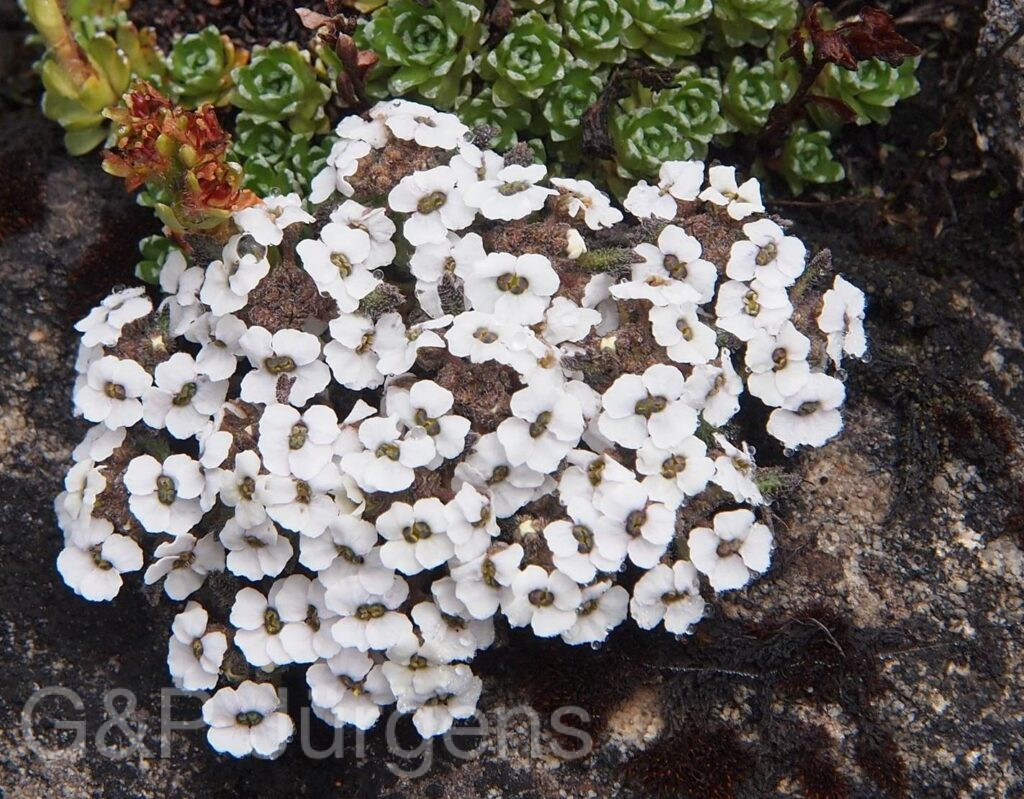
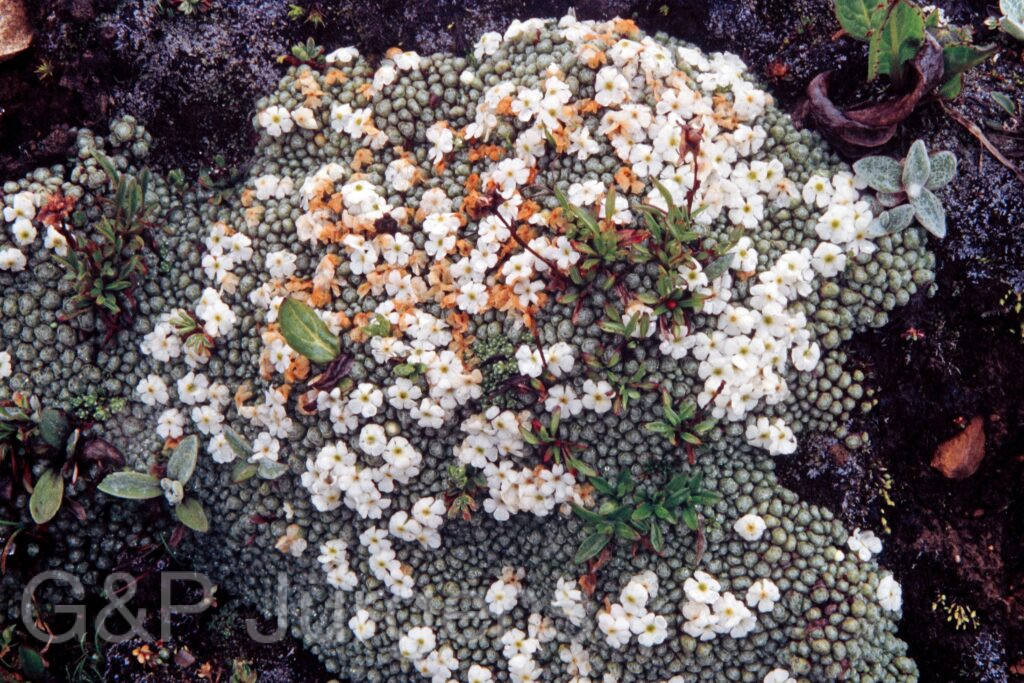
Nepal 99 622 2 ergebnis
West-Nepal Kagmara-La 4550m, July

Description

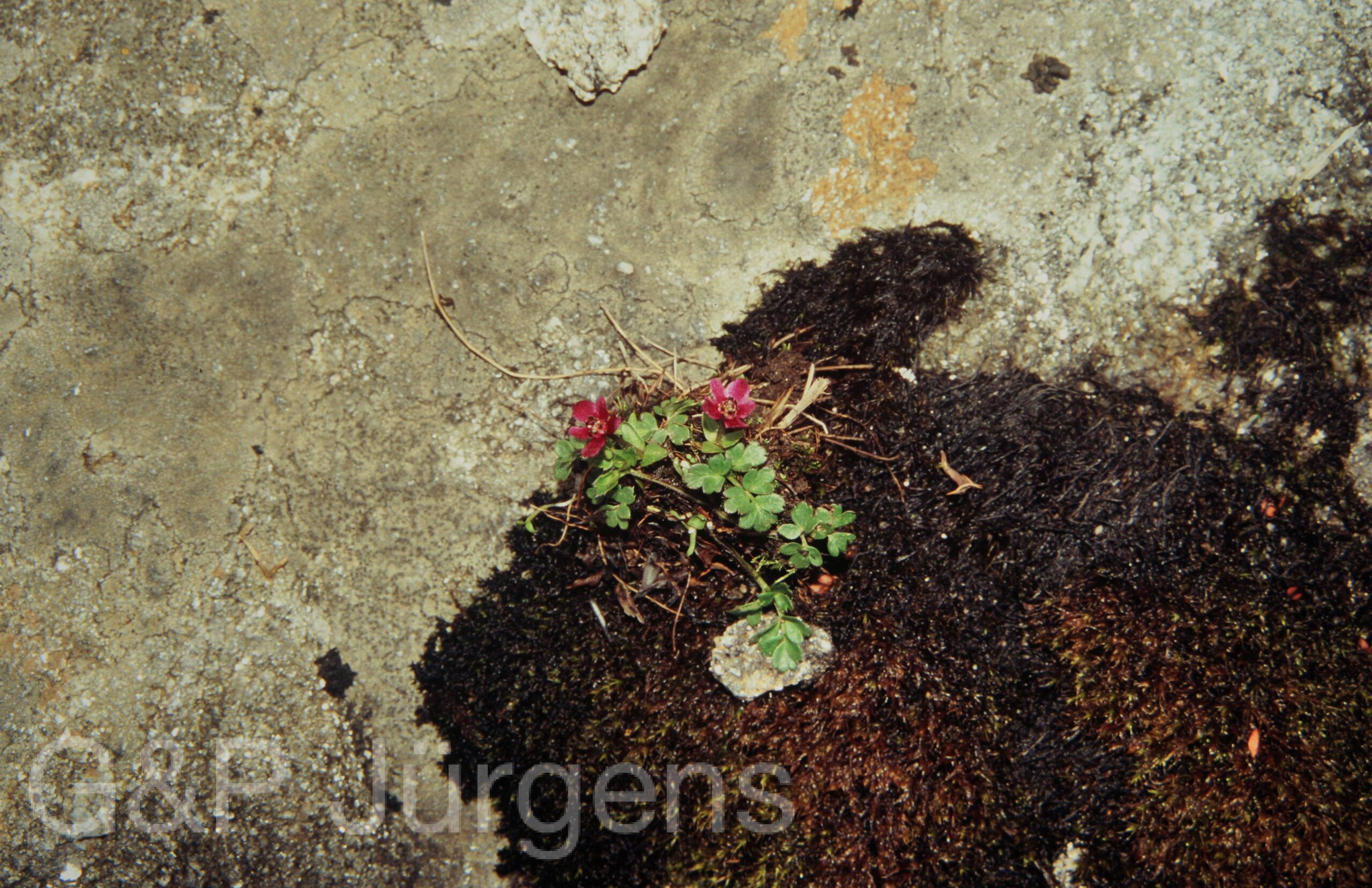
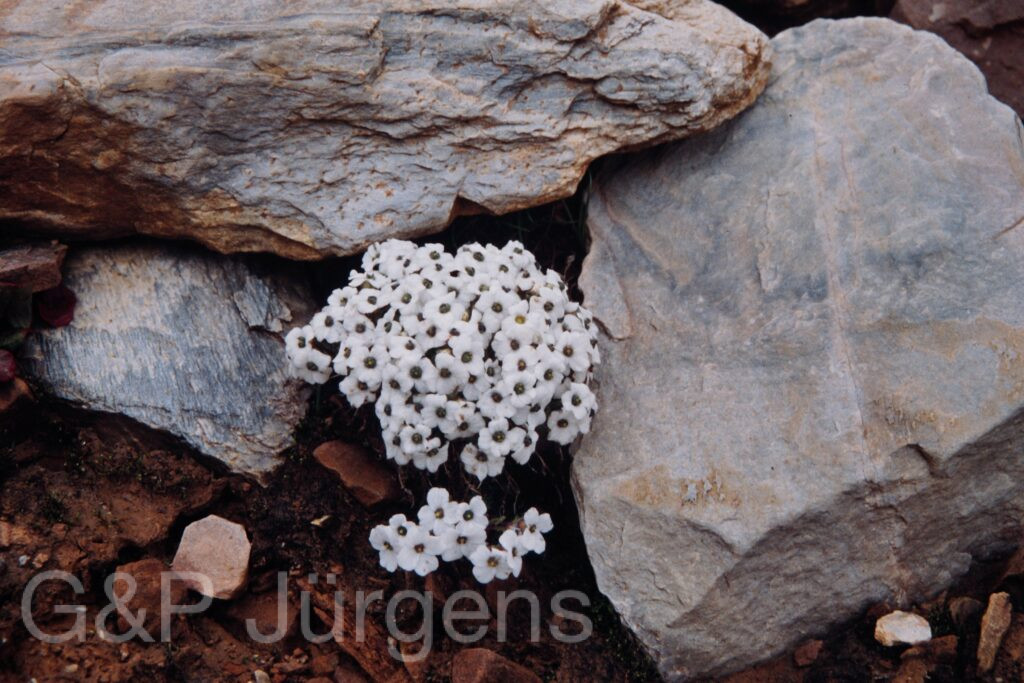
Androsace tapete Maxim. is a cushion-forming rock-jasmine of the high Himalaya and Tibetan plateau, documented by some 579 records from China, Nepal, India and Bhutan. It is a true subnival specialist, growing on exposed gravelly and rocky slopes, screes, moraines and stony alpine flats, typically between about 4000 and 5500 m. The plant photographed at the Kagmara-La in West Nepal at 4550 m in July epitomises its habitat: a wind-blasted, intensely irradiated, frost-prone pass where it forms tight hemispherical cushions hugging the substrate.

The species is a compact, perennial, evergreen cushion plant built from densely packed columnar shoots, each terminating in a small rosette of imbricate, oblong-spathulate leaves clothed in long white hairs that trap warmth and reduce desiccation. Dead leaves are retained internally, packing the cushion into a firm dome (the epithet "tapete" meaning carpet). The flowers are solitary, sessile or nearly so among the rosette leaves, with a small gamopetalous corolla, the five lobes white to pink with a yellow or reddish eye, borne over a short tube. The fruit is a small few-seeded capsule largely enclosed within the persistent calyx.

Androsace tapete belongs to section Aretia (the aretioid cushion androsaces), a group whose extreme cushion architecture represents convergent adaptation to the cold, dry, high-radiation conditions of the world's highest vegetated terrain. The cushion modifies its own microclimate, ameliorating temperature and moisture and often facilitating other alpine species. Restricted to remote high-altitude habitats and slow-growing, such cushion plants are sensitive to climate warming and trampling, although A. tapete remains widespread and is not formally assessed.

Author: Maxim. · Sources: POWO (Kew), GBIF, Flora of China, Flora of Nepal, monograph of Androsace (sect. Aretia), Smith & Lowe's cushion Androsace studies
(Hook.f. & Thomson) Holub

Bh09 114 G203
Bhutan Chele-La, 3500m June
Bh09 159 G282
Bhutan Chele-La, 4000m June
Nepal 95 173 P282 ergebnis
Nepal Rupien La 3850m October
Bhutan2012 273
Bhutan Dochu-La 3500m, September

Description

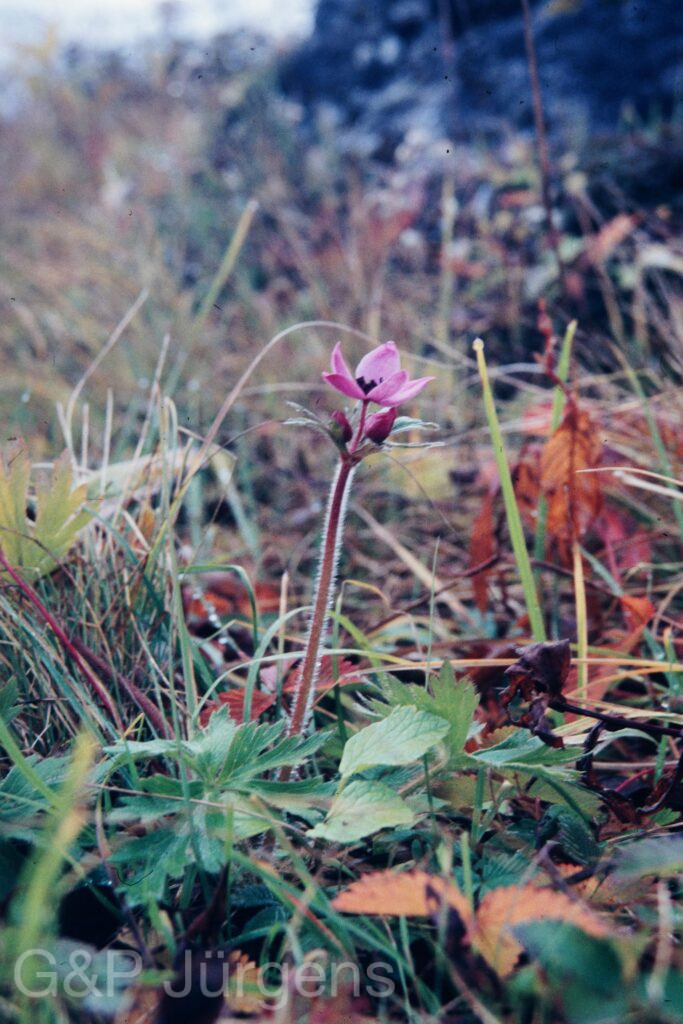
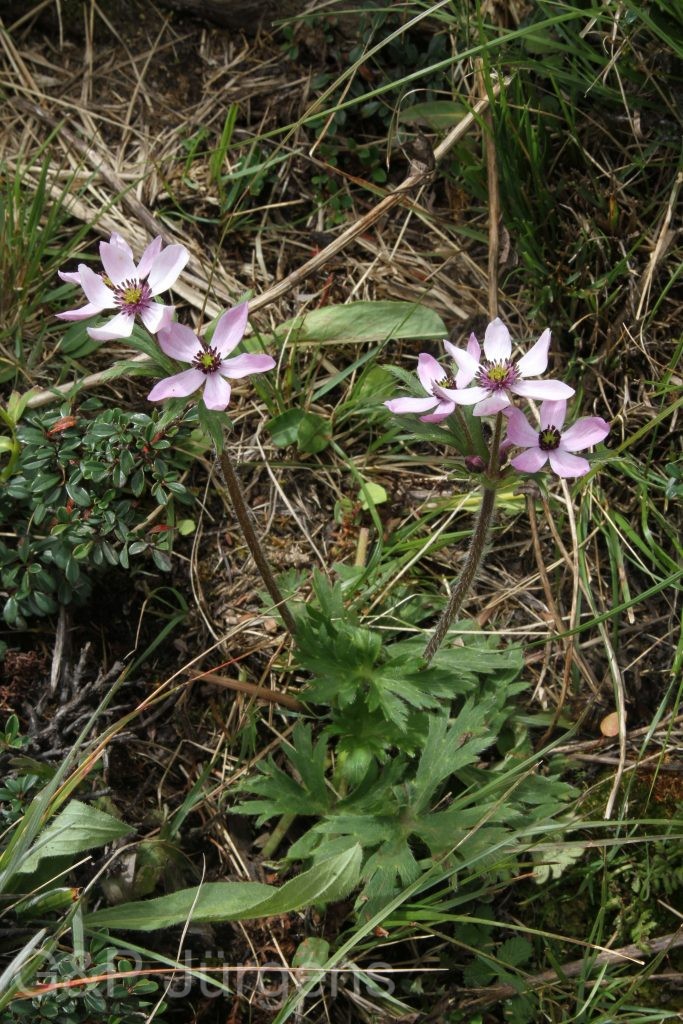
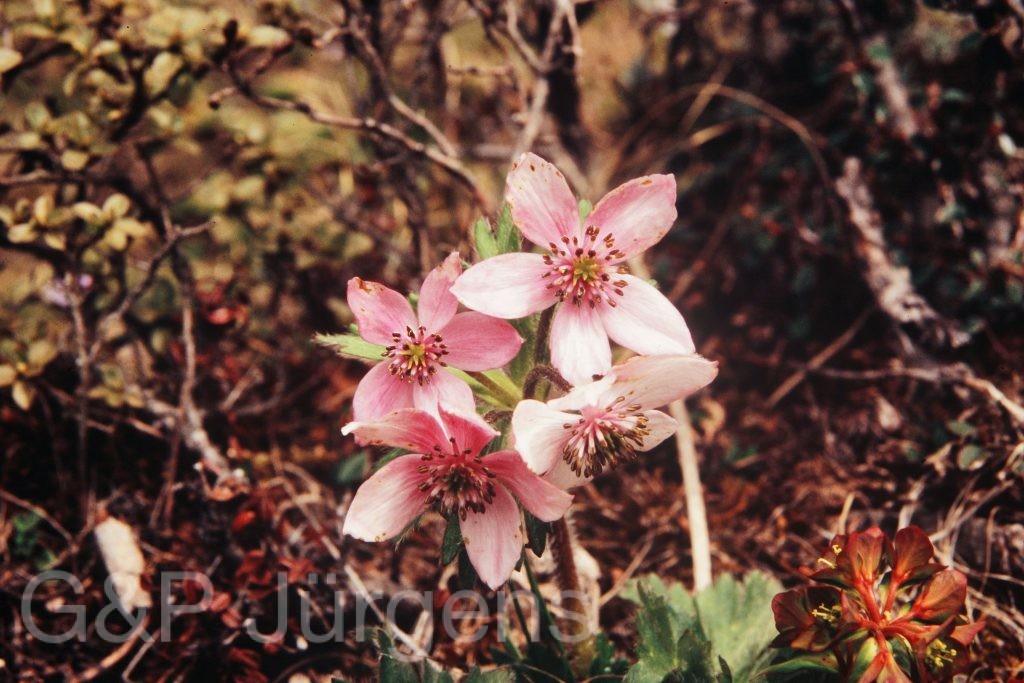
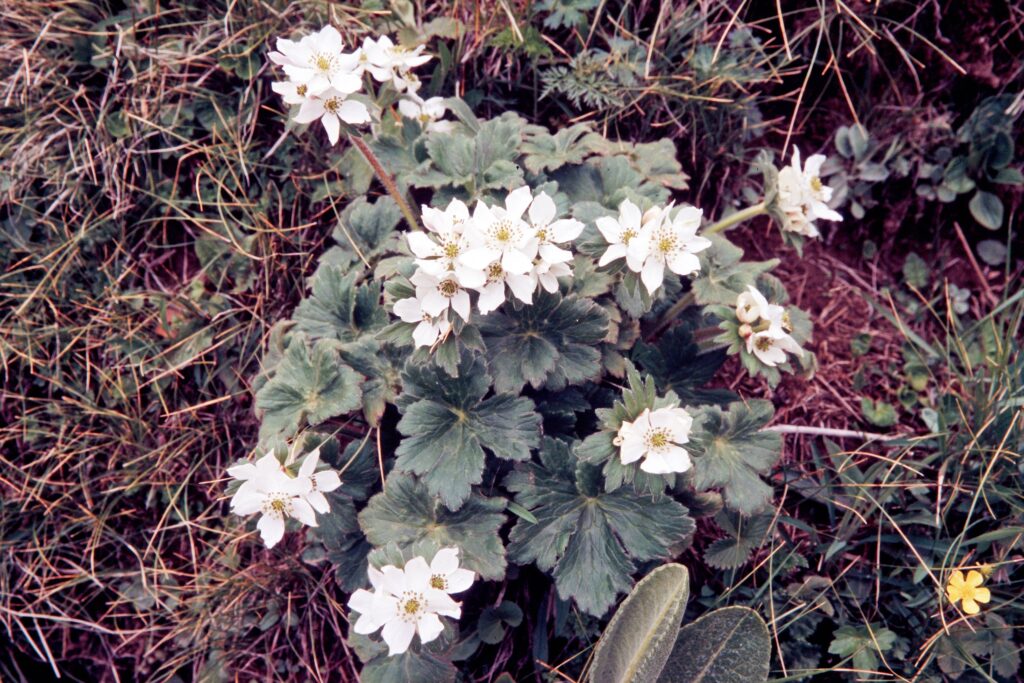
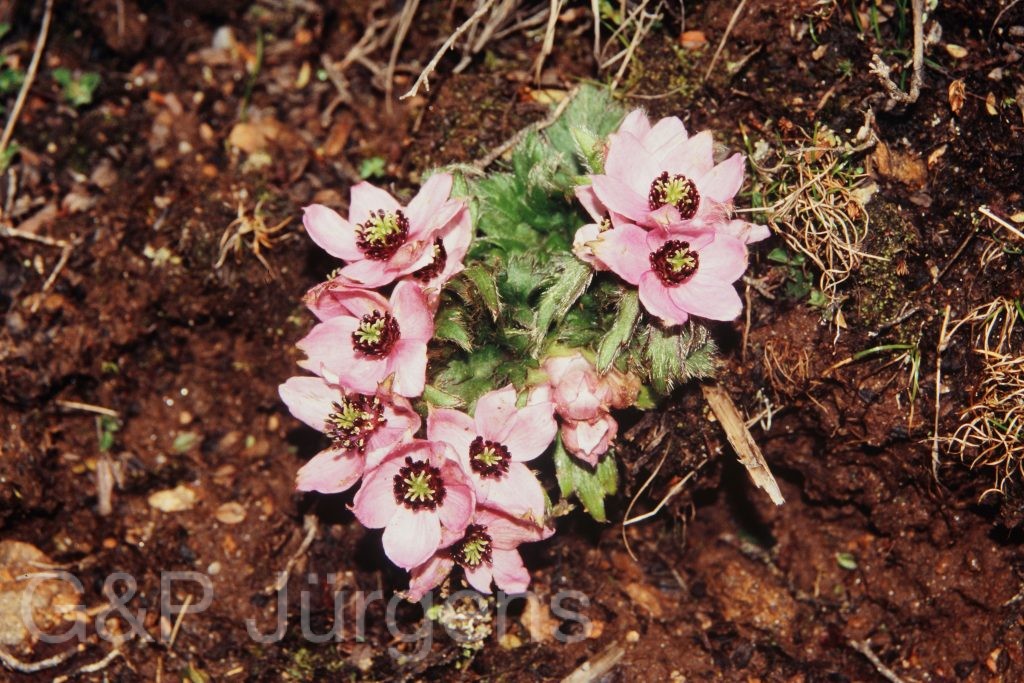
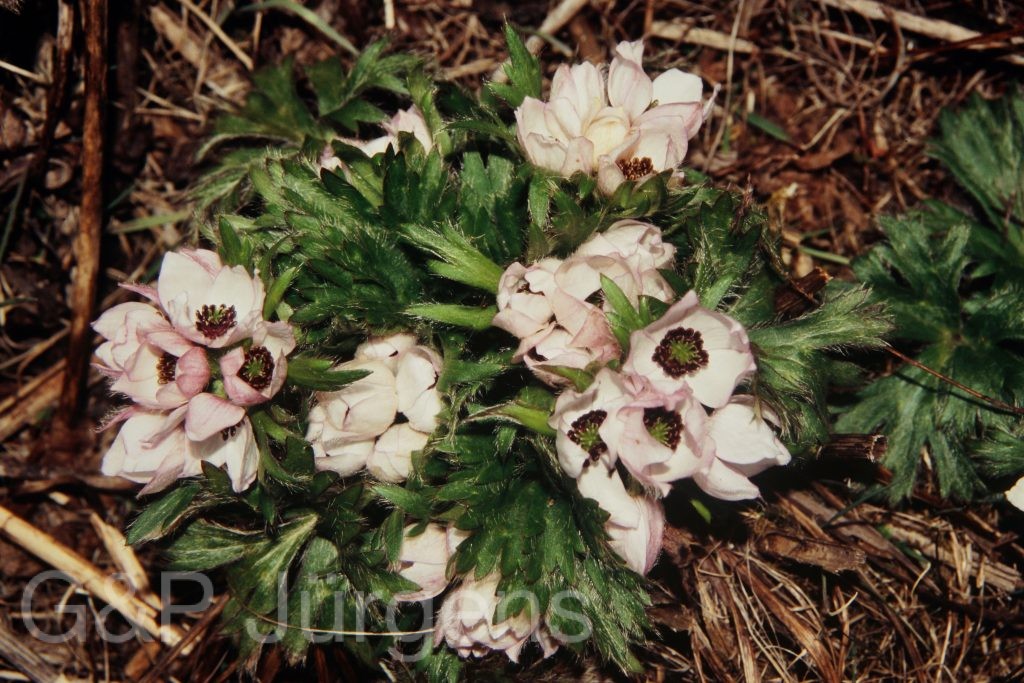
An alpine anemone of the Himalaya and the Tibetan Plateau, recorded from China, Myanmar, Nepal, Bhutan, India and Pakistan, with around 1600 GBIF occurrences. It is a plant of open alpine meadows, grassy slopes, rocky pastures and scrub margins, generally between about 3000 and 4500 m. The featured collections come from several high passes, including Bhutan's Chele-La at 3500 to 4000 m in June, the Dochu-La at 3500 m in September, and Nepal's Rupien La at 3850 m in October, illustrating a long flowering and fruiting season across windswept high-elevation habitats.

The species is a tufted perennial arising from a stout, often woody rootstock crowned with fibrous leaf remnants. The basal leaves are long-petiolate and palmately three- to five-divided, the segments further lobed and toothed and clothed, like the petioles, in spreading hairs. The scape bears a whorl of stalked, leaf-like involucral bracts beneath the inflorescence, which carries one to several flowers. Each flower lacks true petals; the showy perianth consists of five or more white, sometimes bluish- or pinkish-tinged tepals surrounding numerous stamens and a head of many free, hairy carpels. The fruit is an aggregate of compressed, beaked achenes adapted to wind and animal dispersal.

Formerly placed in Anemone, the species is now referred to the segregate genus Anemonastrum, accepted by POWO and GBIF, reflecting molecular and morphological re-circumscription of the windflowers; the basionym honours Hooker and Thomson. Ecologically it is a conspicuous element of summer-flowering alpine turf, offering pollen and nectar to high-altitude insects. Widespread and often locally abundant throughout the Himalaya, it is not of conservation concern, though its grassland habitats are subject to grazing and climatic shifts.

Author: (Hook.f. & Thomson) Holub · Sources: POWO (Kew), GBIF, Flora of Bhutan, Flora of China, Ziman et al. revision of Anemonastrum

(D.Don) Holub

Bh09 32 G59
Bhutan above Paro 3200m, June
Garh 07 464 ergebnis
India Garhwal Khiar Kutti 3900m, June

Description

Anemonastrum polyanthes (formerly Anemone polyanthes) is a robust alpine herb distributed across the Himalaya and into western China, with GBIF holding around 362 occurrences from India, China, Nepal, Pakistan, Bhutan, Afghanistan and Myanmar. It grows in subalpine and alpine meadows, open slopes, forest clearings and grazed pastures, typically between 3000 and 4300 m, flowering with the onset of the summer monsoon. The cited collections from above Paro in Bhutan at 3200 m and from Khiar Kutti in Garhwal, India, at 3900 m, both in June, capture its broad altitudinal spread across damp, herb-rich high-meadow turf.

It is a perennial arising from a stout rootstock, with all principal leaves basal, long-petiolate and palmately three- to five-partite, the segments deeply cut and toothed, hairy on both surfaces. The flowering stem bears a whorl of leaf-like, sessile involucral bracts subtending an umbel-like cyme of several flowers, as the epithet polyanthes implies. Each flower lacks petals; the five to eight petaloid sepals are white, sometimes flushed pinkish or bluish outside, surrounding numerous yellow stamens and a domed cluster of carpels. The fruits are flattened, glabrous, ovate achenes with a short hooked beak, aggregated into a rounded head.

The segregate genus Anemonastrum, raised from Anemone on molecular and morphological grounds, accommodates this group of umbellate-flowered, multi-flowered montane species. Like other Ranunculaceae it contains acrid protoanemonin, deterring grazing livestock so that it often persists conspicuously in over-grazed alpine pasture. Widespread and frequently common throughout the Himalayan arc, it is of Least Concern and serves as a prominent component of summer-flowering high-altitude meadow communities.

Author: (D.Don) Holub · Sources: POWO (Kew), GBIF, Flora of Bhutan, Flora of Pakistan, Annotated Checklist of the Flowering Plants of Nepal, Hand-Mazzetti and Tamura treatments of Anemone

(Wall. ex Hook.f. & Thomson) Mosyakin

BhutanPG2011 219 scaled
Bhutan Jule-Tso, 4300m June
BhutanPG2011 344
Bhutan Jule-Tso, 4300m June

Description

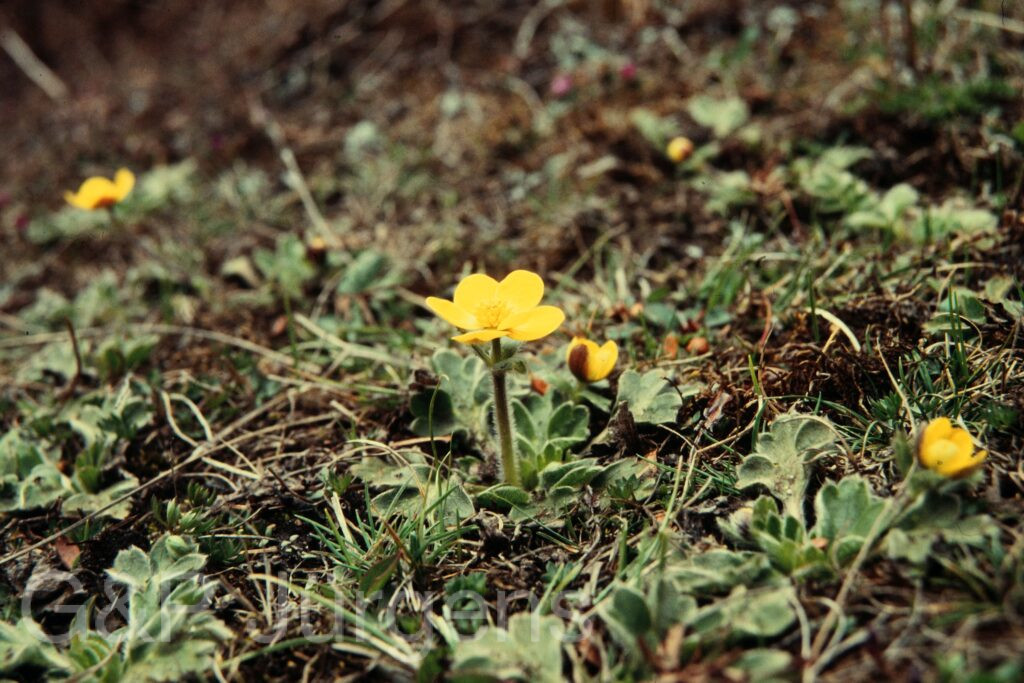
Anemonastrum rupestre (Wall. ex Hook.f. & Thomson) Mosyakin is an alpine perennial of the Himalaya and adjacent mountains, recorded from Nepal, China, India, Bhutan and Myanmar, with about 223 occurrences in GBIF. It inhabits open alpine meadows, rocky slopes, screes and grassy ledges, mostly between 3,000 and 4,500 m. The photographed plants span this range: one from Helambu, Koktrok, in central Nepal at 3,100 m flowering in May, and another from Jule-Tso in Bhutan at 4,300 m in June, illustrating its broad altitudinal occupation of the subalpine to alpine zone.

It is a tufted perennial herb arising from a stout rhizome, with the leaves largely basal and long-petiolate; the lamina is palmately divided into lobed and toothed segments. The flowering scape bears an involucre of leaf-like bracts subtending a few-flowered umbel-like cyme. The flowers lack true petals; the showy perianth consists of several white (sometimes pinkish or bluish-tinged) petaloid sepals surrounding numerous stamens and a head of free carpels. The fruit is an aggregate of laterally compressed, glabrous to pubescent achenes with a short persistent style.

The species was traditionally placed in Anemone, but molecular and morphological studies have led to its transfer to the segregate genus Anemonastrum (Ranunculaceae), characterised by basal leaves, bracteate scapes and compressed achenes. This taxonomic realignment reflects the modern reclassification of the Anemone alliance. As a widespread high-altitude element of the Sino-Himalayan flora occupying extensive natural habitat, it is not of conservation concern, though it remains subject to grazing pressure across its alpine pastures.

Author: (Wall. ex Hook.f. & Thomson) Mosyakin · Sources: POWO (Kew), GBIF, Flora of China, Flora of Bhutan, Annotated Checklist of the Flowering Plants of Nepal, Mosyakin reclassification of Anemone s.l., Ziman & Ehrendorfer studies of Anemone

(Hook.f. & Thomson) Mosyakin

Sikkim2011 131
Sikkim Tanghu 4000m, June
Sikkim2011 129
Sikkim Tanghu 4000m, June
Bhutan2014 985 scaled
Bhutan Chele-La 4000m, May
Bhutan2014 983
Bhutan Chele-La 4000m, May
Nepal 97 210 P428
Nepal Thudam 3690m April

Description

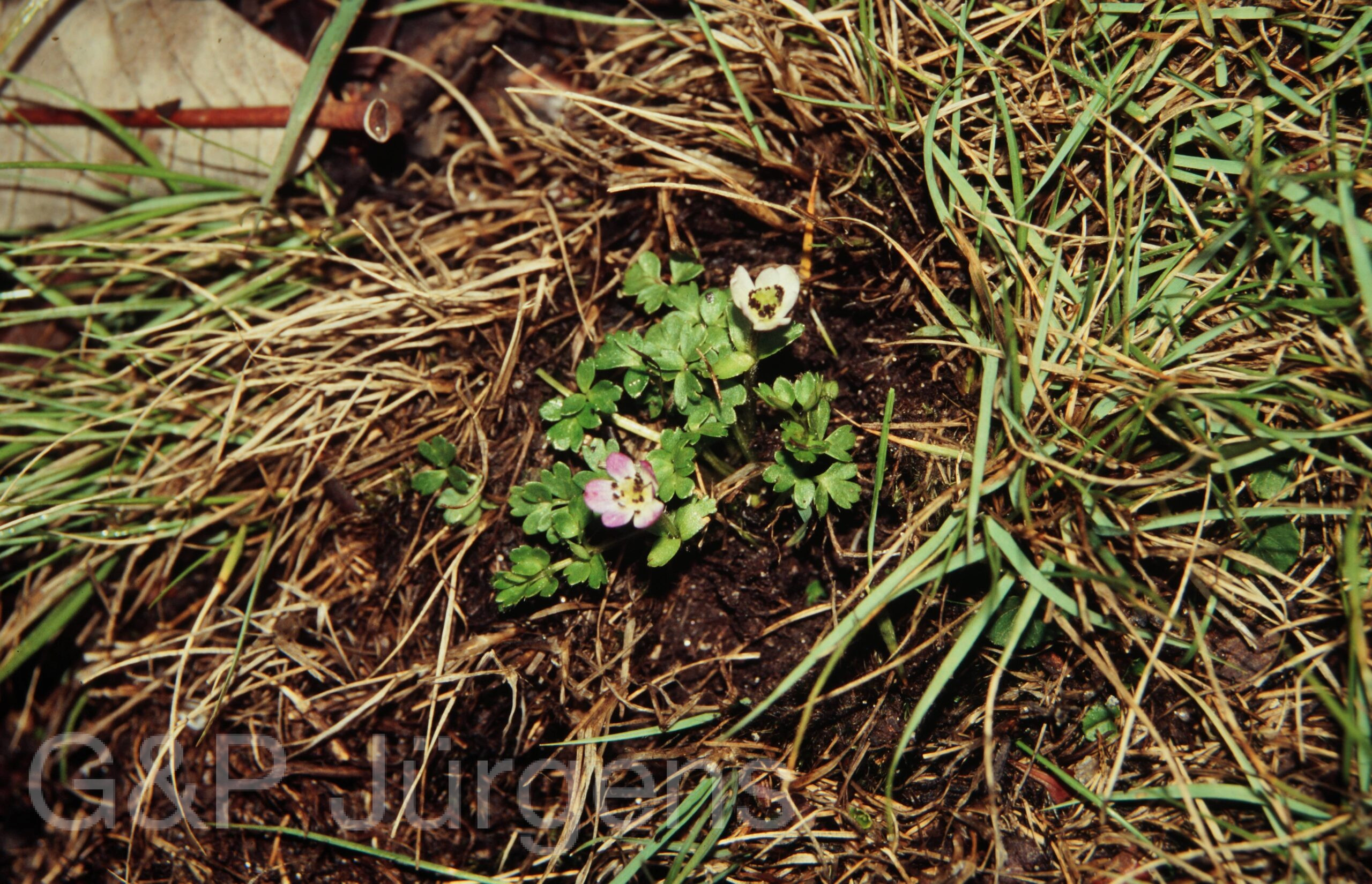
Anemonastrum trullifolium is a Himalayan alpine herb ranging through China, India, Nepal and Bhutan, with 317 occurrences in GBIF (additional records from Britain, Myanmar, Norway and Sweden reflect cultivated or determinavit material). It grows in alpine meadows, open slopes and the margins of dwarf-shrub heath, typically between 3500 and 4500 m. Field collections span Sikkim's Tanghu at about 4000 m in June, Chele-La in Bhutan at 4000 m in May, and Thudam in Nepal at 3690 m in April, indicating an early-season flowerer that tracks receding snow on moist subalpine to alpine turf.

The plant is a rhizomatous perennial 10-30 cm tall, forming a tuft from a short, often hairy rootstock. The long-petiolate basal leaves have a trullate (trowel-shaped) to rhombic-ovate lamina, often three-lobed or coarsely toothed and silky-pilose beneath, the epithet trullifolium referring to this leaf outline. The scape bears an involucre of leaf-like bracts subtending a few-flowered umbel; the flowers lack true petals, the showy perianth comprising 5-6 white to bluish, sometimes externally tinged tepals, surrounding numerous stamens and a head of carpels. The fruiting head is a cluster of flattened, glabrous to pubescent achenes with a short hooked beak.

The species was transferred from Anemone to the segregate genus Anemonastrum following molecular phylogenetic studies that resolved the windflowers into several lineages; the basionym Anemone trullifolia (under which it is widely listed) reflects this history. Pollination is by generalist alpine insects, and the achenes are wind- and gravity-dispersed. Locally common across its range, it has no specific conservation concern.

Author: (Hook.f. & Thomson) Mosyakin · Sources: POWO (Kew), GBIF, Flora of China, Flora of Bhutan, Annotated Checklist of the Flowering Plants of Nepal, Mosyakin revision of Anemonastrum

(H.Pearson) Al-Shehbaz & Warwick

Bh09 80 G136
Bhutan Jangchulakha, 3750m June

Description

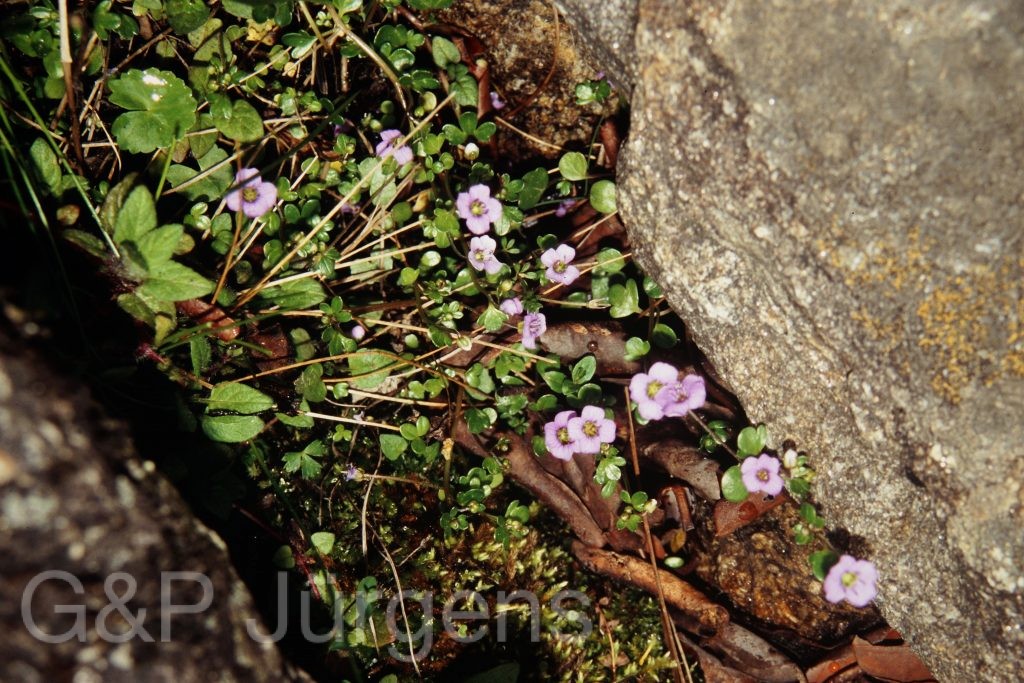
Aphragmus hobsonii is a high-alpine crucifer of the eastern Himalaya and adjacent Tibet, with GBIF records from Nepal, Bhutan and China amounting to roughly 55 occurrences (a Papua New Guinea datum is almost certainly an error). It is a plant of cold, open habitats near the upper limit of vegetation: stony alpine turf, scree margins, moraines and damp gravelly flushes, typically between about 3500 and 4500 m. The specimen depicted at Jangchulakha in Bhutan at 3750 m in June, flowering early in the alpine summer, is characteristic of its occupation of exposed, well-drained high-mountain ground.

It is a small, cushion- or tuft-forming perennial herb arising from a branched caudex topped by a slender taproot. The leaves are mostly basal, entire, oblanceolate to spathulate and narrowed to the base, often forming a dense rosette. The flowers are arranged in a short, congested raceme that scarcely elongates in fruit; the four petals are white to pale lilac, clawed and arranged in the cruciform pattern of the family. The fruit is a short silique or silicula, the seeds in one or two rows, dehiscing by two valves in the typical brassicaceous manner.

Aphragmus is a small genus of cold high-mountain Asia whose generic limits have been revised through molecular study, and the present species was transferred here by Al-Shehbaz and Warwick from earlier placements, reflecting ongoing reassessment of Himalayan crucifer relationships. Its compact, low-growing habit is a clear adaptation to wind exposure, intense radiation and short growing seasons at extreme elevations. Though not formally assessed, its specialised high-alpine niche makes it potentially vulnerable to upslope habitat compression under climate change.

Author: (H.Pearson) Al-Shehbaz & Warwick · Sources: POWO (Kew), GBIF, Flora of China (Brassicaceae), Flora of Bhutan, Annotated Checklist of the Flowering Plants of Nepal, Al-Shehbaz systematic studies in Brassicaceae

(H.Hara) Al-Shehbaz, G.Q.Hao & J.Q.Liu

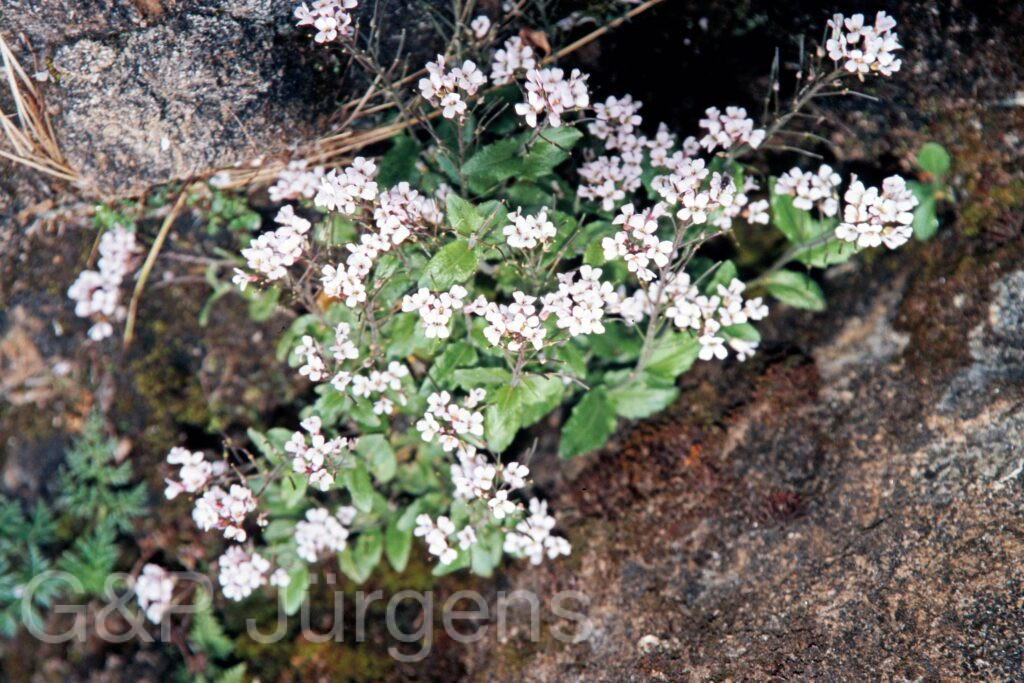
Nepal 99 640 ergebnis
West-Nepal Kagmara-La 5000m, July

Description

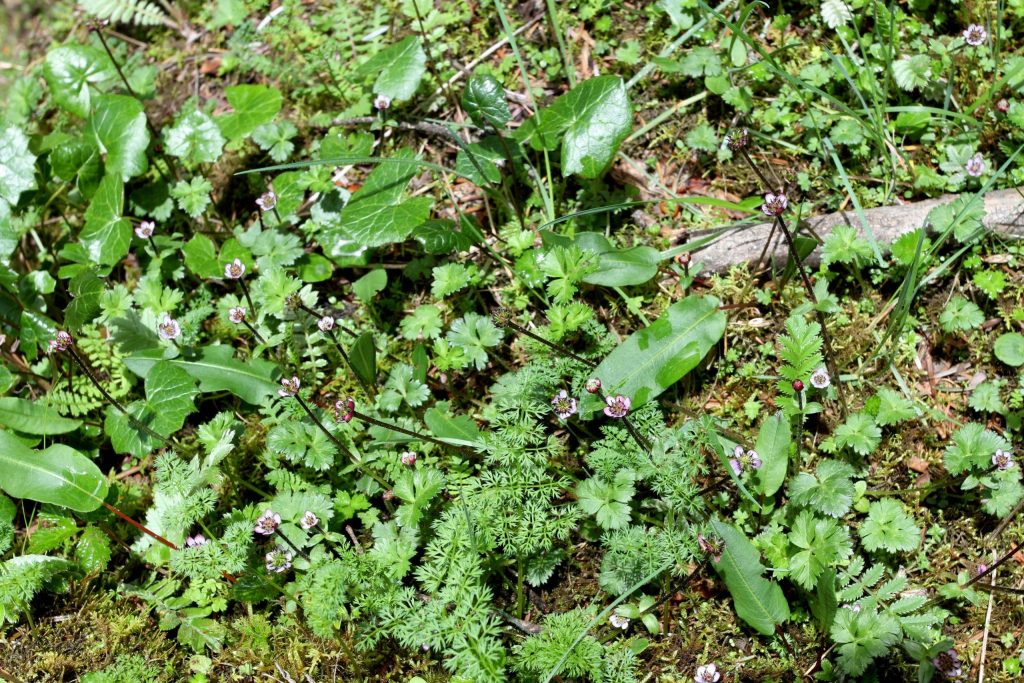
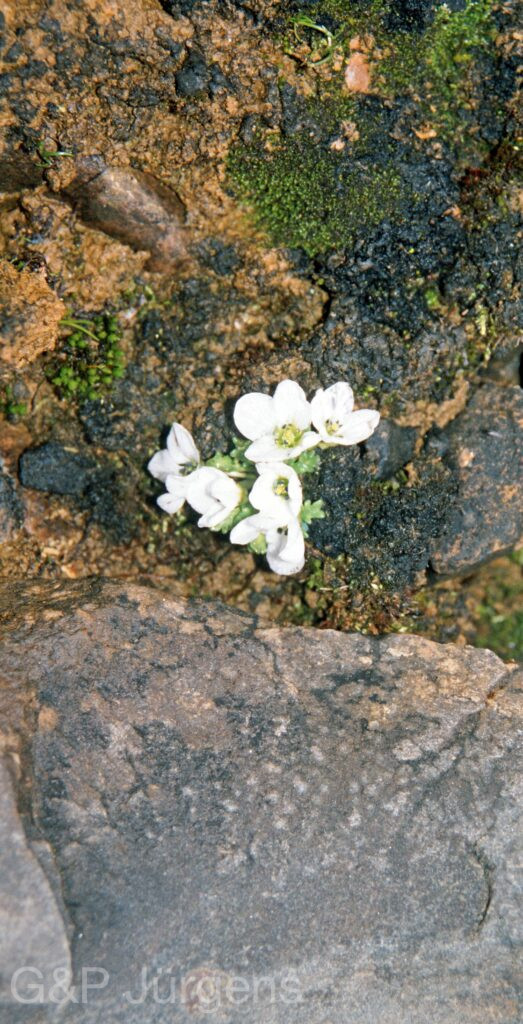
Aphragmus minutus is a diminutive crucifer of the highest Himalaya and adjacent Tibetan and Indo-Burmese mountains, recorded by GBIF (about 34 occurrences) from India, Nepal, Bhutan, Myanmar and China. It is a subnival specialist, growing on open scree, gravelly flats, moraine and fine-grained alpine soils close to the upper limit of vascular plant life, where it endures intense cold, wind and a very short growing season. The illustrated plant was found in West Nepal on the Kagmara La at about 5000 m in July, an elevation typical of the species and among the highest at which flowering plants occur in the region.

It is a tiny, low, cushion- or rosette-forming perennial, as the epithet minutus implies, arising from a slender taproot crowned by a branched caudex. The leaves are crowded, small, entire or slightly toothed, spathulate to oblanceolate, glabrous or nearly so. The flowers are borne in a short, congested raceme scarcely raised above the foliage; each has four greenish sepals and four small white to pale lilac petals in the cruciform arrangement of the family, with tetradynamous stamens. The fruit is a short, oblong to ellipsoid silicula with a persistent style, dehiscing to release a few seeds, its compact form an adaptation to the brief alpine summer.

The species was transferred to Aphragmus on molecular and morphological grounds, the binomial (H. Hara) Al-Shehbaz, G. Q. Hao and J. Q. Liu reflecting that recombination; Aphragmus is a small high-Asian genus of the Brassicaceae centred on the Himalaya and Tibetan Plateau. As an extreme high-altitude cushion plant it is naturally rare and very localised but faces few direct threats beyond climate change, which may compress the habitat of such ceiling-dwelling alpines.

Author: (H.Hara) Al-Shehbaz, G.Q.Hao & J.Q.Liu · Sources: POWO (Kew), GBIF, Flora of China, Flora of Bhutan, Annotated Checklist of the Flowering Plants of Nepal, Al-Shehbaz's systematic studies of Asian Brassicaceae

(Hook.f. & Thomson) Jafri

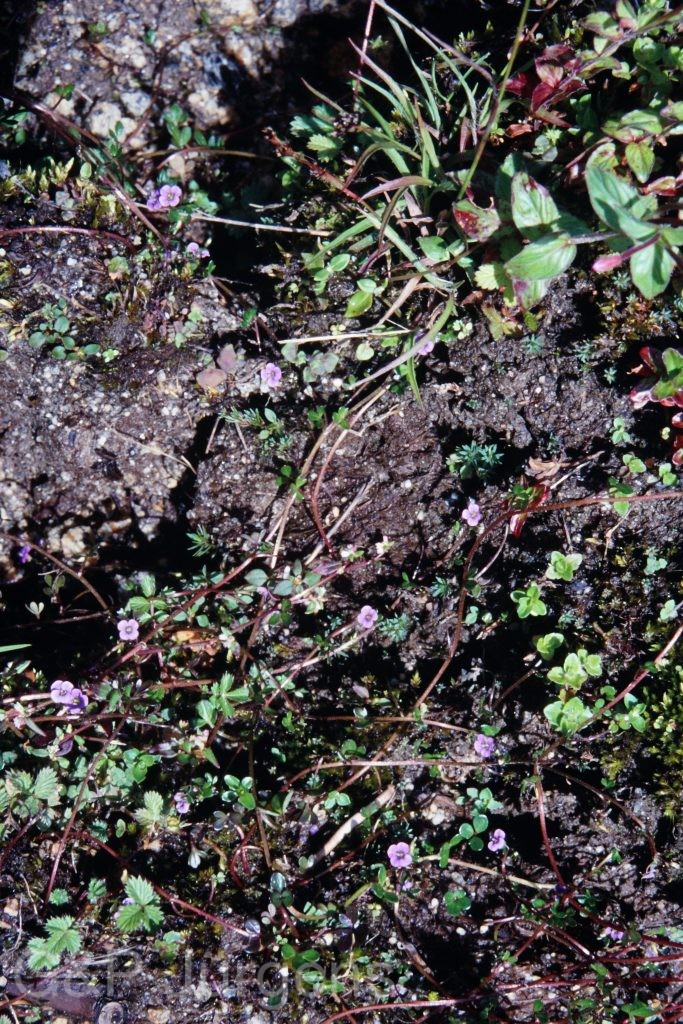
Nepal 99 635 ergebnis
West-Nepal Kagmara-La 5000m, July
BhutanPG2011 415
Bhutan Ludlow-Sherriff-Trail Warrtlang-La 4400m July

Description

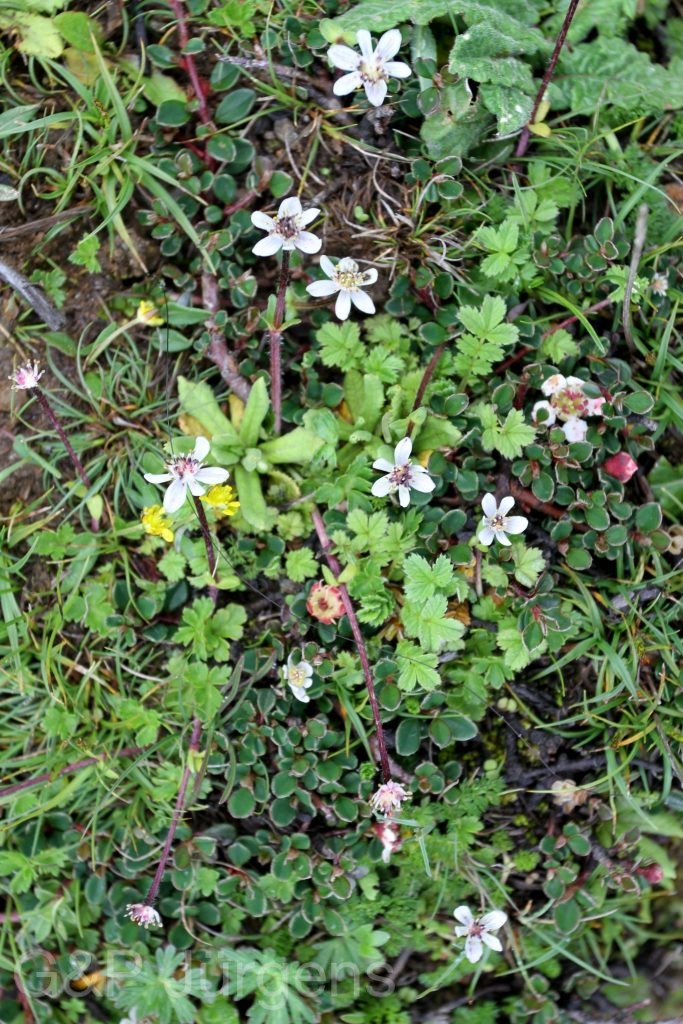
Aphragmus oxycarpus is a high-alpine crucifer of the Himalaya and adjacent Central Asian and Tibetan ranges, recorded from China, India, Nepal, Pakistan, Bhutan, Afghanistan, Tajikistan, Kyrgyzstan and Myanmar; the distant European, British, Japanese and North American records (some 540 in total) represent database artefacts rather than native populations. It is a cushion- to mat-forming plant of the upper alpine and subnival zones, colonising scree, moraine, gravelly slopes and the margins of late-lying snow. The documented stations are strikingly high: West Nepal's Kagmara-La at around 5000 m and Bhutan's Warrtlang-La at about 4400 m, both flowering in July during the brief alpine summer.

It is a small perennial herb with a stout, often multicipital caudex topped by rosettes of fleshy, spathulate to oblanceolate leaves with entire or slightly toothed margins. The flowering stems are short and few-leaved, bearing compact corymbose racemes of small white to pale lilac flowers with the four spreading petals and tetradynamous stamens characteristic of the family. The fruit, from which the epithet derives, is an ovoid to lanceolate, acute-tipped silicle that is somewhat flattened and few-seeded, the septum often reduced or perforate as is typical of the genus.

Aphragmus is a small genus of high-mountain Brassicaceae whose generic and species limits have been repeatedly revised through molecular work, and A. oxycarpus, originally described under Hooker and Thomson and later transferred by Jafri, exemplifies the dwarf, snow-bed habit of the group. Such plants endure extreme cold, intense radiation and a very short growing season, relying on the caudex for perennation. The species is widespread across remote high terrain and faces no recognised threat, though alpine cushion communities are increasingly cited as sensitive indicators of climate-driven upslope shifts.

Author: (Hook.f. & Thomson) Jafri · Sources: POWO (Kew), GBIF, Flora of Pakistan, Flora of China, Flora of Bhutan, Al-Shehbaz revisionary studies of Aphragmus (Brassicaceae)

(W.W.Sm.) Al-Shehbaz & Warwick

Sikkim2003 104 P142
Sikkim below Dzongri 3850m, August

Description

Aphragmus serpens is a diminutive alpine crucifer of the eastern and central Himalaya, recorded from India, Nepal, Bhutan and China, with some 74 georeferenced occurrences indicating a scattered but recurrent presence across the high ranges. It is a plant of cold, open alpine habitats — gravelly and stony slopes, moraine debris, rock ledges and the margins of snow-melt seepages — typically well above treeline. The illustrated material from below Dzongri in Sikkim, at about 3850 m and photographed in August, is representative of the late-summer flowering of this species in the moist eastern Himalayan alpine zone.

The plant is a small, low-growing perennial with a slender, often creeping or trailing habit reflected in the epithet serpens. It arises from a thin rootstock and forms loose tufts or mats of mostly basal leaves; these are small, entire to slightly toothed, narrowed to a petiole, and more or less glabrous to sparsely hairy. The inflorescence is a short, few-flowered raceme; the flowers are typically cruciform with four small petals, usually white to pale lilac or pinkish, four sepals and the characteristic tetradynamous androecium of six stamens. The fruit is a short, oblong to ovoid silicula containing few seeds, the slender style persisting at the apex.

The genus Aphragmus comprises a small group of high-alpine Asian crucifers whose generic limits and species circumscriptions have been substantially revised, this combination being attributed to Al-Shehbaz & Warwick in the course of modern molecular and morphological reassessment of the Brassicaceae. As a specialist of severe high-altitude environments, A. serpens is intimately tied to short, cool growing seasons and reliable snow-melt moisture, and its restricted alpine niche makes it potentially sensitive to climatic warming, though its wide if sparse distribution suggests it is not at present under acute threat.

Author: (W.W.Sm.) Al-Shehbaz & Warwick · Sources: POWO (Kew), GBIF, Flora of China (Brassicaceae), Flora of Bhutan, Al-Shehbaz: monographic revisions of Himalayan Brassicaceae

O.E.Schulz

Garh 07 137 ergebnis
India Garhwal Kinkhola 3500m, June

Description

Arcyosperma primulifolium is a Himalayan crucifer of high-elevation forest and meadow margins, with GBIF recording 99 occurrences from India, Nepal, Pakistan and Bhutan. It occupies moist, shaded slopes, forest edges and damp turf in the upper temperate to subalpine zone, often among rocks and along the transition between birch-rhododendron forest and open alpine pasture. The image was taken at Kinkhola in Garhwal, India, at about 3500 m in June, when the plants flower as the high meadows green up after the spring thaw.

It is a perennial herb with a stout rootstock from which arise a rosette of long-petioled, lyrate to pinnatifid basal leaves; the lamina, with its rounded, crenate terminal lobe, recalls the foliage of a primrose, as the epithet primulifolium notes. The flowering stems are erect and bear smaller, less divided leaves below an elongating raceme. The flowers are white, with four sepals, four clawed petals and the tetradynamous stamens of the Brassicaceae. The fruit is a slender, somewhat flattened silique that distinguishes the monotypic genus; the seeds are arranged in the pod in the manner reflected by the generic name Arcyosperma.

Arcyosperma (Brassicaceae) is a monotypic genus segregated by O. E. Schulz, restricted to the Himalaya and allied within the family's diverse Asian montane crucifers. Its distinctive lyrate leaves and fruit characters set it apart from related genera such as Cardamine and Draba with which it co-occurs. Being a narrow-ranged montane endemic of a single species, it is of particular taxonomic and biogeographic interest, and like other high-Himalayan herbs its populations depend on intact subalpine forest and meadow habitats.

Author: O.E.Schulz · Sources: POWO (Kew), GBIF, Flora of Pakistan, Annotated Checklist of the Flowering Plants of Nepal, Jafri's Flora of West Pakistan (Brassicaceae), Schulz's treatment of Cruciferae in Engler's Das Pflanzenreich