Tag:

Bhutan

Flowers of Bhutan — 1326 plant species documented across the Bhutanese Himalaya, from dense broadleaf and conifer forests to alpine scrub and meadows. Bhutan’s largely intact wilderness shelters an exceptional diversity of orchids, rhododendrons, primulas and Himalayan poppies, many of them regional endemics. Each species page includes a botanical description, distribution, habitat and flowering time, with the original photograph and its recorded altitude and locality.

(Cardot) Hand.-Mazz.
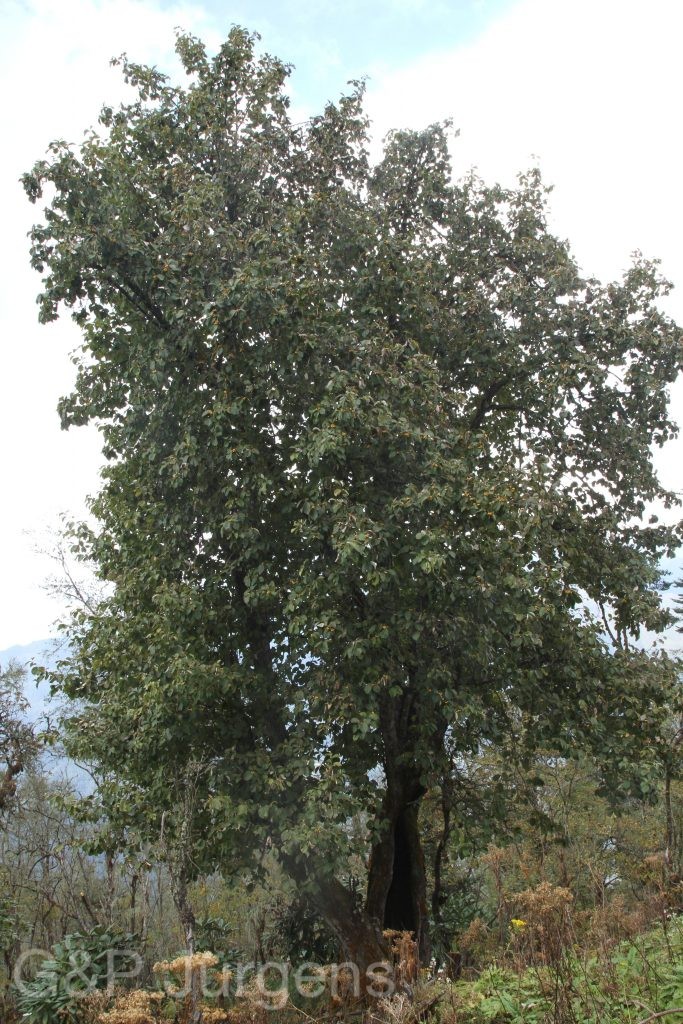
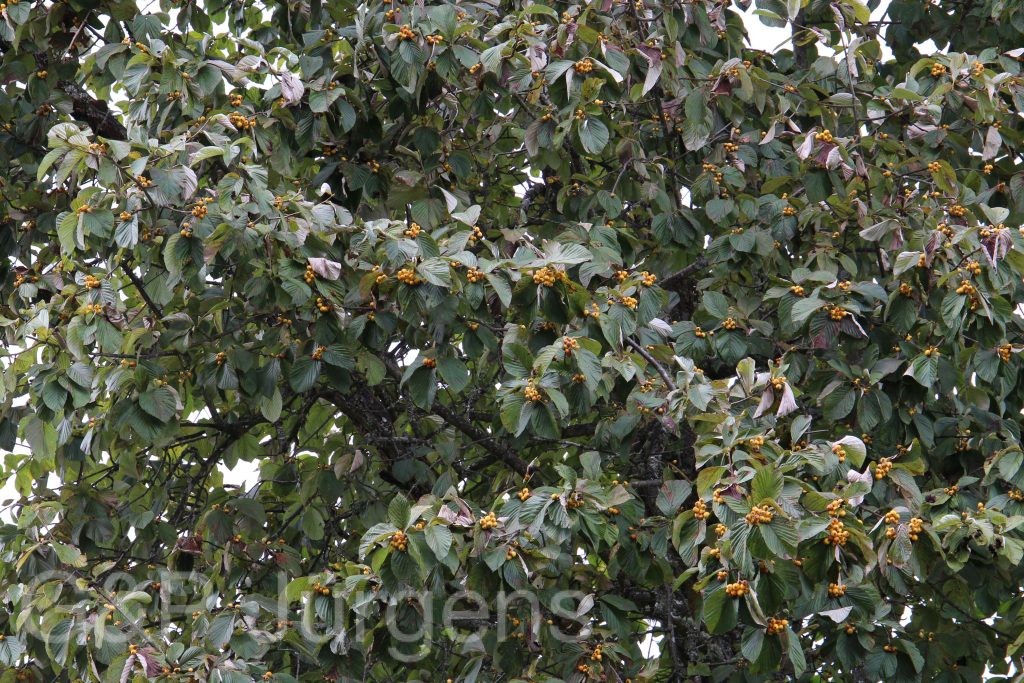
Bhutan2015 495
  Bhutan Pele-La 3000m, October
Bhutan2015 497
  Bhutan Pele-La 3000m, October

Description

Sorbus thibetica is a Sino-Himalayan whitebeam distributed along the eastern Himalaya and adjacent China, from Nepal through northern India, Sikkim and Bhutan into south-western China (Xizang, Yunnan) and northern Myanmar; its roughly 470 georeferenced occurrences include numerous cultivated records in Britain and northern Europe (GB, NO, DK), reflecting its long-standing horticultural use. It grows in temperate and subalpine forest, woodland margins, rocky slopes and open hillsides, generally between about 2500 and 3600 m. The tree photographed at Pele-La in Bhutan at 3000 m in October, in autumn fruit and leaf-colour, is typical of its cool, montane forest habitat.

It is a deciduous tree to 10-20 m, with a rounded crown and grey bark; the stout twigs and buds are densely white-tomentose when young. The leaves are simple (not pinnate), broadly elliptic to obovate, entire-leaved members of the Aria group, dark green and glabrescent above but persistently covered beneath with a thick, silvery-white felted tomentum, the margins finely and shallowly toothed. The white flowers are borne in flat-topped corymbs, each with five petals, numerous stamens and an inferior ovary. The fruit is a small subglobose pome, ripening orange-brown to russet and bearing scattered lenticels, typical of the simple-leaved whitebeams.

Sorbus thibetica belongs to the Aria group of simple-leaved whitebeams (sometimes segregated as the genus Aria), distinct from the pinnate-leaved rowans of Sorbus sensu stricto. The selection 'John Mitchell', with very large leaves, is widely grown ornamentally. Apomixis and hybridisation complicate species limits throughout the group. Widespread and frequent, it is not considered threatened.

Author: (Cardot) Hand.-Mazz. · Sources: POWO (Kew), GBIF, Flora of China, Flora of Bhutan, Flora of Nepal, McAllister's The Genus Sorbus: Mountain Ash and other Rowans
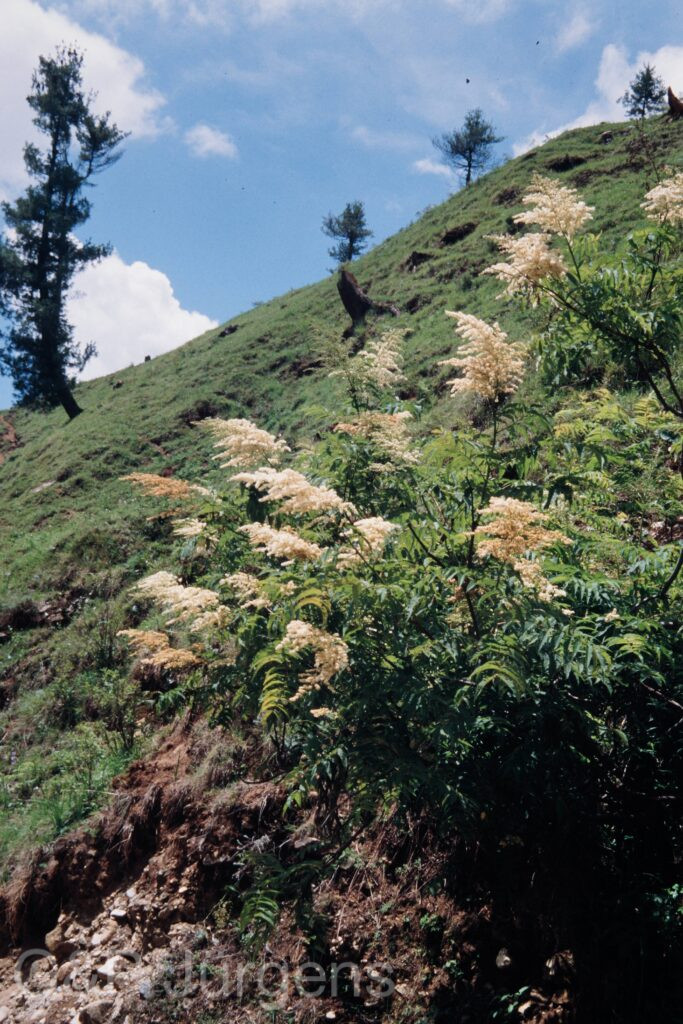
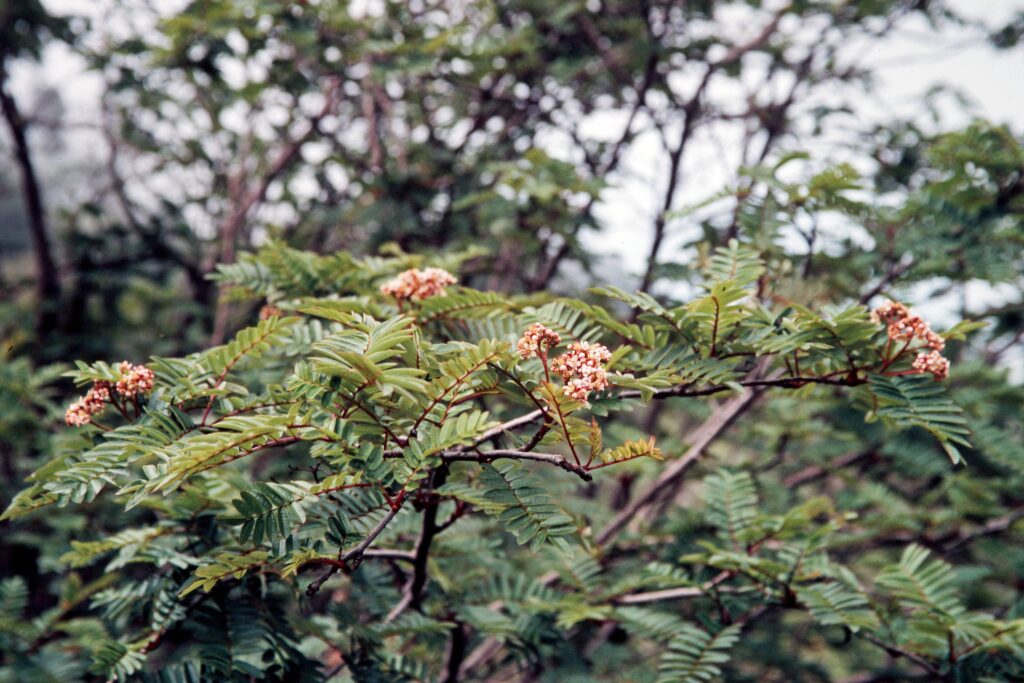
Hedl.

Nepal 99 397 ergebnis
West-Nepal Talphi 2830m, June

Description

Sorbus tomentosa is a Sino-Himalayan tree of the temperate forest belt, distributed along the central and western Himalaya. Although GBIF records remain sparse, with the photographed material gathered at Talphi in West Nepal at about 2830 m in June, the species is characteristic of the upper temperate zone between roughly 2500 and 3500 m. It occupies the canopy gaps and margins of mixed broad-leaved and conifer forest, frequently associating with Quercus, Acer, Betula and Abies, and favouring cool, humid, well-drained slopes where it acts as a light-demanding component of montane woodland.

It is a small deciduous tree or large shrub with pinnate leaves bearing numerous oblong-lanceolate, serrate leaflets that are densely white- or grey-tomentose beneath, giving the foliage a markedly hoary aspect that lends the species its epithet. The young shoots, petioles and rachis are likewise woolly-pubescent. Flowers are small, white, five-petalled and borne in flattened terminal corymbs in early summer; the gynoecium develops into small subglobose pome fruits that ripen red to orange-red in autumn, each crowned by the persistent calyx and containing few seeds.

The species belongs to Sorbus subgenus Sorbus (the pinnate-leaved "true" rowans), a taxonomically intricate group in which apomixis and hybridisation have generated numerous microspecies and rendered circumscriptions difficult. Ecologically its fruits are an important autumn food for thrushes and other frugivorous birds, which act as the principal dispersal agents. Though not presently regarded as threatened, populations are localised and vulnerable to forest clearance and grazing pressure across the Himalayan range.

Author: Hedl. · Sources: POWO (Kew), GBIF, Flora of Nepal, Flora of Bhutan, Flora of China, McAllister – The Genus Sorbus: Mountain Ash and Other Rowans

Sorbus ursina

by G & P Jürgens

(Wall. ex G.Don) S.Schauer

Garh 07 557 ergebnis
India Garhwal Seema 3450m, June

Description

Sorbus ursina is a Himalayan rowan distributed along the southern margins of the high mountains, with documented occurrences in Nepal, India, China, Myanmar and Bhutan, and a comparatively modest record base of around 126 georeferenced collections. It is a tree of the upper temperate to subalpine forest belt, typically occupying the transition between mixed broadleaved-coniferous woodland and the open shrub zone, where it grows on cool, humid, often steep slopes and along forest margins. The plant photographed at Seema in Garhwal (India) at about 3450 m in June reflects this characteristic elevational preference, where the species ascends to the upper limit of arborescent vegetation amid Abies, Quercus and ericaceous undergrowth.

It forms a small deciduous tree or large shrub with a spreading crown, the young twigs initially tomentose and becoming glabrescent and dark with age. The leaves are imparipinnate (pinnately compound), comprising numerous oblong to lanceolate leaflets that are sharply serrate along the margins, glabrous and green above and conspicuously paler, frequently whitish-tomentose, beneath. The flowers are borne in many-flowered terminal corymbs and are small, pentamerous and white, with five free petals, numerous stamens and a partly inferior ovary. The fruit is a small subglobose pome, ripening through pink to deep red and often persisting on the branches after leaf-fall.

Within the large and taxonomically intricate genus Sorbus, S. ursina belongs to the pinnate-leaved (subgenus Sorbus) assemblage, a group complicated across the Himalaya by hybridisation and apomixis. The conspicuous autumn fruiting renders it ecologically important as a food source for thrushes, accentors and other montane frugivorous birds, which act as the principal seed dispersers. Although not presently regarded as threatened given its broad range, populations are tied to intact subalpine forest and are therefore sensitive to grazing pressure, fuelwood collection and the upward shift of timberlines.

Author: (Wall. ex G.Don) S.Schauer · Sources: POWO (Kew), GBIF, Flora of China Vol. 9, Flora of Bhutan Vol. 2, Flora of Nepal, McAllister The Genus Sorbus: Mountain Ash and Other Rowans

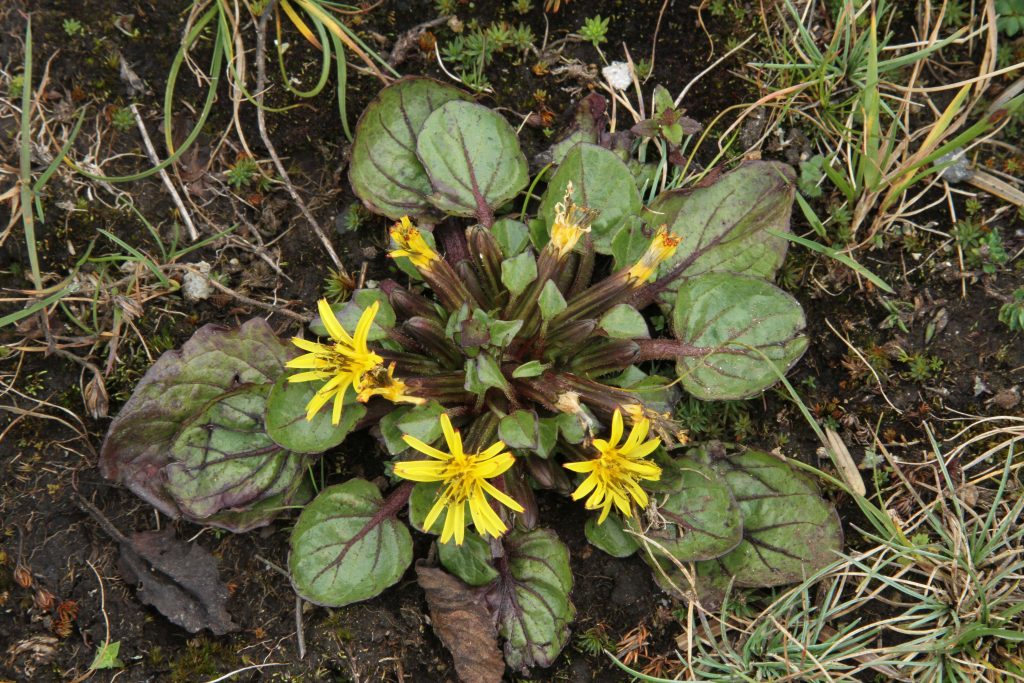
unknown

Bhutan2012 281
Bhutan Shele-La, 4100m September

Description

Soroseris depressa is a cushion-forming alpine composite of the high Himalaya and Tibetan margins, documented from Bhutan, India, China, Nepal and Japan, with about 62 GBIF occurrences. It is a specialist of the highest open ground, colonising scree, gravelly alpine turf, moraines and stony flats well above the treeline, commonly between about 4000 and 5000 m. The photographed material comes from the Shele-La in Bhutan at 4100 m in September, a wind-exposed pass where the species hugs the substrate among sparse alpine cushion vegetation late in the season.

The plant is a low, compact perennial herb with a stout, deep-seated taproot and a contracted, often subterranean caudex from which the leaves and capitula are densely crowded at ground level, forming a flattened ("depressa") rosette or cushion. The leaves are linear-oblanceolate to spathulate, entire to pinnatifid, and frequently woolly or glandular. The capitula are aggregated into a dense, head-like synflorescence sunk among the leaves; each is ligulate with yellow to whitish strap-shaped florets, enclosed by an involucre of few phyllaries. The fruit is a slender, ribbed cypsela crowned by a pappus of fine bristles.

Soroseris is a small genus of the tribe Cichorieae endemic to the Sino-Himalayan and Tibetan high mountains, and S. depressa (also treated under the name Tibetoseris depressa) exemplifies the extreme cushion habit evolved in response to cold, desiccation and short growing seasons. Its restriction to fragile high-alpine substrates makes it sensitive to climate warming and trampling, though its remote habitat affords some protection.

Author: unknown · Sources: POWO (Kew), GBIF, Flora of China, Flora of Bhutan, Annotated Checklist of the Flowering Plants of Nepal, Systematics of Cichorieae (Asteraceae)

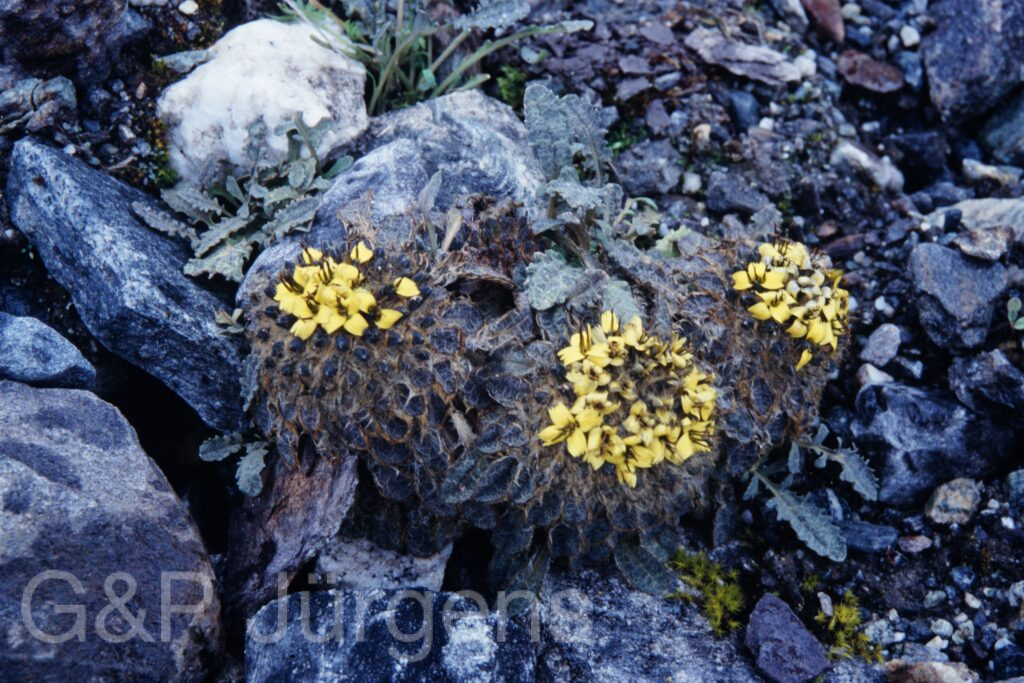
Stebbins

Sikkim2003 292 P406 2
Sikkim Dzongri 4300m August

Description

Soroseris pumila is a high-alpine cushion composite restricted to the eastern Himalaya, recorded from Nepal, northern India (Sikkim) and Bhutan, with only about 97 GBIF records reflecting both its narrow range and the inaccessibility of its habitat. It is a plant of the upper alpine and subnival zones, growing on open screes, gravelly flats, moraine and stony turf well above the treeline, typically between about 4000 and 5000 m. The Sikkim population imaged at Dzongri at 4300 m in August captures the species in its characteristic late-summer flowering, when the brief post-snowmelt growing season allows these dwarf perennials to bloom and set seed.

The plant is a diminutive, often almost stemless perennial with a stout, deep taproot and a congested rosette or low tuft of leaves pressed close to the substrate, an adaptation to wind, cold and intense irradiation. The leaves are narrowly oblanceolate to spathulate, entire to pinnately lobed, and the foliage exudes milky latex when broken. The capitula are crowded into a dense terminal cluster nestled among the leaves; each head is ligulate with yellow ray florets, the corollas five-toothed. The fruit is a cypsela bearing a pappus of soft white bristles that facilitates wind dispersal across the open high-mountain terrain.

Soroseris is a small genus of cushion-forming lactucoid composites endemic to the high mountains of the Sino-Himalaya, and S. pumila is among the most reduced, dwarfed members, its compact habit typical of the subnival flora. Its restricted distribution and specialised habitat at the upper limit of plant life make it a notable element of eastern Himalayan alpine biogeography; while not formally assessed, such narrow-range high-elevation endemics are intrinsically vulnerable to climatic warming and habitat shift.

Author: Stebbins · Sources: POWO (Kew), GBIF, Flora of China, Flora of Bhutan, Annotated Checklist of the Flowering Plants of Nepal, Stebbins' revision of Soroseris and Crepidinae (monograph)

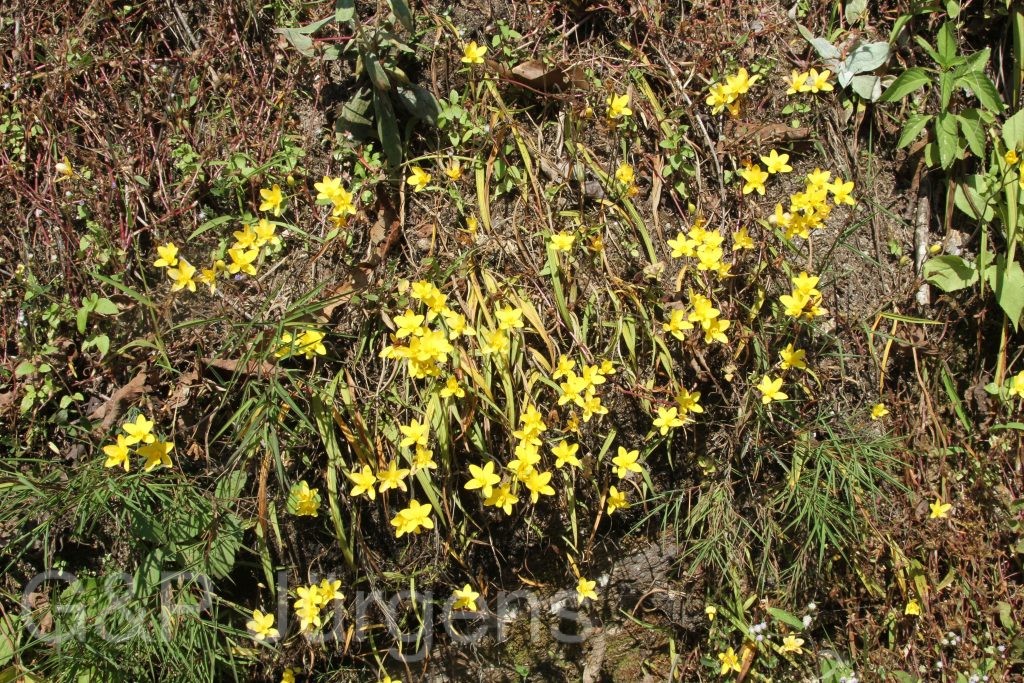
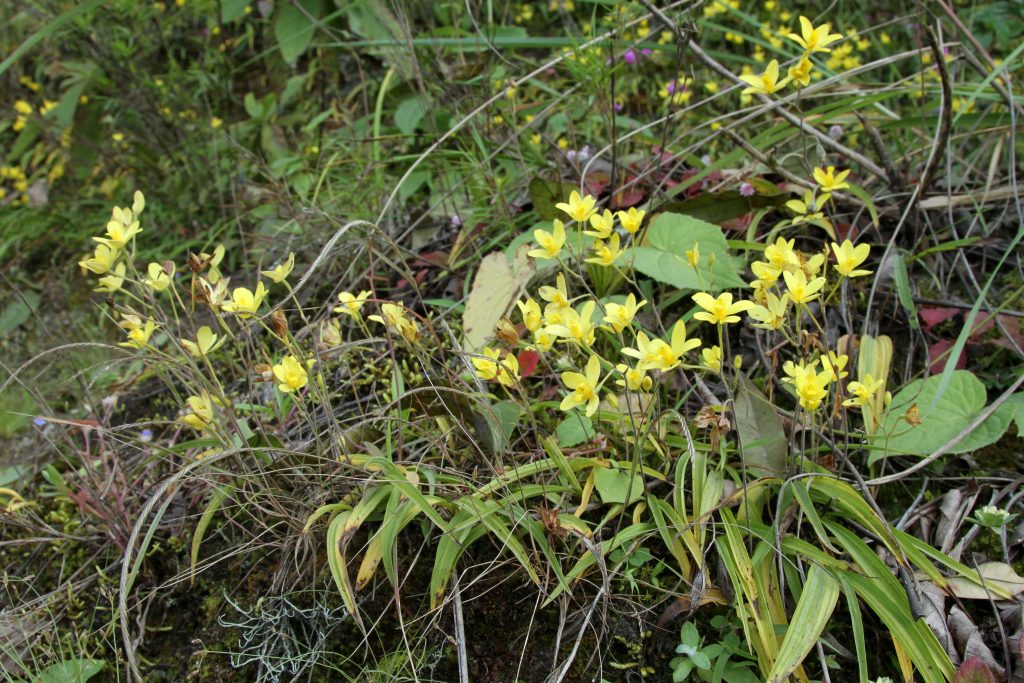
(D.Don) Lindl.

Bhutan2015 77
Bhutan Wangdi Galegphug 1500m, October
Bhutan2012 641
Bhutan Tserang 1600m, September
Bhutan2012 642
Bhutan Tserang 1600m, September

Description

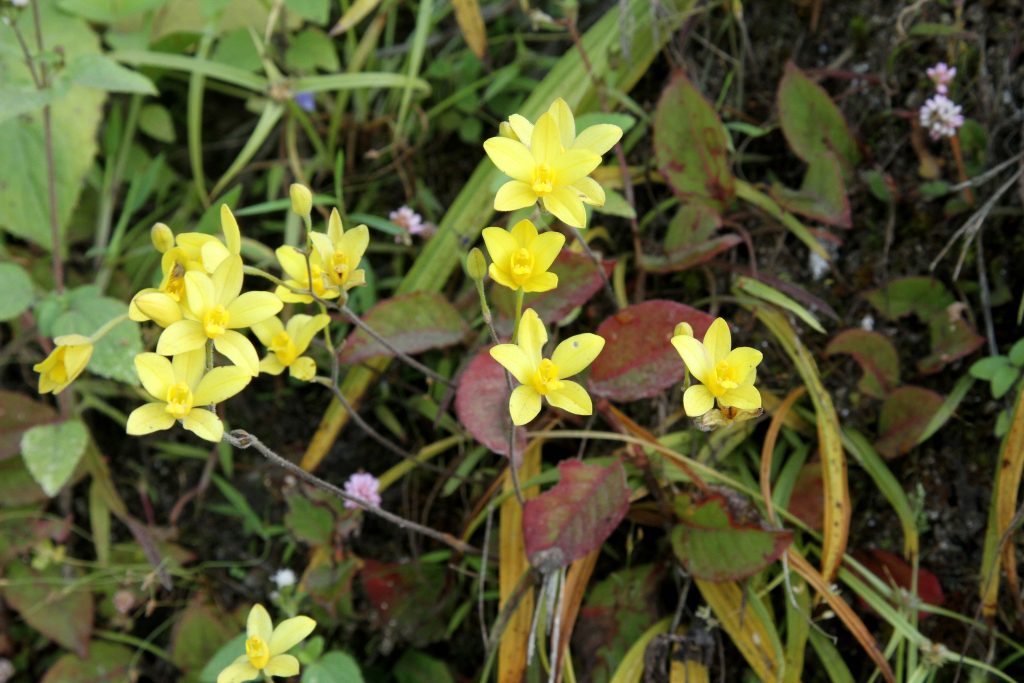
Spathoglottis ixioides is a small terrestrial orchid of the Himalaya, recorded from Nepal, India, Bhutan and China, a relatively narrowly distributed species with 146 occurrences in GBIF. It grows on open grassy banks, mossy rock ledges, humus-rich slopes and forest margins, generally between 1500 and 3500 m. The Bhutanese localities given, Wangdi Galegphug at about 1500 m in October and Tserang at 1600 m in September, reflect the warm-temperate to subtropical montane grassland and bank habitats where it flowers in the post-monsoon autumn, often among grasses on damp, partly shaded ground.

The species is a dwarf, deciduous, terrestrial herb growing from a small subterranean pseudobulb or corm-like tuber. From this arise a few narrowly lanceolate, plicate (longitudinally pleated) leaves that taper to a slender base. The slender erect inflorescence carries one to a few comparatively large flowers; the floral segments are bright yellow, with spreading ovate-lanceolate sepals and petals and a distinctly three-lobed labellum bearing raised keels or calli on the disc and small lateral lobes flanking the column. The fruit is a small ellipsoid dehiscent capsule releasing numerous dust-like seeds.

Spathoglottis (subtribe Collabiinae, tribe Collabieae of the Epidendroideae) is chiefly a tropical Asian and Pacific genus, and S. ixioides is among its most cold-tolerant, high-altitude members, the yellow flowers and reduced deciduous habit distinguishing it within the genus. Like most terrestrial orchids it depends on mycorrhizal fungi for germination of its minute seeds and is pollinated by bees. Although locally frequent in suitable habitat, its restricted range, specialised ecology and the broad pressures of habitat disturbance and orchid collection warrant monitoring, and all orchids are listed under CITES Appendix II.

Author: (D.Don) Lindl. · Sources: POWO (Kew), GBIF, Flora of Bhutan, Orchids of Bhutan, Genera Orchidacearum (Pridgeon et al.)

Gaertn.

Nepal 97 49 P74
Nepal Mewa-Khola 1100m April

Description

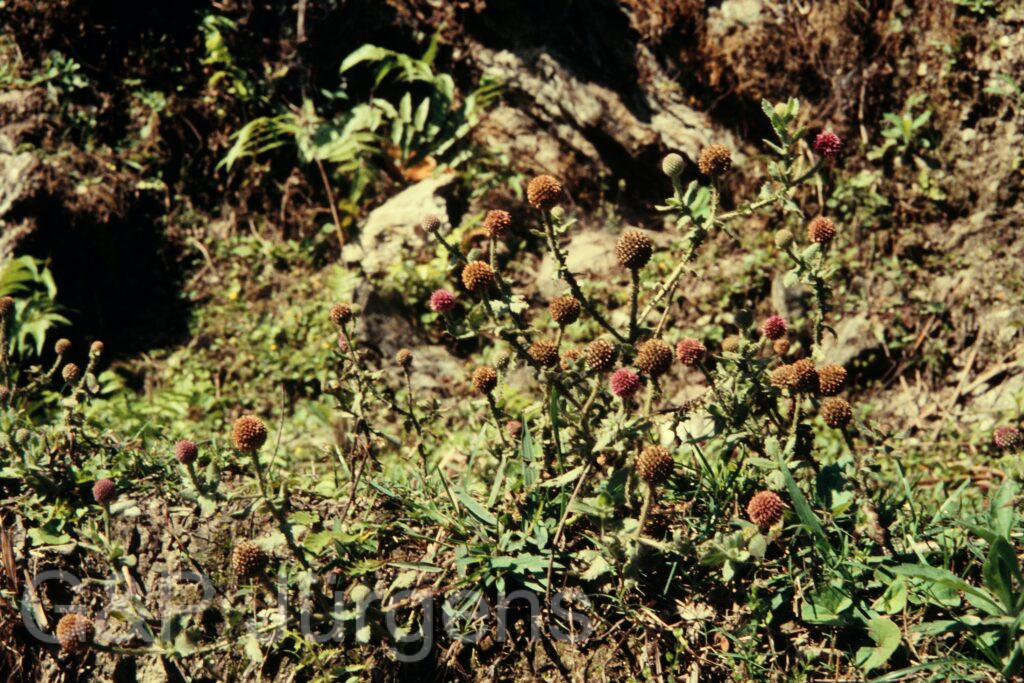
Sphaeranthus indicus Gaertn. is a widespread weedy annual of the Old World tropics and subtropics, with a very broad GBIF footprint (over 1200 occurrences) spanning India, Sri Lanka, Bangladesh, Nepal, Bhutan, Myanmar, Thailand, Laos, Vietnam, southern China and Indonesia, and extending to Australia, Madagascar, Kenya and Ethiopia. It is a plant of seasonally wet, open ground: rice-field margins, fallows, ditches, damp wastelands and the receding edges of pools and tanks, mostly at low elevations. The specimen photographed at Mewa-Khola in Nepal at 1100 m in April occurs in the warm subtropical foothill belt at the upper margin of its lowland range, where post-monsoon wet ground provides its preferred germination sites.

It is a strongly aromatic annual herb with a much-branched, often reddish, ascending to spreading stem bearing conspicuous toothed or undulate wings formed by the decurrent leaf bases. The leaves are obovate to oblanceolate, sessile, and serrate-dentate. The diagnostic feature is its compound capitulescence: numerous tiny, narrow secondary heads are aggregated into a dense, globose to ovoid, purple to violet compound head terminating each branch. Each small head contains a few peripheral female florets and central bisexual florets with tubular corollas. The fruit is a minute, oblong cypsela lacking a conspicuous pappus.

The genus Sphaeranthus is distinctive within tribe Inuleae for its glomerulate, second-order capitula, and S. indicus is its most familiar and economically significant species, valued throughout South Asia in Ayurvedic and folk medicine for its essential oils and bioactive sesquiterpenoids and flavonoids. Ecologically it behaves as a pioneer of disturbed, periodically inundated soils and is locally abundant; it is of least conservation concern and indeed often regarded as a ruderal weed across its pantropical range.

Author: Gaertn. · Sources: POWO (Kew), GBIF, Flora of China, Flowers of the Himalaya, Annotated Checklist of the Flowering Plants of Nepal, Anderberg monograph of tribe Inuleae

Hook.f.

Bhut09 528G 14.06.
Bhutan Jakar 2600m, June
Nepal 99 585 ergebnis
West-Nepal Garpung-Khola 3500m, July

Description

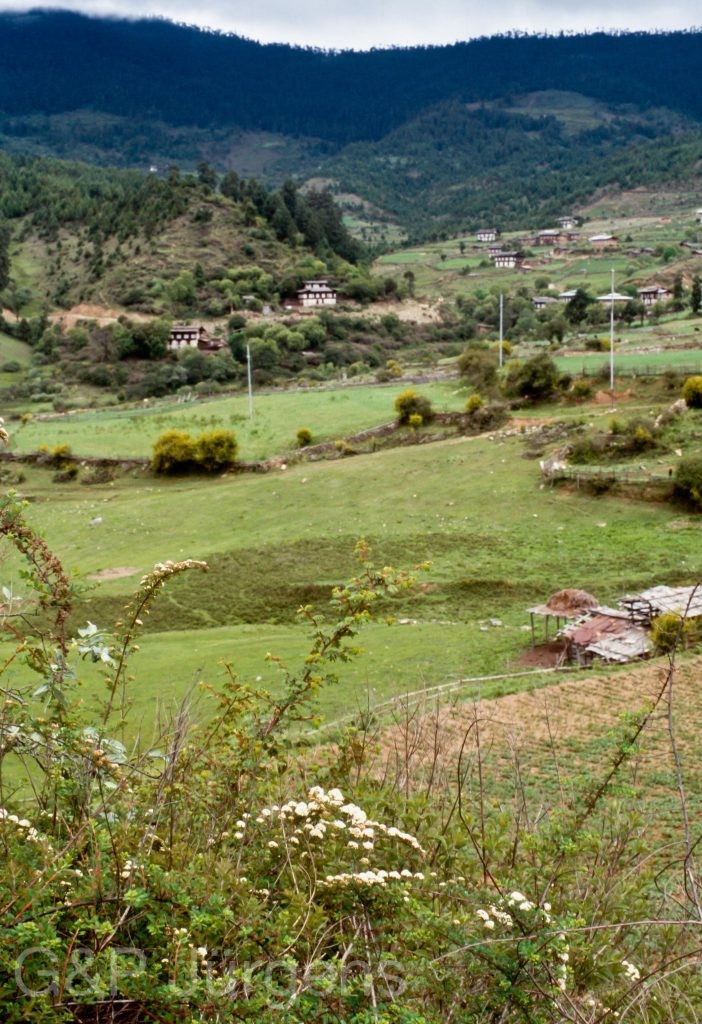
Spiraea arcuata is a Himalayan and Sino-Himalayan shrub native to Nepal, China, India, Bhutan and Myanmar, with about 376 GBIF records, supplemented by cultivated occurrences in Europe and North America. It grows in the temperate and subalpine zone on open hillsides, forest margins, scrub and rocky slopes. The cited records span its altitudinal range, from Jakar in central Bhutan at around 2600 m flowering in June to the Garpung-Khola in western Nepal at about 3500 m in July, where it forms part of the deciduous shrub component of montane vegetation on well-drained slopes.

The plant is a deciduous shrub with slender, arching to recurved branches, the epithet alluding to their curving habit. The leaves are small, alternate, simple, obovate to oblong-elliptic, entire or with a few apical teeth, glabrous to thinly hairy and often paler beneath. The white flowers are numerous and crowded in dense, rounded, corymb-like clusters borne along the branches; each small flower has five petals, a shallow hypanthium, numerous stamens, and several free carpels. The fruit is a cluster of small, dehiscent follicles each containing several narrow seeds.

Described by Hooker f., S. arcuata belongs to the section of pink- to white-flowered Himalayan spiraeas. The genus is taxonomically intricate, with much intergradation among the alpine and subalpine species of the region. Several Himalayan Spiraea, including this one, are valued horticulturally for their profuse spring and early-summer flowering. With its broad distribution and tolerance of open and disturbed montane habitats, the species is not regarded as threatened.

Author: Hook.f. · Sources: POWO (Kew), GBIF, Flora of Bhutan, Flora of China, Rehder's account of Spiraea

Spiraea bella

by GP Jürgens

Sims

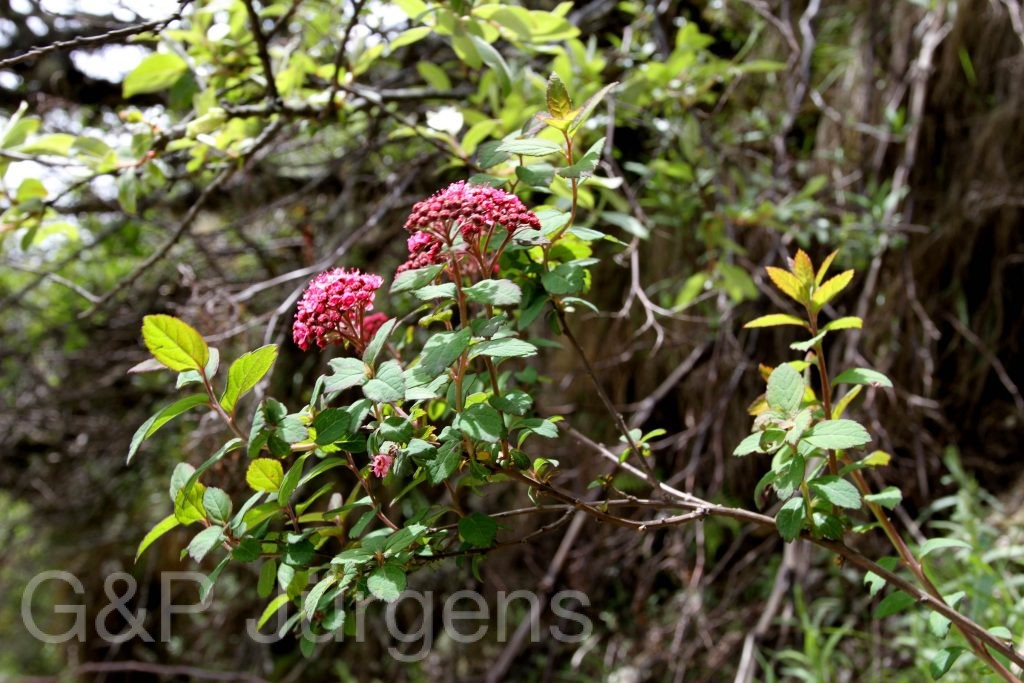
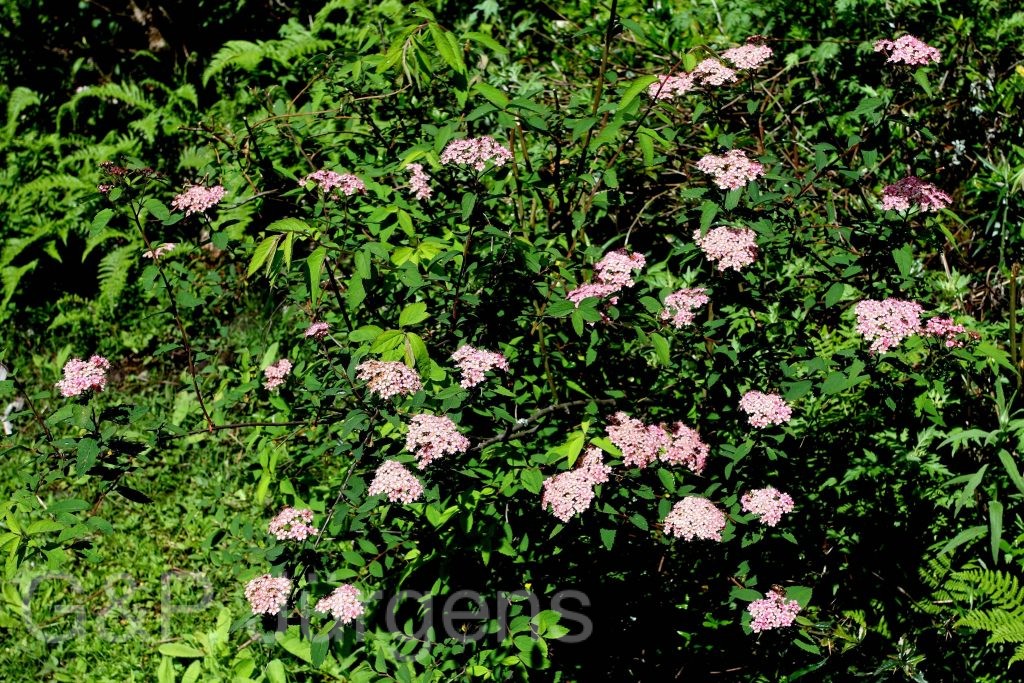
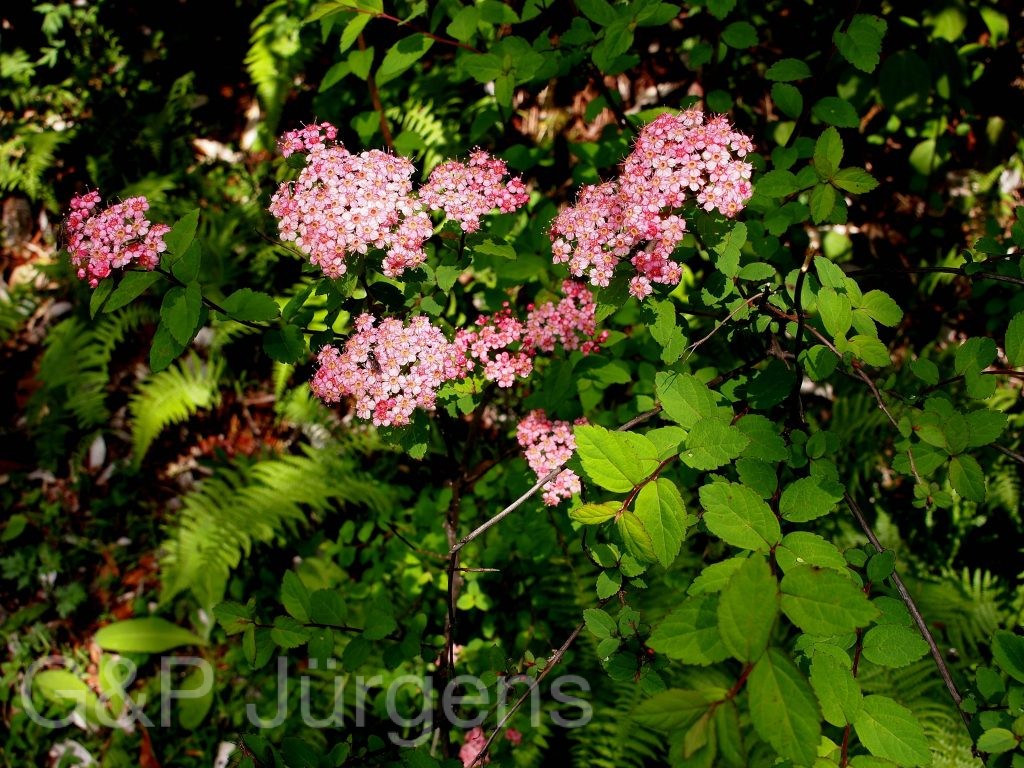
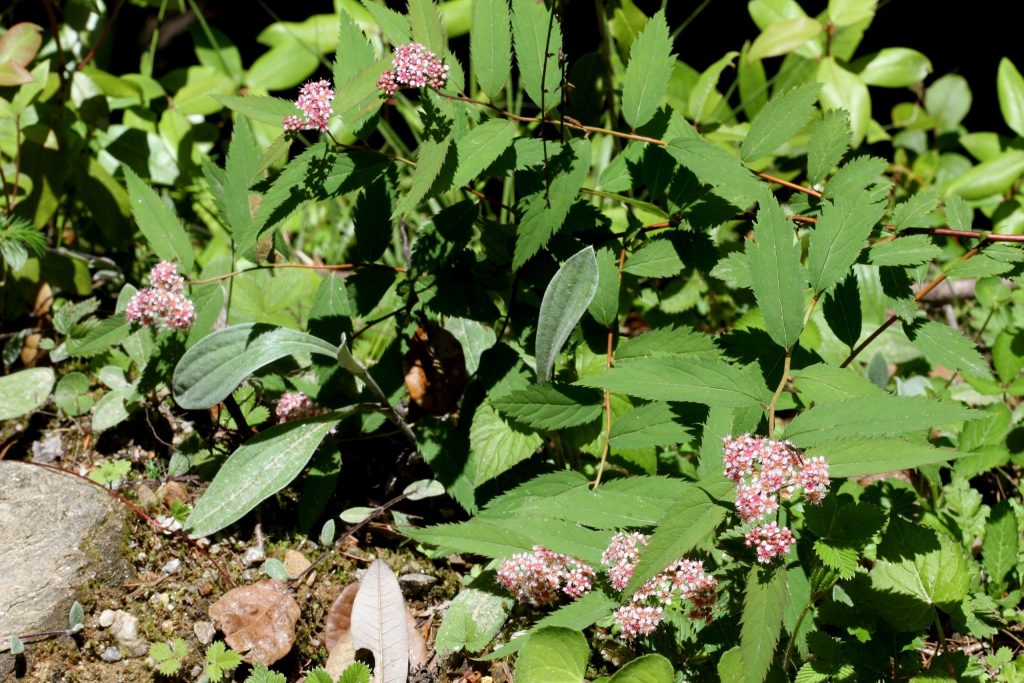
Sikkim2011 38
Sikkim Lachung 2850m, June
Sikkim2011 194
Sikkim Lachung 2850m, June
Sikkim2011 196
Sikkim Lachung 2850m, June

Description

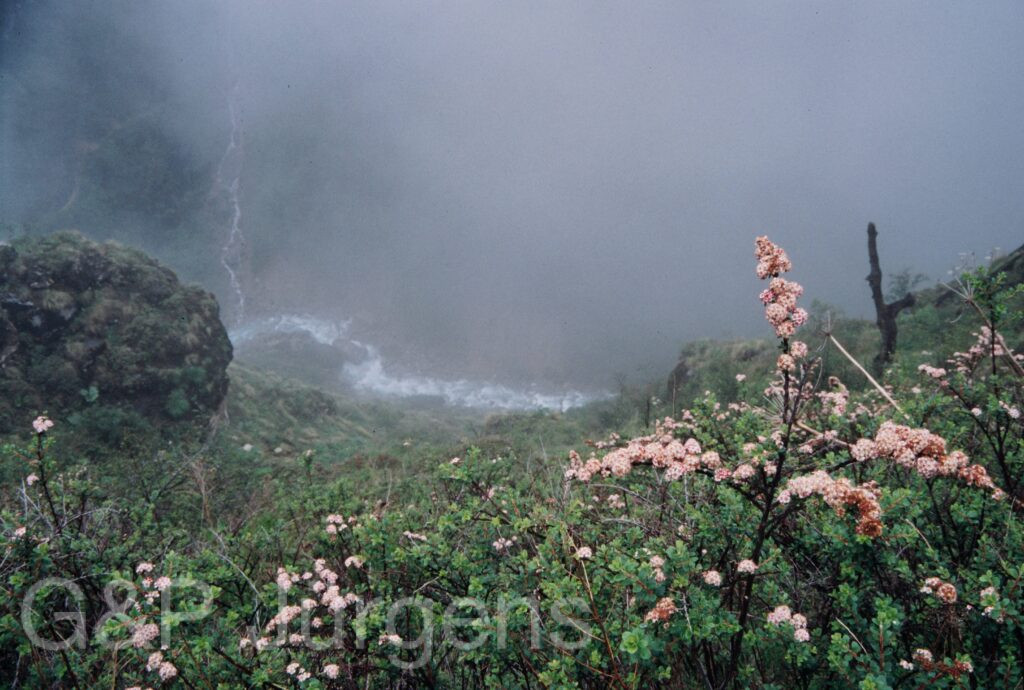
Spiraea bella is a deciduous shrub distributed along the Himalaya and into adjacent China, with verified occurrences spanning China, India, Nepal, Bhutan, Pakistan and Myanmar; further GBIF records from Japan, Korea and numerous European and North American countries reflect its long cultivation as an ornamental. It is a plant of temperate forest margins, open slopes, ravines and shrubberies, typically between about 2000 and 3500 m. The photographed material from Lachung in northern Sikkim at around 2850 m in June, in full bloom, exemplifies its montane habitat in moist, cool valleys.

The species forms an erect to spreading shrub usually 1-2 m tall with slender, angled, reddish-brown branchlets. The alternate, shortly petiolate leaves are ovate to ovate-lanceolate, sharply and often doubly serrate, green above and paler, sometimes thinly pubescent on the veins beneath. Flowers are crowded into terminal corymbs borne on short lateral shoots; each small flower has five rounded pink to rose petals and numerous stamens that exceed the petals, giving the inflorescence a feathery aspect. The fruit is an aggregate of small glabrous to sparsely hairy follicles that split along the inner suture to release minute seeds.

Spiraea bella belongs to a complex of pink-flowered Himalayan spiraeas allied to S. canescens and S. japonica, within which leaf shape and indumentum provide the principal diagnostic characters. Long valued in gardens for its early-summer flowering, it functions ecologically as a nectar source for insects and a component of regenerating forest-edge scrub. It is widespread and locally common, and faces no recognised conservation threat across its broad native range.

Author: Sims · Sources: POWO (Kew), GBIF, Flora of China, Flora of Bhutan, Flowers of the Himalaya

Hook.f.

BhutanPG2011 83 ergebnis scaled
Bhutan Chogcham, 3000m June

Description

Spiraea micrantha is a deciduous shrub of the temperate forests and forest margins of the eastern Himalaya, native to Nepal, Bhutan, India and adjacent China, with around 208 documented occurrences (records from Britain and North America representing cultivated material). It grows in open mixed and conifer forest, woodland edges, scrub and along streambanks, typically between about 2500 and 3300 m. The photographed plant was recorded at Chogcham in Bhutan at 3000 m, flowering in June, when these mid-montane shrubs come into bloom at the start of the summer growing season.

The species is a much-branched shrub with slender, arching, glabrous to thinly pubescent reddish-brown branches. The leaves are alternate, simple and ovate to elliptic-lanceolate, acuminate at the apex and serrate to doubly serrate along the margin, glabrous or sparsely hairy and somewhat glaucous beneath, on short petioles. The inflorescences are lax, terminal, leafy-based corymbose panicles of numerous small flowers (the epithet micrantha denoting the small blooms); each flower has five rounded white to pinkish petals, a shallow campanulate hypanthium, and numerous exserted stamens longer than the petals. The fruit is a cluster of small, glabrous, dehiscent follicles.

Spiraea, of the family Rosaceae and subfamily Amygdaloideae (tribe Spiraeeae), is a north-temperate genus of ornamental shrubs; S. micrantha belongs to the group of Himalayan species with terminal panicle-like inflorescences, distinguished by its small flowers and acuminate, sharply serrate leaves. As a forest-margin shrub it is insect-pollinated and contributes to montane understorey structure. Widespread across the eastern Himalaya and locally common, it is not considered to be of conservation concern.

Author: Hook.f. · Sources: POWO (Kew), GBIF, Flora of Bhutan, Flora of China, A Monograph of the Genus Spiraea