
Sims
Description
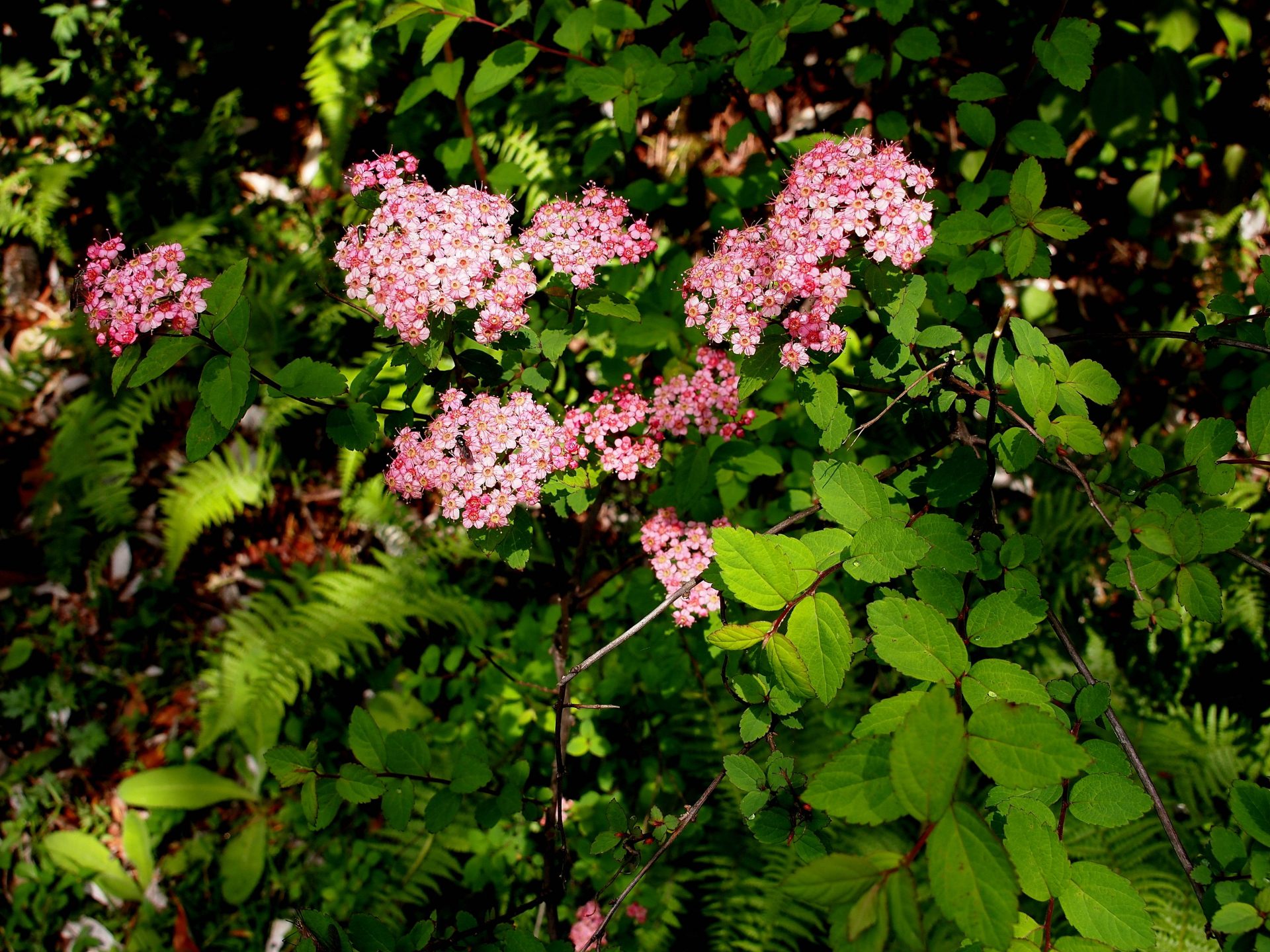
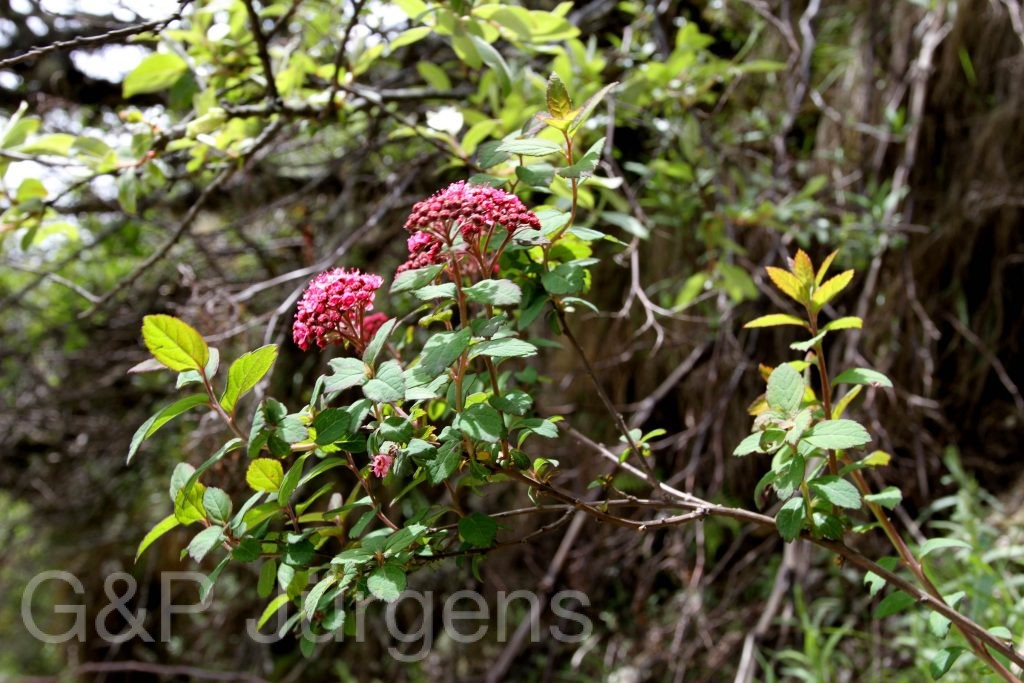
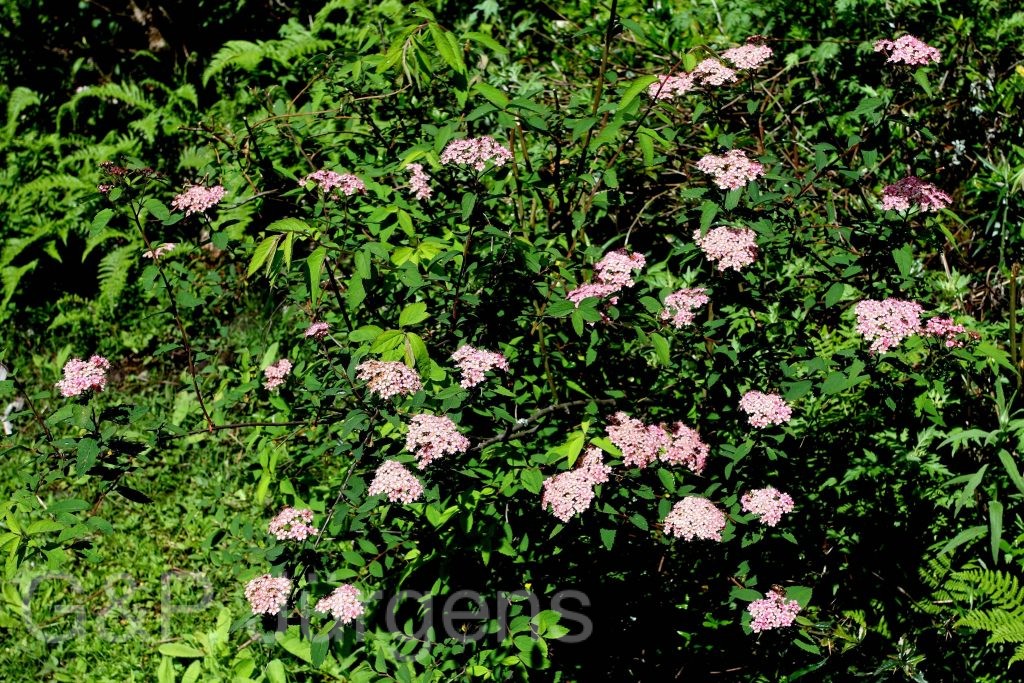
Spiraea bella is a deciduous shrub distributed along the Himalaya and into adjacent China, with verified occurrences spanning China, India, Nepal, Bhutan, Pakistan and Myanmar; further GBIF records from Japan, Korea and numerous European and North American countries reflect its long cultivation as an ornamental. It is a plant of temperate forest margins, open slopes, ravines and shrubberies, typically between about 2000 and 3500 m. The photographed material from Lachung in northern Sikkim at around 2850 m in June, in full bloom, exemplifies its montane habitat in moist, cool valleys.
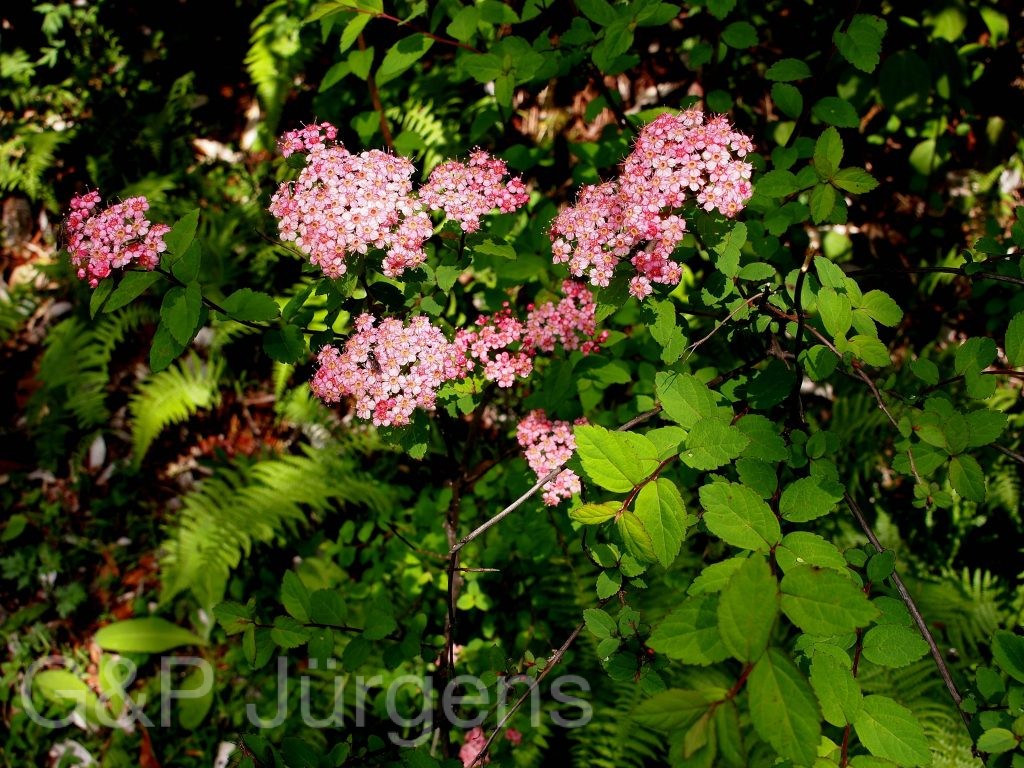
The species forms an erect to spreading shrub usually 1-2 m tall with slender, angled, reddish-brown branchlets. The alternate, shortly petiolate leaves are ovate to ovate-lanceolate, sharply and often doubly serrate, green above and paler, sometimes thinly pubescent on the veins beneath. Flowers are crowded into terminal corymbs borne on short lateral shoots; each small flower has five rounded pink to rose petals and numerous stamens that exceed the petals, giving the inflorescence a feathery aspect. The fruit is an aggregate of small glabrous to sparsely hairy follicles that split along the inner suture to release minute seeds.
Spiraea bella belongs to a complex of pink-flowered Himalayan spiraeas allied to S. canescens and S. japonica, within which leaf shape and indumentum provide the principal diagnostic characters. Long valued in gardens for its early-summer flowering, it functions ecologically as a nectar source for insects and a component of regenerating forest-edge scrub. It is widespread and locally common, and faces no recognised conservation threat across its broad native range.
Author: Sims · Sources: POWO (Kew), GBIF, Flora of China, Flora of Bhutan, Flowers of the Himalaya