Tag:

Bhutan

Flowers of Bhutan — 1326 plant species documented across the Bhutanese Himalaya, from dense broadleaf and conifer forests to alpine scrub and meadows. Bhutan’s largely intact wilderness shelters an exceptional diversity of orchids, rhododendrons, primulas and Himalayan poppies, many of them regional endemics. Each species page includes a botanical description, distribution, habitat and flowering time, with the original photograph and its recorded altitude and locality.

(Wight & Arn.) Benth.
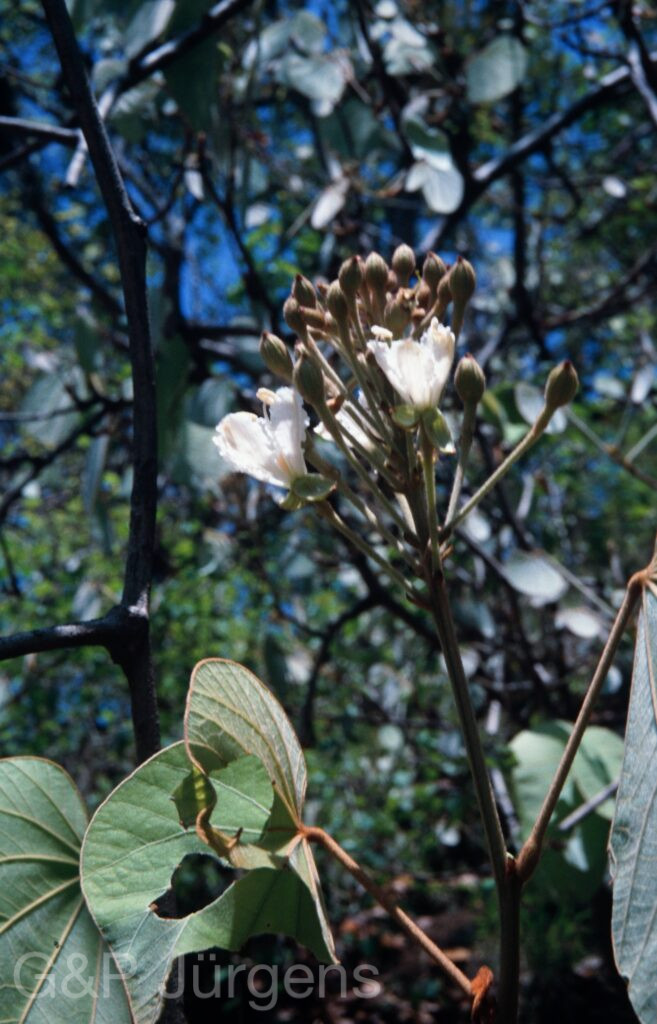
Nepal 2001 184 ergebnis ergebnis
East-Nepal Sabha-Khola 2000m, May
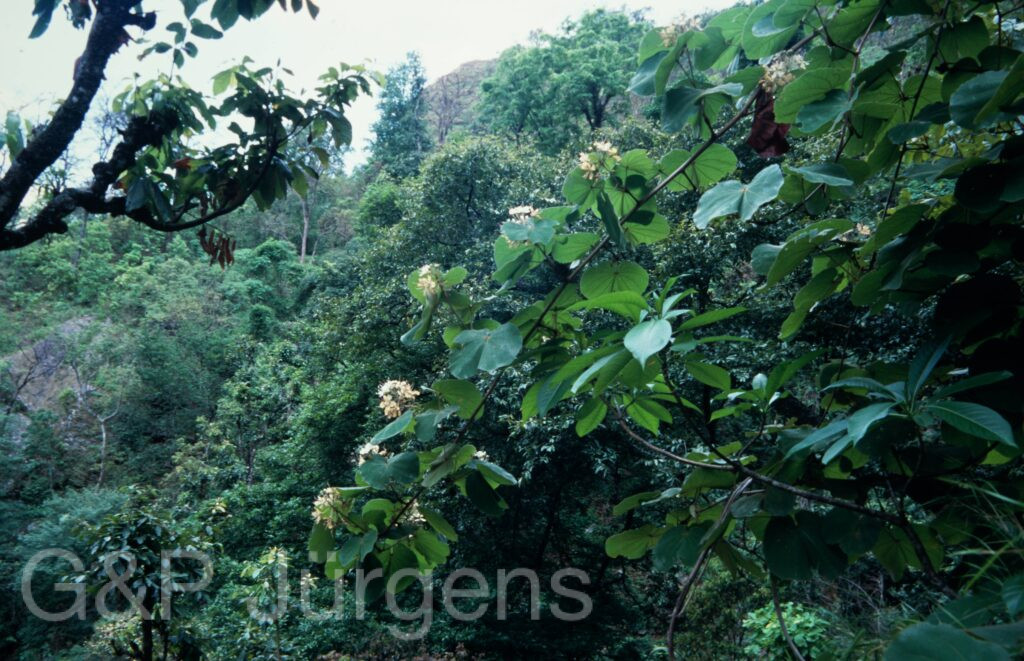
Nepal 2001 476 ergebnis ergebnis
Nepal (Gorkha) Labubhesi 1200m, May

Description

Phanera vahlii (formerly placed in Bauhinia) is a massive woody climber of the Indian subcontinent and Indo-Burmese region, native to India, Nepal, Bhutan, Bangladesh, Myanmar, Laos, Vietnam and China, with over 400 georeferenced records and many further occurrences reflecting cultivation and naturalisation elsewhere. It is a liana of subtropical forests, riverine thickets and forest edges. The Nepalese populations documented from the Sabha Khola in the east at about 2000 m and from Labubhesi in Gorkha at about 1200 m, both flowering in May, span its broad altitudinal tolerance from foothill valleys into temperate forest.

The plant is a gigantic, high-climbing leguminous vine ascending by paired, coiled tendrils, with stems and young parts clothed in dense ferruginous tomentum. The leaves are large, broadly orbicular and conspicuously bilobed at the apex, deeply notched between two rounded lobes in the manner characteristic of the Bauhinia alliance, the lower surface rusty-pubescent. The flowers are borne in large terminal panicles; each has a campanulate calyx and five cream to yellowish-white, clawed petals, with fertile stamens and reduced staminodes. The fruit is a large, woody, oblong pod densely covered with brown velvety hairs and containing several flattened seeds.

The segregation of Phanera from Bauhinia, based on tendrillate climbing habit, stamen number and pollen characters, is now widely followed though some authorities retain a broadly circumscribed Bauhinia. The species is economically important: its tough fibre yields cordage and its very large leaves are used as plates and for wrapping. Widespread and frequently exploited, it is not considered threatened.

Author: (Wight & Arn.) Benth. · Sources: POWO (Kew), GBIF, Flora of Nepal, Flora of British India, Flora of China, Wunderlin's revision of Bauhinia and Phanera
(Forssk.) Sweet

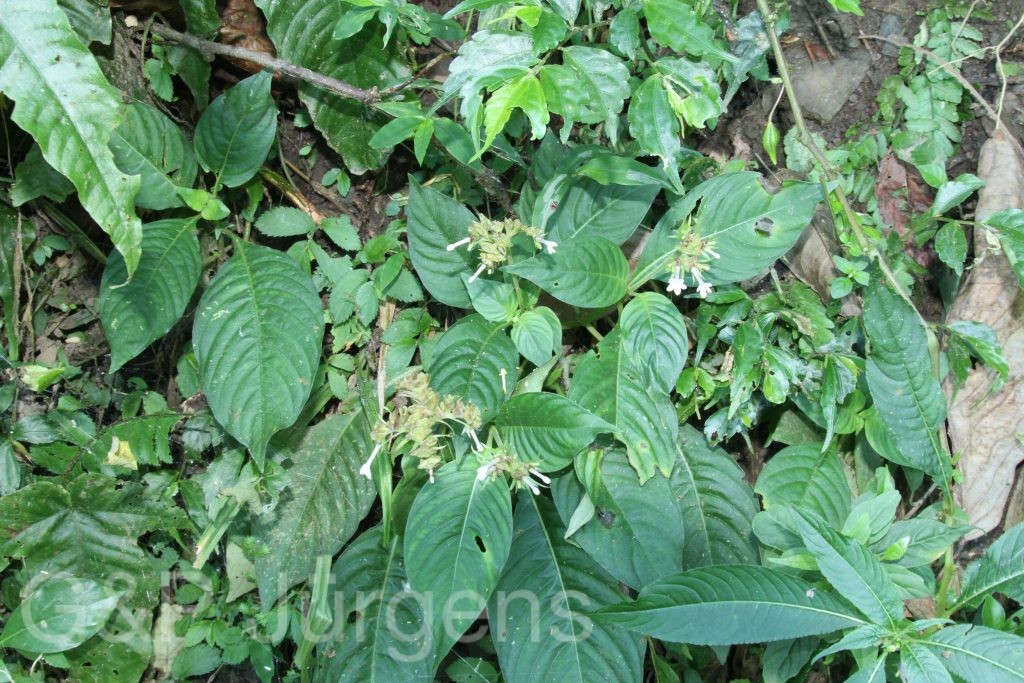
Bhutan2015 104
Bhutan Galephug 600m, October
Bhutan2015 107
Bhutan Galephug 600m, October

Description

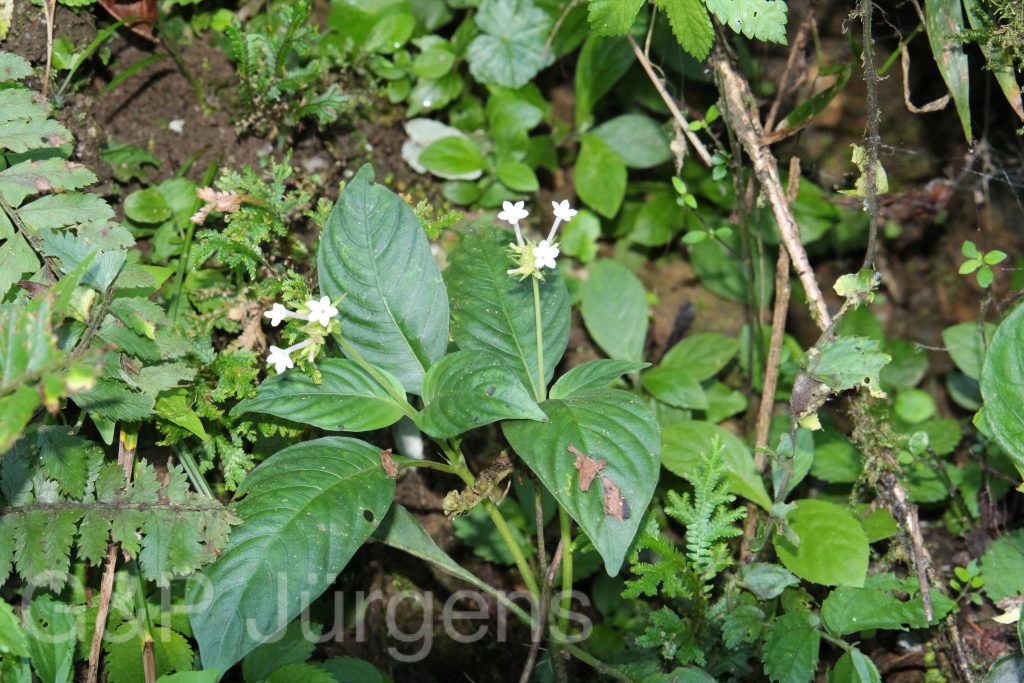
Phaulopsis imbricata is a widespread tropical herb whose principal range lies across sub-Saharan Africa and Madagascar, GBIF recording over 2700 occurrences from countries including South Africa, Tanzania, Ethiopia, Kenya, Cameroon, Uganda, Zambia, Zimbabwe, Mozambique and Madagascar. The Himalayan material represented here, photographed in Bhutan at Galephug at 600 m in October, lies at the lowland subtropical margin of its distribution, where it occurs in the warm, humid foothill belt. Throughout its range it grows in shaded, moist forest understorey, along streambanks, forest margins and disturbed ground.

It is a soft, decumbent to ascending perennial or annual herb with quadrangular, often rooting stems. The leaves are opposite and frequently markedly anisophyllous (unequal in each pair), ovate to elliptic, with entire to undulate margins and pinnate venation. The flowers are borne in dense, secund, imbricate, spike-like cymes subtended by conspicuous, overlapping, often whitish or pale bracts, from which the epithet derives. Each flower has a small, white to pale bluish, two-lipped tubular corolla, two or four stamens, and a bilocular ovary. The fruit is the characteristic acanthaceous loculicidal capsule with a retinaculate (jaculator) seed-ejection mechanism.

The species belongs to the Acanthaceae (subfamily Acanthoideae) and is the type and most variable member of the small Old World genus Phaulopsis. Its enormous geographic and ecological amplitude has generated considerable infraspecific variation and a long synonymy. As a tolerant colonist of forest edges and disturbed sites it is not of conservation concern; its disjunct presence in the eastern Himalaya illustrates the Afro-Asian links of moist tropical floras.

Author: (Forssk.) Sweet · Sources: POWO (Kew), GBIF, Flora Zambesiaca, Flora of Tropical East Africa, Flora of Bhutan, monograph of Phaulopsis (Manktelow)

Wall. ex G. Don

Sikkim2011 33
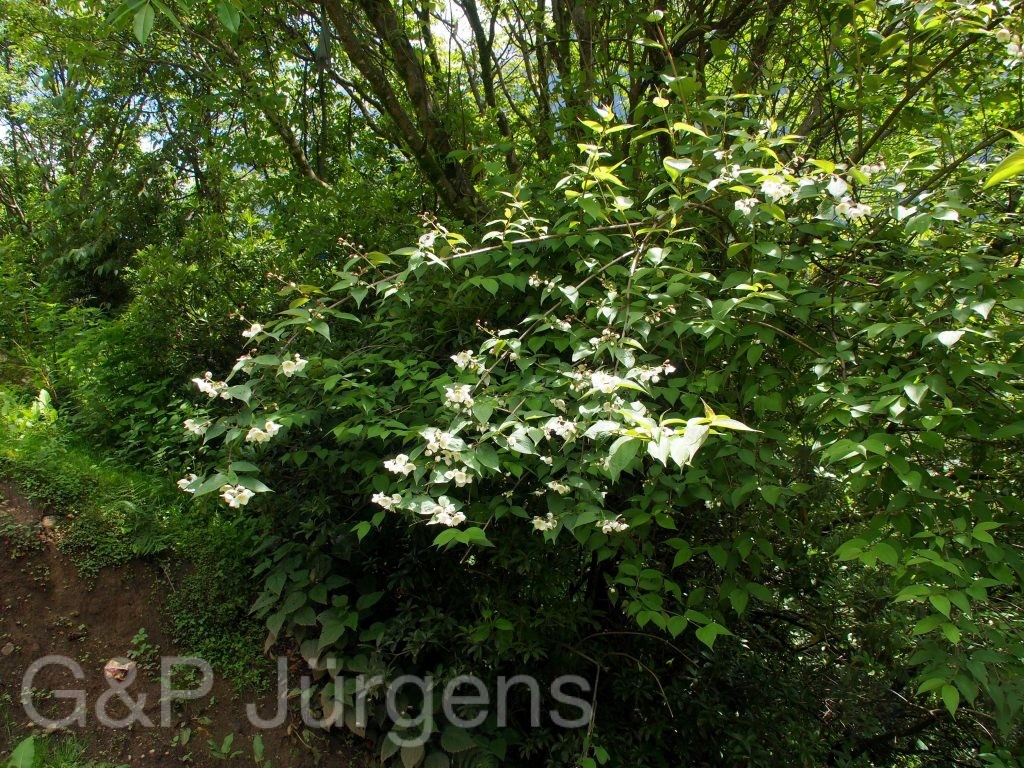
Sikkim Lachung 2600m, June
Sikkim2011 177
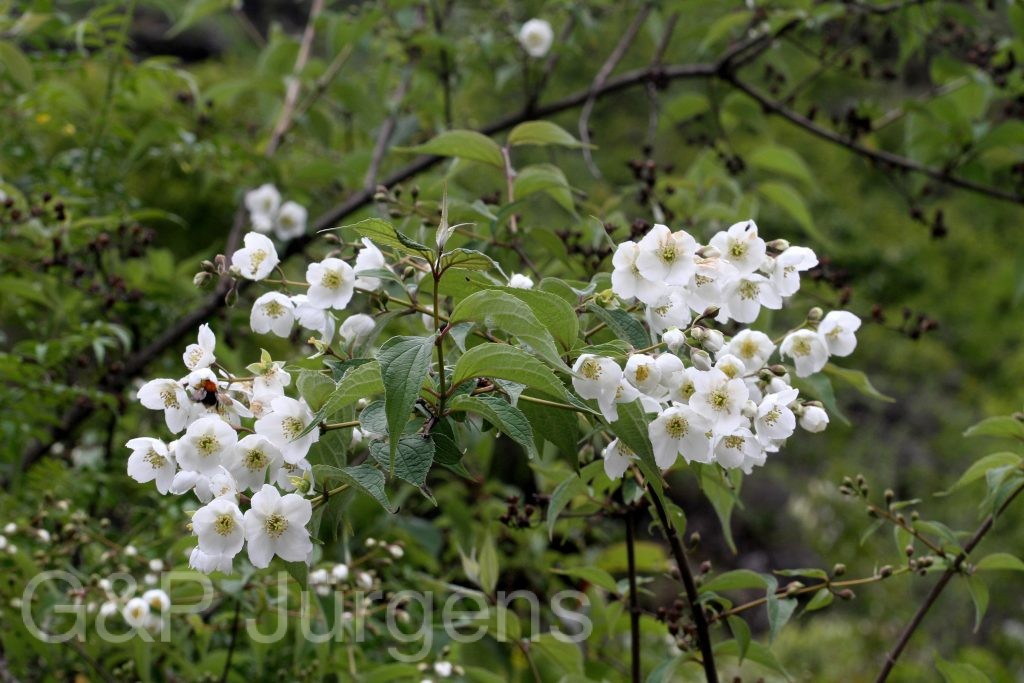
Sikkim Lachung 2600m, June
Sikkim2011 390
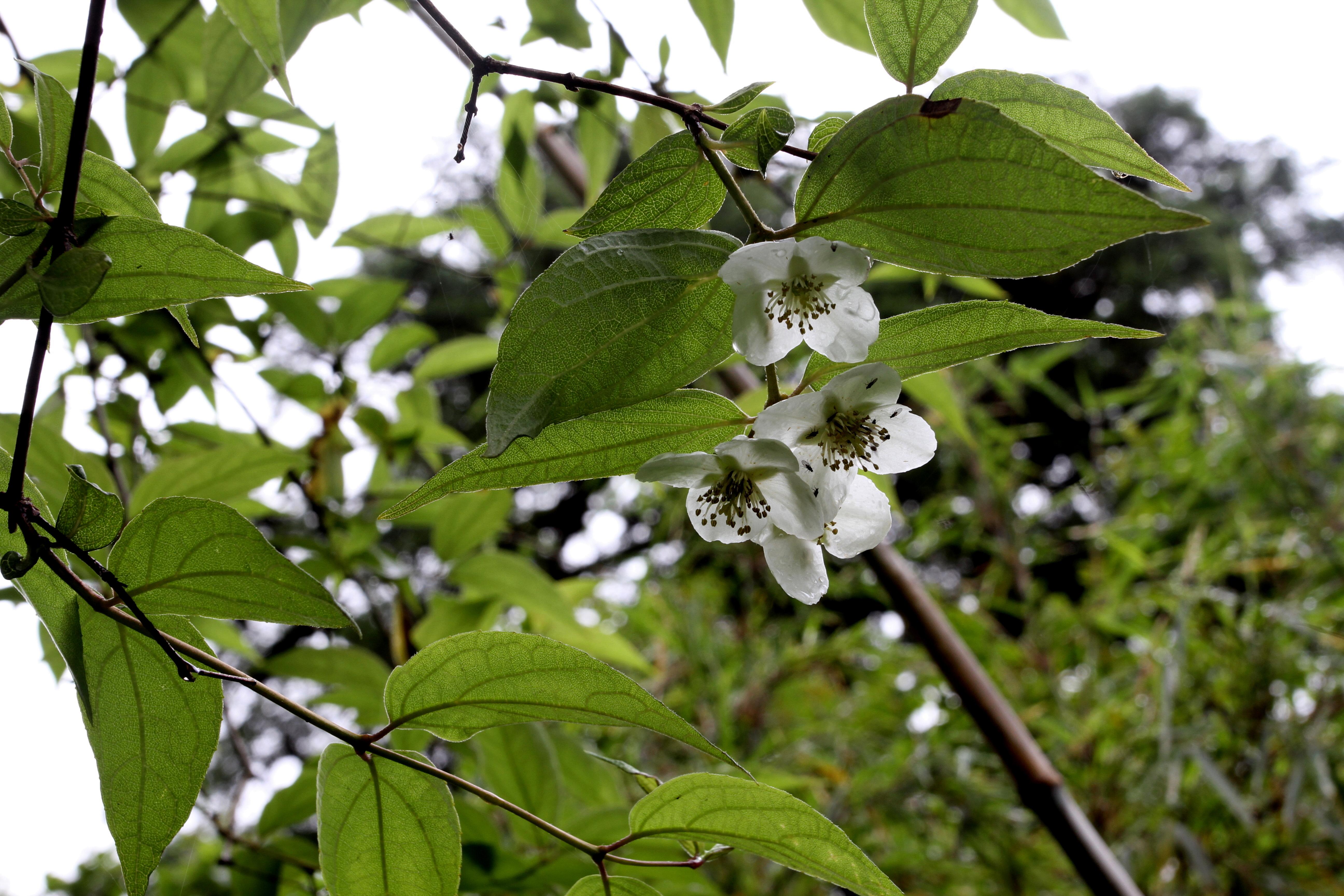
Sikkim Lachung 2600m, June

Description

Philadelphus tomentosus, the Himalayan mock-orange, is native to the temperate Himalaya, ranging from Nepal through Sikkim and Bhutan into northern India and SW China, with the many additional GBIF country codes (US, DE, BE, GB, PL and others) reflecting its wide cultivation as an ornamental shrub rather than a natural range. Some 388 occurrence records underpin this. The photographed plant was found at Lachung in northern Sikkim at about 2,600 m in June, at the onset of flowering. In the wild it is a shrub of temperate forest margins, ravines, open slopes and streamsides, typically between 1,800 and 3,000 m, often among mixed broadleaf and conifer woodland.

It is a deciduous shrub with arching branches and exfoliating bark on older stems. The leaves are opposite, ovate to ovate-lanceolate, acuminate, with a denticulate margin and three to five main veins from the base; the lower surface is densely tomentose with greyish hairs, a character giving the species its epithet. The flowers are borne in terminal racemes or panicles and are fragrant, with four white obovate petals, a cup-shaped hypanthium, four sepals and numerous stamens surrounding a four-locular inferior ovary tipped by partly divided styles. The fruit is a small woody capsule dehiscing loculicidally to release numerous minute seeds.

The genus Philadelphus is centred on the Northern Hemisphere and is taxonomically complex owing to hybridisation and horticultural selection; the leaf indumentum and floral dimensions distinguish P. tomentosus from related Asian species. Long valued in gardens for its scented blossom, it has naturalised in parts of Europe and North America. It remains common in its native montane forests and is of no conservation concern.

Author: Wall. ex G. Don · Sources: POWO (Kew), Flora of China Vol. 8, Flora of Bhutan Vol. 1, GBIF, Hu: A Monograph of the Genus Philadelphus

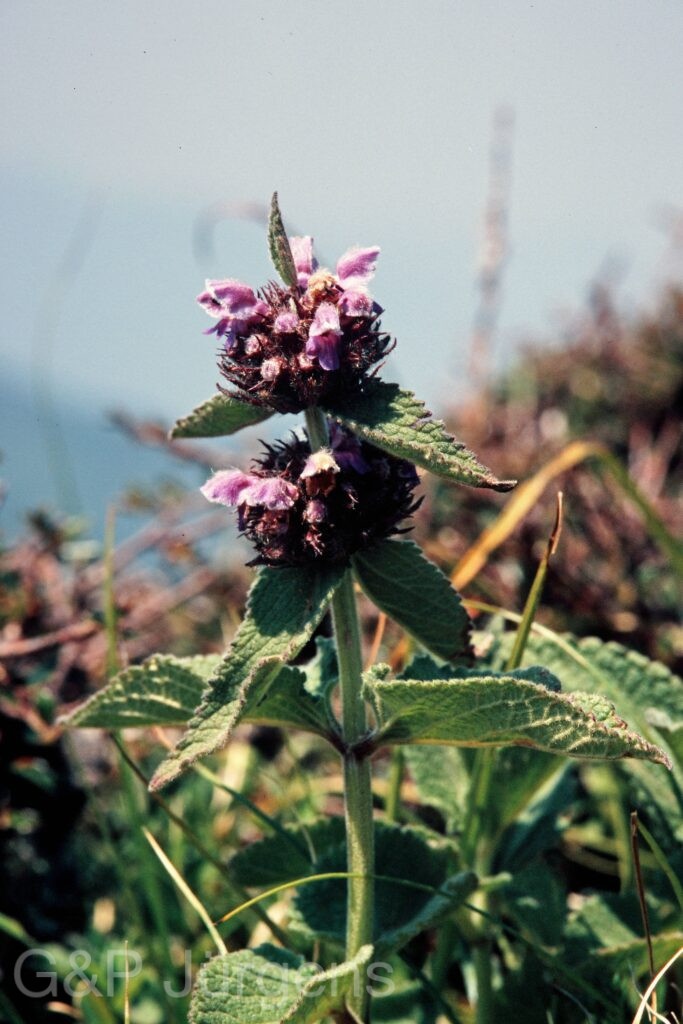
(Royle ex Benth.) Kamelin & Makhm.

Nepal 99 353 ergebnis
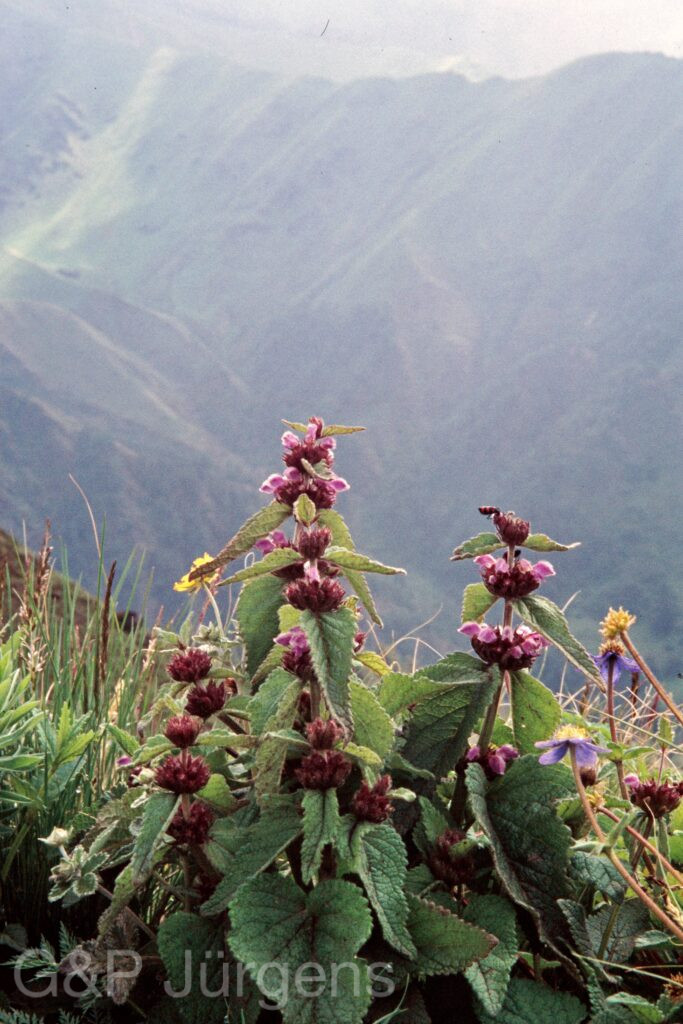
West-Nepal Kalmura 3700m, June
Garh 07 209 ergebnis
India Garhwal Panwali 3300m, June

Description

Phlomoides bracteosa is a robust perennial herb of the alpine and subalpine zones of the western and central Himalaya and adjacent Central Asia. Its distribution, documented from over 330 georeferenced records, spans India, Pakistan, Nepal, Afghanistan, China, Bhutan and Kazakhstan, reflecting a broad Irano-Turanian to Sino-Himalayan range. It favours open grassy slopes, forest margins, moist meadows and stabilised screes, typically between 2500 and 4000 m. The accompanying material was gathered at Kalmura in West Nepal at 3700 m and at Panwali in Garhwal, India, at 3300 m, both in June, near the onset of the monsoon flowering peak.

The plant forms erect, quadrangular, often purplish stems arising from a stout rootstock, reaching 0.5-1 m. The leaves are opposite, broadly ovate to cordate, rugose above with an impressed venation, crenate-serrate at the margin, and densely tomentose beneath. The inflorescence consists of several remote, many-flowered verticillasters subtended by conspicuous, often coloured and ciliate floral bracts that give the species its epithet. The two-lipped corolla is pink to purple, the upper lip galeate and bearded, enclosing didynamous stamens; the calyx is tubular with subequal teeth. The fruit is a schizocarp of four smooth trigonous nutlets.

The species belongs to a complex once treated under Phlomis, now segregated into Phlomoides on the basis of corolla, stamen and nutlet characters supported by molecular phylogenetics. It is a frequent component of Himalayan tall-herb and grazing communities, visited by long-tongued bees and bumblebees. Though not formally assessed, its wide range and tolerance of disturbed pasture suggest it is not currently threatened.

Author: (Royle ex Benth.) Kamelin & Makhm. · Sources: POWO (Kew), GBIF, Flora of Pakistan, Flora of China, Annotated Checklist of the Flowering Plants of Nepal, Kamelin & Makhmedov revision of Phlomoides

(Benth.) Kamelin & Makhm.

BhutanPG2011 781 01 01
Bhutan Chele-La, 3800m July

Description

Phlomoides breviflora is a perennial herb of the Himalaya and adjacent mountains, recorded from Bhutan, Myanmar, Nepal, India and China. Its roughly 24 georeferenced collections indicate a fairly restricted, infrequently gathered species. It grows in subalpine and alpine meadows, open slopes, dwarf-shrub margins and grazed pasture, typically at about 3000-4200 m. The Bhutanese material from Chele-La at 3800 m in July is characteristic, the plant flowering through the high-summer monsoon on cool, open mountain turf at the upper limit of meadow vegetation.

It is an erect, more or less hairy perennial arising from a woody rootstock, the stems quadrangular as is typical of the mint family. The leaves are opposite, ovate to oblong with a cordate base and crenate margins, rugose above and paler and pubescent beneath, the upper leaves grading into floral bracts. The flowers are crowded in dense axillary verticillasters subtended by stiff bristly bracteoles; the tubular calyx is ribbed and the two-lipped corolla is comparatively short, hence breviflora, with a hooded, bearded upper lip and a spreading three-lobed lower lip, pink to purplish in colour. The four didynamous stamens lie beneath the upper lip, and the fruit comprises four smooth nutlets.

The species, based on the basionym described by Bentham and transferred by Kamelin and Makhmedov, belongs to Phlomoides, a genus segregated from the broadly defined Phlomis and characterised by its herbaceous habit and root structure; the original web placement under the Phlomis name reflects that earlier treatment. The dense bracteate verticillasters channel pollination by long-tongued bumblebees of the high Himalaya. No formal conservation assessment exists, but its relatively narrow range and dependence on intact alpine meadow leave it potentially sensitive to overgrazing and climate-driven habitat shifts.

Author: (Benth.) Kamelin & Makhm. · Sources: POWO (Kew), GBIF, Flora of China, Flora of Bhutan, Revision of Phlomoides (Lamiaceae) monograph

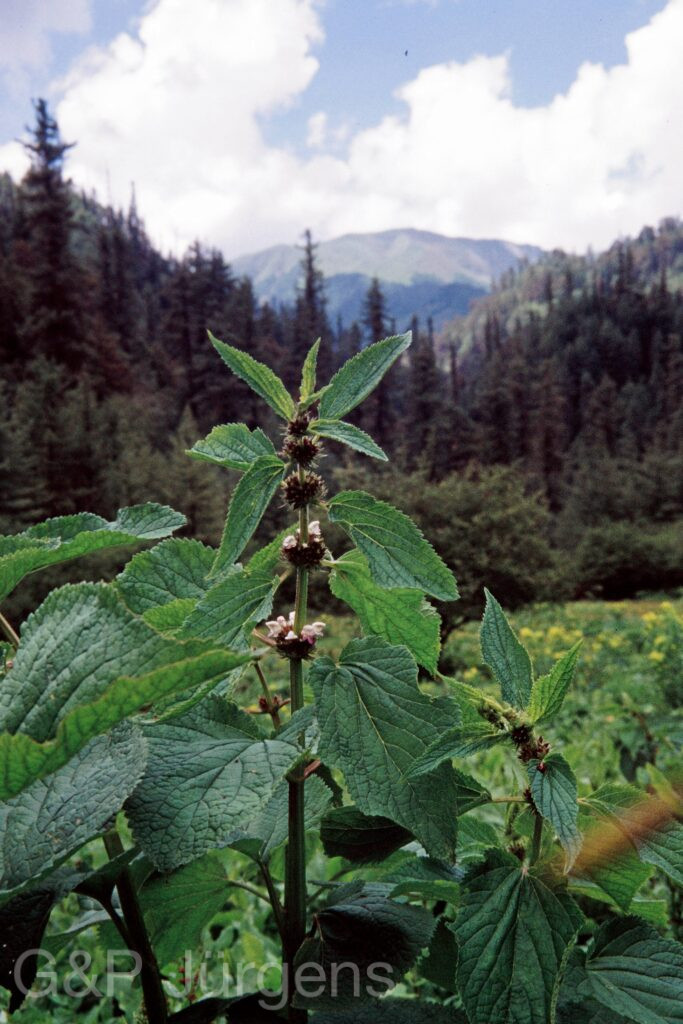
(Wall.) Kamelin & Makhm.

Nepal 99 380 ergebnis
West-Nepal Linji-Khola 3250m, June

Description

Phlomoides macrophylla is a Himalayan and Central Asian perennial mint distributed across Nepal, India, Pakistan, Bhutan, China and Afghanistan, with GBIF documenting roughly 120 occurrences along the main Himalayan arc and its western extensions. It occupies cool temperate to subalpine habitats, growing on open grassy slopes, in forest clearings, among shrubberies and on rocky banks, generally on well-drained soils in sunny to lightly shaded situations. The collection from Linji-Khola in western Nepal at about 3250 m in June is characteristic of its preferred subalpine elevation and its early monsoon flowering, when the herb-rich meadows of the inner valleys come into bloom.

The plant is an erect, robust perennial herb arising from a thick rootstock, the quadrangular stems clothed in stellate and simple hairs. As the epithet indicates, the leaves are conspicuously large, ovate to broadly cordate, with a crenate to serrate margin, a rugose upper surface and a densely tomentose, paler lower surface, the basal leaves long-petiolate and the upper ones reduced. The inflorescence comprises several dense, many-flowered verticillasters in the upper leaf axils, subtended by linear-subulate, often spinescent bracts. Each flower has a tubular, ribbed and toothed calyx and a strongly two-lipped corolla, typically purple, pink or pale violet, the hooded upper lip bearded and arching over the spreading three-lobed lower lip. Four didynamous stamens lie beneath the galea, and the gynobasic style yields four nutlets.

Described by Wallich and transferred to Phlomoides by Kamelin and Makhmedov, the species reflects the modern segregation of the herbaceous, rhizomatous Asiatic phlomises from the shrubby Mediterranean genus Phlomis s.str., a division supported by molecular phylogenetic study within tribe Phlomideae. Several Phlomoides species are used in regional folk medicine and as forage. Widespread and locally common in suitable montane grassland, P. macrophylla is not currently considered threatened, though it depends on the persistence of undisturbed subalpine meadow vegetation.

Author: (Wall.) Kamelin & Makhm. · Sources: POWO (Kew), GBIF, Flora of China, Flora of Pakistan, Flora of Bhutan, Mathiesen et al. phylogeny of Phlomoides

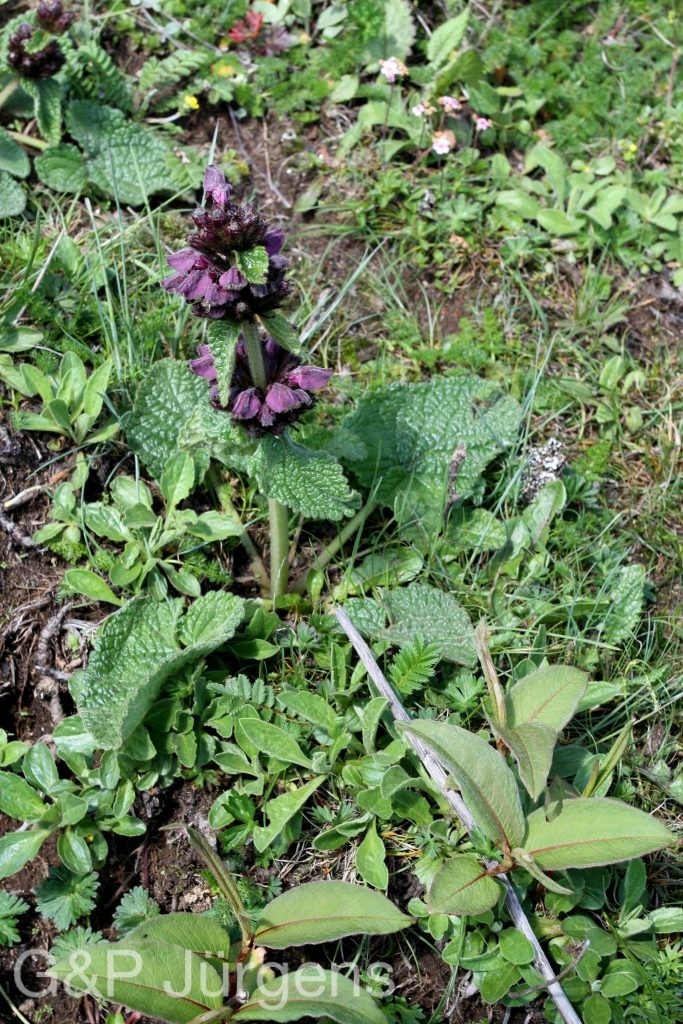
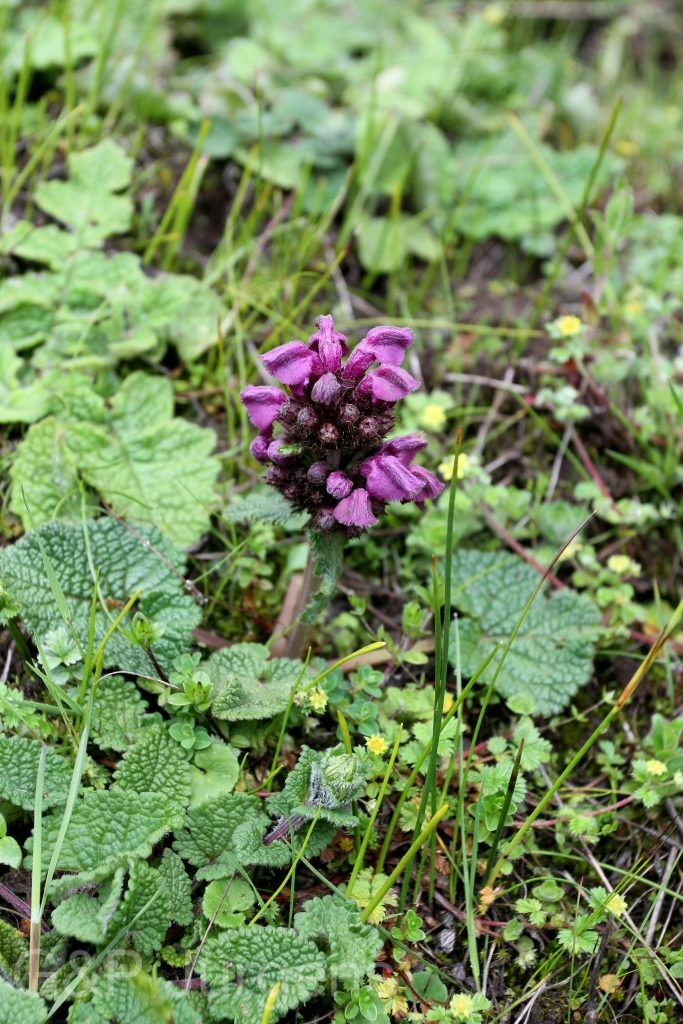
Phlomoides rotata

by GP Jürgens

(Benth. ex Hook.f.) Mathiesen

BhutanPG2011 369
Bhutan Jule-Tso, 4000m June

Description

Phlomoides rotata (formerly Phlomis rotata) is a distinctive stemless mint of the high Himalaya and Tibetan plateau. GBIF records it from China, Nepal, India, Bhutan and Pakistan, with around 700 occurrences spanning the alpine zone of the Sino-Himalayan region. It grows on open stony slopes, gravelly alpine turf, screes and pasture between roughly 3700 and 5200 m. The plant illustrated was photographed at Jule-Tso in Bhutan at 4000 m in June, forming a flattened rosette pressed against the ground, the characteristic habit by which the species hugs the substrate in the windswept high-alpine environment.

It is an acaulescent (stemless) perennial arising from a thick rootstock, the leaves forming a low basal rosette appressed to the soil. The leaves are ovate to orbicular, crenate, rugose with impressed venation and clothed in greyish indumentum. As the epithet rotata (wheel-like) implies, the verticillasters are condensed into a dense, radiating, disc-like terminal head sessile in the centre of the rosette. The bilabiate corollas are purple to violet, the hooded upper lip protecting the four didynamous stamens; the fruit comprises four smooth nutlets enclosed in the persistent tubular calyx.

The genus Phlomoides was reinstated and broadened to absorb much of Phlomis following molecular phylogenetic studies in subfamily Lamioideae, hence the binomial transfer. The ground-hugging rosette habit is a classic adaptation to alpine cold, wind and grazing, minimising exposure while exploiting the warmer boundary layer at soil level. Widely used in Tibetan medicine, the species is collected from the wild; it remains common across its broad high-altitude range and is not considered threatened.

Author: (Benth. ex Hook.f.) Mathiesen · Sources: POWO (Kew), GBIF, Flora of China, Flora of Pakistan, Annotated Checklist of the Flowering Plants of Nepal, Phylogeny and classification of subfamily Lamioideae (Lamiaceae)

Kunth

Bhutan2012 770
Bhutan Zemgang 1600m, October

Description

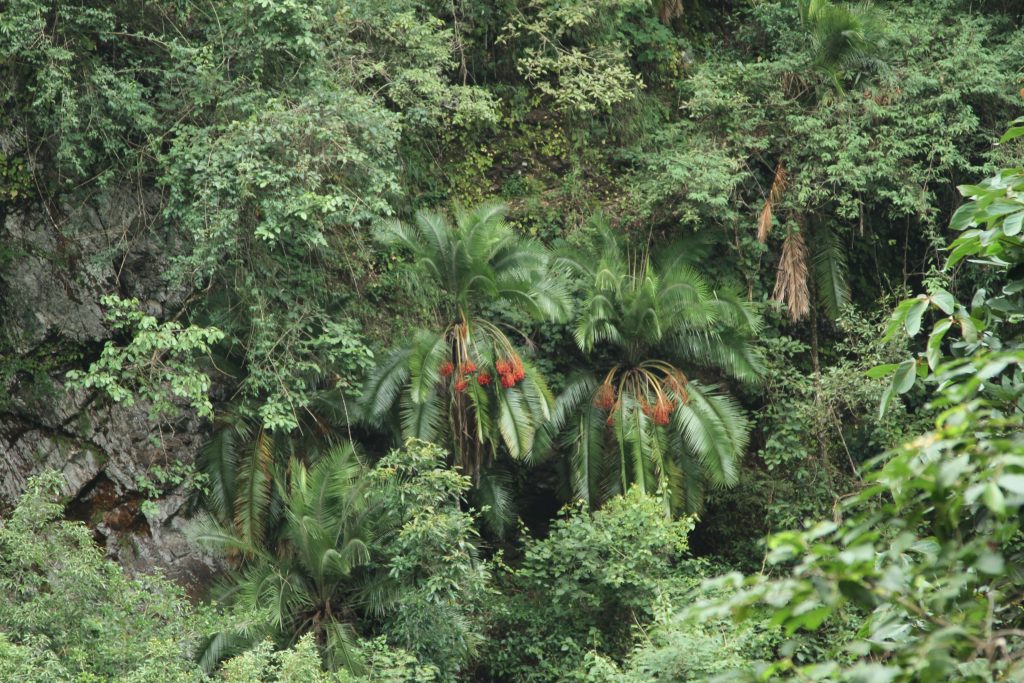
Phoenix loureiroi Kunth is a small date palm broadly distributed across South and Southeast Asia, recorded by GBIF from Taiwan, India, Thailand, China, Vietnam, Nepal, Myanmar, the Philippines, Laos, Pakistan, Cambodia and Bhutan, with cultivated occurrences in the United States, Cuba, Brazil and Spain, totalling over 2000 records. It grows in open forest, savanna, grassy slopes and rocky hillsides from the lowlands into the lower montane zone, tolerating seasonally dry, fire-prone ground. The Bhutanese material from Zhemgang at 1600 m in October reflects its presence in the warm subtropical foothills.

It is a small, often clustering palm with a short, sometimes subterranean stem clothed in persistent leaf bases, rarely forming a slender erect trunk. The leaves are pinnate and arching, the leaflets (pinnae) linear-lanceolate and stiff, the lower ones modified into sharp spines (acanthophylls), a defining feature of Phoenix. The plants are dioecious, the inflorescences branched spadices enclosed in a spathe, the small unisexual flowers cream to yellowish. The fruit is a small ellipsoid drupe ripening purplish-black to reddish, with thin sweet flesh around a single grooved seed, dispersed by birds.

Phoenix loureiroi is a polymorphic species with several recognised varieties spanning its wide range. As a relative of the cultivated date palm, it provides minor local uses for thatch, fibre and fruit, accounting for the scattered cultivated records. Its fire- and drought-tolerant habit and broad Indo-Malesian to Sino-Himalayan distribution make it a resilient element of open landscapes, and it is not threatened, although habitat conversion locally reduces wild populations.

Author: Kunth · Sources: POWO (Kew), GBIF, Flora of China Vol. 23, Flora of Bhutan Vol. 3, Flora of Pakistan, Barrow monograph of the genus Phoenix (Palmae)

C.K.Schneid.

Bhutan2014 207
Bhutan Trachyangtsa 2120, May
Bhutan2014 208
Bhutan Trachyangtsa 2120, May

Description

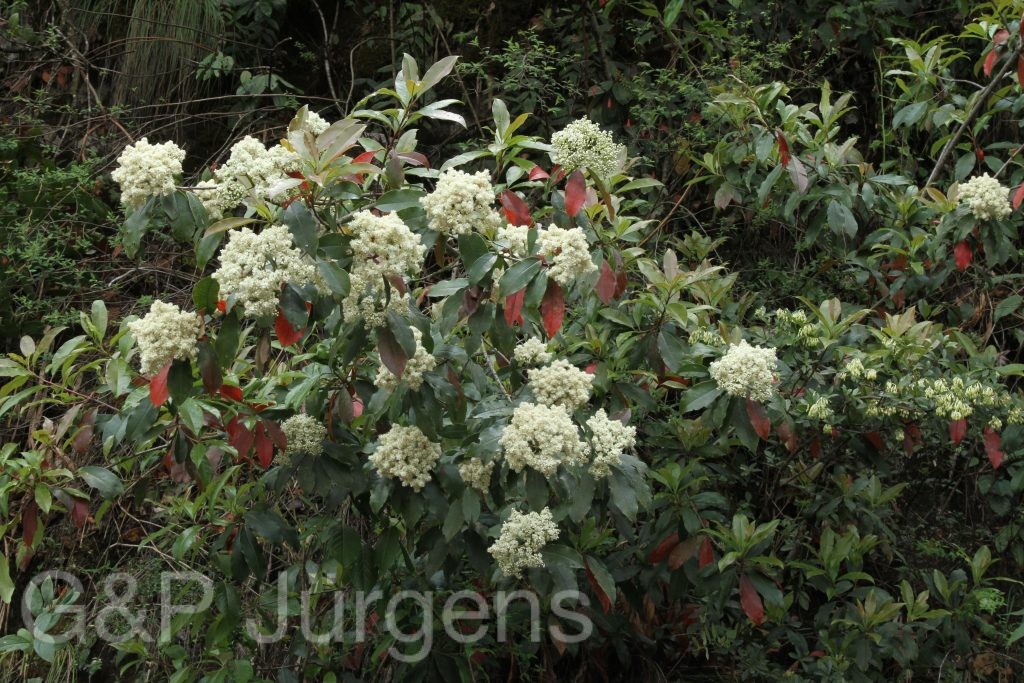
Photinia beauverdiana is a temperate East Asian tree centred on China and Taiwan, with records extending to Bhutan and northern Vietnam; the roughly 2675 occurrences also reflect extensive cultivation in Europe, North America and New Zealand. In its native range it grows in mixed montane forest, the image documenting it at Trachyangtsa in Bhutan at about 2120 m in May. It occupies forest margins, open slopes, ravines and secondary woodland on well-drained soils in the cool, humid temperate belt, occurring as a scattered canopy or understorey component rather than forming pure stands.

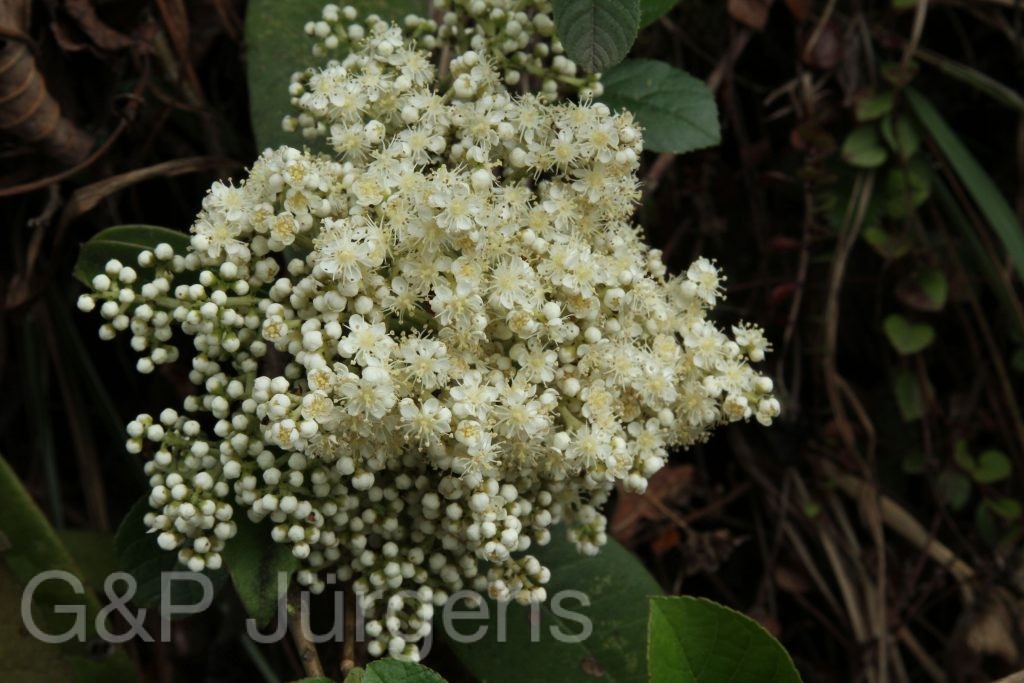
It is a deciduous shrub or small tree with slender, lenticellate branchlets. The leaves are alternate, elliptic to oblong-elliptic, with finely serrate margins, an acuminate apex, and lateral veins running out to the teeth, turning red before autumn fall. The flowers are small and white, with five petals, numerous stamens and an inferior to semi-inferior ovary, borne in many-flowered terminal corymbs. The fruit is a small ovoid pome, ripening dark red and bearing the persistent calyx, attractive to frugivorous birds that disperse the seeds; it is the seasonal foliage colour and fruiting display that make the species ornamental.

Under GBIF this name is returned as a synonym, with Photinia beauverdiana itself standing as the accepted name; the species sits within subfamily Amygdaloideae (Maloideae) of the Rosaceae, in the pome-bearing alliance allied to Pyrus and Sorbus, and has at times been segregated into related genera as generic limits in the group are revised. Originally described by C.K. Schneider, it is widely valued in horticulture for autumn colour and red fruit. With a broad range and abundant cultivation it is of no conservation concern.

Author: C.K.Schneid. · Sources: POWO (Kew), GBIF, Flora of China, Flora of Bhutan, Photinia and Maloideae generic revisions (Rosaceae)

Lindl.

Bhutan2014 22
Bhutan Sandrup 850m, May
Bhutan2014 481
Bhutan Tongsa 2000m, May

Description

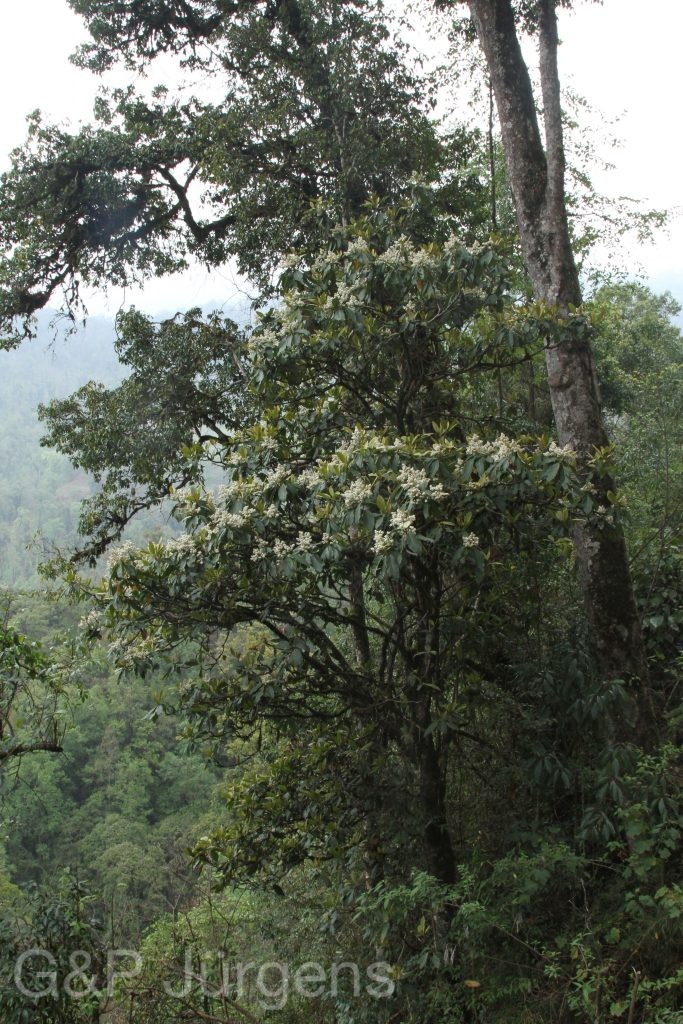
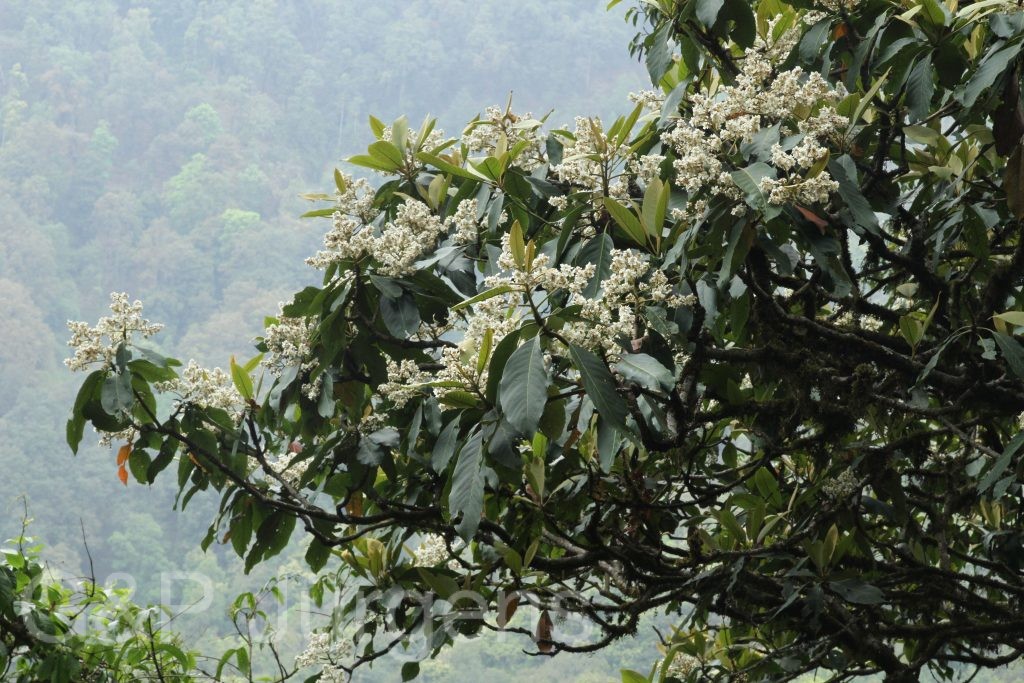
Photinia integrifolia is an evergreen tree or large shrub of broad Indo-Malesian distribution, with verified occurrences across China, Indonesia, India, Sri Lanka, Nepal, Myanmar, Thailand, Bhutan, Malaysia, Vietnam, Laos, the Philippines, Korea, Bangladesh and Timor-Leste, and well over a thousand GBIF records reflecting its wide range and abundance. It grows in subtropical to lower-temperate broadleaved and evergreen forest, on slopes and along ridges, generally from near 800 up to about 2500 m. The Bhutanese material cited, from Sandrup at around 850 m and Tongsa near 2000 m, both in May, spans the altitudinal breadth of its habitat from warm foothill forest into cooler mid-elevation woodland.

The tree has smooth grey bark and bears alternate, leathery, glabrous leaves that are oblong to elliptic-lanceolate with entire (rarely obscurely toothed) margins, the integri-folious character of the epithet, tapering to a short petiole. The small white flowers are massed in terminal corymbose panicles; each has five spreading petals, numerous stamens and an inferior to half-inferior ovary. The fruit is a small subglobose pome, red ripening to dark purple-black, containing one or few seeds and readily taken by birds.

Photinia, of subfamily Amygdaloideae (formerly Maloideae), is allied to Pyrus and Sorbus, and P. integrifolia, described by Lindley, is distinguished within the Asian group by its entire-margined evergreen leaves. Ecologically it is a useful timber and fuelwood tree whose bird-dispersed pomes contribute to forest regeneration. Given its very wide distribution and frequency across South and South-East Asia, it is of least conservation concern.

Author: Lindl. · Sources: POWO (Kew), GBIF, Flora of China, Flora of Bhutan, Flora of British India