
C.K.Schneid.
Description
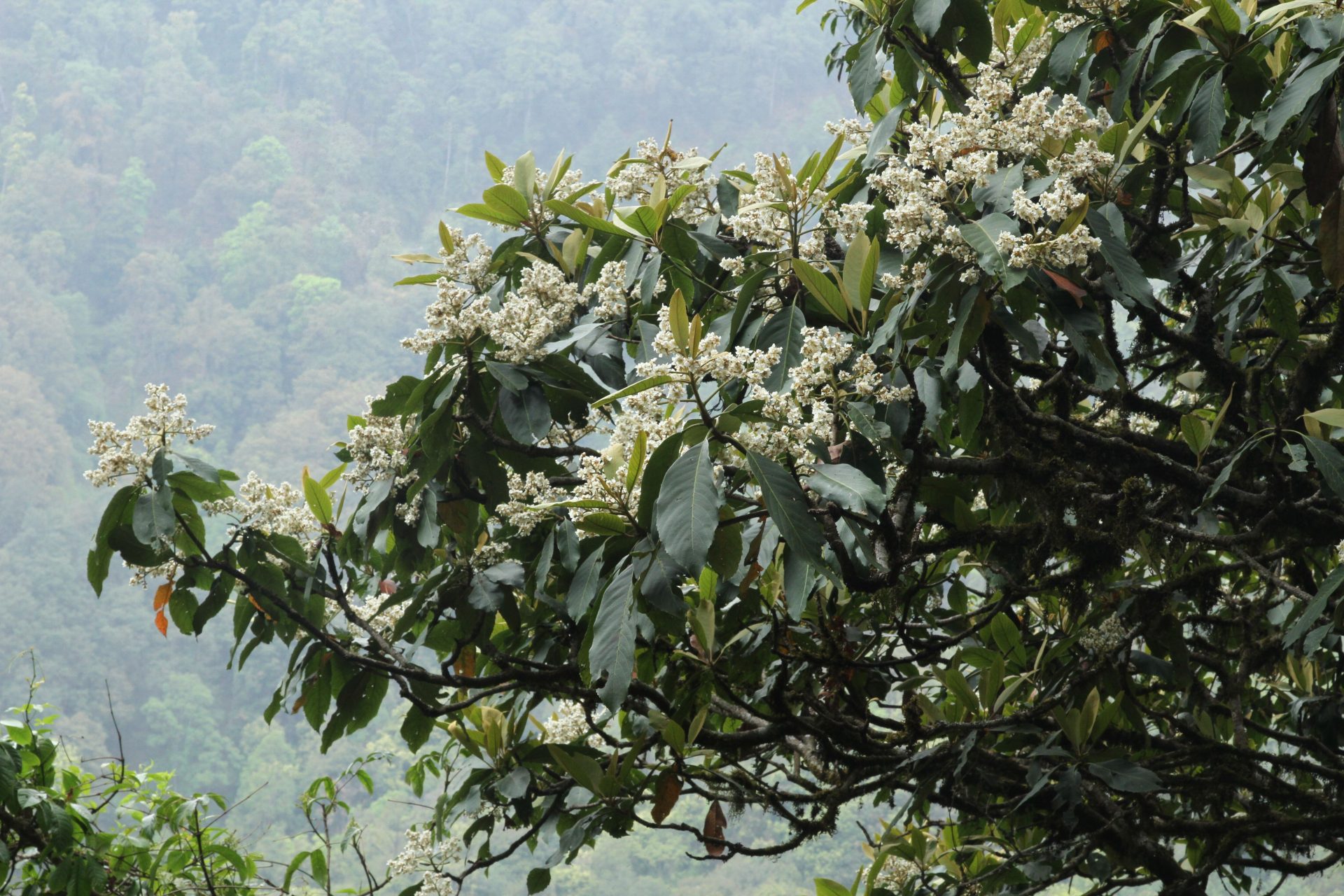
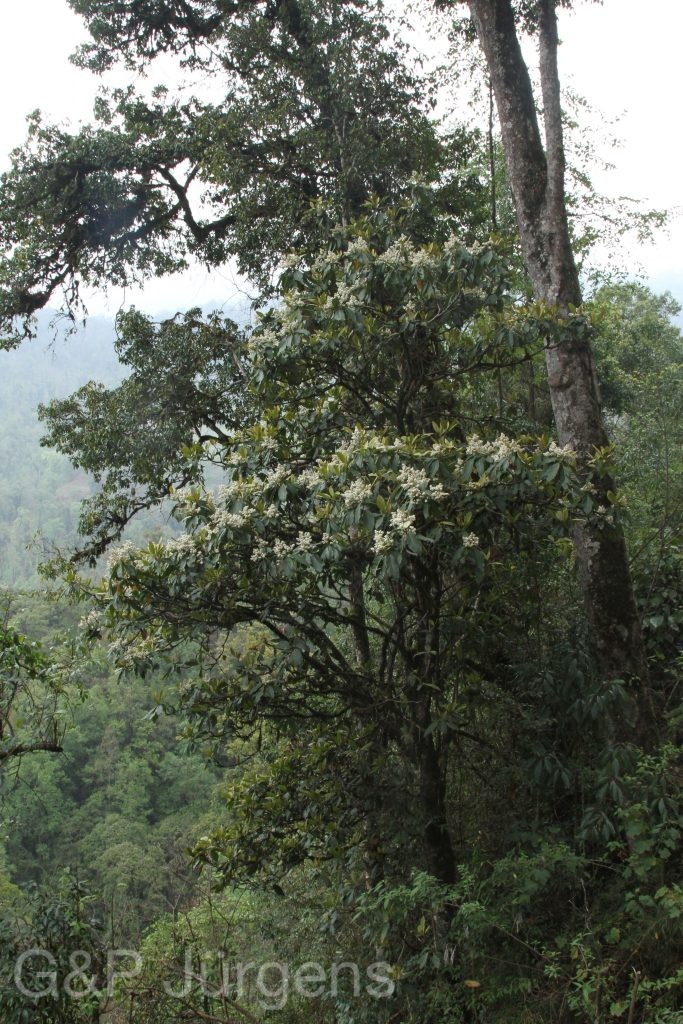
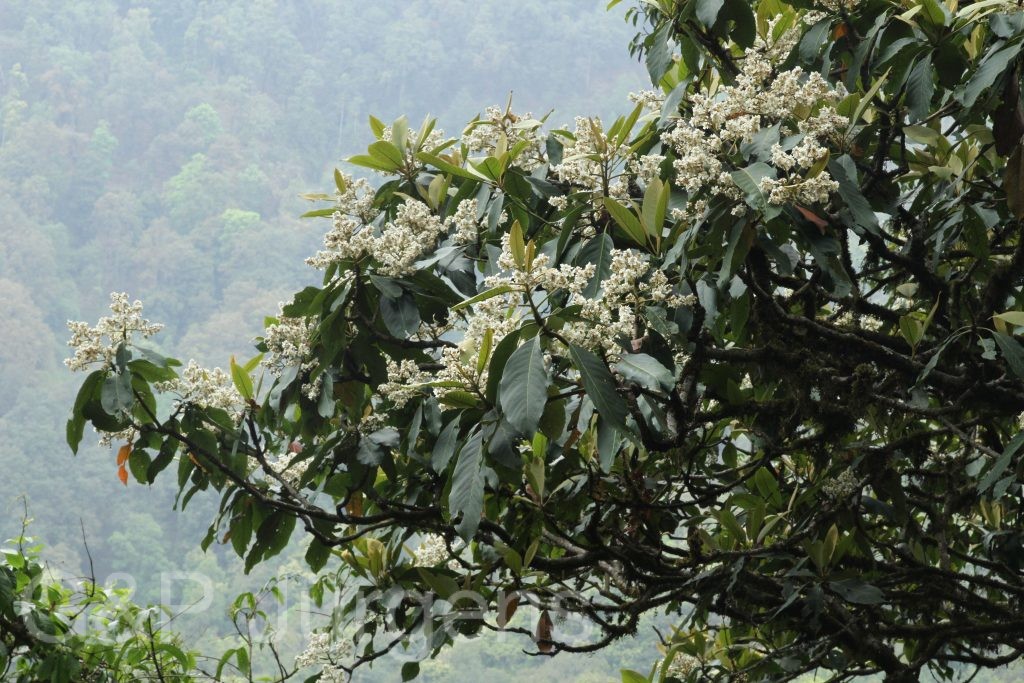
Photinia beauverdiana is a temperate East Asian tree centred on China and Taiwan, with records extending to Bhutan and northern Vietnam; the roughly 2675 occurrences also reflect extensive cultivation in Europe, North America and New Zealand. In its native range it grows in mixed montane forest, the image documenting it at Trachyangtsa in Bhutan at about 2120 m in May. It occupies forest margins, open slopes, ravines and secondary woodland on well-drained soils in the cool, humid temperate belt, occurring as a scattered canopy or understorey component rather than forming pure stands.
It is a deciduous shrub or small tree with slender, lenticellate branchlets. The leaves are alternate, elliptic to oblong-elliptic, with finely serrate margins, an acuminate apex, and lateral veins running out to the teeth, turning red before autumn fall. The flowers are small and white, with five petals, numerous stamens and an inferior to semi-inferior ovary, borne in many-flowered terminal corymbs. The fruit is a small ovoid pome, ripening dark red and bearing the persistent calyx, attractive to frugivorous birds that disperse the seeds; it is the seasonal foliage colour and fruiting display that make the species ornamental.
Under GBIF this name is returned as a synonym, with Photinia beauverdiana itself standing as the accepted name; the species sits within subfamily Amygdaloideae (Maloideae) of the Rosaceae, in the pome-bearing alliance allied to Pyrus and Sorbus, and has at times been segregated into related genera as generic limits in the group are revised. Originally described by C.K. Schneider, it is widely valued in horticulture for autumn colour and red fruit. With a broad range and abundant cultivation it is of no conservation concern.
Author: C.K.Schneid. · Sources: POWO (Kew), GBIF, Flora of China, Flora of Bhutan, Photinia and Maloideae generic revisions (Rosaceae)