
Lindl.
Description
Photinia integrifolia is an evergreen tree or large shrub of broad Indo-Malesian distribution, with verified occurrences across China, Indonesia, India, Sri Lanka, Nepal, Myanmar, Thailand, Bhutan, Malaysia, Vietnam, Laos, the Philippines, Korea, Bangladesh and Timor-Leste, and well over a thousand GBIF records reflecting its wide range and abundance. It grows in subtropical to lower-temperate broadleaved and evergreen forest, on slopes and along ridges, generally from near 800 up to about 2500 m. The Bhutanese material cited, from Sandrup at around 850 m and Tongsa near 2000 m, both in May, spans the altitudinal breadth of its habitat from warm foothill forest into cooler mid-elevation woodland.
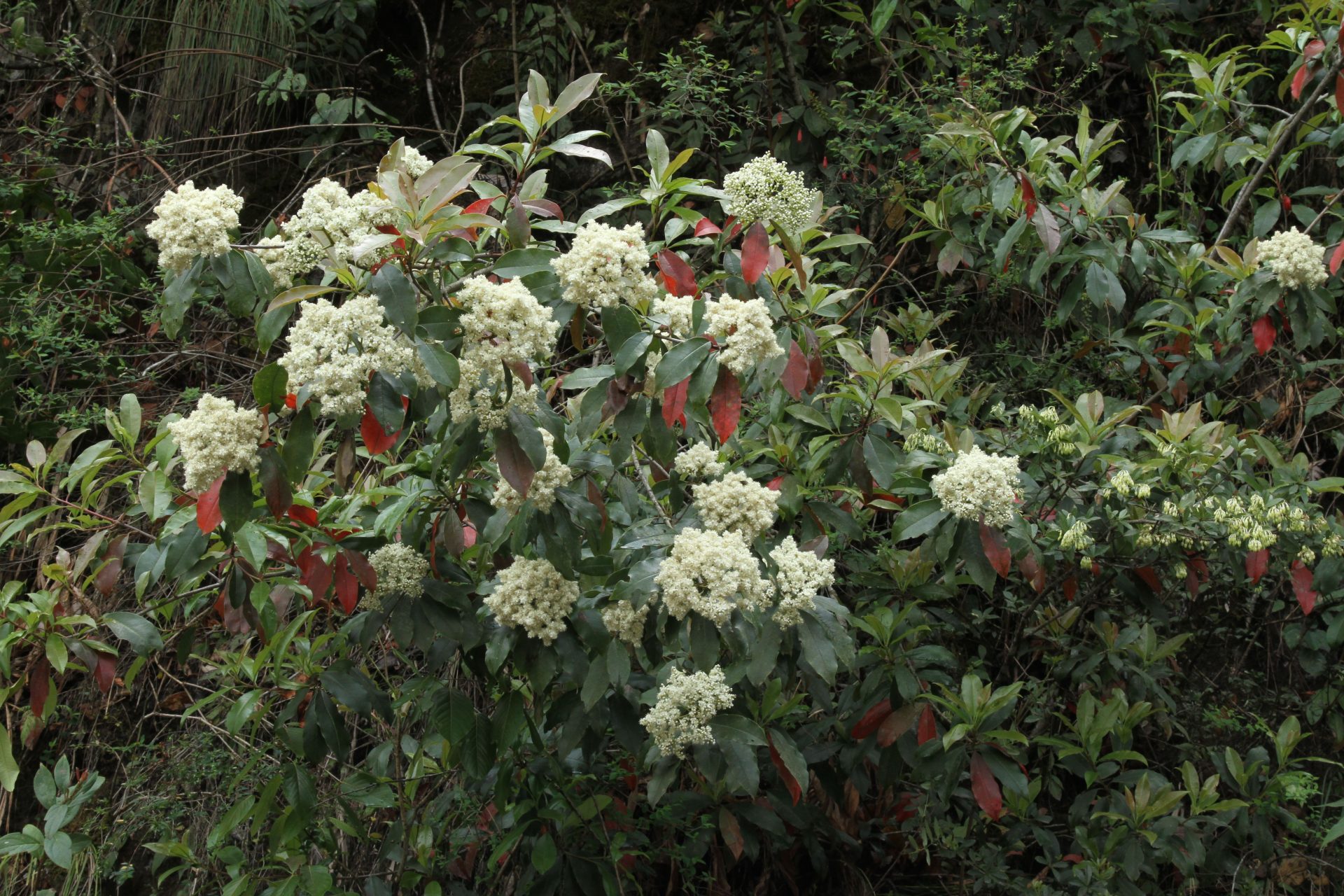
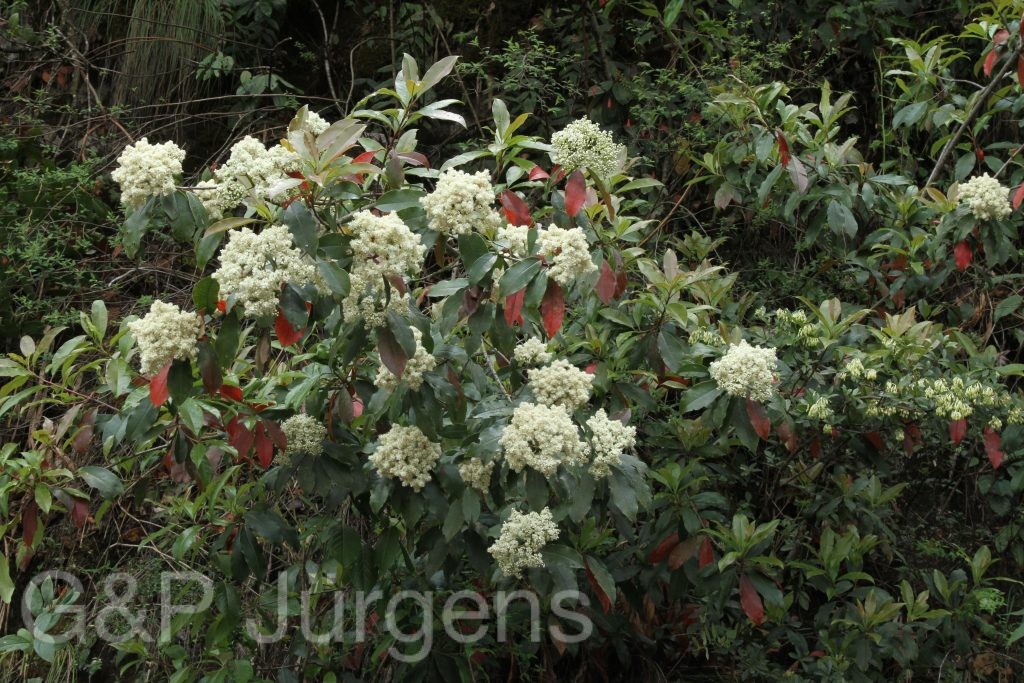
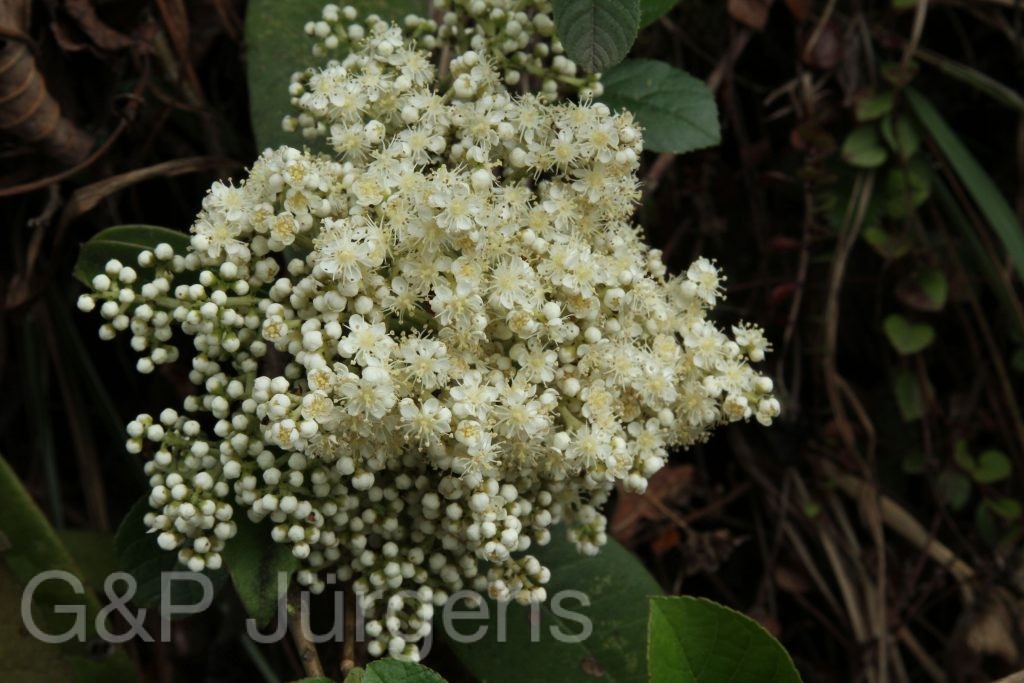
The tree has smooth grey bark and bears alternate, leathery, glabrous leaves that are oblong to elliptic-lanceolate with entire (rarely obscurely toothed) margins, the integri-folious character of the epithet, tapering to a short petiole. The small white flowers are massed in terminal corymbose panicles; each has five spreading petals, numerous stamens and an inferior to half-inferior ovary. The fruit is a small subglobose pome, red ripening to dark purple-black, containing one or few seeds and readily taken by birds.
Photinia, of subfamily Amygdaloideae (formerly Maloideae), is allied to Pyrus and Sorbus, and P. integrifolia, described by Lindley, is distinguished within the Asian group by its entire-margined evergreen leaves. Ecologically it is a useful timber and fuelwood tree whose bird-dispersed pomes contribute to forest regeneration. Given its very wide distribution and frequency across South and South-East Asia, it is of least conservation concern.
Author: Lindl. · Sources: POWO (Kew), GBIF, Flora of China, Flora of Bhutan, Flora of British India