Tag:

Bhutan

Flowers of Bhutan — 1326 plant species documented across the Bhutanese Himalaya, from dense broadleaf and conifer forests to alpine scrub and meadows. Bhutan’s largely intact wilderness shelters an exceptional diversity of orchids, rhododendrons, primulas and Himalayan poppies, many of them regional endemics. Each species page includes a botanical description, distribution, habitat and flowering time, with the original photograph and its recorded altitude and locality.

(G.Watt) Pax

BhutanPG2011 456
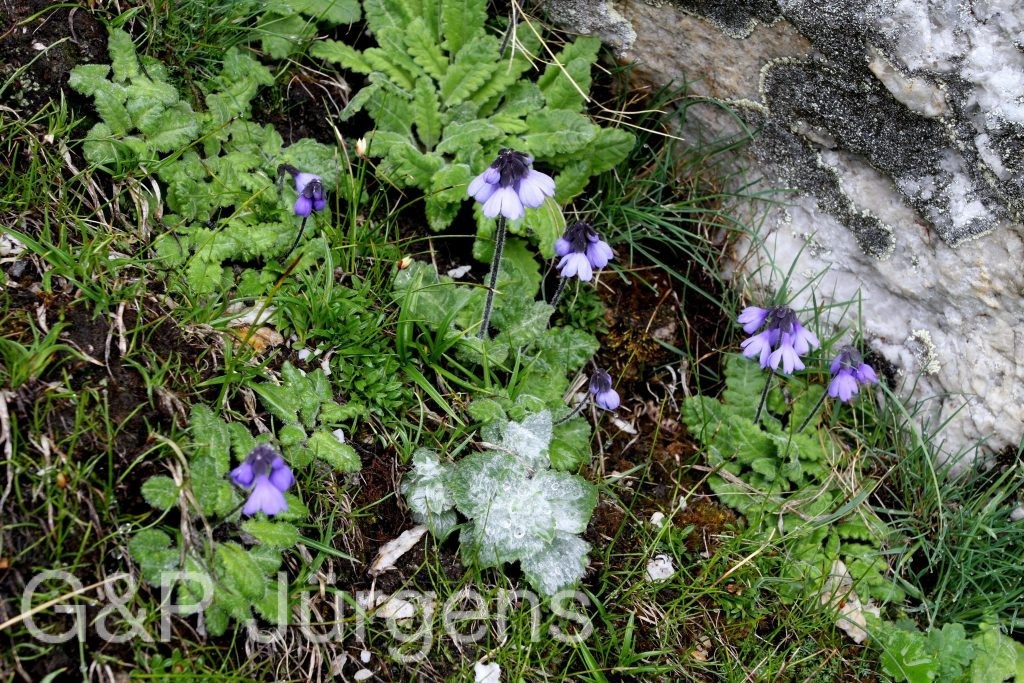
Bhutan Jule-Tso, 4000m June
BhutanPG2011 561 1
Bhutan Jule-Tso, 4000m June

Description

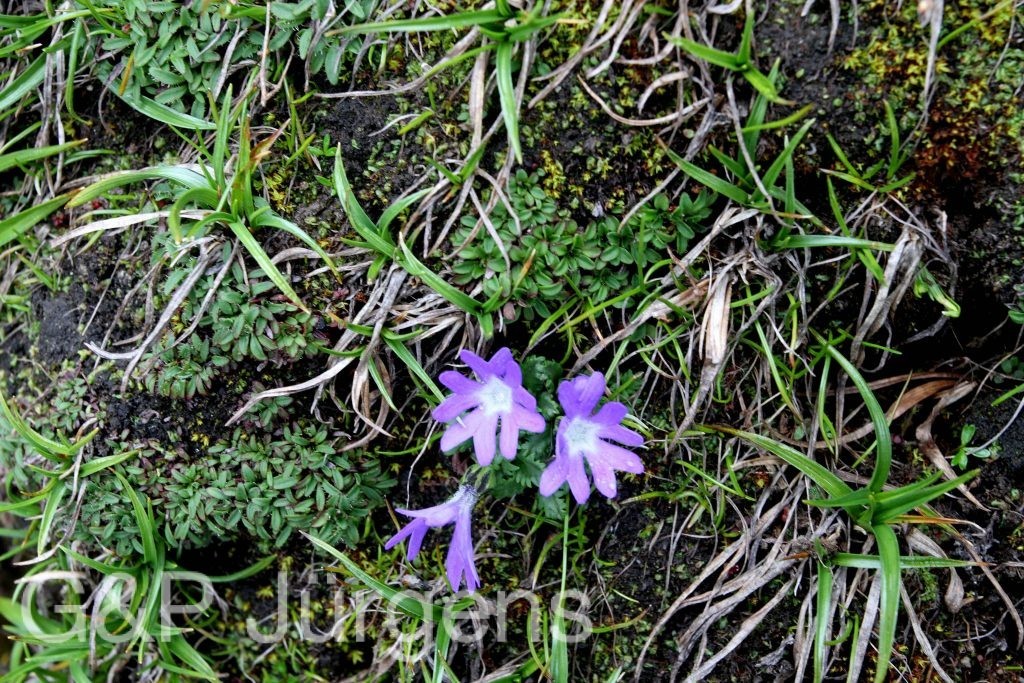
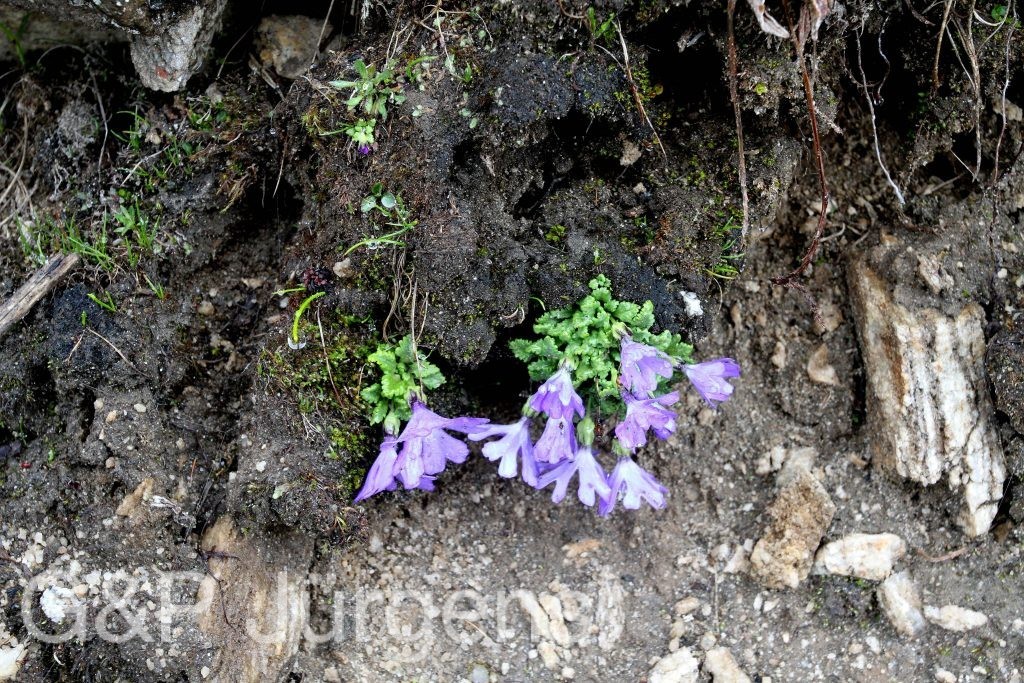
Primula tenuiloba is a diminutive cushion-forming primula of the high Eastern Himalaya, recorded from Nepal, India and Bhutan, with an outlying GBIF citation referable to Japan; the species is documented from some 92 occurrences. It is a plant of the upper alpine zone, occupying moist rocky ledges, gritty turf, screes and snowmelt-irrigated crevices well above the treeline, typically around 4,000 m and higher. The illustrated material was gathered at Jule-Tso in Bhutan at about 4,000 m in June, where it blooms in the brief early-summer window as the alpine slopes thaw.

It is a small, glabrous to farinose perennial herb forming compact tufts or low cushions from a short rootstock. The leaves are crowded in a basal rosette, the blades oblong-spathulate and, as the epithet implies, divided into narrow lobes or pinnatifid-toothed segments, often with a dusting of white or yellowish farina. The flowers are borne singly or in a small umbel on a short scape, occasionally almost sessile among the leaves; the corolla is rose-purple to violet with a contrasting yellow eye, the limb of five obcordate, emarginate lobes spreading from a slender tube. As in the genus the species is heterostylous, and the fruit is a small globose capsule.

Primula tenuiloba is placed in section Minutissimae, the dwarf, cushion-forming Himalayan primulas, characterised by tiny stature, farinose lobed leaves and short-scaped flowers, allying it with P. reptans and P. minutissima. Heterostyly enforces outcrossing by alpine insects. Restricted to a narrow high-altitude band and naturally localised, it is uncommon though not formally assessed; like other obligate alpines its snow-bed habitat is vulnerable to climatic warming.

Author: (G.Watt) Pax · Sources: POWO (Kew), GBIF, Flora of Bhutan, Annotated Checklist of the Flowering Plants of Nepal, Richards' Primula (monograph), Smith & Fletcher revision of Asiatic Primula

W.W.Sm.

Sikkim2011 353
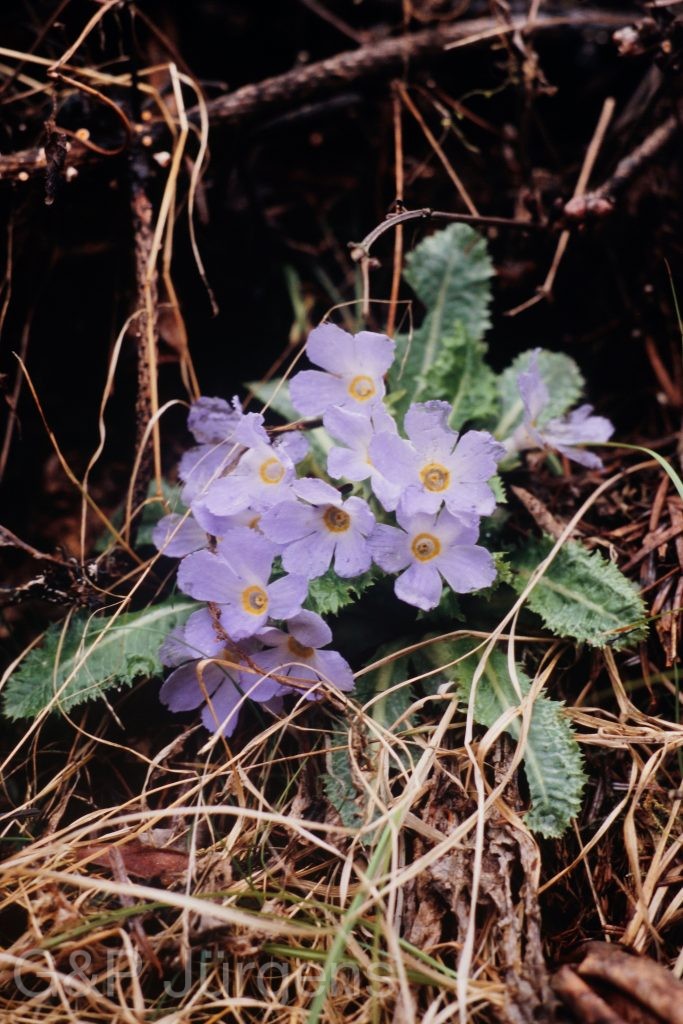
Sikkim, Lada-La 3900m, June

Description

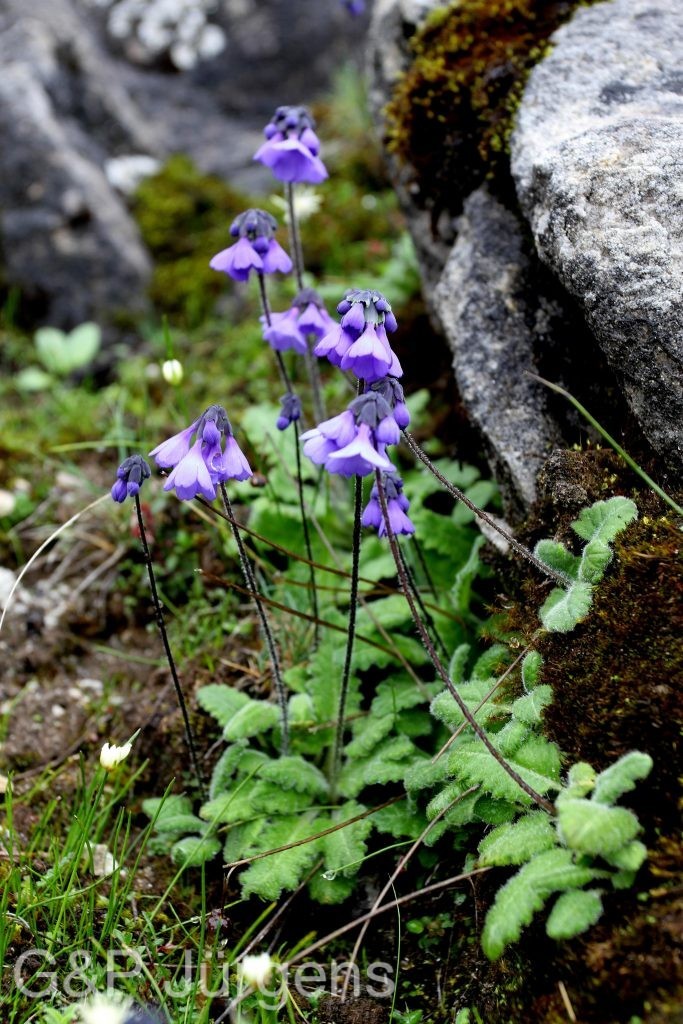
Primula tsariensis is an alpine perennial endemic to the eastern Himalaya, with a distribution centred on the borderlands of Bhutan, southern Xizang (Tibet) and adjacent NE India, and recorded from Sikkim, where the photographed plant was found near the Lada-La pass at about 3,900 m in June. GBIF documents this distribution across Bhutan (BT), China (CN) and India (IN) on the basis of roughly 67 occurrence records. It is a plant of the upper alpine zone, frequenting moist turf, scree margins and seepage slopes among dwarf rhododendron, typically between 3,800 and 4,500 m.

The species forms a small rosette-forming herb arising from a short rhizome with fibrous roots. The leaves are oblanceolate to spathulate, narrowed to a winged petiole, with a crenate to denticulate margin and an efarinose to thinly farinose surface. The slender scape bears a terminal umbel of few flowers; the calyx is tubular-campanulate and divided into narrow lobes, while the corolla is violet to purple-blue with a paler or yellowish eye, the limb of five obcordate, emarginate lobes spreading from a narrow tube. The species is heterostylous, producing pin and thrum forms, and the fruit is a small capsule shorter than or equalling the persistent calyx, dehiscing to release numerous angular seeds.

Primula tsariensis belongs to the section Petiolares, a complex and taxonomically intricate assemblage of Sino-Himalayan primulas distinguished by their farinose tissues and early-spring flowering close to the receding snow. Its narrow range across the Assam Himalaya and southern Tibet makes it a useful biogeographic marker of this high-rainfall sector. Although not formally assessed as threatened, such localised alpine endemics are inherently vulnerable to climate-driven upward shifts of the snowline and to habitat disturbance from grazing.

Author: W.W.Sm. · Sources: POWO (Kew), Flora of China Vol. 15, Flora of Bhutan Vol. 2, GBIF, John Richards: Primula (2003)

Balf.f. & R.E.Cooper

BhutanPG2011 604 01 1
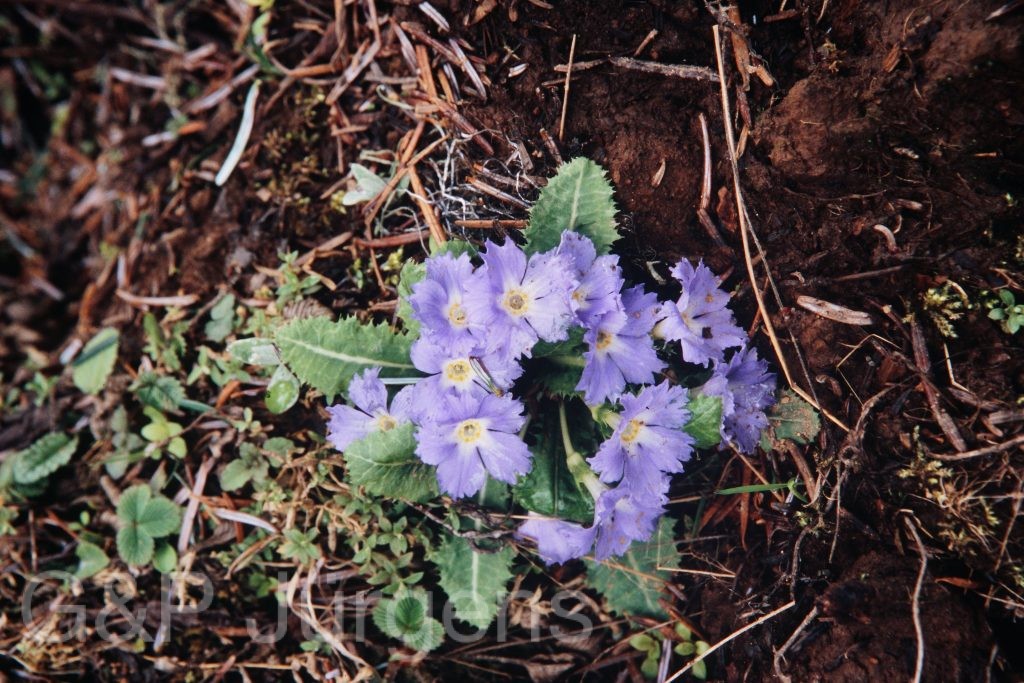
Bhutan Jule-Tso, 4200m June
BhutanPG2011 563 01
Bhutan Jule-Tso, 4200m June
Also: Eriopyton wallichii Benth.

Description

Primula umbratilis is a high-alpine primrose endemic to Bhutan, a narrow-range species known only from that country, where all 33 GBIF records are concentrated. It is a plant of the cool, moist alpine zone, growing among rocks, in damp turf, and in the sheltered shade implied by its epithet (umbratilis, 'of shady places'), often near snowmelt and seepage. The illustrated material comes from Jule-Tso at about 4200 m in June, a glacial lake basin in the high alpine where the species flowers shortly after snow retreat alongside other cushion and rosette plants of the moist eastern Himalayan tops.

The plant is a small herbaceous perennial forming a basal rosette of leaves that are commonly farinose, with a mealy white or yellowish powder on the undersurface and within the flowers, a frequent feature of the genus. From the rosette arises a slender scape bearing an umbel of a few stalked flowers. The corolla is heterostylous, salverform with a slender tube expanding into a flat limb of five obcordate, notched lobes, the colour ranging through pink to violet with a contrasting eye; the calyx is tubular and the fruit a small capsule dehiscing to release numerous minute seeds.

Primula is one of the largest genera of the northern temperate flora, and the Sino-Himalayan region is its centre of diversity, particularly in the high mountains of Bhutan and adjacent China. The historical synonym Eriopyton wallichii Benth. noted in the caption reflects an early generic placement now subsumed under Primula. As a single-country endemic restricted to the alpine zone, P. umbratilis is potentially vulnerable to climate-driven upward range contraction and to grazing pressure, warranting monitoring despite its remote habitat.

Author: Balf.f. & R.E.Cooper · Sources: POWO (Kew), GBIF, Flora of Bhutan, The Genus Primula (Richards), Primulas of the Himalaya

W.W. Sm.

Bh2008 131 G220
Bhutan Pele-La, 3000m April
Bh2008 233 P370
Bhutan Pele-La, 3000m April

Description

Primula whitei W.W.Sm. is an eastern Himalayan primrose of comparatively narrow range; GBIF lists about 74 occurrences from Bhutan, neighbouring India, southern China and Myanmar, with records extending into eastern Nepal. It grows in cool, moist habitats of the upper temperate and subalpine zones, on mossy banks, damp rock ledges, shady cliffs and the margins of forest and scrub, broadly between about 3000 and 4000 m. The plants photographed at Pele-La in Bhutan at 3000 m in April flower very early in the season, as snow recedes, on a high pass typical of the humid, cloud-bathed habitats this species requires.

It is a small, farinose perennial herb forming a compact rosette that overwinters as a resting bud. The leaves are obovate to spathulate, with a crenate to dentate margin tapering to a winged petiole, and the undersurface is often dusted with white or yellowish farina. The flowers are borne singly or in a small umbel on a short scape that elongates only slightly after anthesis, so the blooms nestle close to the foliage. The corolla is salverform with a slender tube and spreading limb of obcordate lobes, violet-blue to lilac with a paler or yellowish eye. The species is heterostylous, and the fruit is a small capsule releasing numerous minute seeds.

Primula whitei belongs to section Petiolares, a Sino-Himalayan group of early-flowering, often farinose primulas centred on the eastern Himalaya whose species delimitation has long challenged taxonomists; it has at times been associated with the Primula bhutanica complex. The genus is classically heterostylous, promoting outcrossing between pin and thrum morphs. With its limited range and reliance on cool, perennially humid microhabitats, the species is regionally restricted and potentially sensitive to warming and to desiccation of the high-altitude niches on which Petiolares primulas depend.

Author: W.W. Sm. · Sources: POWO (Kew), GBIF, Flora of Bhutan, Flora of China, Richards' monograph Primula, Annotated Checklist of the Flowering Plants of Nepal

Prunus campanulata

by GP Jürgens

Maxim.

Nepal 95 437 P759 ergebnis
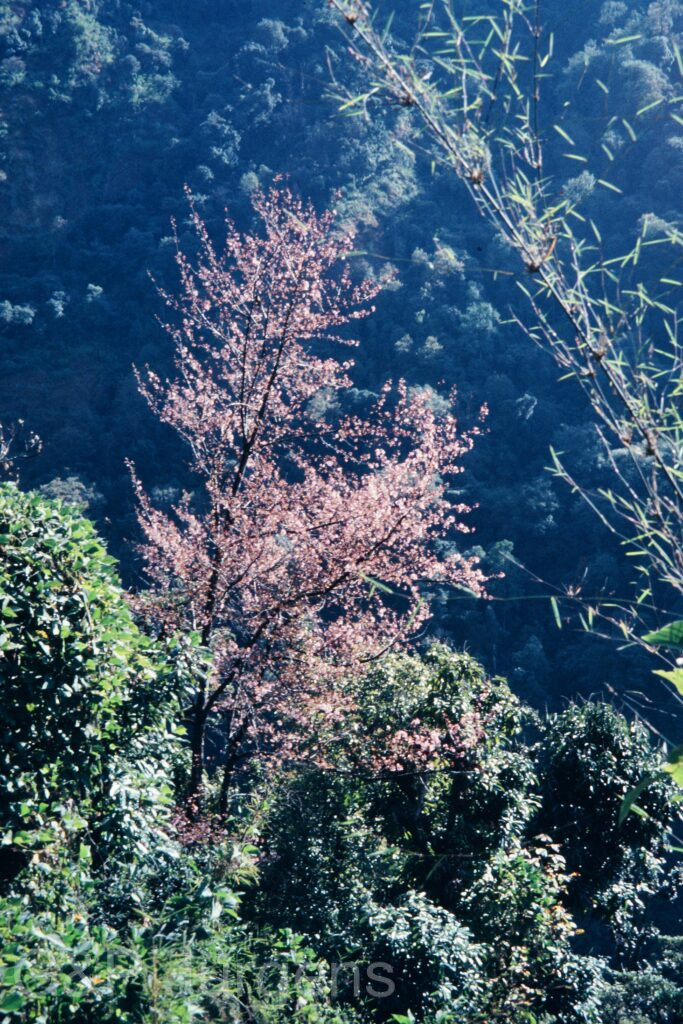
Nepal Trisuli 2400m October

Description

Prunus campanulata is an East Asian cherry distributed across southern China, Taiwan, Japan and Hong Kong, with outlying records reaching the central Himalaya in Nepal, India and Vietnam; it is also widely cultivated and naturalised in Australia, New Zealand, South Africa and the Americas, accounting for the broad GBIF footprint of nearly 1,900 occurrences. In its native range it occupies montane broad-leaved and mixed forest, forest margins and ravines, typically between 500 and 2,500 m. The plant photographed near Trisuli in central Nepal at about 2,400 m in October represents the species at the higher end of its Himalayan range, in cool, humid temperate forest on well-drained slopes.

It is a deciduous tree or large shrub reaching 3-8 m, with glabrous, reddish-brown twigs and conspicuous lenticels. The leaves are alternate, ovate to elliptic-oblong, 4-10 cm long, acuminate, with a sharply biserrate margin and glandular petioles. The flowers, borne in fascicles of 2-4 before or with the young leaves, are pendent and bell-shaped (campanulate), 1-2 cm across, with a deep rose-pink to carmine urceolate hypanthium and rounded, notched petals enclosed by a persistent reddish calyx. The fruit is a small ovoid drupe, ripening dark red to purplish-black and enclosing a single stone.

The distinctive nodding, deeply coloured campanulate flowers and early flowering season distinguish P. campanulata within subgenus Cerasus, where it is placed in section Pseudocerasus. Its early bloom makes it an important nectar source for overwintering birds and early insects, and the drupes are bird-dispersed. The species is horticulturally prized as the Taiwan or bellflower cherry and is a parent in numerous ornamental hybrids; its wide naturalisation reflects this cultivation, and it is locally regarded as a minor invasive in parts of the southern hemisphere. It is not considered threatened.

Author: Maxim. · Sources: POWO (Kew), GBIF, Flora of China, Flora of Nepal, Flora of Bhutan, Kew Bulletin monograph of Prunus subgen. Cerasus

Prunus rufa

by GP Jürgens

Wall. ex Hook.f.

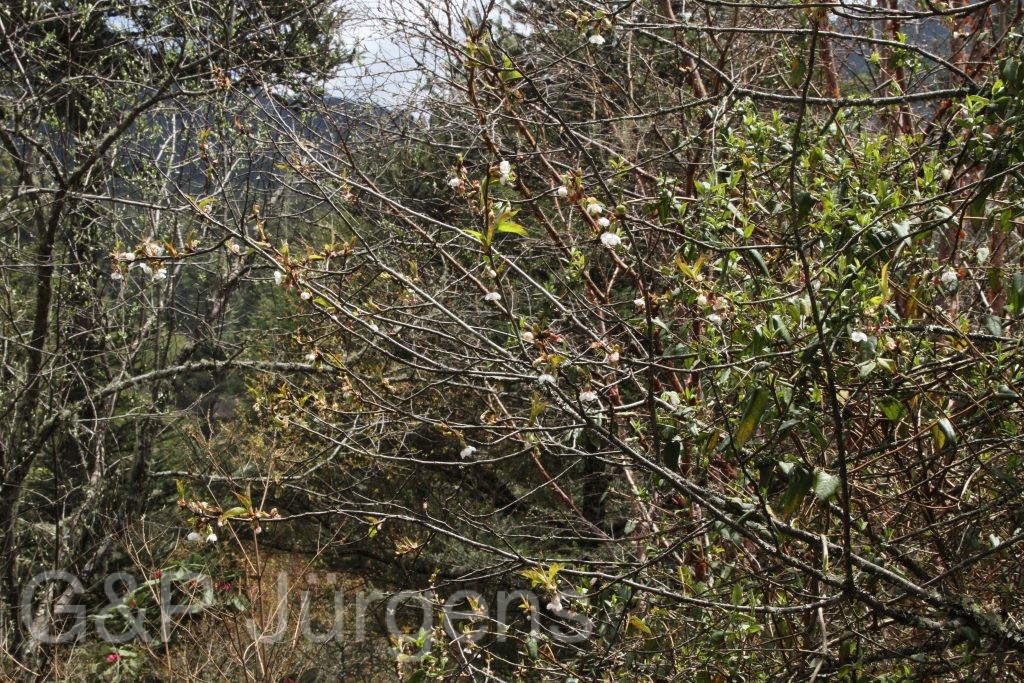
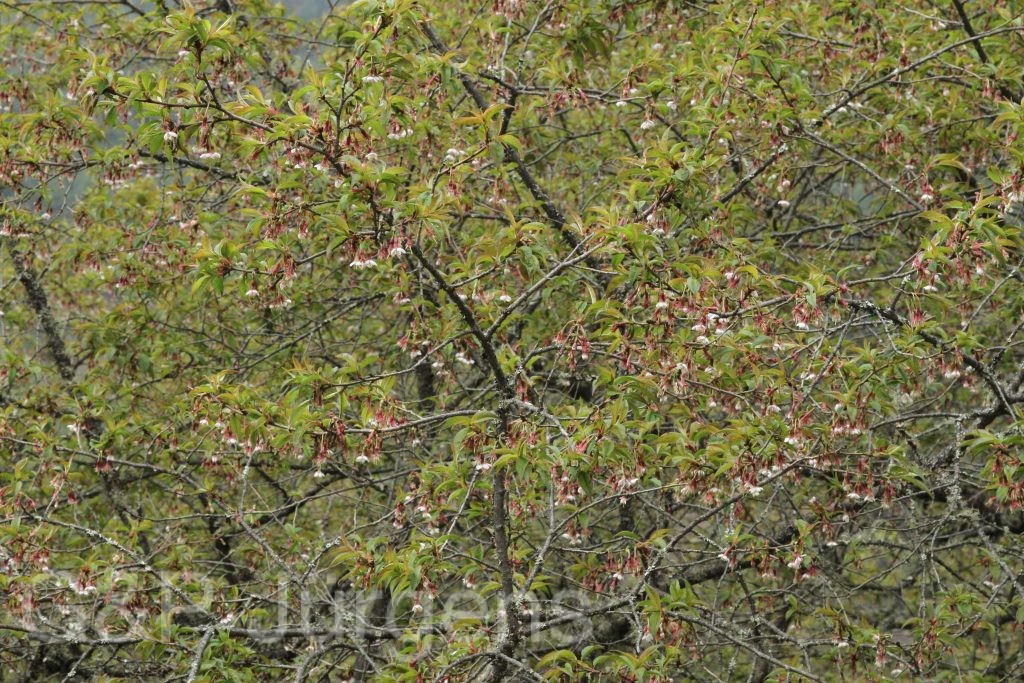
Bhutan2014 434
Bhutan Pele-La 3000m, May
Bhutan2014 543
Bhutan Pele-La 3000m, May

Description

Prunus rufa, the Himalayan cherry, is a small tree of the eastern Himalaya, distributed through Nepal, Bhutan, northern India, China (south-eastern Tibet) and Myanmar, with GBIF logging 290 occurrences concentrated along this Sino-Himalayan belt. It grows in cool temperate and sub-alpine forest, on open slopes, forest margins and in mixed conifer-broadleaf woodland, broadly between 2700 and 3700 m. The photographed plant from the Pele-La pass in central Bhutan at about 3000 m, flowering in May, illustrates its spring blossoming as new growth emerges in the high passes, where it is valued for its striking bark and early flowers.

The species is a deciduous tree, often 5-12 m tall, conspicuous for its smooth, glossy, coppery to reddish-brown peeling bark, which gives rise to the epithet rufa. Young shoots and leaf undersides are clothed in distinctive rusty (rufous) hairs. The alternate leaves are ovate to elliptic, serrate at the margin, acuminate and short-petiolate. The flowers are solitary or in small clusters, opening with the young foliage; each is pentamerous with five white to pale pink petals, numerous stamens and a single carpel seated in a cupular hypanthium. The fruit is a small ovoid drupe, ripening reddish, with a thin flesh surrounding a single hard stone (endocarp).

Described by Wallich ex Hooker, the species belongs to genus Prunus subgenus Cerasus (the true cherries), within Rosaceae subfamily Amygdaloideae. Its rusty indumentum and burnished bark are diagnostic and make it a notable ornamental, cultivated in temperate gardens for its bark and spring flower. The drupes provide food for birds and mammals, aiding seed dispersal. With a broad Himalayan range it is not globally threatened, though high-elevation forest fragmentation and logging may locally reduce populations.

Author: Wall. ex Hook.f. · Sources: POWO (Kew), GBIF, Flora of China, Flora of Bhutan, The Plant Hunter's Guide to Asian Prunus (Cerasus monograph)

(CB.Clarke) Nayar

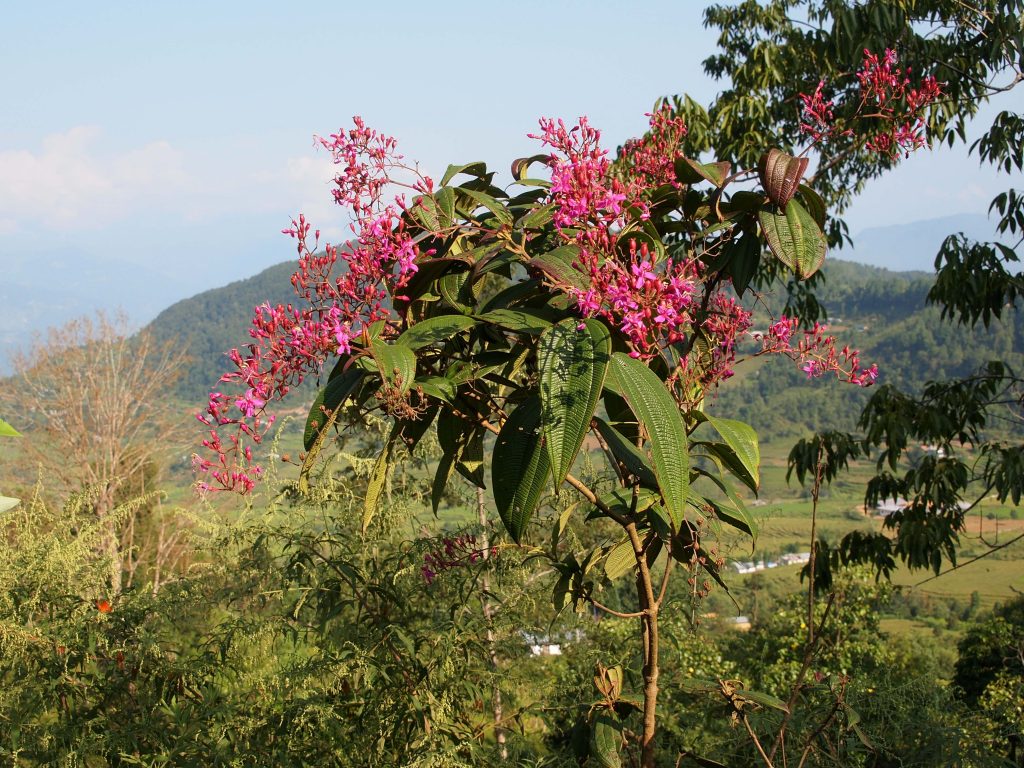
Bhutan2012 632
Bhutan Tserang 1600m
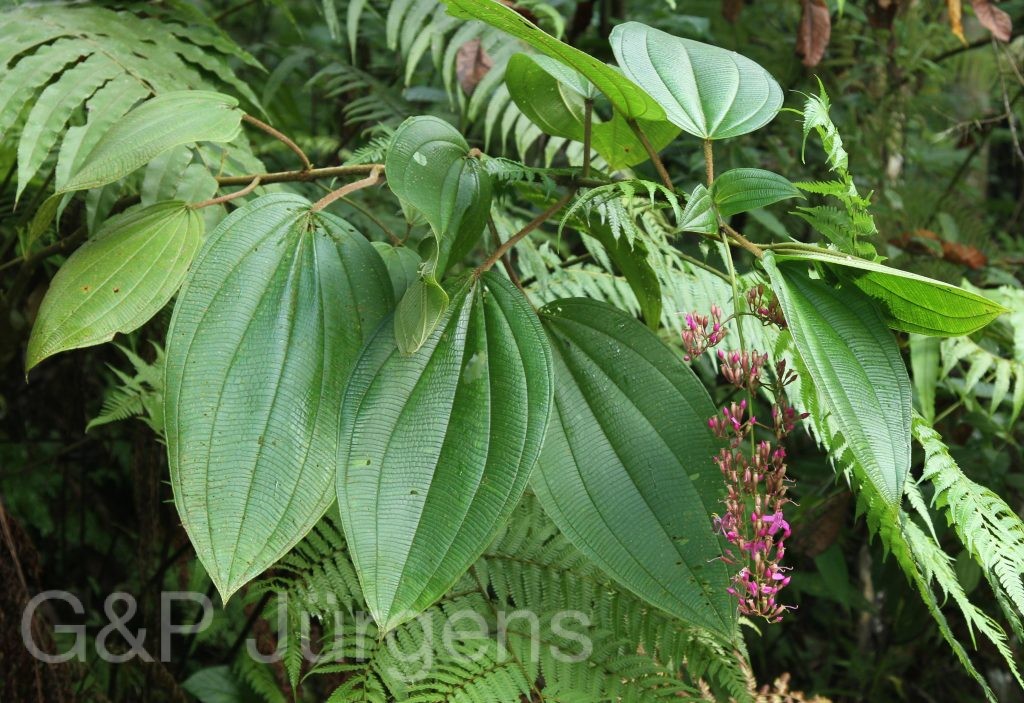
Bhutan2012 1239
Bhutan Tserang 1600m

Description

Pseudodissochaeta assamica is a forest shrub of the Sino-Himalayan and Indo-Burmese region, recorded from China, Vietnam, India, Laos, Bhutan, Myanmar and Bangladesh, with a moderate body of data (c. 126 records in GBIF). It is a plant of warm, humid broad-leaved evergreen and semi-evergreen forest, growing in shaded understorey, along streamsides, ravines and forest margins, typically in the subtropical to lower montane belt around 1000–2000 m. The photographed individual from Tserang in Bhutan, at 1600 m, is representative of this moist, shaded mid-elevation forest habitat where members of the family flourish.

The plant is an erect to scrambling shrub with quadrangular young stems and the opposite, decussate leaves typical of Melastomataceae. The leaves are large, ovate to elliptic-lanceolate, with the characteristic curvinerved (acrodromous) venation of several main veins arising near the base and converging at the apex, the lamina often scabrous or sparsely setose. The flowers are borne in terminal or axillary panicles; each has a campanulate hypanthium, four small petals, and conspicuous stamens that are markedly dimorphic or unequal, with appendaged, often geniculate connectives and poricidal anthers adapted to buzz-pollination. The fruit is an urceolate, several-seeded capsule or berry-like structure crowned by the persistent calyx.

The genus Pseudodissochaeta (tribe Dissochaeteae) was segregated by Nayar from Dissochaeta on differences in stamen and connective structure. This taxon was based on a Clarke name and has a complex synonymy; the source page links to Oxyspora paniculata, an allied melastome with which it has at times been confused, underscoring the taxonomic intricacy of the group. As a fairly widespread forest shrub it is not regarded as threatened, though it depends on intact mid-elevation forest.

Author: (CB.Clarke) Nayar · Sources: POWO (Kew), GBIF, Flora of China (Melastomataceae), Flora of Bhutan, A Revision of the Asiatic Melastomataceae

(D.Don) Anderb.

Nepal 2001 436 ergebnis ergebnis
Nepal (Gorkha) Gunda 1850m, May

Description

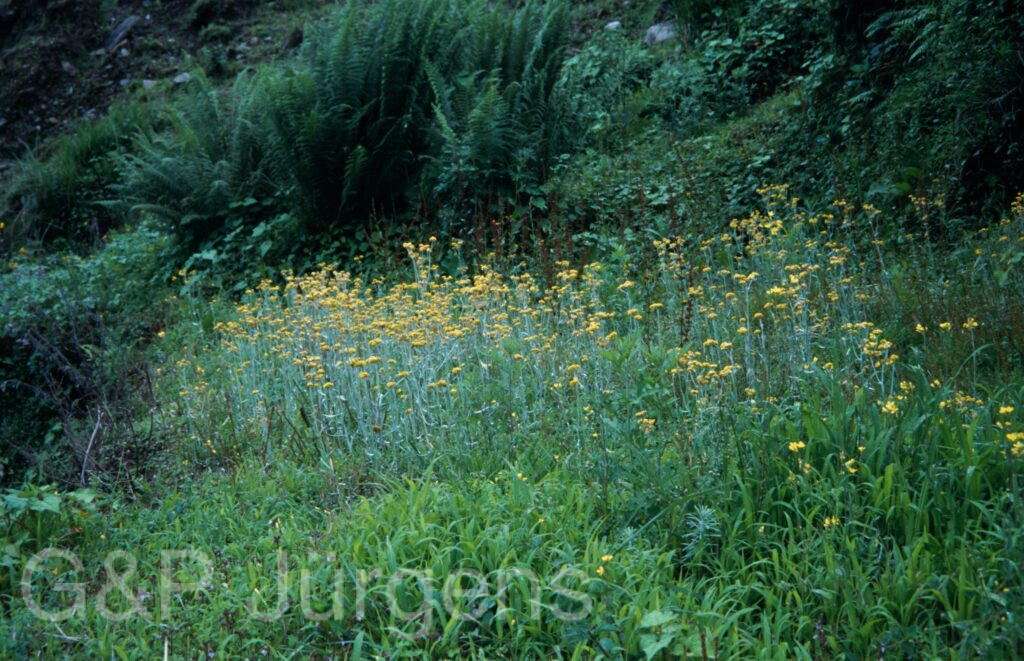
Pseudognaphalium affine is a widespread woolly cudweed of East Asia and the Indo-Himalaya, ranging across China, Japan, Korea, Taiwan, the Himalaya (Nepal, India, Bhutan, Pakistan, Afghanistan), Myanmar, Thailand, Sri Lanka and South-East Asia, and now naturalised more widely (with records as far afield as Argentina and Georgia); its very large dataset of over 7400 georeferenced occurrences confirms its abundance and weedy success. It grows on open grassy slopes, field margins, fallow ground, roadsides and other disturbed sites from the lowlands to the mid-montane belt, broadly from near sea level to about 2500 m. The plant recorded near Gunda in Gorkha, Nepal, at 1850 m in May is typical of such open, sunny, anthropogenic habitats.

It is an annual or biennial herb with erect, simple or branched stems clothed, like the foliage, in dense white-woolly (arachnoid) tomentum. The leaves are alternate, oblanceolate to spathulate, sessile and somewhat decurrent, grey-green and persistently woolly on both surfaces. The numerous small, discoid capitula are aggregated into dense terminal corymbs; each head is enclosed by several rows of pale yellow to straw-coloured, scarious involucral bracts, the florets all tubular, the outer female and filiform, the inner bisexual. The fruit is a tiny oblong cypsela bearing a pappus of slender, basally connate bristles aiding wind dispersal.

Formerly placed in Gnaphalium, this species was transferred to Pseudognaphalium on the basis of capitulum and pappus characters within tribe Gnaphalieae. It is used in East Asian cuisine and folk medicine and is a familiar ruderal weed; its broad ecological tolerance and prolific seed make it abundant and entirely unthreatened.

Author: (D.Don) Anderb. · Sources: POWO (Kew), GBIF, Flora of China, Flora of Nepal, Flora of Bhutan, Anderberg's monograph of the Gnaphalieae

(Franch.) Pax

BhutanPG2011 117
Bhutan Chogham, 3450m June
Bh2008 38 G66
Bhutan Dochu-La, 3000m April
Sikkim 2006 79 ergebnis
India West-Bengal, Kalipokkri 3100m, May

Description

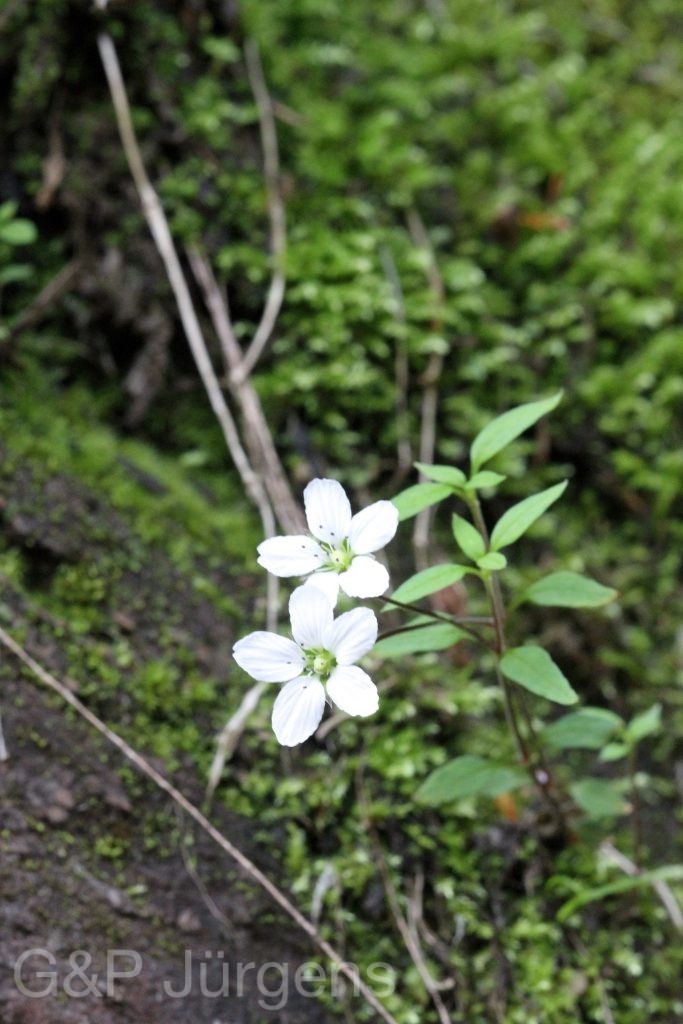
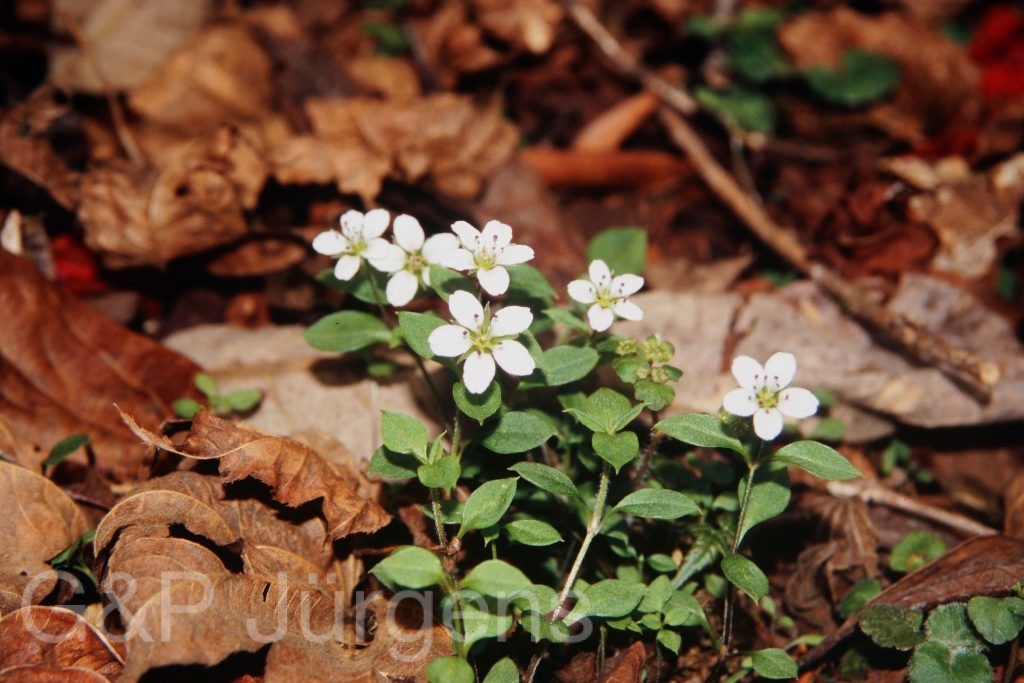
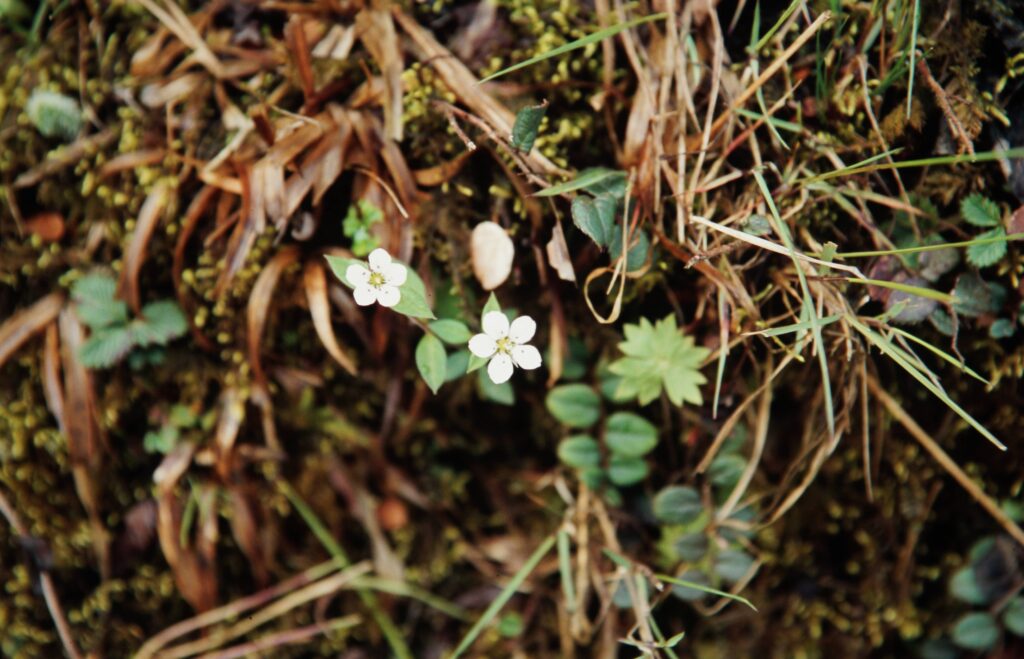
Pseudostellaria himalaica (Franch.) Pax is a small woodland perennial of the Himalaya and adjacent ranges, distributed through Bhutan, India, Nepal, Pakistan, Afghanistan and south-western China, with a comparatively modest GBIF record of about 118 occurrences reflecting its inconspicuous habit. It grows in cool, shaded, humus-rich conditions: the floor of temperate broadleaf and conifer forest, mossy banks, Rhododendron understorey and damp rocky slopes. The illustrated material spans three localities and seasons, from Chogham in Bhutan at 3450 m in June and Dochu-La at 3000 m in April to Kalipokkri in West Bengal, India, at 3100 m in May, indicating a flowering period extending through spring and early summer in the temperate to lower subalpine zone.

The plant is a delicate, glabrous to sparsely hairy perennial arising from slender, fusiform to tuberous-thickened roots. The stems are weak, slender and ascending, bearing opposite, sessile to shortly petiolate, ovate to lanceolate leaves with entire margins. The flowers are of two kinds in the manner typical of Pseudostellaria: showy, chasmogamous flowers borne in the upper axils or terminally, with five free white petals (often bifid or notched) somewhat exceeding the five lanceolate sepals, ten stamens and a three-styled ovary; and inconspicuous, often petal-less cleistogamous flowers produced lower on the plant that self-fertilise. The fruit is a small capsule dehiscing by valves to release few seeds.

This taxon has frequently been treated as Pseudostellaria heterantha var. himalaica, reflecting its close affinity with the variable P. heterantha aggregate, and authors differ on whether to recognise it at species or varietal rank, as the source page name indicates. The combination of showy outcrossing flowers with reliably self-pollinating cleistogamous ones is a reproductive strategy that buffers seed-set in the short, cool growing season of shaded montane forest. The species is widespread if seldom abundant, and no specific conservation threat is recorded, though it depends on intact forest understorey.

Author: (Franch.) Pax · Sources: POWO (Kew), GBIF, Flora of China, Flora of Bhutan, Caryophyllaceae of the Himalaya (Majumdar)

(Bureau & Franch.) Pinto-Carr., E.Rico & M.M.Mart.Ort.

Bh09 414 P652
Bhutan Paro, 2500m June

Description

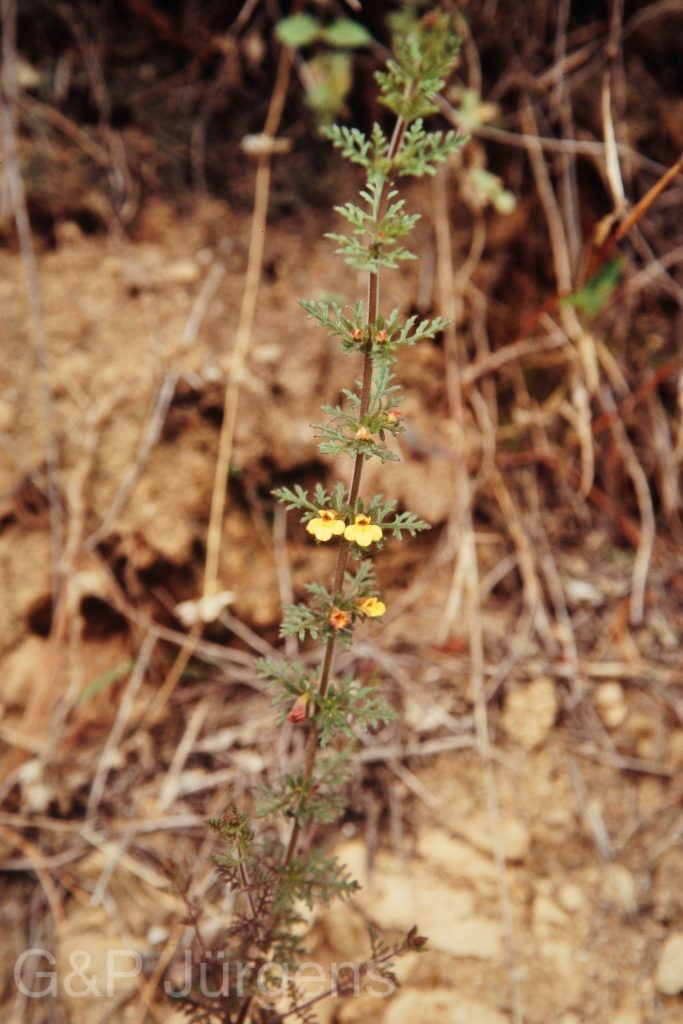
Pterygiella tenuisecta (Bureau & Franch.) Pinto-Carr., E.Rico & M.M.Mart.Ort. is a hemiparasitic annual herb of the Sino-Himalayan region, distributed through Bhutan, northern India and south-western China (notably Yunnan and Sichuan), with the GBIF dataset of roughly 883 occurrences also carrying determinations referable to material in Japan. Often treated under the name Phtheirospermum tenuisectum, it occupies open grassy slopes, forest margins, scrub and disturbed banks at montane elevations, where like other root-hemiparasites it attaches to the roots of neighbouring grasses and herbs while retaining functional green foliage. The illustrated plant was photographed at Paro in western Bhutan at around 2500 m in June, an elevation and season typical of its flowering in the temperate montane belt.

It is a slender, erect to ascending annual with branched, glandular-pubescent stems. The leaves are opposite below and may become alternate above, the blades pinnatisect to bipinnatisect with narrow, almost filiform ultimate segments, giving the foliage a finely divided, feathery appearance reflected in the epithet tenuisecta. The flowers are solitary in the upper leaf axils, shortly pedicellate, with a tubular, ribbed, glandular calyx of fused sepals. The corolla is yellow, two-lipped, the upper lip hooded and the lower three-lobed and spreading, enclosing four didynamous stamens. The fruit is a loculicidal, ovoid to oblong capsule containing numerous small seeds.

The species has been shuttled between several genera of the broomrape family, having been described in Gerardia and later placed in Phtheirospermum before molecular and morphological work supported its transfer to Pterygiella; the synonymy underlies the differing names on the source page. As a facultative hemiparasite it plays a part in regulating grassland community structure, drawing water and nutrients from hosts while contributing its own photosynthesis. No conservation concern is recorded, the plant being a widespread component of seasonally moist montane grasslands across its Sino-Himalayan range.

Author: (Bureau & Franch.) Pinto-Carr., E.Rico & M.M.Mart.Ort. · Sources: POWO (Kew), GBIF, Flora of China, Flora of Bhutan, Orobanchaceae phylogenetic studies (Pinto-Carrasco et al.)