Tag:

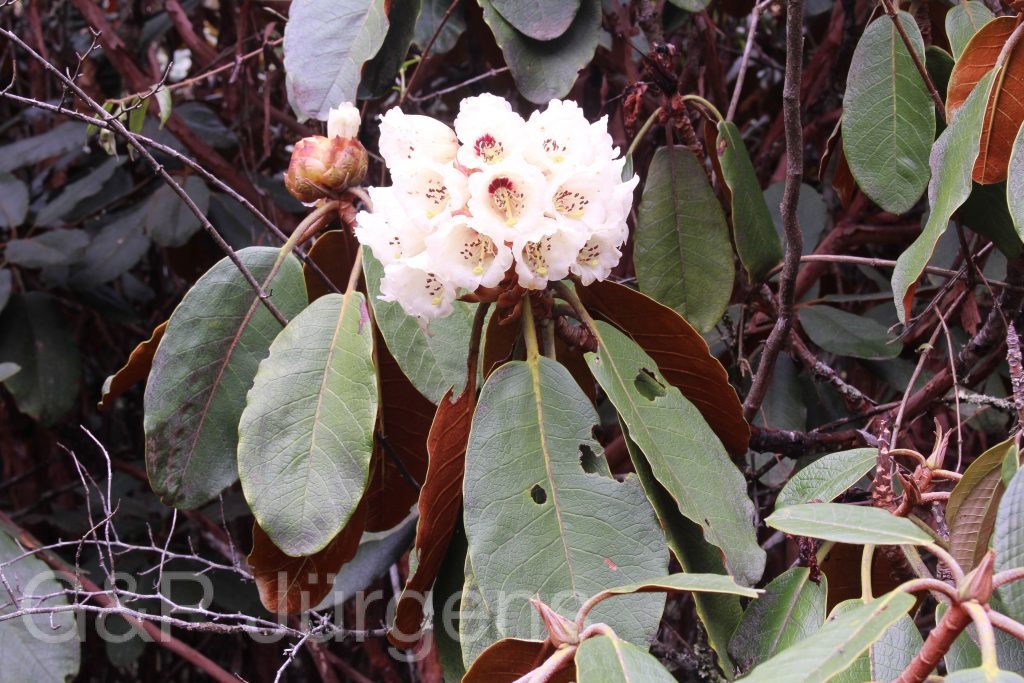
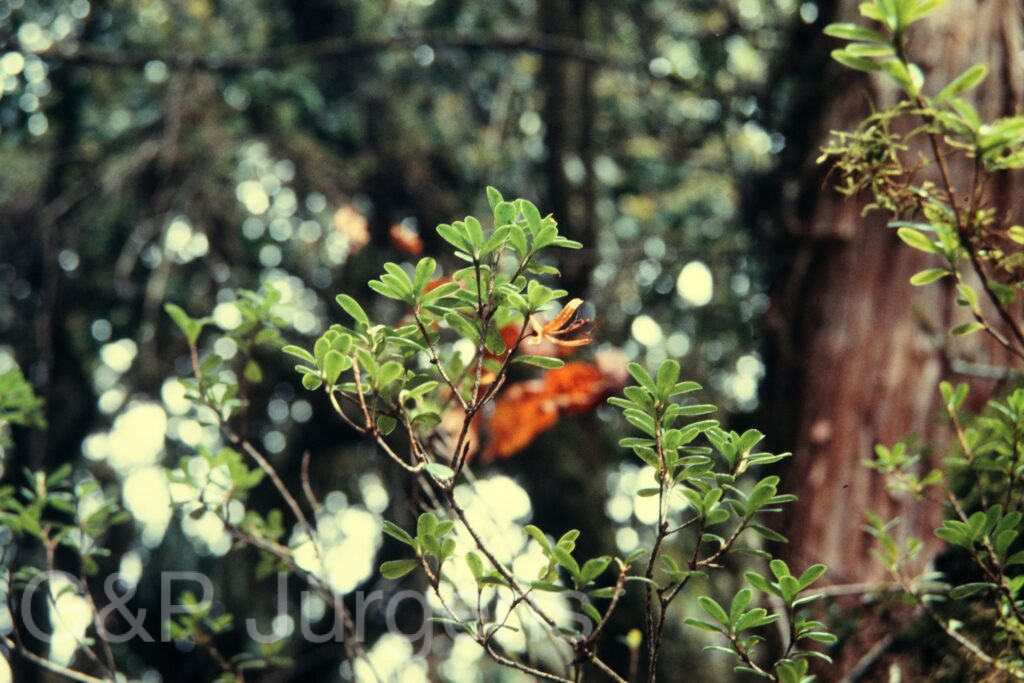
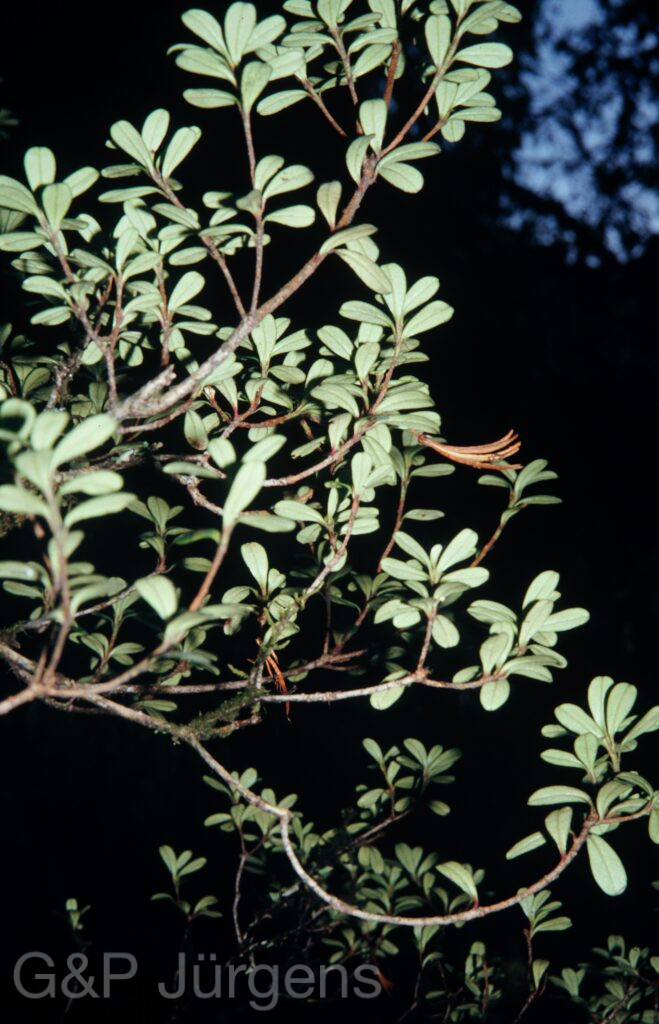
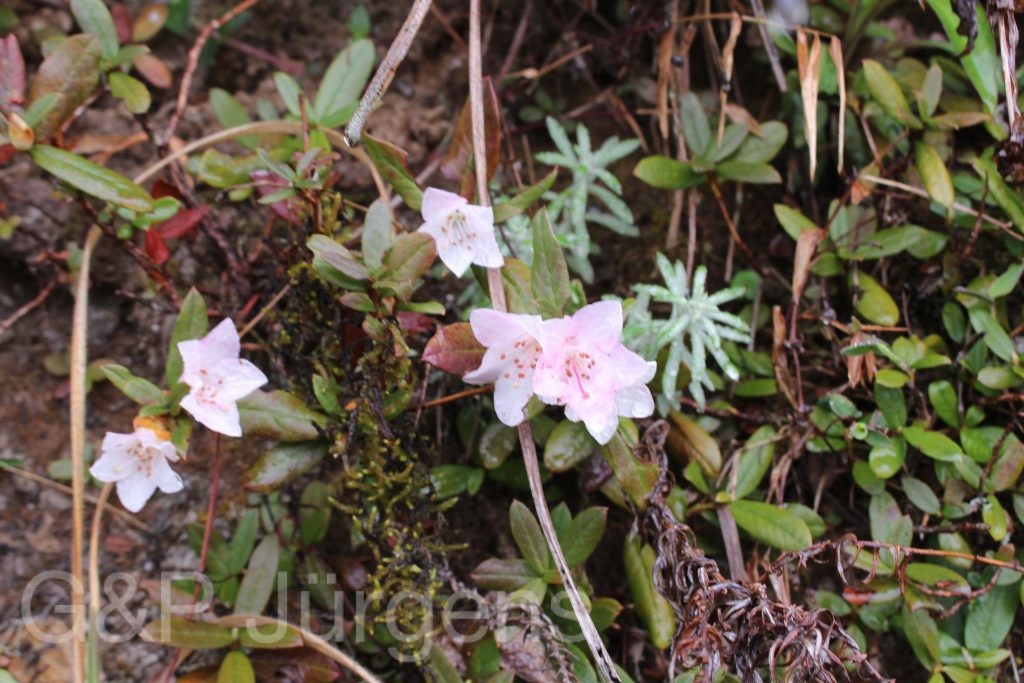
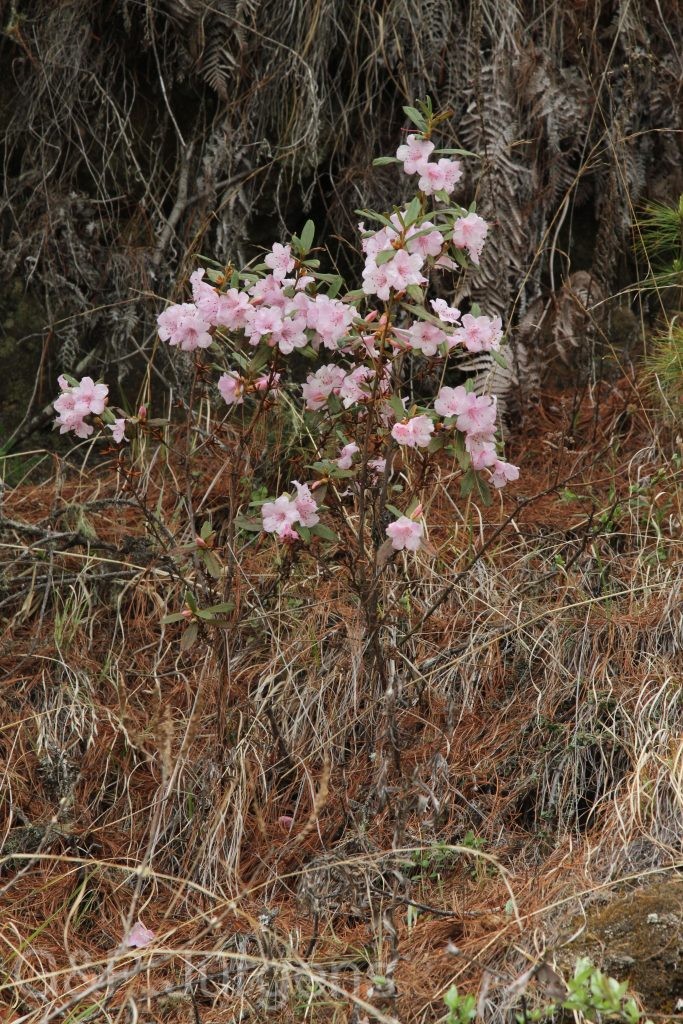
Montane (1500-2500 m)

Hook. f.

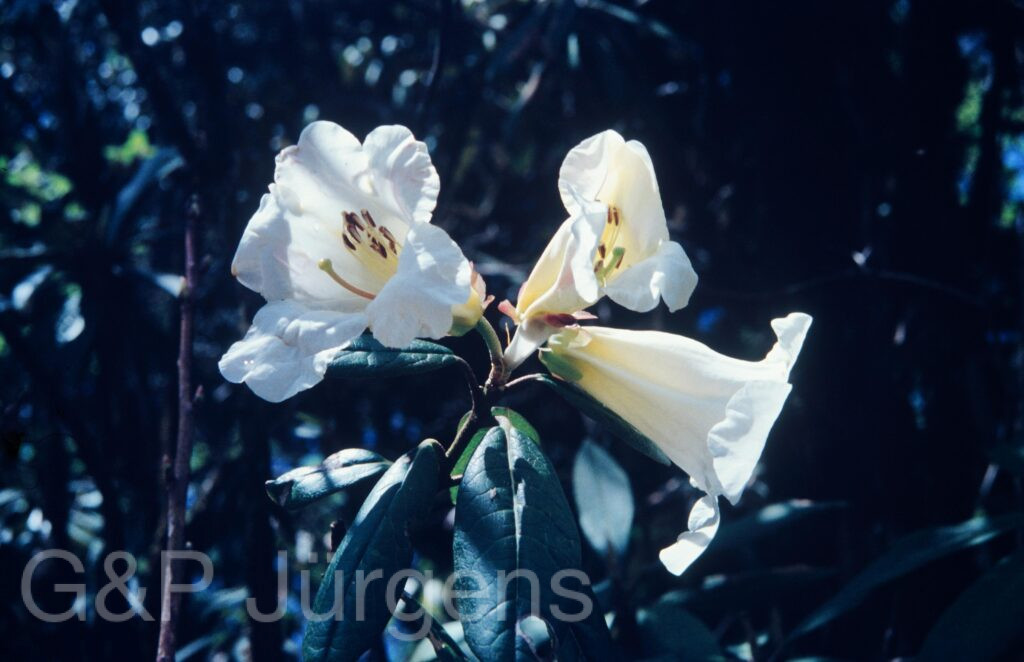
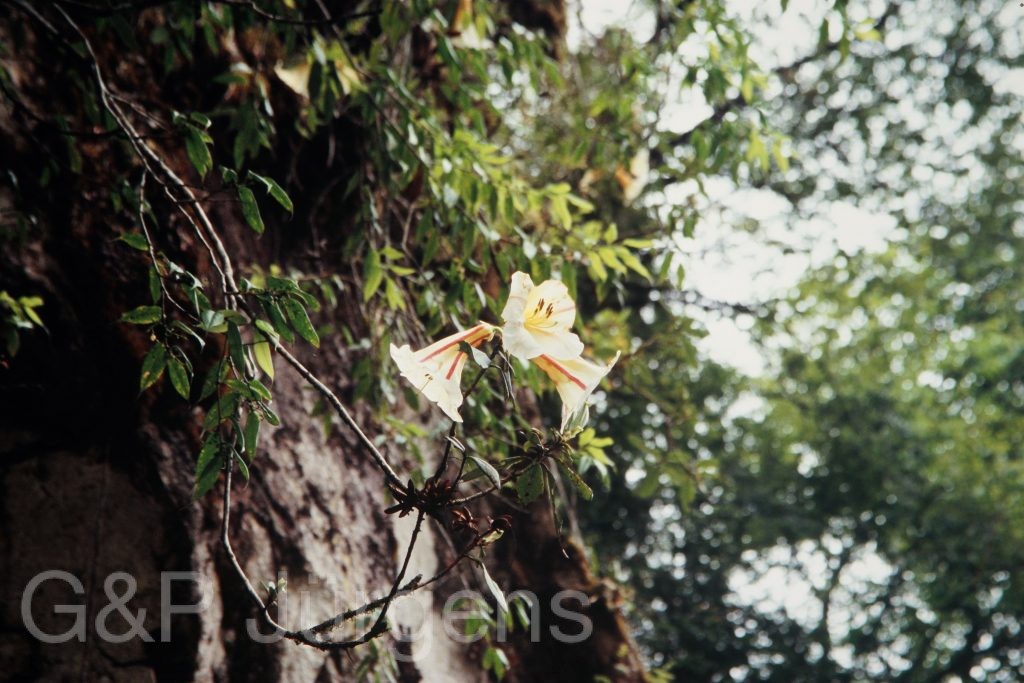
Bh09 237 P397
Bhutan Wangdi 1950m, June
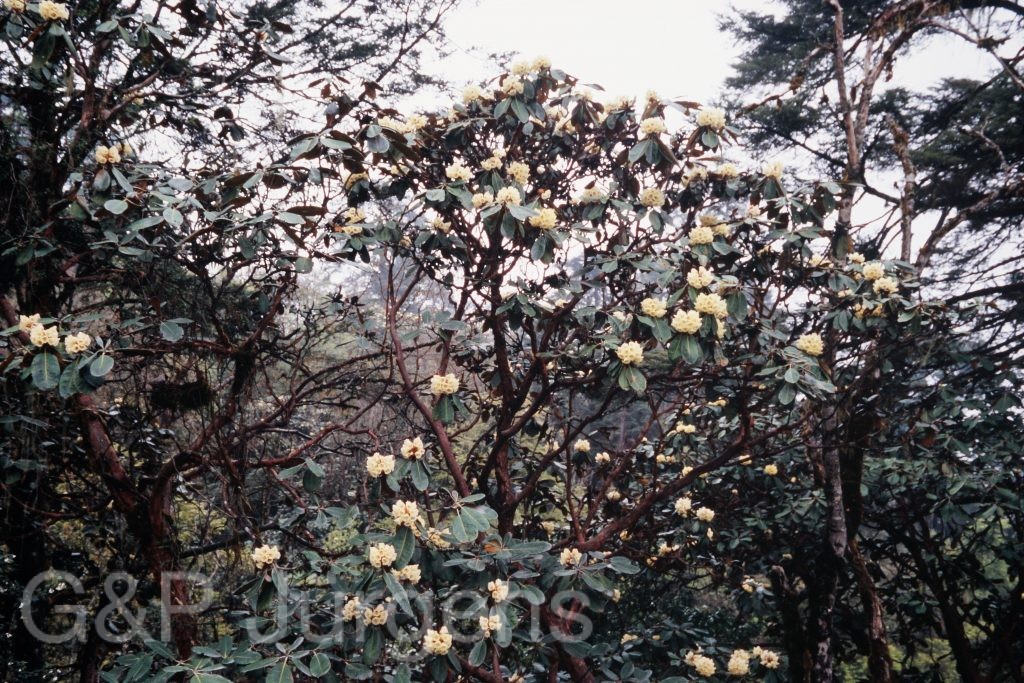
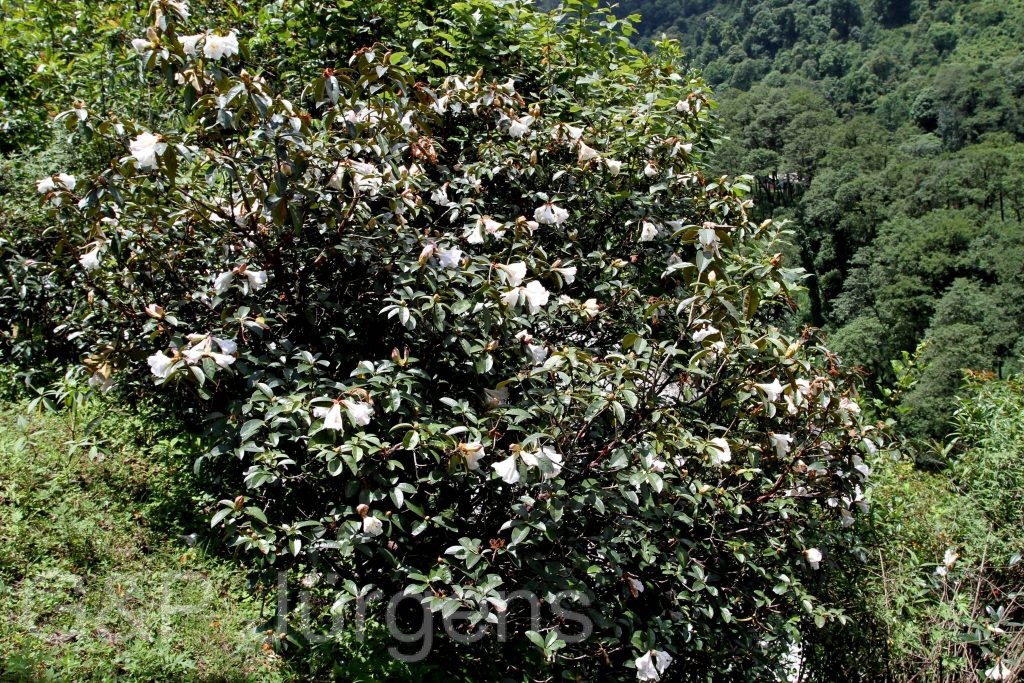
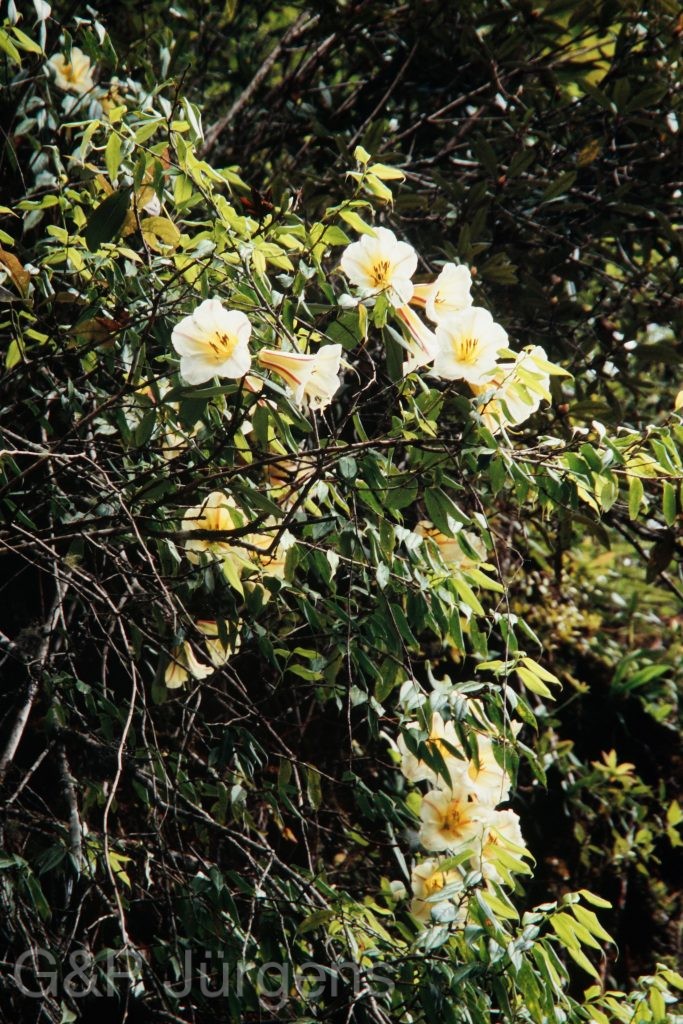
Bh09 238 G399
Bhutan Wangdi 1950m, June
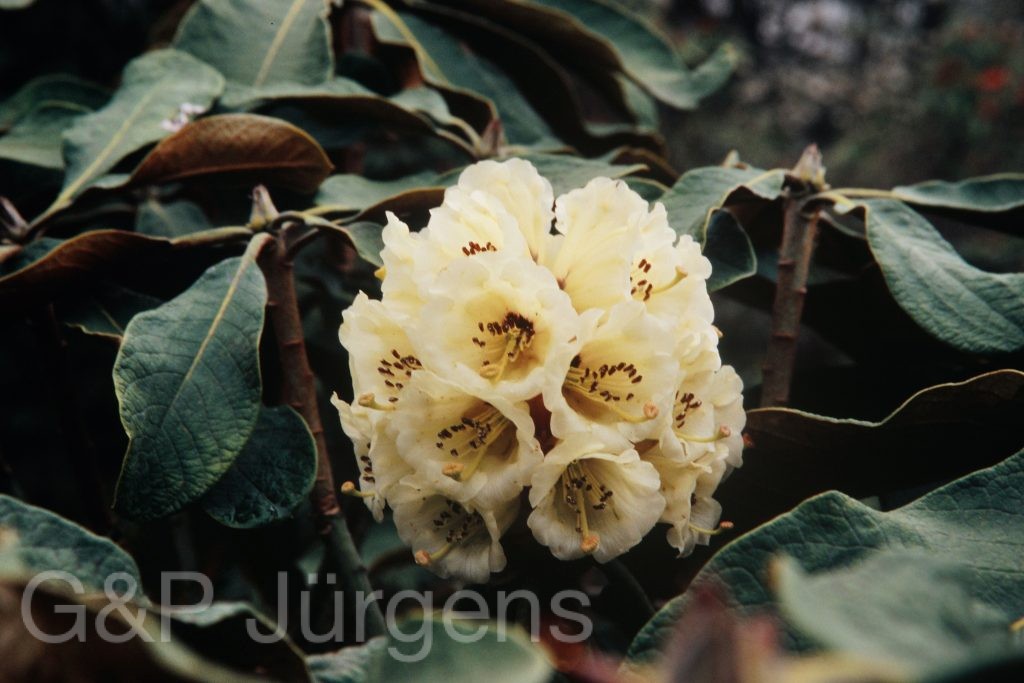
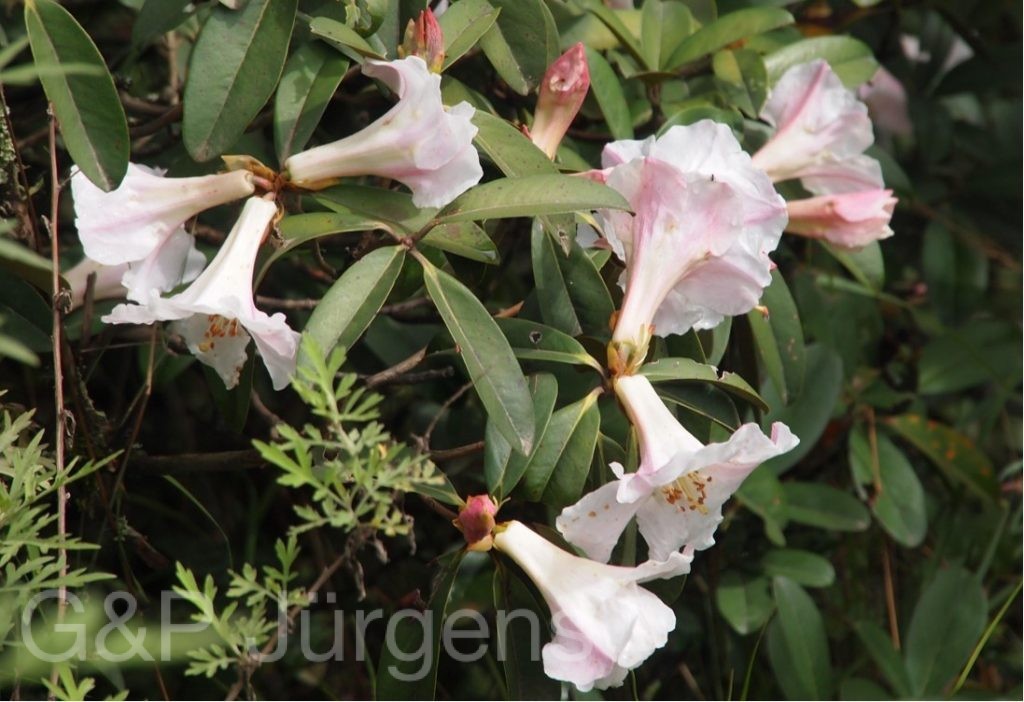
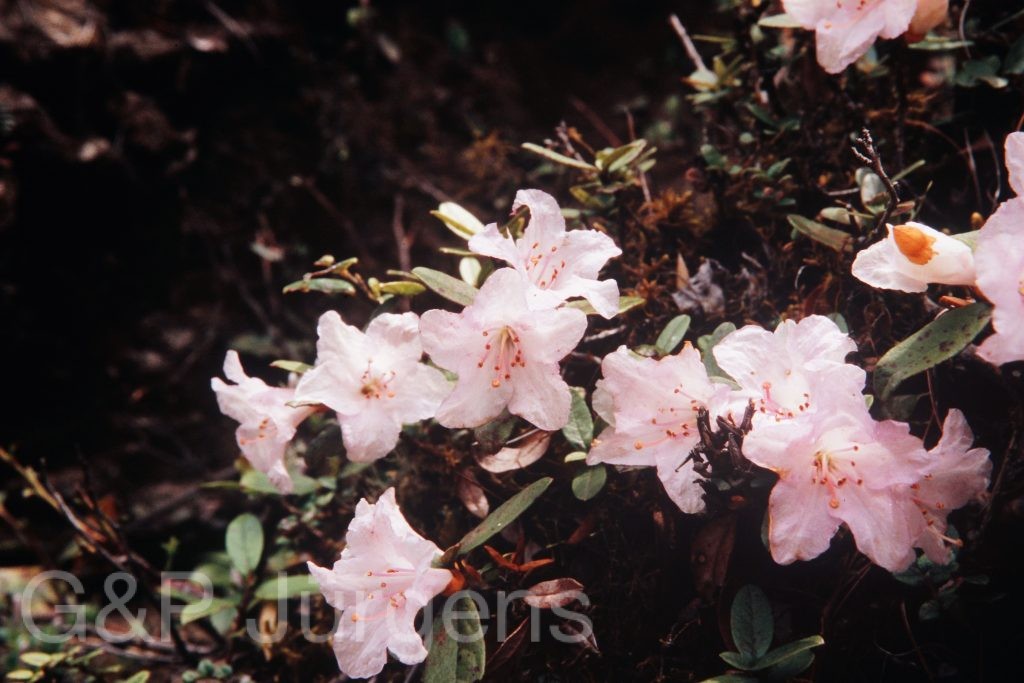
Nepal 97 314 P620
Nepal Honggaon 2360m May
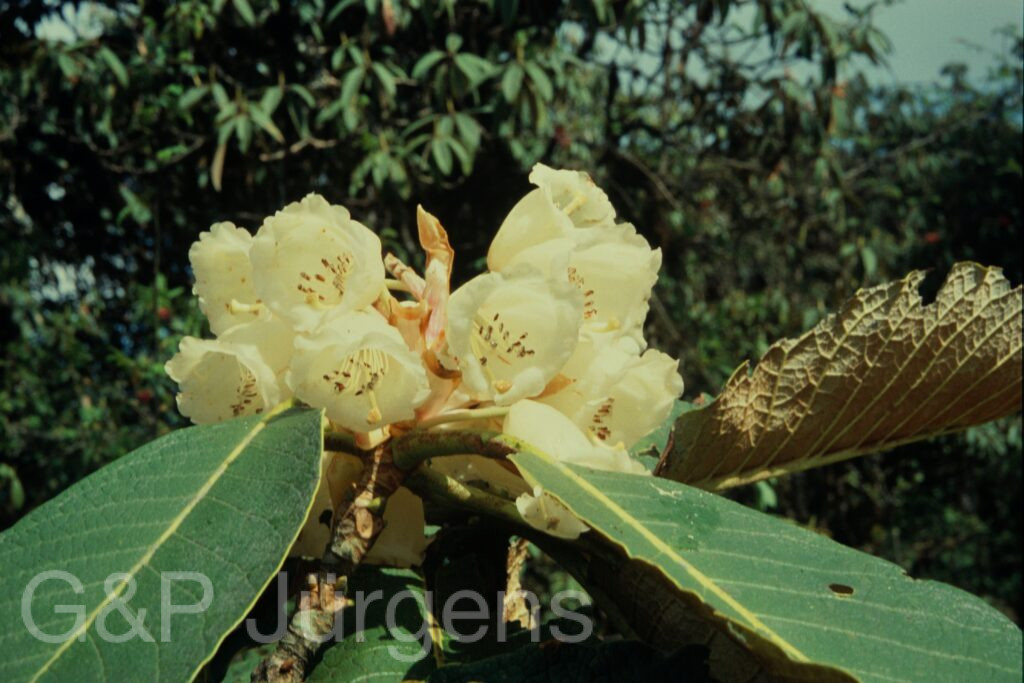
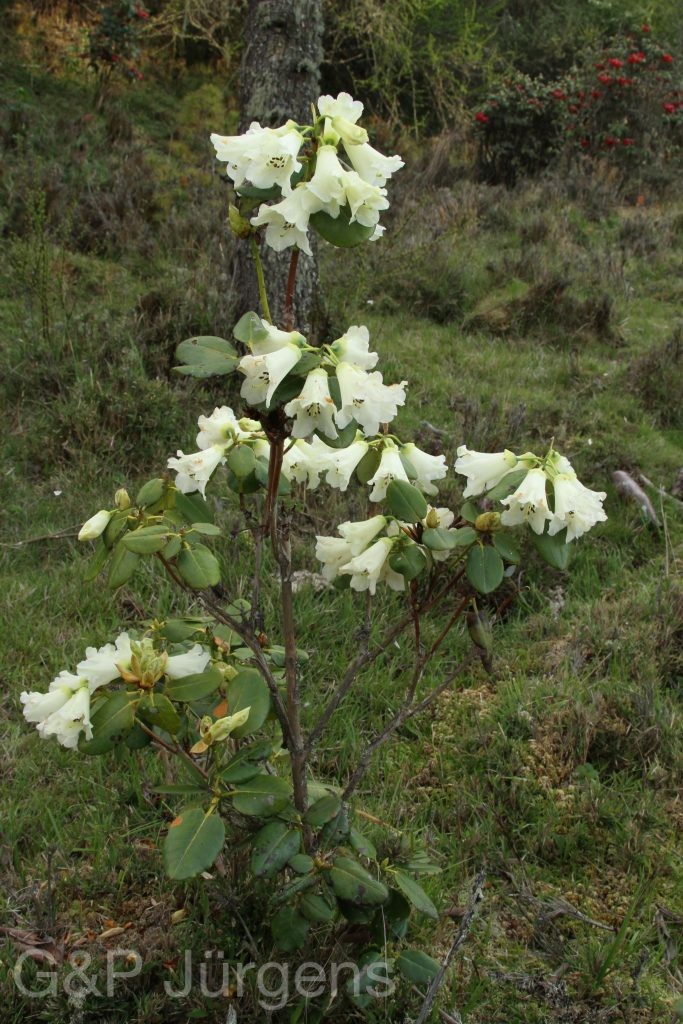
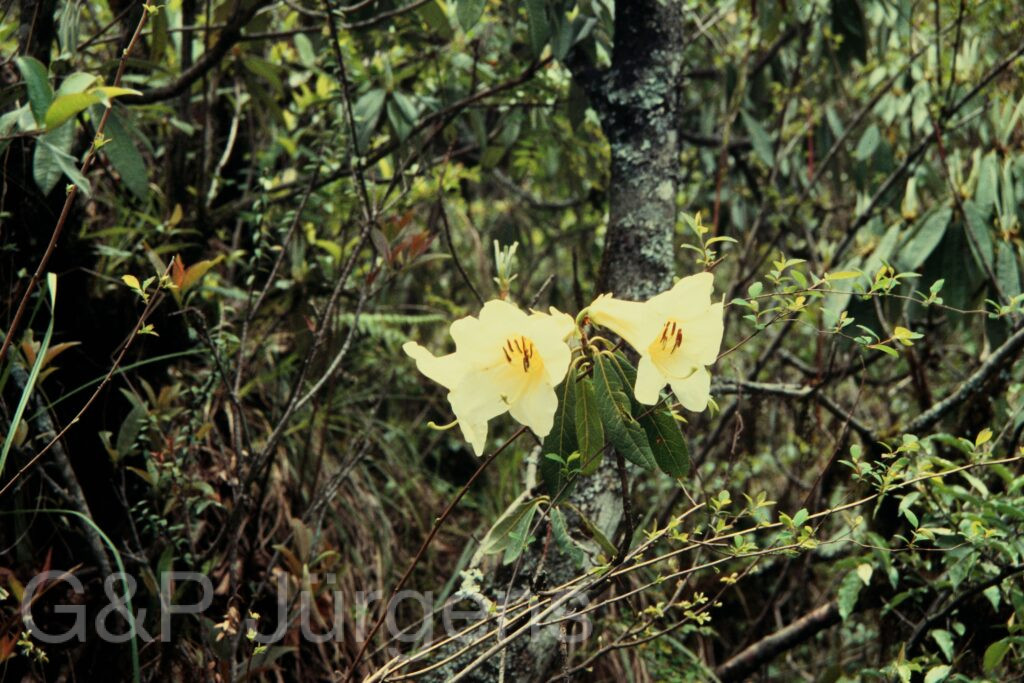
Nepal 97 418 P807
Nepal Taskigaon 3000m May

Description

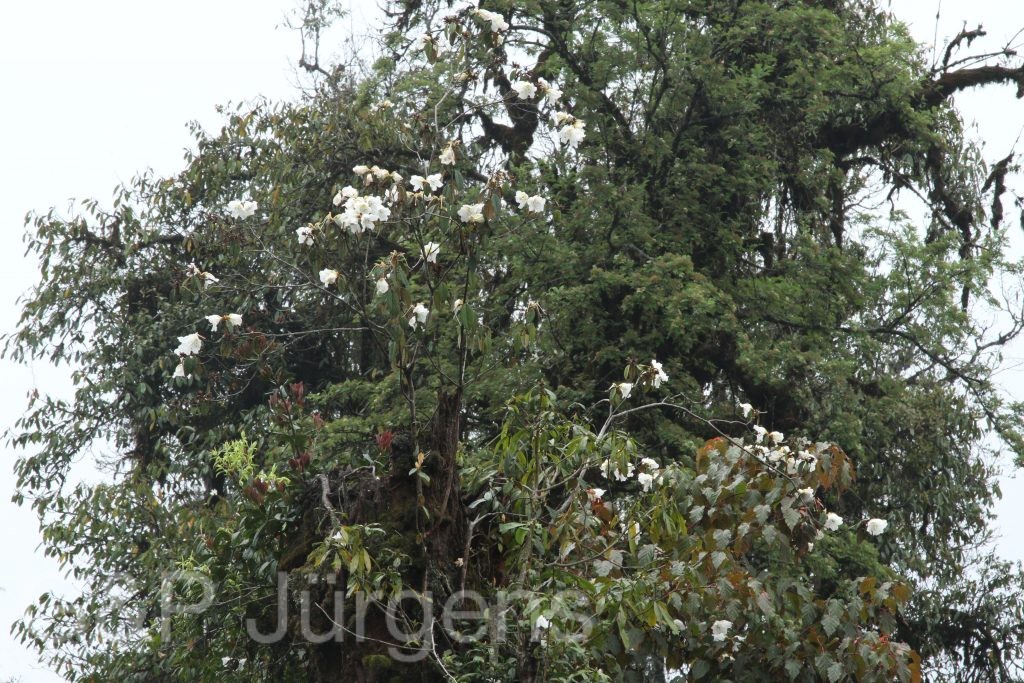
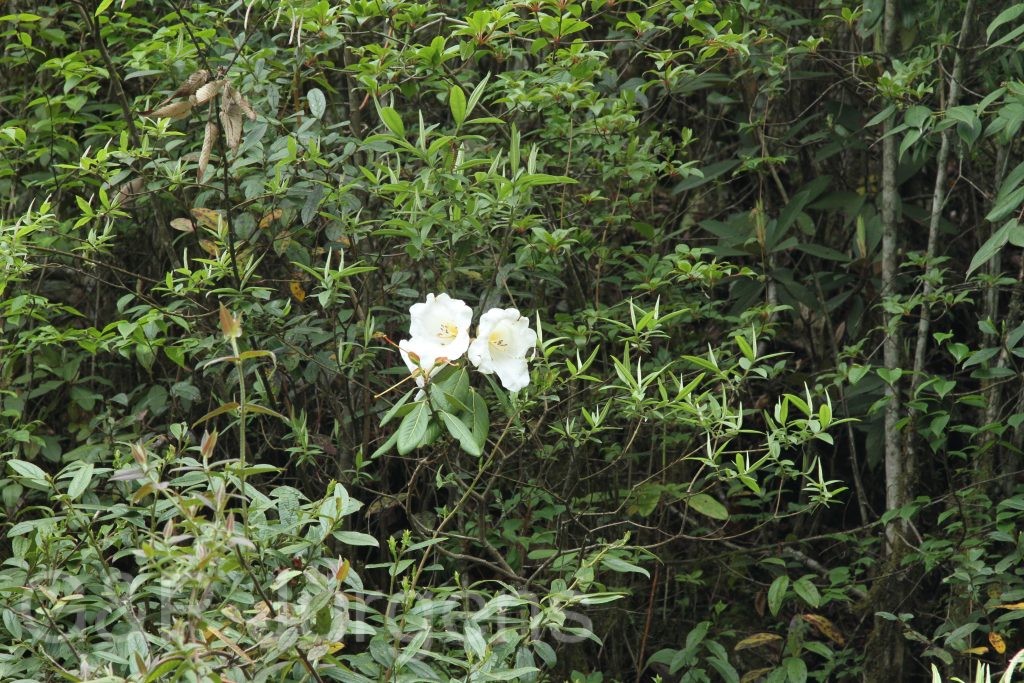
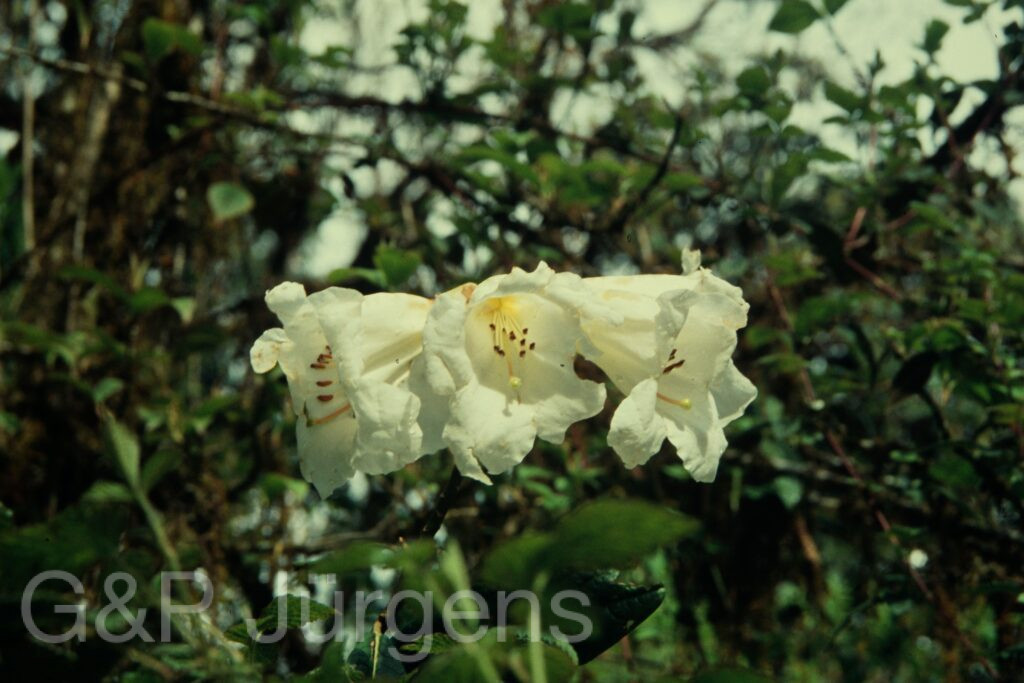
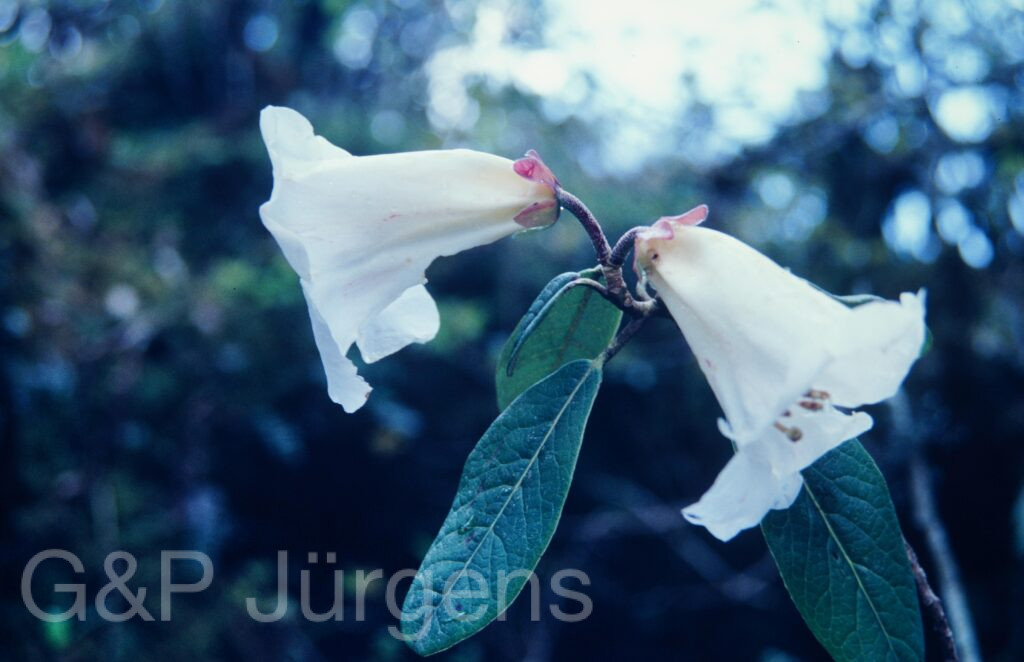
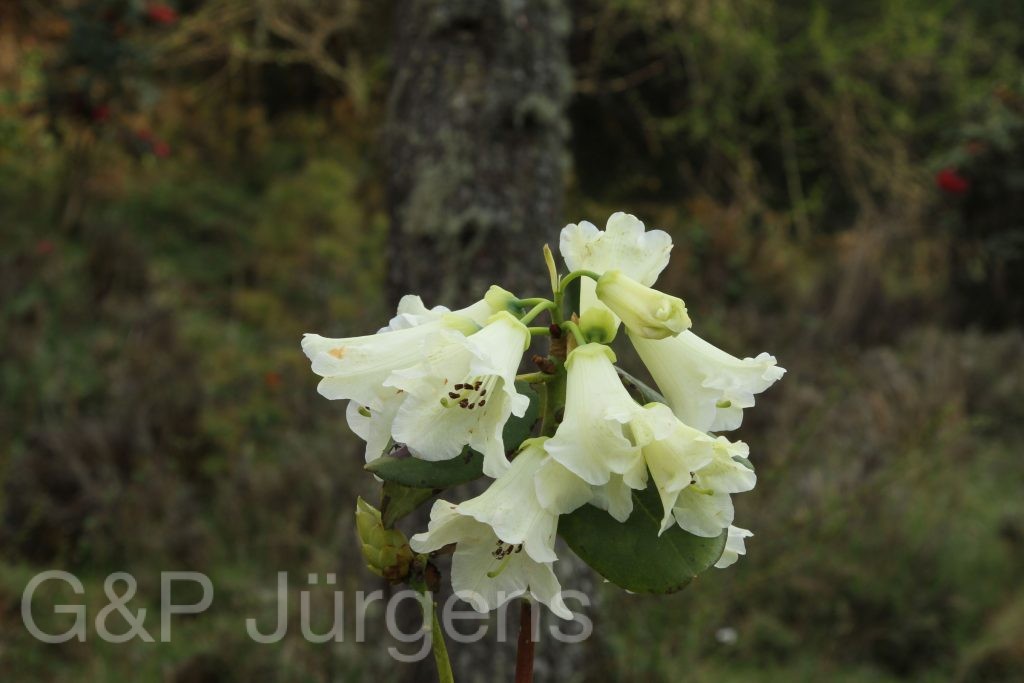
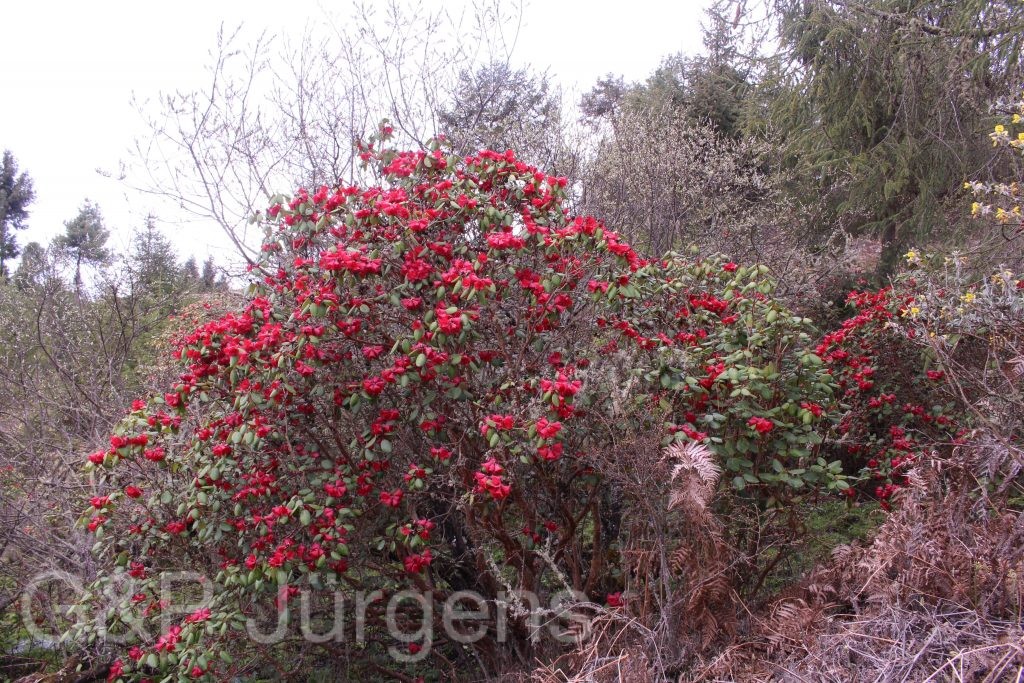
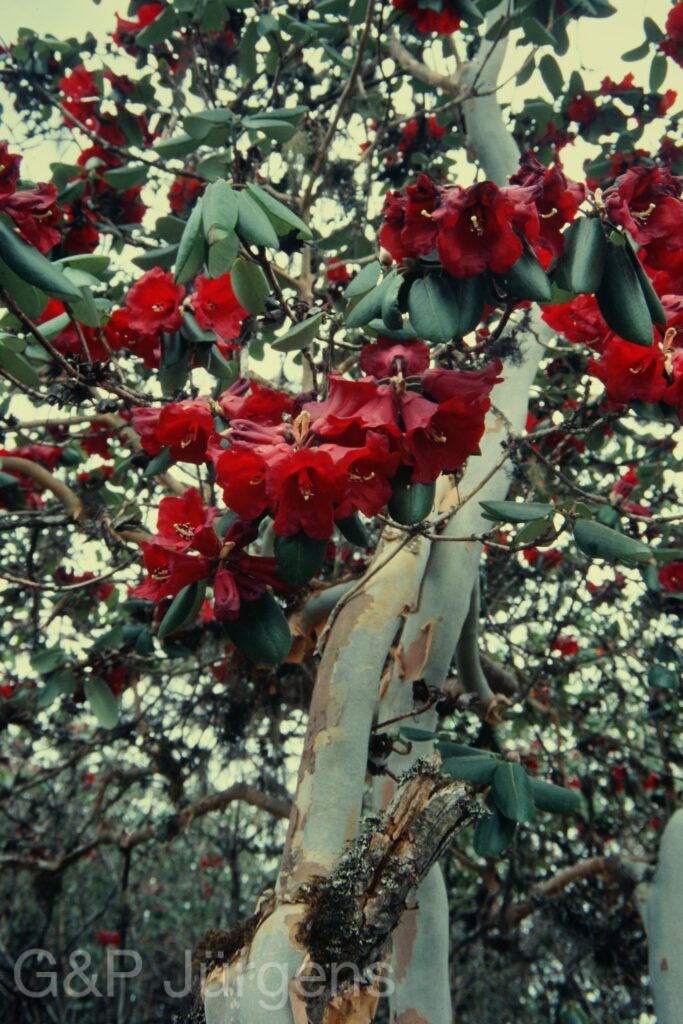
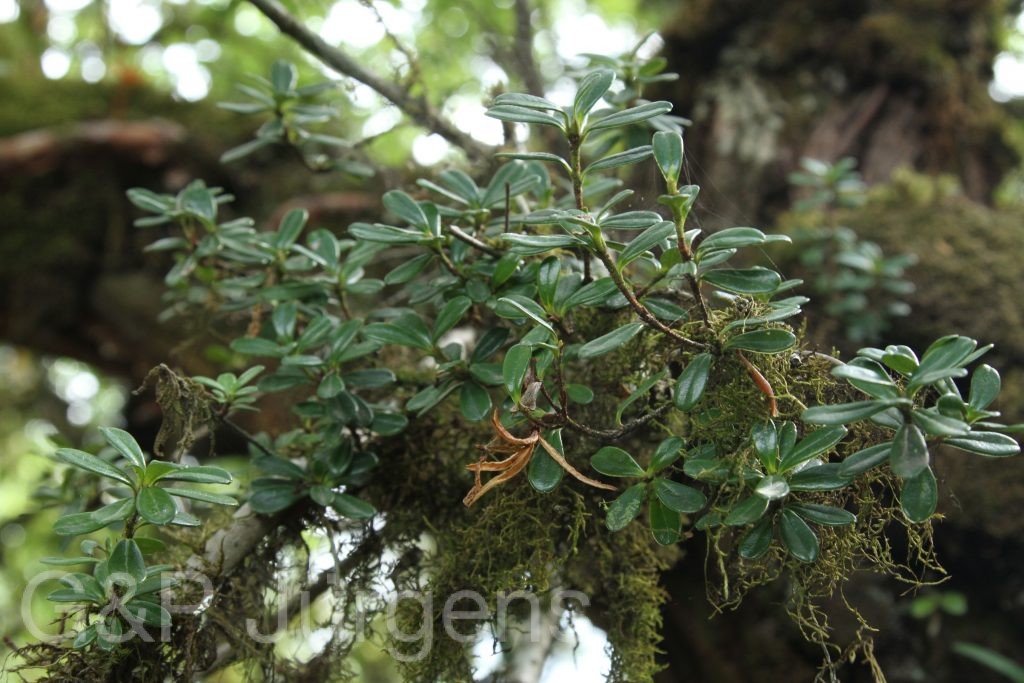
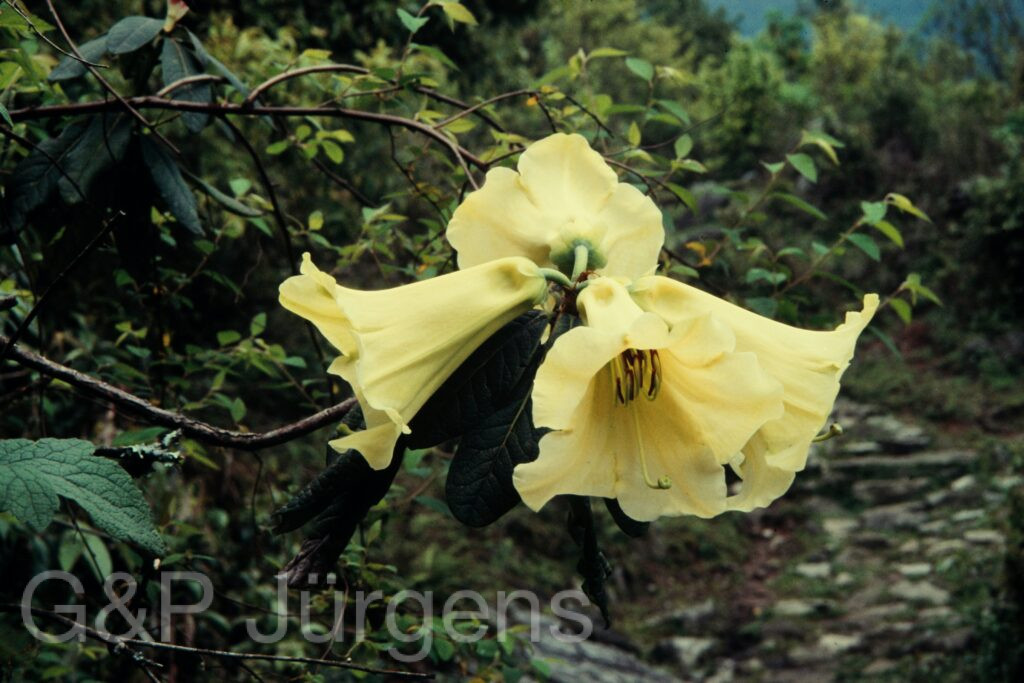
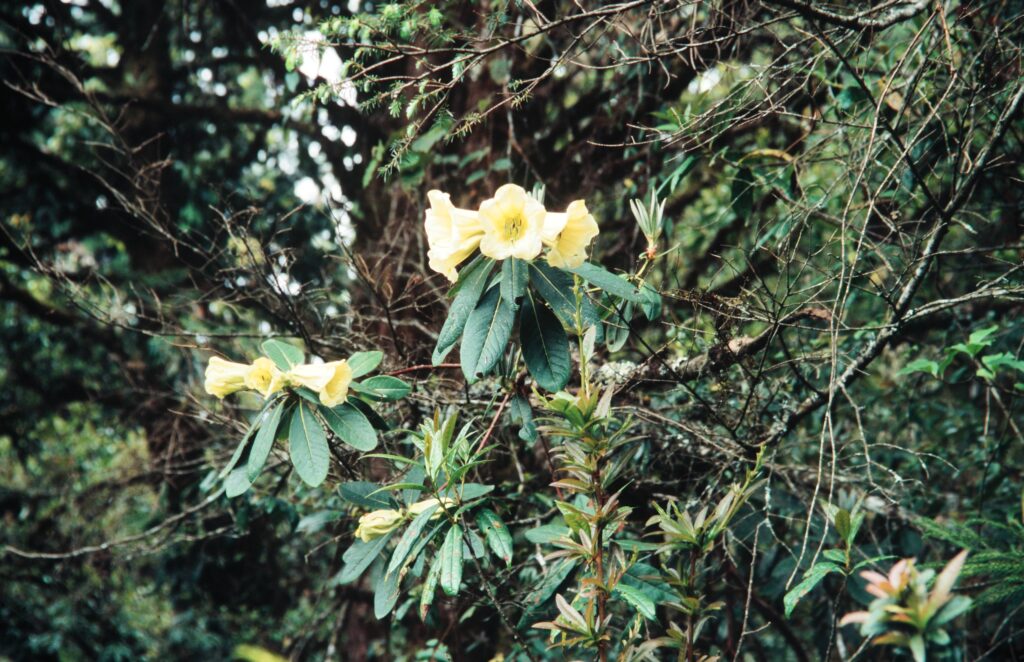
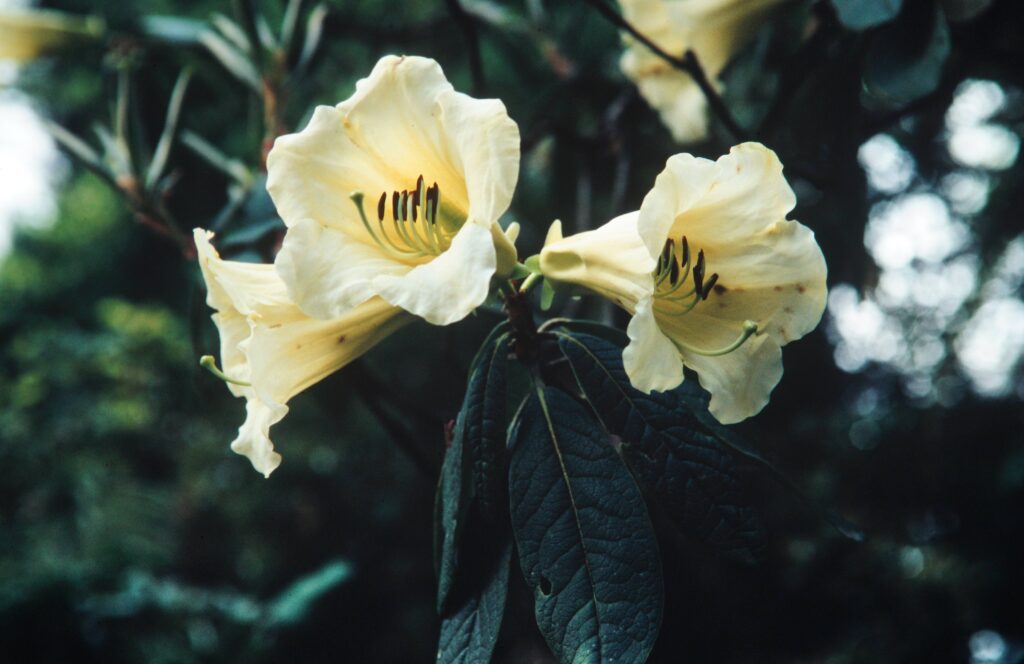
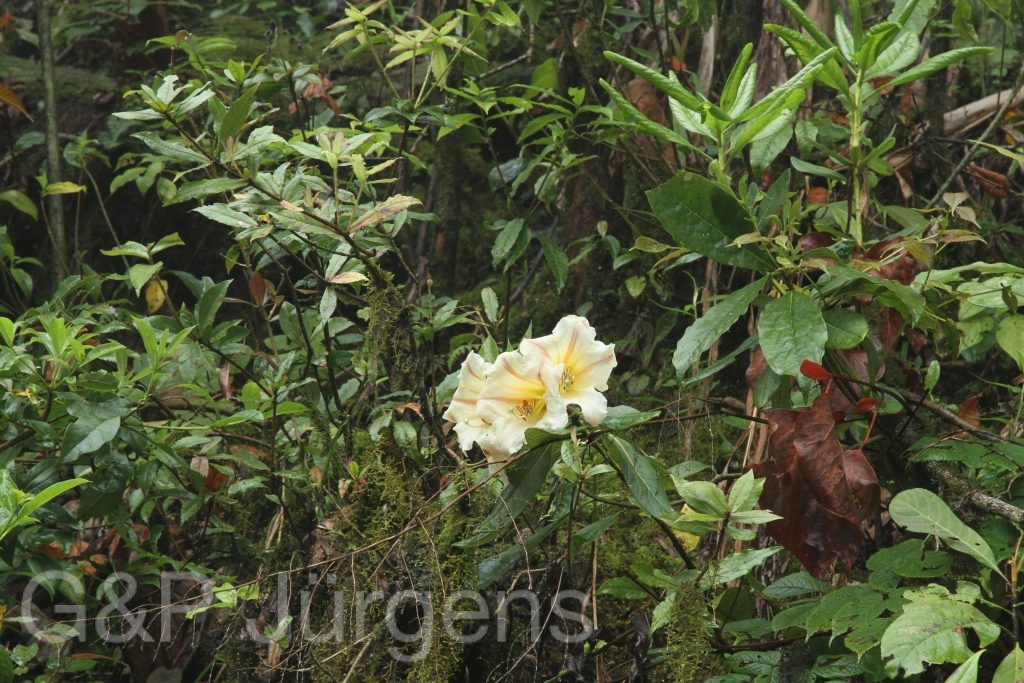
Rhododendron dalhousieae is an epiphytic or terrestrial shrub of the eastern Himalaya, distributed across India, Nepal, Bhutan and adjacent China; its c. 149 georeferenced records track the wet temperate forest belt (records from Britain and New Zealand reflect its long history in cultivation). It grows in humid broadleaf and Rhododendron-rich forest, often perched on mossy trunks and rocks or on steep banks, chiefly between 1800 and 3000 m. The image documents populations across its range, from Wangdi in Bhutan at 1950 m to Nepal's Honggaon and Taskigaon (2360-3000 m) and Samadan in West Bengal at 2400 m, flowering from May into June in the cloud-forest zone.

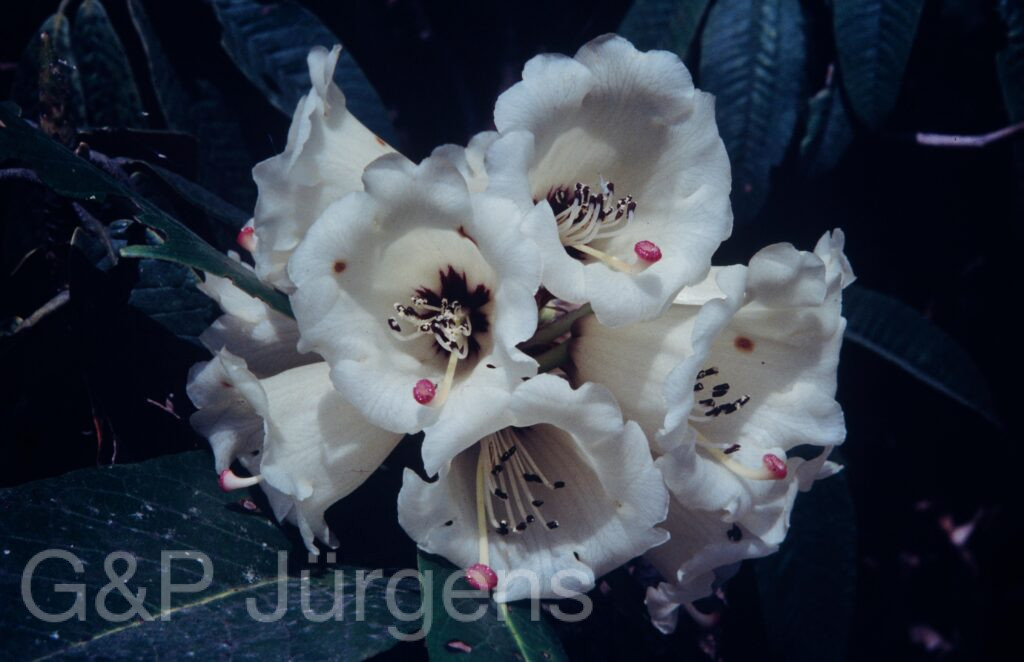
It is a straggling, sparsely branched shrub 1-3 m tall, frequently epiphytic, with peeling bark and large, obovate to elliptic leaves clustered toward the branch tips, glaucous beneath and bearing scattered scales. The flowers are among the most spectacular of Himalayan rhododendrons: borne in lax trusses of two to six, each broadly funnel-campanulate, 7-12 cm long, fragrant, white often flushed with pale yellow or pink, with a long tube. The ten stamens and slender style are enclosed within the corolla, and the scaly ovary matures into an elongate capsule splitting to release numerous minute winged seeds.

Described by Hooker f. (Hook. f.) from his Sikkim explorations, R. dalhousieae belongs to Rhododendron subgenus Rhododendron, section Rhododendron (the lepidote or scaly-leaved rhododendrons), and is named for Lady Dalhousie. Its large, fragrant, pale flowers suggest pollination by moths and large bees. Long prized in horticulture, it is widespread but locally uncommon and dependent on intact humid forest; habitat loss makes some populations vulnerable, though it is not formally threatened.

Author: Hook. f. · Sources: POWO (Kew), GBIF, Flora of Bhutan, Flora of China, Flora of Bhutan and Sikkim, The Genus Rhododendron monograph (Edinburgh, Ericaceae)
(Balf. f. & R.E. Cooper) Cullen

Bhutan2014 305
Bhutan Tritangbi 2250m, May
Bhutan2014 308
Bhutan Tritangbi 2250m, May

Description

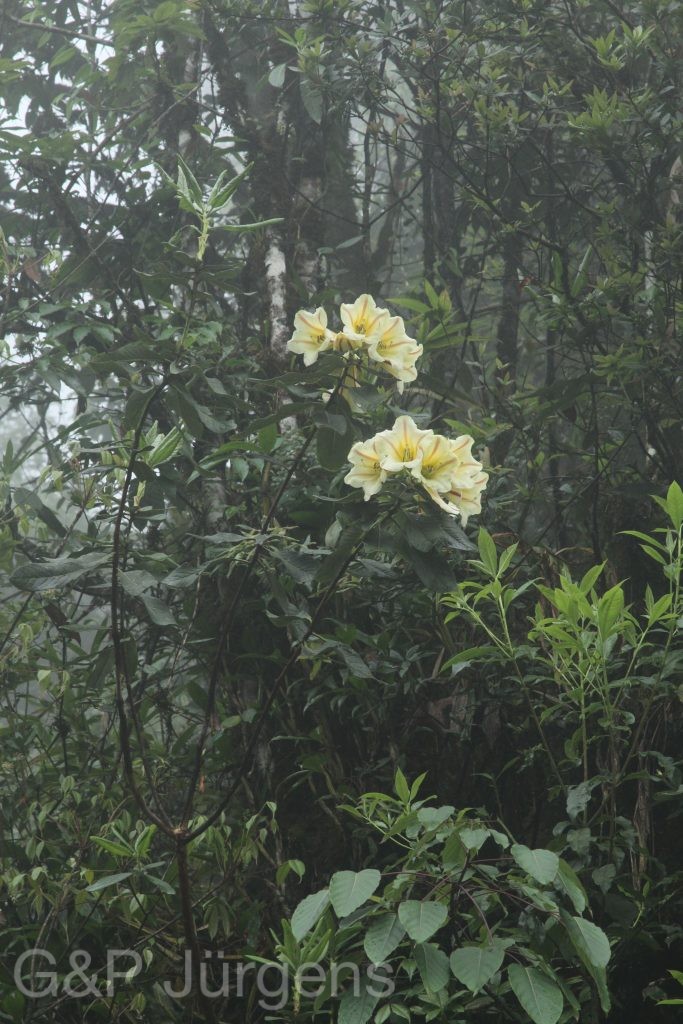
Rhododendron dalhousieae var. rhabdotum is a striking epiphytic rhododendron of the eastern Himalaya. GBIF records this taxon from Bhutan, India and China, with only around 16 occurrences, reflecting its restricted range in the moist temperate forests of the eastern Himalaya. It grows chiefly as an epiphyte on mossy trunks, or on cliffs and steep banks, in humid broadleaved and conifer forest, generally between about 2000 and 3000 m. The plant illustrated was photographed at Tritangbi in Bhutan at 2250 m in May, flowering in late spring within the cloud-forest belt where high humidity and abundant moss support its epiphytic habit.

It is a straggling, sparsely branched shrub with large, leathery, oblong-elliptic leaves clustered toward the branch tips. The flowers are borne in a loose terminal truss of a few very large, fragrant, broadly funnel-form to campanulate blooms 8-10 cm long. The corolla is creamy white to pale yellow, and the diagnostic feature distinguishing var. rhabdotum from typical R. dalhousieae is the presence of bold longitudinal red stripes running down the outside of the corolla tube (the epithet rhabdotum, striped). The fruit is a dry septicidal capsule releasing numerous minute winged seeds suited to dispersal onto epiphytic perches.

The taxon belongs to Rhododendron section Maddenia, a group of large-flowered, often epiphytic and fragrant species centred on the eastern Himalaya. Cullen treated rhabdotum as a variety of R. dalhousieae, a placement some authorities raise to species rank as R. rhabdotum. Its large fragrant flowers are adapted to moth pollination. With a narrow range, specialised epiphytic ecology and dependence on intact humid forest, it is vulnerable to deforestation and is a prized but localised eastern Himalayan rhododendron.

Author: (Balf. f. & R.E. Cooper) Cullen · Sources: POWO (Kew), GBIF, Flora of China, Flora of Bhutan, Annotated Checklist of the Flowering Plants of Nepal, The Genus Rhododendron: its classification and synonymy (Cullen, RBGE)

Hook.f.

Bhutan2014 349
Bhutan Tumching-La 3000m, May
Bh2008 100 P160
Bhutan Nabding, 2600m April
Bh2008 101 P161
Bhutan Nabding, 2600m April
Sikkim2004 24 P45
Sikkim West-Bengal, Sambon 1850m April
Sikkim2004 35 G61
Sikkim West-Bengal, Sambon 1850m April
Sikkim2004 31 P53 ergebnis
Sikkim Bersay 2810m, April

Description

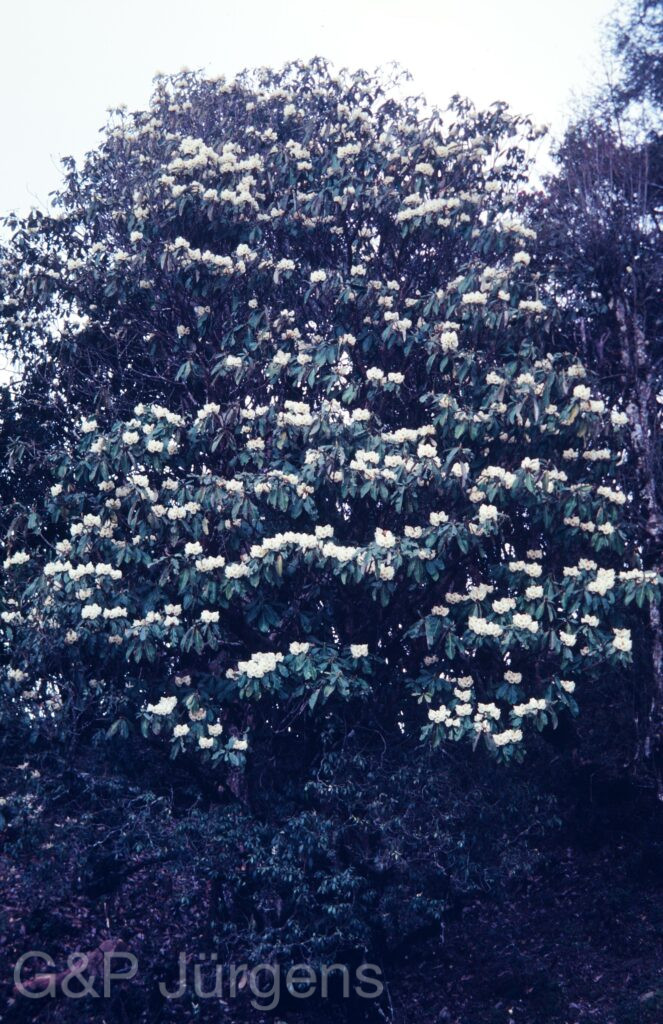
Rhododendron falconeri is a large-leaved arborescent rhododendron native to the eastern Himalaya, occurring in Nepal, India (Sikkim, Darjeeling), Bhutan and adjacent China; the additional countries listed in GBIF (Great Britain, Canada, Belgium, Korea and others among 316 occurrences) reflect cultivated and herbarium records from botanic gardens. It grows in cool, humid temperate forest between roughly 2400 and 3300 m, forming a conspicuous component of the upper broadleaved and rhododendron-magnolia zone. The collection localities in the image caption, spanning Tumching-La and Nabding in Bhutan and Sambon and Bersay in Sikkim and West Bengal between 1850 and 3000 m in April and May, capture its flowering on misty ridge forests during the pre-monsoon.

The species is an evergreen shrub or small tree to 12 m with rough, flaking bark and stout shoots. Its very large obovate to elliptic leaves, up to 30 cm long, are dark green and rugose above and clothed beneath with a dense rusty to fawn indumentum of branched hairs, a diagnostic feature. The flowers are borne in dense rounded trusses of fifteen to twenty-five; each corolla is fleshy, campanulate, eight- to ten-lobed, creamy white to pale yellow and marked with a deep purple basal blotch. Fruit is a stout, curved, woody dehiscent capsule releasing numerous minute winged seeds.

Placed in subgenus Hymenanthes, subsection Falconera, R. falconeri is allied to R. hodgsonii and is among the most celebrated big-leaf rhododendrons, cultivated since its introduction by Hooker. The thick leaf indumentum and large foliage are adaptations to cool, fog-laden montane conditions, and it is pollinated chiefly by birds and large insects. While locally common and not globally threatened, Himalayan populations are pressured by fuelwood cutting, forest clearance and climate-driven upslope shifts.

Author: Hook.f. · Sources: POWO (Kew), GBIF, Flora of Bhutan, The Genus Rhododendron (Royal Botanic Garden Edinburgh), Hooker Rhododendrons of Sikkim-Himalaya

Wight

Nepal1992 196 P285 ergebnis
Nepal Suketar 2400m March 
Nepal1992 197 P286 ergebnis
Nepal Suketar 2400m March 

Description

Rhododendron grande is a tree species of the eastern Himalayan temperate forest belt, ranging through Nepal, Sikkim and Darjeeling in India, Bhutan, northern Myanmar and southwestern China (Yunnan, Tibet), with cultivated and naturalised records extending to Great Britain, Belgium, Canada and the United States; the GBIF dataset comprises some 284 georeferenced occurrences. It typically grows between 2000 and 3000 m in cool, humid broad-leaved and conifer forests, ravine margins and on shaded slopes, often forming an understorey component beneath Tsuga and Quercus. The photographed plant from Suketar in eastern Nepal at 2400 m, flowering in March, is characteristic of these mid-montane mist forests where high rainfall and persistent cloud cover prevail.

It is an evergreen shrub or small tree reaching 10–15 m, with stout branchlets and smooth grey-brown bark. The leaves are large, coriaceous, oblong-elliptic to oblanceolate, 15–30 cm long, dark glossy green above and conspicuously silvery to fawn lanate-tomentose beneath with a thin plastered indumentum. The inflorescence is a dense compact truss of 15–25 flowers; the corolla is campanulate, 4–5 cm long, ivory-white to creamy with a basal crimson-purple blotch, eight-lobed, and subtended by a swollen nectary. Stamens are 16, the ovary tomentose, and the fruit a woody curved capsule dehiscing to release numerous minute winged seeds.

Rhododendron grande belongs to subgenus Hymenanthes, subsection Grandia, a group of large-leaved species centred on the Sino-Himalaya and noted for their bicoloured indumentum. As one of the earliest-flowering large rhododendrons it is valued in horticulture and draws nectar-feeding birds and bumblebees. Though not globally threatened, populations face pressure from forest clearance and grazing.

Author: Wight · Sources: POWO (Kew), GBIF, Flora of China Vol. 14, Flora of Bhutan Vol. 2, Flora of Nepal, The Genus Rhododendron (Cox & Cox)

T. Moore

Bhutan2014 311
Bhutan Jakar 2400m, May
Bhutan2014 448
Bhutan Jakar 2400m, May
Sikkim2004 56 G98
Sikkim West-Bengal, Bersay 2810m April
Nepal 1994 257 ergebnis
Ost-Nepal Milka-Danda 2850m April 
Nepal 1994 263 ergebnis
Ost-Nepal Milka-Danda 2850m May 

Description

Rhododendron lindleyi is an epiphytic to terrestrial rhododendron of the eastern Himalaya, recorded in GBIF from India, Nepal, Bhutan, China and Myanmar across 154 occurrences. It is characteristic of cool, humid mid-montane broad-leaved and conifer forest, growing as an epiphyte on mossy trunks or on cliffs and steep banks between roughly 2200 and 3000 m. Collections cited from the image span Jakar in Bhutan at 2400 m in May, Bersay in the Sikkim-West Bengal borderlands at 2810 m in April, and Milka-Danda in east Nepal at 2850 m in April-May, indicating a spring-flowering species of the perhumid forest belt.

It is a straggling, sparsely branched shrub 1-3 m tall with smooth, peeling reddish-brown bark and rather thin, scaly branchlets. The leaves are elliptic-oblong, leathery, glaucous and densely lepidote (scaly) beneath. The inflorescence is a loose terminal truss of 3-6 large, fragrant flowers; the corolla is broadly funnel-campanulate, 7-10 cm long, white often flushed with pink and marked with a yellow basal blotch, the tube exterior bearing scattered scales. There are usually ten stamens, an elongate scaly style, and the fruit is a slender, scaly, septicidal capsule releasing numerous minute winged seeds adapted to epiphytic establishment.

The species belongs to Rhododendron subgenus Rhododendron section Maddenia, the lepidote, often epiphytic, large-flowered rhododendrons. Named for the botanist John Lindley, it is prized in horticulture for its scented bloom. Pollination is by long-tongued insects, with dust-seed dispersal favouring colonisation of bark and rock. Though locally frequent, its dependence on undisturbed humid forest leaves it sensitive to habitat clearance.

Author: T. Moore · Sources: POWO (Kew), GBIF, Flora of Bhutan, Flora of China, The Genus Rhododendron (Edinburgh Revision)

Hook. f.

Sikkim2011 171
Sikkim Lachen 2760m, June
61F33B91D6814425A5DC452DD80DA368
Bhutan Paro, 2400m June

Description

Rhododendron maddenii is a temperate Himalayan and Indo-Burmese species native from India and Bhutan through China to Myanmar and Vietnam; GBIF's 432 records also reflect its wide cultivation, with occurrences logged from New Zealand, Australia, Britain, Japan, Korea, Malaysia and the United States. In the wild it grows on steep, often rocky and humus-rich slopes, cliff ledges and the margins of temperate broadleaf and conifer forest, frequently as an epiphyte or lithophyte. The figured plants from Lachen in Sikkim at 2760 m and Paro in western Bhutan at 2400 m, both flowering in June, place it firmly within the cool temperate forest belt where summer monsoon moisture and high atmospheric humidity prevail.

It is an evergreen shrub or small tree, the bark smooth and peeling in papery flakes. The leaves are leathery, elliptic to oblong-lanceolate, dark green and glabrous above, the undersurface densely covered with brown lepidote scales characteristic of the subgenus. The flowers, borne in terminal trusses of few blooms, are large, funnel-form to tubular-campanular and strongly fragrant, white often flushed with pink and scaly on the outside of the corolla tube. There are typically numerous stamens and a long style, the ovary lepidote. The fruit is an elongate, scaly, dehiscent capsule releasing many small seeds adapted to wind and epiphytic establishment.

Within Rhododendron subgenus Rhododendron, R. maddenii belongs to the large, taxonomically complex subsection Maddenia, distinguished by lepidote foliage and showy scented corollas, and it shows considerable variation in size and indumentum across its range. The fragrant, pale flowers attract long-tongued moths and other nocturnal pollinators. Long prized in horticulture, it is the source of many hybrids; in the wild it remains generally secure, though habitat loss and over-collection threaten some local populations.

Author: Hook. f. · Sources: POWO (Kew), GBIF, Flora of Bhutan, Flora of China, The Genus Rhododendron (Royal Horticultural Society), Cullen's revision of lepidote Rhododendron

Hook. f.

Bhutan2014 631
Bhutan Phobjika 2800m, May
Bhutan2014 632
Bhutan Phobjika 2800m, May
Bhutan2014 382
Bhutan Tongsa 2000m, May
Sikkim2004 307 P542
Sikkim/India May

Description

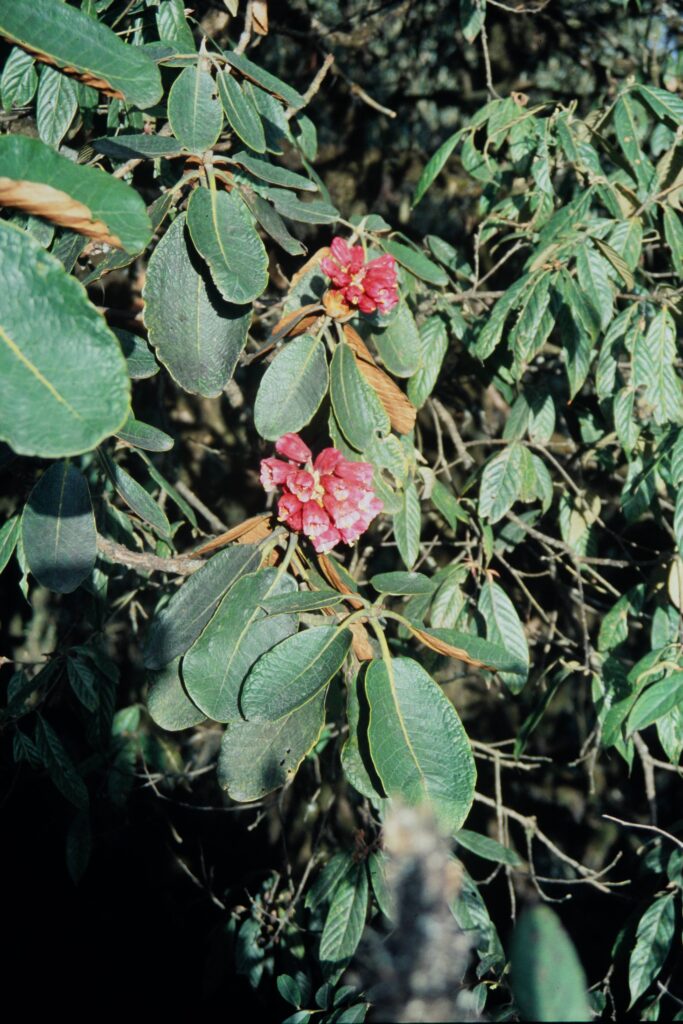
Rhododendron thomsonii is an Eastern Himalayan endemic centred on Sikkim, Bhutan, adjacent northeastern India, southern Tibet (China) and easternmost Nepal, with the nearly 479 records also reflecting widespread cultivation in Britain, North America and continental Europe. In its native range it occupies the cool, humid temperate forest zone, the images documenting plants at Phobjika around 2800 m and Tongsa near 2000 m in Bhutan, flowering in May, together with material from Sikkim. It grows in fir and mixed broadleaved forest, on forest margins, in rhododendron thickets and on open rocky slopes between roughly 3000 and 4000 m, often where the monsoon brings high atmospheric humidity.

It is an evergreen shrub or small tree reaching several metres, with smooth, flaking reddish-brown to plum bark. The leaves are broadly obovate to orbicular, glabrous, glaucous beneath, rounded or emarginate at the apex and cordate at the base, borne on short petioles. The inflorescence is a loose terminal truss of few flowers; the corolla is fleshy, broadly campanulate and a deep blood-red to crimson, subtended by a large, cup-shaped, persistent and conspicuously coloured calyx that is diagnostic for the species. Stamens are ten; the ovary and curved style are glabrous, maturing into a woody capsule.

The species was described by J.D. Hooker from his Sikkim Himalayan expeditions and is the type of subsection Thomsonia within Rhododendron subgenus Hymenanthes. Its large fleshy calyx, glaucous foliage and waxy red bells distinguish it from related taxa and have made it a foundation species in horticultural breeding. Though restricted in distribution, it is locally common within suitable montane forest and is buffered by extensive cultivation, so it is not regarded as globally threatened, although habitat pressures affect parts of its native range.

Author: Hook. f. · Sources: POWO (Kew), GBIF, Flora of Bhutan, Flora of China, The Genus Rhododendron (Royal Botanic Garden Edinburgh)

Hook.

Bhutan2014 811
Bhutan Wangdi Mo-Chu 1600m, May
Nepal 97 108 P184
Nepal Dongen 2400m April
Nepal 1994 196 ergebnis
Ost-Nepal Mewa-Khola
2100m April

Description

Rhododendron vaccinioides is a small epiphytic rhododendron of the eastern Himalaya and adjacent China and Southeast Asia, recorded from China, India, Myanmar, Nepal, Bhutan, Vietnam and Japan, with some 245 GBIF occurrences. It grows as an epiphyte on mossy trunks and branches, and occasionally on rocks, in humid temperate broadleaved and conifer forest, generally between about 1600 and 3000 m. The documented populations span Wangdi Mo-Chu in Bhutan at 1600 m, Dongen in Nepal at 2400 m and the Mewa Khola in eastern Nepal at 2100 m, flowering in April and May in the cloud-bathed mid-montane belt.

It is a small, much-branched epiphytic shrub with slender, often pendent or sprawling branchlets bearing scattered scales (lepidote indumentum). The leaves are small, obovate to oblanceolate and somewhat fleshy, clustered toward the branch tips, vaccinium-like in aspect, hence the epithet, and lepidote beneath. The flowers are small, solitary or few at the branch ends, with a short-tubed, broadly funnelform to rotate, white to pinkish corolla that is sparsely scaly outside. The fruit is a small lepidote capsule splitting into valves to release numerous minute seeds adapted to wind dispersal among the canopy.

The species belongs to Rhododendron subgenus Rhododendron, section Vireya (the largely epiphytic, tropical-montane rhododendrons), of which it is one of the few representatives reaching the Himalaya. It is widespread and not threatened, but as an epiphyte dependent on humid, moss-laden old-growth forest it is sensitive to deforestation and to drying of the montane cloud belt.

Author: Hook. · Sources: POWO (Kew), GBIF, Flora of Bhutan, Flora of China, Argent monograph of Rhododendrons of Subgenus Vireya

Hook. f.

Bhutan2014 43
Bhutan Trashigang 1300m, May
Bhutan2014 391
Bhutan Tumching-La 3000m, May
Bh2008 146 P243
Bhutan Chendebji, 2450m April

Description

Rhododendron vaccinioides Hook. f. is a small epiphytic rhododendron of the eastern Himalaya and adjacent montane Asia, ranging from Nepal and India through Bhutan to southern China, Myanmar and Vietnam, with around 245 GBIF occurrences. It grows characteristically as an epiphyte on mossy trunks and branches, and occasionally on rocks, in humid broadleaved and mixed evergreen forest, across a wide altitudinal span. The three Bhutan gatherings cited, from Trashigang at 1300 m and Chendebji at 2450 m flowering in April and May, and Tumching-La at 3000 m, illustrate its broad range from warm subtropical to cool temperate cloud forest where atmospheric moisture is high.

The species is a dwarf, much-branched epiphytic shrub with slender twigs clothed in scales and bearing small, obovate, leathery leaves whose lower surface is densely lepidote, resembling the foliage of Vaccinium as the epithet implies. The flowers are small, solitary or few together at the branch tips, with a short tubular to campanulate, white to pale pink corolla, the lobes spreading; the ovary and style are scaly. The fruit is a small lepidote capsule splitting septicidally to release numerous minute seeds adapted to wind dispersal in the canopy.

Rhododendron vaccinioides belongs to subgenus Rhododendron, section Vireya-allied scaly rhododendrons, an epiphytic lineage radiating through the wet forests of Asia. Its diminutive epiphytic habit is unusual among Himalayan rhododendrons. Widespread and locally frequent, it is of least conservation concern, though dependent on intact humid forest canopy.

Author: Hook. f. · Sources: POWO (Kew), GBIF, Flora of Bhutan, Flora of China, The Genus Rhododendron (Royal Botanic Garden Edinburgh), Cullen monograph of lepidote Rhododendron

(Raf.) N.Tanaka

Nepal1992 155 P227 ergebnis
Nepal Simbua-Khola 2000m March 

Description

Rohdea nepalensis is a rhizomatous perennial herb of the Himalaya and adjacent montane Asia, documented by GBIF from China, India, Nepal, Bhutan, Myanmar, Bangladesh and Thailand across some 133 occurrences. It is a forest-floor species of shaded, moist broadleaved and evergreen forest, growing on humus-rich slopes, banks and rocky ground in the subtropical to warm-temperate zone. The photographed plant was recorded in Nepal in the Simbua-Khola at 2000 m in March, an early-season flowering in the cool, damp understorey characteristic of the species.

It forms clumps from a short, stout rhizome and produces basal, distichous, strap-shaped to oblanceolate leaves that are leathery, arching, prominently veined and tapered to a sheathing base. The inflorescence is a short, dense, sessile or shortly pedunculate spike borne near ground level, carrying numerous small, crowded flowers; each flower has a fleshy, urceolate to campanulate perianth of six connate tepals, usually pale yellow to greenish, with six included stamens and a superior ovary. The fruit is a one- to few-seeded berry that ripens red.

GBIF accepts the name, recombined by N. Tanaka, who expanded Rohdea to include species formerly placed in Tupistra and Campylandra; under that classification the plant appears in older literature under those genera. It is treated within an enlarged Asparagaceae (subfamily Nolinoideae, the former Convallariaceae/Ruscaceae). Several Rohdea are cultivated as evergreen ornamentals and used in traditional medicine. Widely distributed in suitable forest, R. nepalensis is of no conservation concern.

Author: (Raf.) N.Tanaka · Sources: POWO (Kew), GBIF, Flora of China, Flora of Nepal, Tanaka revision of Rohdea