
Hook.f.
Description
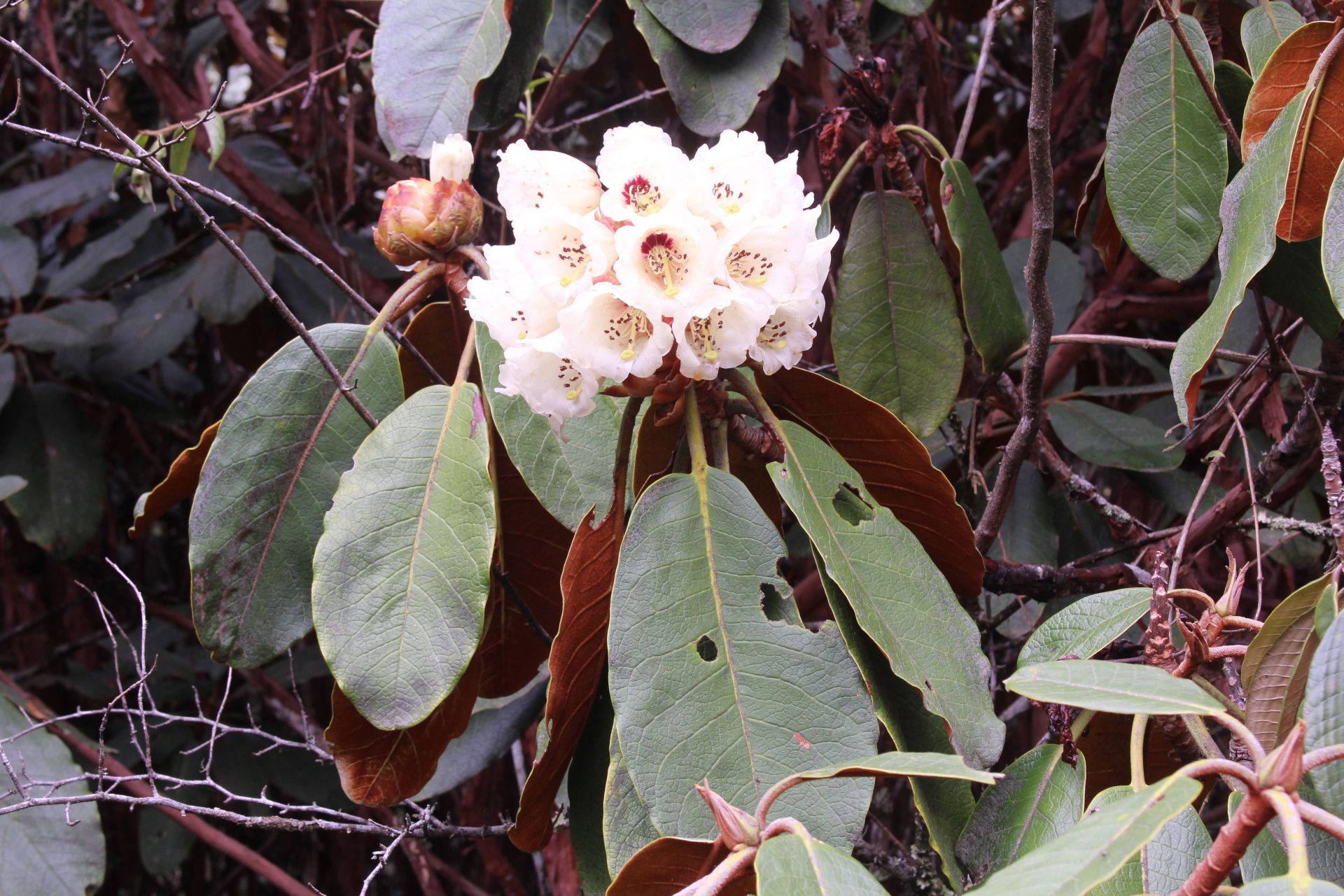
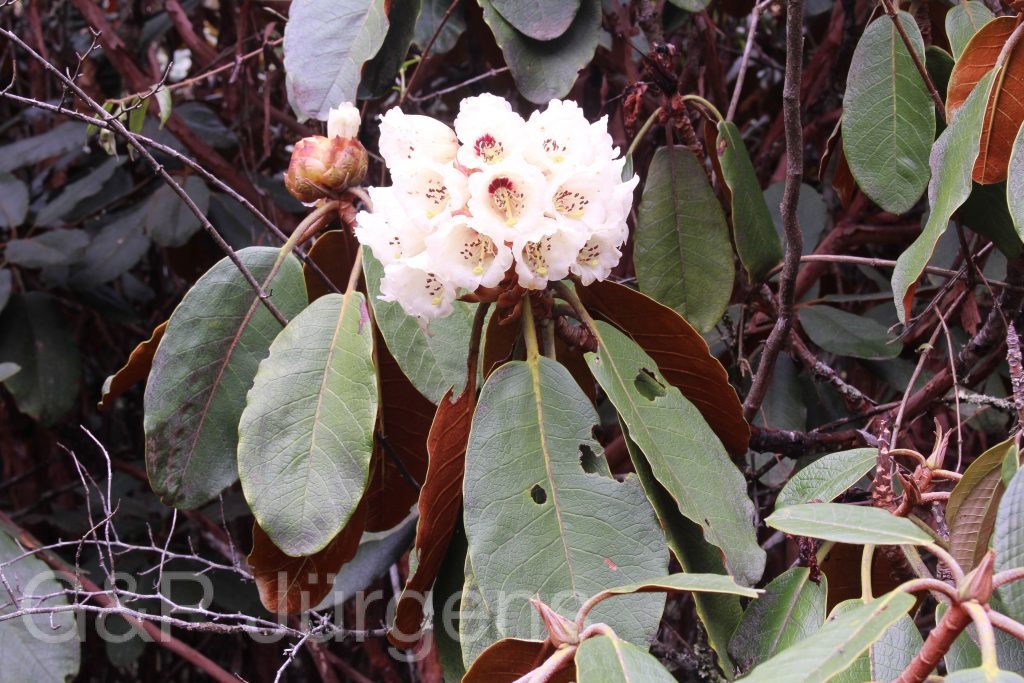
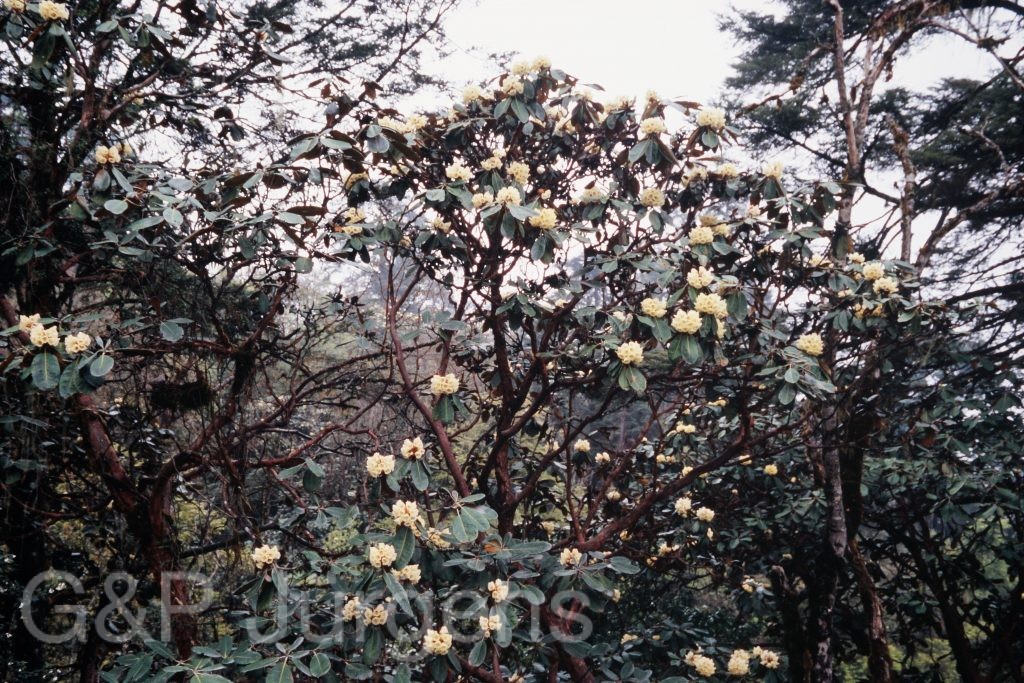
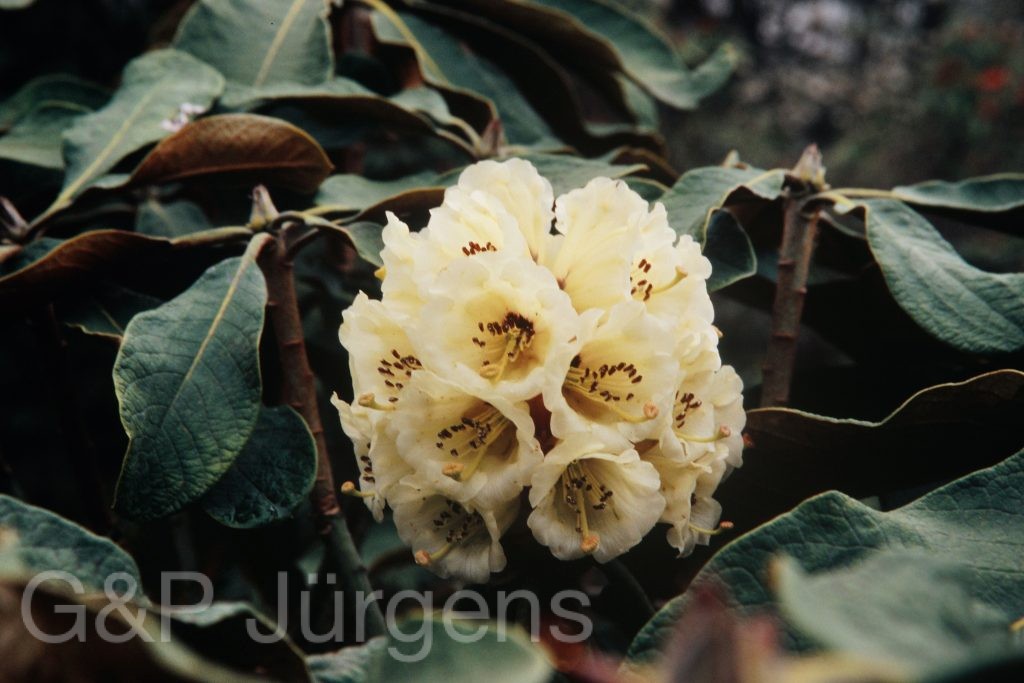
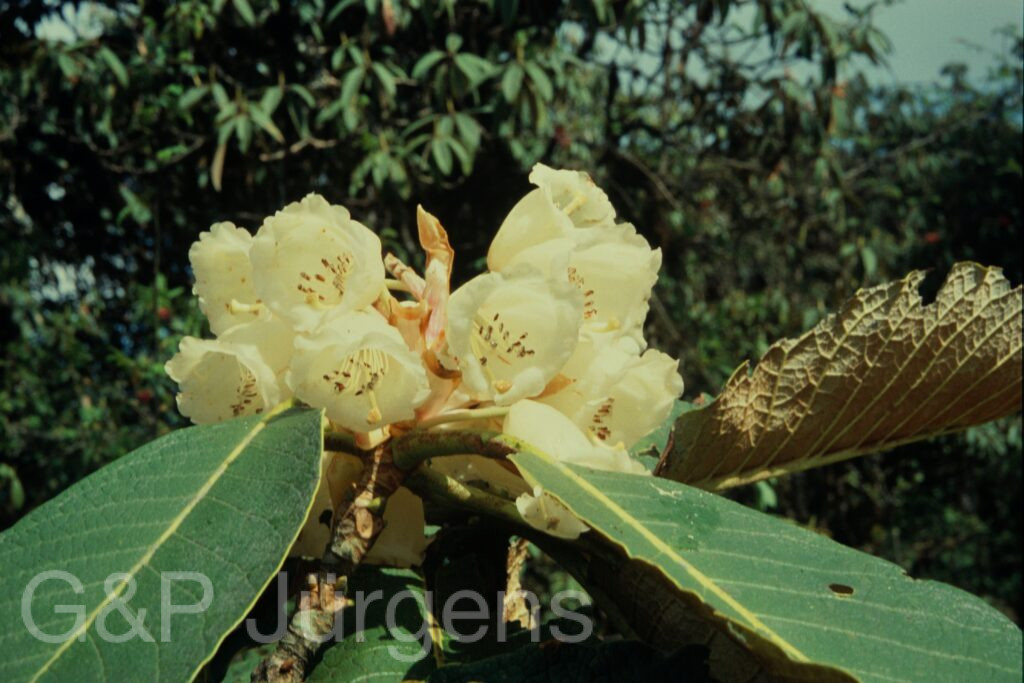
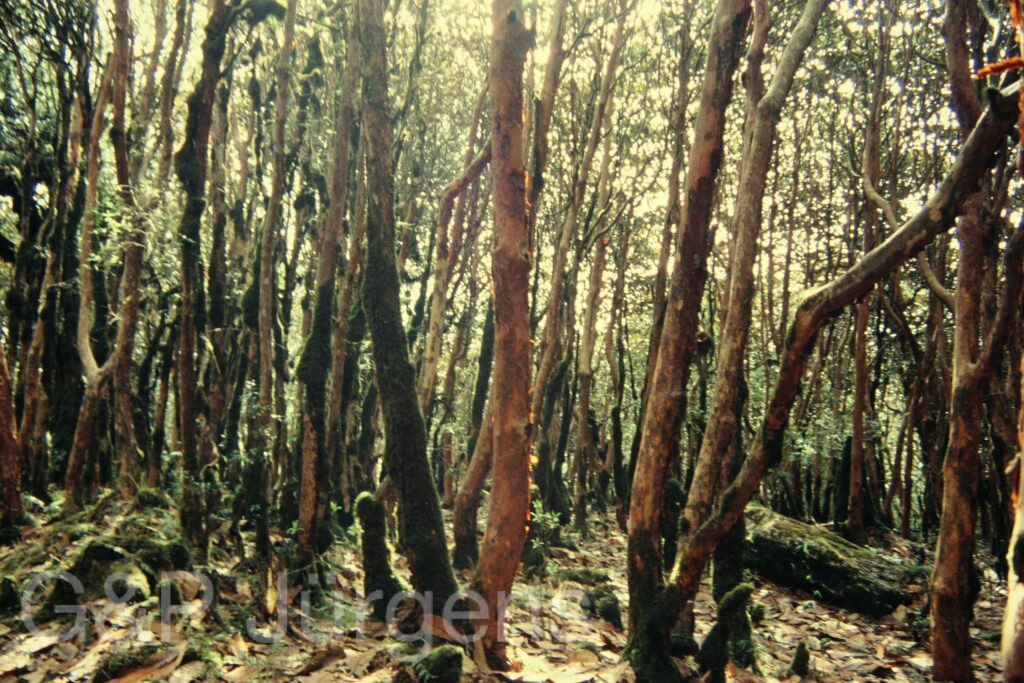
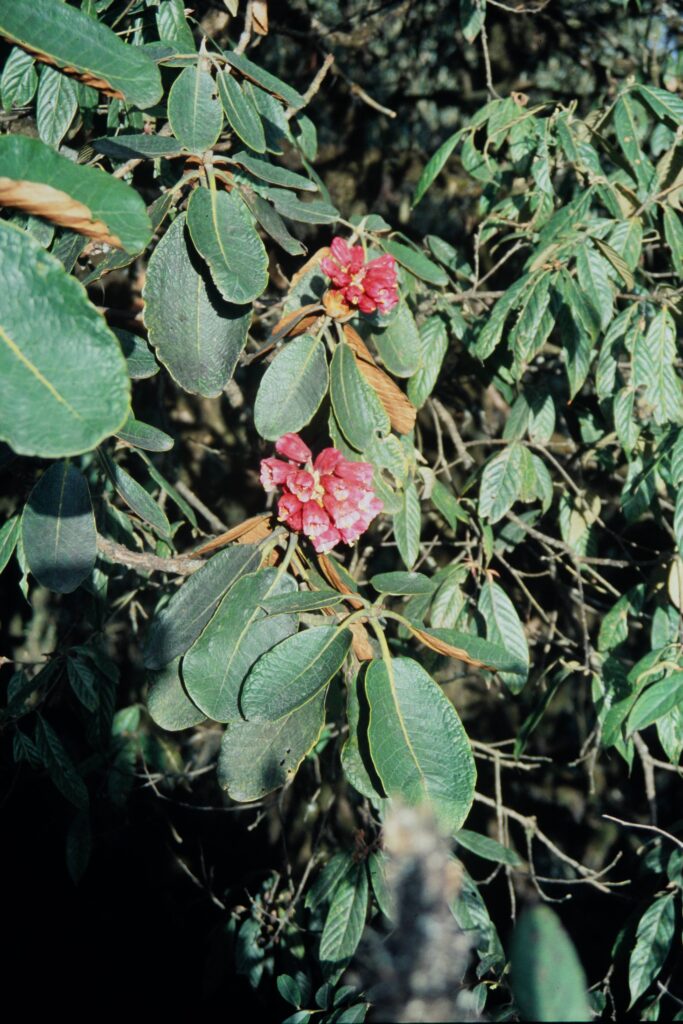
Rhododendron falconeri is a large-leaved arborescent rhododendron native to the eastern Himalaya, occurring in Nepal, India (Sikkim, Darjeeling), Bhutan and adjacent China; the additional countries listed in GBIF (Great Britain, Canada, Belgium, Korea and others among 316 occurrences) reflect cultivated and herbarium records from botanic gardens. It grows in cool, humid temperate forest between roughly 2400 and 3300 m, forming a conspicuous component of the upper broadleaved and rhododendron-magnolia zone. The collection localities in the image caption, spanning Tumching-La and Nabding in Bhutan and Sambon and Bersay in Sikkim and West Bengal between 1850 and 3000 m in April and May, capture its flowering on misty ridge forests during the pre-monsoon.
The species is an evergreen shrub or small tree to 12 m with rough, flaking bark and stout shoots. Its very large obovate to elliptic leaves, up to 30 cm long, are dark green and rugose above and clothed beneath with a dense rusty to fawn indumentum of branched hairs, a diagnostic feature. The flowers are borne in dense rounded trusses of fifteen to twenty-five; each corolla is fleshy, campanulate, eight- to ten-lobed, creamy white to pale yellow and marked with a deep purple basal blotch. Fruit is a stout, curved, woody dehiscent capsule releasing numerous minute winged seeds.
Placed in subgenus Hymenanthes, subsection Falconera, R. falconeri is allied to R. hodgsonii and is among the most celebrated big-leaf rhododendrons, cultivated since its introduction by Hooker. The thick leaf indumentum and large foliage are adaptations to cool, fog-laden montane conditions, and it is pollinated chiefly by birds and large insects. While locally common and not globally threatened, Himalayan populations are pressured by fuelwood cutting, forest clearance and climate-driven upslope shifts.
Author: Hook.f. · Sources: POWO (Kew), GBIF, Flora of Bhutan, The Genus Rhododendron (Royal Botanic Garden Edinburgh), Hooker Rhododendrons of Sikkim-Himalaya