Tag:

Myanmar

Flowers of the Myanmar Himalaya — 604 species recorded from northern Myanmar (Burma) and the eastern Himalayan borderlands, a biodiversity hotspot linking the Himalaya to the mountains of Yunnan and Southeast Asia. The region’s forests and alpine slopes hold a rich flora of rhododendrons, orchids, balsams and gentians. Every page gives a botanical description, distribution, habitat and flowering time with the original photograph.

D.Don

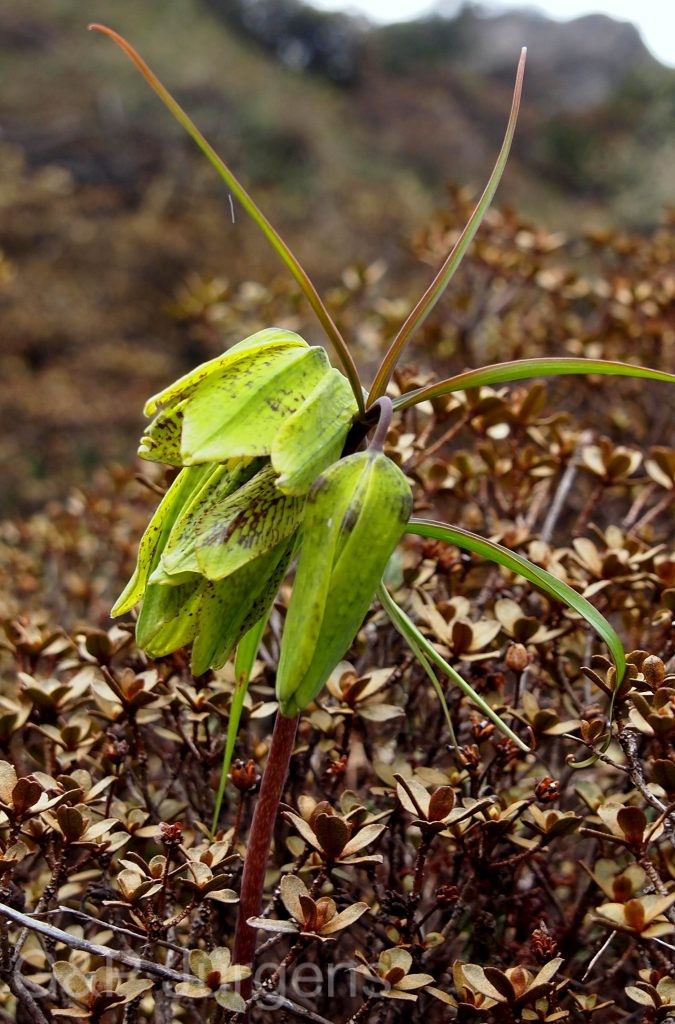
Sikkim2011 68
Sikkim Tanghu 3900m, June
Sikkim2011 69
Sikkim Tanghu 3900m, June
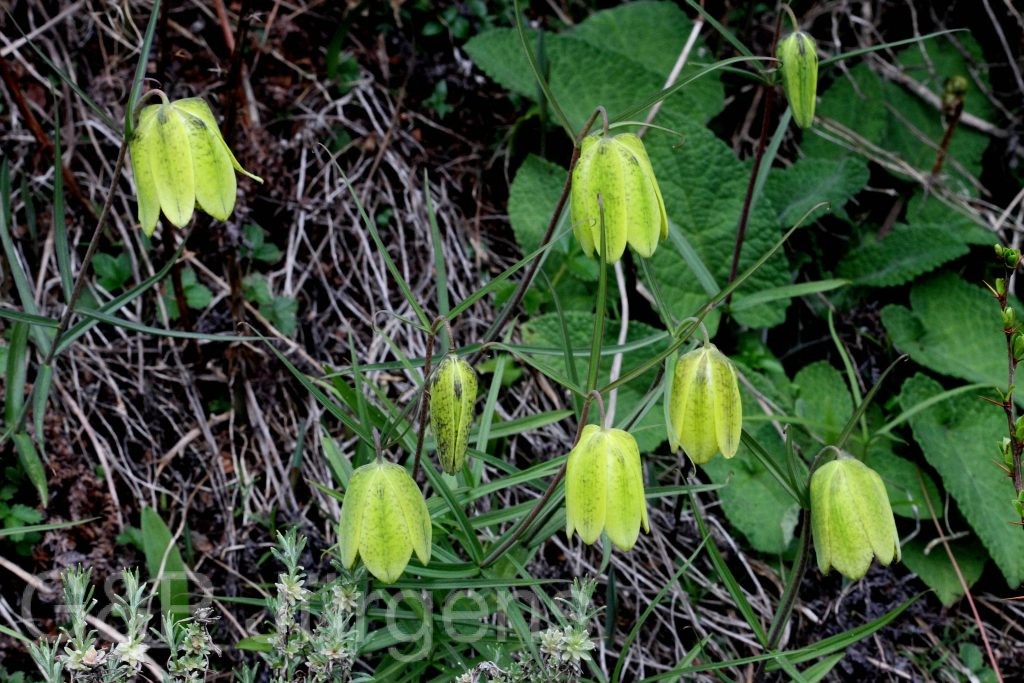
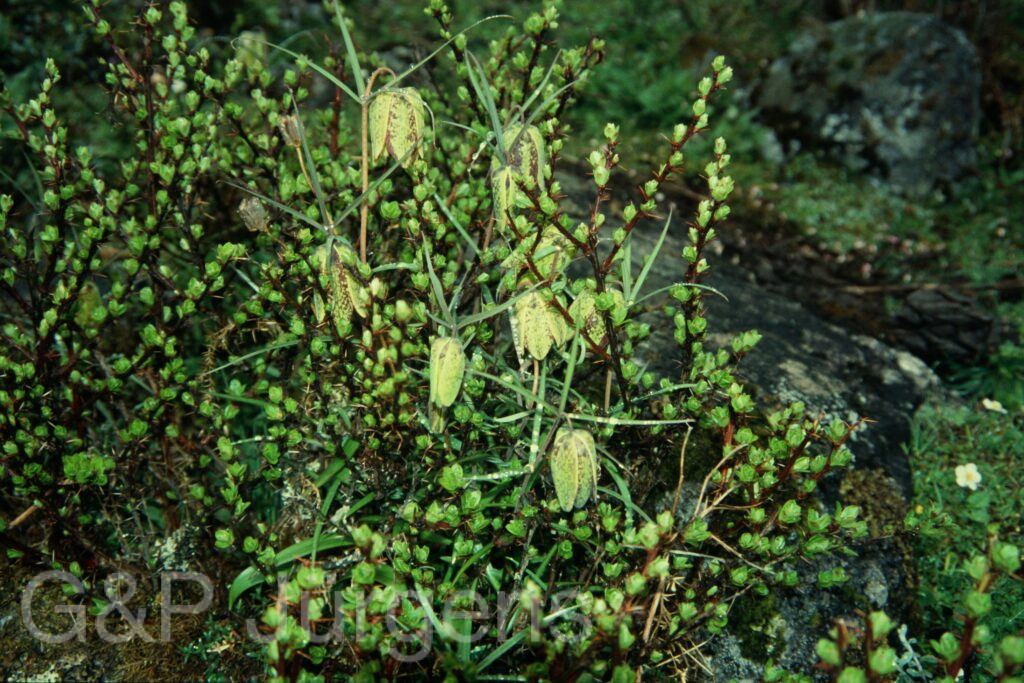
Sikkim2004 414 G713
Sikkim/India Yumthang 3700m May
Sikkim2004 415 P712
Sikkim/India Yumthang 3700m May

Description

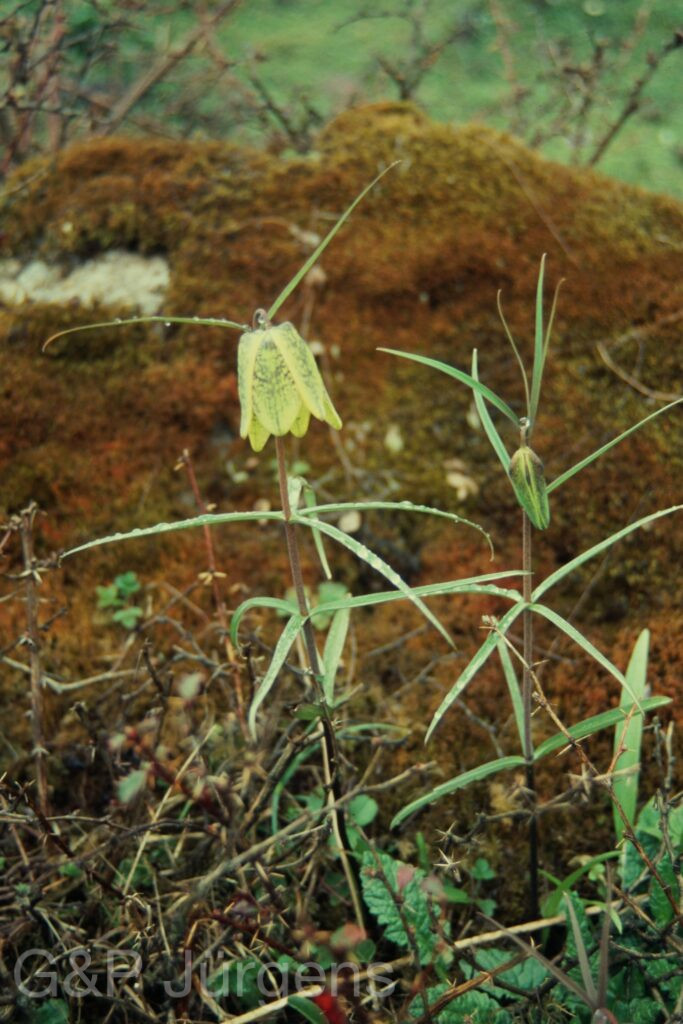
Fritillaria cirrhosa is a bulbous alpine lily of the Himalaya and the Hengduan mountains, native to China, India, Nepal, Pakistan, Bhutan and Myanmar, the very large total of c. 962 records reflecting its wide range and economic importance. It inhabits alpine meadows, scrub, rocky slopes, screes and grassy clearings, mostly between roughly 3200 and 4600 m. The illustrated plants were photographed at Tanghu in Sikkim at 3900 m in June and at Yumthang on the Sikkim/India border at 3700 m in May, sites characteristic of the species, which flowers shortly after snowmelt on cool, moist, well-drained high-montane ground.

It is a perennial herb arising from a small bulb of a few fleshy scales. The slender erect stem bears scattered to whorled, linear to lanceolate leaves, the uppermost of which are prolonged into slender, curling, tendril-like tips, the cirrhose feature from which the epithet derives. The flowers are usually solitary and nodding, broadly campanulate, with six tepals that are yellowish-green to purplish and conspicuously tessellated (chequered) with darker purple-brown; a nectary gland sits near the base of each tepal. The six stamens surround a superior trilocular ovary with a three-lobed style. The fruit is an erect, six-angled or narrowly winged loculicidal capsule.

Fritillaria (Liliaceae) is a Holarctic genus delimited by section on bulb structure, leaf arrangement and style form, and F. cirrhosa is a polymorphic species of the subgenus Fritillaria. Its dried bulb is the source of the renowned traditional Chinese medicine "chuan bei mu," used as an antitussive, and this heavy commercial harvesting is the principal conservation concern: although still widespread, the species is subject to intense wild collection, and the chuan bei mu trade has prompted cultivation efforts and regulatory attention across its range.

Author: D.Don · Sources: POWO (Kew), GBIF, Flora of China, Flowers of the Himalaya (Polunin & Stainton), Rix monograph of Fritillaria
Gagea flavonutans

by GP Jürgens

(H.Hara) Zarrei & Wilkin

Sikkim2011 100
Sikkim Chopta-valley 4200m, June
Sikkim2011 120
Sikkim Chopta-valley 4200m, June

Description

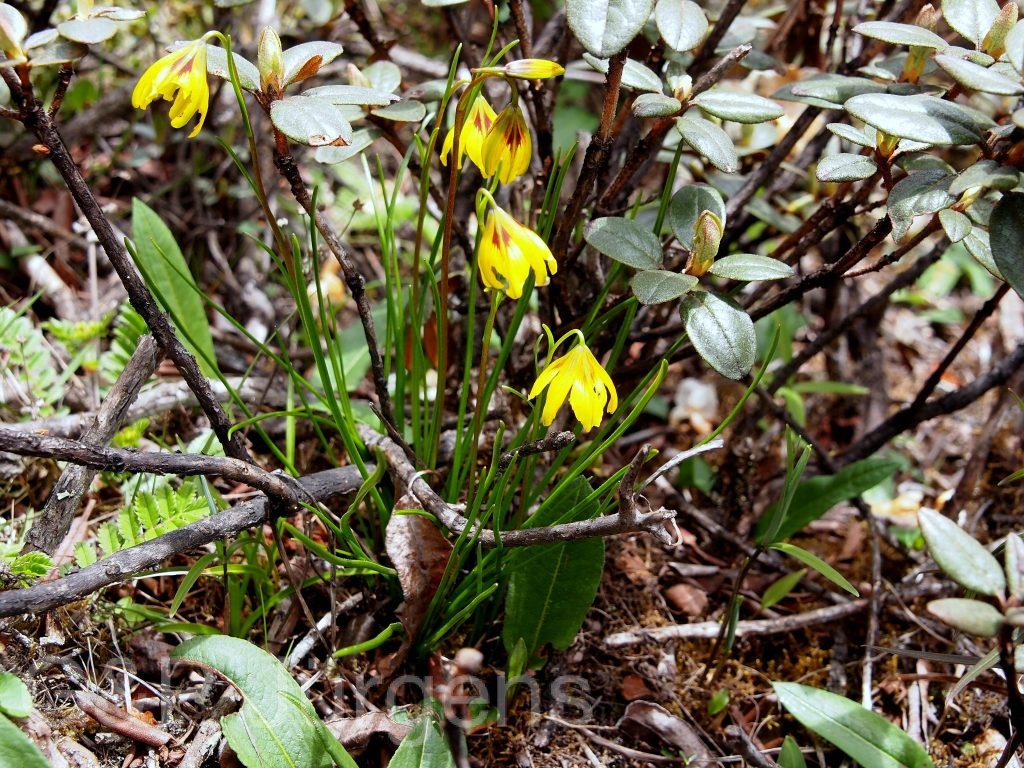
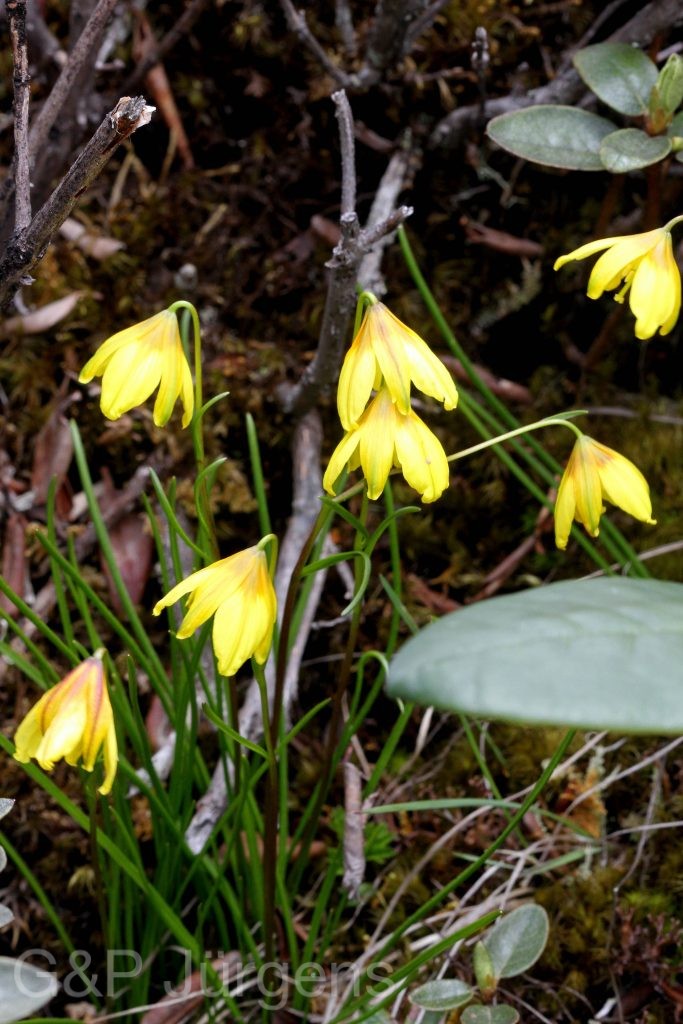
Gagea flavonutans is a small alpine bulbous geophyte of the eastern Himalaya, recorded from Nepal, India, China, Bhutan and Myanmar, with about 104 georeferenced occurrences clustered along the high inner ranges. It grows in open alpine turf, on grassy and stony slopes, screes and moist ground at the edge of melting snow, chiefly between roughly 3800 and 4500 m. The plant was photographed in the Sikkim Chopta Valley at 4200 m in June, an elevation and season characteristic of the genus, whose members flush and flower rapidly in the brief interval following snowmelt before the soil dries.

It is a slender, hairless perennial arising from one or few ovoid tunicate bulbs. There are typically two narrowly linear basal leaves, channelled and grass-like, considerably exceeding the short scape. The inflorescence is few-flowered, the flowers nodding as the epithet flavonutans implies. The perianth comprises six free, narrowly elliptic to oblong tepals, yellow within and often greenish or purplish-tinged on the outer surface; the six stamens have slender filaments and small anthers, and the superior tricarpellate ovary bears a single style. The fruit is a small loculicidal capsule containing numerous seeds.

Gagea (Liliaceae) is a large, taxonomically difficult Old World genus in which species are delimited by bulb structure, leaf number and section, and floral orientation; G. flavonutans, originally described by Hara, was transferred to Gagea in the molecular reassessment by Zarrei and Wilkin that absorbed the segregate Lloydia into a broadened Gagea. Its nodding yellow flowers and high-Himalayan range distinguish it within this complex. As a short-statured snowbed geophyte it is sensitive to changes in snow cover and grazing, though it remains locally frequent and is not currently regarded as threatened.

Author: (H.Hara) Zarrei & Wilkin · Sources: POWO (Kew), GBIF, Flora of China, Annotated Checklist of the Flowering Plants of Nepal, Zarrei & Wilkin phylogenetic revision of Gagea

(Maxim.) S.C.Chen, P.J.Cribb & S.W.Gale

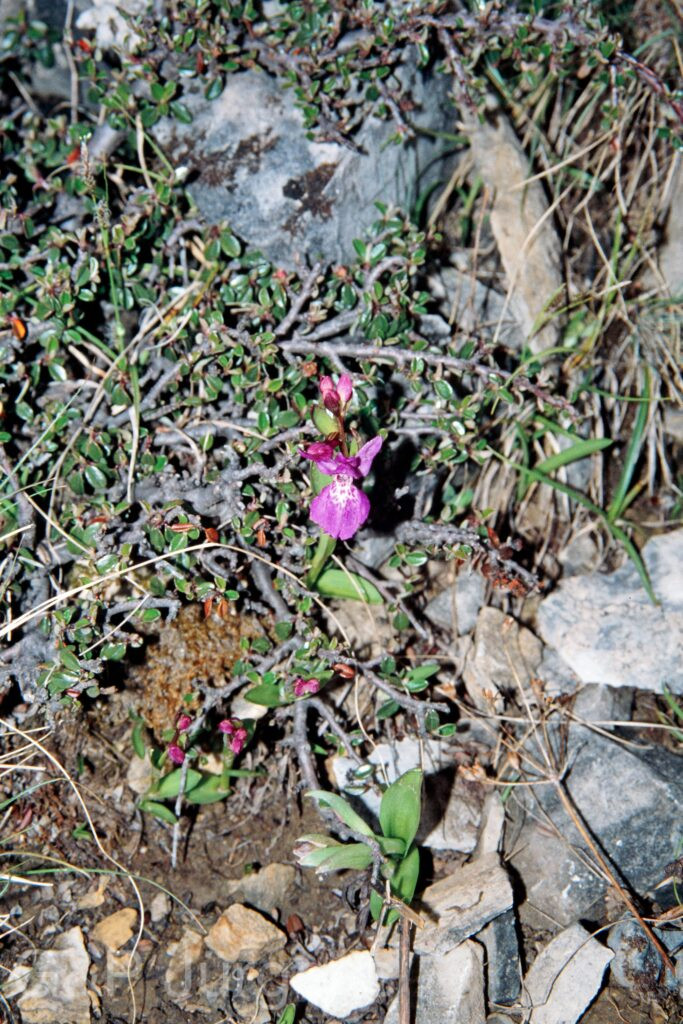
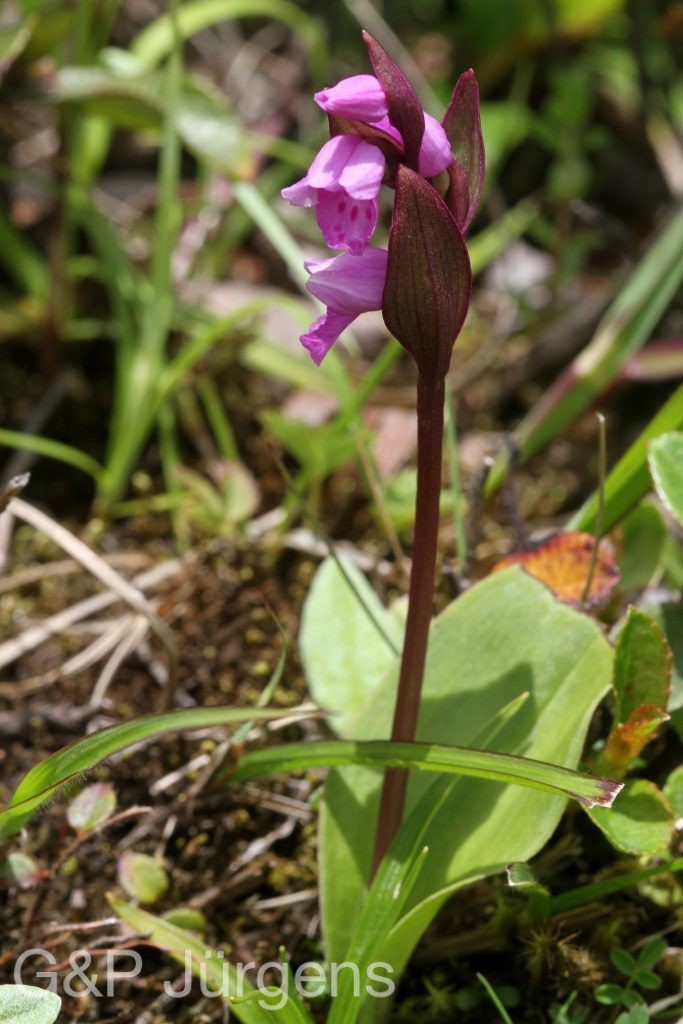
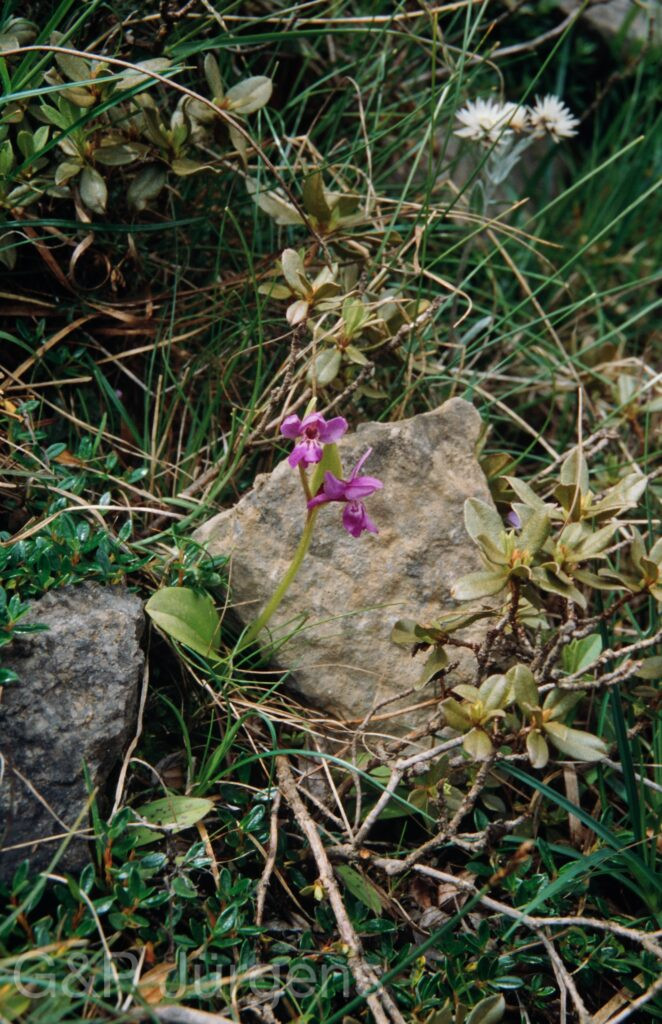
Nepal 99 34 ergebnis
West-Nepal Chere 3000m June

Description

Galearis roborovskii is a terrestrial orchid distributed across the high mountains of Central and East Asia, with georeferenced records documented from China, Nepal, Bhutan, India, Myanmar, Japan and Russia, comprising about 154 occurrences in GBIF. It is a plant of cool, moist alpine and subalpine habitats, favouring open meadows, grassy slopes, streambanks and forest margins where snowmelt maintains soil moisture through the growing season. The species generally occurs between roughly 2500 and 4000 m, and the population photographed at Chere in West Nepal at about 3000 m in June, at the onset of the monsoon flowering season, falls within this montane belt.

It is a small, glabrous, tuberous geophyte arising from ovoid to oblong fleshy tuberoids. The slender, erect stem bears one or two basal leaves that are oblong-elliptic to lanceolate, sheathing at the base and often fleshy. The inflorescence is a short, few-flowered terminal raceme subtended by leaf-like bracts. The flowers are purple to rose-pink, with the dorsal sepal and petals converging to form a loose hood (galea) over the column; the lateral sepals spread or are reflexed, and the trilobed labellum is deflexed and produced basally into a slender, cylindric to clavate spur. The fruit is a small erect dehiscent capsule releasing abundant dust-like seeds.

The genus Galearis was resurrected and recircumscribed on molecular grounds, and this species was transferred from Orchis by S.C.Chen, P.J.Cribb and S.W.Gale; it sits within subtribe Orchidinae. Like most temperate terrestrial orchids it depends on mycorrhizal fungi for germination and establishment, rendering it sensitive to grazing, trampling and habitat disturbance. Though presently widespread and not formally assessed as threatened across its broad Himalayan to Sino-Russian range, localised populations warrant monitoring against alpine land-use pressures.

Author: (Maxim.) S.C.Chen, P.J.Cribb & S.W.Gale · Sources: POWO (Kew), GBIF, Flora of China, Flora of Bhutan, Flora of Nepal, Pearce & Cribb The Orchids of Bhutan

(Lindl.) P.F.Hunt

Sikkim2011 207
Sikkim Lachung 3100m, June
Nepal 99 809 ergebnis
West-Nepal Baga-La-Phedi 4300m, July

Description

Galearis spathulata is a small terrestrial orchid of the high Himalaya and the mountains of western China, recorded from China, India, Nepal, Bhutan and Myanmar, with over 500 occurrences in GBIF. It is a plant of moist alpine and subalpine meadows, open Rhododendron and juniper scrub, grassy slopes and rocky turf, generally between about 3,000 and 4,500 m. The illustrated gatherings span this range, from Lachung in Sikkim at around 3,100 m in June to Baga-La-Phedi in West Nepal at about 4,300 m in July, where the species flowers through the early summer monsoon.

It is a dwarf, glabrous perennial herb arising from slender, fleshy root-tubers and bearing usually one or two basal, spathulate to oblong leaves that taper to a sheathing base. The short, erect stem terminates in a few-flowered raceme of small purplish-pink flowers, each subtended by a bract. The dorsal sepal and petals converge to form a hood over the column, the lateral sepals spreading; the labellum is entire to obscurely lobed, directed forward and produced at the base into a short, cylindrical to saccate spur. The fruit is an erect, ribbed capsule releasing dust-like seeds.

Galearis is a small holarctic-temperate to Sino-Himalayan genus segregated from Orchis, and G. spathulata is distinguished by its spathulate basal leaves and short-spurred, hooded flowers. Pollination is by insects, with seedling establishment dependent on mycorrhizal association, as in all orchids. Widespread and locally common across the alpine Himalaya, the species is not regarded as threatened, although, being an orchid, it falls under the general CITES Appendix II listing for the family.

Author: (Lindl.) P.F.Hunt · Sources: POWO (Kew), GBIF, Flora of China, Flora of Bhutan, Annotated Checklist of the Flowering Plants of Nepal, Pridgeon et al. Genera Orchidacearum

(Buch.-Ham. ex Sm.) D.Don

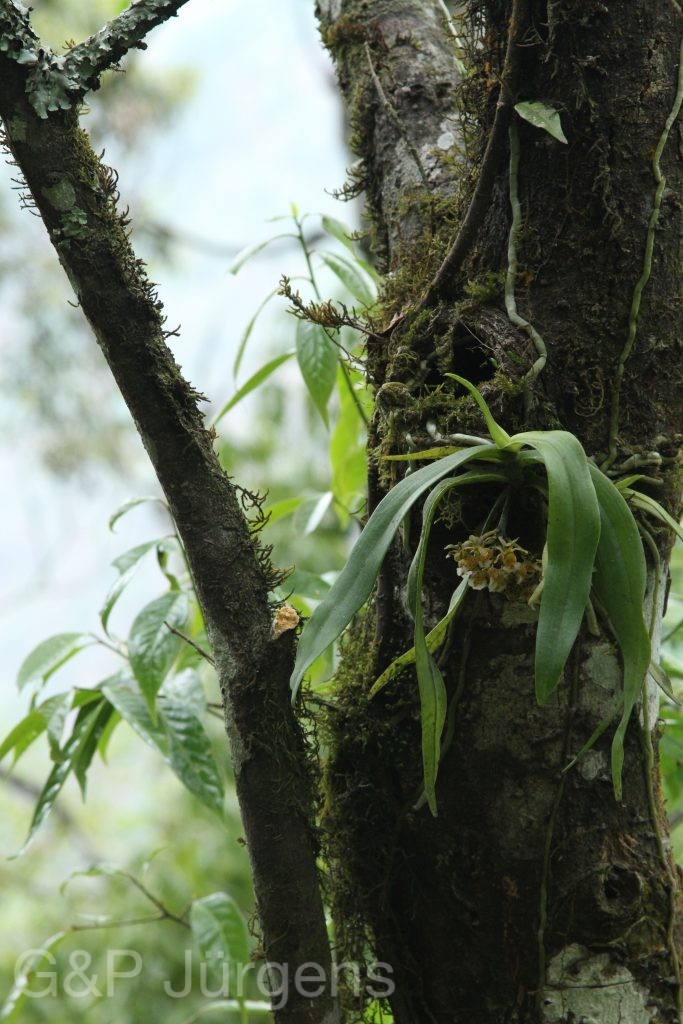
Bhutan2014 463
Bhutan Trongtsa 2030m, May
Bhutan2014 464
Bhutan Trongtsa 2030m, May

Description

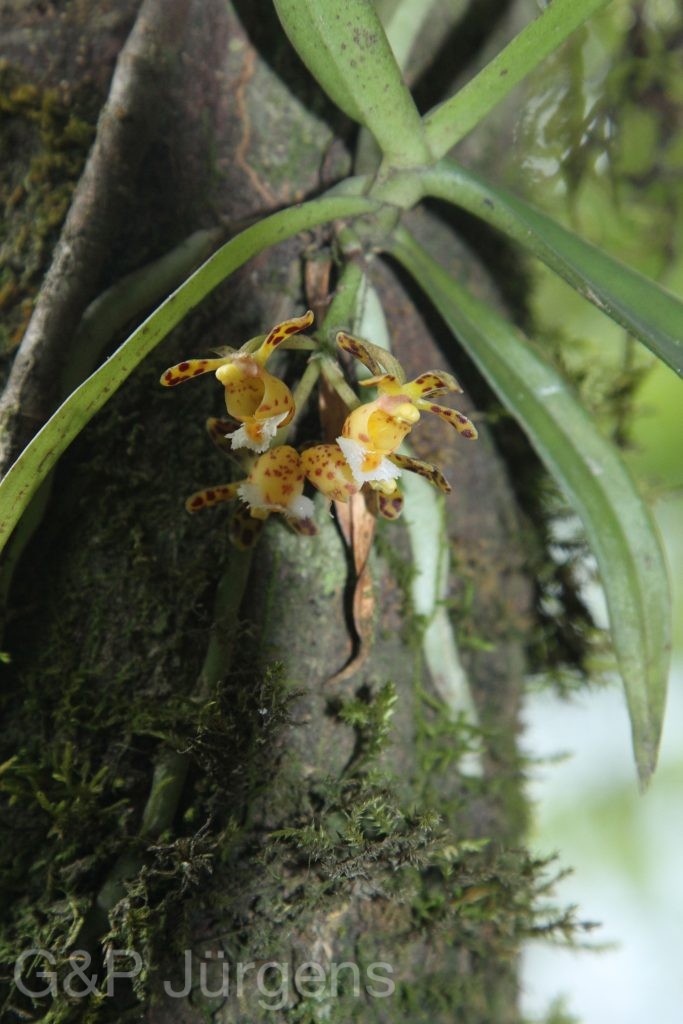
Gastrochilus calceolaris is a widespread epiphytic orchid of the eastern Himalaya and tropical-subtropical Asia, recorded by GBIF from China, India, Nepal, Bhutan, Myanmar and onwards through Vietnam, Thailand, Malaysia, the Philippines and Indonesia, with 356 georeferenced occurrences. It grows on the trunks and branches of broadleaved evergreen trees in humid montane and lower temperate forest, typically between about 1000 and 2300 m. The plant illustrated was photographed near Trongtsa (Trongsa) in central Bhutan at 2030 m in May, a setting of mossy oak and rhododendron forest where atmospheric moisture favours vandaceous epiphytes.

The species is a monopodial epiphyte with a short, stout stem clad in the persistent sheathing bases of distichous, ligulate to oblong leaves that are coriaceous and unequally bilobed at the apex. Numerous flexuous aerial roots anchor the plant. The short, pendent racemes bear several to many subumbellate flowers; the sepals and petals are yellowish green blotched with reddish brown. The labellum is three-lobed with a conspicuous saccate, helmet- or slipper-shaped hypochile (the source of the epithet calceolaris) and a fringed, transversely oblong epichile bearing a hairy central callus. The column is short and the pollinia are waxy.

First described as Aerides calceolaris by Buchanan-Hamilton ex Smith and transferred to Gastrochilus by D. Don, the species is the type-bearing representative of a genus of some five dozen Asian epiphytes segregated from Saccolabium. Though locally frequent across a vast range and not assessed as globally threatened, populations are vulnerable to forest clearance and to collection for the ornamental orchid trade.

Author: (Buch.-Ham. ex Sm.) D.Don · Sources: POWO (Kew), GBIF, Flora of Bhutan, Flora of China, The Genus Gastrochilus (Z.H. Tsi monograph), Orchids of Bhutan

Wall.

Nepal 97 89 P149
Nepal Tankhu 2200m, April
Nepal 1994 186 ergebnis
Ost-Nepal Jaljale Himal
2350 m, April

Description

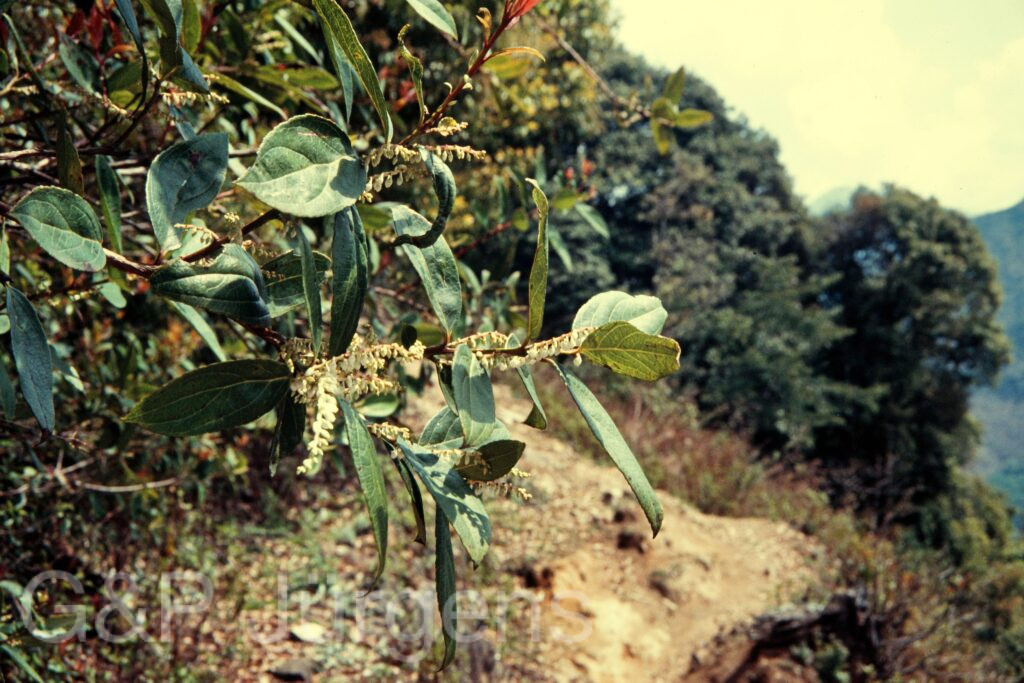
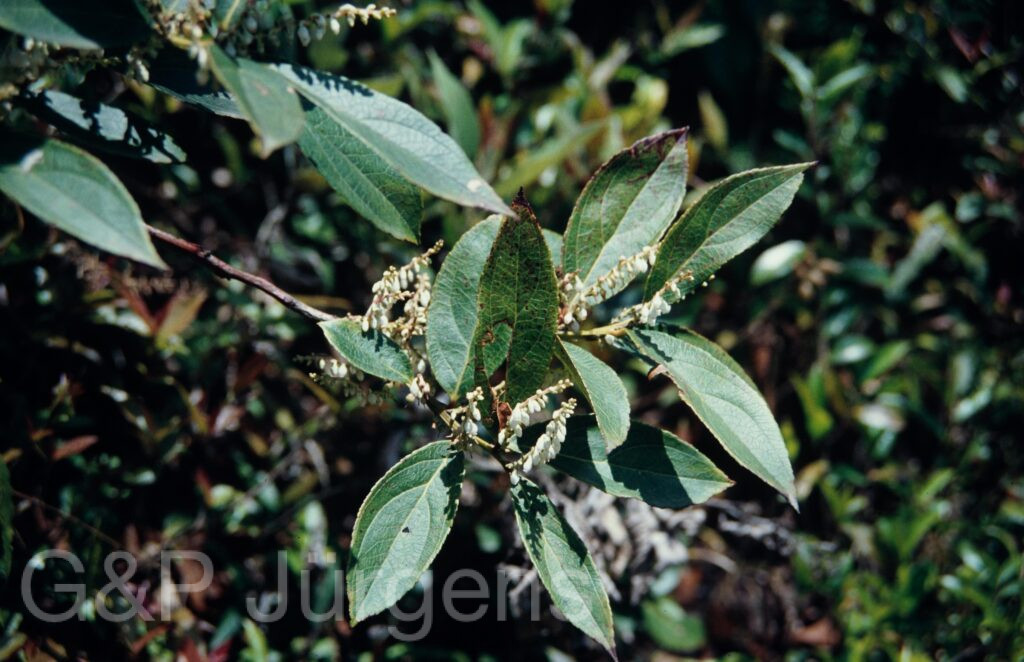
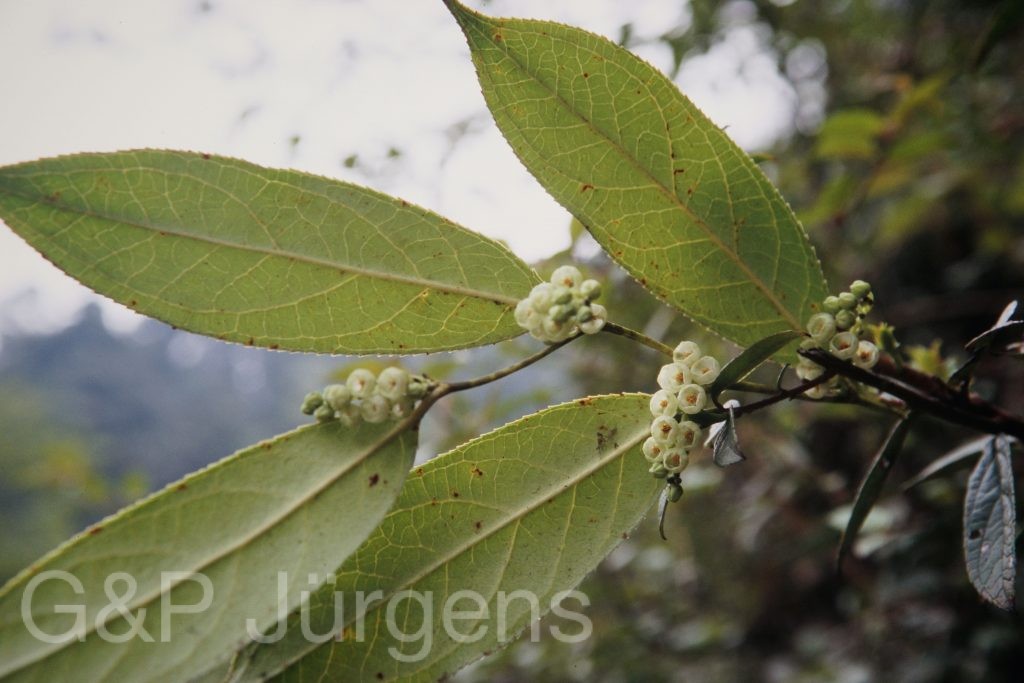
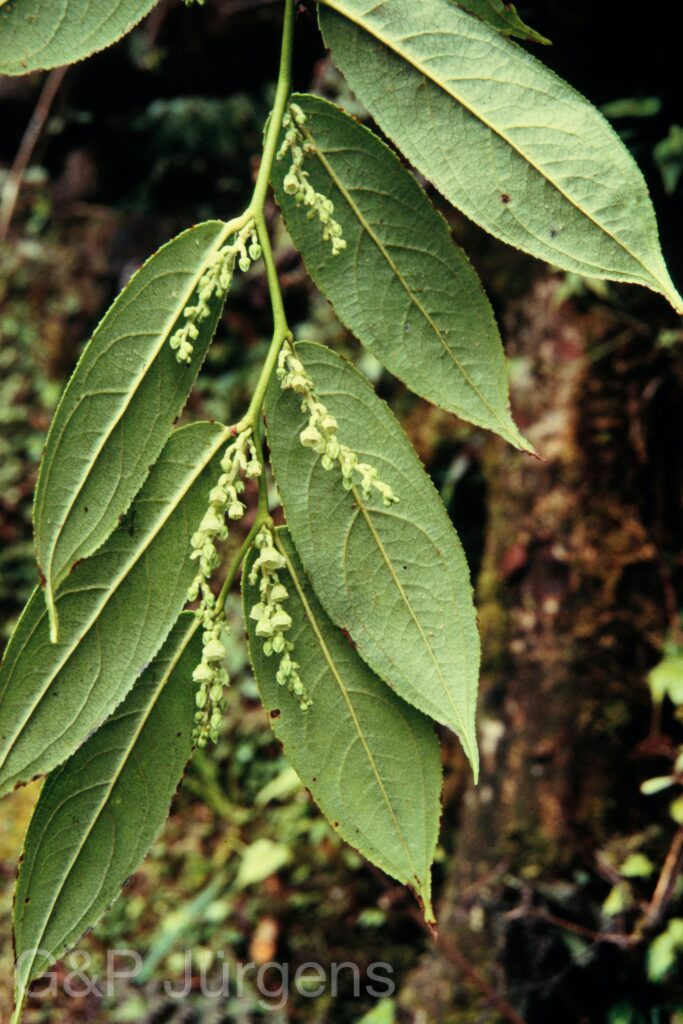
Gaultheria fragrantissima Wall. is a wide-ranging evergreen shrub of the eastern Himalaya and montane tropical Asia, documented from Nepal, India, Bhutan, China, Myanmar, Sri Lanka, Thailand, Vietnam, Indonesia and Malaysia, with a substantial body of records (GBIF reports some 1,853 occurrences, the higher latitudes among them reflecting cultivation or introduction). It occupies forest margins, open hillsides, secondary scrub and clearings in oak, rhododendron and broad-leaved evergreen forest, typically at 1,500-2,800 m. The photographed material comes from central and eastern Nepal, at Tankhu (2,200 m) and the Jaljale Himal (2,350 m), both in April, where it flowers on sunny, well-drained slopes.

It forms a much-branched shrub 1-3 m tall, the young twigs reddish, bristly or shortly setose. The leaves are alternate, coriaceous, elliptic to lanceolate, 5-12 cm long, with a serrulate-glandular margin, acuminate apex and conspicuously reticulate venation, aromatic when crushed. Inflorescences are axillary or terminal racemes bearing numerous small, urceolate (urn-shaped) white to pinkish corollas about 4-6 mm long, the calyx persistent and accrescent. The fruit is a depressed-globose capsule enclosed by the swollen, fleshy, bluish-purple calyx, forming a berry-like false fruit, dispersed by birds.

A member of the large genus Gaultheria (Ericaceae, subfam. Vaccinioideae), the species yields a methyl-salicylate-rich essential oil ("Indian wintergreen oil") distilled from its foliage and harvested commercially across Nepal and India. This use, with its capacity to colonise disturbed and burnt ground, makes it locally abundant and of no conservation concern. Its broad ecological amplitude and bird-dispersed fleshy fruits underlie its extensive Indo-Malesian distribution.

Author: Wall. · Sources: POWO (Kew), GBIF, Flora of Nepal, Flora of China, Flora of Bhutan, Airy Shaw revision of Asiatic Gaultheria, Middleton monograph of Gaultheria

Wight

Bh2008 154 P253
Bhutan Trongtsa 2120m, April
Nepal 97 115 P198
Nepal Mewa-Khola 2470m April

Description

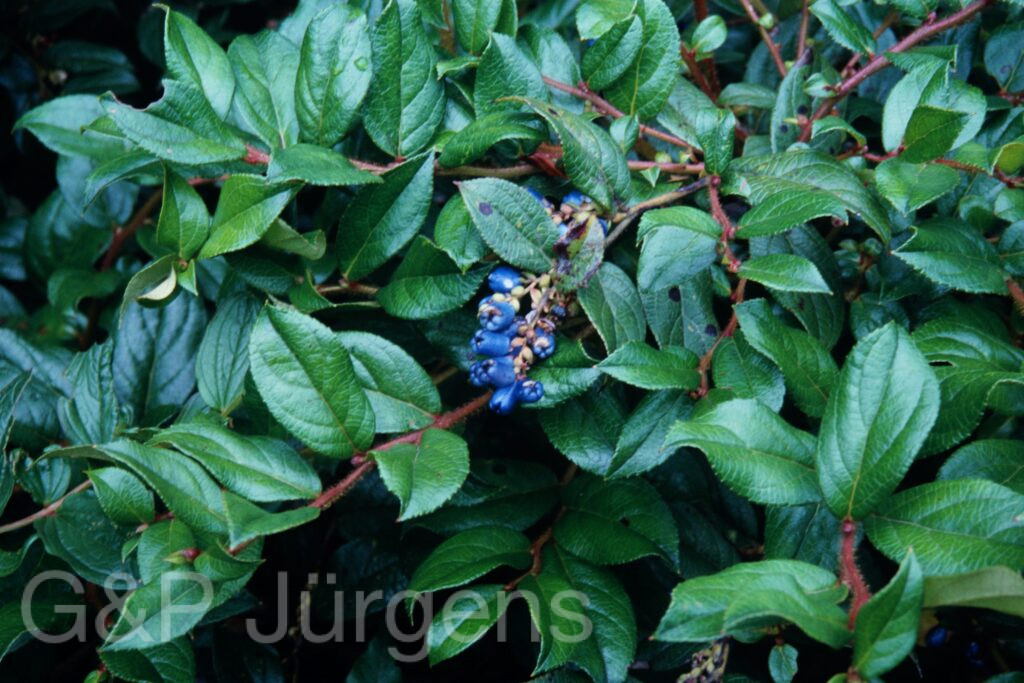
Gaultheria griffithiana is an evergreen shrub of the eastern Himalaya and Indo-Burmese mountains, distributed through Nepal, Sikkim and Darjeeling in India, Bhutan, southern China (Xizang, Yunnan), Myanmar, Laos and Vietnam, with nearly seven hundred georeferenced records. It grows in temperate broadleaved and conifer forest, on shrubby slopes, forest margins and rocky banks, often on acidic humus-rich soils. The cited collections at Trongtsa in Bhutan around 2120 m and Mewa-Khola in east Nepal at 2470 m, both flowering in April, reflect its spring anthesis in the montane forest belt.

The plant is a much-branched shrub with reddish, often bristly or glandular-setose young branchlets. The leaves are alternate, coriaceous, elliptic to oblong-lanceolate, finely serrate with gland-tipped teeth, glossy above and often with bristly hairs or glands, and aromatic when crushed. The flowers are borne in axillary racemes, each subtended by bracts; the calyx is five-lobed and the corolla is small, urceolate (urn-shaped), white to pinkish, with ten included stamens whose anthers open by terminal pores. The fruit is a small berry-like structure, the capsule being enclosed by the fleshy, accrescent calyx that turns blue-black or dark purple at maturity.

Gaultheria (Ericaceae, subfamily Vaccinioideae) is well represented in the Sino-Himalaya, and this species, named for William Griffith, belongs to the assemblage of wintergreen-scented shrubs containing methyl salicylate. The fleshy fruiting calyces are dispersed by birds, while the urceolate flowers are pollinated by bees. Locally common and ecologically widespread, the species is not regarded as threatened.

Author: Wight · Sources: POWO (Kew), GBIF, Flora of China, Flora of Bhutan, Middleton's revision of Asian Gaultheria (Ericaceae)

C.B.Clarke

Sikkim2003 409 P569
Sikkim Zemu Valley 3400m August

Description

Gaultheria hookeri is an evergreen shrub native to the eastern Himalayas and extending into southwestern China and northern Myanmar. Its range encompasses Nepal, northeast India (Sikkim, Arunachal Pradesh), Bhutan, Myanmar, and China (Yunnan, Xizang, Sichuan). The species is a characteristic element of upper temperate to subalpine forests, occurring at elevations of 2,500–4,000 m in Rhododendron-Abies forests, bamboo thickets, and along stream margins. It is well documented from the Zemu Valley in Sikkim at 3,400 m, where it can be found growing in the understorey of dense montane forests during August.
Gaultheria hookeri forms a densely branched, spreading to erect shrub 0.3–1.5 m tall. The young branchlets are setose-hispid with rusty brown hairs. The leaves are alternate, coriaceous, ovate to elliptic-ovate, 4–10 cm long, with a serrate to serrulate margin, the veins impressed above and prominent beneath. The flowers are borne in short axillary racemes; each flower has a campanulate to urceolate corolla, white to pinkish, 4–6 mm long. The calyx is five-lobed and becomes fleshy and enlarged in fruit, enclosing the capsule to form a conspicuous, globose, fleshy pseudoberry that is blue to deep purple-black at maturity, 8–12 mm in diameter.
Described by C.B. Clarke and named in honour of Sir Joseph Dalton Hooker, who extensively explored the Sikkim Himalaya, G. hookeri is one of the more robust and widely collected species in the genus across the eastern Himalayan region. With over 750 occurrence records in GBIF, it is comparatively well documented. The species is of ecological importance as a food source for montane birds and mammals that disperse its fleshy fruits. Its aromatic, wintergreen-scented foliage, rich in methyl salicylate, is occasionally used in traditional medicine. The species has also been introduced to cultivation in botanical gardens in Europe and North America.

Author: C.B.Clarke · Sources: POWO (Kew), GBIF, Flora of Bhutan Vol. 2, Flora of China Vol. 14, Hooker: Flora of British India Vol. 3 (1882)

D.Don

Garw 2005 166 ergebnis ergebnis
India Garhwal Shertoli 3200m, September

Description

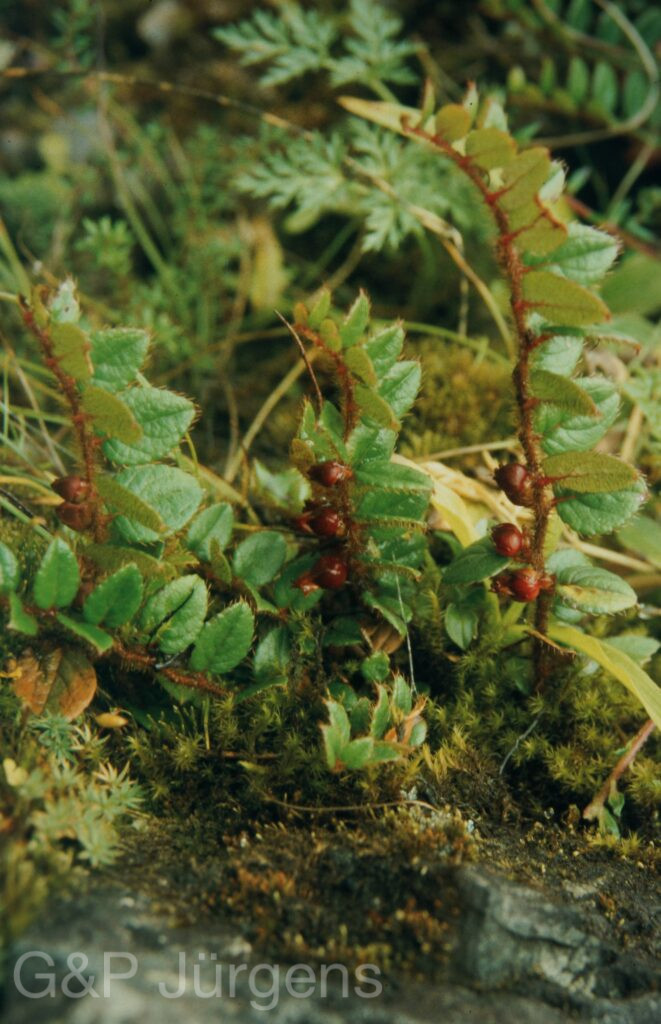
Gaultheria nummularioides D.Don is a prostrate, creeping dwarf shrub of the temperate and subalpine Himalaya and adjacent mountains of East and Southeast Asia. Its range extends through Nepal, NE and NW India, Bhutan, Myanmar and SW China, with outlying records in Malesia (Indonesia, Malaysia) and cultivated occurrences in Japan, Great Britain and the United States; GBIF documents over 1,200 collections across this wide span. It typically grows between 2,000 and 4,000 m in mossy forest margins, on damp rocks, banks and epiphytically on tree trunks, as recorded for the photographed plant from Garhwal at Shertoli, 3,200 m, in September. It favours humid, shaded, acidic substrates and is a characteristic component of Rhododendron–oak understorey and bryophyte-rich rock communities.

The plant forms wiry, much-branched, reddish-brown procumbent stems clothed in stiff brown bristles, rooting at the nodes to form dense mats. Leaves are small, distichous, ovate to rounded (nummularioides referring to the coin-like blade), 5–12 mm long, coriaceous, dark green and glossy above, the margins finely toothed and ciliate. Flowers are solitary and axillary, pendent on short pedicels, the corolla campanulate to urceolate, white tinged pink, 4–5 mm long with five short recurved lobes; the calyx is often reddish. The fruit is a fleshy blue-black berry-like capsule enclosed by the accrescent succulent calyx.

The genus Gaultheria (subfamily Vaccinioideae) is notable for aromatic foliage rich in methyl salicylate; G. nummularioides is locally used as a fragrant and medicinal plant. Its broad Himalayan-to-Malesian distribution illustrates the floristic continuity of the Sino-Himalayan ericaceous element. The species is common and not of conservation concern across most of its range.

Author: D.Don · Sources: POWO (Kew), GBIF, Flora of China Vol. 14, Flora of Bhutan Vol. 2, Flora of Nepal, Airy Shaw: The Gaultheria-Pernettya complex (Kew Bulletin)

Royle

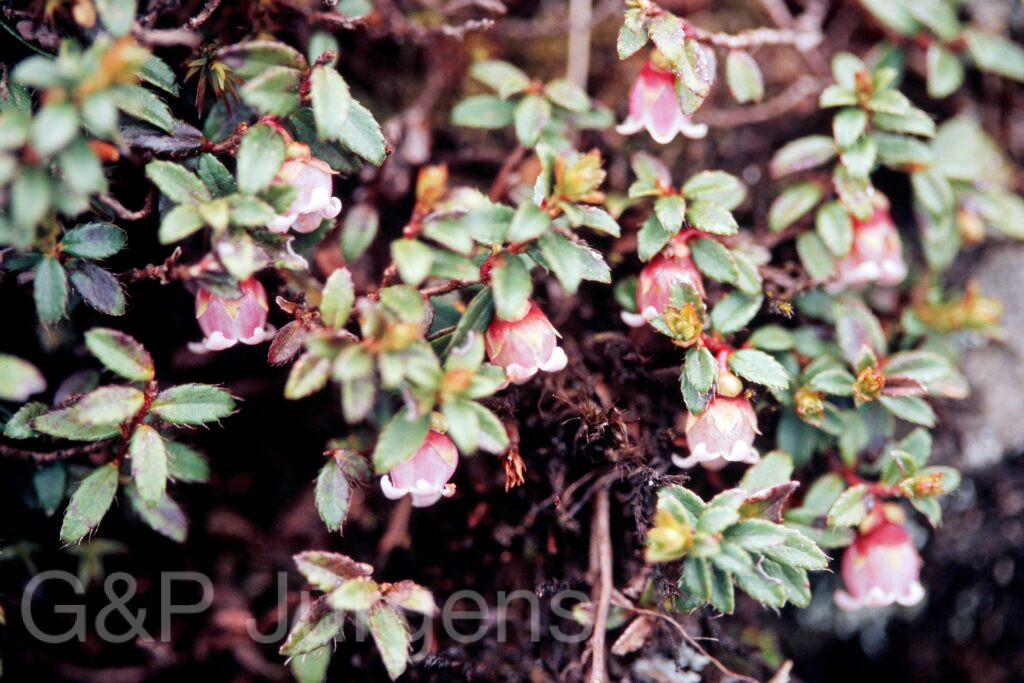
Nepal 2001 411 ergebnis ergebnis
Nepal (Gorkha) Barpak 3050m, May
Garh 07 165 ergebnis
India Garhwal Kinkhola 3550m, June

Description

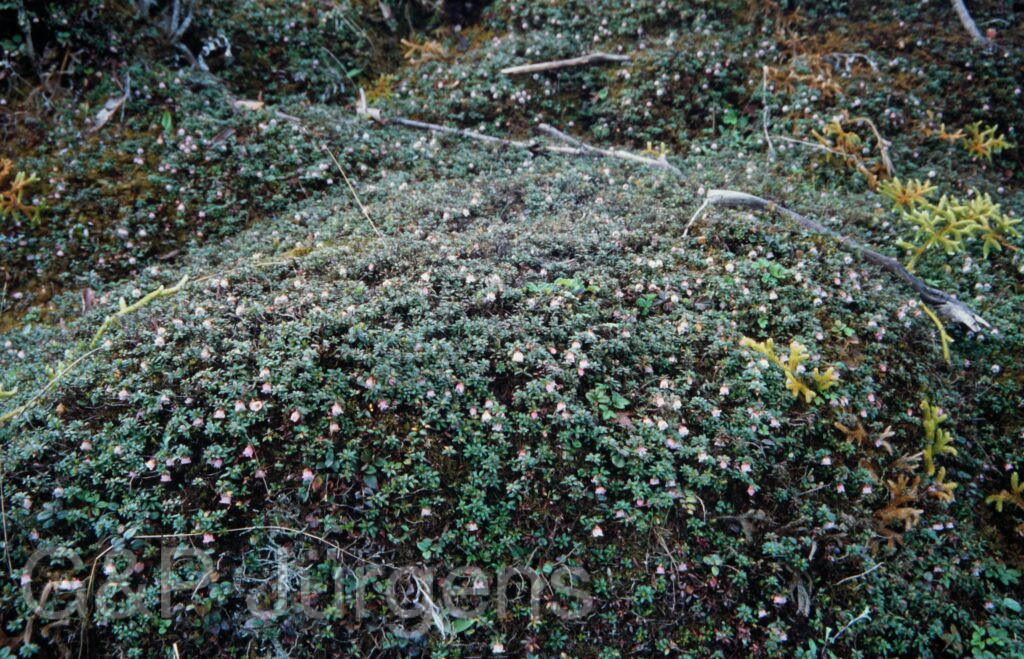
Gaultheria trichophylla is a low, mat-forming dwarf shrub of the high Himalaya, occurring across Nepal, northern India, Bhutan, Pakistan, Myanmar and southwestern China, with disjunct or introduced records from New Zealand, Canada, Chile and France; GBIF documents some 611 collections. It is a plant of open alpine and subalpine slopes, rhododendron scrub margins and humus-rich turf between about 3000 and 4500 m. The photographed material was gathered in central Nepal at Barpak (Gorkha) near 3050 m in May and in the Garhwal Himalaya at Kinkhola around 3550 m in June, on the moist, well-drained, peaty soils it favours under a cool monsoonal climate.

The plant forms compact, prostrate to ascending mats from slender, wiry, much-branched stems that are finely bristly-hairy and root at the nodes. The leaves are small, alternate, crowded, ovate to elliptic, leathery and shining, with a finely toothed, bristly-ciliate margin. Flowers are solitary in the leaf axils, the corolla urceolate to broadly campanulate, pink to pale rose, five-lobed, with a persistent calyx that becomes fleshy in fruit. The fruit is a depressed-globose capsule enclosed by the swollen, berry-like, bright blue calyx, a diagnostic generic feature aiding bird dispersal.

The genus Gaultheria (Ericaceae) is centred on eastern Asia and the Americas, and G. trichophylla belongs to a group of small-leaved alpine species in which the showy fleshy calyx replaces a true berry. Like its relatives it is calcifuge, demanding acidic substrates and forming ericoid mycorrhizal associations. It is widespread and locally abundant across its core Himalayan range and not regarded as threatened.

Author: Royle · Sources: POWO (Kew), GBIF, Flora of China Vol. 14, Flora of Bhutan Vol. 2, Flora of Nepal, Flora of Pakistan, Airy Shaw and Sleumer monograph of Asiatic Gaultheria