Tag:

Myanmar

Flowers of the Myanmar Himalaya — 604 species recorded from northern Myanmar (Burma) and the eastern Himalayan borderlands, a biodiversity hotspot linking the Himalaya to the mountains of Yunnan and Southeast Asia. The region’s forests and alpine slopes hold a rich flora of rhododendrons, orchids, balsams and gentians. Every page gives a botanical description, distribution, habitat and flowering time with the original photograph.

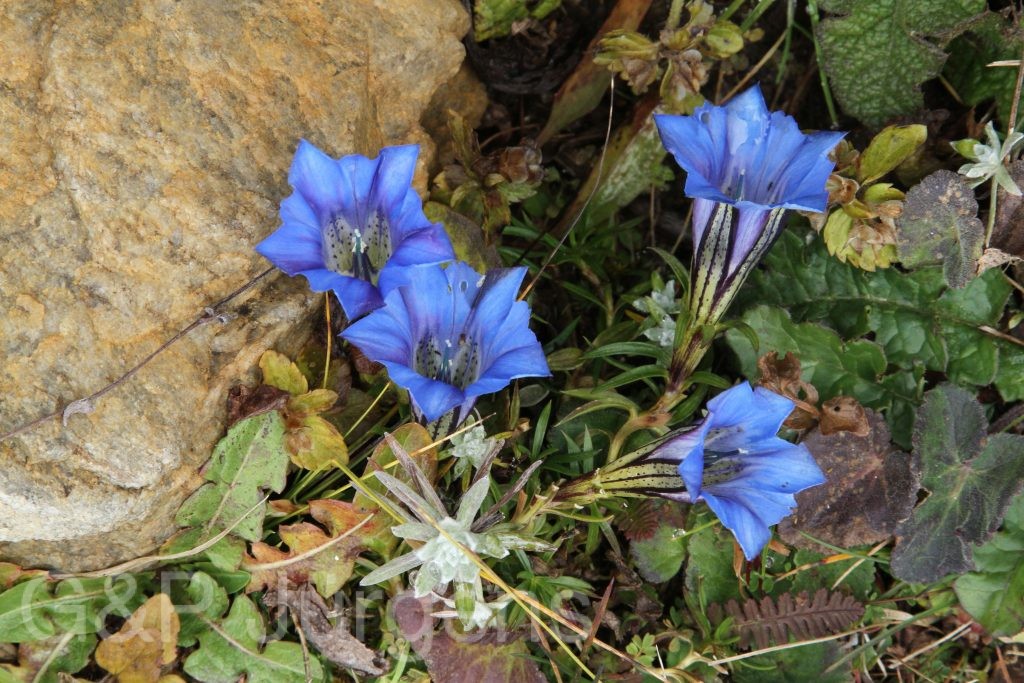
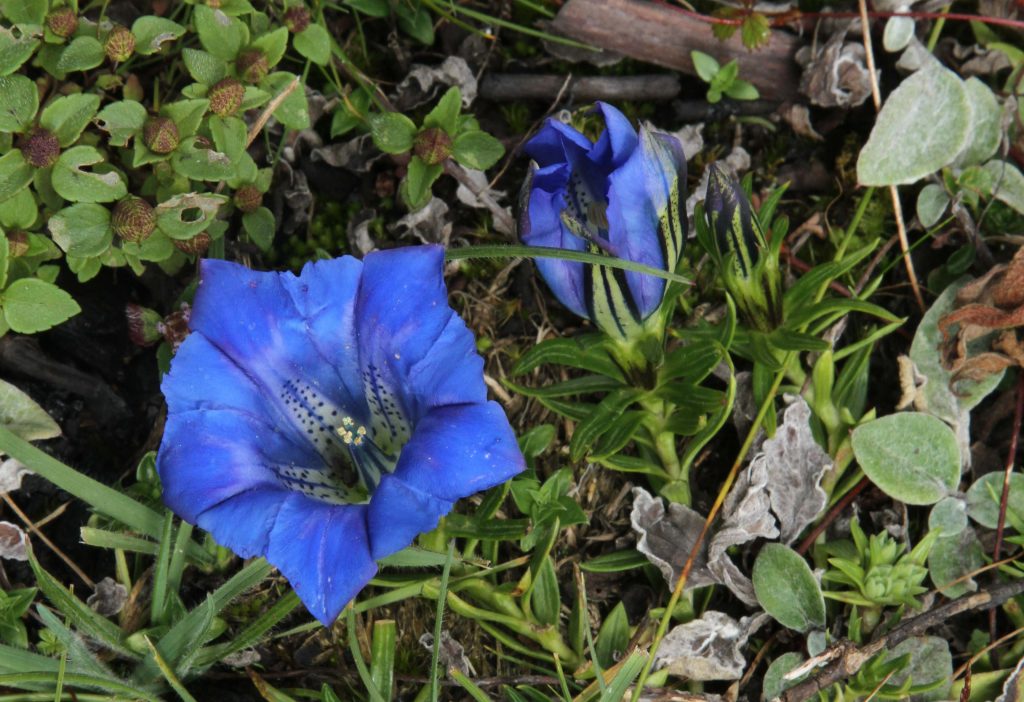
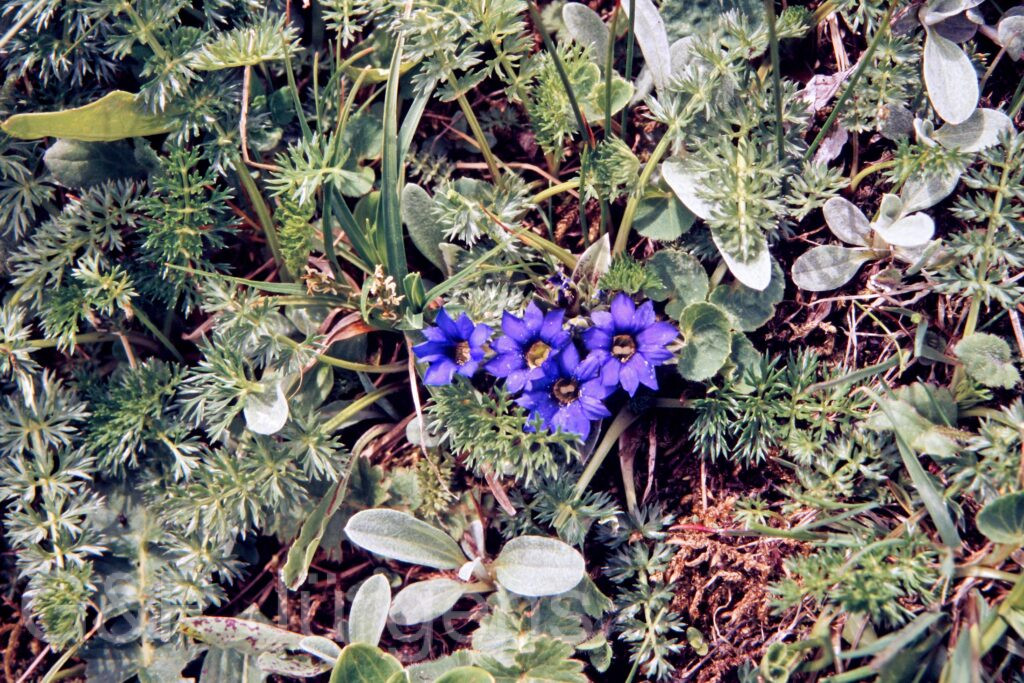
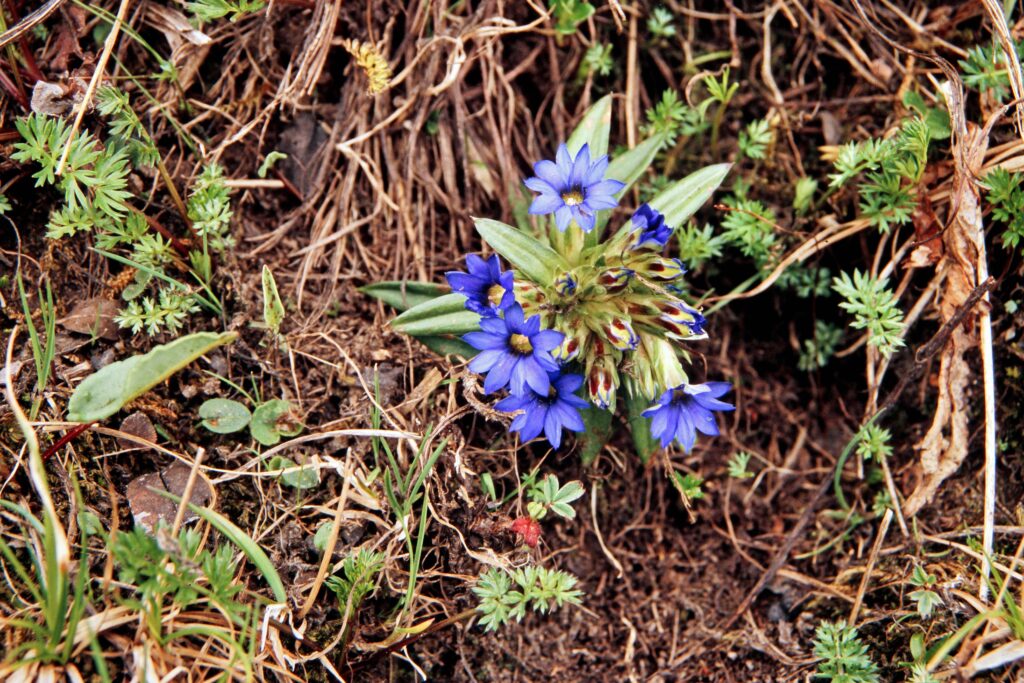
Buch.-Ham. ex D.Don

Garh 07 393 ergebnis
India Garhwal Meggu Kichatti 3200m, June 
Garh 07 420 ergebnis
India Garhwal Khiar Kutti 3900m, June

Description

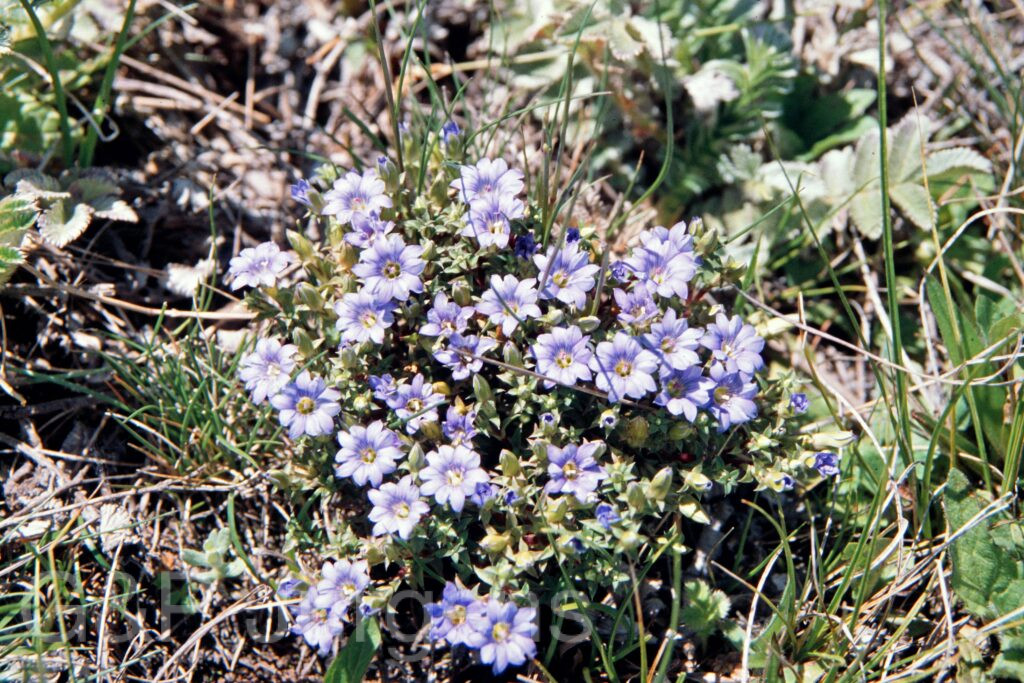
Gentiana capitata is a Himalayan annual gentian distributed across Nepal, India, Bhutan, China and Pakistan and into Myanmar; GBIF records about 206 occurrences spanning the central and eastern Himalaya. It grows on open alpine and subalpine slopes, grassy meadows, terraced banks and pastures, generally between about 2500 and 4000 m. The photographed plants come from Garhwal, India, at Meggu Kichatti (3200 m) and Khiar Kutti (3900 m), both in June, a setting typical of this small monsoon-season gentian, part of the seasonal herb flora of the western Himalayan high meadows in early summer.

The species is a slender annual with erect, often few-branched, quadrangular stems arising from a fine root system. The leaves are opposite, sessile, ovate to lanceolate, the basal pairs sometimes forming a loose rosette. The flowers are clustered into a dense, head-like or capitate terminal cyme that gives the species its name, sometimes with additional flowers in the upper axils. Each flower has a tubular to funnel-shaped, pale blue to bluish-mauve corolla with five spreading lobes and small plicate folds between them; the calyx is tubular with five teeth. The fruit is a stalked, two-valved capsule releasing numerous minute seeds.

Gentiana capitata Buch.-Ham. ex D.Don belongs to the annual, small-flowered Himalayan section of the genus characterised by capitate inflorescences and plicate corollas. Widespread and locally common across the Himalaya, it tolerates grazed and disturbed ground and is of no conservation concern. As an annual it depends on regular seed production and the brief monsoon season, and it is a familiar component of the high-meadow flora pollinated by insects drawn to its blue flower clusters.

Author: Buch.-Ham. ex D.Don · Sources: POWO (Kew), GBIF, Flora of China, Flora of Nepal, Halda: The Genus Gentiana
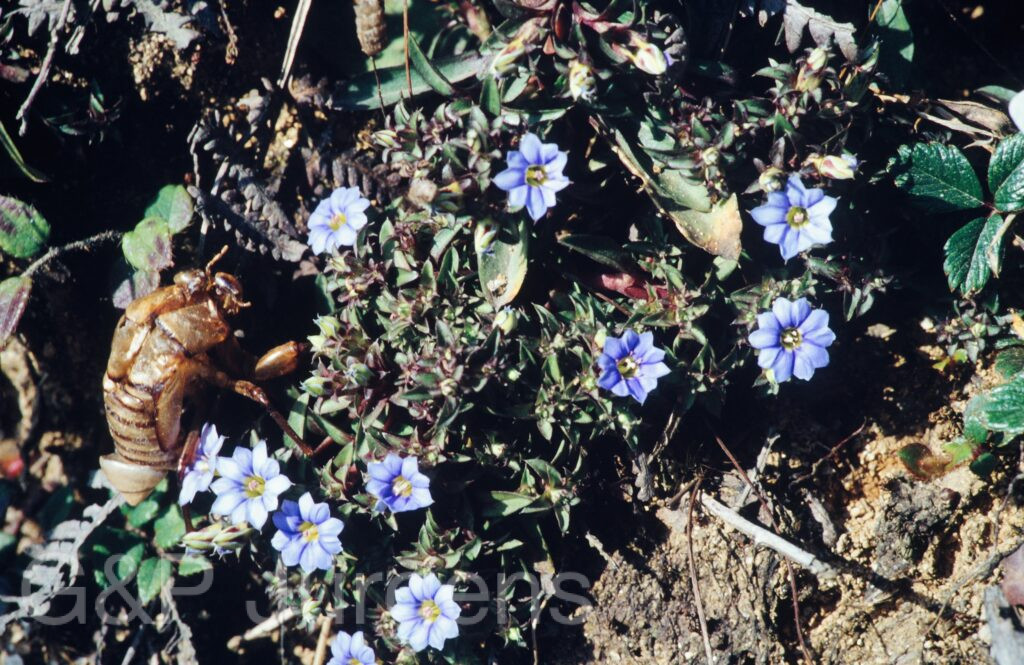
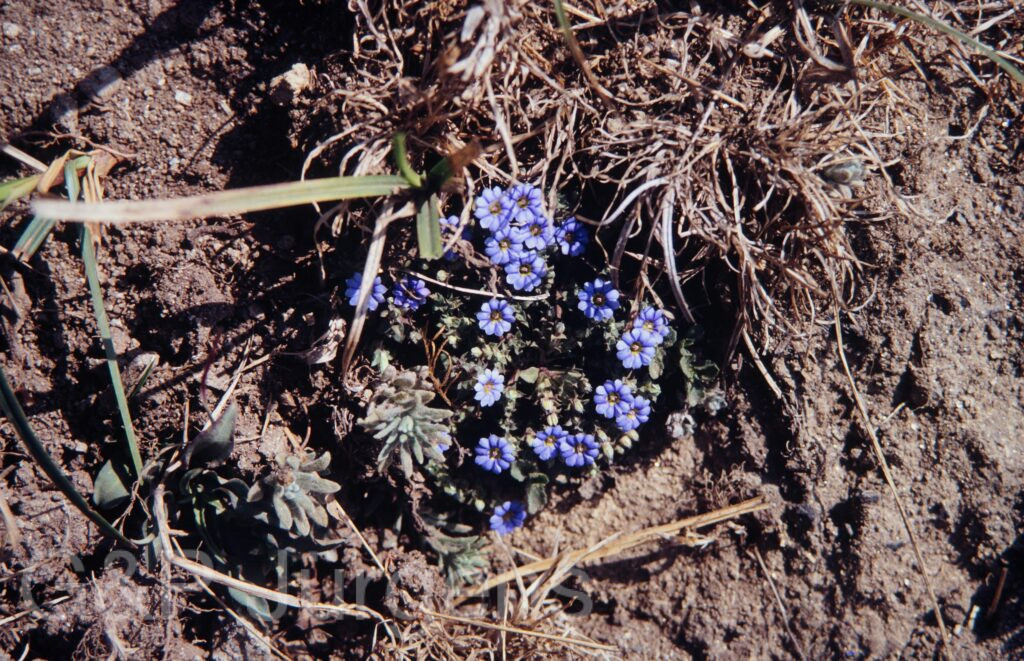
(G.Don) Griseb.

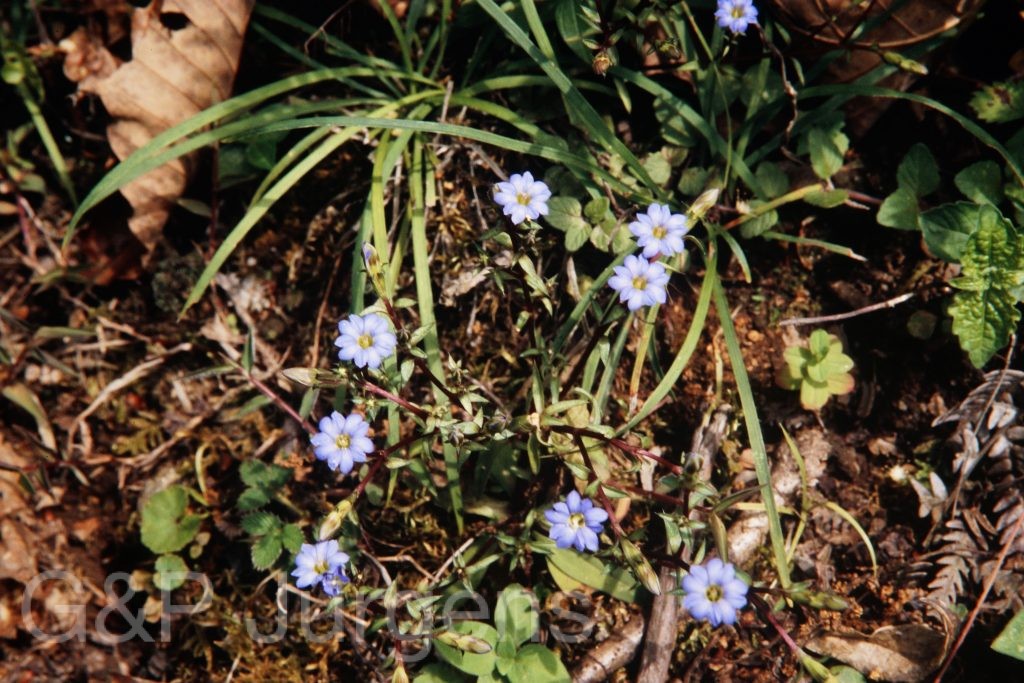
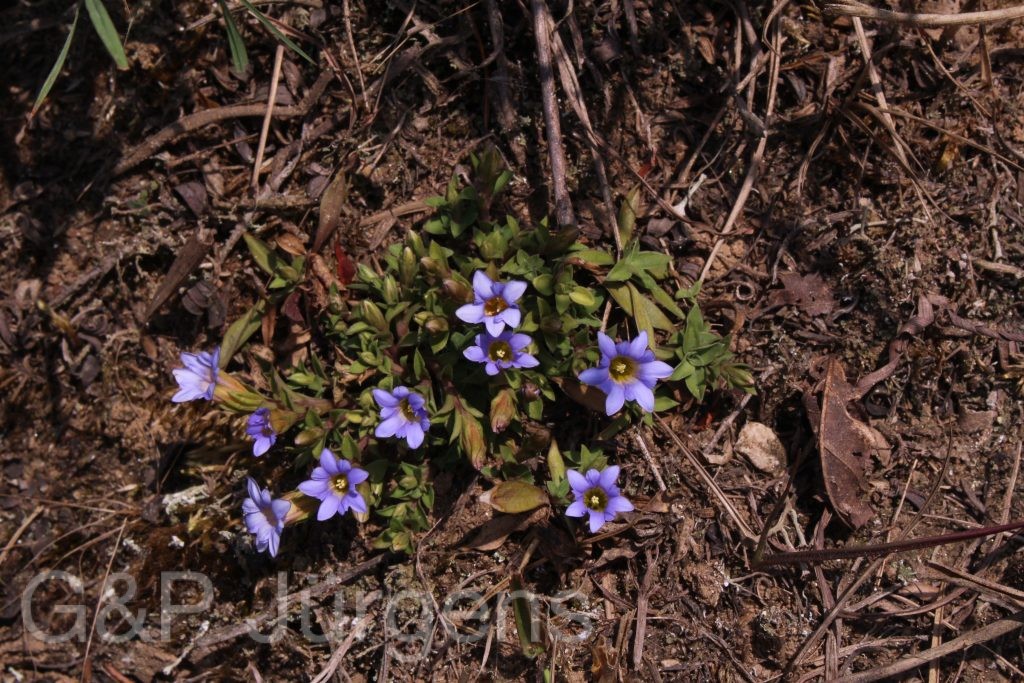
Bhutan2014 670
Bhutan Phobjika 2900m, May
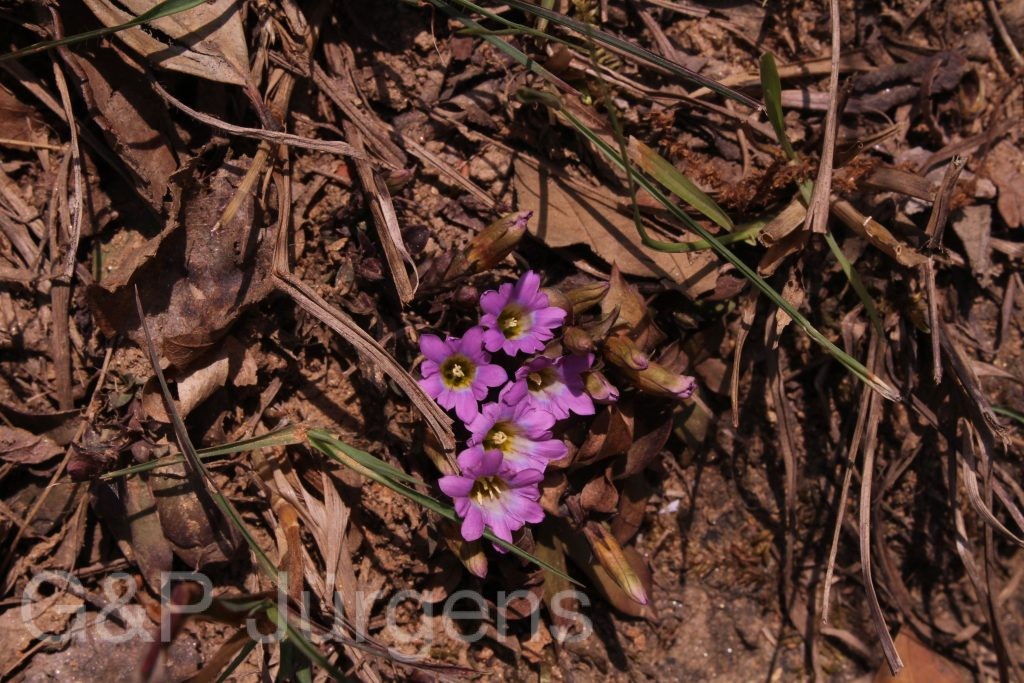
Bhutan2014 671
Bhutan Phobjika 2900m, May

Description

Gentiana loureiroi is a small Asian gentian distributed from China and Hong Kong through Thailand, Laos, Vietnam and Myanmar to India and Bhutan, with more than 500 GBIF records making it one of the better-documented species in this account. It is a plant of open grassy places, pasture, roadside banks and moist montane meadows, generally in the lower and middle montane belt. The collection from Phobjika in central Bhutan at about 2900 m, flowering in May, typifies its occurrence in damp, short-turf glacial-valley grasslands where it appears early in the season among grazed sward.

The plant is a low, slender annual or short-lived perennial with prostrate to ascending, often branched stems forming small mats or tufts. The leaves are small, opposite, ovate to elliptic, sessile, with cartilaginous margins, the basal ones frequently forming a loose rosette. The flowers are solitary and terminal on the branchlets, with a tubular calyx of five lobes and a funnelform to salverform corolla that is typically blue to violet-blue, the five spreading lobes alternating with smaller plicate folds in the sinuses. The fruit is a stipitate capsule projecting from the withered corolla and releasing numerous minute seeds.

Described by G. Don and combined in Gentiana by Grisebach, G. loureiroi belongs to the largely small-flowered annual section of the genus characteristic of disturbed and grazed montane grassland. Its wide geographic and elevational range, tolerance of human-modified habitats and prolific seed production make it ecologically resilient and of least conservation concern across its extensive distribution.

Author: (G.Don) Griseb. · Sources: POWO (Kew), GBIF, Flora of China, Flora of Bhutan, Ho & Pringle's account of Gentiana

Franch.

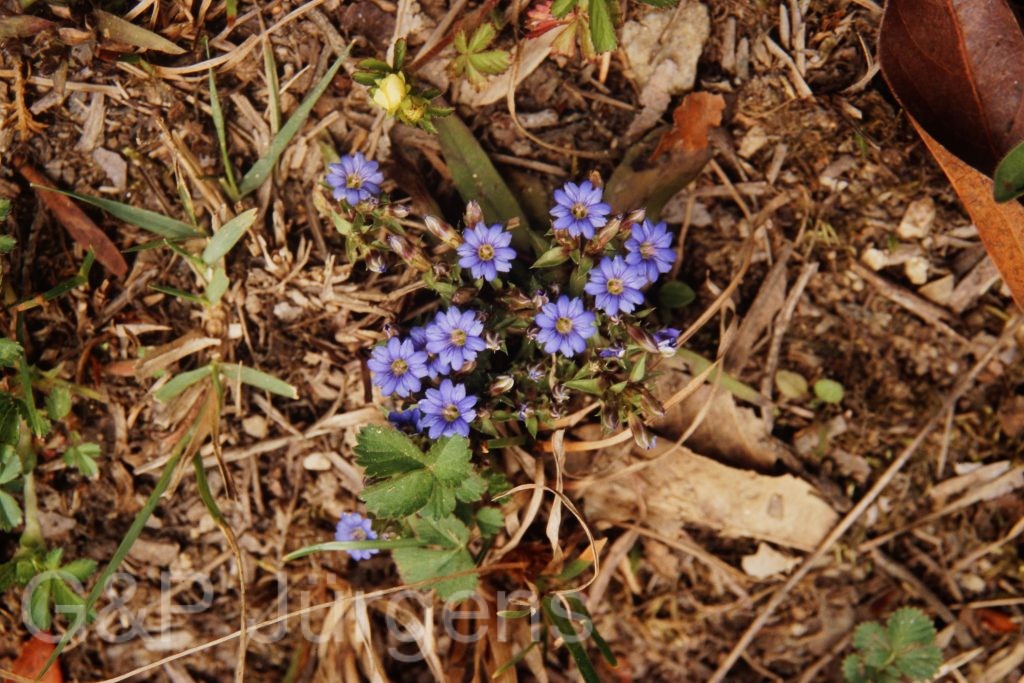
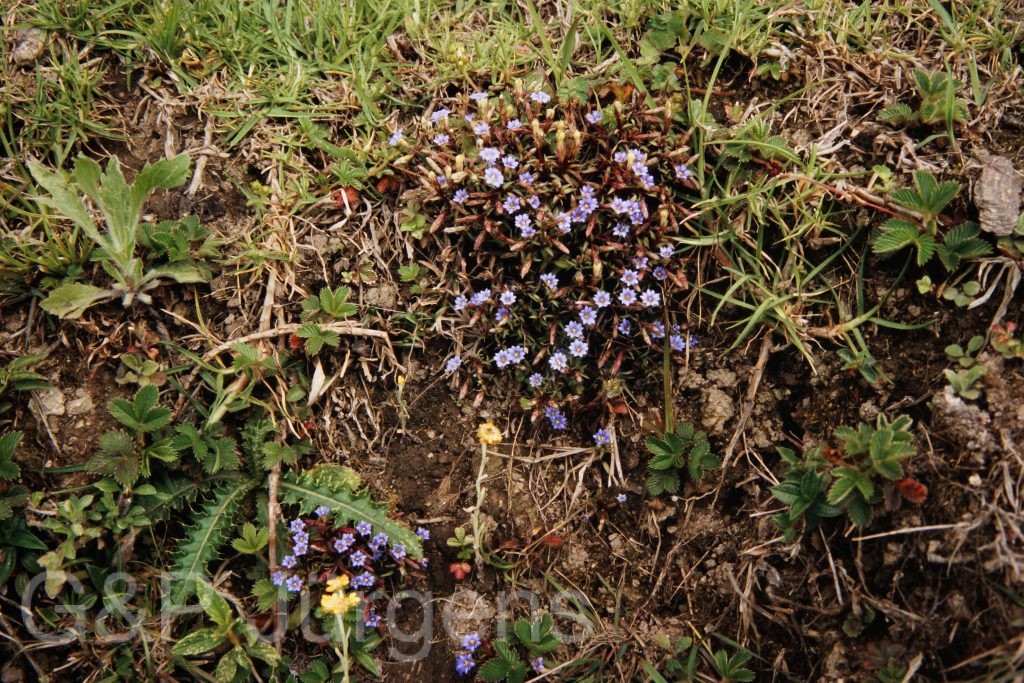
Bh2008 446 G697
Bhutan Gogona, 3400m April
BH2008 537 G815
Bhutan Limbukha, 2200m April
Bh2008 538 P816
Bhutan Limbukha, 2200m April

Description

Gentiana maeulchanensis is a small annual or biennial gentian of the eastern Himalaya and adjacent China, known from a comparatively modest 60 records spanning China, Bhutan, India and Myanmar. It occupies open meadows, grassy banks, terraced field margins and moist disturbed ground, generally between 2000 and 3600 m, flowering early in the season before the monsoon. The illustrated plants were collected in Bhutan at Gogona (3400 m) and at Limbukha (2200 m), both in April, the latter site lying among the lower cultivated valleys where the species descends to its altitudinal minimum.

The plant is a slender, often branched herb a few centimetres to about 20 cm tall, with a basal rosette and small opposite cauline leaves that are ovate to spathulate with cartilaginous, often whitish margins. The flowers are solitary and terminal or borne in lax cymes; the calyx is tubular with a membranous keel and unequal lobes. The corolla is funnelform to campanulate, blue to pale violet, with five spreading lobes alternating with shorter, fringed or toothed plicae in the sinuses, a defining feature of the section. The capsule is exserted on a stipe at maturity and releases numerous minute seeds.

The species belongs to the predominantly annual Himalayan-Chinese assemblage of small gentians, where it is distinguished by its plical fringing and early phenology. Such early flowering exploits the brief window before competing monsoon vegetation, and the flowers are pollinated by early-emerging insects. With a restricted but stable distribution, it has not been assessed but warrants attention where its lower-elevation habitats are subject to agricultural change.

Author: Franch. · Sources: POWO (Kew), GBIF, Flora of China, Flora of Bhutan, Annotated Checklist of the Flowering Plants of Nepal, Ho & Liu monograph of Gentiana

Harry Sm.

Bhutan2015 660
Bhutan Chele-La 4000m, October
Bhutan2015 662
Bhutan Chele-La 4000m, October
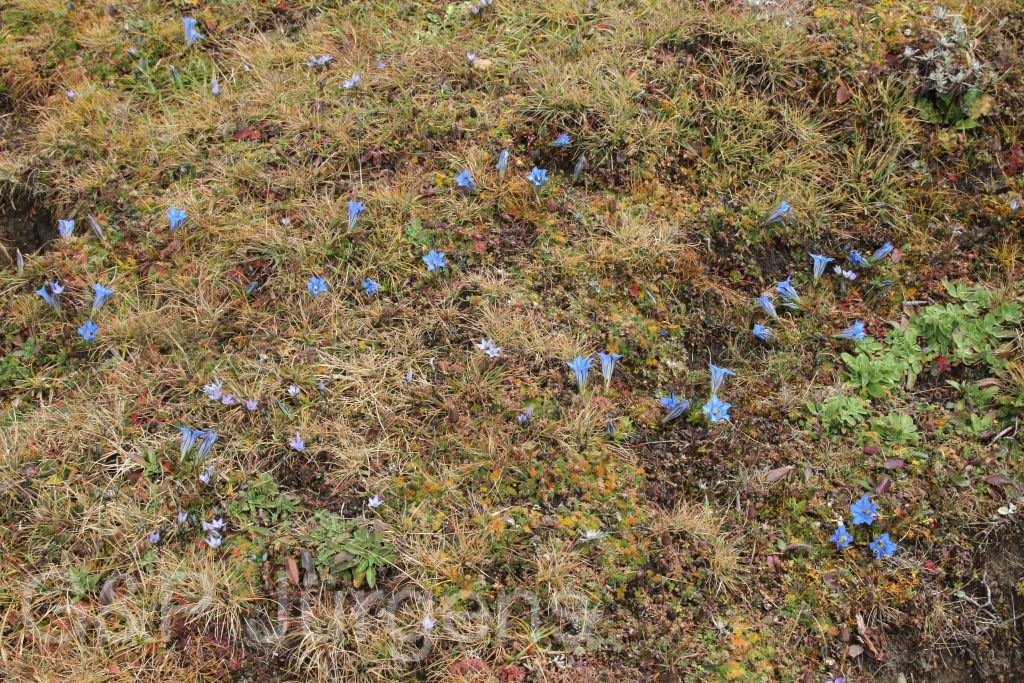
Bhutan2012 280
Bhutan Shele-La, 4100m September

Description

Gentiana oreodoxa is an eastern Himalayan and southwest Chinese alpine gentian recorded from China, Myanmar, Bhutan and India, a comparatively narrow distribution reflected in its modest GBIF tally of about 81 occurrences. It grows in alpine turf, open grassy slopes and rocky meadows of the high mountains, characteristically at and above 4000 m. The plants photographed at Chele-La (about 4000 m, October) and Shele-La (about 4100 m, September) in Bhutan exemplify its preference for short alpine grassland near the upper passes, where it flowers late in the season as autumn approaches.

The species is a small tufted perennial with a short rootstock giving rise to clustered, prostrate to ascending flowering stems and basal rosettes. The leaves are small, narrowly elliptic to oblanceolate, leathery and densely imbricate below, with cartilaginous-thickened margins. The flowers are solitary or few at the stem tips, the campanulate to narrowly funnel-shaped corolla deep blue with plicate folds (plicae) between the lobes, the calyx tubular with short teeth. The fruit is a stalked, bivalved capsule releasing numerous small seeds.

Gentiana oreodoxa belongs to the large autumn-flowering assemblage of dwarf alpine gentians (section Frigida and allies) that dominate the high turf of the Sino-Himalaya. These plants are well adapted to short growing seasons and intense radiation, opening their corollas in sunshine and closing in cold or cloud. With a restricted eastern Himalayan range it is a regional specialist; though not formally assessed as threatened, its confinement to high alpine habitats makes it a useful indicator of montane ecosystem integrity under a warming climate.

Author: Harry Sm. · Sources: POWO (Kew), GBIF, Flora of China, Flora of Bhutan, Annotated Checklist of the Flowering Plants of Nepal, Ho & Liu monograph of Gentiana

(D.Don) Wall.

Nepal 1994 80 ergebnis
Ost-Nepal Jaljale Himal
2900m April
Nepal1992 43 W61 ergebnis
Nepal Nundhaki 1600m March 
Nepal 99 227 ergebnis
West-Nepal Gumghadi 2400m, June

Description

Gentiana pedicellata is a small annual gentian widely distributed across the Himalaya and into south-western China and Sri Lanka, with records also from Myanmar, Laos and Bangladesh and a documented base of some 466 occurrences (European and East Asian points largely cultivated or curated). It occupies open grassy slopes, terraced fields, forest clearings and moist disturbed ground over a broad altitudinal span. The images here span eastern Nepal's Jaljale Himal at 2900 m in April, Nundhaki at 1600 m in March, and Gumghadi in west Nepal at 2400 m in June, reflecting a flowering season tied to spring and early summer at middle elevations.

The plant is a slender, diminutive annual a few centimetres to about 15 cm tall, often branched from the base. The leaves are small, opposite, ovate to elliptic, sessile or shortly petiolate and somewhat fleshy, the lower forming a loose basal rosette. The flowers are solitary and terminal on conspicuously elongate, thread-like pedicels (the source of the epithet), the calyx tubular with five lobes, and the corolla narrowly funnel-shaped, pale blue to bluish-white with intervening plicate folds between the five spreading lobes. The fruit is a stalked, two-valved capsule exserted from the persistent calyx, releasing numerous minute seeds.

Gentiana pedicellata belongs to the Gentianaceae and to the annual gentians (section Chondrophyllae), a group well represented in the temperate Himalaya by many small, ephemeral species. Its long pedicels readily distinguish it from related dwarf annuals. The flowers are insect-pollinated, opening in bright conditions, and the light seeds are dispersed passively. Common, weedy and adaptable across a wide range, the species is of least conservation concern.

Author: (D.Don) Wall. · Sources: POWO (Kew), GBIF, Flora of China, Flora of Bhutan, Annotated Checklist of the Flowering Plants of Nepal, Ho & Liu monograph of Gentiana

Sweet

BhutanPG2011 106
Bhutan Tsochenchen, 3450m June
Sikkim2003 181 G247
Sikkim Dzongri 4100m 08.2003

Description

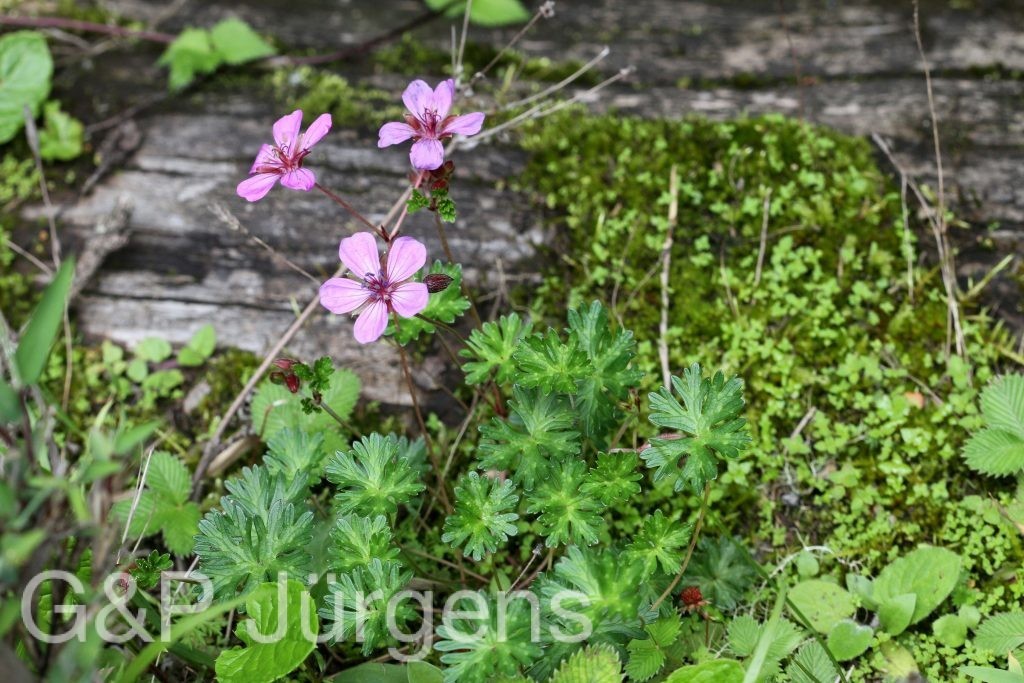
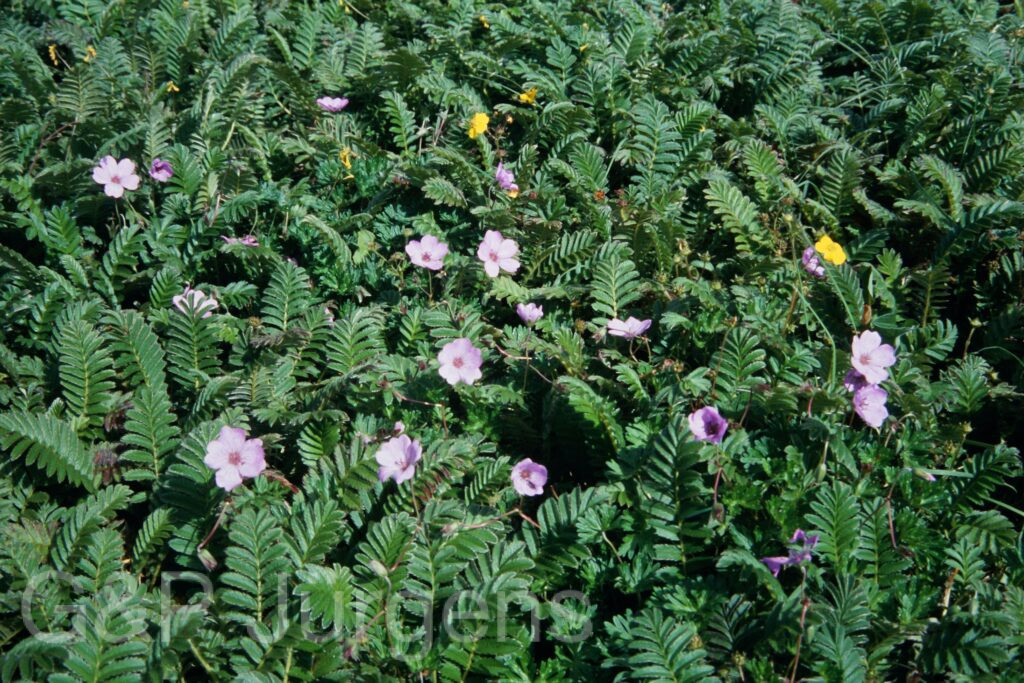
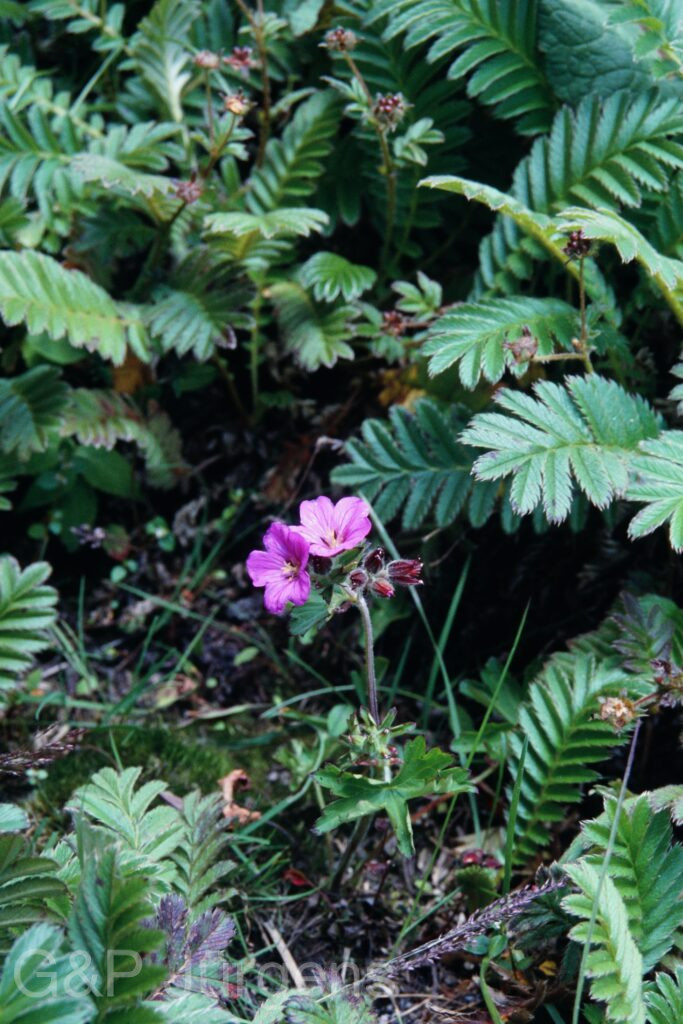
Geranium donianum is an alpine cranesbill of the Himalaya and southwestern China, recorded by GBIF from China, Nepal, India, Bhutan and Myanmar across roughly 795 occurrences. It grows in alpine and subalpine meadows, open grassy slopes, scrub margins and stony turf, generally at high elevations where it forms part of the herb-rich alpine sward. The photographed plants were found in Bhutan at Tsochenchen at 3450 m in June and in Sikkim at Dzongri at 4100 m in August, situations typical of its preference for sunny, well-drained montane grassland through the brief alpine summer.

It is a low, tufted perennial arising from a stout, often woody rootstock, with somewhat spreading, hairy stems. The leaves are orbicular to reniform in outline and palmately divided nearly to the base into several wedge-shaped, deeply lobed segments, the lobes again toothed; basal leaves are long-petiolate. The flowers are relatively large and showy, with five free, obovate petals that are typically deep pink to purplish-red and conspicuously darker-veined, sometimes notched at the apex. There are ten stamens and a five-lobed superior ovary; the fruit is the characteristic beaked schizocarp of the genus, whose mericarps separate elastically at maturity to fling out the seeds.

GBIF accepts the name. Within Geranium it belongs among the Himalayan alpine cranesbills allied to G. orientali-tibeticum and related taxa, a group well represented across the high ranges. The vivid dark-veined petals serve as nectar guides for bee and fly pollinators. Widespread and locally common in alpine pastures, G. donianum is assessed as of least conservation concern.

Author: Sweet · Sources: POWO (Kew), GBIF, Flora of Nepal, Flora of China, Yeo monograph of Geranium

Edgew. & Hook.f.

Sikkim2003 204 P284
Sikkim Dzongri 3900m 08.2003

Description

Geranium polyanthes is a perennial cranesbill of the high Himalaya and the mountains of southwestern China, recorded by GBIF from China, India, Nepal, Bhutan and Myanmar (with scattered cultivated or vouchered records elsewhere) across about 331 georeferenced occurrences. It is a plant of subalpine and alpine meadows, open hillsides, grassy slopes and forest clearings near and above the treeline, characteristically flowering in the monsoon months of July and August. Its elevational range extends from roughly 3,000 m to over 4,000 m, well represented by the photographed plant from Dzongri in Sikkim at about 3,900 m in August, where it grows among dwarf rhododendron and herbaceous alpine turf.

The species forms a clump from a stout rootstock, the stems erect to ascending and clothed, like the rest of the plant, in spreading hairs. The leaves are orbicular-reniform in outline and palmately lobed into shallow, broad, crenate-toothed segments, the basal leaves long-petioled. As the epithet polyanthes ("many-flowered") indicates, the inflorescence is comparatively dense and many-flowered, an umbel-like cluster of pink to rose-pink flowers with five obovate, slightly notched petals veined with darker lines, ten stamens and a beaked pistil. The fruit is the characteristic geraniaceous schizocarp with an elongate rostrum that splits explosively into one-seeded mericarps, ejecting the seeds.

Geranium polyanthes belongs to the large genus Geranium (subgenus Geranium) and is one of a suite of pink-flowered Himalayan perennial cranesbills that includes G. donianum and G. nakaoanum, from which it is separated by its denser, many-flowered inflorescence and leaf division. As a nectar-rich alpine herb it is visited by bees and other insects and contributes to the floral diversity of Himalayan summer pastures. It is locally common and not considered threatened, though the alpine meadow habitats it occupies are sensitive to overgrazing and to the upslope shifts in vegetation associated with a warming climate.

Author: Edgew. & Hook.f. · Sources: POWO (Kew), GBIF, Flora of China Vol. 11, Flora of Bhutan Vol. 2, Flora of Nepal, Flora of Pakistan, Yeo: Hardy Geraniums and the systematic monograph of the genus Geranium

Edgew. & Hook.

BhutanPG2011 491
Bhutan Ludlow-Sherriff-Trail Managed-Chu, 3550m June

Description

Geranium refractum is a perennial herb of the eastern and central Himalaya and adjacent China, distributed through China, Nepal, India, Bhutan and Myanmar, with about 645 georeferenced records concentrated in the subalpine and alpine zones. It grows in alpine meadows, forest clearings, shrubberies and moist, rocky slopes, often among dwarf rhododendron and on streamside banks. The plant photographed along the Ludlow-Sherriff trail near the Managed-Chu in Bhutan at 3550 m, flowering in June, is typical of its high-elevation habitat, where it appears with the early summer thaw.

It forms ascending to spreading stems from a perennial rootstock, the foliage palmately divided into five to seven deeply incised and toothed lobes. The flowers, as the epithet indicates, are nodding and become strongly reflexed, with five reflexed to spreading white or pale pinkish petals; the ten stamens and the long style column are exserted and conspicuous against the recurved corolla, recalling a small cyclamen or shooting-star in posture. The fruit is the characteristic geranium schizocarp with an elongate beak, the mericarps releasing seeds by elastic ejection.

Geranium refractum, described by Edgeworth and Hooker f., belongs to the same Himalayan group of nodding-flowered species as G. lambertii, from which it differs in its reflexed white flowers and exserted reproductive parts. Its early-summer blooms are visited by bumblebees and other montane insects, and the spring-loaded mericarps disperse seed ballistically. It is reasonably widespread across the eastern Himalaya and is not regarded as threatened, although alpine meadow populations are subject to grazing pressure.

Author: Edgew. & Hook. · Sources: POWO (Kew), GBIF, Flora of China, Flora of Bhutan, Annotated Checklist of the Flowering Plants of Nepal, Yeo Hardy Geraniums

Cass.

Bh2008 487 P756
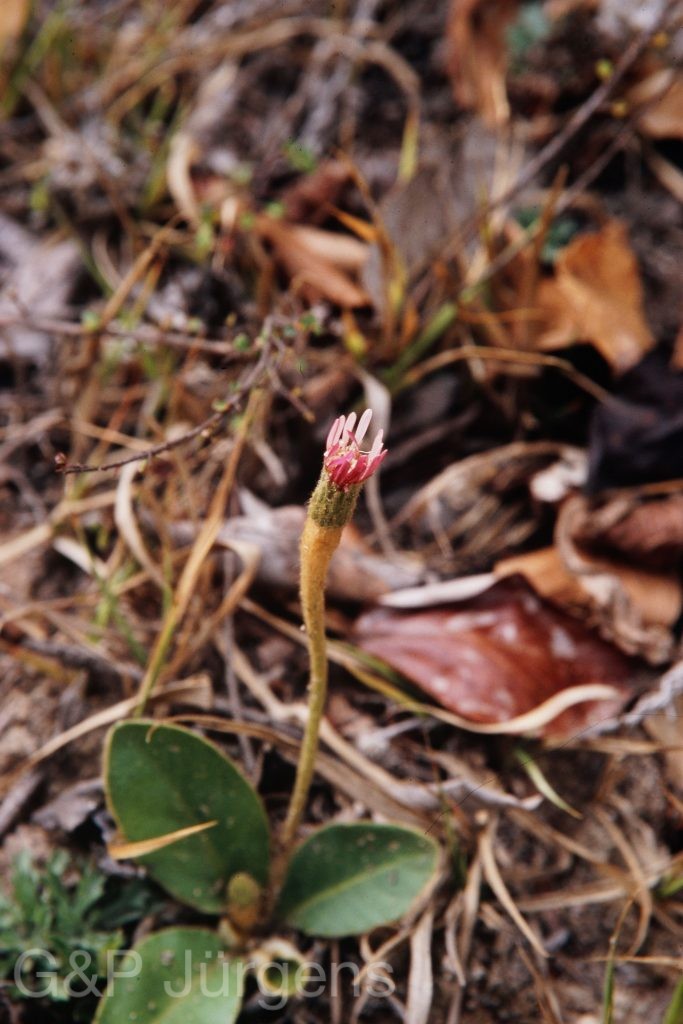
Bhutan Samtengang 2100, May
Bh09 355 G572
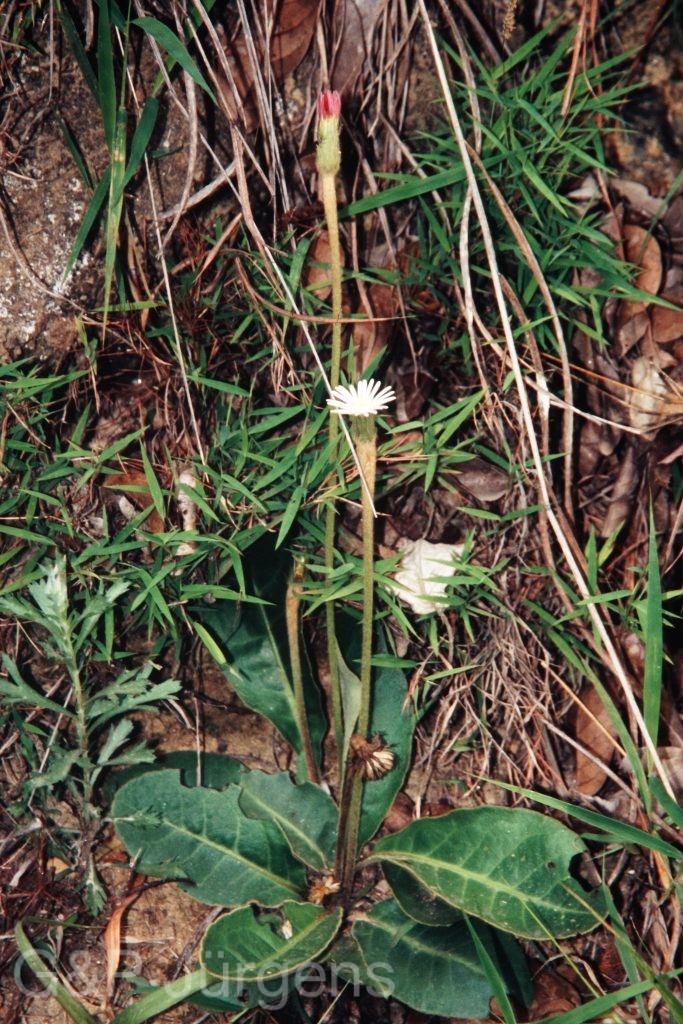
Bhutan Samtengang 2100, May

Description

Gerbera piloselloides is a remarkably wide-ranging species spanning the palaeotropics, with GBIF recording over 2780 occurrences from South Africa, Madagascar and tropical East and Central Africa eastward through the Himalaya and southern China to Myanmar and Thailand. Across this disjunct Afro-Asian range it occupies open grassland, sunny hill slopes, sparse pine forest, roadsides and disturbed pasture, generally on well-drained, often acidic soils. In the Eastern Himalaya it occurs in the subtropical to lower temperate zone, the figured plant from Samtengang in central Bhutan at about 2100 m flowering in May, a season coinciding with the onset of the warm months when the basal rosettes throw up their solitary scapes.

The species is a stemless perennial herb forming a flat rosette from a short rhizome. The leaves are entire, oblanceolate to obovate-spathulate, narrowed to the base, green and thinly hairy above but conspicuously white-tomentose beneath. From the rosette centre arise one or more slender, leafless, woolly scapes each terminating in a single heterogamous capitulum. The involucre is campanulate with imbricate phyllaries; the outer female florets are bilabiate, white to pinkish above and reddish beneath, encircling tubular bisexual disc florets. The fruit is a narrowly fusiform, beaked, hairy cypsela bearing a pappus of numerous barbellate bristles.

Referable to Cassini, the binomial Gerbera piloselloides is accepted by GBIF; it has at times been segregated into the genus Piloselloides, and the name is treated here as accepted following current consensus. Within the tribe Mutisieae, Gerbera is noted for its bilabiate marginal florets, and the broad Old World distribution of this taxon reflects both ancient biogeographic connections and tolerance of disturbed, fire-maintained grassland. Its colonising ability in open habitats makes it secure across its range, and it is of no conservation concern.

Author: Cass. · Sources: POWO (Kew), GBIF, Flora of Bhutan, Flora of China, Flora Zambesiaca, Hansen's revision of Gerbera (Mutisieae)

Gmelina arborea

by GP Jürgens

Roxb.

Nepal 97 56 P78
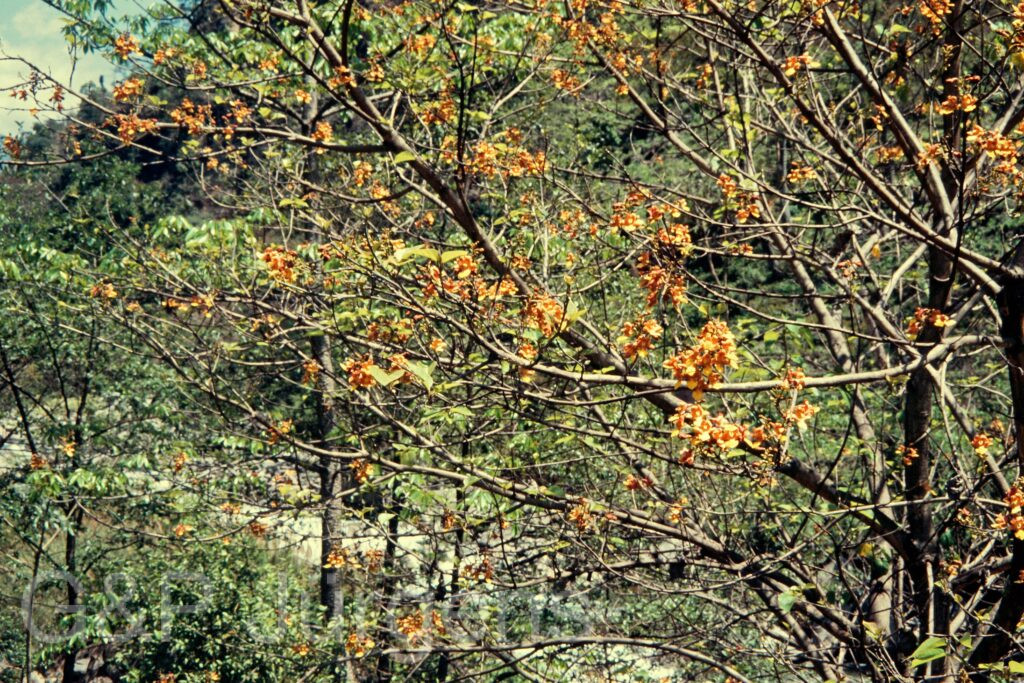
Nepal Mewa-Khola 1160m April
Nepal 97 54 P84
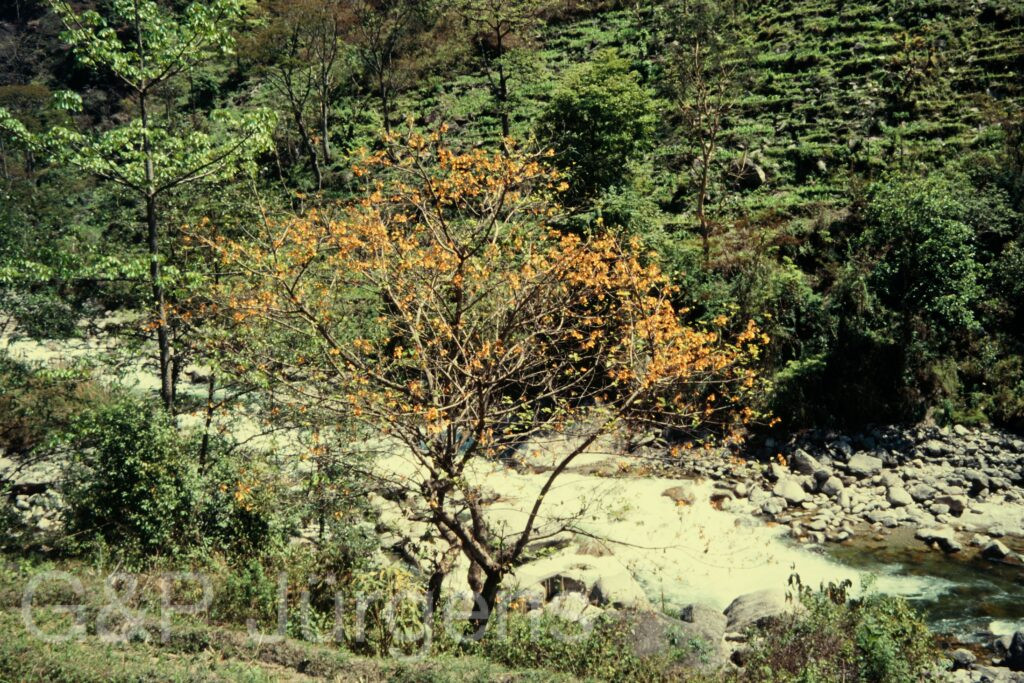
Nepal Mewa-Khola 1160m April

Description

Gmelina arborea, known as gamhar or white teak, is a fast-growing tropical tree native to the Indian subcontinent and Southeast Asia, ranging through Nepal, India, Sri Lanka, Myanmar, Thailand, Indochina, China, Indonesia and the Philippines; it is now extensively planted in tropical Africa and the Americas, and its 12,900 GBIF occurrences across countries from Colombia and Brazil to Nigeria, Tanzania and Mexico largely reflect this pantropical forestry use. In its native range it grows in moist and dry deciduous forest and along watercourses from the lowlands to about 1,500 m. The plant photographed along the Mewa Khola in eastern Nepal at 1,160 m in April shows it flowering in the leafless or newly leafing state typical of the dry pre-monsoon season in the Himalayan foothills.

It is a medium-sized to large deciduous tree reaching 15-30 m, with a straight bole, greyish bark and a spreading crown. The leaves are opposite, broadly ovate to cordate, 10-25 cm long, acuminate and entire, glabrescent above and finely fulvous-tomentose beneath, with gland-dotted petioles. The flowers are showy and brownish-yellow to orange-yellow, borne in terminal panicles that appear when the tree is largely leafless; the corolla is bilabiate and funnelform with a swollen tube, and the four didynamous stamens are included. The fruit is a fleshy, ovoid to obovoid drupe, yellow when ripe, with a hard stone enclosing one to several seeds.

Gmelina, traditionally placed in Verbenaceae but now referred to Lamiaceae, comprises some thirty-five Old World tropical species, of which G. arborea is by far the most economically important. Its rapid growth, pale lightweight timber and suitability for pulp and plantation forestry have made it one of the most widely cultivated hardwoods in the tropics, while its nectar-rich flowers attract bees and its drupes are taken by mammals and birds. Long valued in traditional medicine and listed among the classical Ayurvedic drugs, the species is abundant and of least concern, though its plantations occasionally naturalise beyond cultivation.

Author: Roxb. · Sources: POWO (Kew), GBIF, Flora of China, Annotated Checklist of the Flowering Plants of Nepal, World Agroforestry database, revision of Gmelina (Lamiaceae)