
Roxb.
Description
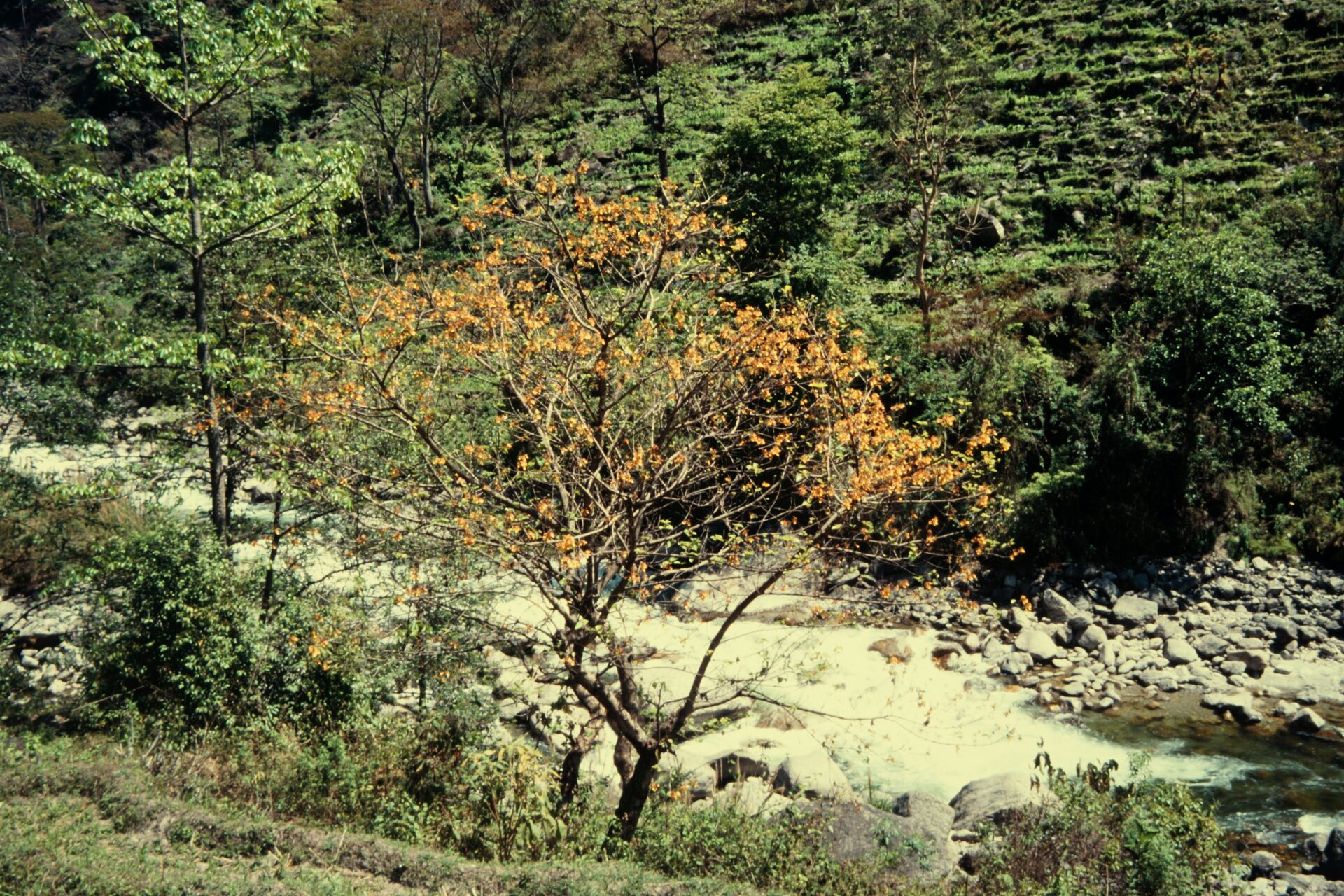
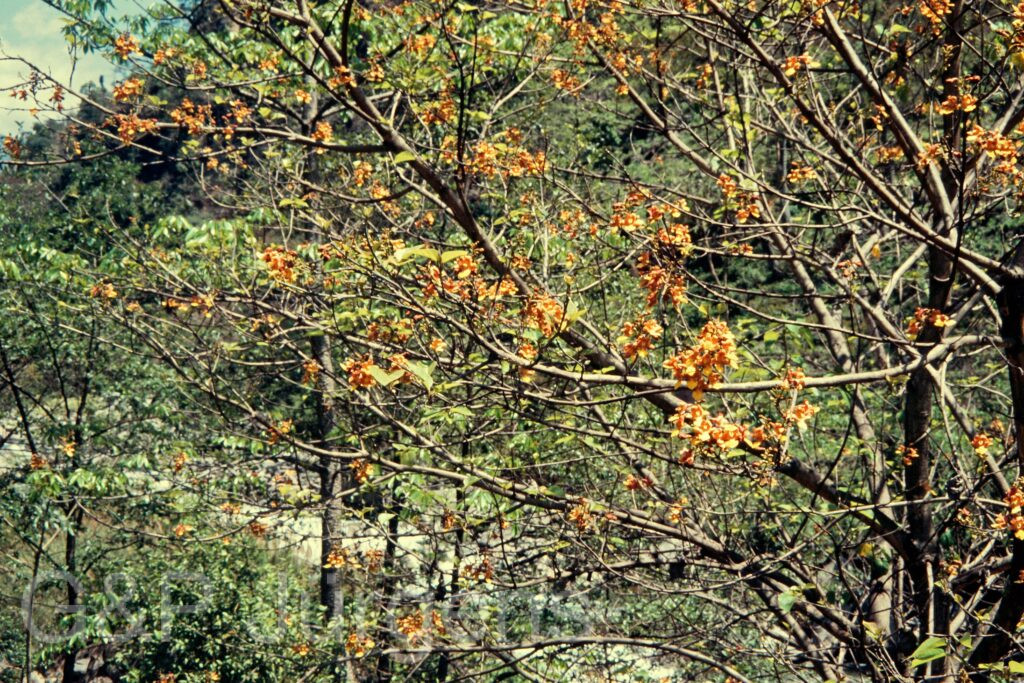
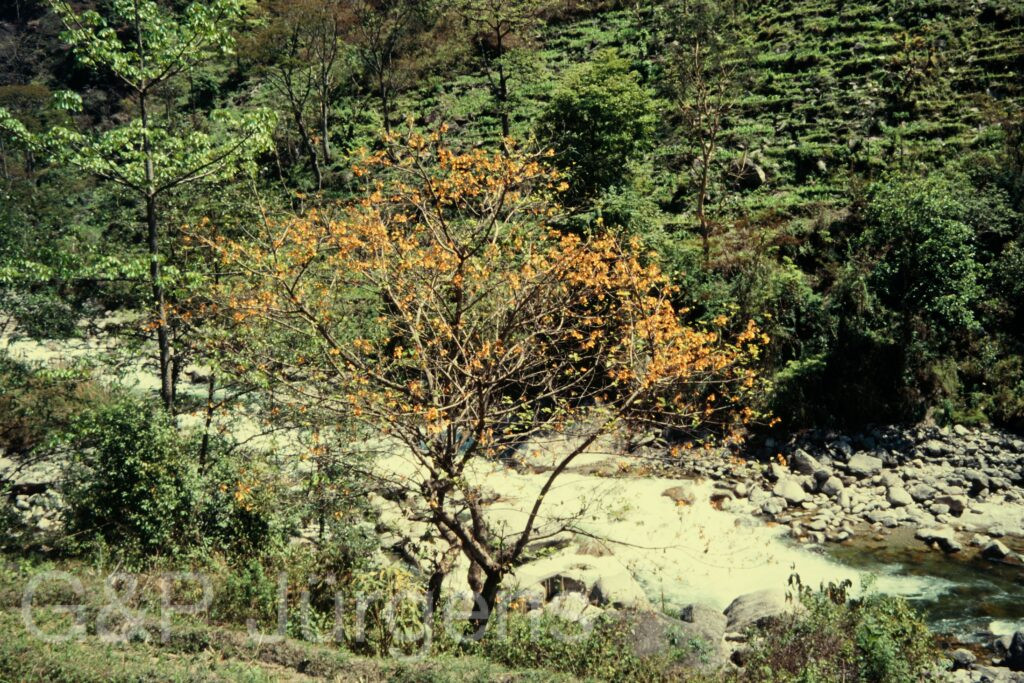
Gmelina arborea, known as gamhar or white teak, is a fast-growing tropical tree native to the Indian subcontinent and Southeast Asia, ranging through Nepal, India, Sri Lanka, Myanmar, Thailand, Indochina, China, Indonesia and the Philippines; it is now extensively planted in tropical Africa and the Americas, and its 12,900 GBIF occurrences across countries from Colombia and Brazil to Nigeria, Tanzania and Mexico largely reflect this pantropical forestry use. In its native range it grows in moist and dry deciduous forest and along watercourses from the lowlands to about 1,500 m. The plant photographed along the Mewa Khola in eastern Nepal at 1,160 m in April shows it flowering in the leafless or newly leafing state typical of the dry pre-monsoon season in the Himalayan foothills.
It is a medium-sized to large deciduous tree reaching 15-30 m, with a straight bole, greyish bark and a spreading crown. The leaves are opposite, broadly ovate to cordate, 10-25 cm long, acuminate and entire, glabrescent above and finely fulvous-tomentose beneath, with gland-dotted petioles. The flowers are showy and brownish-yellow to orange-yellow, borne in terminal panicles that appear when the tree is largely leafless; the corolla is bilabiate and funnelform with a swollen tube, and the four didynamous stamens are included. The fruit is a fleshy, ovoid to obovoid drupe, yellow when ripe, with a hard stone enclosing one to several seeds.
Gmelina, traditionally placed in Verbenaceae but now referred to Lamiaceae, comprises some thirty-five Old World tropical species, of which G. arborea is by far the most economically important. Its rapid growth, pale lightweight timber and suitability for pulp and plantation forestry have made it one of the most widely cultivated hardwoods in the tropics, while its nectar-rich flowers attract bees and its drupes are taken by mammals and birds. Long valued in traditional medicine and listed among the classical Ayurvedic drugs, the species is abundant and of least concern, though its plantations occasionally naturalise beyond cultivation.
Author: Roxb. · Sources: POWO (Kew), GBIF, Flora of China, Annotated Checklist of the Flowering Plants of Nepal, World Agroforestry database, revision of Gmelina (Lamiaceae)