Tag:

Myanmar

Flowers of the Myanmar Himalaya — 604 species recorded from northern Myanmar (Burma) and the eastern Himalayan borderlands, a biodiversity hotspot linking the Himalaya to the mountains of Yunnan and Southeast Asia. The region’s forests and alpine slopes hold a rich flora of rhododendrons, orchids, balsams and gentians. Every page gives a botanical description, distribution, habitat and flowering time with the original photograph.

Buch.-Ham.

Sikkim 2006 458 ergebnis
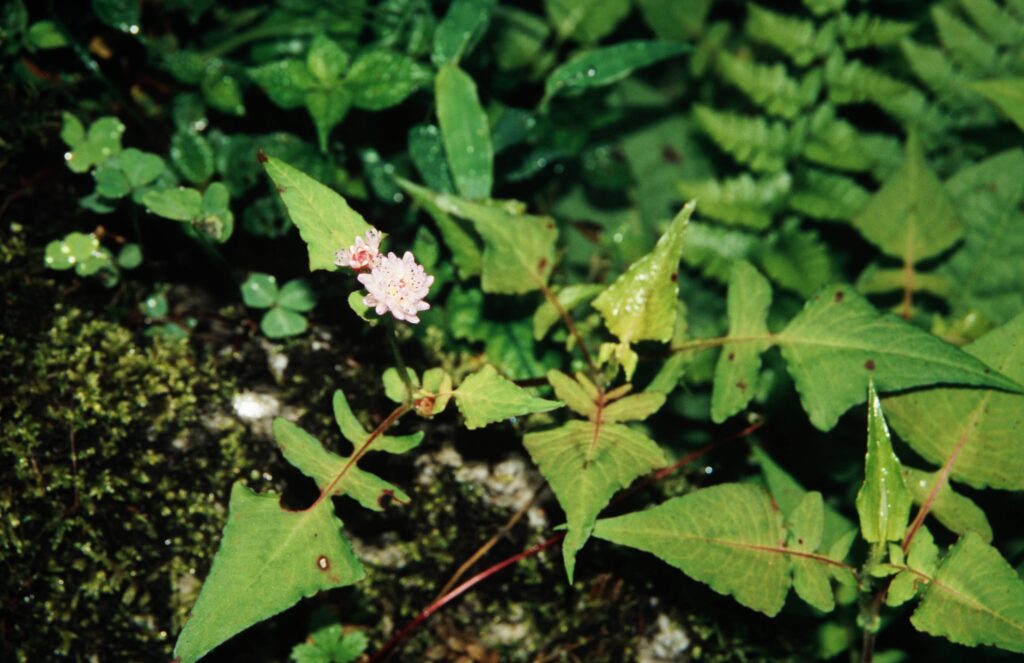
India Sikkim, Ringi-Chu 2100m May

Description

Polygonum runcinatum is a widely distributed knotweed found across the Himalaya and extending through much of eastern and southeastern Asia to Malesia. Its range encompasses Nepal, Bhutan, India, Pakistan, Myanmar, China, Taiwan, Thailand, Vietnam, Malaysia, Indonesia, and Papua New Guinea, with scattered records elsewhere. GBIF documents over 1,660 occurrences, reflecting its abundance and broad ecological amplitude. The species colonises moist, open to semi-shaded habitats including forest margins, stream banks, roadsides, damp meadows, and disturbed ground at elevations from 500 to 3,500 m. The photograph from Ringi-Chu in Sikkim at 2,100 m, taken in May, shows the species at a mid-elevation site in the eastern Himalaya.
The plant is a prostrate to ascending perennial herb, 20–60 cm long, often forming extensive mats. Stems are slender, branched, rooting at lower nodes, reddish-brown, glabrous to sparsely pubescent. Leaves are distinctive: ovate to lanceolate, 3–8 cm long, with a hastate to runcinate base bearing prominent, backward-pointing basal lobes — the feature indicated by the epithet runcinatum. The upper leaf surface frequently bears a dark, V-shaped or chevron-like blotch, a useful field character. Ocreae are tubular, membranous, ciliate. Flowers are borne in dense, globose, terminal capitate heads, 8–12 mm in diameter, on slender peduncles. Individual flowers are small, with a five-lobed perianth, pink to deep rose, occasionally white. Stamens usually eight. The achene is trigonous, dark brown, enclosed within the persistent perianth.
Polygonum runcinatum has been transferred by some authors to Persicaria as P. runcinata (Buch.-Ham.) H.Gross, reflecting the broad restructuring of Polygonum sensu lato based on molecular phylogenetic evidence. The species is ecologically versatile and often weedy, colonising disturbed habitats rapidly. It plays a role in soil stabilisation on moist slopes and provides floral resources for small pollinators. It is not threatened and is considered common to locally abundant throughout its extensive range.

Author: Buch.-Ham. · Sources: POWO (Kew), GBIF, Li et al.: Polygonaceae in Flora of China Vol. 5, Grierson & Long: Flora of Bhutan Vol. 1
D.Don

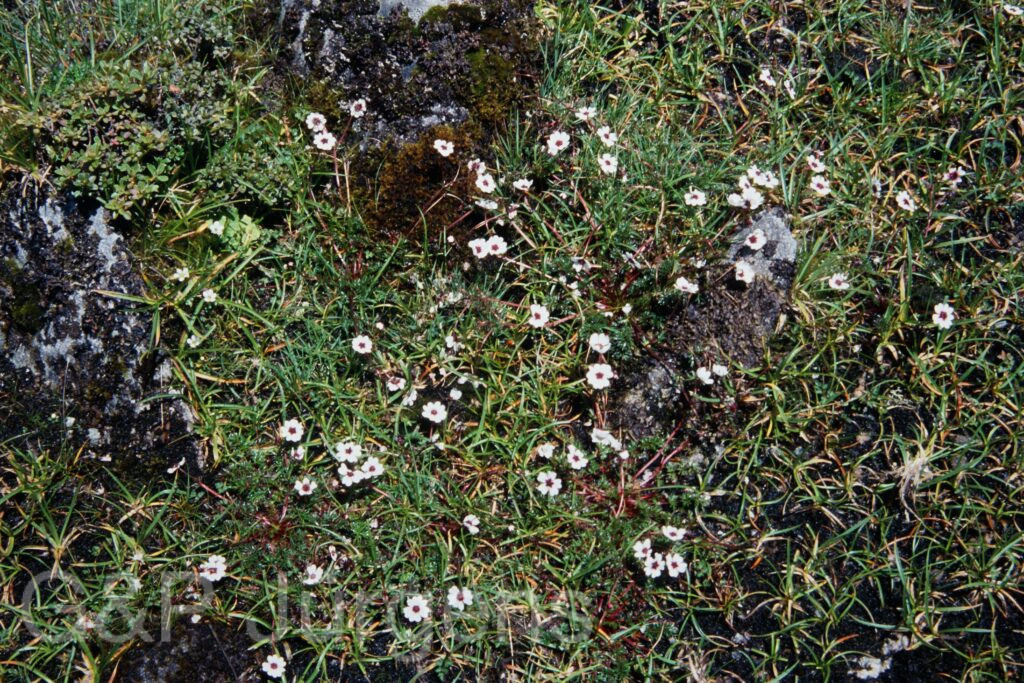
Sikkim2003 132 G180
Sikkim Dzongri 3900m, August
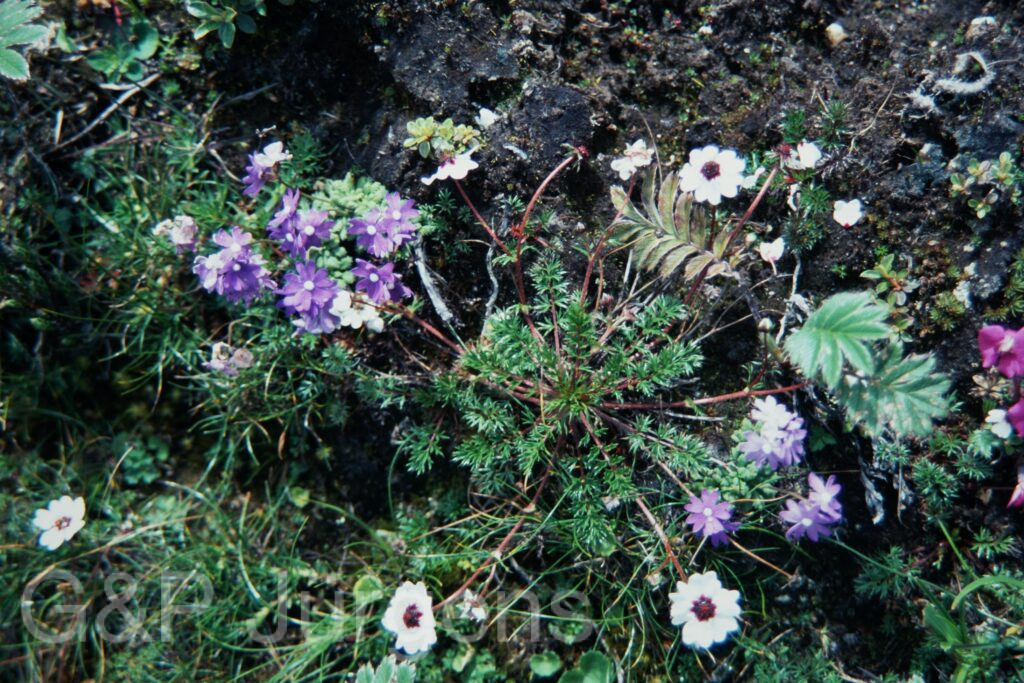
Sikkim2003 133 W181
Sikkim Dzongri 3900m, August

Description

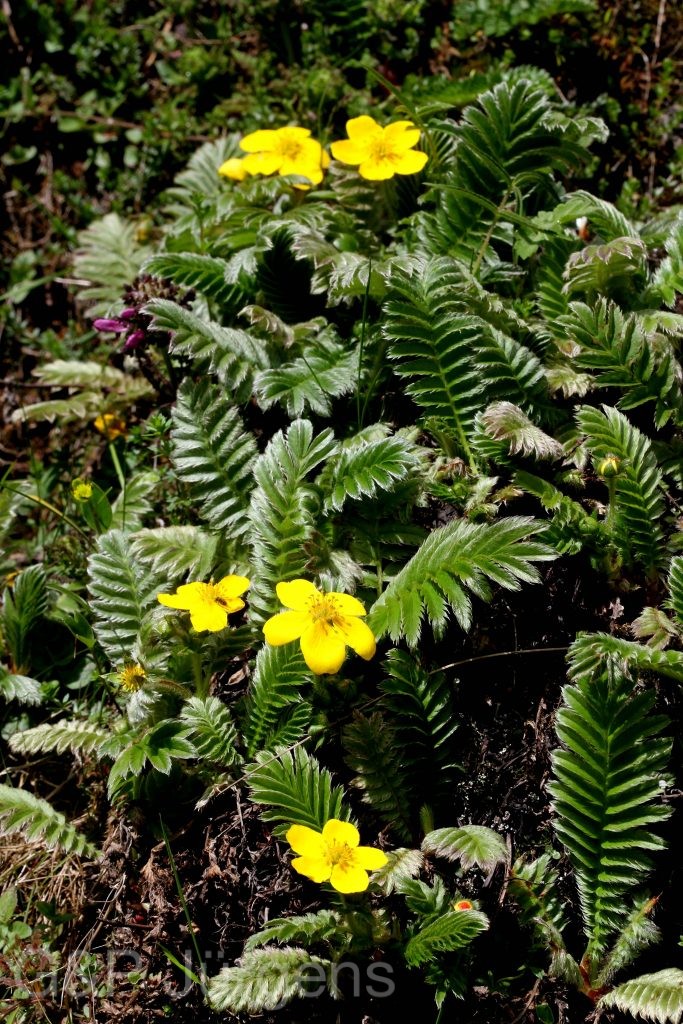
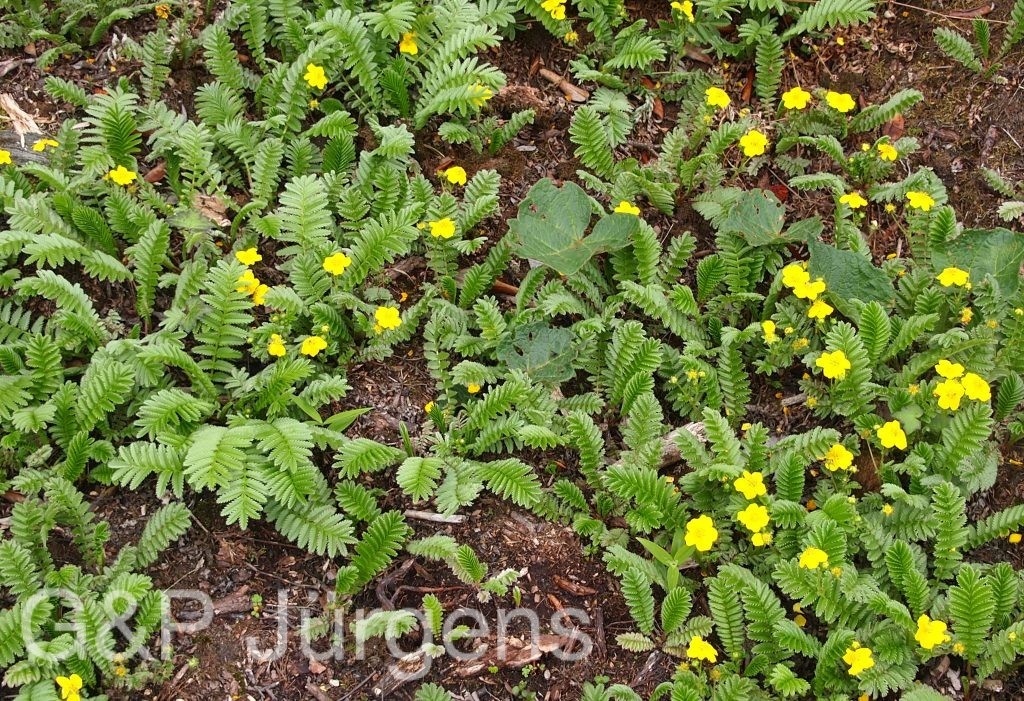
Potentilla coriandrifolia D.Don is a high-alpine perennial distributed across the eastern and central Himalaya and adjacent mountains, recorded from China, Nepal, India, Bhutan and Myanmar, with extralimital cultivated records elsewhere; some 542 georeferenced occurrences are documented in GBIF. It inhabits open turf, stony alpine meadows, gravelly slopes and the margins of moraines, typically between 3500 and 4800 m. The photographed plant grows at Dzongri in Sikkim at about 3900 m, flowering in August, a setting typical of the cool, well-drained alpine sward where this cushion-forming herb thrives among dwarf rhododendrons and graminoids.

The plant develops from a stout, woody, branched rootstock crowned by the persistent remains of old petioles, forming low tufts or loose mats. The leaves are radical, pinnate or pinnatisect with a coriander-like (coriandrifolium) dissection, the leaflets deeply incised into narrow oblong segments and often somewhat glaucous or silky beneath. Flowering stems are slender, ascending and few-flowered. The flowers are typically yellow, occasionally suffused with reddish or purplish tones at the base of the petals, with five obcordate petals exceeding the calyx, an epicalyx alternating with the sepals, and numerous stamens surrounding a central tuft of carpels. The fruit is an aggregate of dry achenes seated on a hairy receptacle.

A member of the large and taxonomically intricate genus Potentilla, this species belongs to the assemblage of dwarf Himalayan cinquefoils adapted to short growing seasons and intense insolation. Its distinctive finely cut foliage distinguishes it from related alpine taxa such as P. microphylla. Though not assessed as threatened, populations are restricted to fragile high-altitude habitats sensitive to grazing pressure and climate-driven upslope shifts, making the species a useful indicator of alpine ecosystem condition.

Author: D.Don · Sources: POWO (Kew), GBIF, Flora of China, Flora of Bhutan, Annotated Checklist of the Flowering Plants of Nepal, Soják monograph of Potentilla

Wall. & Lehm.

Nepal 99 481 ergebnis
West-Nepal Churta-Khola 3700m, June
Garw 2005 309 ergebnis
India Garhwal Patanathi 3600m, September

Description

Potentilla eriocarpa is a mat-forming alpine cinquefoil distributed throughout the Himalaya and adjacent ranges, from Afghanistan and Pakistan eastward through India, Nepal and Bhutan into south-western China and Myanmar. GBIF records some 667 occurrences, densest in Nepal, the Indian Himalaya and the Chinese borderlands. It is a plant of the high alpine zone, colonising rock crevices, screes, stony meadows, moraines and exposed ridges, characteristically between about 3000 and 4800 m. The populations imaged in West-Nepal at Churta-Khola (3700 m, June) and in Indian Garhwal at Patanathi (3600 m, September) reflect its broad flowering season across the western Himalaya, from early summer into autumn near the upper limits of vascular plant growth.

The species forms low, dense cushions or tufts from a stout, woody, branched caudex clothed in the persistent remains of old stipules and leaf-bases. The leaves are ternate, the three obovate to cuneate leaflets coarsely toothed toward the apex, dark green and glabrescent above, paler and often silky beneath. The flowering stems are short, ascending to decumbent, bearing one to few flowers. Each flower has five sepals alternating with five epicalyx segments, five broadly obovate, often emarginate yellow petals, numerous stamens and many carpels on a hairy receptacle. The diagnostic feature, reflected in the epithet, is the densely woolly-hairy (eriocarpous) achenes forming the fruiting head.

Potentilla is a large and taxonomically intricate northern-temperate genus, and P. eriocarpa, described by Wallich and Lehmann, belongs to the predominantly Asian alpine cushion-forming group. Its ternate leaves and conspicuously hairy achenes separate it from the many associated Himalayan cinquefoils. As a widespread, abundant high-alpine perennial it is of no conservation concern, and is a significant component of cushion-plant and fellfield communities at extreme elevations.

Author: Wall. & Lehm. · Sources: POWO (Kew), GBIF, Flora of China, Flora of Pakistan, Flora of Bhutan, Annotated Checklist of the Flowering Plants of Nepal, monograph of the genus Potentilla (Wolf)

Trevir.

Bh09 289 P475
Bhutan Tongsa, 2300m June
Garw 2005 284 ergebnis
India Garhwal Kunol 2650m, September

Description

Potentilla lineata is a widespread Asian cinquefoil ranging across the Himalaya and into China, Myanmar and Vietnam, well represented in GBIF with around 519 records from China, Nepal, India, Bhutan, Pakistan and beyond. In GBIF the queried name is treated as a synonym, with Potentilla lineata itself given as the accepted name. It occupies open grassy slopes, forest clearings, banks, pastures and disturbed roadsides through the temperate and subalpine belts, roughly 1500 to 3500 m. The collections cited from Tongsa in Bhutan at 2300 m in June and from Kunol in the Garhwal Himalaya at 2650 m in September show its long flowering season across the monsoon.

It is a perennial herb with a woody rootstock producing erect to ascending, often silky-hairy stems. The leaves are pinnate or digitately compound with toothed, oblong to obovate leaflets that are typically green and appressed-hairy above and densely silvery- or white-tomentose beneath, the strongly impressed venation giving rise to the epithet lineata. The flowers are borne in lax terminal cymes; each has five yellow petals alternating with an epicalyx and five sepals, numerous stamens and many carpels seated on a hairy receptacle. The fruit is an aggregate of small dry achenes.

Potentilla is a large and taxonomically complex genus in which hybridisation and polyploidy blur species boundaries, and P. lineata has accordingly accumulated several synonyms. The silvery indumentum reduces water loss and reflects intense montane radiation. With its broad ecological tolerance and ready colonisation of disturbed ground, the species is common and of no conservation concern, functioning as a characteristic component of Himalayan grazing land and successional grassland.

Author: Trevir. · Sources: POWO (Kew), GBIF, Flora of China (Rosaceae), Flora of Bhutan, Annotated Checklist of the Flowering Plants of Nepal, Soják taxonomic studies of Potentilla

D. Don

Sikkim2011 228
Sikkim Yumthang 3700m, June
BhutanPG2011 224
Bhutan Tsochenchen, 3600m June

Description

Potentilla peduncularis is a Sino-Himalayan cinquefoil recorded in GBIF from China, Nepal, India, Bhutan, Pakistan and Myanmar across 239 occurrences. It occupies alpine and subalpine meadows, grassy slopes, open scrub and stream margins, typically between 3000 and 4300 m. The photographed plants were recorded at Yumthang in Sikkim at about 3700 m and at Tsochenchen in Bhutan at 3600 m, both in June, when long days and snow-melt moisture drive the early summer flush of flowering on these high pastures.

It is a tufted perennial herb arising from a stout, woody, branched rootstock, producing ascending to spreading flowering stems 15-40 cm tall that are clothed in spreading hairs. The leaves are pinnate (imparipinnate) with several pairs of oblong, deeply serrate to incised leaflets that are green and pilose above and densely white- to grey-tomentose beneath, giving a bicoloured aspect. The inflorescence is a lax, long-pedunculate cyme of yellow flowers, each with five sepals alternating with epicalyx segments, five obcordate petals, and numerous stamens surrounding a domed receptacle of carpels. The fruit is an aggregate of small, glabrous achenes.

Although widely accepted, the name is treated in GBIF as a synonym, with Potentilla peduncularis itself given as the accepted name; the species sits within the large, taxonomically intricate genus Potentilla (Rosaceae, subfamily Rosoideae), where the dense white leaf indumentum is a useful diagnostic among Himalayan yellow-flowered cinquefoils. Pollination is by generalist insects, and the dry achenes are dispersed passively. It is locally frequent and not regarded as threatened.

Author: D. Don · Sources: POWO (Kew), GBIF, Flora of China, Flora of Bhutan, Flora of Pakistan, Soják revision of Asian Potentilla

Schur

BhutanPG2011 396
Bhutan Tsochenchen, 3550m June
D444371527264B45943B2C738598F852 1
Bhutan Dur-Tso-Chu, 3500m June

Description

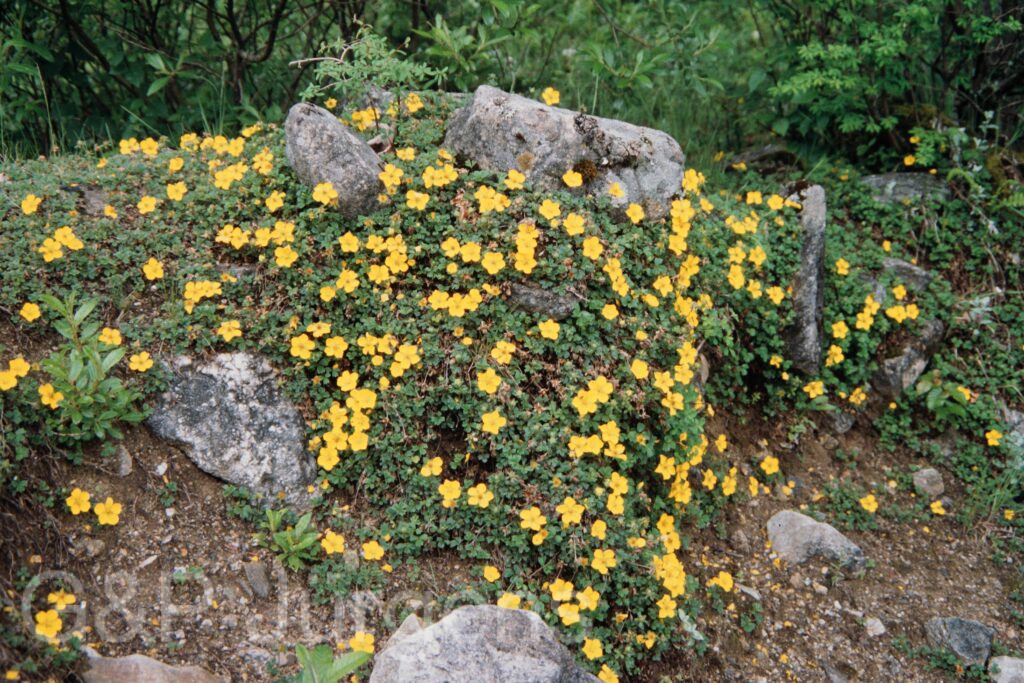
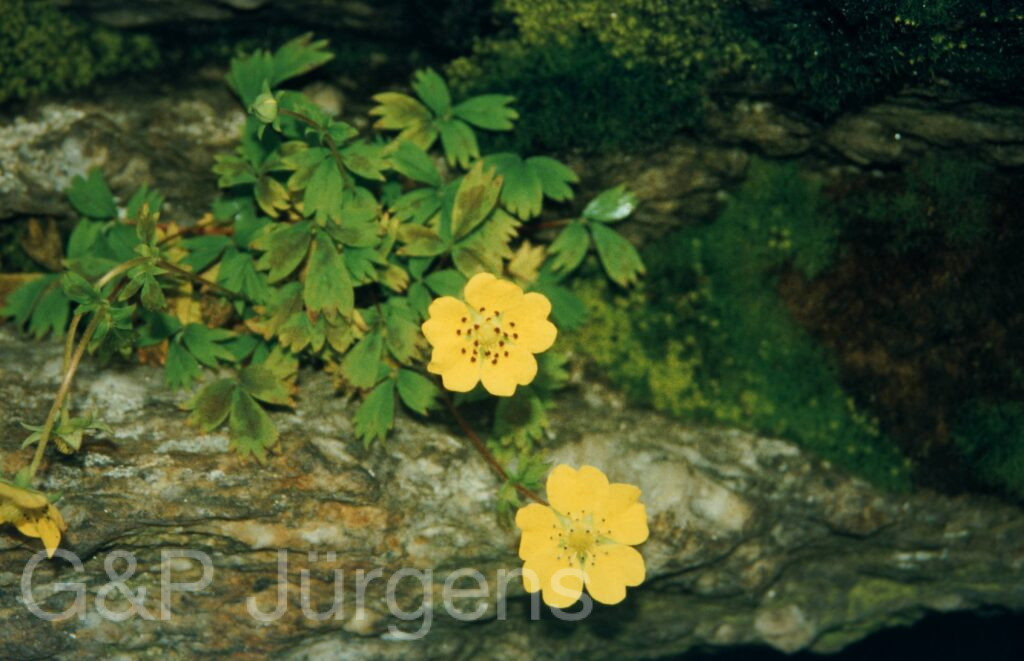
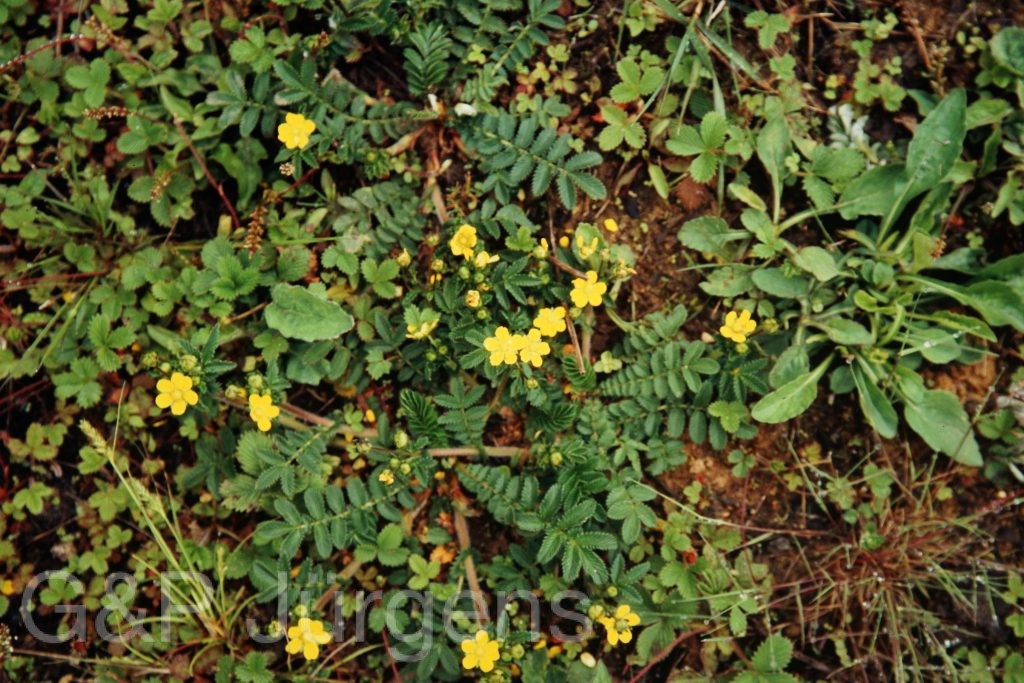
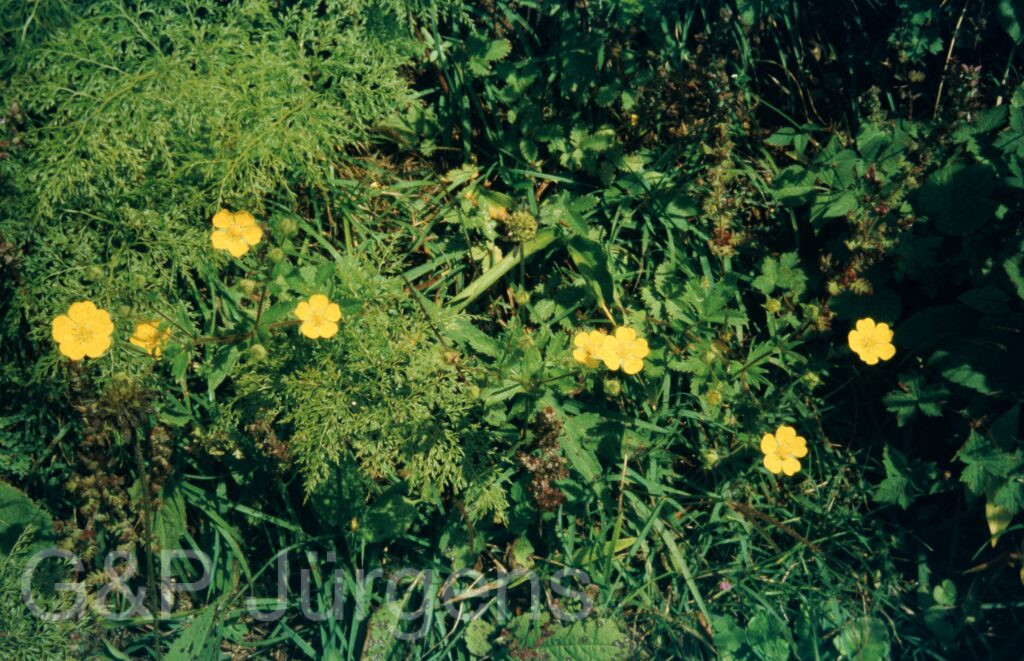
Potentilla polyphylla is a Himalayan and Sino-Himalayan cinquefoil ranging through Nepal, north-east India, Bhutan, south-west China, Myanmar, Afghanistan and Pakistan, with 340 georeferenced occurrences. It is a plant of open alpine and subalpine habitats, occupying grassy slopes, meadows, rocky banks, stream margins and the moist turf around glacial lakes. The Bhutan collections at Tsochenchen (3550 m) and Dur-Tso-Chu (3500 m), both in June, place it firmly in the high-alpine zone, typically between about 3000 and 4300 m. GBIF treats the supplied name as a synonym while retaining Potentilla polyphylla as the accepted name; it has at times been confused with Potentilla leuconota.

It is a perennial herb arising from a stout, woody rootstock, producing tufted basal leaves and ascending flowering stems. The leaves are pinnately compound (interrupted-pinnate) with numerous small, closely set, oblong-obovate leaflets that are sharply toothed and silky-hairy, especially beneath. The flowers are borne in lax terminal cymes; each has five green sepals alternating with an epicalyx, five rounded yellow petals, numerous stamens, and many free carpels seated on a hairy receptacle. The fruit is a cluster of small dry achenes.

Within the large genus Potentilla the species sits among the pinnate-leaved high-mountain cinquefoils, a taxonomically intricate group where leaf division and indumentum provide key diagnostic characters. The open yellow flowers are pollinated by a variety of alpine insects. Widely distributed across the Himalayan arc and tolerant of grazed pasture, it is not regarded as threatened, and like other alpine Potentilla species it has local ethnobotanical uses.

Author: Schur · Sources: POWO (Kew), GBIF, Flora of Bhutan, Flora of China, Flora of Nepal, Soják Potentilla taxonomic revisions

Hook.

Bhutan2015 372
Bhutan Tumching-La 4000m, October

Description

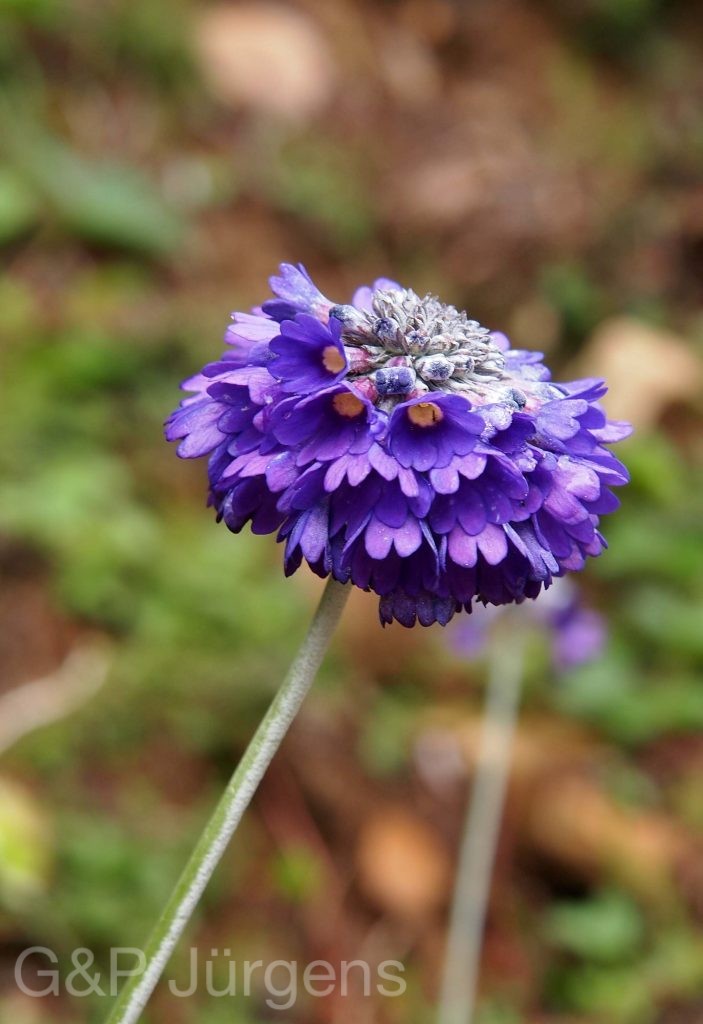
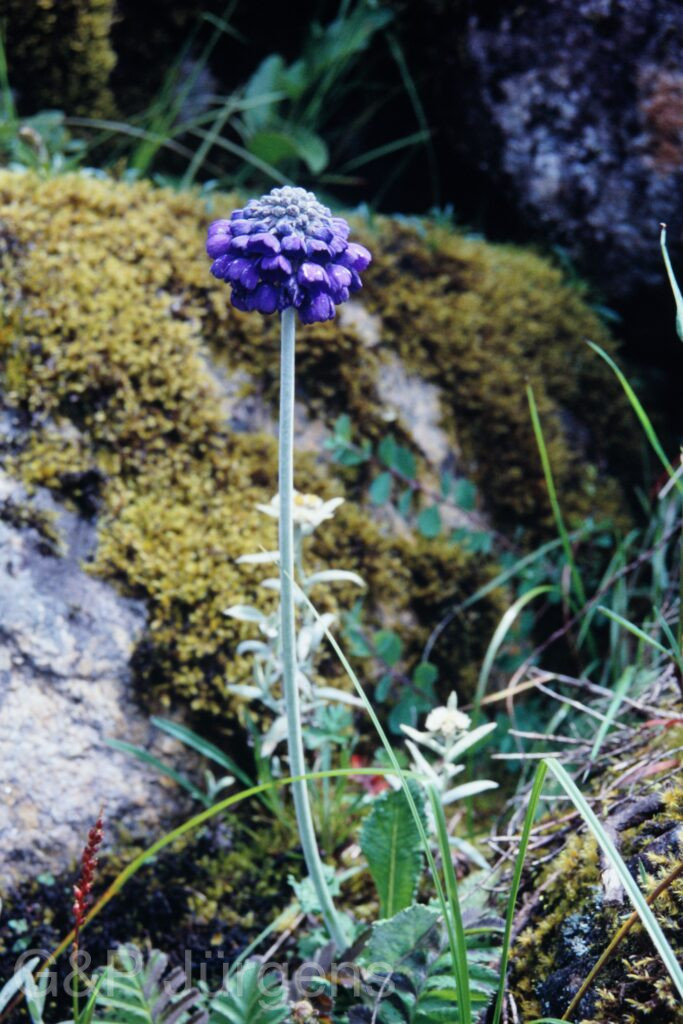
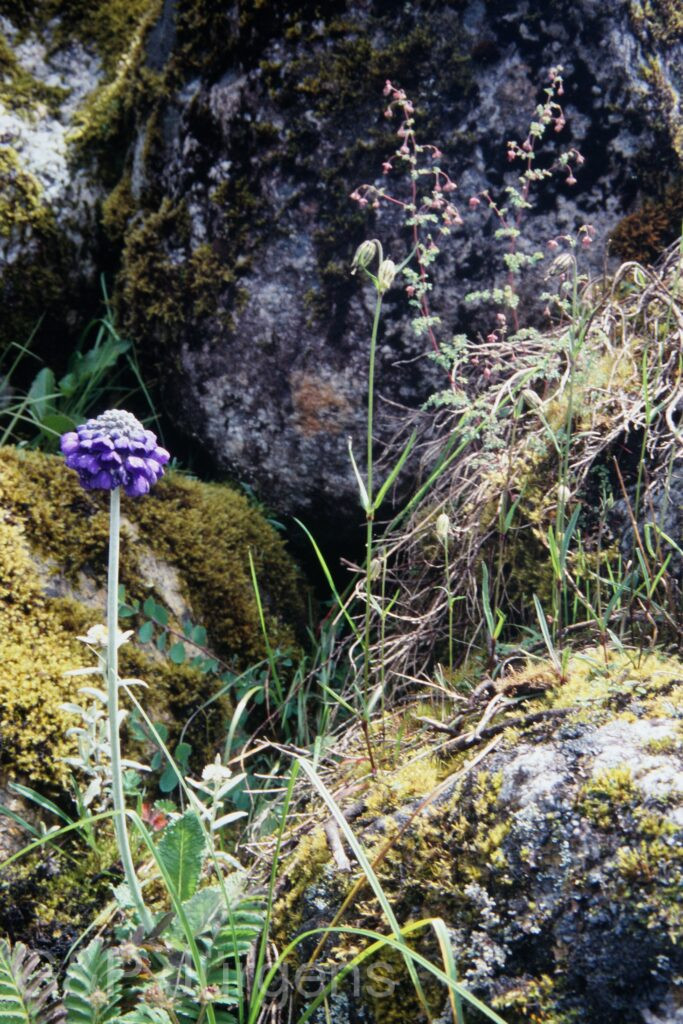
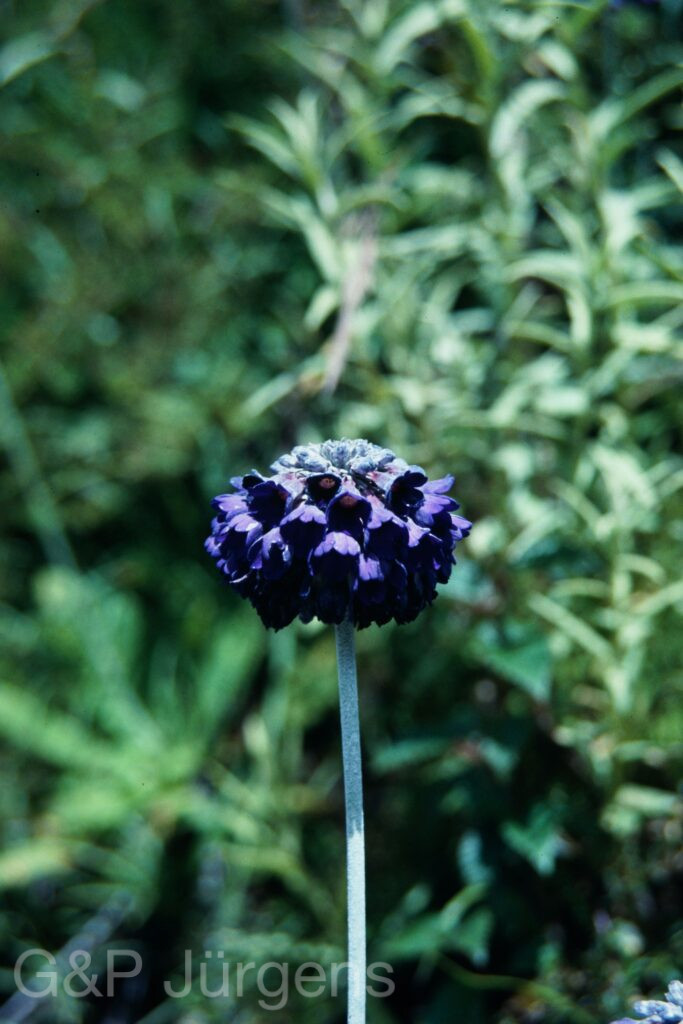
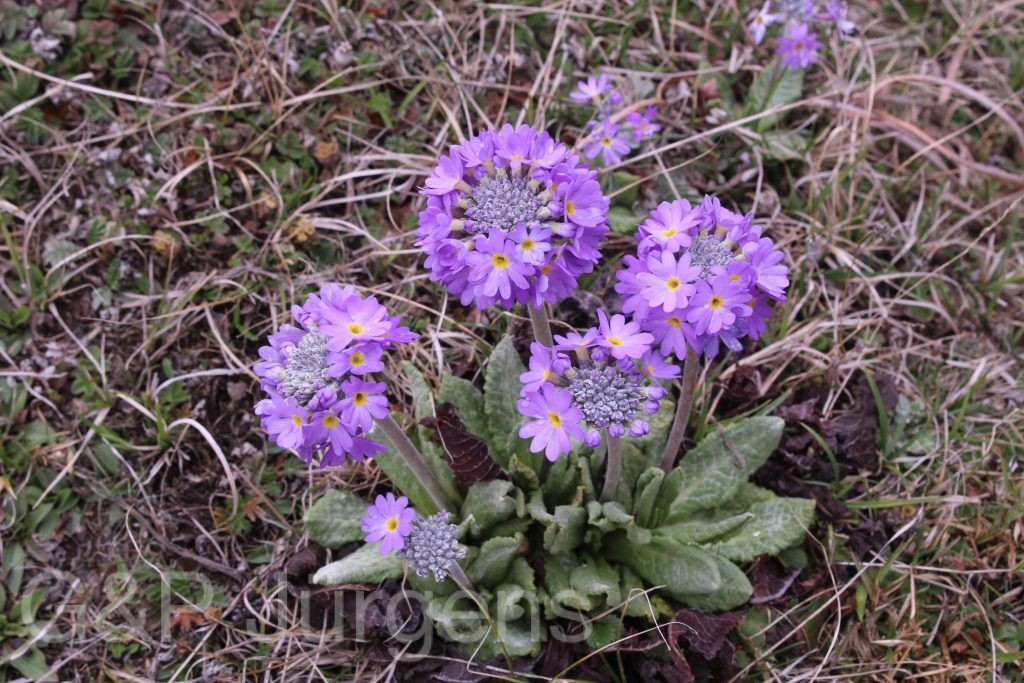
Primula capitata is an eastern Himalayan primrose distributed through Nepal, Sikkim and northern India, Bhutan and adjacent southern China and northern Myanmar, with around 476 GBIF records (additional entries from Europe, North America, Japan and Korea reflecting its cultivation). It is a plant of open, moist alpine and subalpine habitats, growing in damp meadows, on grassy slopes, streamsides and among rocks. The imaged populations at Tumching La (4000 m) and Shele La (3000 m) in Bhutan and at Dzongri in Sikkim (4100 m) span its typical elevational range and its notably late, monsoon-to-autumn flowering from August into October, when much of the alpine flora has already set seed.

The species forms a rosette of oblanceolate to spathulate leaves that are crenate to denticulate at the margin and densely white- or yellow-farinose beneath. From the rosette rises a stout, farinose scape bearing the diagnostic inflorescence: a dense, flat-topped to hemispherical capitate head of many small flowers, the lowermost opening first so that the head appears truncate. Each flower has a tubular calyx and a violet to deep blue-purple corolla with a short tube and small, spreading limb-lobes, the throat farinose. The plant is heterostylous. The fruit is a small capsule enclosed in the persistent calyx.

Primula capitata belongs to sect. Capitatae, a small group distinguished by their compact, drumstick-like heads of farinose flowers. Several subspecies and varieties have been recognised on the basis of leaf and farina characters and degree of late-season flowering. Its dependence on cool, moist alpine turf ties its distribution to the high monsoon-influenced ranges of the eastern Himalaya; it is locally common and not regarded as threatened, and is valued in cultivation as a hardy late-flowering rock-garden primula.

Author: Hook. · Sources: POWO (Kew), GBIF, Flora of Bhutan, Flora of China, Annotated Checklist of the Flowering Plants of Nepal, Richards' Primula (monograph)

Sm.

Bhutan2014 914
Bhutan Chele La 4000m, May
Bhutan2014 378
Bhutan Chele La 4000m, May
Bh2008 247 P391
Bhutan Tumching-La, 3800m April

Description

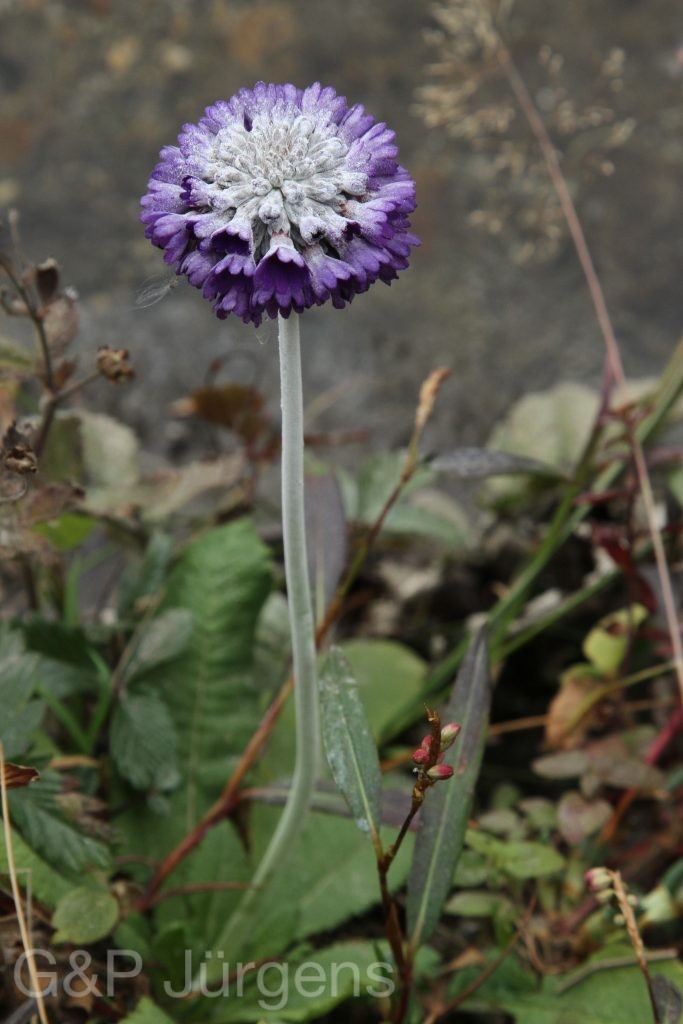
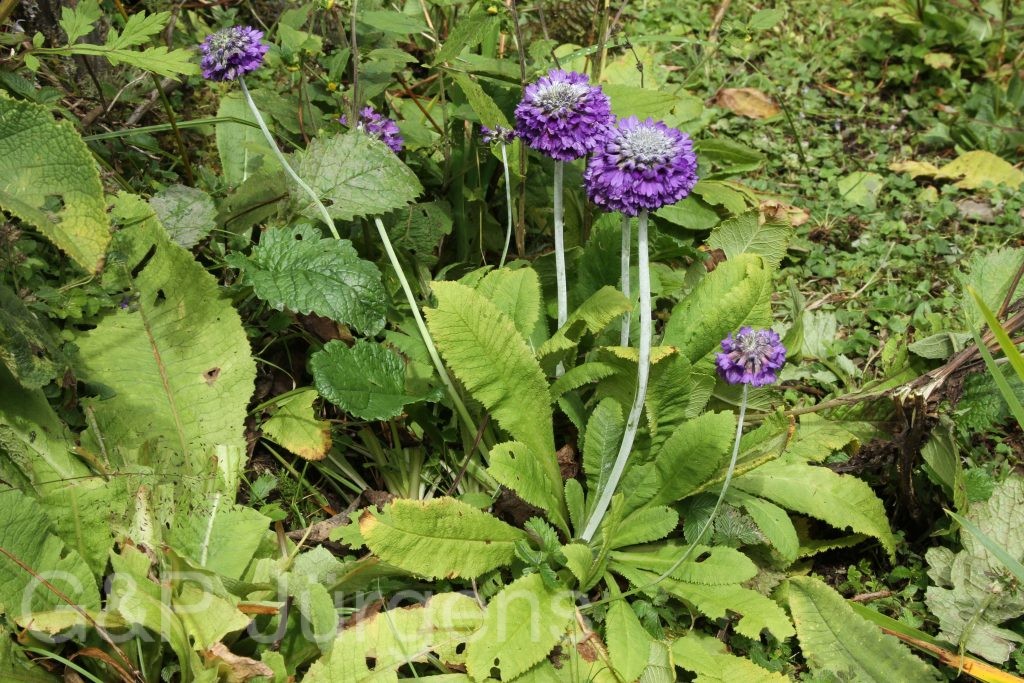
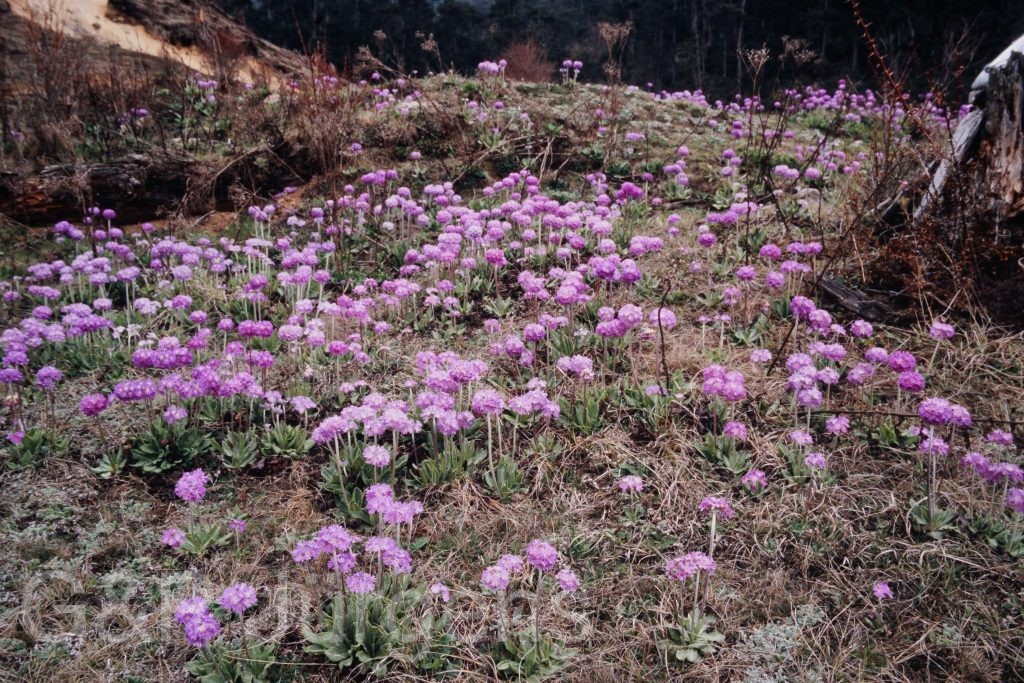
Primula denticulata, the drumstick primrose, is a widespread Himalayan and Sino-Himalayan species ranging from Afghanistan and Pakistan through Nepal, India, Bhutan and Myanmar into China; long valued in horticulture, it is widely cultivated and naturalised, accounting for GBIF records from Great Britain, Germany, Austria, Scandinavia and North America among nearly 1800 occurrences. It is a plant of moist alpine and subalpine meadows, streamsides, damp grassy slopes and open scrub, often forming colonies in snow-melt flushes. The images document it in Bhutan at Chele La around 4000 m in May and at Tumching-La near 3800 m in April, when its globular heads emerge as the snow recedes.

It is a robust perennial herb forming a rosette from a short stout rhizome. The leaves are oblong-spathulate, denticulate at the margin (giving the epithet), often farinose beneath, and elongate markedly after flowering. The scape is stout and at first short, elongating to 15-30 cm, terminating in a dense globose umbel of many flowers. Each flower is salverform, lilac, purple, violet or occasionally white, with a yellow eye, borne on short pedicels; the species is heterostylous, with pin and thrum morphs. The fruit is a small globose capsule enclosed in the persistent calyx, shedding numerous seeds.

Primula denticulata is placed in section Denticulata of the genus and forms a distinctive group within the vast Himalayan radiation of Primula. Its heterostyly enforces outcrossing by early-season pollinators, and farina production is typical of many high-elevation primulas. Common across its range and easily grown, it is of least conservation concern and remains one of the most familiar Himalayan primroses in gardens worldwide.

Author: Sm. · Sources: POWO (Kew), GBIF, Flora of China, Flora of Bhutan, Flora of Nepal, Smith & Fletcher Monograph of the Genus Primula

G.Watt

Sikkim2011 40
Sikkim Vista-valley 3700m, June
Sikkim2011 41
Sikkim Vista-valley 3700m, June
Sikkim2004 388 P666
Sikkim Lachung 3100m, May
Sikkim 2006 357 ergebnis
India West-Bengal Tamrong 2750m, May

Description

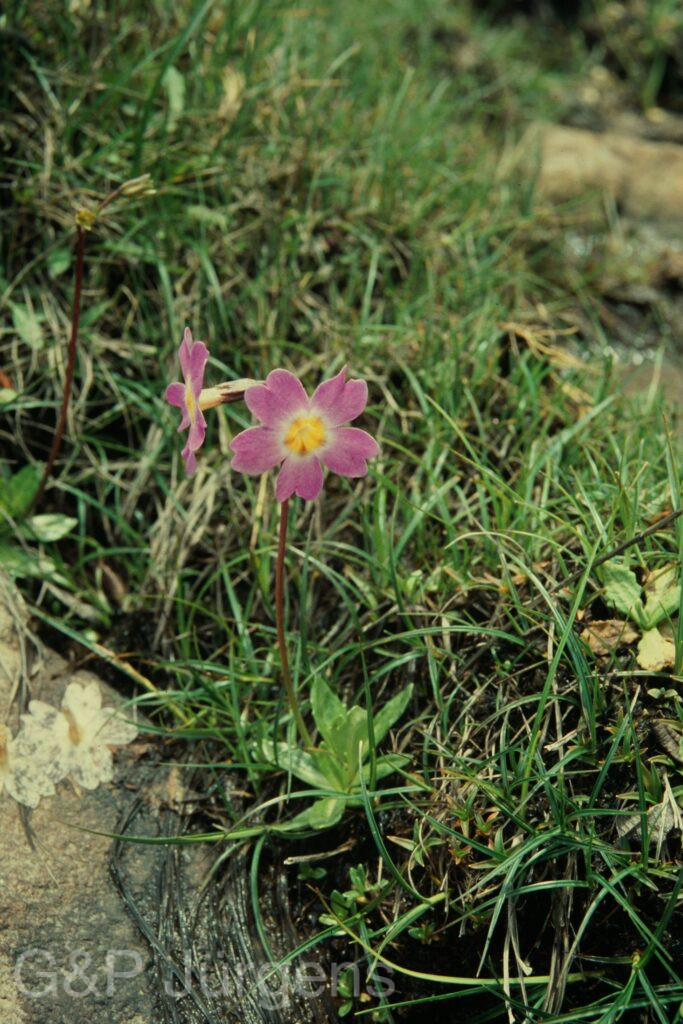
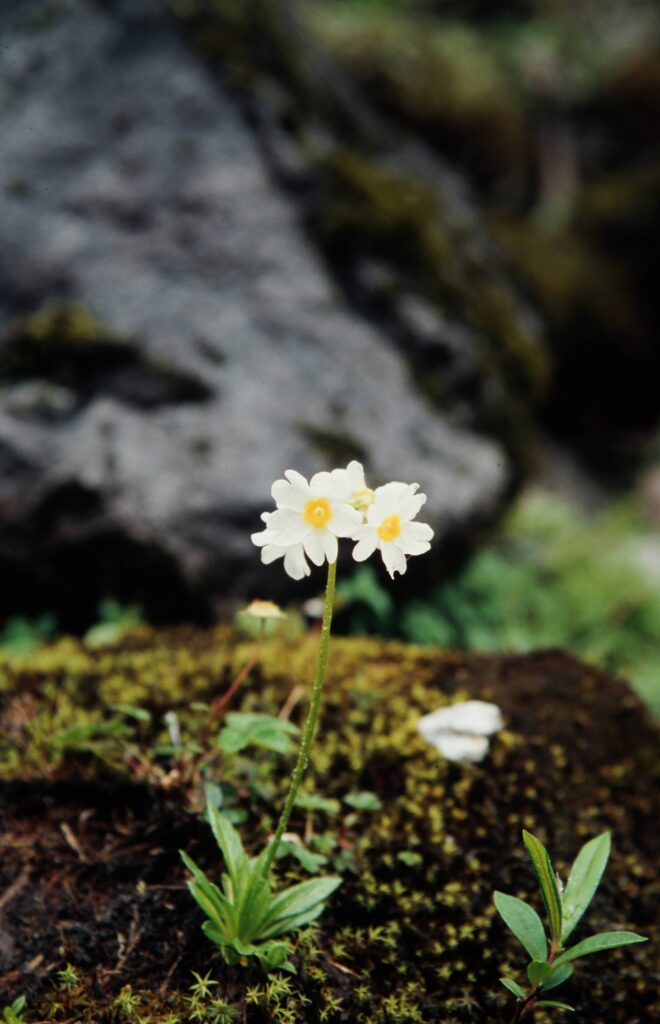
Primula dickieana is an eastern Himalayan primrose ranging through China, Nepal, India, Myanmar and Bhutan, with about 202 GBIF records concentrated in the Sikkim–Bhutan sector. It is a plant of moist alpine meadows, damp turf and seepage slopes, typically between roughly 2700 and 4500 m. The cited collections span this gradient, from Sikkim's Vista valley at 3700 m and Lachung at 3100 m to Tamrong in West Bengal at 2750 m, flowering in May and June as snowmelt saturates the high pastures. It thrives where cool, humus-rich soils remain reliably wet through the early growing season.

The species is a small, tufted, perennial herb forming a basal rosette of leaves that are oblanceolate to spathulate, narrowed to a winged petiole, with crenate to entire margins and an efarinose (mealless) surface. A single slender scape bears a solitary terminal flower, or occasionally a few, the corolla rotate and showy in proportion to the plant. Flower colour is notably variable, ranging from yellow through cream, pink and purple to nearly white, with a tubular calyx and a corolla limb of broad, often emarginate lobes. The fruit is a small capsule enclosed within the persistent calyx, dehiscing to release numerous minute seeds.

Within Primula, the species is placed in section Yunnanensis (formerly allied to section Dickieana), a group of single-flowered alpine primulas, and its remarkable colour polymorphism has long interested monographers. Pollination is effected by alpine insects visiting the open corolla. The species is locally common within its narrow alpine band but, like many Sino-Himalayan primulas, is potentially vulnerable to upslope habitat compression under a warming climate and to trampling and grazing in accessible high pastures.

Author: G.Watt · Sources: POWO (Kew), GBIF, Flora of Bhutan, Flora of China (Primulaceae), Richards Primula (monograph)

G.Watt

Bhutan2014 1057
Bhutan Takthsang 2900m, May
Bhutan2014 1060
Bhutan Takthsang 2900m, May

Description

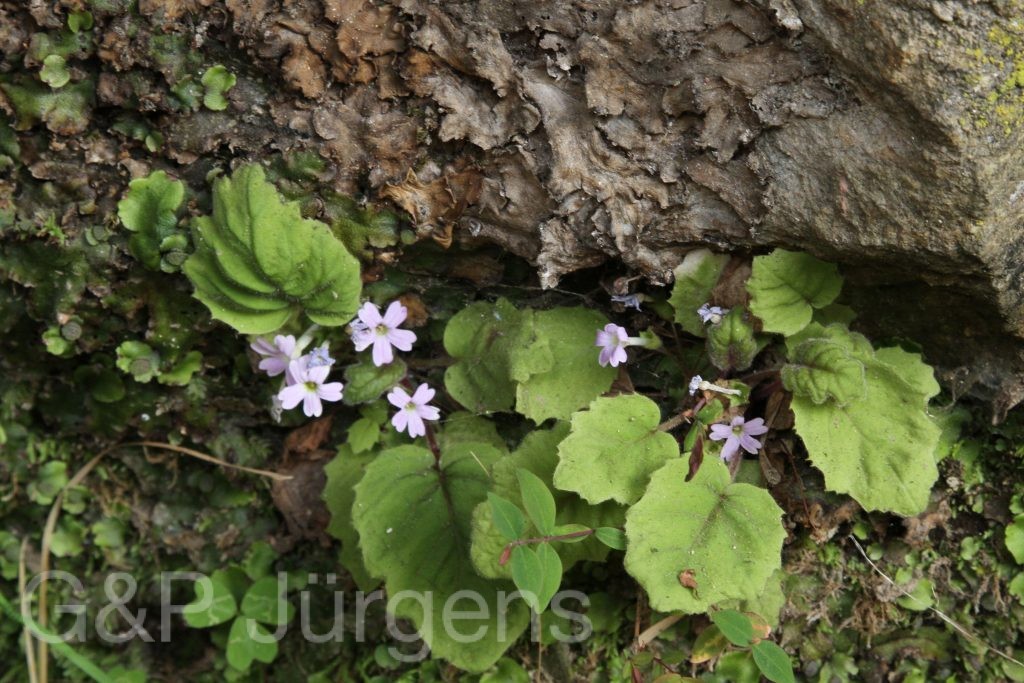
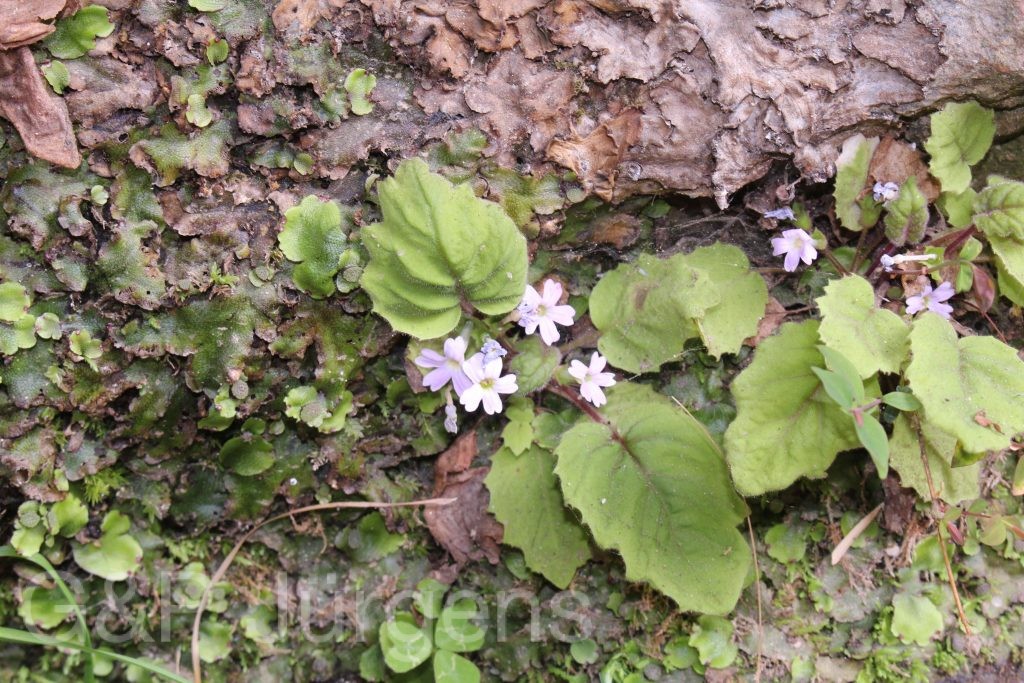
Primula filipes is a slender, delicate primrose of the eastern Himalayas, distributed across Bhutan, Sikkim and adjacent northeast India, eastern Nepal, northern Myanmar and southwest China (Xizang, Yunnan). It is a plant of cool, humid montane forest, favouring mossy banks, shaded streamsides and damp rock ledges within mixed broad-leaved and conifer woodland. The species typically occurs between roughly 2,500 and 3,600 m; the population photographed near the cliffside monastery of Taktshang (Tiger's Nest) in Bhutan at about 2,900 m in May is characteristic of its preferred shaded, moist forest understorey.

The plant is a small perennial herb forming a loose rosette of thin, ovate to oblong-elliptic leaves that are crenate-dentate at the margin and gradually narrowed into a slender, winged petiole, the lamina often farinose beneath. From the rosette arises a filiform, erect scape, frequently efarinose, terminating in a lax umbel of few flowers. The flowers are small, with a campanulate calyx and a pale to deep purple-violet corolla bearing a yellow eye and a notched, spreading limb; the capsule is globose and shorter than or subequal to the persistent calyx.

Primula filipes belongs to section Petiolares, a large and taxonomically intricate Himalayan group characterised by farinose, rosette-forming herbs of moist forest habitats. The species was described by the botanist George Watt from Himalayan material. As a narrowly montane forest endemic dependent on undisturbed humid woodland, it is sensitive to deforestation and trampling at popular pilgrimage sites, though it remains locally frequent within suitable habitat.

Author: G.Watt · Sources: POWO (Kew), Flora of Bhutan Vol. 1, Flora of China Vol. 15, GBIF, Richards: Primula (2003)