Tag:

Nepal

Flowers of Nepal — 1313 wild plant species documented from the Nepalese Himalaya, from subtropical foothills to high alpine meadows above 4,000 m. Nepal’s dramatic elevation gradient makes it one of the richest botanical regions on Earth, home to rhododendrons, primulas, gentians and the famed blue poppies (Meconopsis). Every entry gives a botanical description, native distribution, habitat and flowering season, alongside the original field photograph and the location where it was taken.

(Wall.) Hook.f. & Thomson
Sikkim2011 189
Sikkim Lachung 2800m, June
Bh09 249 G417
Bhutan Pele-La, 3100m June
Sikkim 2006 7 ergebnis
India West-Bengal Maneybhajang 2000m, May

Description

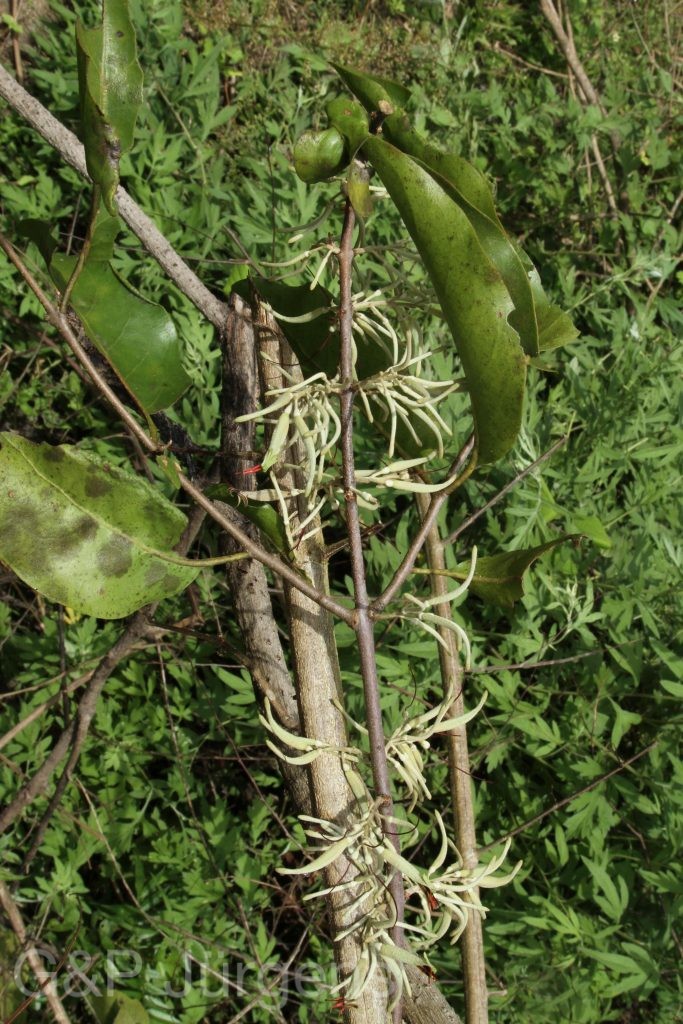
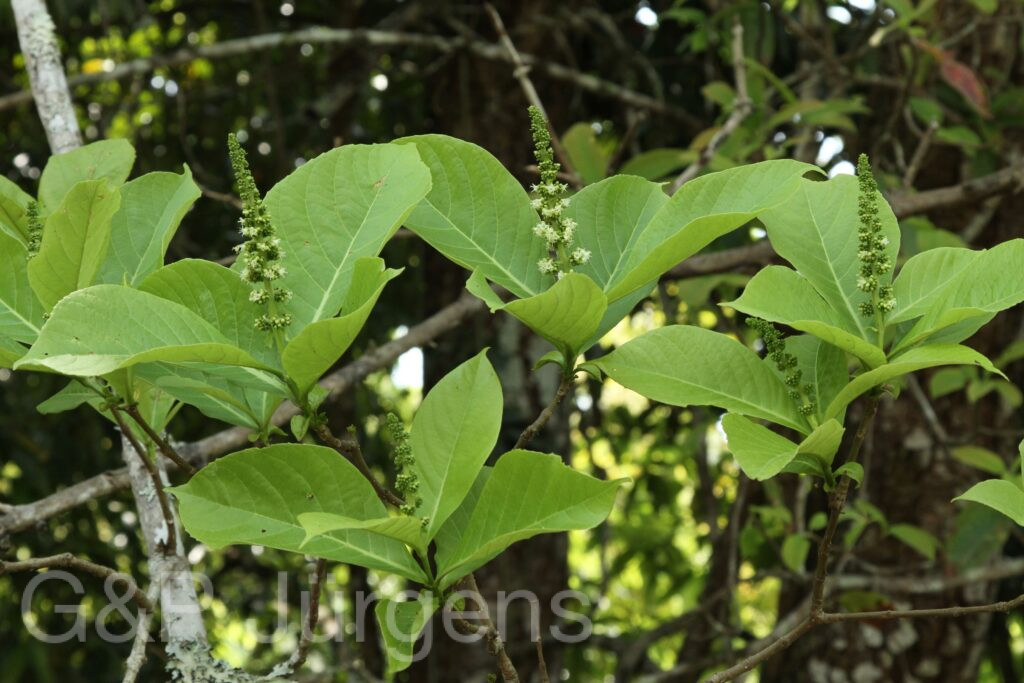
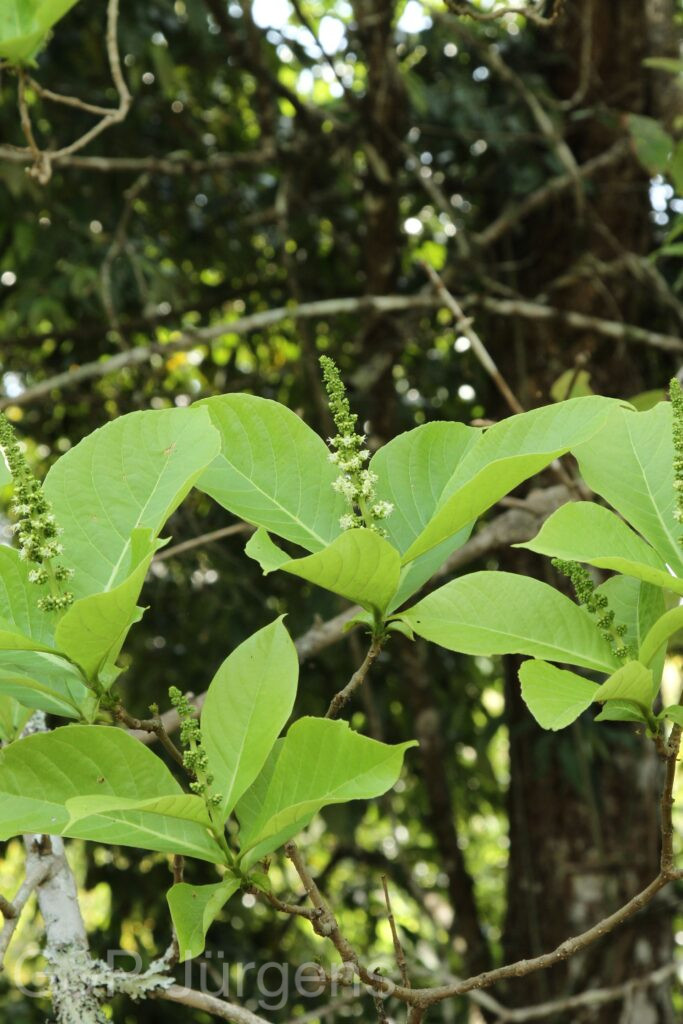
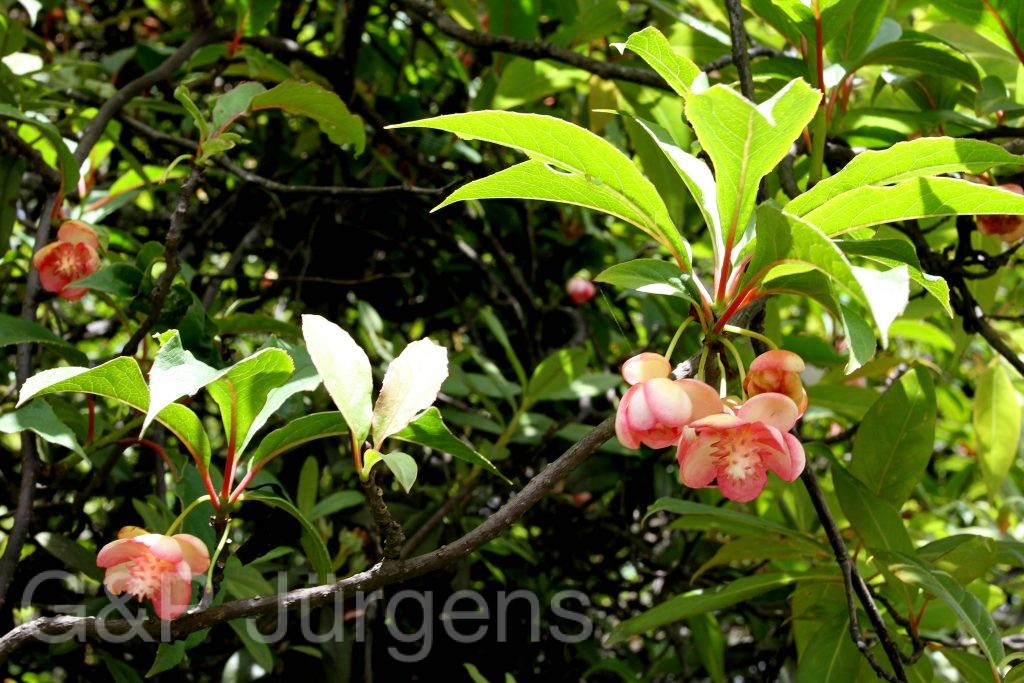
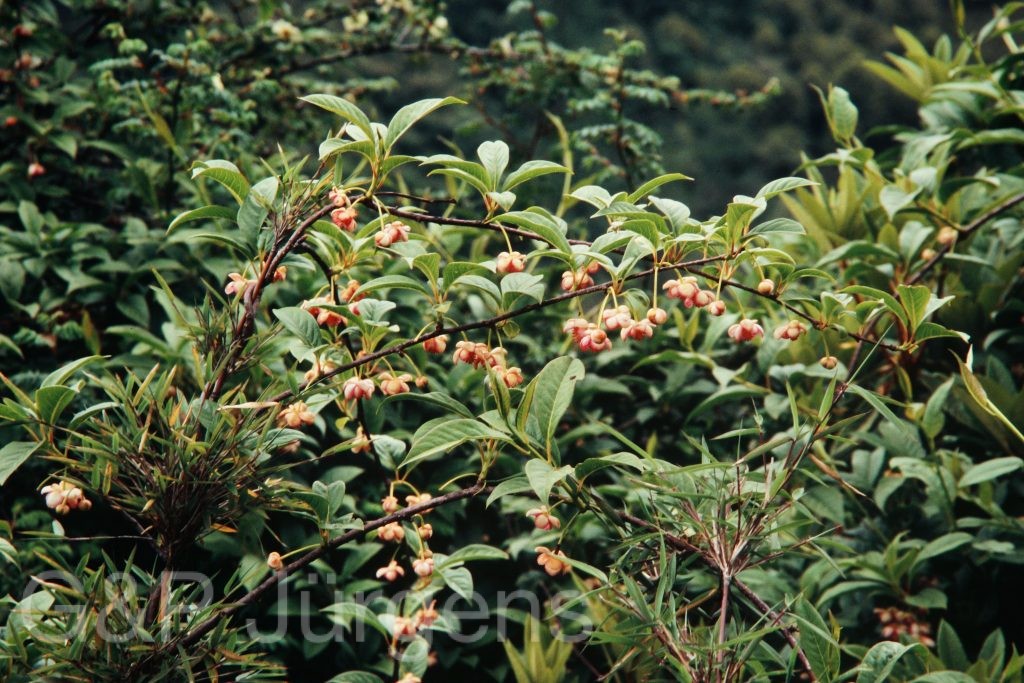
Schisandra grandiflora (Wall.) Hook.f. & Thomson is a deciduous, woody climber of the eastern Himalaya, recorded by GBIF from China, India, Nepal, Bhutan and Myanmar. It is a plant of cool, humid temperate forest, growing in mixed broad-leaved and conifer woodland, along forest margins and ravines, where it scrambles over shrubs and into the canopy, generally between about 2,000 and 3,500 m. The cited collections span Lachung in Sikkim at 2,800 m and Pele-La in Bhutan at 3,100 m in June, and Maneybhajang in West Bengal at 2,000 m in May, illustrating its broad occurrence across the moist temperate forest belt of the eastern Himalayan arc.
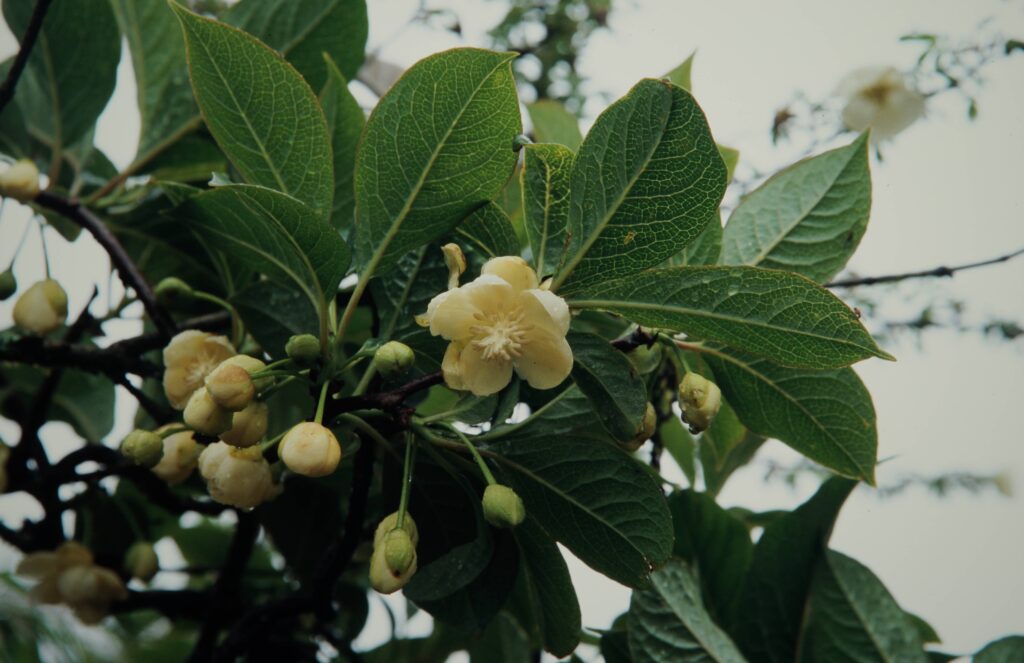
The plant is a glabrous, twining liana with slender woody stems and alternate, simple leaves that are elliptic to obovate, with serrulate margins and an acuminate apex, borne on reddish petioles. As in all Schisandraceae the flowers are unisexual, the species being dioecious or monoecious; they are solitary and pendulous on slender pedicels, comparatively large for the genus (hence grandiflora), with several white to creamy or pink-tinged perianth segments not differentiated into sepals and petals. The numerous free carpels of the female flower, borne on an elongating receptacle, ripen into a pendent, spike-like aggregate of red, fleshy berries.

Schisandraceae, together with the related Illiciaceae, occupy a basal position among the angiosperms in the order Austrobaileyales, making the family of major significance in studies of early flowering-plant evolution. Several Schisandra species, notably S. chinensis, are renowned medicinal plants, and the aromatic fruits of S. grandiflora are likewise used locally. Its disjunct Sino-Himalayan distribution reflects the ancient, relictual biogeography characteristic of this lineage.

Author: (Wall.) Hook.f. & Thomson · Sources: POWO (Kew), GBIF, Flora of China Vol. 7, Flora of Bhutan Vol. 1, Saunders: Monograph of Schisandra (Systematic Botany Monographs)
Wall.

Bhutan2015 296
Bhutan Zhemgang 910, October

Description

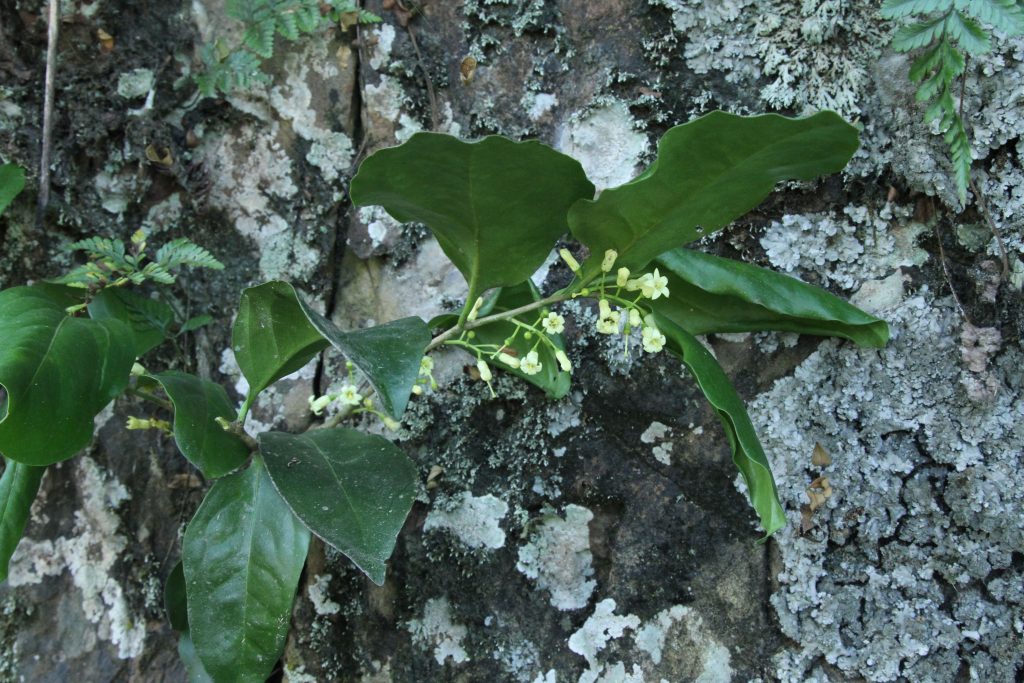
Schoepfia fragrans is a small tree or shrub of subtropical and tropical Asia, distributed across SW China, NE India, Nepal, Bhutan, Bangladesh and continental Southeast Asia (Myanmar, Thailand, Vietnam, Laos, Cambodia, Malaysia, Indonesia, Korea), with GBIF recording some 464 occurrences. It grows in evergreen and semi-evergreen broadleaved forest and forest margins at low to moderate elevations. The photographed plant from Zhemgang in south-central Bhutan at 910 m (October) typifies its occurrence in the warm subtropical hill forest of the southern Himalayan foothills.

It is an evergreen shrub or small tree with alternate, simple, entire, leathery ovate to lanceolate leaves that are acuminate and glabrous, with the lateral veins faint or obscure. The flowers are small, fragrant as the epithet records, and borne in short axillary spikes or racemes; the perianth is a tubular, funnel-shaped corolla with short recurved lobes, the stamens adnate to the corolla tube, and the ovary partly inferior, sunk in a fleshy disc. The fruit is a small ellipsoid drupe crowned by the persistent perianth remains and partly enclosed by the accrescent calyx.

Schoepfia was long placed in Olacaceae but is now segregated, with its relatives, into the family Schoepfiaceae (as given here) within the sandalwood order Santalales, a placement supported by molecular phylogenetics. Members of the order are characteristically hemiparasitic, and Schoepfia is understood to be a root hemiparasite drawing on neighbouring woody hosts while remaining photosynthetic. As a widespread forest species it is not of conservation concern, though it depends on the persistence of intact subtropical broadleaved forest.

Author: Wall. · Sources: POWO (Kew), Flora of Bhutan Vol. 1, GBIF, Flora of China Vol. 5, Nickrent: Santalales (Schoepfiaceae) phylogeny and classification

(L.) R.J.Wang

Sikkim 2006 280 ergebnis
India West-Bengal, Chaana 1650m, May

Description

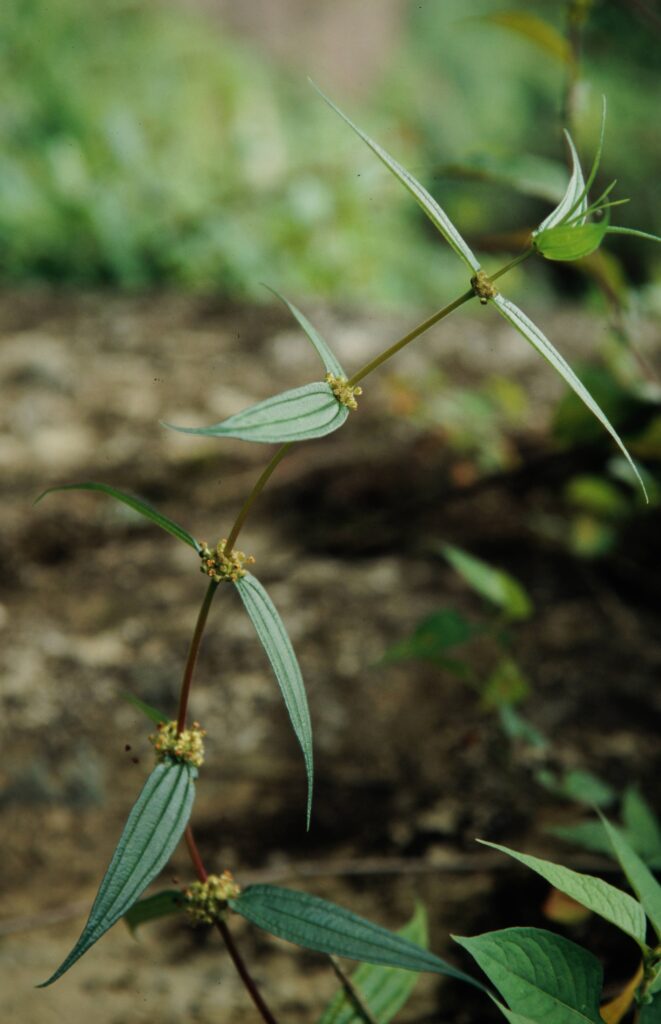
Scleromitrion verticillatum is a widespread herb of tropical and subtropical Asia, with 629 GBIF occurrences spanning India, Nepal, China, Taiwan, Japan and a broad swathe of Southeast Asia from Myanmar and Vietnam through Malaysia, Indonesia and the Philippines. It grows as a weedy annual or short-lived perennial of open, disturbed and seasonally moist ground, including roadsides, grassy banks and waste places from the lowlands into the lower hills. The plant recorded at Chaana in West Bengal at 1650 m in May reflects its presence in the eastern Himalayan foothills, where it flowers with the onset of the warm, pre-monsoon season.

The species is an erect to ascending herb with quadrangular, often scabrid stems that may be roughened on the angles. The leaves are opposite, sessile or nearly so, linear-lanceolate to lanceolate, with entire, frequently scabrid margins and interpetiolar stipules bearing setae characteristic of the tribe Spermacoceae. The small white flowers are borne in dense axillary clusters or verticillate glomerules, each with a four-lobed calyx, a tubular four-lobed corolla, four epipetalous stamens and a bifid style. The fruit is a small, subglobose to ellipsoid capsule that dehidces septicidally to release numerous minute, angular seeds.

Scleromitrion was segregated from the broadly circumscribed Hedyotis-Oldenlandia complex on the basis of molecular and capsular characters, and S. verticillatum was formerly placed in Hedyotis and Oldenlandia. The genus belongs to the tribe Spermacoceae within Rubioideae. As a ruderal coloniser of open habitats, the species is ecologically successful and locally common, posing no conservation concern across its extensive range.

Author: (L.) R.J.Wang · Sources: POWO (Kew), GBIF, Flora of China Vol. 19, Flora of Bhutan Vol. 2, Flora of Nepal, Flora of Pakistan, Wang's revision of Scleromitrion and Spermacoceae

Danser

Bhutan2012 994
Bhutan Trithangebe 1000m, October
Bhutan2012 995
Bhutan Trithangebe 1000m, October
Nepal 97 307 P610
Nepal Honggaon 2360m May
Nepal 97 308 P611
Nepal Honggaon 2360m May

Description

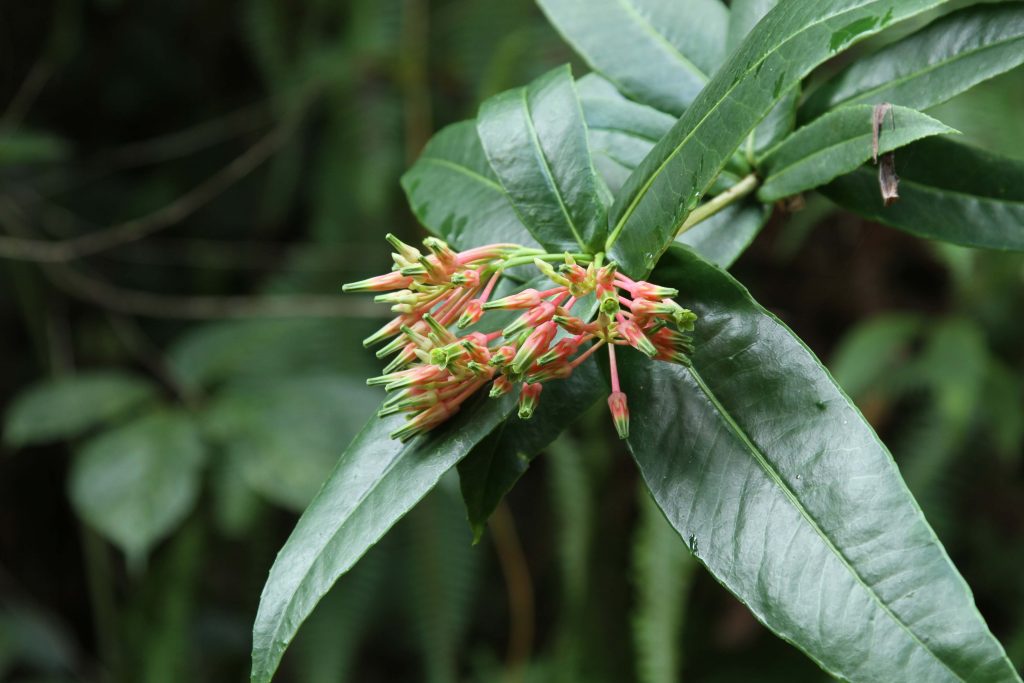
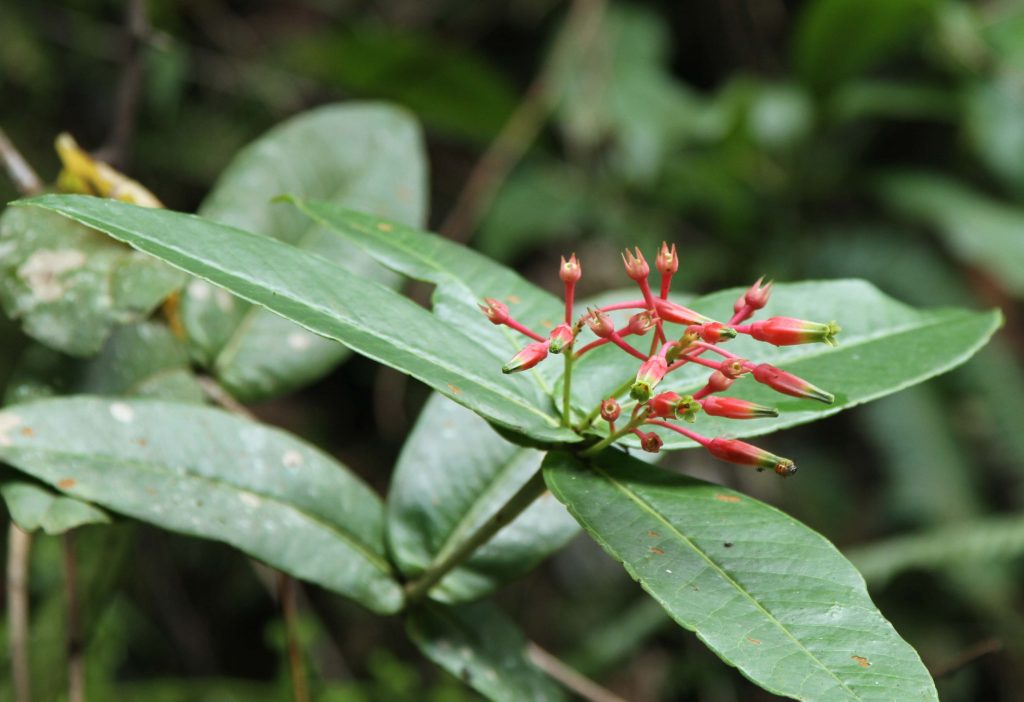
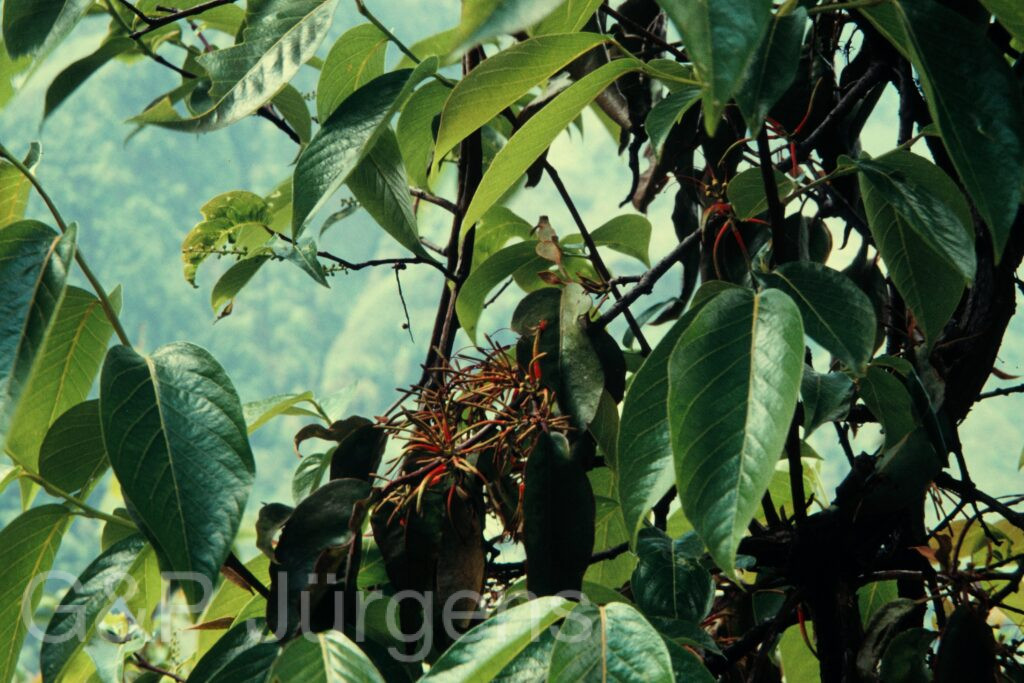
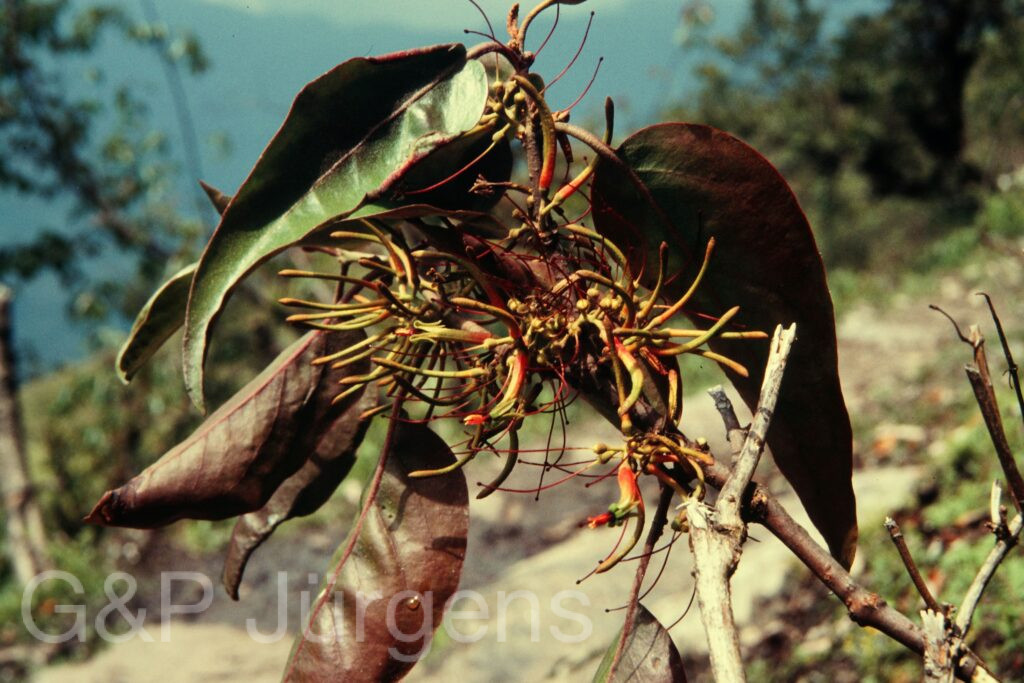
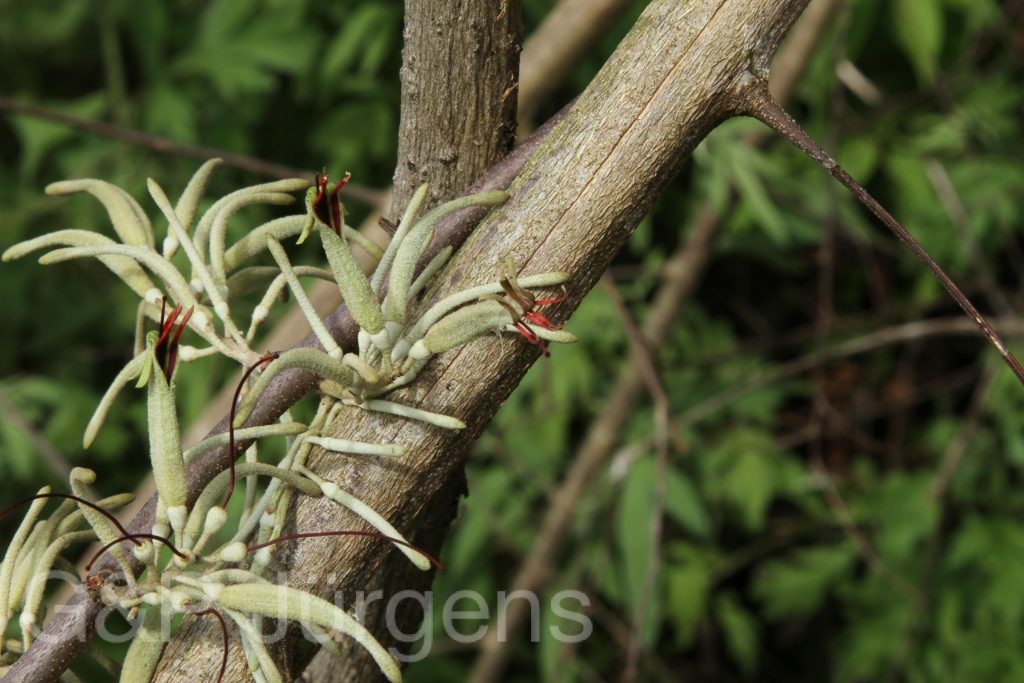
Scurrula elata is a hemiparasitic mistletoe of the eastern and central Himalaya, recorded from Nepal, China, Bhutan and India, with around 200 occurrences in GBIF. As an obligate stem parasite it occurs wherever suitable woody host trees grow in subtropical to warm temperate broad-leaved forest, hill forest and forest edges, drawing water and minerals from its host through a haustorial connection while photosynthesising in its own leaves. Its altitudinal spread is shown by the cited material from Trithangebe in Bhutan at 1000 m, in flower in October, and from Honggaon in Nepal at 2360 m in May, indicating a range across the lower and mid montane forest belt where host diversity is high.

The plant forms a pendent to spreading parasitic shrublet attached to host branches by a swollen haustorial union. The young stems and foliage are clothed in a brownish to rusty stellate or dendritic tomentum. The leaves are opposite or subopposite, ovate to elliptic, entire and shortly petiolate. The flowers are arranged in short axillary racemes and are characteristically zygomorphic, with a slender, curved, tubular corolla that splits along one side as it opens, ranging from greenish to reddish in colour; the calyx is borne on an elongate, club-shaped receptacle. The fruit is a small, club-shaped (turbinate) berry, narrowed below, containing a single viscin-coated seed adapted for bird dispersal and adhesion to new host branches.

Scurrula is a genus of the showy mistletoe family Loranthaceae, distinguished within the family by its pear- or club-shaped fruit and curved, one-sided corolla, and centred on tropical and subtropical Asia. As with other loranths, its flowers are typically pollinated by birds, and its seeds are spread by frugivorous birds such as flowerpeckers that wipe the sticky seeds onto branches. Heavy infestation can damage host trees, but the species is a natural component of Himalayan forest canopies, is widespread within its range and is not considered threatened.

Author: Danser · Sources: POWO (Kew), GBIF, Flora of China Vol. 5, Flora of Bhutan Vol. 1, Flora of Nepal, The Loranthaceae of the Indomalayan Region (Danser)

G. Don

Bhutan2012 1241
Bhutan Tashigang 1900m, October
Bhutan2012 1242
Bhutan Trashigang 1900m, October

Description

Scurrula pulverulenta G.Don is a hemiparasitic mistletoe of the Loranthaceae distributed through the eastern Himalaya and Indo-Burmese region. GBIF (about 126 occurrences) records it from India, Myanmar, Nepal, Bhutan, southern China, Thailand and Bangladesh, where it grows as a branch parasite on a range of woody hosts in broad-leaved and subtropical hill forest. It occurs chiefly in warm-temperate to subtropical montane zones; the collections from Tashigang (Trashigang) in eastern Bhutan at 1,900 m, flowering in October, illustrate its autumn anthesis in mid-elevation forest where it depends on suitable phorophytes for establishment.

The plant is a much-branched aerial shrublet attached to its host by a haustorial union, drawing water and minerals while photosynthesising in its own leaves. Young branches, leaves and inflorescences are densely covered with a rusty or greyish stellate-mealy indumentum, the source of the epithet "pulverulenta" (powdery). Leaves are opposite, ovate to elliptic, leathery and short-petiolate. The flowers are borne in short axillary racemes; the corolla is tubular and curved, four-lobed and typically reddish to orange, characteristic of bird-pollinated Loranthaceae. The fruit is the distinctive Scurrula "club-shaped" (pyriform, narrowed to the base) berry, with viscid pulp.

The genus Scurrula is defined within the Loranthaceae by its club-shaped fruit and the curved, often tetramerous corolla, and is closely allied to Taxillus and Dendrophthoe. Its sticky, viscin-coated seeds are dispersed by frugivorous birds (notably flowerpeckers), which wipe them onto host branches, completing an obligate host-parasite-disperser interaction. As a branch parasite, Scurrula pulverulenta is ecologically significant in Himalayan forest dynamics and is of interest in studies of mistletoe host specificity and pollination.

Author: G. Don · Sources: POWO (Kew), Flora of Bhutan Vol. 1, Flora of China Vol. 5, GBIF, Barlow: Loranthaceae of Asia and Malesia

Hemsl. ex F.B. Forbes & Hemsl.

Bhutan2012 150
Bhutan Haarvalley 3500m, October

Description

Sedum filipes Hemsl. ex F.B.Forbes & Hemsl. is a slender, succulent herb of the Sino-Himalayan mountains, recorded by GBIF from China, Nepal, India, Bhutan and Myanmar. It is a plant of moist, shaded rock ledges, mossy boulders, stream banks and forest margins in the subalpine and lower alpine belts, occurring from around 2,500 to 4,000 m. The October collection from the Haa valley in western Bhutan at 3,500 m reflects its preference for cool, humid microhabitats, where it often grows in thin soil pockets over rock alongside ferns, bryophytes and other small montane herbs at the close of the monsoon season.

The species is a delicate, glabrous annual or short-lived perennial with thread-like, often reddish, ascending or decumbent stems, as the epithet filipes (slender-stalked) implies. The fleshy leaves are alternate, flat to slightly terete, spathulate to obovate, narrowed to the base and entire. The inflorescence is a lax, few-flowered cyme bearing small, yellow, star-shaped flowers; each flower is typically five-merous, with lanceolate sepals, narrowly lanceolate petals, ten stamens and free or basally united carpels that ripen into erect, beaked follicles releasing minute seeds.

Within Crassulaceae the genus Sedum in its broad traditional sense is highly polymorphic, and slender Himalayan taxa such as S. filipes have at times been segregated into genera such as Sinocrassula or treated within narrowly defined sections. Its succulent CAM-related physiology allows survival on exposed, drought-prone rock surfaces, making it a characteristic colonist of rocky subalpine habitats and a useful indicator of undisturbed montane rock communities.

Author: Hemsl. ex F.B. Forbes & Hemsl. · Sources: POWO (Kew), GBIF, Flora of China Vol. 8, Flora of Bhutan Vol. 1, 't Hart & Eggli: Evolution and Systematics of the Crassulaceae

Wall. ex Lindl.

Sikkim2003 385 P543 ergebnis
Sikkim Talim (Zemu-valley) 3280m, August

Description

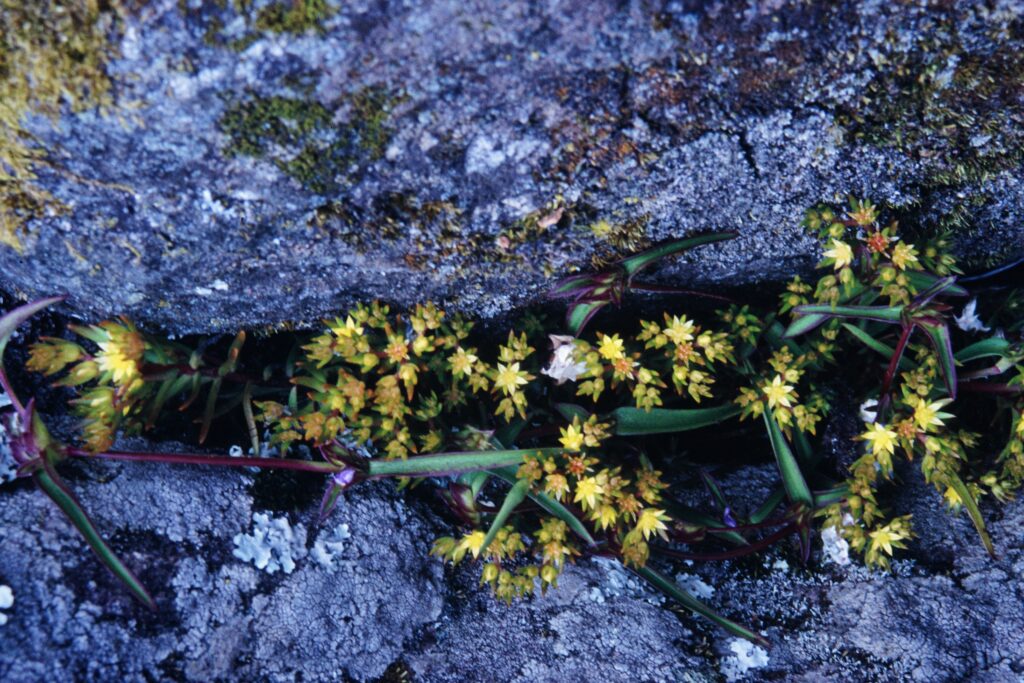
Sedum multicaule is a widespread Himalayan stonecrop ranging from Pakistan eastwards through India, Nepal, Bhutan and into China and Myanmar, and is well collected with around 618 GBIF records. A succulent of rocky habitats, it colonises moist cliffs, boulders, mossy banks, walls and stony slopes, often growing as a lithophyte in the spray of streams across the temperate to subalpine belt, broadly between about 2000 and 4000 m. The documented gathering from Talim in the Zemu valley of Sikkim at 3280 m in August reflects its preference for damp rock faces during the summer growing season.

It is a perennial, somewhat tufted herb with numerous slender, often reddish stems, as the epithet "multicaule" implies, that are decumbent at the base then ascending. The fleshy leaves are alternate, linear to oblong and terete or semi-terete, frequently spurred at the base and crowded along the stems. The inflorescence is a terminal cyme of several branches bearing many small, sessile, star-shaped flowers; these are typically five-merous with narrow, acute yellow petals, ten stamens and free or shortly united carpels. The fruit comprises spreading, many-seeded follicles.

Sedum in the broad sense belongs to the Crassulaceae and exhibits the CAM photosynthesis and water-storing succulence that suit it to seasonally dry, exposed rock surfaces. The Himalayan members form a taxonomically complex assemblage, several segregated by modern authors into related genera. Of no conservation concern given its abundance and broad altitudinal and geographic range, S. multicaule is a characteristic and resilient element of montane rock-crevice vegetation.

Author: Wall. ex Lindl. · Sources: POWO (Kew), GBIF, Flora of China, Flora of Pakistan, Crassulaceae monograph (Ohba / 't Hart)

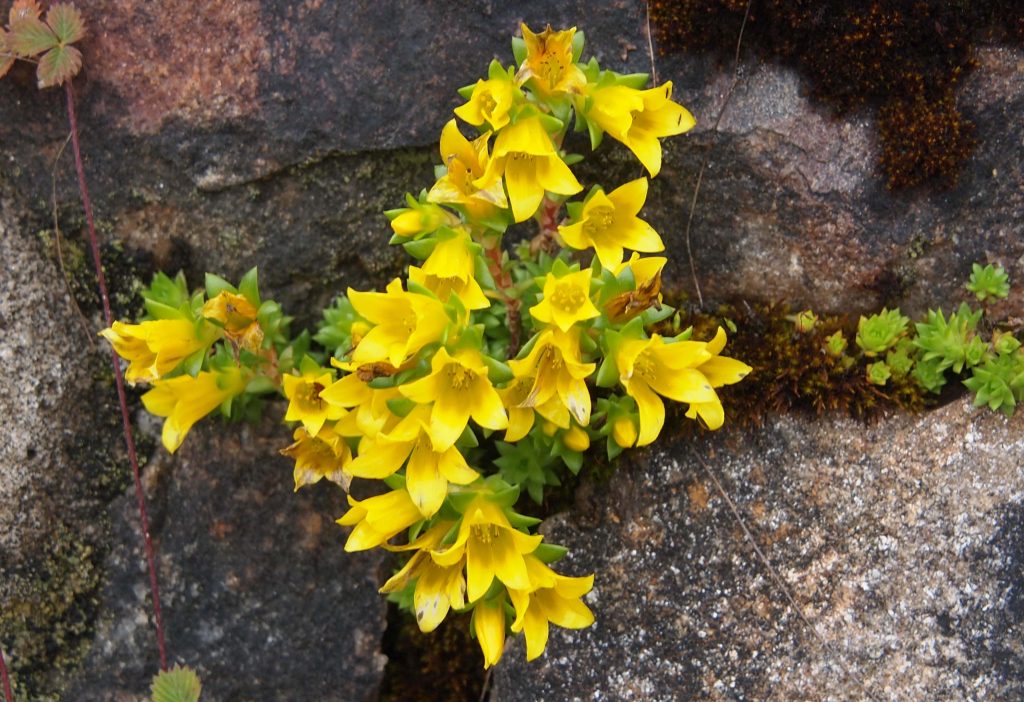
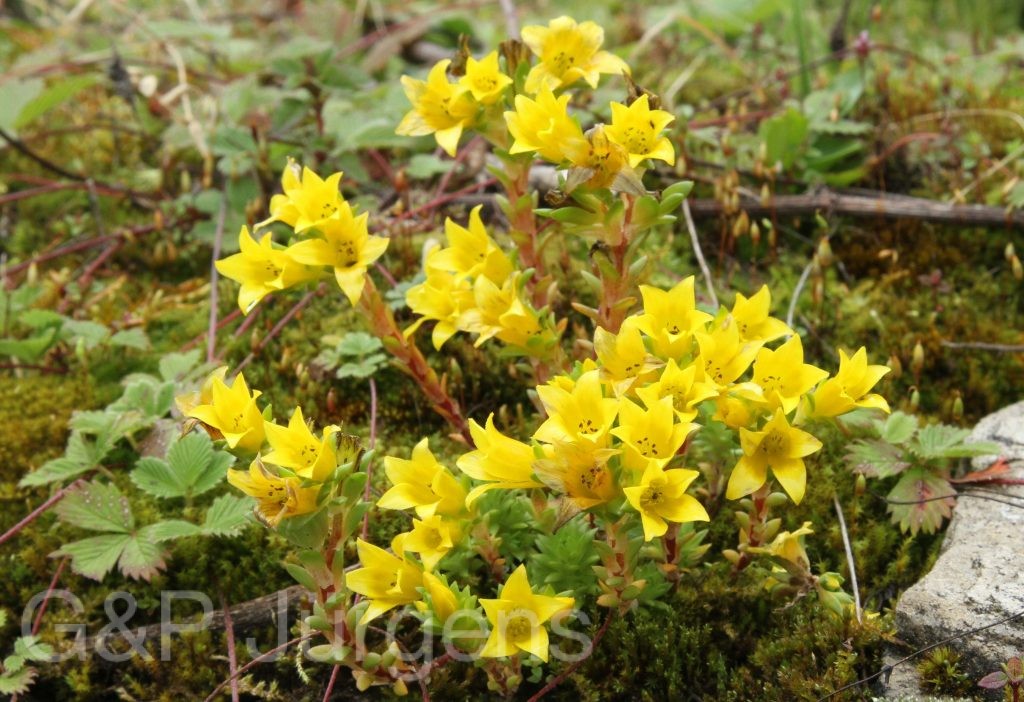
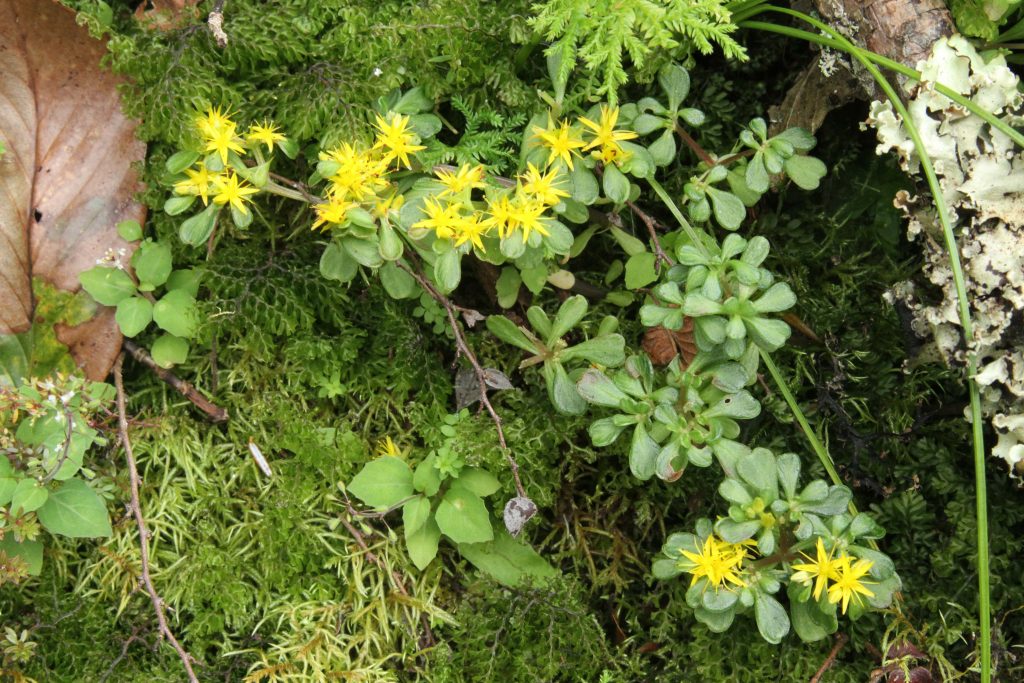
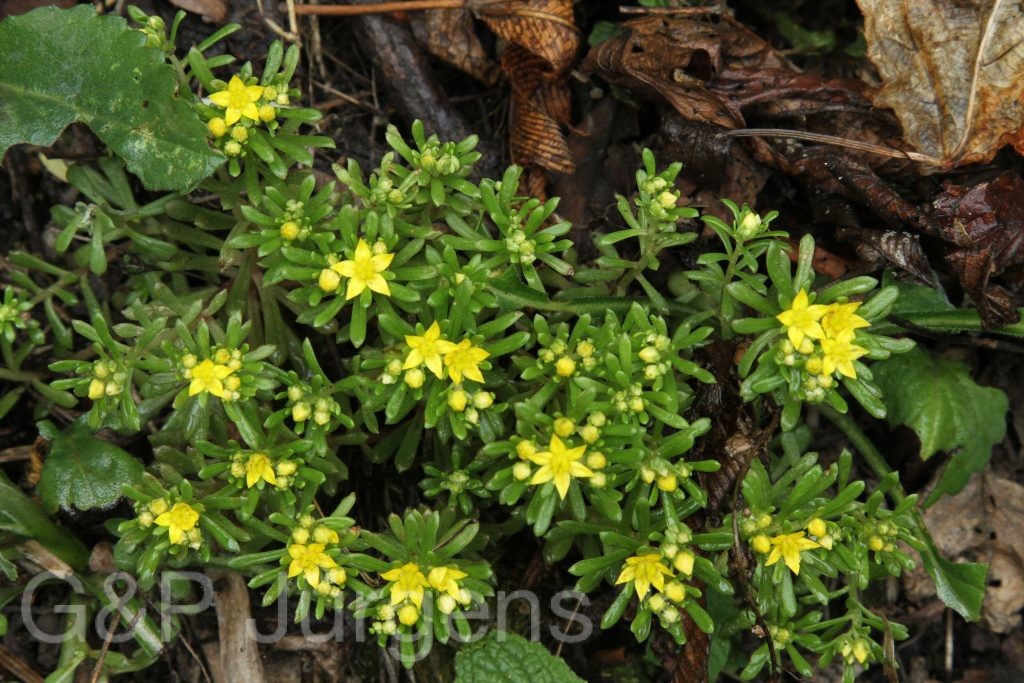
Sedum oreades

by GP Jürgens

(Decne.) Raym.-Hamet

Bhutan2012 46
Bhutan Shele-La, 3900m September
Bhutan2012 48
Bhutan Shele-La, 3900m September

Description

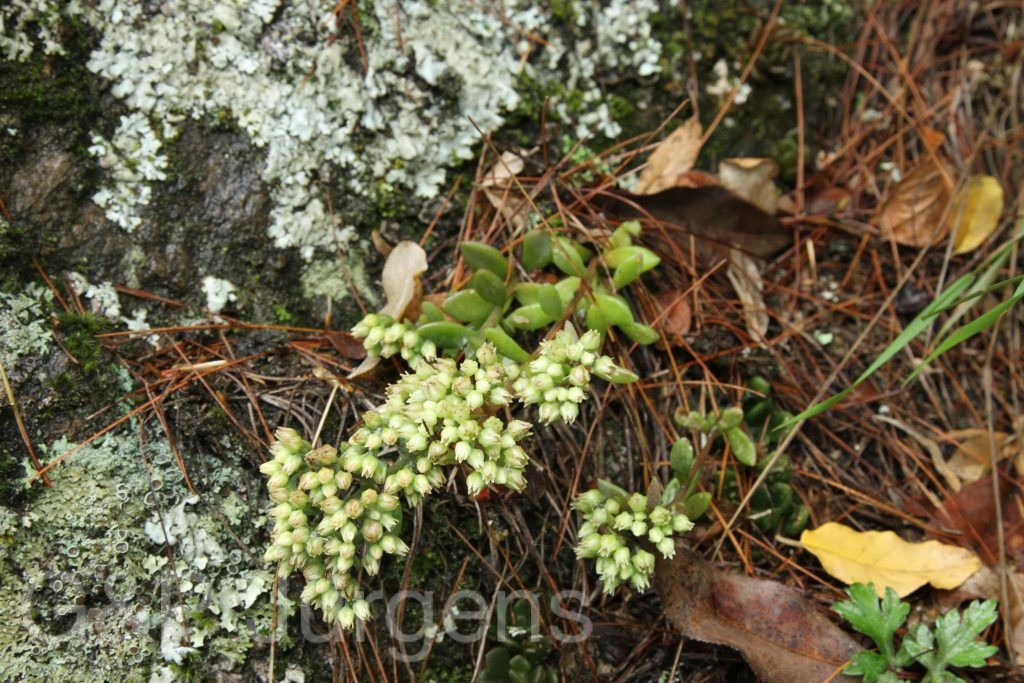
Sedum oreades is a small succulent perennial of the Himalaya and Tibetan Plateau, recorded by GBIF in some 368 occurrences from China, India, Nepal, Bhutan and Pakistan. It is a plant of high alpine habitats, colonising rock crevices, stony slopes, screes, moraine and gravelly turf, broadly between 3500 and 5000 m. The illustrated plant was photographed in Bhutan at the Shele-La at 3900 m in September, persisting and fruiting late in the season, its drought- and cold-tolerant succulence well suited to the thin, freely draining, sun-exposed substrates of the upper alpine zone.

The plant forms low tufts or cushions from a branched, often woody rootstock bearing crowded leafy shoots. The leaves are small, fleshy and succulent, linear-oblong to terete and densely imbricate along the stems, frequently flushed red in exposed sites. The flowers are borne in a compact terminal cyme; they are typically five-merous with lanceolate, free or basally connate petals that are yellow, sometimes tinged red, surrounding the stamens and the cluster of carpels. The fruit consists of erect to slightly spreading follicles that split along the inner suture to release numerous minute seeds.

Sedum (Crassulaceae) is a large, taxonomically complex genus, and many Himalayan-Tibetan species formerly placed here have been transferred to segregate genera such as Rhodiola and Phedimus on the basis of habit and floral structure; S. oreades is a member of the high-altitude alpine assemblage. GBIF treats the name as accepted. Employing crassulacean acid metabolism and a cushion habit, it is a hardy pioneer of harsh, exposed ground and is locally common, with no recognised conservation concern.

Author: (Decne.) Raym.-Hamet · Sources: POWO (Kew), GBIF, Flora of China, Flora of Pakistan, Ohba studies of Himalayan Crassulaceae

A. Berger

Bhutan2012 328
Bhutan Dochu-La 3200m, September
Bhutan2014 35
Bhutan Trashigang 1570m, May

Description

Sedum triactina is a succulent herb of the eastern Himalaya and Sino-Himalayan region, recorded from China, Nepal, India and Bhutan; its c. 329 georeferenced records span a wide temperate to subalpine altitudinal range. It grows on damp rocks, mossy banks, cliff ledges, stream margins and forest floor, generally between 1500 and 3500 m. The two Bhutanese localities documented in the image, Dochu-La at 3200 m in September and Trashigang at 1570 m in May, illustrate the species' broad ecological tolerance, occurring both in cool subalpine forest passes and warmer mid-elevation valleys.

It is a small, fleshy perennial herb with slender, often decumbent to ascending stems rising from a delicate creeping base, sometimes rooting at the nodes. The leaves are succulent, alternate, oblong to spathulate, entire and rather flat, glabrous and somewhat glaucous. The inflorescence is a lax, few-flowered terminal cyme. The flowers are typically pentamerous (the epithet "triactina" alluding to a three-rayed or three-parted character in some flowers), with narrow, spreading, pale yellow to greenish-yellow or whitish petals, ten stamens, and free or basally connate carpels. The fruit comprises several spreading, many-seeded follicles releasing minute seeds.

Described by A. Berger, S. triactina belongs to the large genus Sedum of the stonecrop family Crassulaceae, a group employing CAM photosynthesis as an adaptation to the desiccating conditions of rock and cliff microhabitats. Its small flowers are visited by generalist insects, and vegetative fragmentation supplements seed reproduction. The species is widespread and locally common across its montane range, with no recognised conservation concern, persisting readily on disturbed rocky and roadside substrates.

Author: A. Berger · Sources: POWO (Kew), GBIF, Flora of Bhutan, Flora of China, Flora of Nepal, 't Hart & Bleij's account of Sedum (Crassulaceae)

L.f.

Bhutan2014 678
Bhutan Wangdi Phodrang 1100m, June
Bhutan2014 677
Bhutan Wangdi Phodrang 1100m, June

Description

Semecarpus anacardium, the marking-nut tree, is a tree of the South and Southeast Asian tropics extending into the southern Himalayan foothills. GBIF (some 1,524 occurrences) records it natively from India, Nepal, Bhutan, Myanmar, Bangladesh, Sri Lanka, Vietnam, Indonesia, the Philippines and Papua New Guinea, with cultivated or introduced material in the Neotropics and on islands such as Mauritius. It grows in deciduous and semi-evergreen forest, savanna woodland and forest margins, mostly below 1,200 m. The photographed tree is from Wangdue Phodrang in western Bhutan at about 1,100 m, in June, near the upper limit of its subtropical range along the inner Himalayan valleys.

It is a medium-sized deciduous tree with a spreading crown and grey bark exuding an acrid, blackening resin. The leaves are large, simple, obovate to oblong, clustered towards the branch ends, coriaceous and rounded at the apex, with prominent venation. The flowers are small, greenish-white and borne in terminal panicles. The fruit is a drupe seated on a fleshy, orange, swollen hypocarp (the enlarged receptacle); the drupe itself is ovoid and turns black, its pericarp containing the caustic resin.

The black juice is the source of the indelible "marking-nut" dye used traditionally to mark cloth, and the nut is important in Ayurvedic medicine, though the resin is a potent contact irritant rich in urushiol-type phenolics, like others in the Anacardiaceae. The fleshy hypocarp is edible when roasted. The species is common across its range and of no conservation concern, exemplifying the Indo-Malesian tropical element penetrating the lower Himalaya.

Author: L.f. · Sources: POWO (Kew), Flora of Bhutan Vol. 2, Flora of Nepal, GBIF, Ding Hou: Anacardiaceae (Flora Malesiana)