D.Don
Description
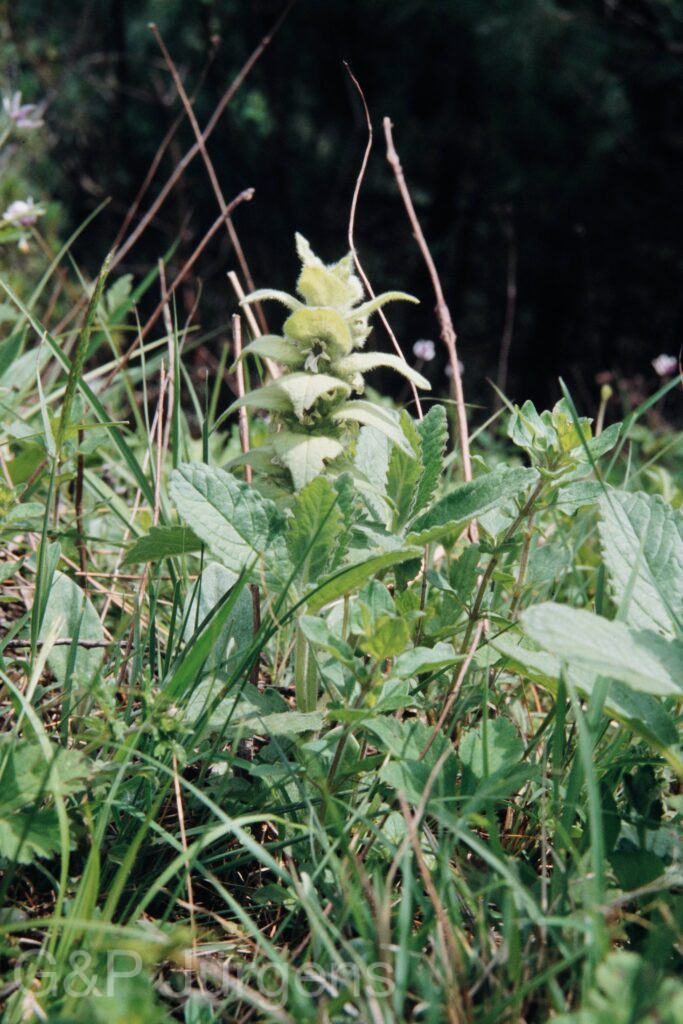
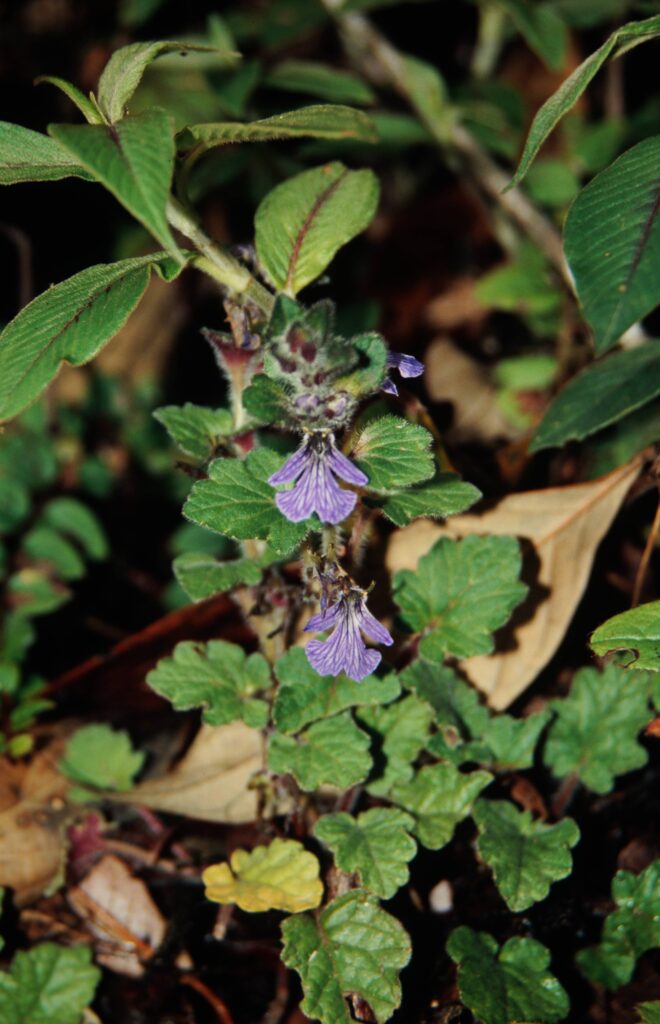
Ajuga lobata is an eastern Himalayan and Sino-Himalayan element distributed across Nepal, northern India, Bhutan, northern Myanmar and adjacent south-western China, with some 172 georeferenced occurrences documented. It is a plant of cool-temperate forest margins, mossy banks and open grassy slopes within the upper-montane to subalpine belt, typically between about 2400 and 3500 m. The population photographed at Tonglu (3100 m) on the Singalila ridge of West Bengal in May, flowering as the monsoon approaches, is characteristic: it favours humus-rich, freely draining soils in light shade beneath Rhododendron and oak.
It is a low, perennial, somewhat creeping herb arising from a slender rootstock, the quadrangular stems frequently decumbent at the base and rooting at the lower nodes before ascending. The leaves are opposite, ovate to obovate, the lamina conspicuously lobed or coarsely crenate-dentate, narrowed into a winged petiole and often tinged purplish beneath. Flowers are borne in axillary verticillasters forming a leafy terminal spike; the corolla is bluish to violet, two-lipped with a strongly reduced upper lip and a prominent, spreading three-lobed lower lip, the four didynamous stamens exserted. The fruit comprises four reticulate-rugose nutlets seated in the persistent campanulate calyx.
Within Ajuga (Ajugoideae) the species is distinguished by its markedly lobed leaves, a feature echoed in the epithet. Its montane distribution makes it a useful indicator of intact temperate forest ecosystems, and like many bugles it is visited by bees and serves as a minor nectar source. No conservation concern is presently recognised given its broad range, though it is locally restricted to suitable forest habitat.
Author: D.Don · Sources: POWO (Kew), GBIF, Flora of China Vol. 17, Flora of Bhutan Vol. 2, Flora of Nepal, A Revision of the Genus Ajuga (Labiatae)