Tag:

Nepal

Flowers of Nepal — 1313 wild plant species documented from the Nepalese Himalaya, from subtropical foothills to high alpine meadows above 4,000 m. Nepal’s dramatic elevation gradient makes it one of the richest botanical regions on Earth, home to rhododendrons, primulas, gentians and the famed blue poppies (Meconopsis). Every entry gives a botanical description, native distribution, habitat and flowering season, alongside the original field photograph and the location where it was taken.

Stapf

Sikkim2003 256 P351
Sikkim Dzongri 4200m August

Description

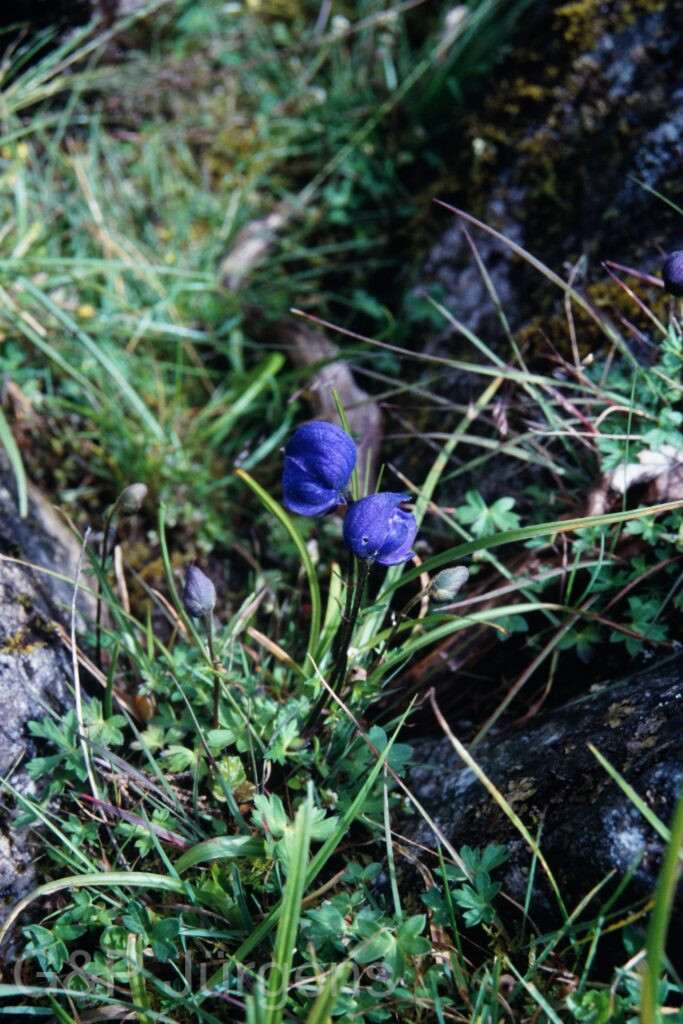
Aconitum naviculare is a high-alpine monkshood of the eastern and central Himalaya, ranging from Nepal through Sikkim and northern India into Bhutan, south-western China (Xizang) and northern Myanmar; its modest tally of around 110 georeferenced occurrences (CN, NP, BT, IN, MM) reflects its specialised montane niche. It occupies open alpine meadows, screes, moist turf and rocky slopes at high elevation, typically between about 3500 and 4800 m. The plant photographed at Dzongri in Sikkim at 4200 m in August, flowering at the height of the monsoon-influenced alpine summer, exemplifies its cold, exposed habitat near the upper limit of vascular plant growth.

It is a small perennial herb arising from a slender tuberous rootstock, with an erect or somewhat flexuous stem usually under 30 cm. The leaves are palmately divided into narrow, deeply cut segments. The flowers are few and borne in a lax terminal raceme; as in all Aconitum the five petaloid sepals are zygomorphic, the uppermost forming the characteristic helmet or hood (galea), here narrowly boat-shaped (navicular, whence the epithet), bluish-purple and often paler within. Two long-clawed nectariferous petals are concealed beneath the hood, with numerous stamens and three to five free carpels ripening into a cluster of follicles containing winged seeds.

Aconitum naviculare belongs to subgenus Aconitum and is a noted constituent of Himalayan alpine flora, valued and harvested in Tibetan and folk medicine as "Bonga" for its diterpenoid alkaloids, which render the whole plant highly toxic. Such harvesting, combined with its restricted high-altitude range, raises local conservation concern, although it remains frequent within intact alpine grassland.

Author: Stapf · Sources: POWO (Kew), GBIF, Flora of China, Flora of Bhutan, Flora of Nepal, Stapf's monograph of the Asiatic species of Aconitum
(Hook.f.) H.Hara

Sikkim2003 70 P95
Sikkim Choka 2900m, August

Description

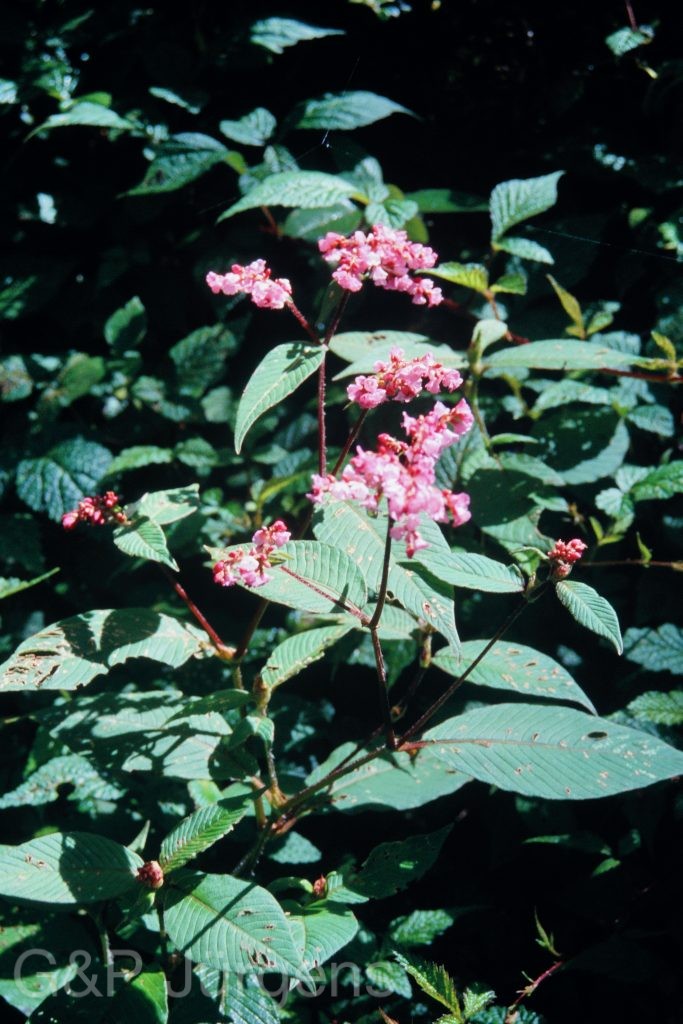
Aconogonum campanulatum, treated by GBIF as a synonym of the accepted Aconogonon campanulatum, is a Sino-Himalayan perennial herb distributed from Nepal and northern India through Sikkim and Bhutan into Myanmar and south-western China. Its 372 GBIF records lie mostly within this native range, with scattered European, North and South American and New Zealand points reflecting cultivated and herbarium material. It grows in subalpine and alpine meadows, forest clearings, shrubberies and along streamsides and banks, commonly between about 2700 and 4000 m. The plant photographed at Choka in Sikkim at 2900 m in August captures it flowering in moist, herb-rich montane vegetation during the monsoon.

It is a robust, branching perennial arising from a woody rootstock, with erect leafy stems. The leaves are alternate, ovate to ovate-lanceolate, often somewhat cordate to rounded at the base and acuminate at the apex, frequently white-tomentose beneath, with membranous sheathing ochreae at the nodes. The flowers are borne in lax, branched, paniculate inflorescences; each has a five-parted, campanulate, white to pinkish perianth (the source of the epithet), with eight stamens and a trifid style. The fruit is a small, trigonous, shining brown nut.

The species belongs to Aconogonon (often spelled Aconogonum), a segregate of the broadly defined Polygonum embracing the alpine knotweeds, and the accepted name is Aconogonon campanulatum. Its woody rootstock and tall leafy habit suit the tall-herb communities of moist Himalayan slopes. Widely distributed and locally abundant, it is of no conservation concern and forms a conspicuous element of subalpine meadow vegetation.

Author: (Hook.f.) H.Hara · Sources: POWO (Kew), GBIF, Flora of Bhutan, Flora of China, Annotated Checklist of the Flowering Plants of Nepal

L.

Bhutan2012 41
Bhutan Shele-La, 3600m September
Bhutan2012 42
Bhutan Shele-La, 3600m September

Description

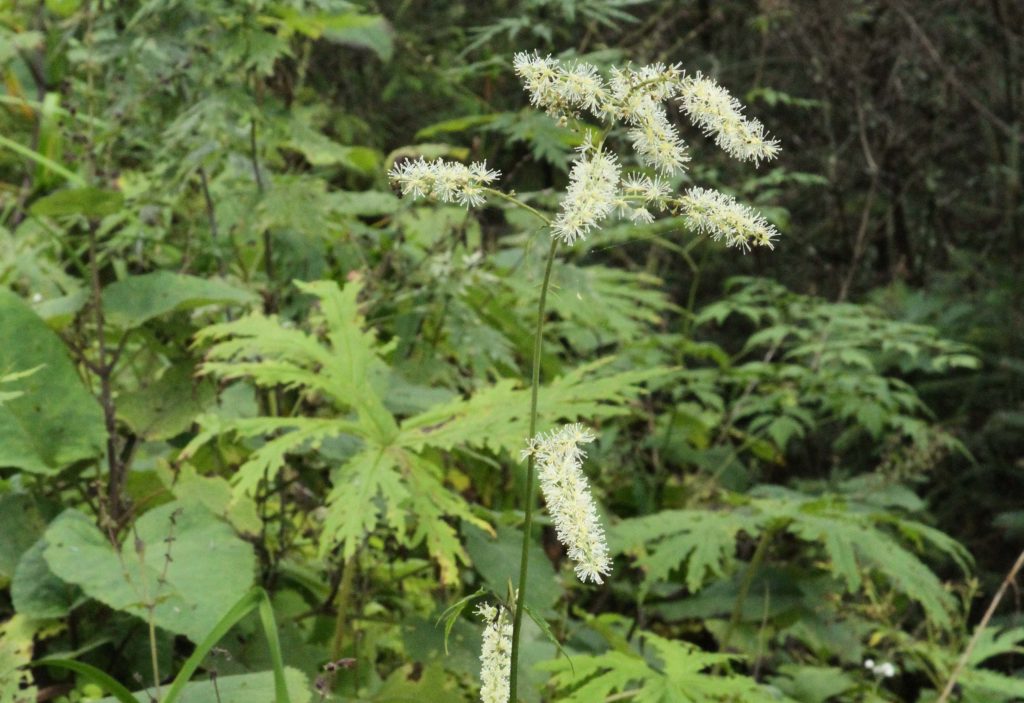
Actaea cimicifuga, the type of the long-segregated genus Cimicifuga and now treated within Actaea, is a temperate Eurasian herb with a vast range spanning Russia, China, Korea, Mongolia, Japan, Nepal, India, Bhutan and parts of central and eastern Europe, reflected in some 2565 georeferenced records. It grows in cool montane and subalpine woodland, forest margins, scrub and tall-herb meadows, in the Himalaya generally between about 2500 and 3800 m. The recorded plant from Shele-La in Bhutan at 3600 m, flowering in September, illustrates its preference for moist, shaded high-montane situations where it blooms late in the season.

It is a tall, erect perennial from a stout woody rhizome, reaching well over a metre. The leaves are large and ternately to bipinnately compound, with ovate, sharply toothed and lobed leaflets. The inflorescence is an elongate, branched panicle of slender racemes bearing many small, short-stalked flowers; the petaloid sepals fall early, the petals are reduced and staminode-like, and the numerous white stamens give the spikes a feathery aspect. The fruit is a cluster of dry, dehiscent, several-seeded follicles, distinguishing it from the berry-fruited typical species of Actaea.

The follicular fruit and tall paniculate habit underlie the historic recognition of Cimicifuga, now subsumed into Actaea on molecular grounds, making the species a focus of generic-circumscription debate. The plant has a strong, unpleasant odour repellent to insects, the source of the name "bugbane," and it has a long history of medicinal use. Widespread and locally common, it is of no conservation concern.

Author: L. · Sources: POWO (Kew), GBIF, Flora of China, Flora of Bhutan, Compton's revision of Cimicifuga and Actaea

Lindl.

Bh09 44 P81
Bhutan Paro 2500m, June

Description

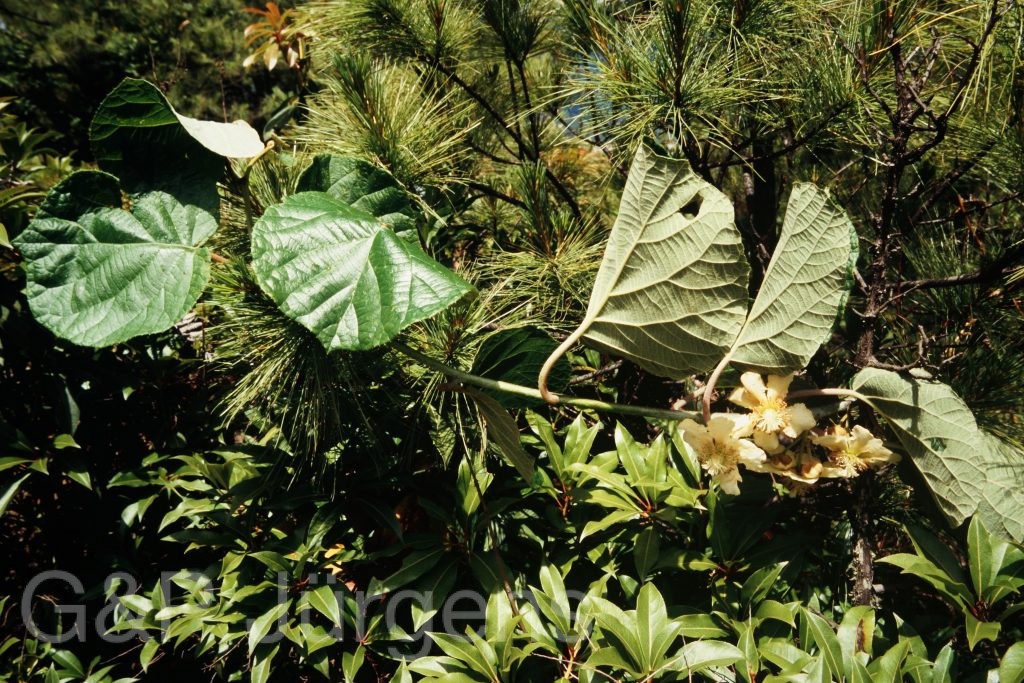
Actinidia callosa Lindl. is a woody climber of the Actinidiaceae, the kiwifruit family, distributed widely through the Himalaya and East and Southeast Asia. GBIF (about 3,400 occurrences) records it from China, Taiwan, Nepal, India, Japan, Vietnam, Myanmar, Bhutan and Indonesia, where it scrambles through montane broad-leaved and mixed forest, along forest margins, thickets and stream banks. It occupies a broad temperate to warm-temperate belt; the plant photographed at Paro in Bhutan at 2,500 m in June illustrates its flowering in mid-elevation forest, where it climbs over shrubs and trees for support.

The plant is a deciduous, twining liana with terete, lenticellate stems and a pith that is typically lamellate (chambered) or solid, a diagnostic character within the genus. Leaves are alternate, long-petiolate, ovate to elliptic, with finely serrate margins bearing callose-tipped teeth, the feature giving the epithet "callosa"; the lower surface is often glabrous to sparsely hairy with conspicuous venation. The flowers are borne in axillary cymes, are usually functionally unisexual (the plants more or less dioecious), and have white to greenish-white petals; the numerous stamens bear dark anthers, and the superior ovary develops many styles. The fruit is a many-seeded berry, ovoid to oblong, greenish to brownish and spotted, edible though far smaller than the cultivated kiwifruit.

Actinidia callosa is a polymorphic species with several recognised varieties differing in leaf indumentum, dentition and fruit characters, and it belongs to the same genus as the commercial kiwifruit (A. deliciosa and A. chinensis), making the wild Himalayan members of interest as genetic resources. Ecologically it is a characteristic forest liana, its berries dispersed by birds and mammals, and it contributes to the structural complexity of mid-montane Asian forests.

Author: Lindl. · Sources: POWO (Kew), Flora of China Vol. 12, Flora of Bhutan Vol. 1, GBIF, Li, Li & Soejarto: Actinidiaceae in Flora of China

(L.) Kuntze

Bhutan2015 588
Bhutan Mo-Chu 1900m, October
Bhutan2015 589
Bhutan Mo-Chu 1900m, October

Description

Adenostemma lavenia is a near-pantropical composite of remarkably wide distribution, with GBIF documenting some 4700 occurrences across Asia, Australasia, the Americas, Africa and the Pacific, including China, Japan, India, Nepal, Australia, the Philippines, Brazil and many other countries. It is a weed of moist, shaded habitats, favouring streambanks, wet forest margins, ditches and damp disturbed ground, mostly at low to mid elevations. The photographed plant is from the Mo-Chu valley in Bhutan at 1900 m in October, growing in humid riparian thicket within subtropical hill forest.

The species is an erect to ascending annual or short-lived perennial herb with branched, ridged, sparsely pubescent stems. The leaves are opposite, ovate to deltoid, coarsely crenate-serrate, with a cuneate to truncate base narrowing to a winged petiole. The capitula are small, discoid and white, lacking ray florets, arranged in lax terminal corymbose cymes; each holds few tubular florets within a two-seriate involucre of subequal phyllaries. The most diagnostic feature is the cypsela, which is glandular-tuberculate and crowned by a pappus reduced to a few short, stout, gland-tipped (clavate) bristles that act as a clinging burr.

Adenostemma is a small genus of the tribe Eupatorieae, and A. lavenia is the type and most cosmopolitan species, its sticky fruits readily dispersed on animals and clothing, explaining its global spread. Highly variable and broadly circumscribed, it has long been used in folk medicine. It is abundant and weedy, hence of no conservation concern.

Author: (L.) Kuntze · Sources: POWO (Kew), GBIF, Flora of China, Flora of Bhutan, Annotated Checklist of the Flowering Plants of Nepal, Revision of Adenostemma (Eupatorieae)

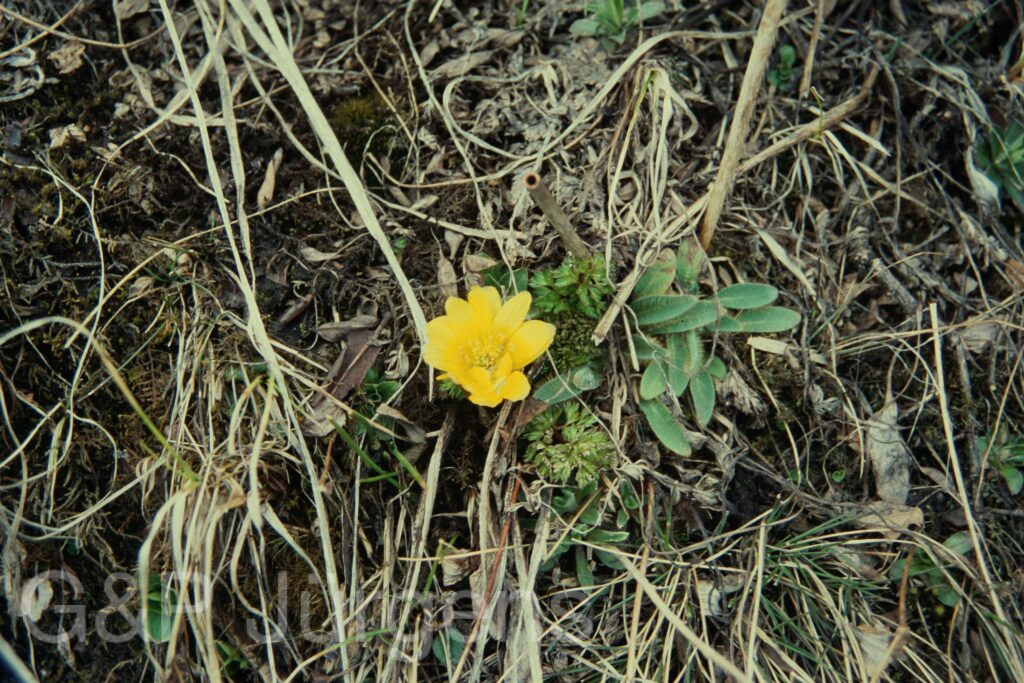
Simonov.

Sikkim2004 168 P284
Sikkim/India Singalila 4200m May

Description

Adonis nepalensis is an alpine perennial herb of the central and eastern Himalaya, recorded from Nepal, India and Bhutan (the additional scattered GBIF records from Hungary and Morocco almost certainly representing cultivated or misattributed material), with a small total of 28 occurrences in GBIF. It is a plant of high open habitats, growing in alpine meadows, grassy and rocky slopes and the margins of dwarf scrub near and above the treeline. The photographed plant was collected on the Singalila ridge on the Sikkim/India border at about 4200 m in May, a high-altitude spring-flowering station typical of the species, which blooms soon after snowmelt.

The plant grows from a short, stout rootstock and produces erect, leafy stems. The leaves are alternate and finely dissected, repeatedly divided into narrow, linear ultimate segments, giving them a feathery aspect characteristic of the genus. The flowers are solitary and terminal, fairly large and showy, with numerous spreading petals that are yellow (the usual colour in the Himalayan species), subtended by a green, dissected involucre of leaf-like bracts; the numerous stamens and free carpels are borne on a slightly elongate receptacle. The fruit is a head of small, dry, one-seeded achenes.

Adonis belongs to the Ranunculaceae and, like many genera of the family, contains cardiac glycosides and other toxic compounds. Adonis nepalensis is the principal Himalayan representative, distinguished by its alpine habit and yellow flowers, and is a relatively narrow-ranged montane species. Its high-elevation, snowmelt-dependent populations make it of biogeographic interest as part of the specialised Himalayan alpine flora and potentially sensitive to warming and to the disturbance of fragile alpine turf.

Author: Simonov. · Sources: POWO (Kew), GBIF, Flora of Bhutan, Annotated Checklist of the Flowering Plants of Nepal, Ranunculaceae of the Himalaya

(Wall.) Nees

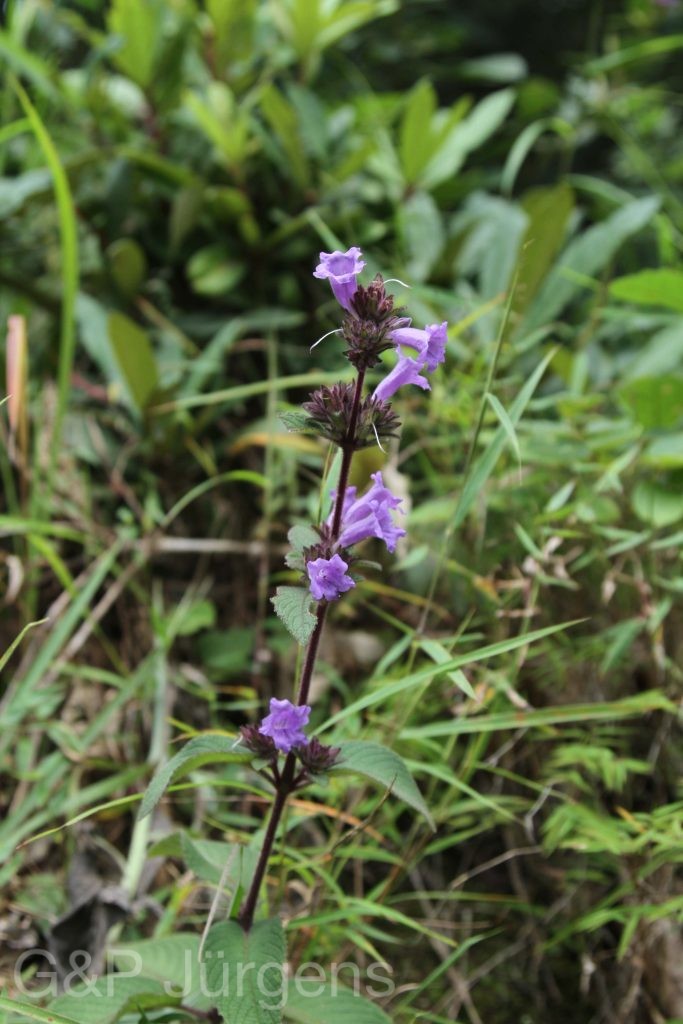
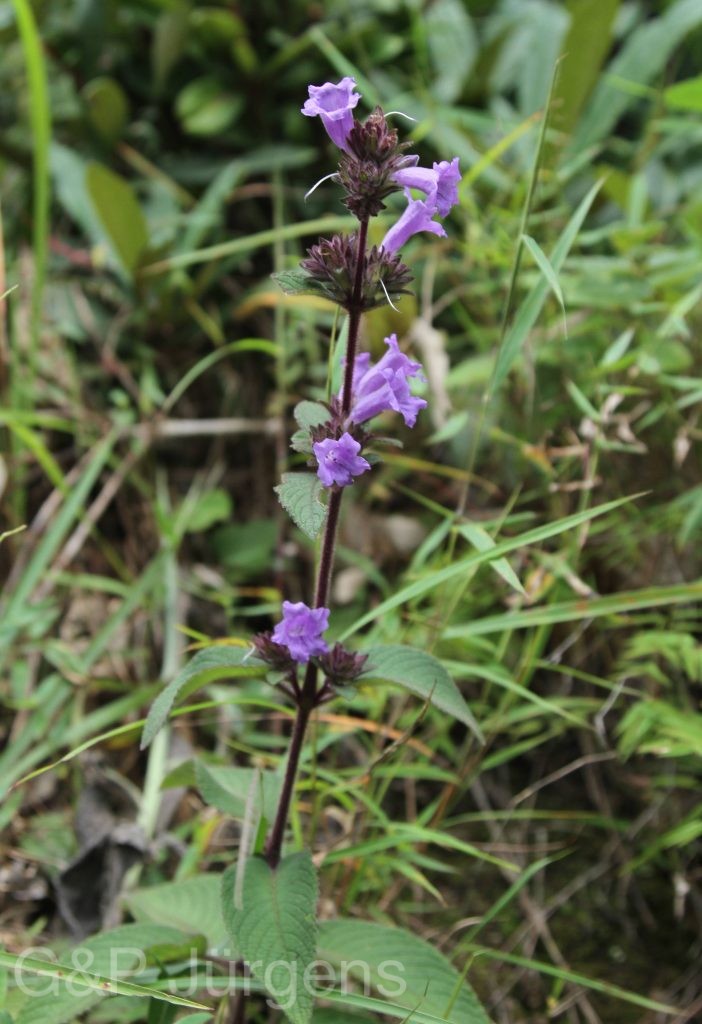
Bhutan2012 954
Bhutan2012 955

Description

Aechmanthera gossypina is a robust Himalayan acanth distributed from south-western China through northern India, Nepal and Bhutan. GBIF records some 34 occurrences across China, India, Nepal and Bhutan. Under current taxonomy the name is treated as a synonym, with Aechmanthera gossypina regarded as the accepted name for the taxon; many authors further place Aechmanthera within an expanded Strobilanthes. The plant occupies warm-temperate to subtropical hill slopes, forest margins, shrubberies and open rocky banks of the mid-Himalaya, typically between about 1000 and 2500 m, flowering in the cooler months on disturbed and grassy ground.

The plant is a coarse, woolly perennial herb or soft shrub with erect, much-branched stems densely clothed, like the foliage, in a cottony grey tomentum—the indumentum that gives the epithet gossypina, meaning cotton-like. The leaves are opposite, ovate to elliptic, acuminate, with crenate to serrate margins and a softly hairy surface. The flowers are borne in elongate terminal and axillary spike-like thyrses subtended by leafy bracts; the corolla is funnel-shaped, pale violet to bluish, with a slightly oblique five-lobed limb. The fruit is a club-shaped, explosively dehiscent capsule, the seeds borne on hooked retinacula characteristic of the family.

Aechmanthera is a small Sino-Himalayan genus historically segregated from Strobilanthes on details of the inflorescence and seed, but molecular and morphological studies increasingly subsume it within that large, taxonomically intricate genus noted for mass-flowering (plietesial) cycles. Whether A. gossypina shares the gregarious, semelparous flowering of many Strobilanthes remains imperfectly documented. The species is reasonably widespread across the central Himalaya and is not regarded as of conservation concern.

Author: (Wall.) Nees · Sources: POWO (Kew), GBIF, Flora of China, Flora of Bhutan, An Annotated Checklist of the Flowering Plants of Nepal, A Revision of the Genus Strobilanthes (Acanthaceae)

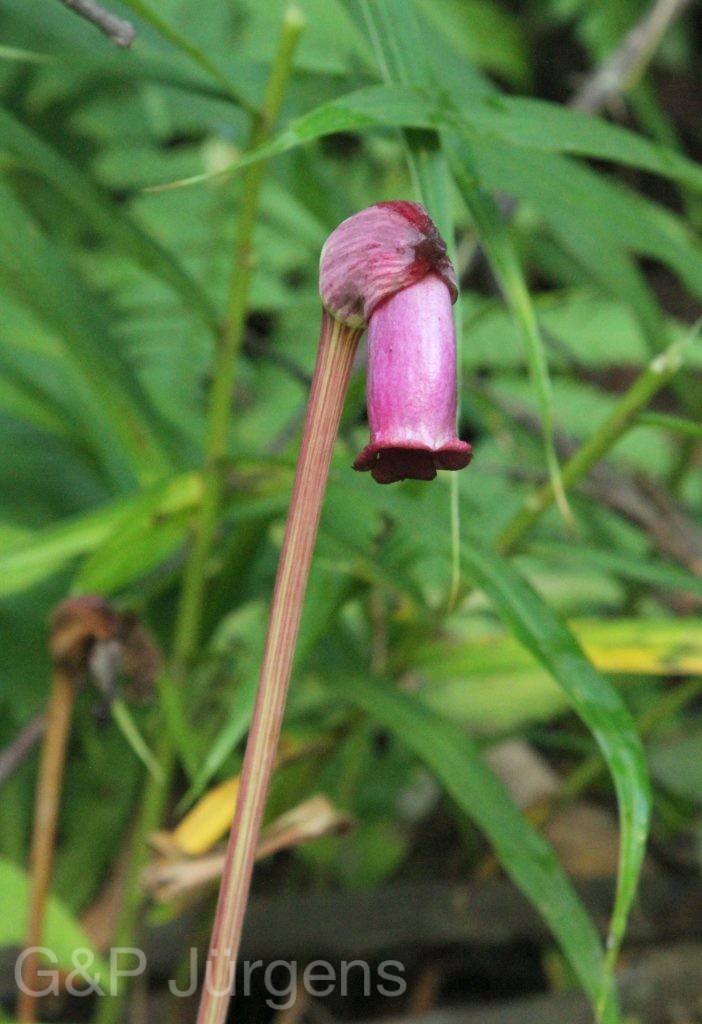
L.

Bhutan2012 456
Bhutan Wangdi 2500m, September
Nepal 95 63 P106 ergebnis
Nepal below Barphak 1400m October

Description

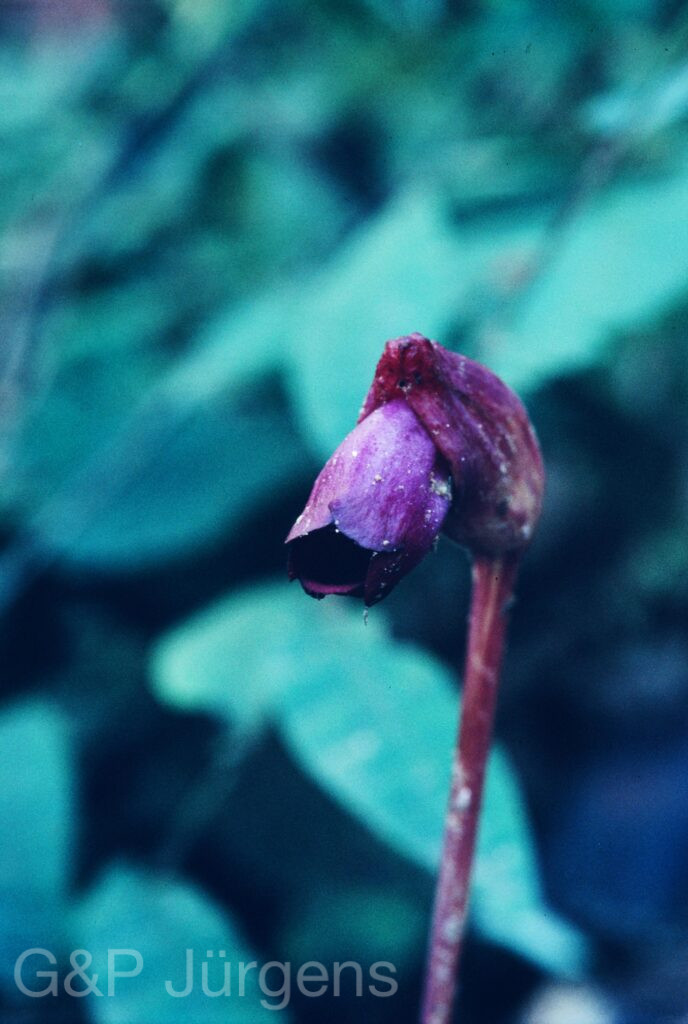
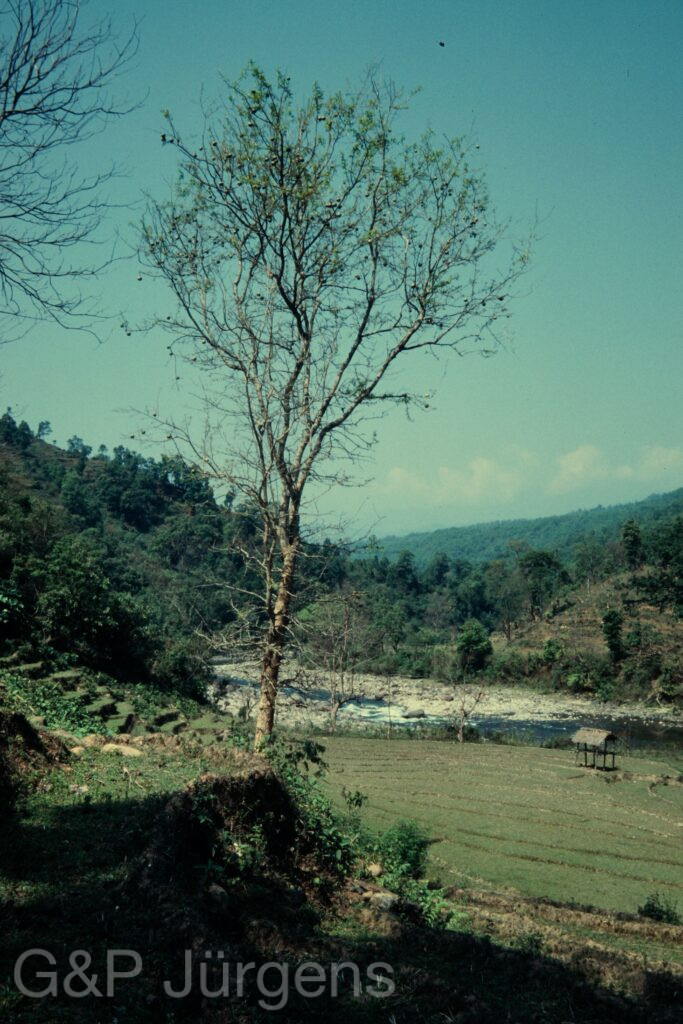
Aeginetia indica is a widespread holoparasitic herb of tropical and subtropical Asia, recorded from Japan, China, Taiwan, Korea and across South and Southeast Asia including India, Nepal, Bhutan, Sri Lanka, Myanmar, Thailand, the Malesian region and beyond; with about 3514 GBIF records it is by far the most frequently collected species in this group. It is a root parasite of grasses and other monocots, occurring in moist forest, grassland, scrub, plantations and field margins from the lowlands up into the lower hills, generally below about 2500 m. The plants illustrated, from Wangdi in Bhutan at around 2500 m in September and below Barphak in Nepal at about 1400 m in October, span this elevational range.

Lacking chlorophyll, the plant is reduced to fleshy, scale-like leaves on a very short underground stem attached to the host roots. The conspicuous part is the flower, borne singly atop a long, stout, purplish or yellowish scape; it is a large, tubular, somewhat curved corolla coloured deep purple to magenta with a paler throat, the five lobes short and the mouth oblique, subtended by a boat-shaped spathe-like calyx. There are four stamens and a superior ovary that ripens into a many-seeded capsule shedding the dust-like seeds characteristic of parasitic plants.

Now placed in the broadened Orobanchaceae following the merger of the old Scrophulariaceae-derived parasites, Aeginetia is an Asian genus of obligate root parasites, and A. indica is notable as a parasite of sugarcane and other grasses, where it can be a minor agricultural pest. Its enormous seed output and broad host and geographic range make it ecologically successful and of no conservation concern. The species is also used in traditional medicine across parts of its range.

Author: L. · Sources: POWO (Kew), GBIF, Flora of China, Flora of Bhutan, Annotated Checklist of the Flowering Plants of Nepal, Nickrent Parasitic Plant Genera of the World

Aegle marmelos

by GP Jürgens

(L.) Corrêa

Nepal 97 557 P1087
Nepal Sabha-Khola 550m May

Description

Aegle marmelos (L.) Corrêa, the bael or wood-apple, is a deciduous tree of the Rutaceae native to the Indian subcontinent and Southeast Asia and now widely cultivated and naturalised across the tropics. Its very numerous records center on India, Nepal, Sri Lanka, Bangladesh, Bhutan, Thailand, Indochina, southern China and Malesia, with introductions into the Americas, Australia and elsewhere. The species grows in dry deciduous forest, scrub and on cultivated and temple ground, tolerating poor, alkaline and seasonally arid soils. It is essentially a lowland and foothill plant, and the tree photographed along the Sabha-Khola in Nepal at 550 m in May represents the warm sub-Himalayan tract where it flowers with the pre-monsoon heat.

The tree reaches up to about 10–15 m, with a spreading crown and armed branches bearing stout, straight, axillary spines. The leaves are alternate and trifoliolate (rarely with five leaflets), the leaflets ovate-lanceolate, crenulate and dotted with translucent aromatic oil glands. The flowers are greenish-white, fragrant, bisexual, borne in short axillary panicles, with four to five petals and numerous stamens. The fruit is a large, globose, woody-rinded amphisarca, grey-green ripening to yellowish, the hard shell enclosing a sweet, aromatic, mucilaginous orange pulp with numerous wool-coated seeds.

Monotypic or nearly so within Aegle, the species is of exceptional cultural and economic importance: it is sacred in Hindu tradition, associated with Shiva, and is a long-established medicinal plant, the unripe fruit valued in the treatment of dysentery and digestive disorders. The pulp is consumed fresh and in beverages. Owing to its hardiness and usefulness it is extensively planted, and it is nowhere considered threatened, though its near-ubiquitous cultivation obscures the limits of its truly native range.

Author: (L.) Corrêa · Sources: POWO (Kew), GBIF, Flora of China Vol. 11, Flora of Pakistan, Stone: Rutaceae (Flora Malesiana)

Roxb.

Sikkim2004 445 G776
Sikkim/India Tista-Valley 2000m May

Description

Aerides multiflora is an epiphytic orchid of the subtribe Aeridinae, native to the eastern Himalayas and extending into Southeast Asia. Its natural range encompasses Nepal, northeast India (Sikkim, Assam, Meghalaya, Arunachal Pradesh), Bhutan, Myanmar, Thailand, and southwest China (Yunnan). The species inhabits humid, semi-deciduous and evergreen forests at elevations of 200–2,000 m, typically growing on mossy tree trunks and branches in well-lit positions.

The plant produces stout, terete stems 20–40 cm long, clothed with distichous, coriaceous, strap-shaped leaves that are 15–25 cm long and unequally bilobed at the apex. The inflorescence is a densely many-flowered, pendent raceme 15–30 cm long, bearing 20–40 fragrant flowers. Individual flowers are 2–2.5 cm across, white to pale rose-pink with purple spots, the lip trilobed with a prominent forward-pointing spur. The mid-lobe is fleshy and tongue-shaped. Flowering occurs from April to June.

Aerides multiflora is valued in horticulture for its abundant, sweetly fragrant blooms. The species is under pressure from overcollection and habitat degradation across its range. Like all orchids, it is listed under CITES Appendix II, regulating international trade.

Author: Roxb. · Sources: POWO (Kew), Flora of Bhutan Vol. 3, GBIF, Pearce & Cribb: The Orchids of Bhutan (2002)