Tag:

Nepal

Flowers of Nepal — 1313 wild plant species documented from the Nepalese Himalaya, from subtropical foothills to high alpine meadows above 4,000 m. Nepal’s dramatic elevation gradient makes it one of the richest botanical regions on Earth, home to rhododendrons, primulas, gentians and the famed blue poppies (Meconopsis). Every entry gives a botanical description, native distribution, habitat and flowering season, alongside the original field photograph and the location where it was taken.

C.B.Clarke ex Hook.f.
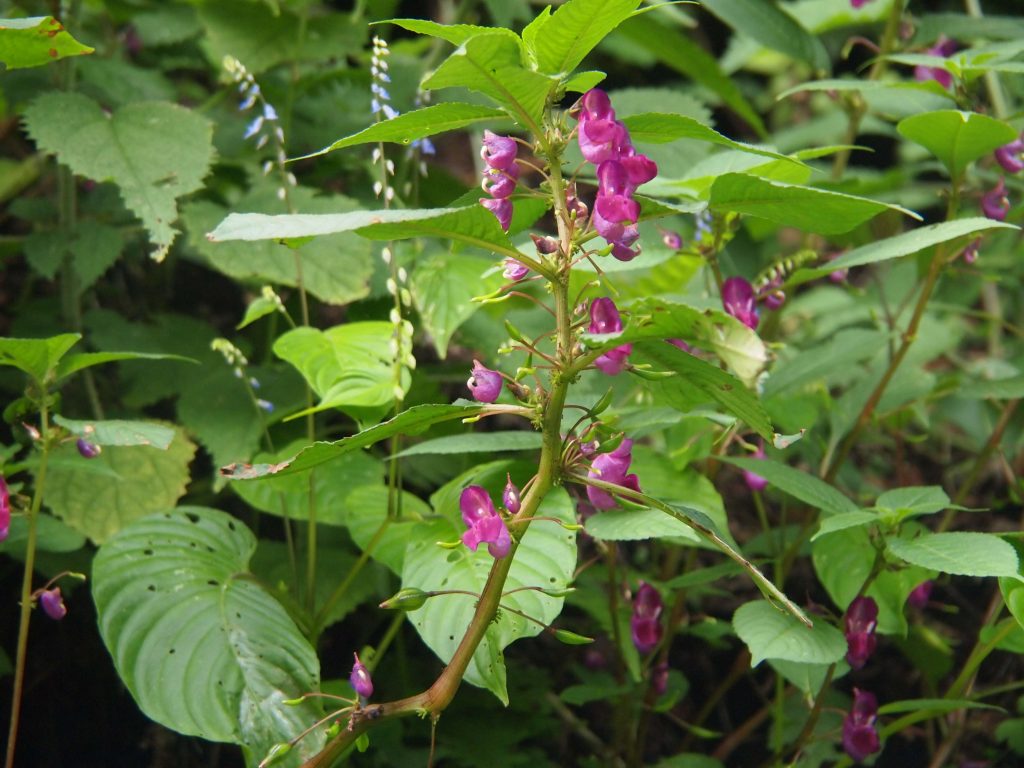
Bhutan2012 772
Bhutan Zemgang 1800m, October
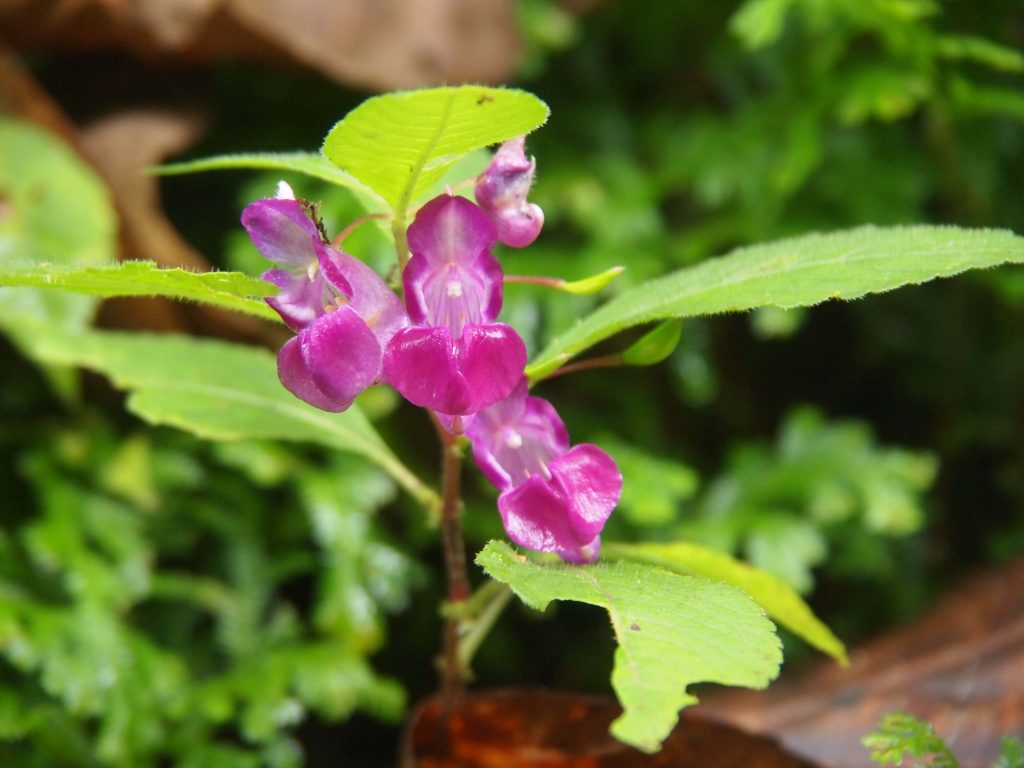
Bhutan2012 774
Bhutan Zemgang 1800m, October

Description

Impatiens florigera is a balsam of the eastern Himalaya, recorded by GBIF (about 29 occurrences) from India, Bhutan and Nepal. It is a herb of moist, shaded habitats in the subtropical and warm-temperate broadleaved forest belt, growing on damp banks, by streams, in forest clearings and along shaded roadsides where soil moisture is high through the monsoon. The illustrated plant was photographed in Bhutan at Zemgang at about 1800 m in October, an autumn-flowering montane forest locality characteristic of the species, which blooms towards the close of the monsoon when many Himalayan Impatiens reach their flowering peak.

The plant is a succulent, glabrous annual with a translucent, watery stem that is often reddish at the swollen nodes and branches freely. The leaves are alternate, ovate to elliptic, with a crenate-serrate margin and shortly acuminate apex, narrowed to a petiole that may bear a few stipitate glands. The flowers are zygomorphic and showy, borne on slender axillary peduncles; each has the balsam structure of three sepals, the lowest enlarged into a spurred boat-shaped lip, and five petals forming a standard and two lateral united pairs, typically pink to purplish. The fruit is a fleshy, club-shaped capsule that dehisces explosively, its valves coiling abruptly to scatter the seeds.

Impatiens is one of the largest genera of flowering plants and especially diverse in the Himalaya, where numerous narrowly distributed species occupy moist forest habitats and are distinguished by fine differences in flower form, spur shape and indumentum. I. florigera belongs to this rich eastern Himalayan radiation. As a monsoon-dependent annual of moist forest it is locally frequent within its range; its explosive seed dispersal and insect pollination are typical of the genus.

Author: C.B.Clarke ex Hook.f. · Sources: POWO (Kew), GBIF, Flora of Bhutan, Flora of China, Annotated Checklist of the Flowering Plants of Nepal, Grey-Wilson's monograph Impatiens of Africa and revisional studies of Asian Impatiens
Buch.-Ham. ex Hook.f. & Thomson

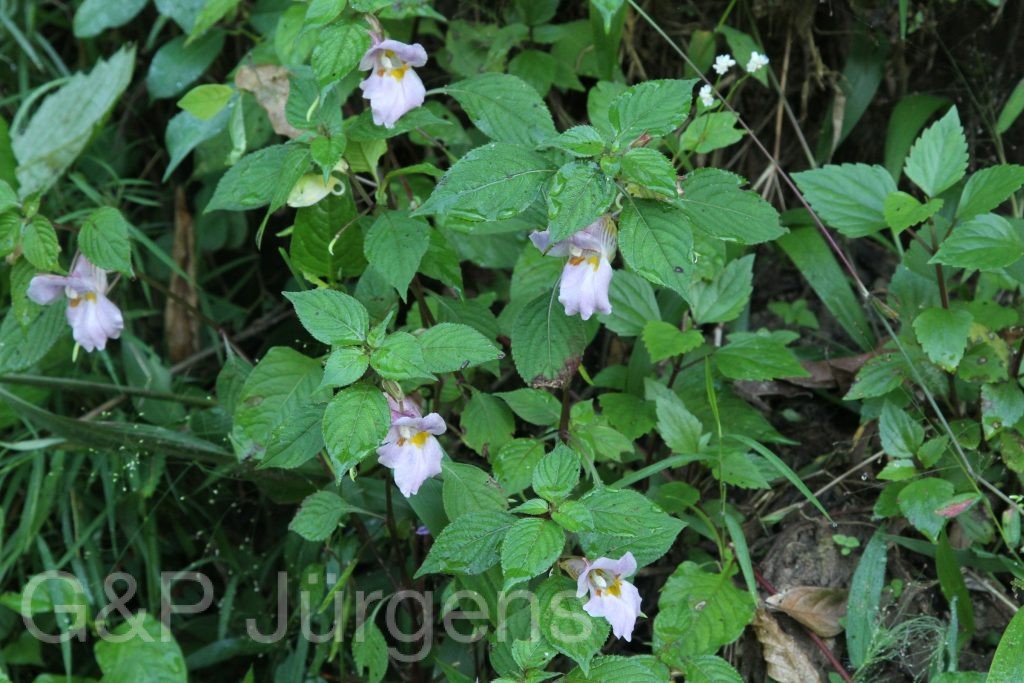
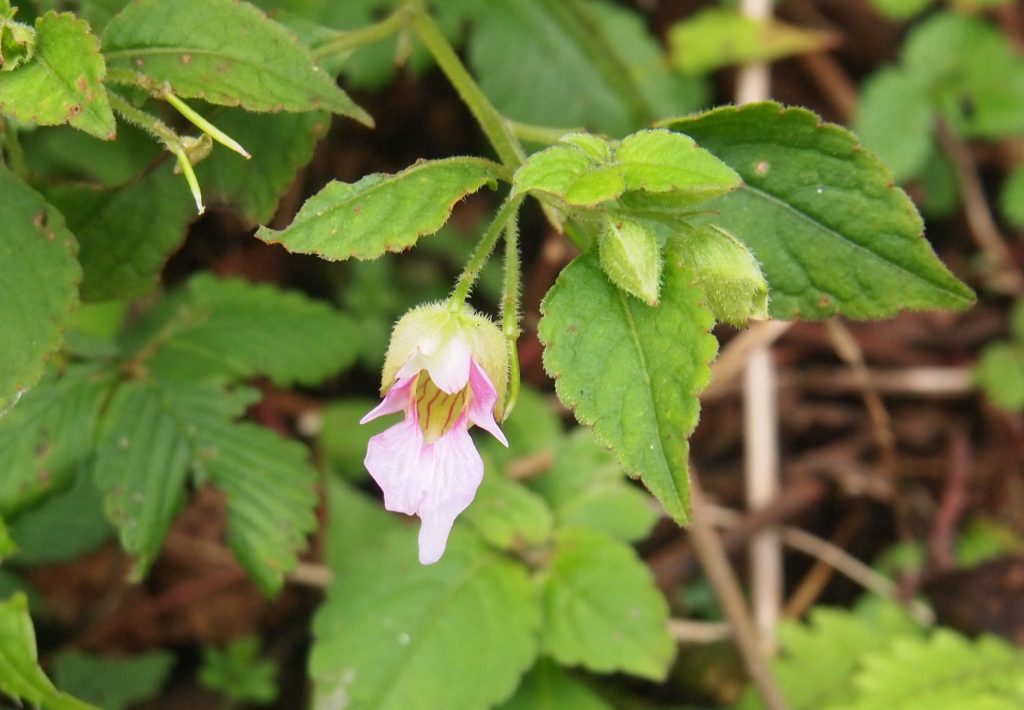
Bhutan2015 299
Bhutan Galephug 500m, October

Description

Impatiens jurpia is a Himalayan balsam ranging through northern India, Nepal, Bhutan and southward into Thailand and Malaysia. It is a hygrophilous herb of moist, shaded habitats, characteristically inhabiting wet forest margins, ravines, dripping banks and the verges of streams within subtropical and warm-temperate woodland. It occurs across a wide altitudinal span; the plant recorded at Gelephu in southern Bhutan at around 500 m in October illustrates its presence in the humid subtropical foothills, where it flowers in the post-monsoon season when soil moisture remains high.

The plant is a succulent annual herb with translucent, swollen, glabrous stems that are often reddish at the nodes, rooting at the lower joints. The leaves are alternate, ovate to elliptic-lanceolate, with a crenate-serrate margin frequently bearing minute setae in the sinuses, and taper into a petiole. The flowers are zygomorphic and borne on slender axillary pedicels; the lateral sepals are small, the lower sepal forms a navicular spur curving downward, and the corolla, pink to purplish or pale, comprises a standard and two bilobed lateral united petals. The fruit is a fusiform capsule that dehisces explosively, ejecting the seeds.

Impatiens is one of the largest genera of flowering plants and a major centre of diversity in the Himalaya and Southeast Asia, where rapid speciation has produced many narrowly distributed taxa. Impatiens jurpia, attributed to Buchanan-Hamilton ex Hooker f. and Thomson, is a comparatively widespread and morphologically variable member of the genus. Its ballistic seed dispersal and dependence on perennially moist microhabitats make it a useful indicator of intact, humid forest streamside ecosystems.

Author: Buch.-Ham. ex Hook.f. & Thomson · Sources: POWO (Kew), Flora of Bhutan Vol. 2, Flora of China Vol. 12, GBIF, Grey-Wilson: Impatiens of Africa and the Himalaya

DC.

Bhutan2012 940
Bhutan Jakar 1950m, October

Description

Impatiens puberula is a Himalayan balsam ranging through Nepal, India, China, Bhutan and Myanmar, with around 186 georeferenced records. It is a plant of cool, humid, shaded habitats, occurring on damp banks, stream-sides, seepage slopes and moist forest margins in the temperate zone. The individual photographed near Jakar in the Bumthang region of central Bhutan at about 1950 m in October illustrates its preference for shaded, moisture-retentive ground, where it flowers late into the monsoon season on rich, organic soils.

The species is a succulent annual with translucent, often reddish-tinged stems that are minutely puberulous, the indumentum giving rise to its epithet. The leaves are alternate, ovate to elliptic-lanceolate with a crenate-serrate margin, the teeth often gland-tipped, and taper to a petiole. The zygomorphic flowers are borne singly or in few-flowered axillary clusters; the showy lower sepal is prolonged into a slender, curved nectar spur, and the lateral united petals form broad wings, as is characteristic of the genus. The fruit is an explosively dehiscent fleshy capsule that, when ripe, coils its valves to fling out the seeds.

Impatiens is one of the largest angiosperm genera and is notably species-rich and taxonomically difficult across the Sino-Himalayan region, where rapid radiation has produced numerous narrowly defined and frequently endemic taxa separated by floral colour, spur curvature and seed sculpturing. Its explosive ballistic seed dispersal and dependence on perennially moist microhabitats make such balsams sensitive to drainage change and forest disturbance, though I. puberula remains widespread.

Author: DC. · Sources: POWO (Kew), GBIF, Flora of Bhutan, Flora of Nepal, Flora of China, Grey-Wilson's monograph of Impatiens

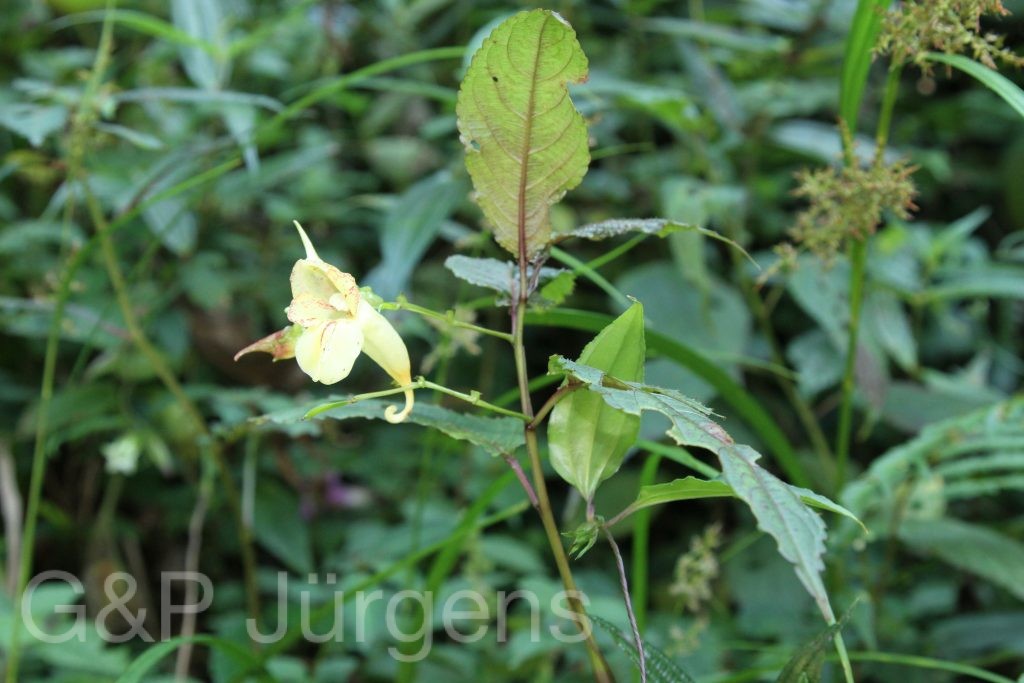
DC.

Bhutan2012 138 1
Bhutan Haar-Valley, 3100m September

Description

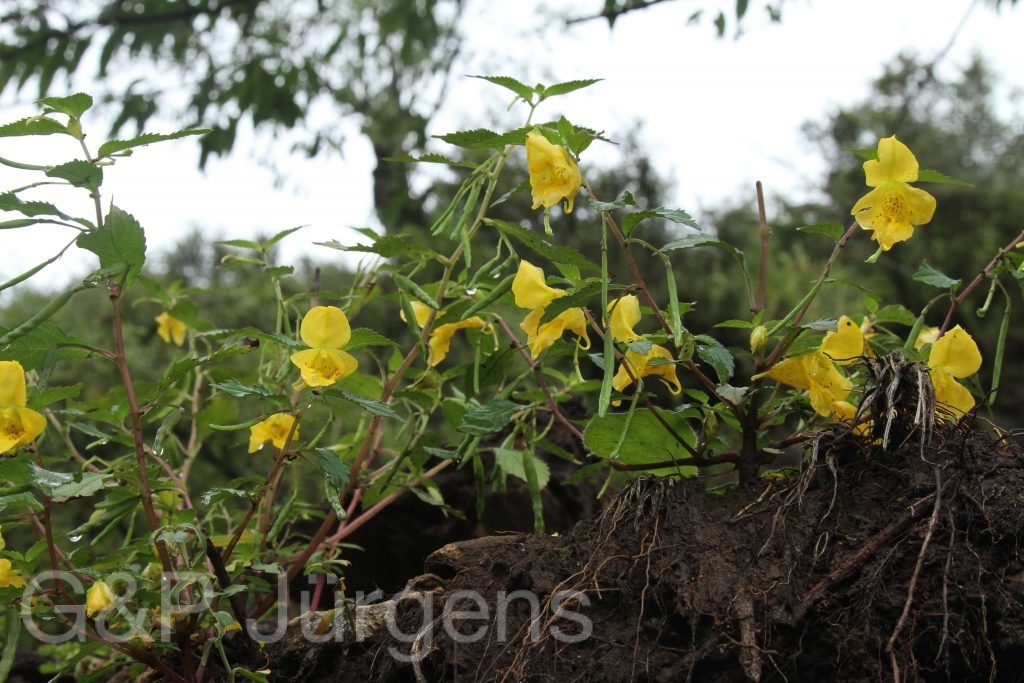
Impatiens scabrida is a robust annual balsam native to the Himalaya, its core range spanning India, Nepal, Pakistan, China and Bhutan, though GBIF's 243 occurrences also include many records from Europe and elsewhere (Portugal, the Netherlands, Great Britain, Germany, Poland and others), reflecting its naturalisation as a garden escape outside its homeland. In its native range it grows on moist shaded banks, forest margins, ravines and streamsides. The photographed plant is from the Haa Valley in Bhutan at about 3100 m, flowering in September, in cool, damp temperate woodland.

The plant is a succulent, erect annual with translucent, often reddish, branched stems that are scabrid (rough), as the epithet records. The leaves are ovate to lanceolate, serrate, with gland-tipped teeth. The yellow flowers are zygomorphic and spurred in the manner of the genus: a saccate lower sepal drawn into a slender curved spur, an upper standard petal and paired lateral united petals forming wings. The fruit is a fleshy, explosively dehiscent capsule that ejects its seeds on contact, giving balsams their touch-me-not behaviour.

The species is accepted. Impatiens is a vast, taxonomically complex genus centred on tropical Asia and Africa, with the Himalaya a major centre of diversity and endemism. The yellow-flowered Himalayan balsams are pollinated chiefly by long-tongued bees, and the ballistic seed dispersal aids rapid colonisation, the very trait underlying this species' spread in European riparian and disturbed habitats. Its naturalised populations make it a subject of interest in invasion ecology.

Author: DC. · Sources: POWO (Kew), GBIF, Flora of Bhutan, Grey-Wilson's monograph Impatiens of Africa and Asian studies, Flora of Nepal

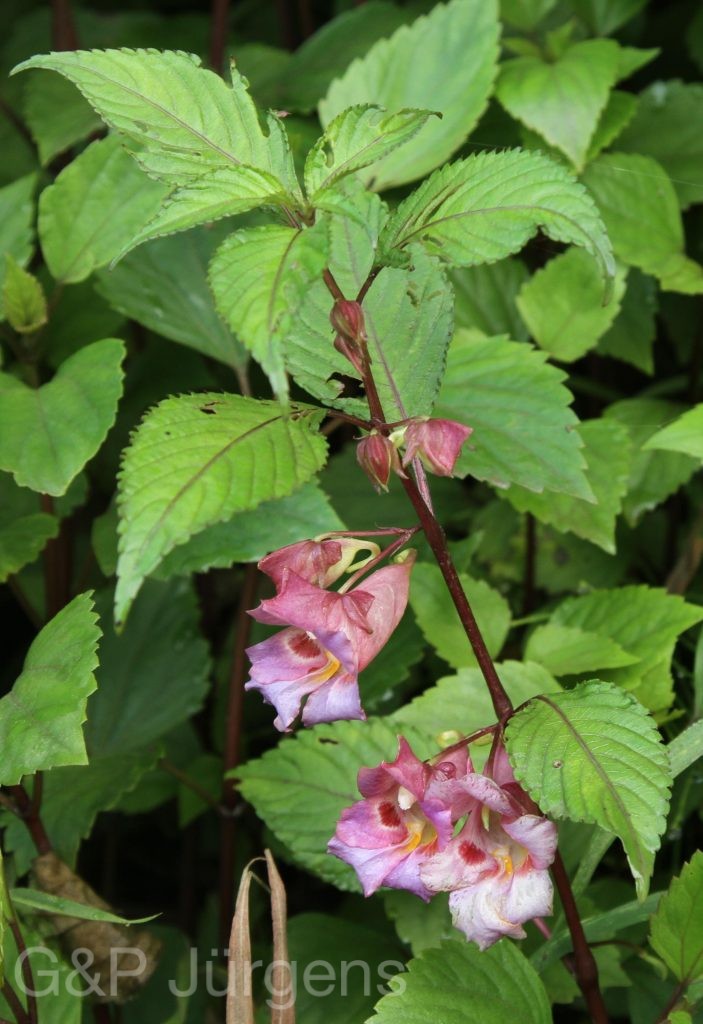
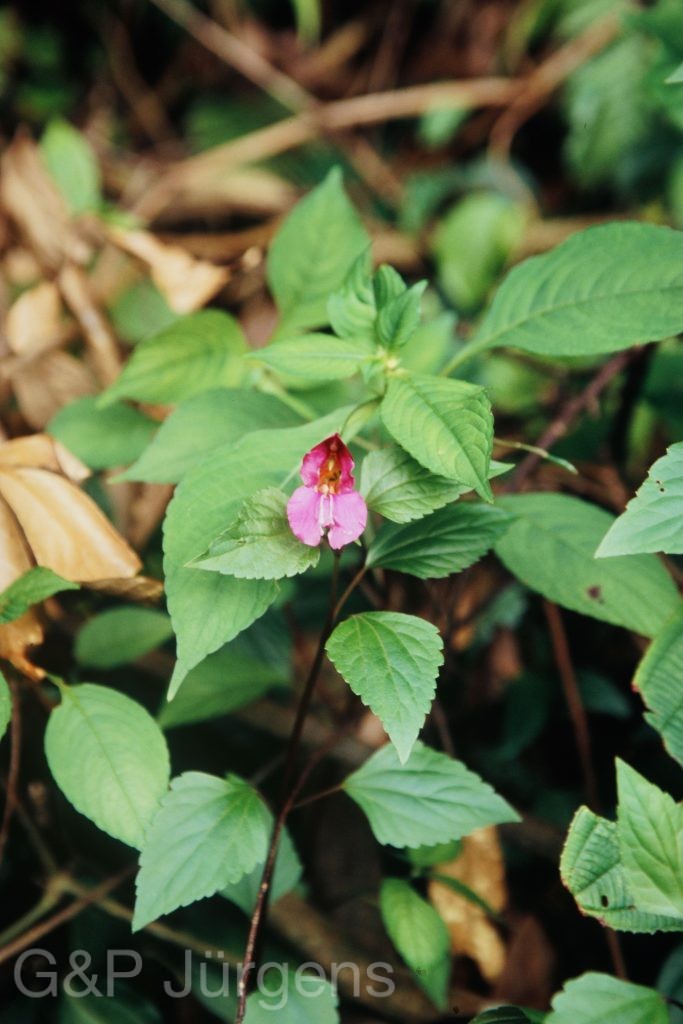
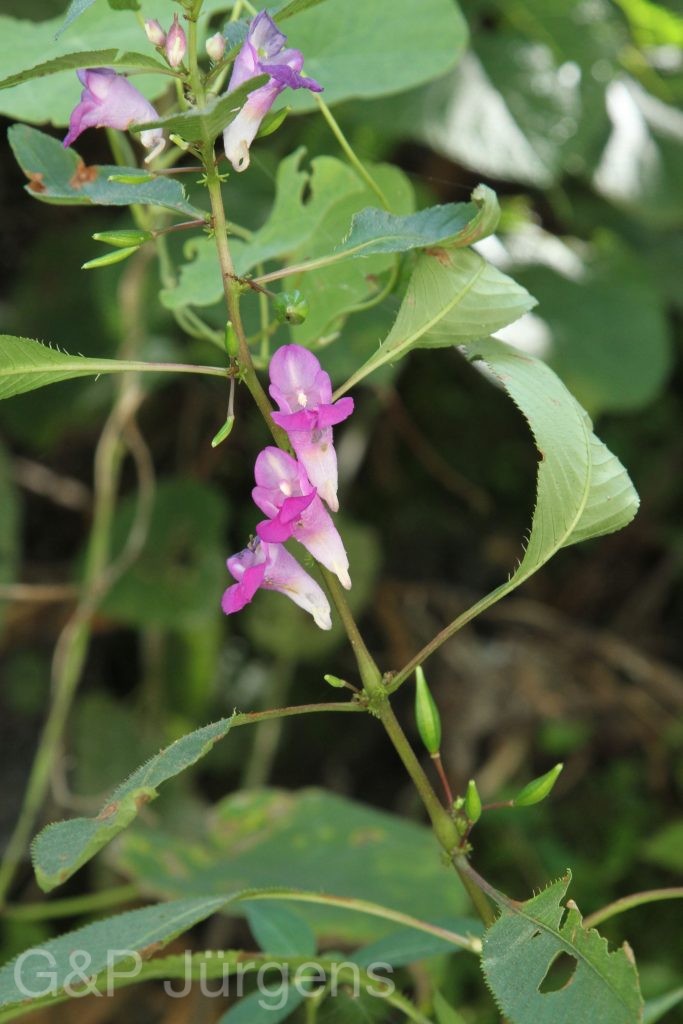
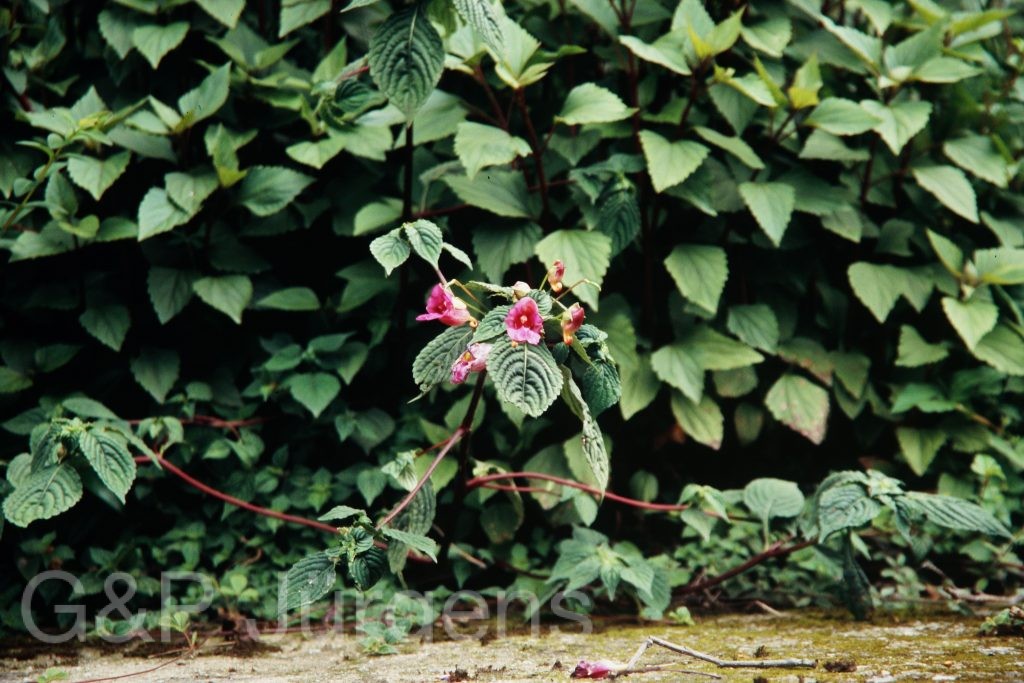
Hook.f. et Thomson

Bhutan2015 60
Bhutan Wangdi Phodrang 2000m, October
Bhutan2015 59
Bhutan Wangdi Phodrang 2000m, October
BhutanPG2011 37
Bhutan Pele-La, 2800m June
Bhutan2012 1338
Bhutan Pemagatse, 2000m October

Description

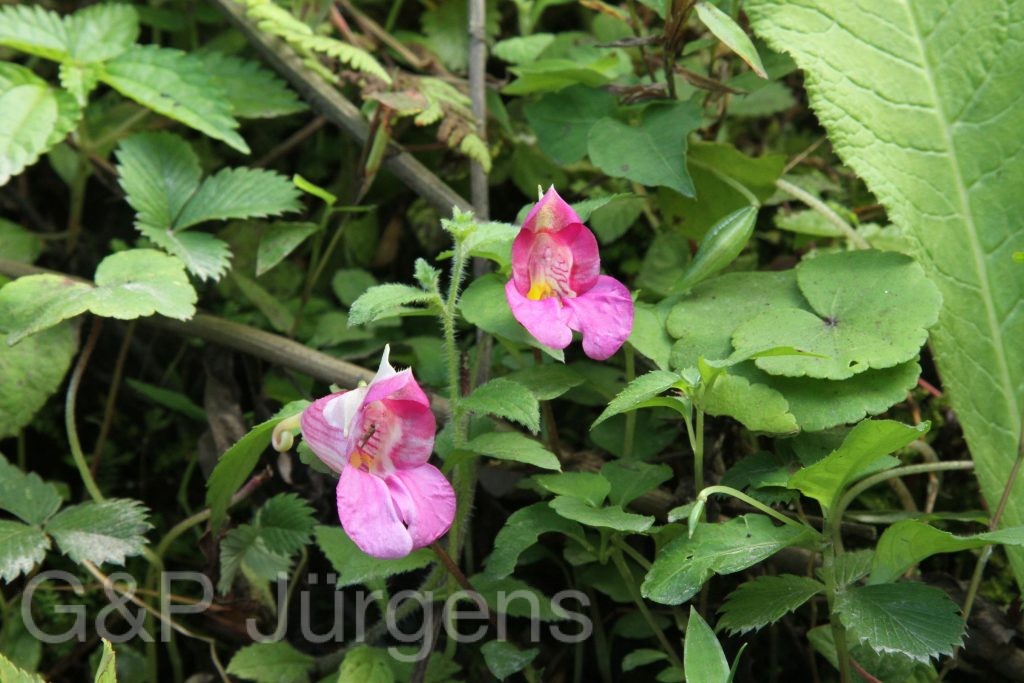
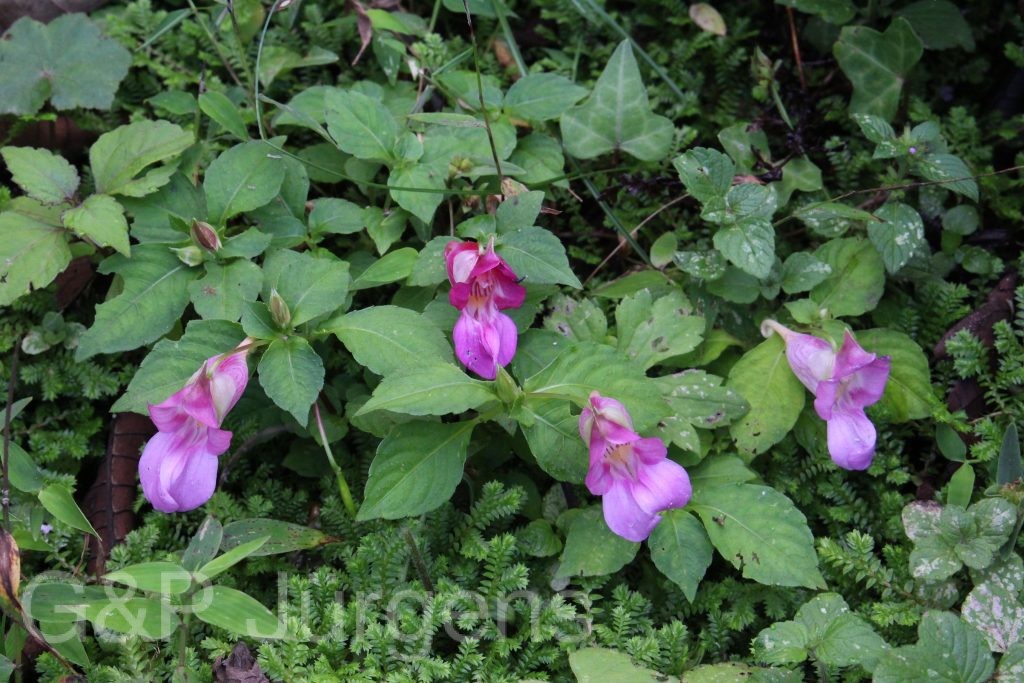
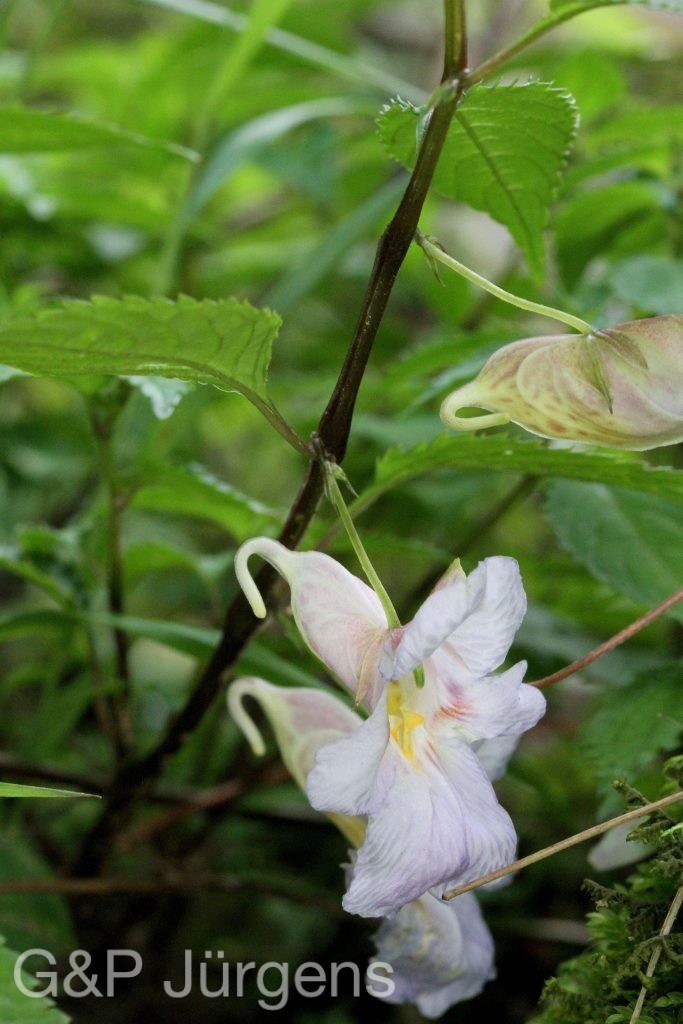
Impatiens spirifer is an annual balsam of the eastern Himalaya, recorded by GBIF in some 52 occurrences from India, China, Bhutan and Nepal. It favours cool, shaded and humid situations such as forest margins, ravine banks, seepage slopes and roadside ditches in the temperate and upper-subtropical belt, broadly between 1800 and 3000 m. The accompanying images were taken in Bhutan at Wangdi Phodrang and Pemagatse (2000 m, October) and the Pele-La (2800 m, June), documenting a long flowering season that extends through the monsoon into autumn on moist, organic-rich soils where balsams thrive.

The plant is a succulent, glabrous herb with translucent, often reddish-tinged stems that are erect to ascending and somewhat swollen at the nodes. The leaves are alternate, ovate to elliptic, crenate-serrate with the lowermost teeth sometimes gland-tipped, narrowing to a petiole. The flowers are zygomorphic and resupinate, borne singly or in few-flowered axillary clusters; the lower sepal forms a navicular spur that is slender and incurved, while the lateral united petals are deeply two-lobed. The fruit is a fleshy, fusiform capsule that dehisces explosively, the valves coiling to fling out the small seeds.

Impatiens (Balsaminaceae) is among the largest angiosperm genera, exceptionally species-rich and rapidly radiating in the Sino-Himalayan region, where narrow endemism and floral micromorphology drive species delimitation. GBIF treats I. spirifer as accepted. Like many montane balsams it is closely tied to perennially moist microhabitats and is thus vulnerable to drainage, disturbance and shifts in monsoon reliability, although it remains locally frequent within suitable forest.

Author: Hook.f. et Thomson · Sources: POWO (Kew), GBIF, Flora of Bhutan, Flora of China, Grey-Wilson monograph of Impatiens (Balsaminaceae)

Wall.

Bh09 387 P613
Bhutan Mo-Chu, 1500m June

Description

Impatiens sulcata is a tall, robust annual balsam of the Himalaya, recorded by GBIF (361 occurrences) from India, Nepal, Bhutan, Pakistan and adjacent China and Myanmar. It favours damp, nutrient-rich ground along streams, ditches, forest margins, roadside seepages and disturbed moist sites, principally from around 1500 to 3000 m in the warm-temperate and subtropical belts. The cited gathering from the Mo-Chu in Bhutan at 1500 m in June reflects its riparian preference, the plant typically forming dense, gregarious stands in the early monsoon along watercourses where the soil remains saturated.

The species is a succulent herb often exceeding a metre in height, with stout, conspicuously grooved (sulcate), reddish, hollow stems that root at the lower nodes. The leaves are large, ovate to ovate-lanceolate, serrate with crenate-glandular teeth, and arranged oppositely or in whorls toward the apex. Flowers are large and showy, pink to purplish, borne in axillary racemose clusters; the lower sepal forms a saccate spur, the standard is dorsally carinate, and the lateral united petals carry broad auricles. The fruit is a fleshy, club-shaped capsule that dehisces explosively, scattering the seeds by elastic recoil of the valves.

Belonging to the speciose, taxonomically complex genus Impatiens, the species sits among the tall Himalayan annual balsams and is allied to such forms as I. glandulifera, with which it shares vigorous growth and explosive seed dispersal. Its annual, fast-growing, ruderal habit makes it an effective colonist of disturbed riparian ground, while its open flowers are pollinated by bees and butterflies. It is widespread and not threatened.

Author: Wall. · Sources: POWO (Kew), GBIF, Flora of China Vol. 12, Flora of Bhutan Vol. 1, Flora of Nepal, Grey-Wilson Impatiens of Africa and the Himalaya

Roxb. ex DC.

Bhutan2015 120
Bhutan Galephug 600m, October
Bh09 288 G471
Bhutan Galephug 600m, October

Description

Impatiens tripetala is a succulent annual balsam of the warm, humid lowlands and foothills of the eastern Himalaya and Indo-Burma. GBIF lists 77 occurrences, centred on India, Myanmar, Bhutan and Nepal, with additional scattered or cultivated records reported under several country codes. It grows in moist shaded ground along forest streams, ditches and disturbed seepage sites in the subtropical belt, flowering late in and after the monsoon. The species was recorded at Galephug in southern Bhutan at about 600 m in October, a low foothill elevation reflecting its preference for warm, perhumid habitats.

It is an erect, glabrous herb with translucent, watery stems that are swollen at the nodes, rooting at the lower joints. The leaves are alternate, ovate to elliptic-lanceolate, crenate-serrate with the teeth often gland-tipped, and narrowed to a petiole. The zygomorphic flowers are borne on axillary peduncles; the lower sepal forms a spurred saccate pouch, and the corolla shows the reduced, apparently three-petalled appearance to which the epithet tripetala refers. The fruit is the characteristic fleshy, explosively dehiscent capsule of the genus, scattering its seeds by elastic recoil of the valves.

Impatiens (Balsaminaceae) is an enormous genus with a major centre of diversity in the Sino-Himalayan region, where many species are narrow endemics distinguished by flower colour, spur form and capsule shape. I. tripetala forms part of the rich lowland-to-submontane balsam flora of the eastern Himalaya. As an annual of moist, often disturbed ground it can be locally common, but the wider group is notable for high endemism and sensitivity to forest loss and hydrological change, themes relevant to its conservation context.

Author: Roxb. ex DC. · Sources: POWO (Kew), GBIF, Flora of Bhutan, Flora of British India, Annotated Checklist of the Flowering Plants of Nepal, Grey-Wilson monograph Impatiens of Africa and Asian revisions of Balsaminaceae

C.B.Clarke ex Hook.f.

Bhutan2015 91
Bhutan Galephug 1200m, October

Description

Impatiens uncipetala is a Himalayan balsam recorded from India, Nepal, China and Bhutan, with 43 georeferenced occurrences across the central and eastern Himalaya. As with most Impatiens it is a moisture-demanding herb of shaded, humid habitats, growing along stream banks, on dripping rock faces, in ditches and on the floor of moist subtropical to lower temperate forest. The plant photographed at Galephug in Bhutan at 1200 m in October reflects its low-elevation, post-monsoon flowering, when the soft, succulent annuals reach maturity and bloom freely in the warm, wet foothill forests.

The plant is a tender annual herb with translucent, watery, brittle stems that are often swollen at the nodes and root readily where they touch the ground. The leaves are simple, alternate or sometimes subopposite, ovate to lanceolate, with toothed margins. The zygomorphic flowers hang on slender pedicels and display the characteristic balsam architecture: three sepals, the lowermost enlarged into a saccate nectar spur, and five petals in which the two lateral pairs are fused into wing-like structures. The epithet uncipetala refers to a hooked petal appendage. The fruit is a fleshy, five-valved capsule that splits and coils explosively, ejecting the seeds.

Impatiens is one of the largest angiosperm genera, with a major centre of diversity in the Sino-Himalayan and Indo-Burmese region where narrowly endemic species abound. Its explosive capsules and reliance on humid microhabitats foster localised, often patchy distributions. The moderate occurrence count for I. uncipetala suggests a regional but uncommon species best conserved through maintenance of intact moist forest.

Author: C.B.Clarke ex Hook.f. · Sources: POWO (Kew), GBIF, Flora of Bhutan, Flora of China, Impatiens of the Himalaya and China monographic studies (Balsaminaceae), Flowers of the Himalaya (Polunin & Stainton)

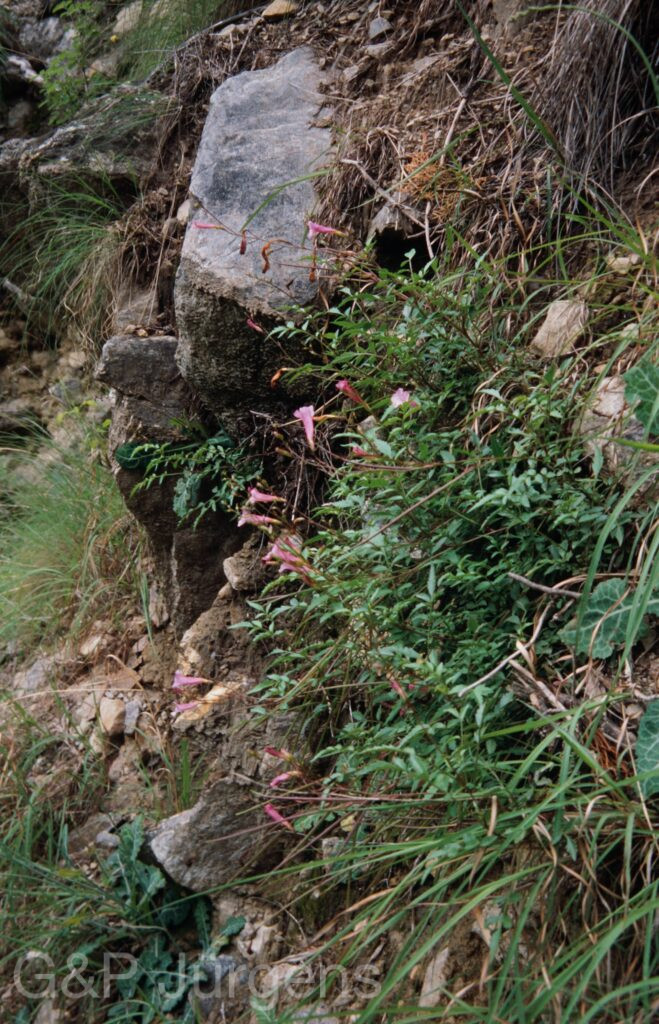
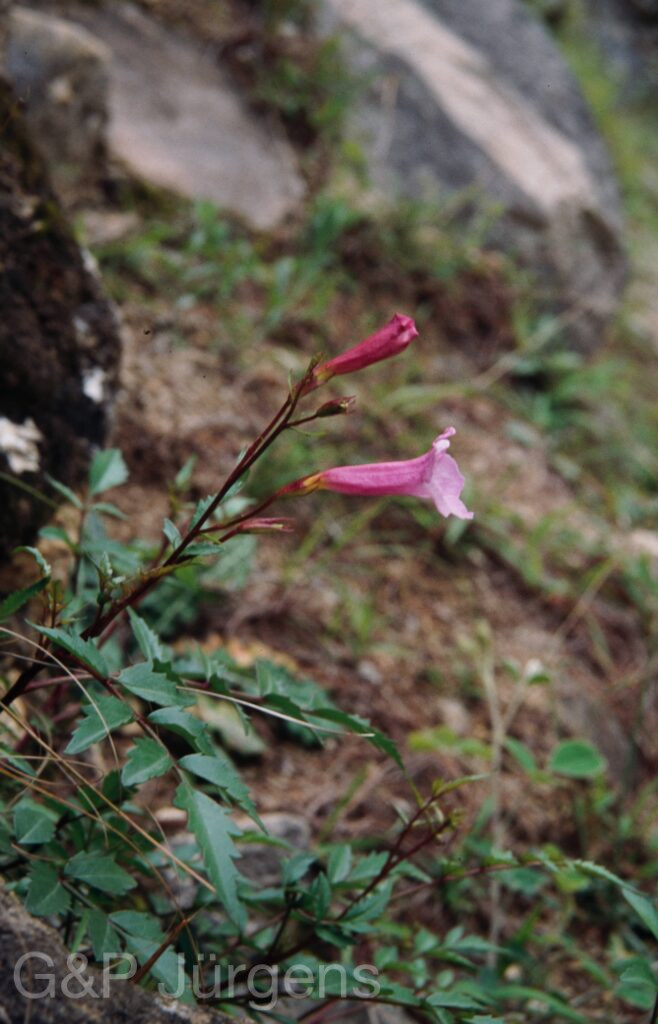
Royle

Nepal 99 904 ergebnis
West-Nepal Hanke 2660m, July
Nepal 99 905 ergebnis
West-Nepal Hanke 2660m, July

Description

Incarvillea diffusa is a herbaceous member of the Bignoniaceae distributed through the Himalaya into southwest and central China, with GBIF recording close to 1,900 occurrences chiefly from China, Nepal and India together with scattered cultivated and naturalised records elsewhere. It inhabits open, often disturbed ground at middle elevations: grassy and shrubby slopes, forest margins, roadside banks, ravines and rocky places, broadly between about 2000 and 3500 m. The photographed plant from Hanke in west Nepal at 2660 m, flowering in July, sits within this mid-montane band and at the height of the monsoon, the season when the species comes into bloom on moist, sunlit hillsides among grasses and scrub.

It is an erect to ascending, branching herb commonly reaching 30-80 cm, sometimes more, with a sturdy rootstock. The leaves are alternate and pinnately to bipinnately compound, the leaflets ovate, toothed and softly herbaceous, giving the plant a leafy, somewhat diffuse aspect that suits its specific epithet. The flowers are borne in lax terminal racemes or panicles; each has a campanulate calyx and a showy, bilabiate, funnelform to trumpet-shaped corolla, yellow with the throat and tube often marked or flushed, and four didynamous stamens enclosed within. The fruit is an elongate, narrowly cylindrical capsule that splits to release numerous flat, winged seeds.

Incarvillea is an Asian genus of around fifteen species centred on the Sino-Himalayan region and the Tibetan plateau, ranging from low herbs to robust perennials, and is unusual within the mostly woody, tropical Bignoniaceae in being entirely herbaceous. I. diffusa belongs to the yellow-flowered, pinnate-leaved group and is distinguished by its diffuse branching habit and floral details. Widespread and frequent in suitable open habitats, it is of no conservation concern, and its showy blooms have brought several relatives of the genus into horticulture.

Author: Royle · Sources: POWO (Kew), GBIF, Flora of China Vol. 18, Flora of Nepal, Grierson and Long's Flora of Bhutan Vol. 2, Grey-Wilson's revision of Incarvillea

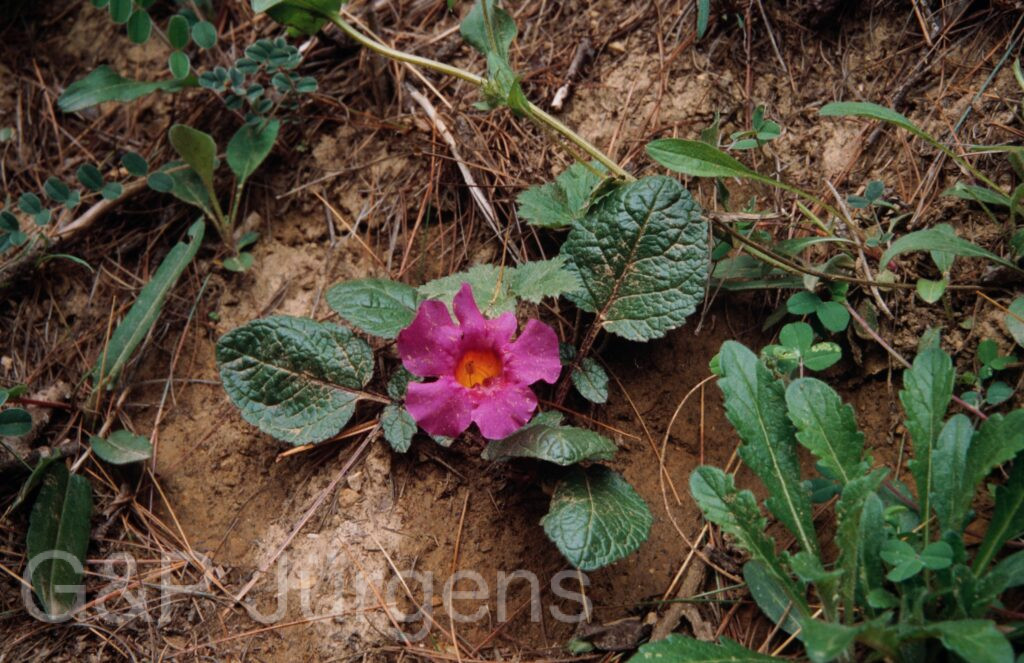
(H.Lév.) Grierson

Nepal 99 727 ergebnis ergebnis
West-Nepal Poksundo-Lake 3650m, July

Description

Incarvillea mairei is a stemless, rosette-forming alpine perennial of the Bignoniaceae, distributed across the high mountains of the Sino-Himalayan region. GBIF data (over 450 occurrences) document its native range in China and Nepal, with additional herbarium material in European collections. It is a plant of open alpine and subalpine slopes, stony pastures, grassland and rocky ground, generally between about 2,500 and 4,500 m. The collection from near Phoksundo Lake in West Nepal at 3,650 m in July reflects its preference for sunny, well-drained high-altitude meadows where it flowers during the summer monsoon.

Unlike the woody, climbing members of its family, I. mairei is a low herb with a stout, fleshy taproot and a basal rosette of pinnately divided to lyrate-pinnatifid leaves with crenate leaflets. The flowers are borne on a short, leafless scape and are among the most striking of any alpine herb: large, trumpet-shaped and showy, with a broadly campanulate corolla 5–8 cm long, deep rose-pink to magenta with a paler or yellow-marked throat. The corolla is weakly two-lipped with five spreading lobes, enclosing four didynamous stamens. The fruit is an elongate, woody, more or less terete capsule that splits to release numerous flat, winged seeds.

Incarvillea is a primarily Sino-Himalayan and Central Asian genus that is anomalous within the largely tropical and woody Bignoniaceae for its herbaceous, frost-tolerant alpine species. The genus is of considerable horticultural interest, I. mairei being prized in rock gardens for its outsized blooms. As a showy alpine endemic to the region, it is locally vulnerable to collection and to the degradation of high-altitude pasture, though it remains widespread within its native range.

Author: (H.Lév.) Grierson · Sources: POWO (Kew), Flora of China Vol. 18, Flora of Nepal, GBIF, Grierson: Notes on the Genus Incarvillea (Bignoniaceae)