
Royle
Description
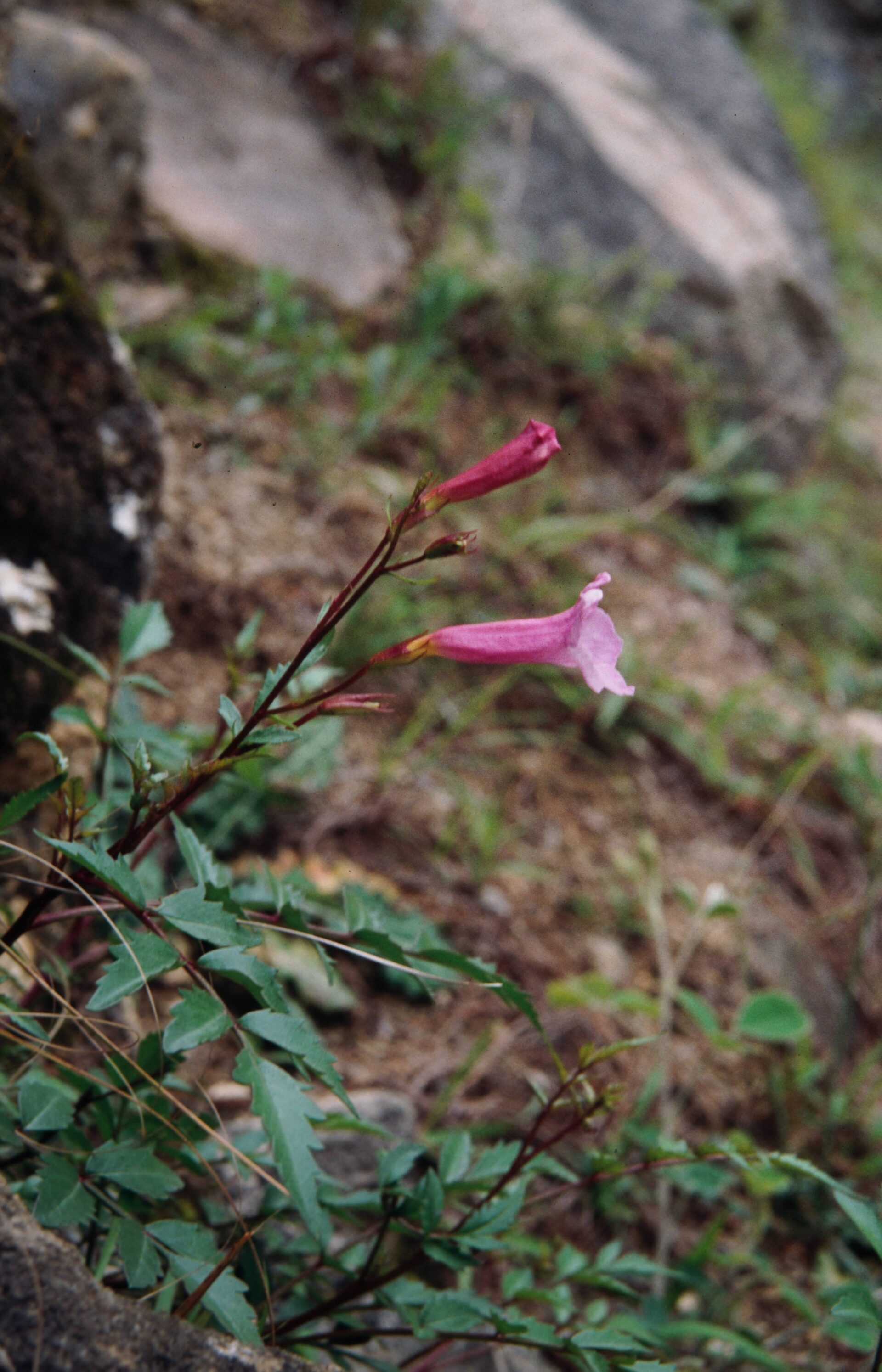
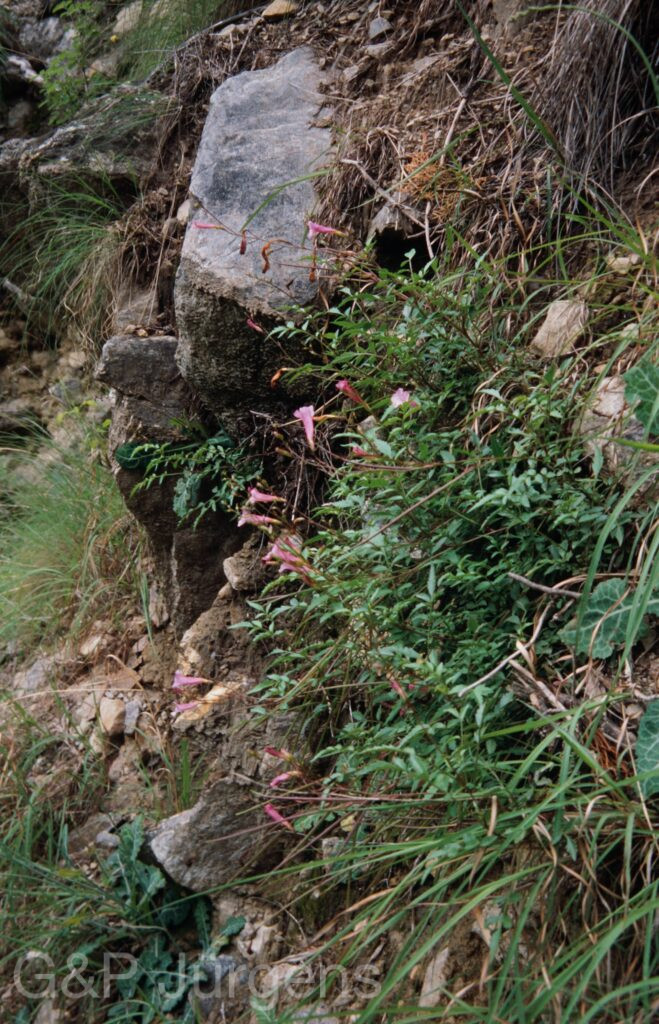
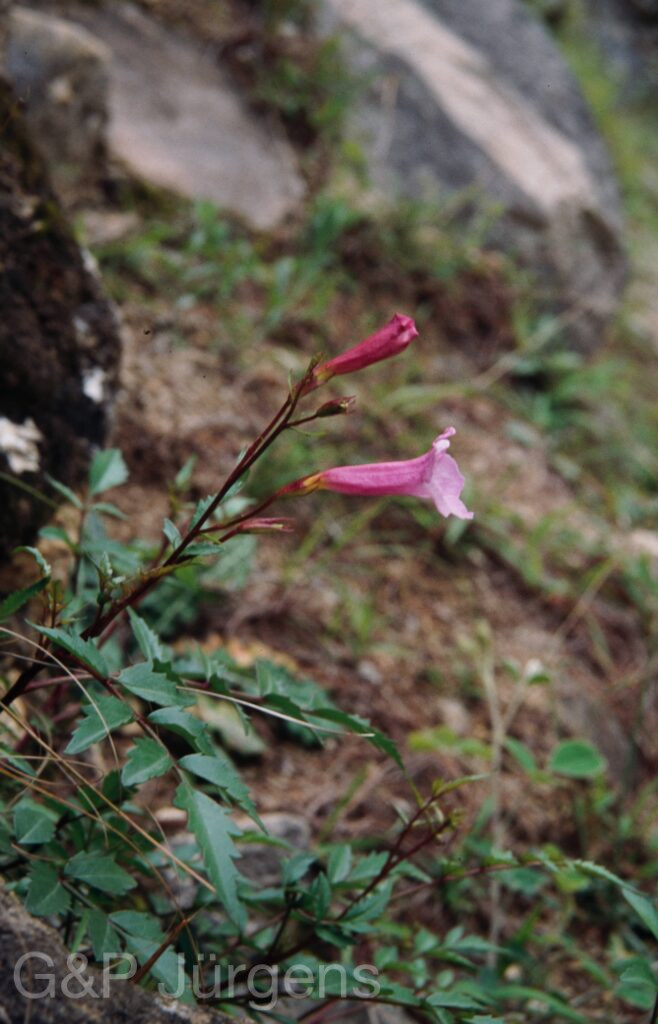
Incarvillea diffusa is a herbaceous member of the Bignoniaceae distributed through the Himalaya into southwest and central China, with GBIF recording close to 1,900 occurrences chiefly from China, Nepal and India together with scattered cultivated and naturalised records elsewhere. It inhabits open, often disturbed ground at middle elevations: grassy and shrubby slopes, forest margins, roadside banks, ravines and rocky places, broadly between about 2000 and 3500 m. The photographed plant from Hanke in west Nepal at 2660 m, flowering in July, sits within this mid-montane band and at the height of the monsoon, the season when the species comes into bloom on moist, sunlit hillsides among grasses and scrub.
It is an erect to ascending, branching herb commonly reaching 30-80 cm, sometimes more, with a sturdy rootstock. The leaves are alternate and pinnately to bipinnately compound, the leaflets ovate, toothed and softly herbaceous, giving the plant a leafy, somewhat diffuse aspect that suits its specific epithet. The flowers are borne in lax terminal racemes or panicles; each has a campanulate calyx and a showy, bilabiate, funnelform to trumpet-shaped corolla, yellow with the throat and tube often marked or flushed, and four didynamous stamens enclosed within. The fruit is an elongate, narrowly cylindrical capsule that splits to release numerous flat, winged seeds.
Incarvillea is an Asian genus of around fifteen species centred on the Sino-Himalayan region and the Tibetan plateau, ranging from low herbs to robust perennials, and is unusual within the mostly woody, tropical Bignoniaceae in being entirely herbaceous. I. diffusa belongs to the yellow-flowered, pinnate-leaved group and is distinguished by its diffuse branching habit and floral details. Widespread and frequent in suitable open habitats, it is of no conservation concern, and its showy blooms have brought several relatives of the genus into horticulture.
Author: Royle · Sources: POWO (Kew), GBIF, Flora of China Vol. 18, Flora of Nepal, Grierson and Long's Flora of Bhutan Vol. 2, Grey-Wilson's revision of Incarvillea