
(L.) Kurz
Description
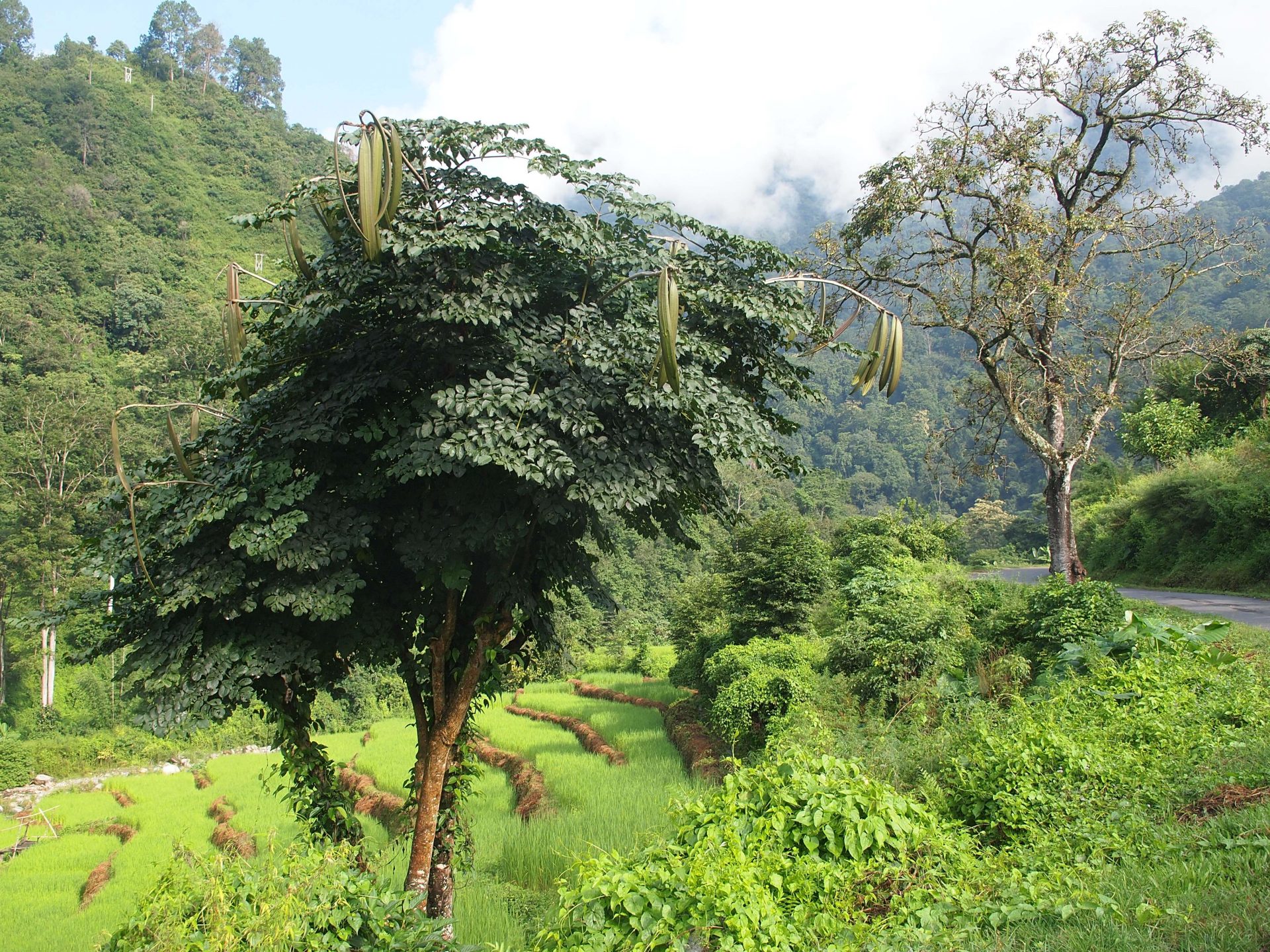
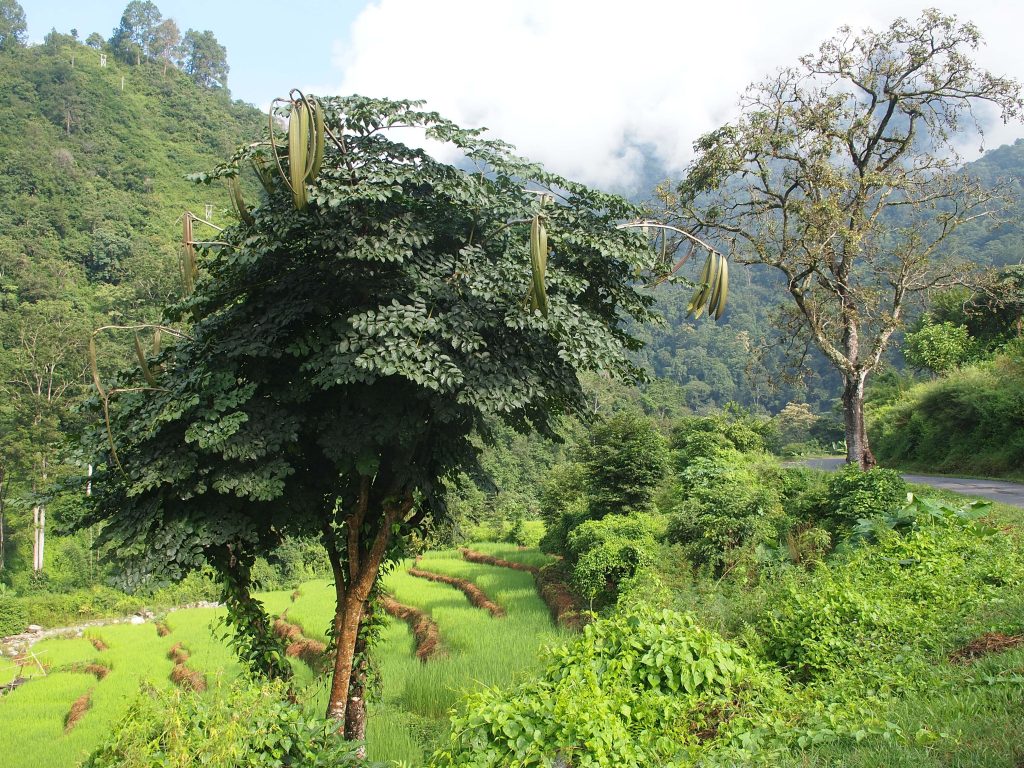
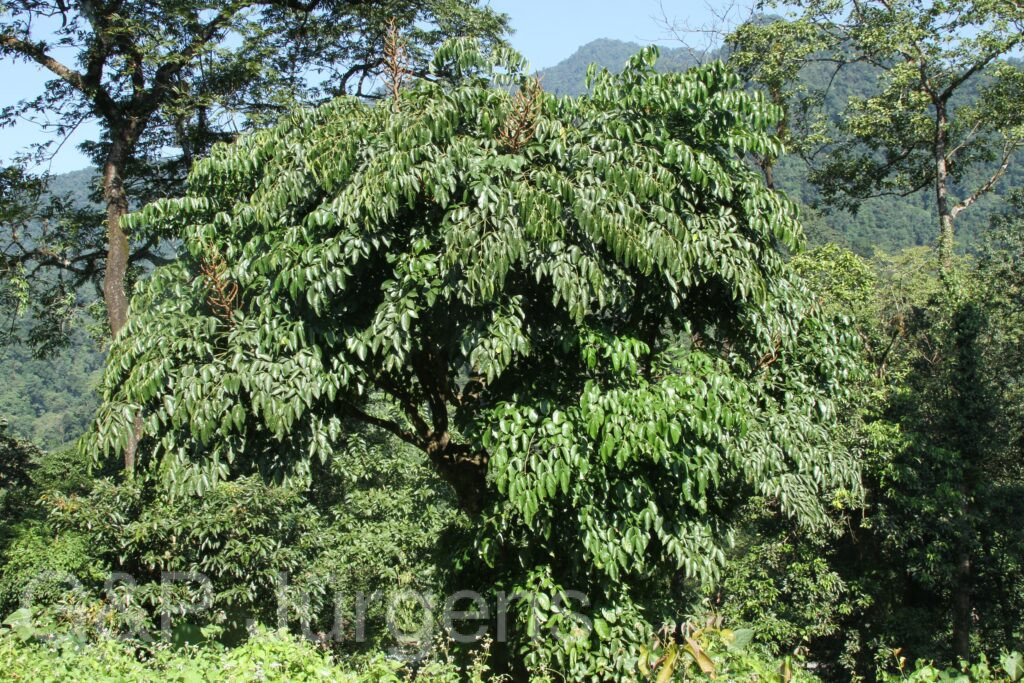
Oroxylum indicum, the Indian trumpet tree or midnight horror, is a small deciduous tree of subtropical and tropical Asia, ranging from India, Nepal and Bhutan through Bangladesh, Myanmar and southern China to Indochina, Thailand, Sri Lanka and across Malesia to the Philippines. GBIF aggregates around 1440 occurrences. It is a tree of forest margins, secondary growth, ravines and roadsides at low to moderate elevations, often in seasonally dry monsoon forest. The Bhutanese specimens at Trithangebe (900 m) and Galephug (500 m) in October occupy this warm foothill zone, fruiting at the close of the monsoon when the great pendulous pods become conspicuous.
The tree has a sparse crown and stout, soft-wooded branches marked with prominent leaf scars. Its leaves are very large, opposite and two- to three-pinnate, often a metre or more across, with ovate, acuminate leaflets, the falling rachides littering the ground beneath. The flowers open at night in a long erect terminal raceme, each large, fleshy and campanulate, lurid reddish-purple outside and paler within, malodorous and bat-pollinated. Most striking is the fruit: a flattened, sword-shaped, sabre-like capsule up to a metre long that splits into two woody valves to release numerous flat seeds broadly winged with a papery membrane for wind dispersal.
A member of Bignoniaceae, Oroxylum is a distinctive near-monotypic genus set apart by its enormous pinnate leaves, nocturnal chiropterophilous flowers and giant samaroid pods. The species is of considerable ethnobotanical importance: its bark, seeds and young fruit are widely used in Ayurvedic and traditional medicine, and the tender pods are eaten as a vegetable. Despite localised harvesting it remains common and widespread, and is not regarded as globally threatened.
Author: (L.) Kurz · Sources: POWO (Kew), GBIF, Flora of China Vol. 18, Flora of Bhutan Vol. 2, Annotated Checklist of the Flowering Plants of Nepal, Gentry monograph of Bignoniaceae