
D.Don
Description
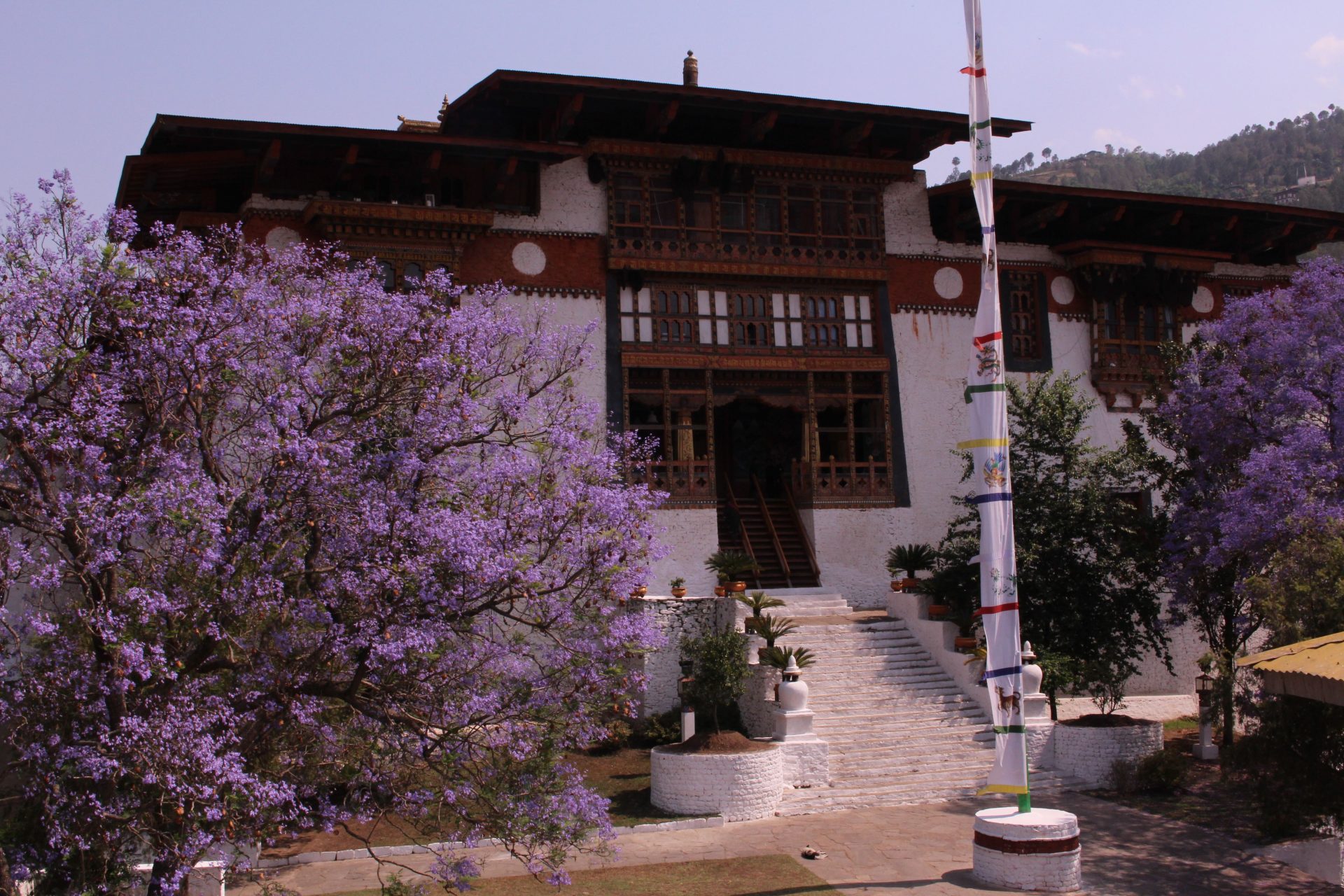
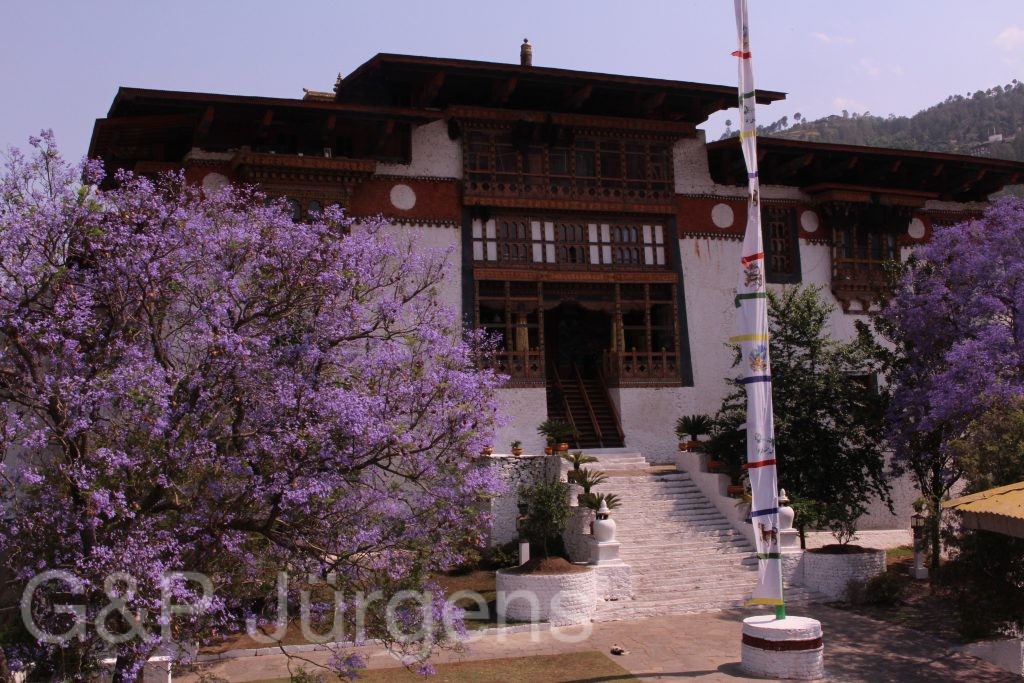
Jacaranda mimosifolia is a deciduous tree native to subtropical South America, in particular northwestern Argentina and adjacent Bolivia, but it is now one of the most widely planted ornamental trees in warm-temperate and tropical regions worldwide; its more than twenty thousand occurrence records span Australia, South Africa, Spain, Kenya, Mexico, the United States and far beyond. It thrives in well-drained soils in warm valleys, parks and roadsides and is frost-sensitive. The tree photographed at Punakha in Bhutan at 1200 m in May is a cultivated street or garden specimen, flowering in its characteristic spring blaze in the warm lower Himalayan valley, well outside its native New World range.
It is a medium to large tree with a spreading, rounded crown and smooth grey bark. The leaves are large, opposite and bipinnate with many small, oblong, mucronate leaflets, recalling those of mimosoid legumes and giving the species its epithet. The flowers are produced in showy terminal panicles, typically before or with the new foliage; each has a small campanulate calyx and a tubular, two-lipped blue to violet corolla that swells above a narrow base. Four didynamous stamens and a staminode are enclosed within. The fruit is a flattened, woody, rounded to oblong capsule that splits along two valves to release numerous thin, broadly winged, wind-dispersed seeds.
Jacaranda is a Neotropical genus of the Bignoniaceae, and J. mimosifolia is its most familiar member, prized for its lavender-blue spring flowering. In its native range it is assessed as Vulnerable owing to limited and fragmented wild populations, even as it flourishes in cultivation globally; in several regions it has become naturalised or weedy. Its nectar-rich flowers attract bees and other insects, and its showy display has made it an emblematic urban tree across the subtropics.
Author: D.Don · Sources: POWO (Kew), GBIF, Flora Argentina, IUCN Red List assessment, Gentry's treatment of Bignoniaceae