Tag:

Nepal

Flowers of Nepal — 1313 wild plant species documented from the Nepalese Himalaya, from subtropical foothills to high alpine meadows above 4,000 m. Nepal’s dramatic elevation gradient makes it one of the richest botanical regions on Earth, home to rhododendrons, primulas, gentians and the famed blue poppies (Meconopsis). Every entry gives a botanical description, native distribution, habitat and flowering season, alongside the original field photograph and the location where it was taken.

D. Don

Sikkim2011 179
Sikkim Lachen 2760m, June

Description

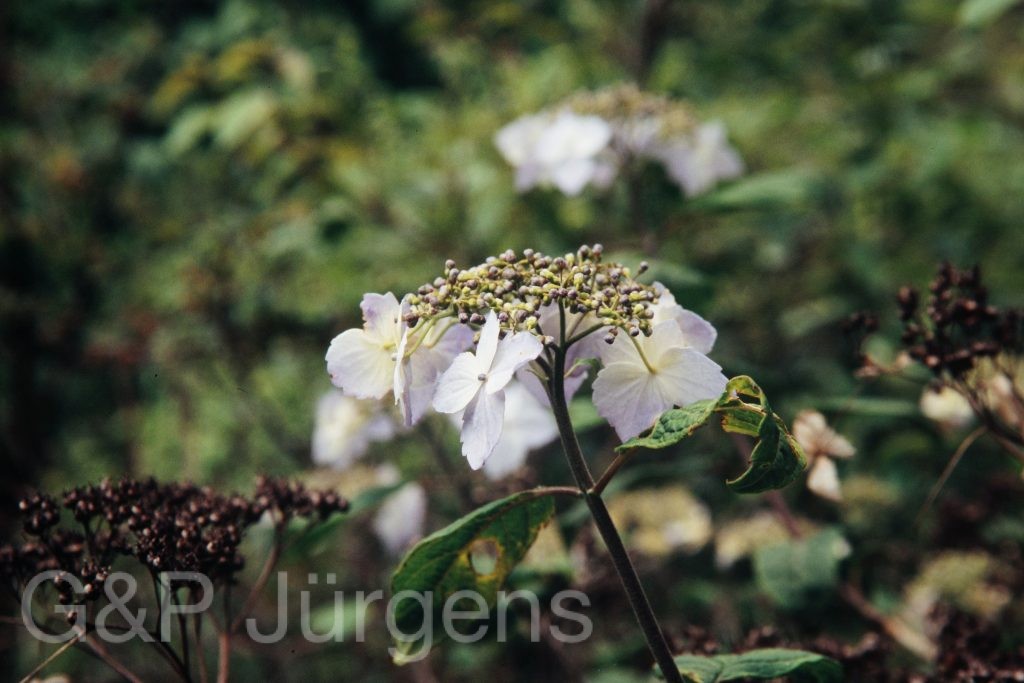
Hydrangea heteromalla is a deciduous shrub or small tree of the Himalaya and central China, with GBIF returning over 1600 occurrences spanning its native range in China, Nepal, India, Bhutan and Myanmar as well as numerous cultivated and naturalised records from Europe and North America. In the wild it grows in cool temperate forest, on open slopes, forest margins, ravines and shrubberies, typically between about 1500 and 3500 m. The plant photographed near Lachen in northern Sikkim at about 2760 m, flowering in June, occupies the moist temperate montane belt where the species is a frequent understorey and edge shrub.

The plant has stout, spreading branches with peeling bark and opposite leaves that are ovate to elliptic, acuminate, finely serrate, and characteristically discolorous, dark green above and densely pale-tomentose to whitish beneath, the indumentum giving the epithet heteromalla. The inflorescence is a broad, flat-topped to slightly domed corymb bearing many small fertile flowers surrounded at the margin by larger, showy, sterile ray-florets with four enlarged white sepaloid segments. The fertile flowers are small, white, with five petals and numerous stamens. The fruit is a small ribbed capsule opening at the apex to release numerous tiny seeds.

Hydrangea heteromalla is a variable and widespread species, the subject of much horticultural selection and the source of cultivated forms grown for their lacecap inflorescences, which explains its scattered records across temperate gardens worldwide. Within Hydrangea section Hydrangea it represents the principal Himalayan-Chinese montane lineage. Ecologically the marginal sterile florets serve to attract pollinators to the inconspicuous fertile flowers. The species is common and not threatened, and its wide ecological amplitude and ornamental value have ensured both its persistence in the wild and its global cultivation.

Author: D. Don · Sources: POWO (Kew), GBIF, Flora of China, Flora of Bhutan, McClintock "A Monograph of the Genus Hydrangea", Annotated Checklist of the Flowering Plants of Nepal
Hook. f. & Thomson

Bhutan2012 692
Bhutan Galephu, 850m September
Bh09 216 G363
Bhutan Dochu-La, 3000m June
Bh09 217 P364 2
Bhutan Dochu-La, 3000m June

Description

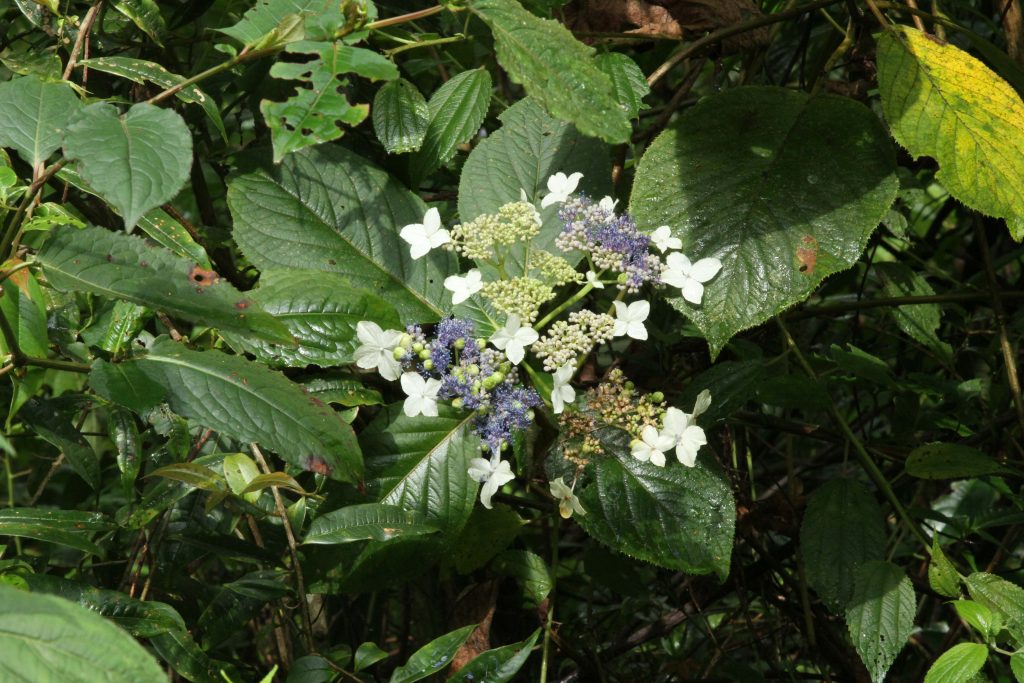
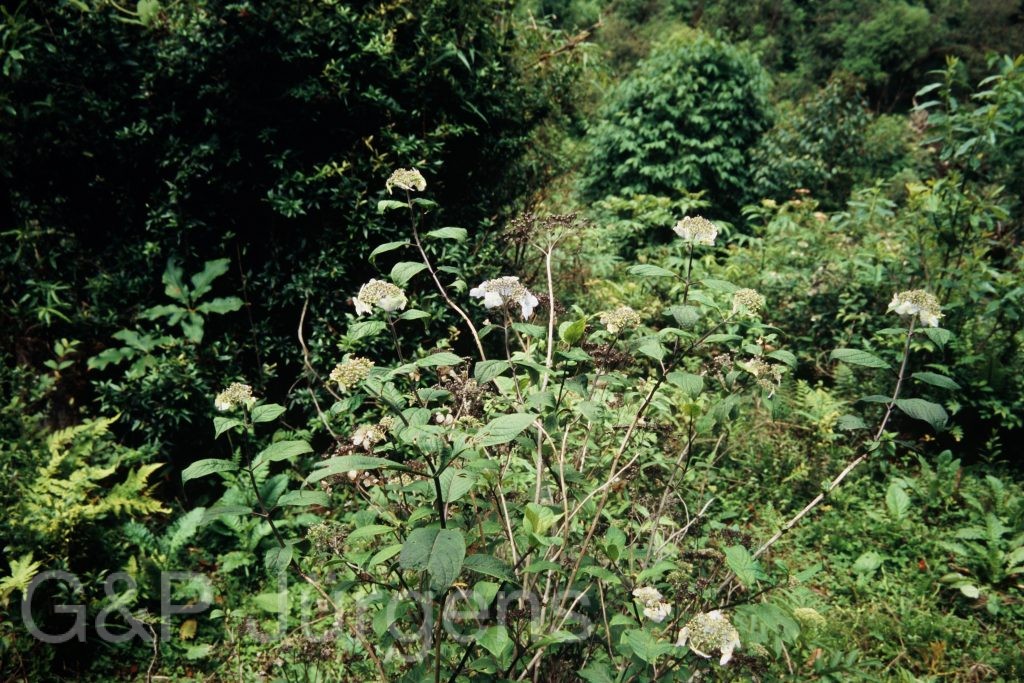
Hydrangea stylosa Hook.f. & Thomson is a Sino-Himalayan shrub recorded by GBIF from China, Bhutan, India, Vietnam and Japan, with cultivated occurrences from Canada and New Zealand, totalling about 85 records. It occupies a broad altitudinal range in moist broad-leaved and mixed forest, thickets and forest margins, on shaded slopes and along ravines. The Bhutanese material spans this amplitude strikingly, with collections from Galephu at 850 m in September and from the Dochu-La at 3000 m in June, showing occurrence from low submontane forest up into the cool temperate zone.

It is a deciduous shrub with terete branches, the young growth often pubescent and the bark exfoliating on older stems. The leaves are opposite, ovate to oblong-lanceolate, with a serrate margin, an acuminate apex and pinnate venation, pilose along the veins beneath. The inflorescence is a terminal corymbose cyme bearing two kinds of flowers: numerous small fertile flowers with minute petals, and a marginal ring of showy sterile flowers whose enlarged, petaloid white to pinkish sepals attract pollinators. The fertile flowers are notable for their elongate, persistent styles, emphasised by the epithet stylosa; the fruit is a small ribbed capsule opening between the styles.

Within Hydrangea, H. stylosa belongs to the lacecap-type species, in which marginal sterile flowers advertise the fertile centre to insects. Its distribution forms part of the eastern Himalayan to Sino-Japanese floristic continuum, and the species is of horticultural interest, accounting for the cultivated records beyond its native range. As a forest understorey shrub it depends on humid montane woodland.

Author: Hook. f. & Thomson · Sources: POWO (Kew), GBIF, Flora of Bhutan Vol. 1, Flora of China Vol. 8, McClintock monograph of the genus Hydrangea, Flora of Nepal

Thunb.

Bhutan2015 150
Bhutan Zhemgang 900m, October

Description

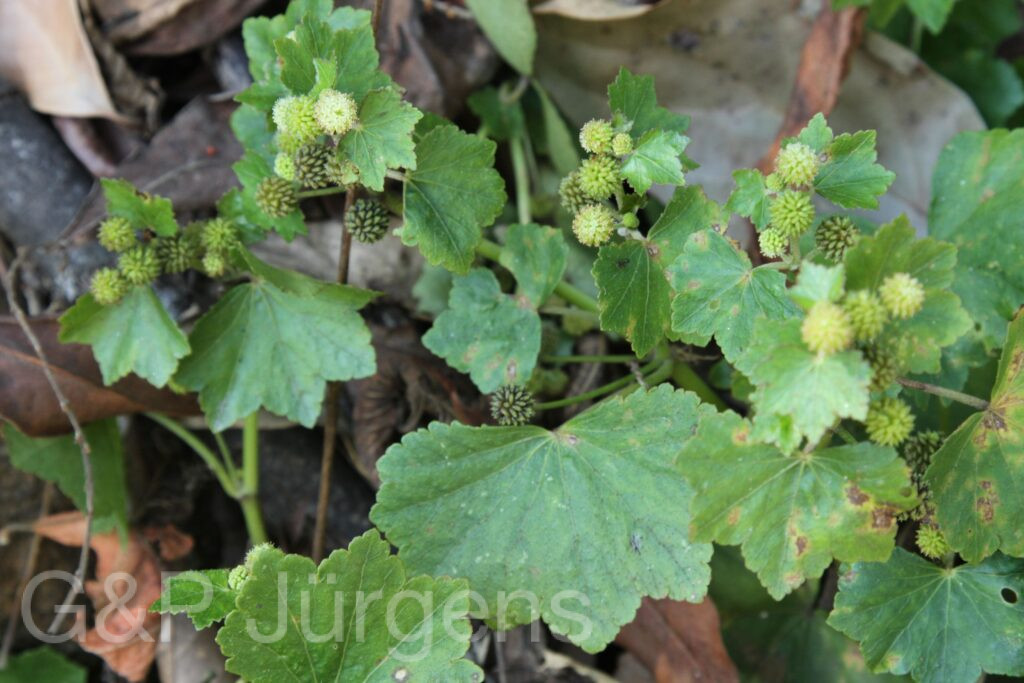
Hydrocotyle javanica is a widespread perennial herb of tropical and subtropical Asia and the western Pacific, recorded from the Himalaya (Nepal, NE India, Bhutan) through southern China, Taiwan, Japan and Korea to Sri Lanka, Myanmar, Indochina, Malesia, the Philippines, New Guinea, Australia and Fiji; with 2,061 GBIF occurrences it is among the better-documented members of its genus. It favours moist, shaded ground along streams, forest floors, seepage banks and damp roadside verges. The Bhutan record from Zhemgang at about 900 m in October places it in warm, humid subtropical forest, where it grows as a creeping ground cover.

It is a creeping to ascending herb rooting at the nodes, with slender, often pilose stems. The leaves are alternate, long-petioled, orbicular to reniform in outline, 2–7 cm wide, palmately 5–7-lobed with the lobes again toothed, cordate at the base, and frequently bearing scattered hairs. The inflorescences are condensed simple umbels, sometimes verticillate along the stem, on peduncles shorter than the petioles; the minute flowers are whitish to greenish, with five petals and an inferior bicarpellate ovary. The fruit is a small, laterally compressed schizocarp, broader than long, the mericarps with conspicuous lateral ribs.

Long placed in Apiaceae, Hydrocotyle is now segregated into Araliaceae (Hydrocotyloideae) on molecular grounds, so the input family is botanically defensible. GBIF lists the name as accepted. The species is highly variable across its enormous range, and several infraspecific taxa have been described; it is common, weedy and of no conservation concern.

Author: Thunb. · Sources: POWO (Kew), Flora of China Vol. 14, Flora of Bhutan Vol. 2, GBIF, Pimenov & Leonov: The Genera of the Umbelliferae (1993)

(DC.) H.Ohashi & R.R.Mill

Bhutan2012 572
Bhutan Wangdi 2700m, September
Bhutan2012 573
Bhutan Wangdi 2700m, September

Description

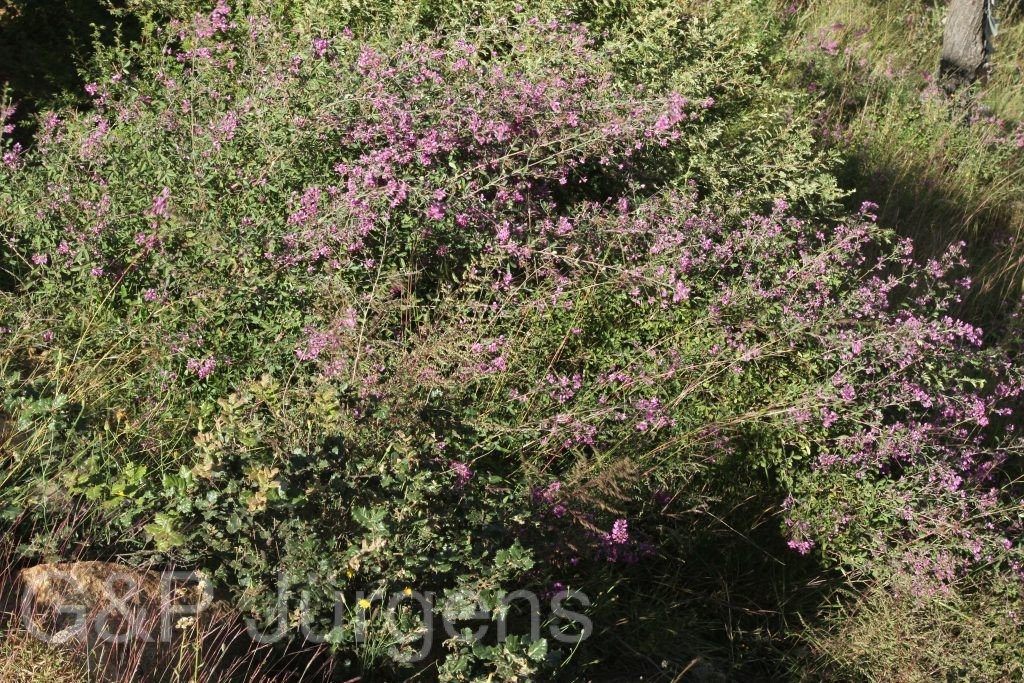
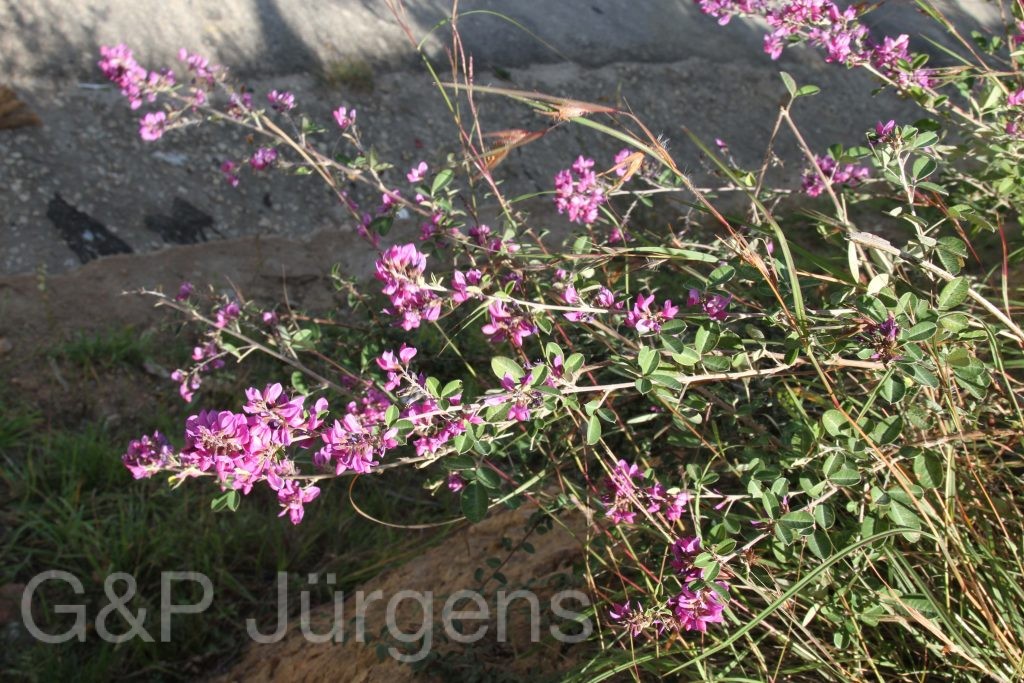
Hylodesmum laxum is a widely distributed forest herb of warm-temperate and subtropical Asia, recorded from Japan, China, Taiwan, the Philippines, Indonesia, Papua New Guinea, India, Vietnam, Sri Lanka, Thailand, Nepal and Bhutan, with some 740 georeferenced occurrences. It is a characteristic understorey element of moist broad-leaved and mixed evergreen forests, favouring shaded slopes, forest margins and streamside thickets on humus-rich soils. In the eastern Himalaya it ascends to the middle montane belt, as illustrated by the material gathered near Wangdi in central Bhutan at about 2700 m in September, when it flowers and fruits in the post-monsoon season.

The species is a perennial herb with erect or ascending, slender, ridged stems arising from a woody rootstock. The leaves are pinnately trifoliolate and crowded toward the stem apex, the terminal leaflet rhombic-ovate to elliptic and larger than the lateral ones, acuminate and entire, thinly membranous and sparsely appressed-pubescent. The inflorescence is a lax, elongate terminal raceme or panicle bearing small papilionaceous flowers with a pink to pale purple corolla, the standard obovate and the keel obtuse. The fruit is a flattened, stipitate loment constricted between the segments, the articles covered with uncinate hairs that promote epizoochorous dispersal.

The genus Hylodesmum was segregated from Desmodium by Ohashi and Mill to accommodate species with stipitate, deeply constricted loments and a forest-herb habit, and H. laxum is among its more widespread members. Its very broad transcontinental range, spanning the Himalaya to the western Pacific, points to effective long-distance dispersal by the hooked fruit articles. Locally common and of no immediate conservation concern, its populations nonetheless remain dependent on intact forest cover, and the species is a useful indicator of relatively undisturbed montane woodland.

Author: (DC.) H.Ohashi & R.R.Mill · Sources: POWO (Kew), GBIF, Flora of China Vol. 10, Flora of Bhutan Vol. 1, Flora of Nepal, Ohashi & Mill revision of Hylodesmum (Desmodium group)

(Wall. ex DC.) C.B. Clarke

BhutanPG2011 365
Bhutan Jule-Tso 4150m, June
Sikkim2003 159 P212
Sikkim Dzongri 3900m, August
Sikkim2003 160 P213
Sikkim Dzongri 3900m, August

Description

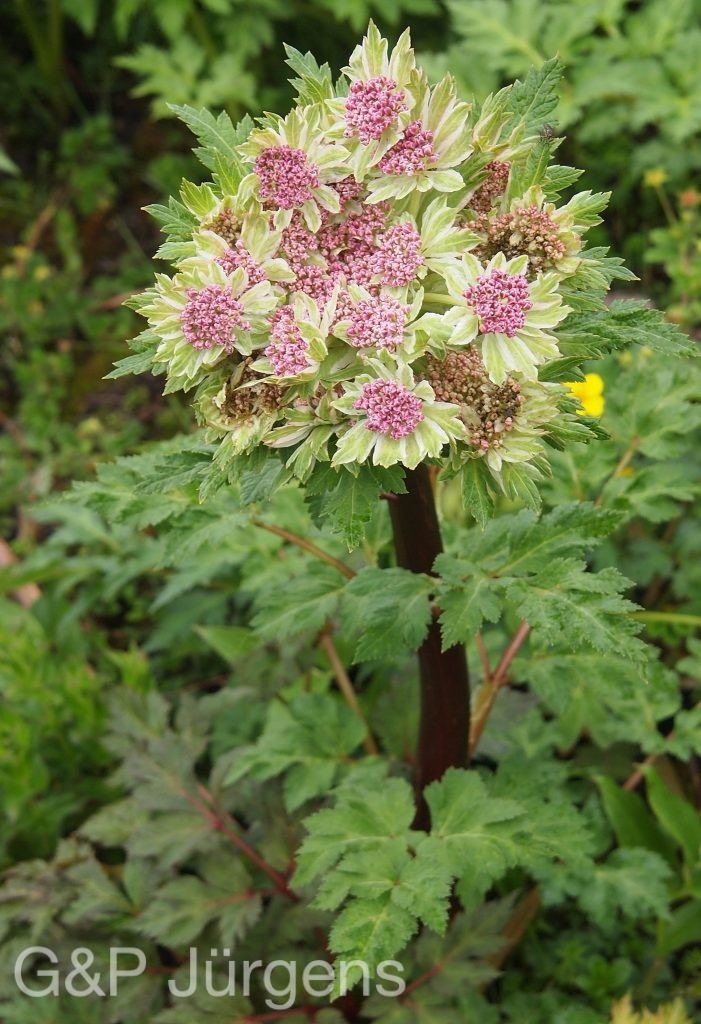
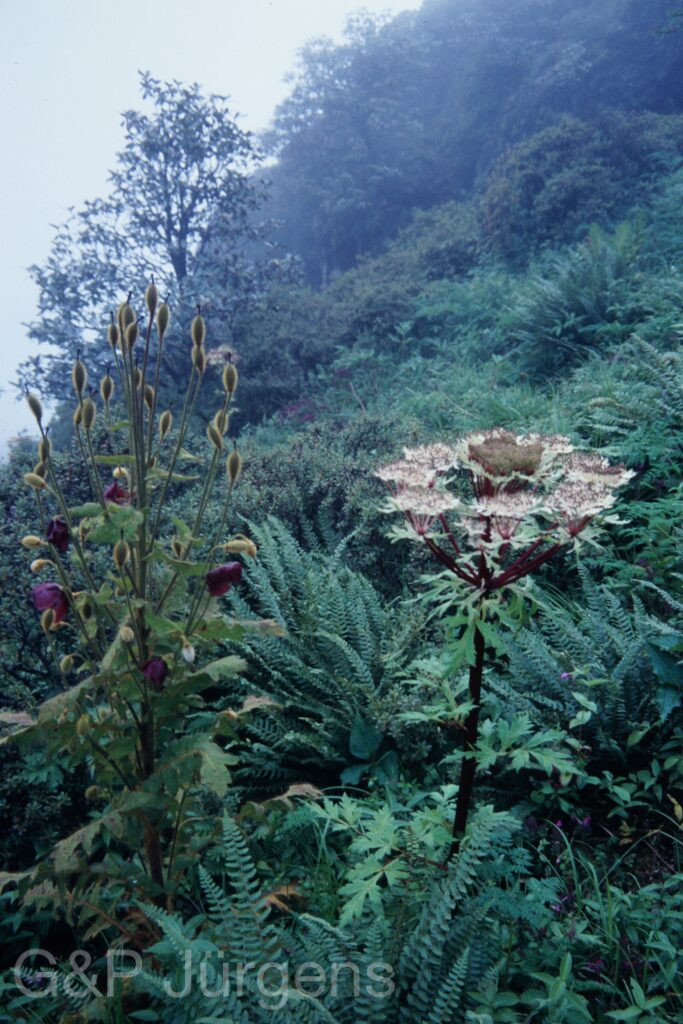
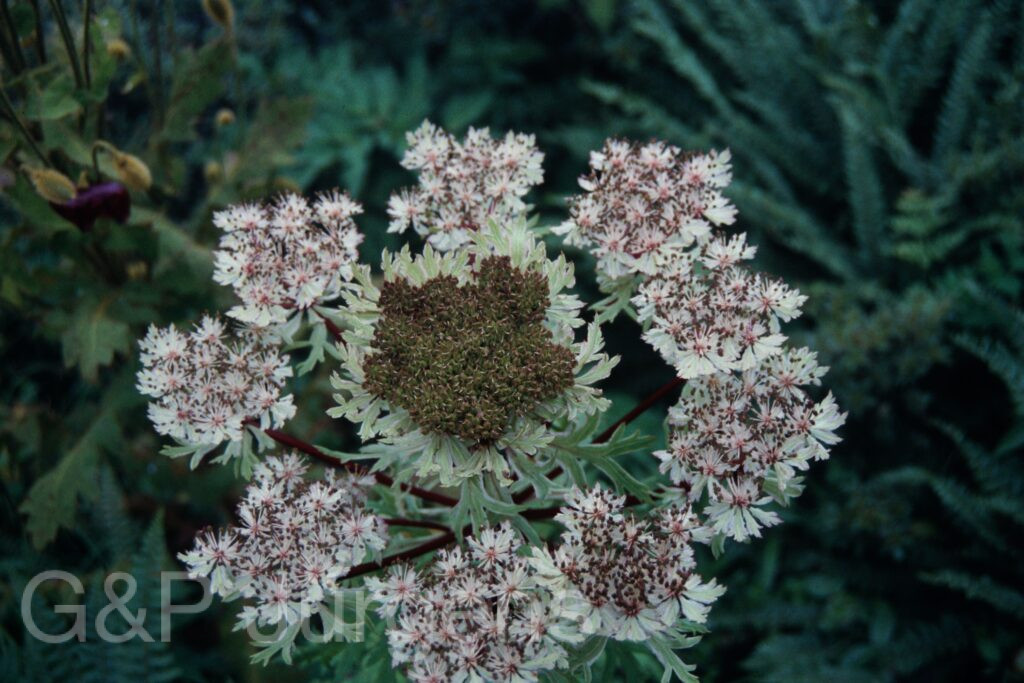
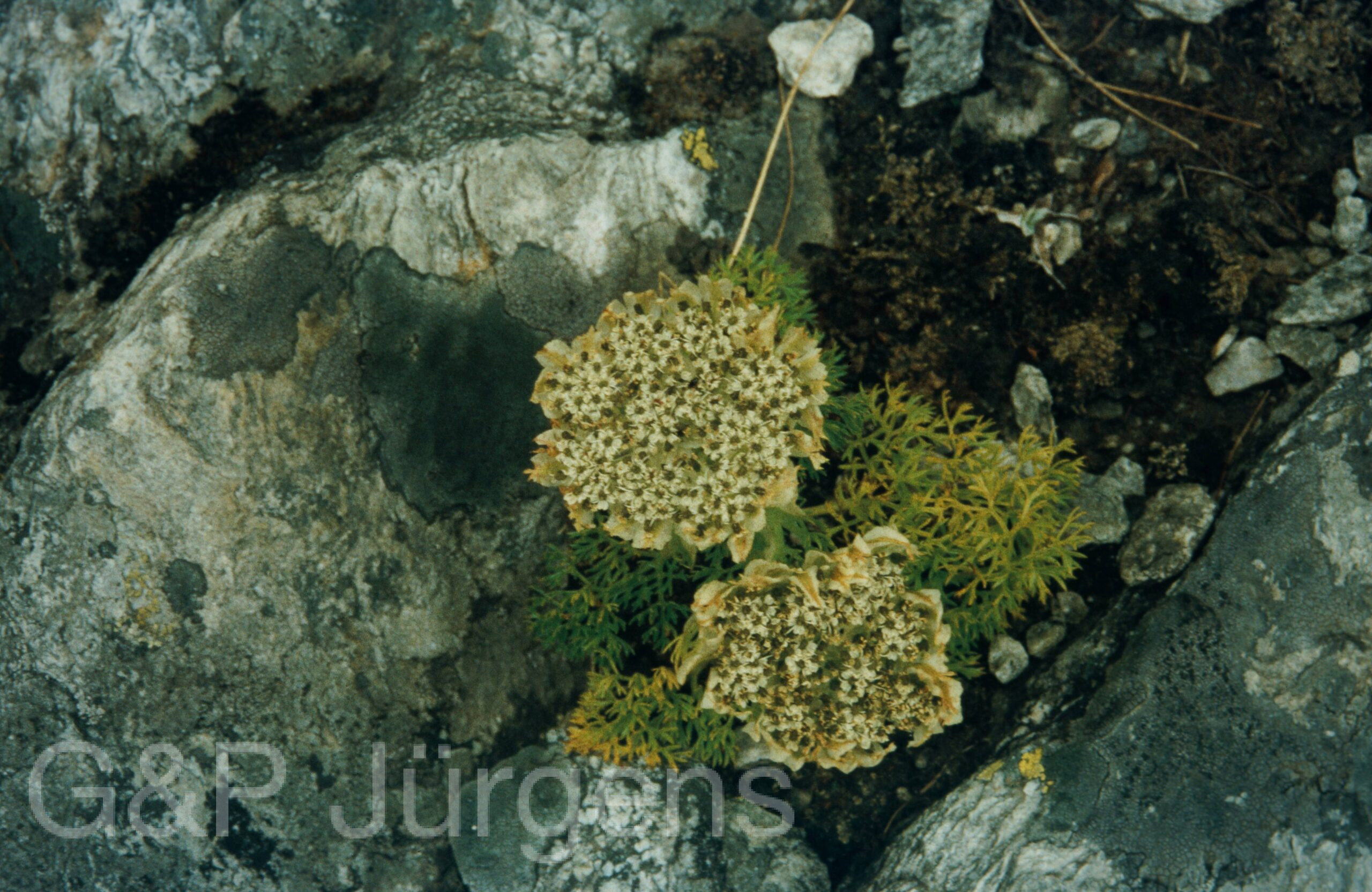
Hymenidium benthamii is a robust alpine umbellifer of the high Himalaya, distributed through Nepal, China, India, Myanmar and Bhutan (gbif_countries: NP, CN, IN, MM, BT), with about 181 GBIF occurrences. It grows in alpine meadows, damp grassy slopes, rocky pastures and streamside flushes above the treeline, where it is a characteristic herb of the moist eastern Himalayan uplands. The illustrated collections span Jule-Tso in Bhutan at about 4150 m, flowering in June, and Dzongri in Sikkim at about 3900 m in August, documenting its occupation of the cool subalpine to alpine zone through the monsoon season.

The plant is a stout perennial arising from a thickened taproot and crown, with erect, ribbed, often hollow stems. The leaves are largely basal, long-petiolate and two- to three-times pinnately divided into toothed or further-dissected segments, the petioles sheathing at the base. The inflorescence is a large, flat-topped compound umbel subtended by a conspicuous involucre of broad, often membranous-margined bracts, a feature recalling the genus name Hymenidium; the small flowers are white to pinkish with five petals. The fruit is a dry schizocarp splitting into two ribbed mericarps, the ridges and oil-canals (vittae) providing key taxonomic characters.

Long known under Pleurospermum benthamii, the species, as the wp_link itself preserves, has been transferred to Hymenidium following revisionary work that dismembered the broadly construed Pleurospermum on molecular grounds. It belongs to the conspicuous-bracted alpine Apiaceae of the Sino-Himalaya, a group much used in regional ethnomedicine. Widespread across its montane range, it is of no conservation concern.

Author: (Wall. ex DC.) C.B. Clarke · Sources: POWO (Kew), GBIF, Flora of Nepal, Flora of China, Annotated Checklist of the Flowering Plants of Nepal, Pimenov & Kljuykov revision of Pleurospermum and allied genera

Lindl.

Description

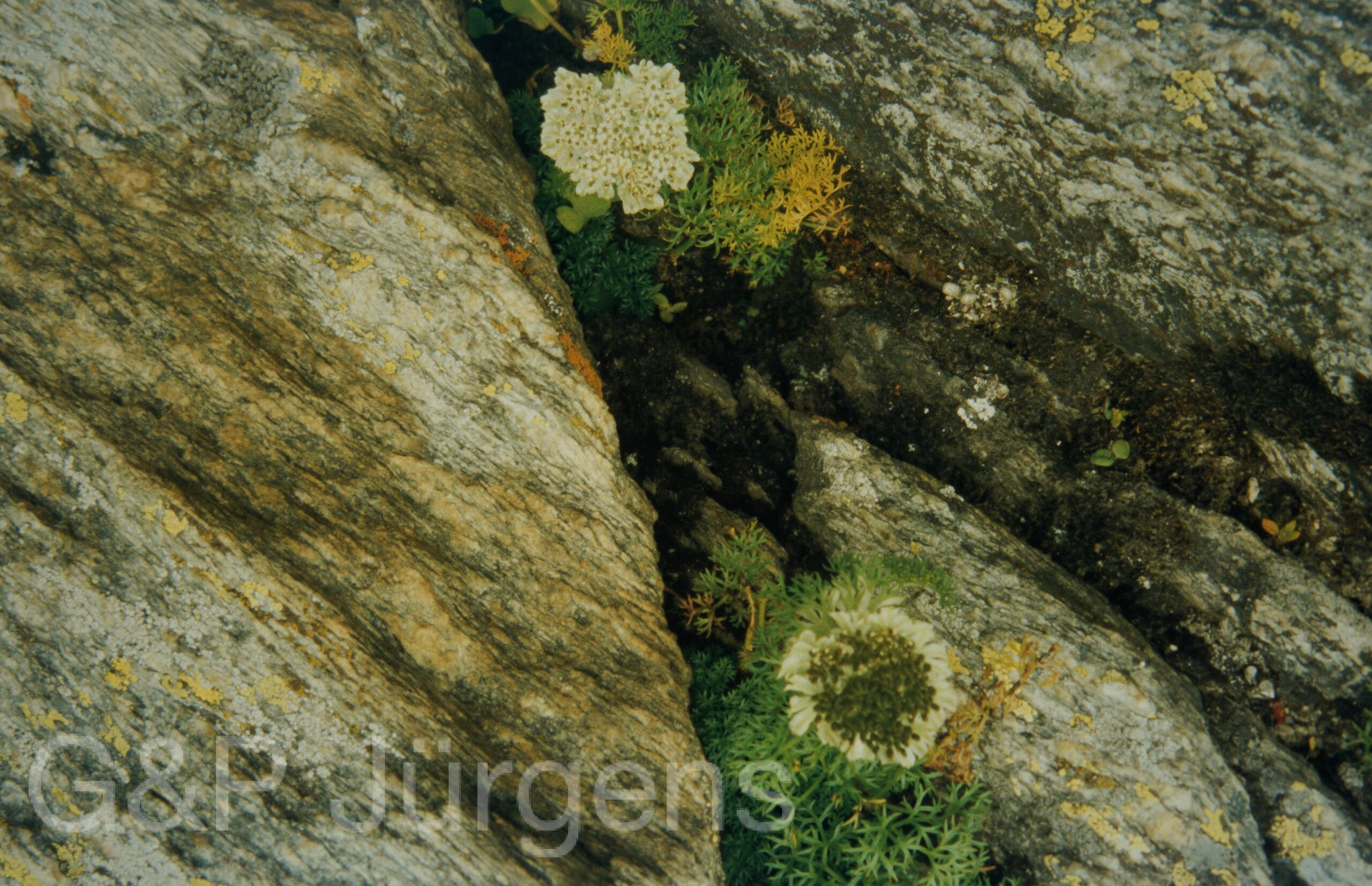
Hymenidium brunonis is a high-alpine umbellifer of the Himalaya, recorded from Pakistan eastward through north-west and central India to Nepal. Long familiar under the name Pleurospermum brunonis, it inhabits open alpine meadows, screes, rocky slopes and moist hollows above the treeline, generally between about 3,500 and 4,800 m. The individual photographed at the Kuari Pass in Garhwal, India, at 4,000 m in September shows the species in its characteristic late-season setting, fruiting as the short alpine summer closes. Its scattered but consistent occurrence across the chain (some 75 georeferenced records) reflects a true alpine specialist of the inner Himalayan ranges.

It is a low, glabrous, somewhat fleshy perennial arising from a stout taproot and a sheath of fibrous remains of old petioles. The leaves are mostly basal, pinnate to bipinnate, the segments oblong and often crowded, the petioles broadly sheathing at the base. The inflorescence is a compound umbel subtended by conspicuous, broad, membranous-margined, often leafy bracts and bracteoles — a diagnostic feature of the group. The small flowers are white to pinkish, with five petals and an epigynous disc. The fruit is an ovoid to oblong schizocarp with prominently winged or ridged mericarps.

The transfer of many Asian Pleurospermum species to Hymenidium follows molecular work resolving the polyphyly of Pleurospermum sensu lato; the conspicuous scarious bracts unite the segregate. As a plant of remote high-elevation habitats it faces little direct pressure, though alpine flora of this belt is sensitive to grazing intensity and to the upslope compression of habitat under a warming climate.

Author: Lindl. · Sources: POWO (Kew), Flora of China Vol. 14, Flora of Pakistan (Umbelliferae), GBIF, Pimenov & Leonov: The Genera of the Umbelliferae (1993)

Wall. ex N.Robson

BhutanPG2011 824 01 01
Bhutan Luksor, 2800m July
BhutanPG2011 695 01 01
Bhutan Luksor, 2800m July
Sikkim2003 378 P531
Sikkim Tista valley 3400m August

Description

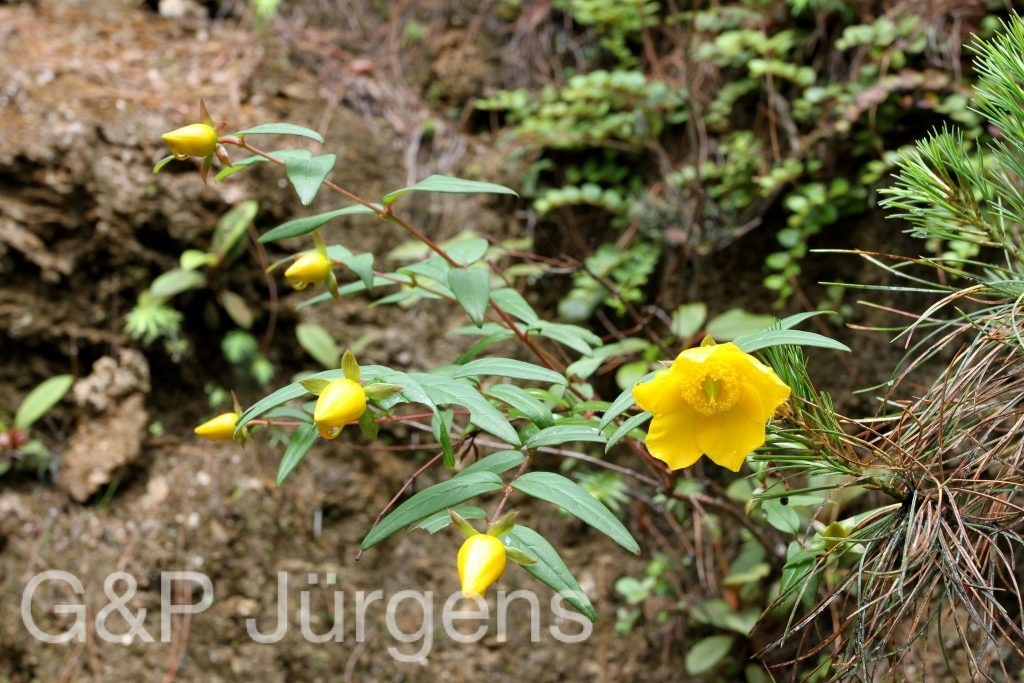
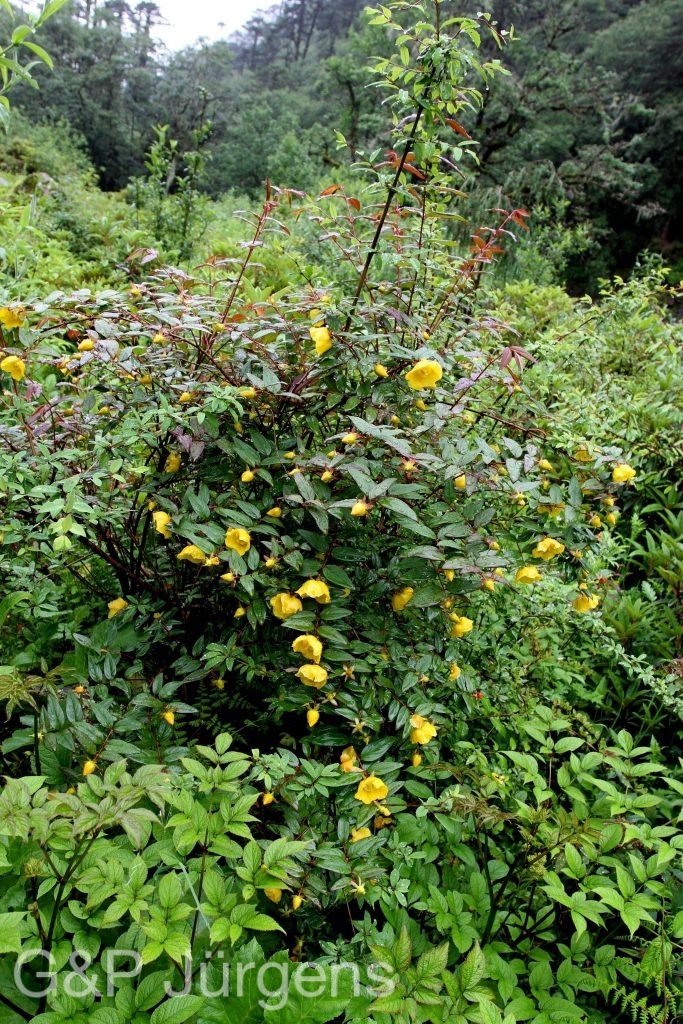
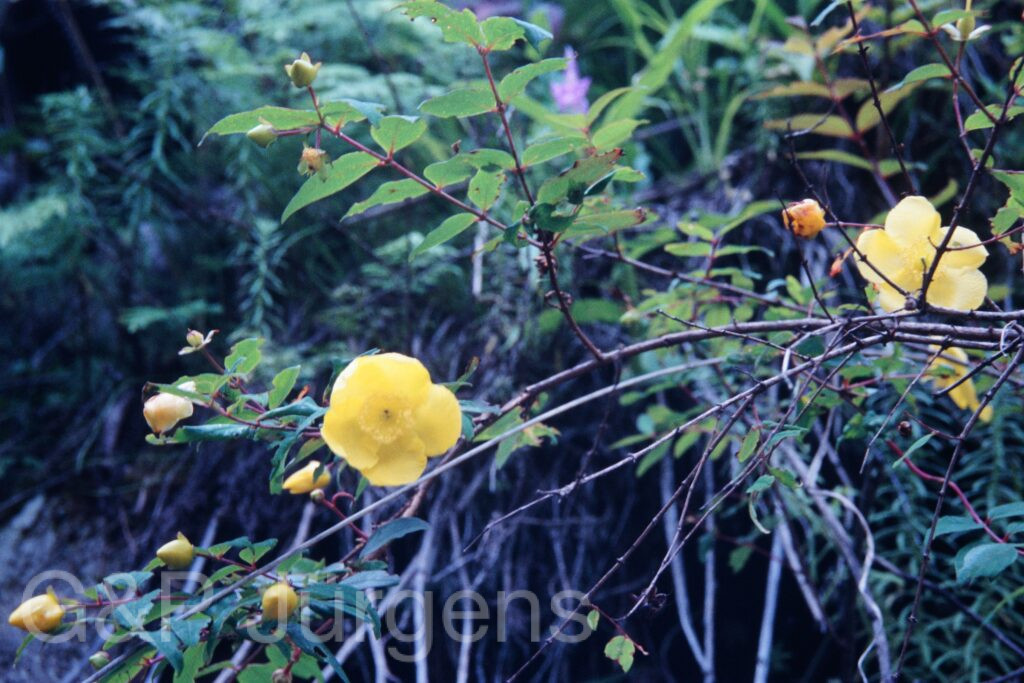
Hypericum choisianum (correctly H. choisyanum) is a handsome shrubby St John's wort of the Himalaya, distributed from Nepal eastward through India, Sikkim, Bhutan and into southwestern China, with outlying records from Myanmar; cultivated and naturalised material accounts for occurrences in Britain, Ireland and Vietnam, contributing to a GBIF total of over two hundred records. It inhabits open temperate forest, forest margins, scrub, banks and rocky slopes, typically between about 1800 and 3600 m. The plants documented from Luksor in Bhutan at 2800 m in July and from the Tista valley in Sikkim at 3400 m in August reflect both its broad elevational tolerance and its mid-to-late summer flowering, when the large golden blooms are conspicuous along forest edges and clearings throughout the monsoon season.

The plant is an evergreen or semi-evergreen shrub of one to two metres, with arching reddish branches and opposite, ovate to oblong-lanceolate, sessile or clasping leaves that are slightly glaucous beneath and dotted with translucent glands. The flowers are large and showy, solitary or few in terminal cymes, with five broad, bright golden-yellow petals that are often somewhat incurved to give a cupped, almost globose bloom. The numerous stamens are united into five fascicles, and the styles are five, free and spreading. The superior, five-locular ovary develops into a leathery to slightly fleshy capsule that dehisces to release many small seeds; the glandular tissue throughout the plant contains the characteristic hypericin and related compounds.

Hypericum, here placed in the Hypericaceae (sometimes treated within a broadly defined Clusiaceae), reaches notable diversity in the Sino-Himalaya, and H. choisyanum belongs to the large-flowered shrubby section Ascyreia, several members of which are valued as garden ornamentals for their bold yellow flowers and hardiness. Described by N. Robson, who monographed the genus, it is part of a closely allied complex of Himalayan shrubs distinguished by subtle differences in leaf shape, stamen fascicles and capsule form. As a common, ecologically adaptable species spanning a wide range and elevation, it is of no conservation concern, and its frequency along disturbed forest margins reflects considerable tolerance of moderate human modification.

Author: Wall. ex N.Robson · Sources: POWO (Kew), GBIF, Flora of China Vol. 13, Flora of Bhutan Vol. 1 Part 2, Flora of Nepal, Studies in the genus Hypericum (Norman Robson, Bulletin of the British Museum)

Wight & Arn.

Bhutan2014 8
Bhutan Sandrup 750m, May
Bhutan2014 222
Bhutan Karu-Chu 1800m, May

Description

Hypericum hookerianum is a Himalayan and Sino-Himalayan shrubby St John's wort, native across China, NE India, Nepal, Bhutan and Myanmar, with GBIF recording some 638 occurrences including numerous cultivated and naturalised records from Europe, North America and Australasia. In the wild it grows in forest margins, clearings, scrub and on open rocky slopes. The photographed Bhutanese plants from Sandrup (750 m) and Karu-Chu (1,800 m), both in May, illustrate its wide altitudinal tolerance from the subtropical foothills to the warm temperate belt.

It is an evergreen or semi-evergreen shrub with terete, often reddish branches. The leaves are opposite, ovate to oblong or lanceolate, sessile or nearly so, frequently glaucous beneath and dotted with pale translucent glands. The flowers are large and showy, borne singly or in few-flowered cymes; they are cup-shaped to bowl-shaped, deep golden-yellow, with five broad concave petals and a dense central boss of numerous stamens grouped in five fascicles surrounding a stout ovary with several styles. The fruit is a many-seeded septicidal capsule.

Hypericum hookerianum is a parent of several widely grown ornamental cultivars and hybrids, valued for its robust habit and bold flowers, which accounts for its scattered occurrence well beyond its native range. The translucent and dark glands of the foliage, characteristic of the genus, contain hypericin and hyperforin and related bioactive compounds. Within the large and complex genus Hypericum, the species belongs to the woody section Ascyreia, distinguished by its shrubby habit, large bowl-shaped flowers and fascicled stamens; it is of no conservation concern given its breadth of range and cultivation.

Author: Wight & Arn. · Sources: POWO (Kew), Flora of Bhutan Vol. 1, GBIF, Flora of China Vol. 13, Robson: Studies in the Genus Hypericum (Bulletin of the Natural History Museum)

Choisy

Garh 07 321JPG ergebnis
India Garhwal Maji 2650, June

Description

Hypericum oblongifolium is a shrubby St John's wort of the family Hypericaceae, native to the western and central Himalaya. GBIF records place it principally in India, Pakistan, Nepal and Afghanistan, with scattered records eastward to Bhutan and occurrences elsewhere representing cultivated plants. It grows on open, rocky hillsides, in scrub, along forest margins and on stream banks in the temperate zone, generally between about 1,500 and 3,000 m. The specimen illustrated from Maji in Garhwal, India, at around 2,650 m in June is typical of this sunny, well-drained mid-montane habitat where the shrub flowers in early summer.

The plant is a much-branched, evergreen to semi-evergreen shrub up to about 1–2 m, with reddish, arching, two-lined younger branches becoming terete with age. The leaves are opposite, sessile to subsessile, oblong to oblong-lanceolate, leathery, with translucent glandular dots, and somewhat glaucous beneath. The flowers are large and showy, golden-yellow, borne singly or in few-flowered terminal cymes; they have five spreading petals, numerous stamens grouped into bundles, and a superior ovary crowned by free styles, conforming to the characteristic Hypericum floral plan. The fruit is a septicidal capsule that splits to release numerous small seeds.

Within the large genus Hypericum the species belongs to the predominantly Asian section of woody, large-flowered shrubs and is closely allied to other Himalayan taxa such as H. hookerianum, from which it is separated by leaf shape, branch character and details of the styles. It is valued horticulturally for its abundant bright flowers and is used locally in folk medicine. Widespread and tolerant of disturbed, open ground, it is not considered threatened, and it readily colonises sunny banks and roadside scrub throughout the western Himalaya.

Author: Choisy · Sources: POWO (Kew), GBIF, Flora of Pakistan, Flora of Nepal, Flora of China Vol. 13, Robson: Studies in the genus Hypericum (Guttiferae)

(Forssk.) Roem. & Schult.

Nepal 99 997 ergebnis
West-Nepal Juphal 2600m, July

Description

Hypoestes triflora is a broadly distributed paleotropical herb ranging from tropical and southern Africa across the Arabian Peninsula to the Himalaya and southwestern China; its roughly 2040 GBIF records show a strong African centre in South Africa, Ethiopia, Tanzania, Kenya, Cameroon and the Congo basin, with Asian outliers in India, Nepal and China. In the western Himalaya it reaches the mid-montane zone, as in the collection near Juphal in West Nepal at about 2600 m in July, flowering during the monsoon. It grows in shaded, moist situations on forest floors and streambanks, as a soft-stemmed understorey herb of seasonally wet temperate and subtropical woodland.

The plant is an erect to straggling herb with four-angled, swollen-noded stems rooting at the lower joints. The opposite leaves are ovate to lanceolate, thin-textured and acuminate, with entire to obscurely toothed margins. The flowers are grouped in small axillary clusters, each subtended by bracts and typically containing three flowers, as the epithet records. The bilabiate corolla is pale pink to lilac or purplish, with a slender tube and deeply two-lipped limb. The fruit is an explosively dehiscent club-shaped capsule that ejects its seeds from retinacula-bearing placentae.

Within Acanthaceae, Hypoestes is allied to Justicia and recognised by its bracteate flower clusters and two-locular capsules; H. triflora is among the most wide-ranging species, its disjunct African-Asian distribution reflecting historical connections across the paleotropics. As a common woodland herb spanning many countries, it is of no particular conservation concern.

Author: (Forssk.) Roem. & Schult. · Sources: POWO (Kew), GBIF, Flora of China Vol. 19, Flora of Bhutan Vol. 2, Flora of Nepal, Flora of Tropical East Africa (Acanthaceae)