
Wall. ex N.Robson
Description
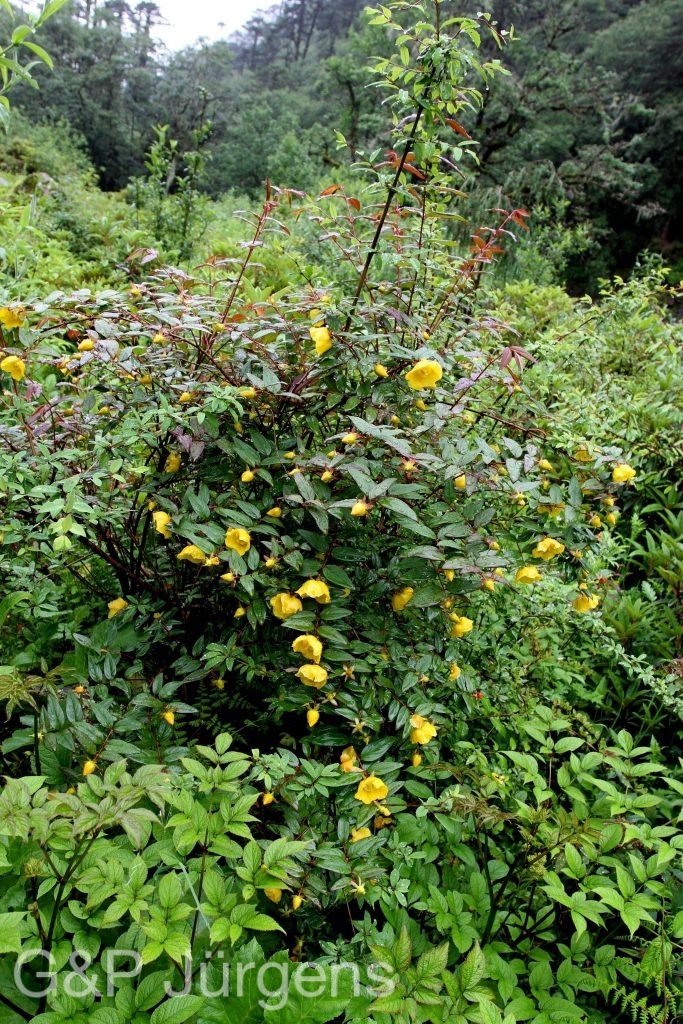
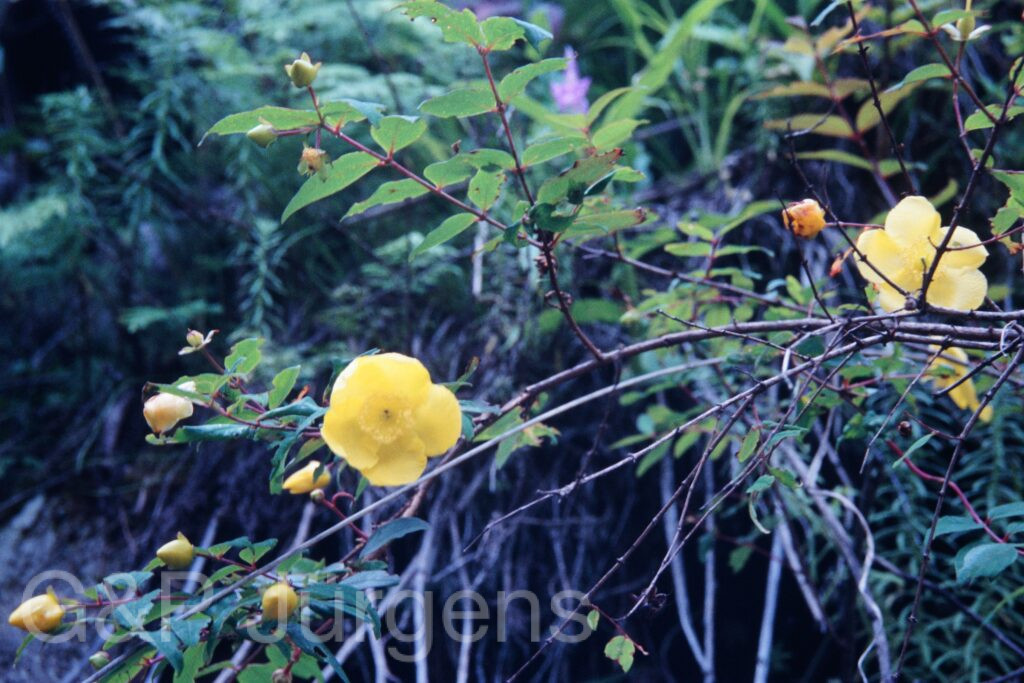
Hypericum choisianum (correctly H. choisyanum) is a handsome shrubby St John's wort of the Himalaya, distributed from Nepal eastward through India, Sikkim, Bhutan and into southwestern China, with outlying records from Myanmar; cultivated and naturalised material accounts for occurrences in Britain, Ireland and Vietnam, contributing to a GBIF total of over two hundred records. It inhabits open temperate forest, forest margins, scrub, banks and rocky slopes, typically between about 1800 and 3600 m. The plants documented from Luksor in Bhutan at 2800 m in July and from the Tista valley in Sikkim at 3400 m in August reflect both its broad elevational tolerance and its mid-to-late summer flowering, when the large golden blooms are conspicuous along forest edges and clearings throughout the monsoon season.
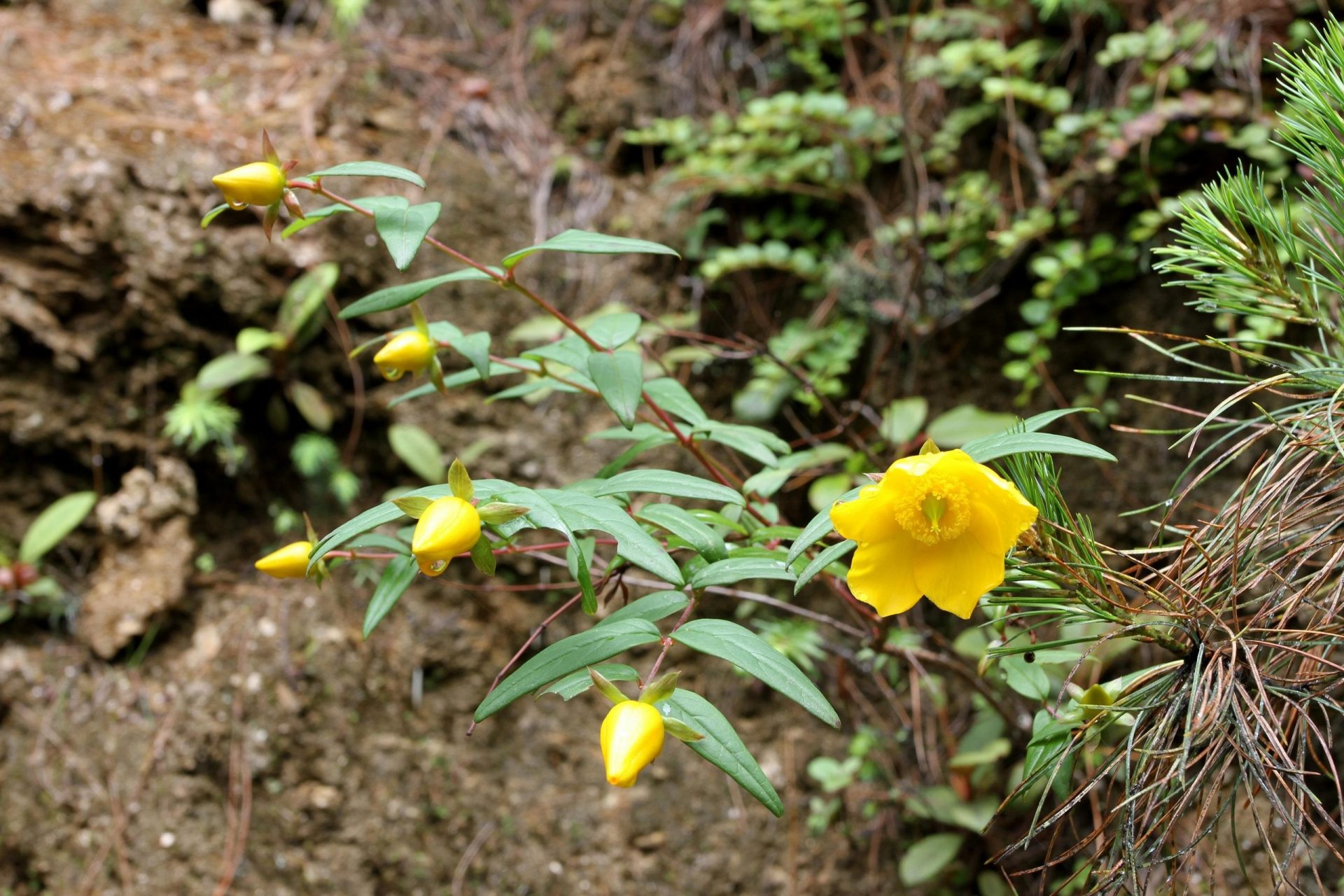
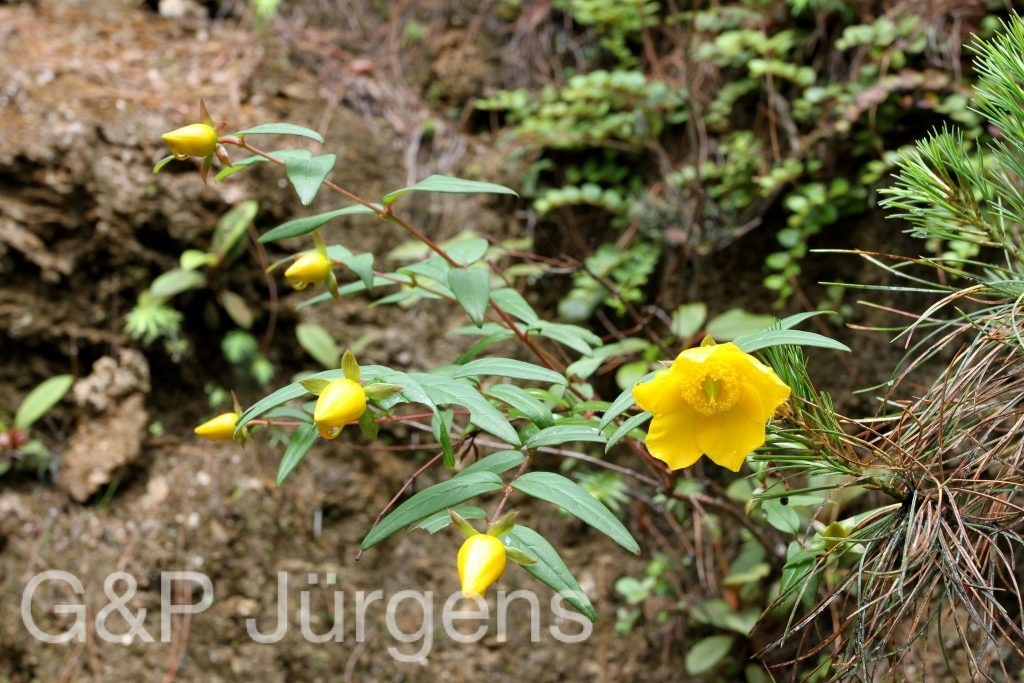
The plant is an evergreen or semi-evergreen shrub of one to two metres, with arching reddish branches and opposite, ovate to oblong-lanceolate, sessile or clasping leaves that are slightly glaucous beneath and dotted with translucent glands. The flowers are large and showy, solitary or few in terminal cymes, with five broad, bright golden-yellow petals that are often somewhat incurved to give a cupped, almost globose bloom. The numerous stamens are united into five fascicles, and the styles are five, free and spreading. The superior, five-locular ovary develops into a leathery to slightly fleshy capsule that dehisces to release many small seeds; the glandular tissue throughout the plant contains the characteristic hypericin and related compounds.
Hypericum, here placed in the Hypericaceae (sometimes treated within a broadly defined Clusiaceae), reaches notable diversity in the Sino-Himalaya, and H. choisyanum belongs to the large-flowered shrubby section Ascyreia, several members of which are valued as garden ornamentals for their bold yellow flowers and hardiness. Described by N. Robson, who monographed the genus, it is part of a closely allied complex of Himalayan shrubs distinguished by subtle differences in leaf shape, stamen fascicles and capsule form. As a common, ecologically adaptable species spanning a wide range and elevation, it is of no conservation concern, and its frequency along disturbed forest margins reflects considerable tolerance of moderate human modification.
Author: Wall. ex N.Robson · Sources: POWO (Kew), GBIF, Flora of China Vol. 13, Flora of Bhutan Vol. 1 Part 2, Flora of Nepal, Studies in the genus Hypericum (Norman Robson, Bulletin of the British Museum)