Tag:

Nepal

Flowers of Nepal — 1313 wild plant species documented from the Nepalese Himalaya, from subtropical foothills to high alpine meadows above 4,000 m. Nepal’s dramatic elevation gradient makes it one of the richest botanical regions on Earth, home to rhododendrons, primulas, gentians and the famed blue poppies (Meconopsis). Every entry gives a botanical description, native distribution, habitat and flowering season, alongside the original field photograph and the location where it was taken.

Sprague

Nepal 99 729 ergebnis ergebnis
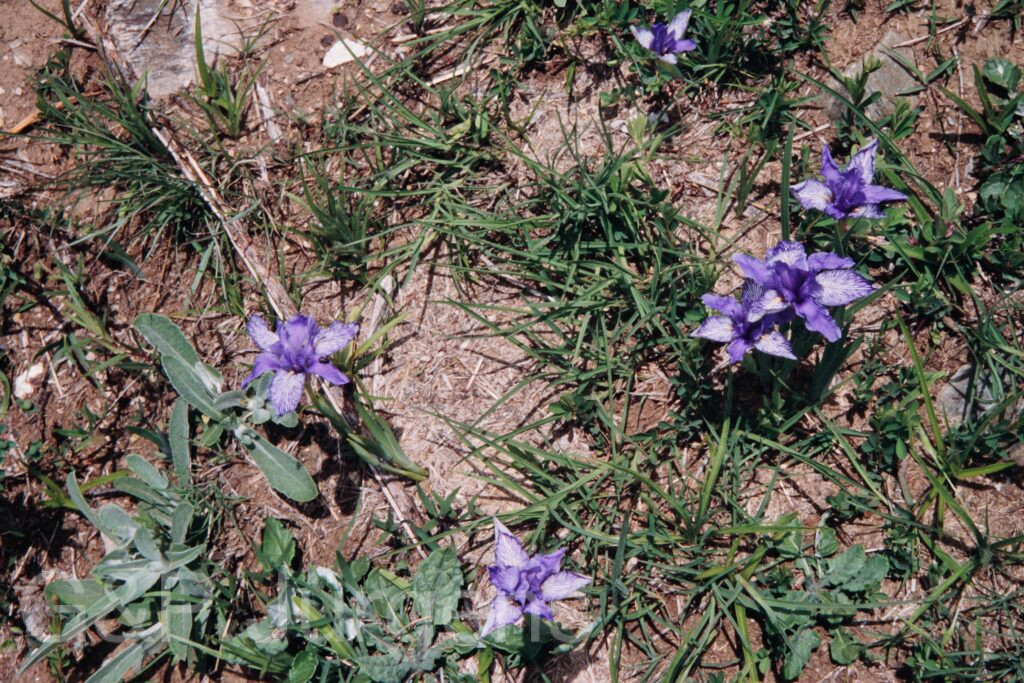
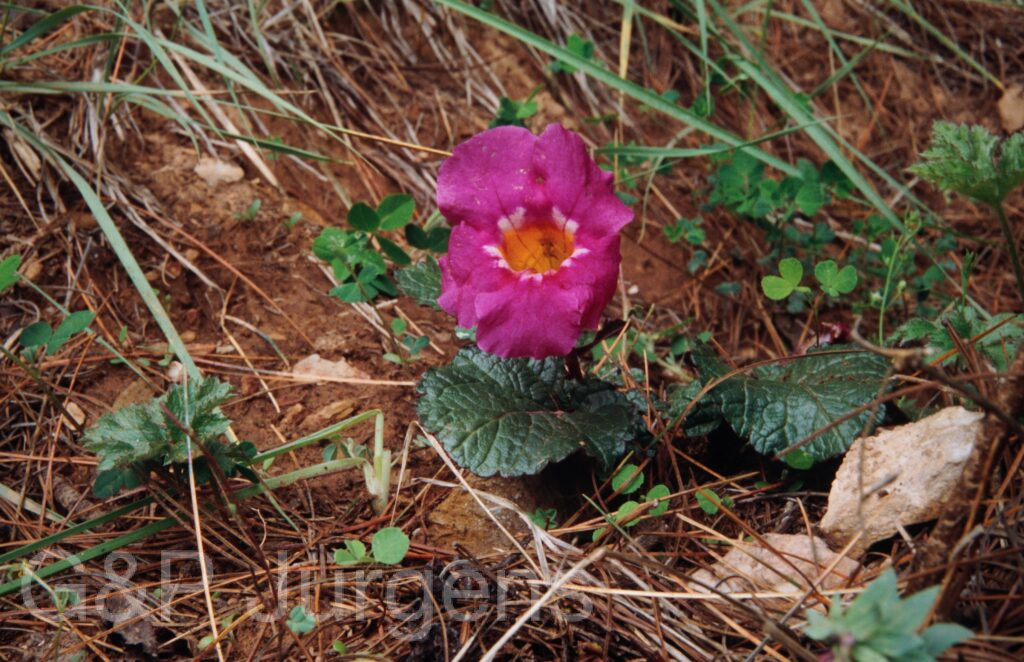
West-Nepal Poksundo-Lake 3650m, July

Description

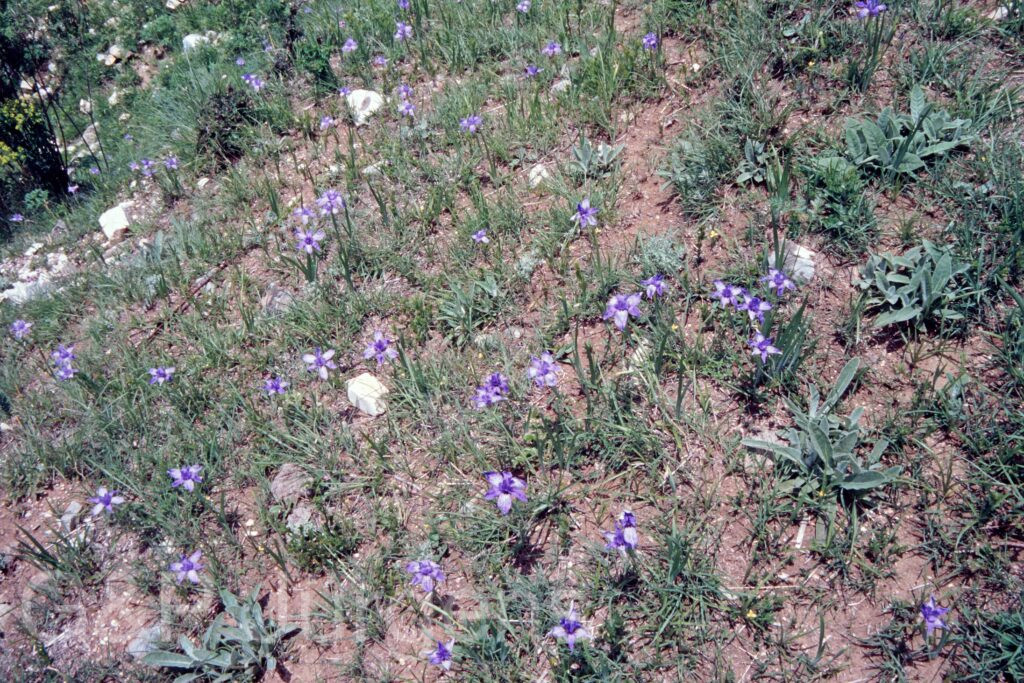
Incarvillea younghusbandii is a dwarf, ground-hugging alpine herb of the high Tibetan plateau and the adjoining Himalaya, recorded from China (Xizang), Nepal and Bhutan with about 180 GBIF occurrences. It is a specialist of cold, arid to semi-arid high-elevation habitats: gravelly flats, stony alpine steppe, sandy river terraces and screes, typically between roughly 3,600 and 5,000 m. The plant documented at Phoksundo Lake in West Nepal at 3,650 m, flowering in July, sits near the lower edge of its range and illustrates its association with the dry, rain-shadowed inner Himalayan valleys that grade into the Tibetan plateau flora.

The plant is a stemless or nearly stemless perennial arising from a thick, fleshy taproot. The leaves form a flat basal rosette and are pinnately or pinnatisect-compound with rounded, crenate leaflets, often somewhat fleshy and pressed close to the ground. The flowers are large and showy relative to the diminutive plant, borne almost sessile within the rosette; the corolla is broadly funnelform to trumpet-shaped, rose-pink to magenta with a paler or yellowish throat, weakly bilabiate with five spreading rounded lobes. The fruit is an elongate, beaked, dehiscent capsule releasing flattened, winged or hairy-margined seeds.

The rosette-and-taproot habit is a classic adaptation to the wind-blasted, frost-prone, short-season conditions of the plateau, minimising exposure while presenting flowers at ground level to insect pollinators. Incarvillea is the principal temperate Asian genus of the otherwise largely tropical Bignoniaceae, and this species belongs to its specialised high-alpine, acaulescent group. Though not formally assessed, its restricted habitat warrants attention.

Author: Sprague · Sources: POWO (Kew), Flora of China Vol. 18, Flora of Bhutan Vol. 2, GBIF, Grierson: Bignoniaceae revisions of the eastern Himalaya
Buch.-Ham. ex D.Don

Bhutan2014 844
Bhutan Thimphu 2230m, May
Bh09 393 G625
Bhutan Mo-Chu, 1550m June

Description

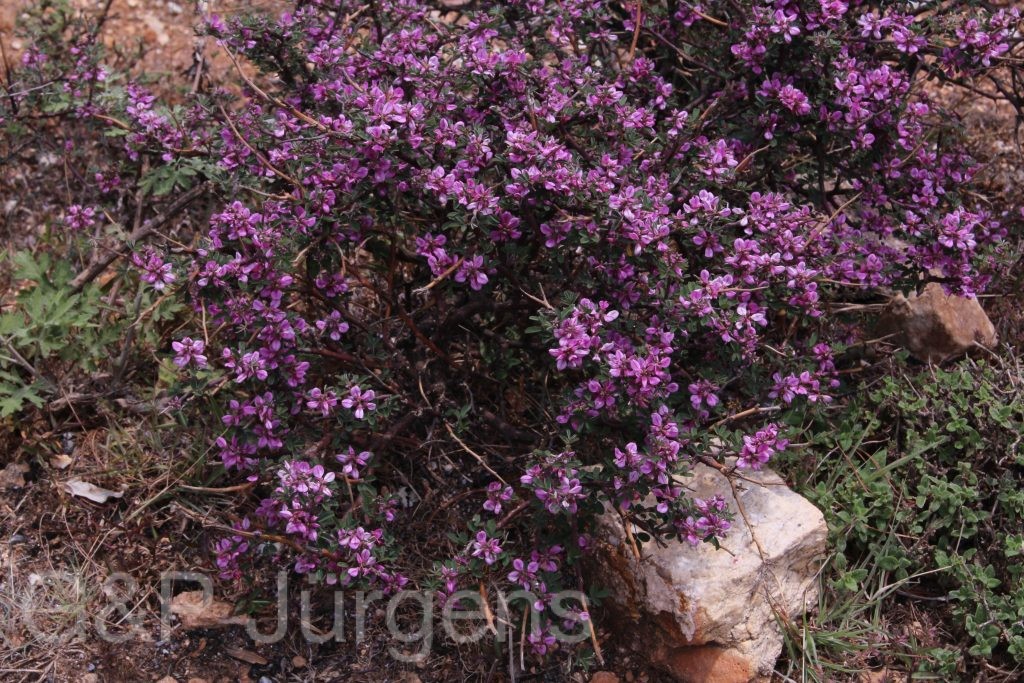
A shrubby indigo widespread across the Himalaya and South to South-East Asia, native to India, Nepal, China, Bhutan, Myanmar, Thailand and Vietnam, with around 436 GBIF occurrences (numerous European and other records represent cultivated or herbarium material). It grows on sunny open slopes, scrub, forest margins, roadbanks and disturbed ground in the warm-temperate and subtropical zones, mostly between about 1200 and 2700 m. The featured plants were recorded in Bhutan in May and June, at Thimphu around 2230 m and the lower Mo-Chu valley at about 1550 m, both warm montane settings.

The species is a much-branched, erect to spreading shrub with slender, ribbed twigs bearing characteristic appressed, biramous (medifixed) hairs. The leaves are imparipinnate with numerous small, opposite, oblong to obovate leaflets that are sparsely strigose and minutely mucronate. Flowers are borne in slender, elongate axillary racemes; each papilionaceous flower has a small campanulate calyx and a pink to purplish-red corolla comprising a broad standard, two wings and a spurred keel, with diadynamous stamens. The fruit is a slender, straight, linear, terete to slightly compressed pod that splits along both sutures to release several small, cylindric seeds, the valves often twisting on dehiscence.

Accepted by POWO and GBIF, I. dosua belongs to the large, taxonomically complex genus Indigofera, distinguished from relatives by its leaflet number, indumentum and pod form. As a nitrogen-fixing legume it enriches poor montane soils and colonises disturbed sites, while its flowers attract bees. Widespread, adaptable and frequent in secondary habitats, it is of no conservation concern and is sometimes used locally for fodder, green manure and as a dye source.

Author: Buch.-Ham. ex D.Don · Sources: POWO (Kew), GBIF, Flora of Bhutan, Flora of China, Sanjappa monograph of Indian Indigofera

Nepal 2009 84 ergebnis
Nepal Helambu Bolgoau 2030, May

Description

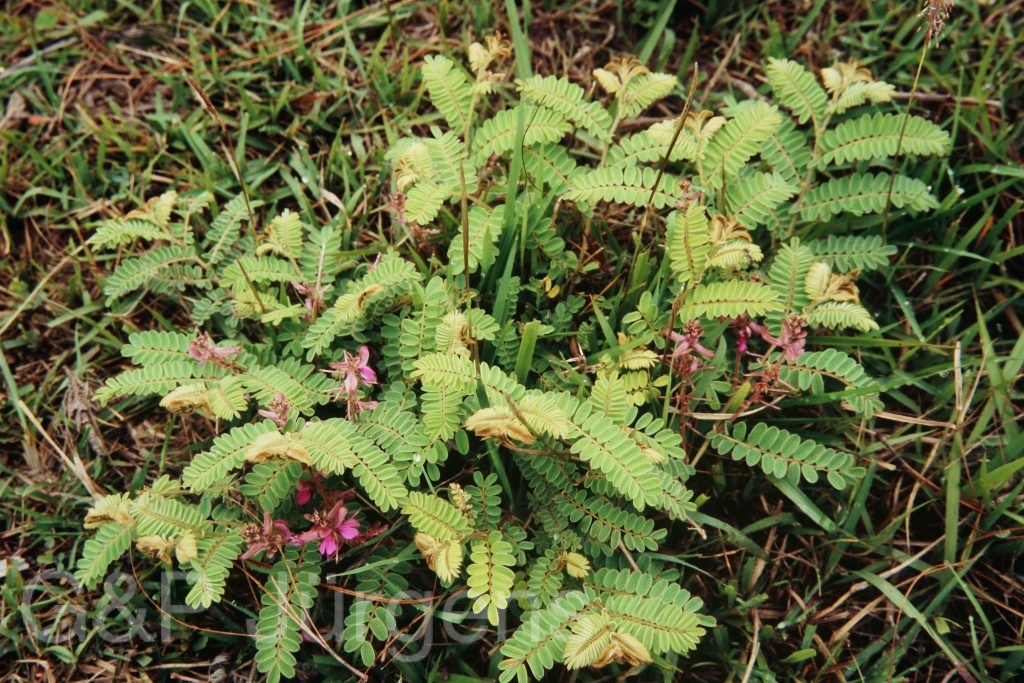
Indigofera dosua var. dosua is a Himalayan shrub of the indigo genus, recorded by GBIF from Nepal and India with a comparatively small number of occurrences, around 19, reflecting limited collection rather than rarity. It grows on open hillsides, in scrub, along forest margins and on disturbed slopes in the subtropical to warm-temperate montane belt. The photographed plant was found in Nepal in the Helambu region at Bolgoau, around 2030 m, in May, a typical mid-elevation setting for this colonising legume of sunny, well-drained terrain.

It is an erect, branching shrub whose young shoots bear the appressed, two-armed (medifixed) malpighiaceous hairs characteristic of Indigofera. The leaves are imparipinnate with several pairs of small, opposite, elliptic to obovate leaflets, each mucronate and finely hairy. The flowers are borne in slender axillary racemes and have the typical papilionaceous structure, with a standard, two wings and a keel, generally pink to reddish or purplish, the keel bearing lateral spurs. The stamens are diadelphous and the superior ovary develops into a slender, cylindrical, several-seeded legume, the pod straight to slightly curved and dehiscing along both sutures.

GBIF accepts the name and its autonymic variety. Indigofera is a large pantropical genus historically significant as a source of natural indigo dye, and several Himalayan species are nitrogen-fixing pioneers of degraded slopes. The recognition of var. dosua implies the existence of other infraspecific variants distinguished by indumentum and leaflet number. As a widespread early-successional shrub, it is of no conservation concern.

Sources: POWO (Kew), GBIF, Flora of Nepal, Flora of British India, monograph of Asian Indigofera

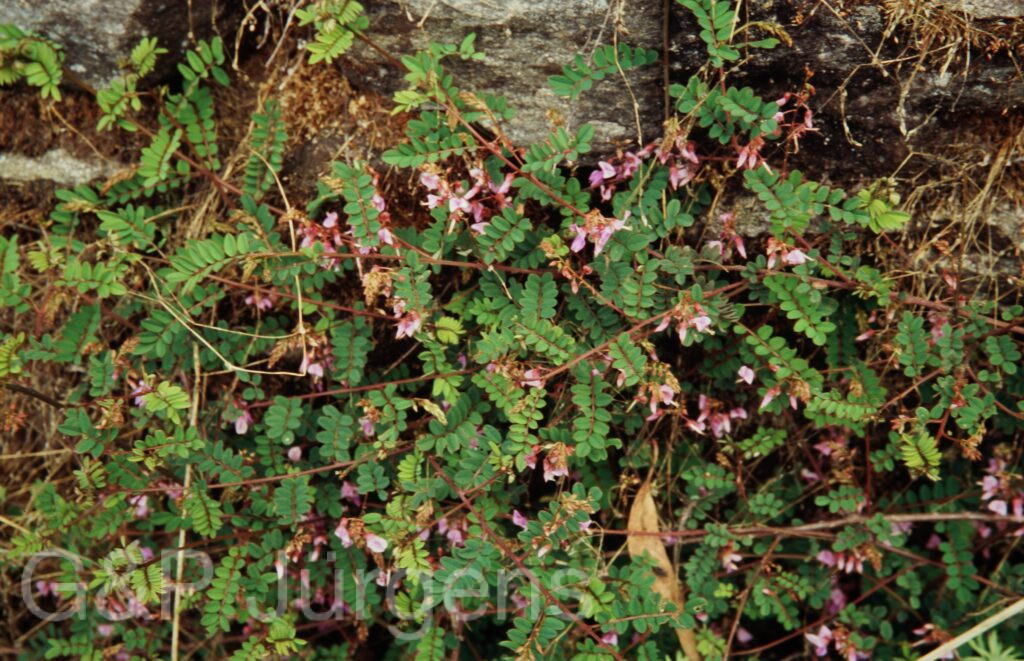
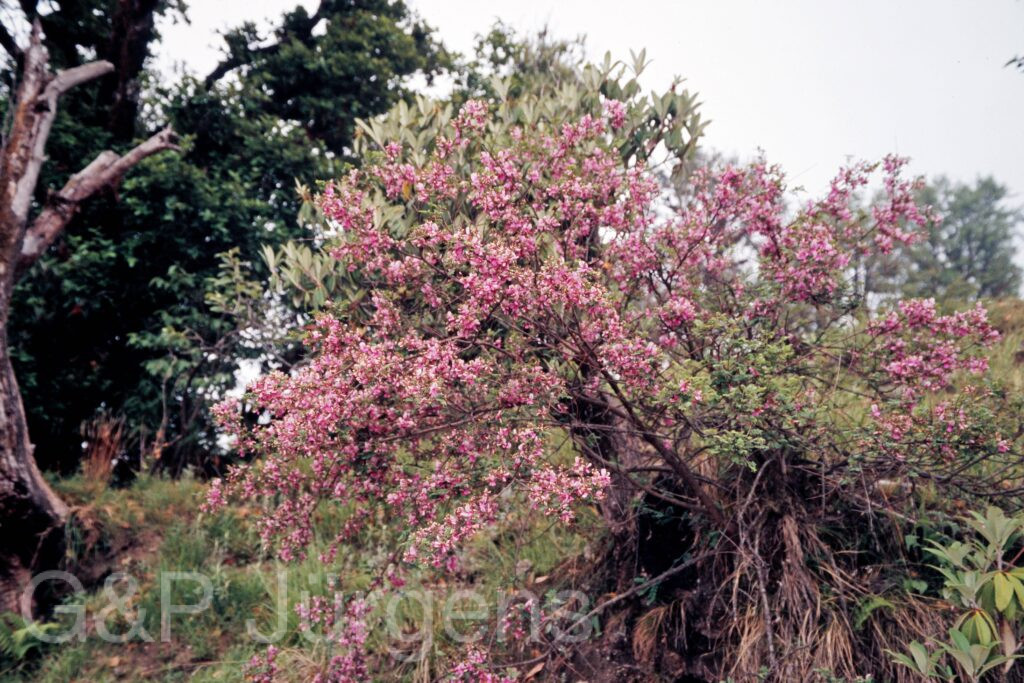
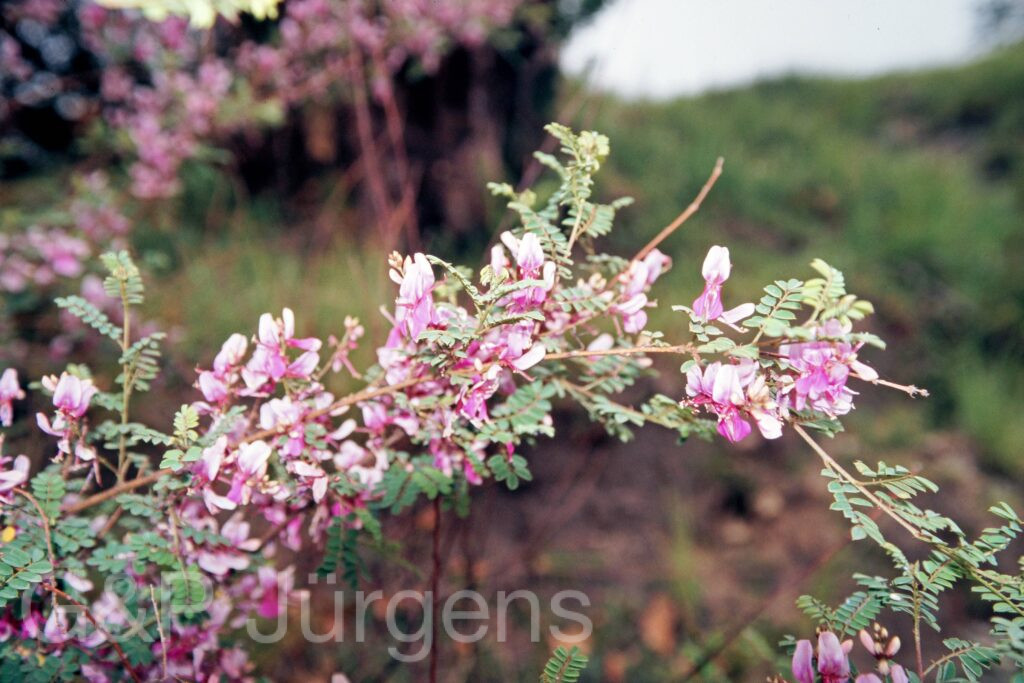
Wall. ex Brandis

Garh 07 220 ergebnis
India Garhwal Kawara 2000m, June
Garh 07 221 ergebnis
India Garhwal Kawara 2000m, June

Description

Indigofera heterantha (Wall. ex Brandis), a deciduous shrub of the subfamily Faboideae, is widely distributed across the western and central Himalaya, ranging from Afghanistan and Pakistan eastward through northern India, Nepal and Bhutan into southwest China. With over 1,100 georeferenced occurrences recorded in GBIF, it is a common and conspicuous element of the temperate zone, and has additionally become naturalised in cultivation across Europe, North America, Japan and the Southern Hemisphere. The species favours open hillsides, forest margins, dry stony slopes and degraded scrub, typically between 1,500 and 3,000 m, as reflected in the collection from Garhwal at Kawara, India, at 2,000 m in June, where it forms part of the sun-loving sub-alpine shrubbery.

The plant is an erect, much-branched shrub reaching 1–2 m in height, with slender, angular, greyish branchlets bearing appressed, biramous (medifixed) hairs that lend a canescent aspect to young growth. The leaves are imparipinnate with 11–21 small, obovate to elliptic leaflets, each mucronate at the apex and silky-pubescent beneath. Numerous purplish-red to bright pink-crimson papilionaceous flowers are borne in dense, erect axillary racemes that often exceed the subtending leaf; the calyx is shortly toothed and the standard petal silky on its outer face. The fruit is a slender, terete, glabrescent legume containing several cuboid seeds.

Formerly treated under the name Indigofera gerardiana, the species is taxonomically allied to the I. hebepetala group of Himalayan legumes. It is an important soil-binding pioneer on eroding slopes, contributing nitrogen through rhizobial symbiosis, and the tough stems are traditionally harvested for basketry and fuel. Its hardiness and floriferous habit have made it a popular ornamental in temperate gardens. The species is not considered threatened, being abundant throughout its broad montane range.

Author: Wall. ex Brandis · Sources: POWO (Kew), Flora of Pakistan, GBIF, Flora of China Vol. 10, Sanjappa: Legumes of India (1992)

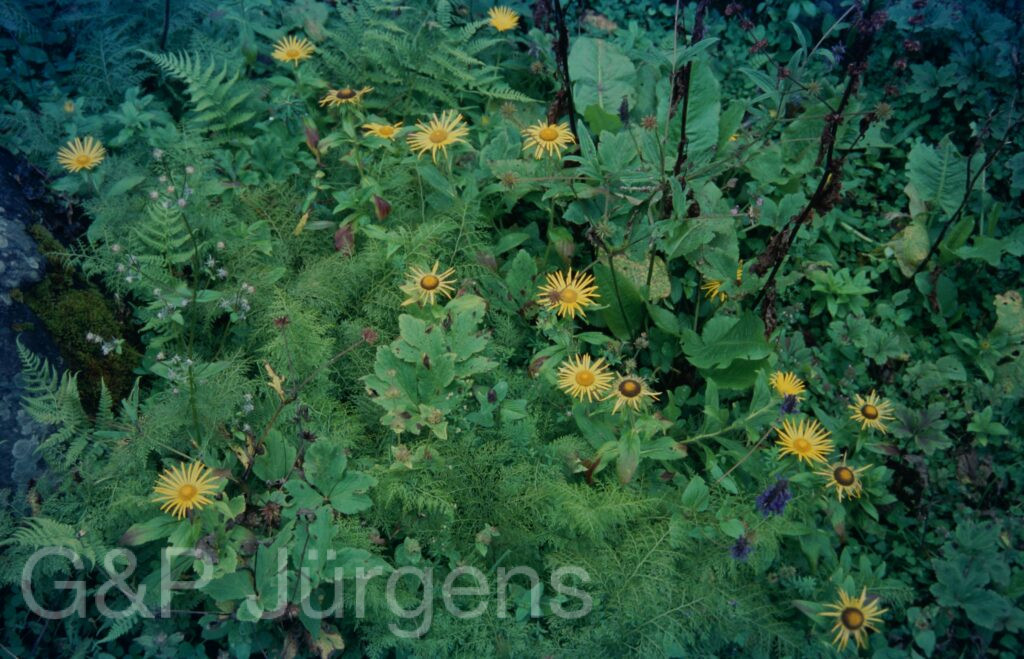
Willd.

Garw 2005 26 ergebnis ergebnis
India Garhwal 2950m, September
Garw 2005 27 ergebnis ergebnis
India Garhwal 2950m September

Description

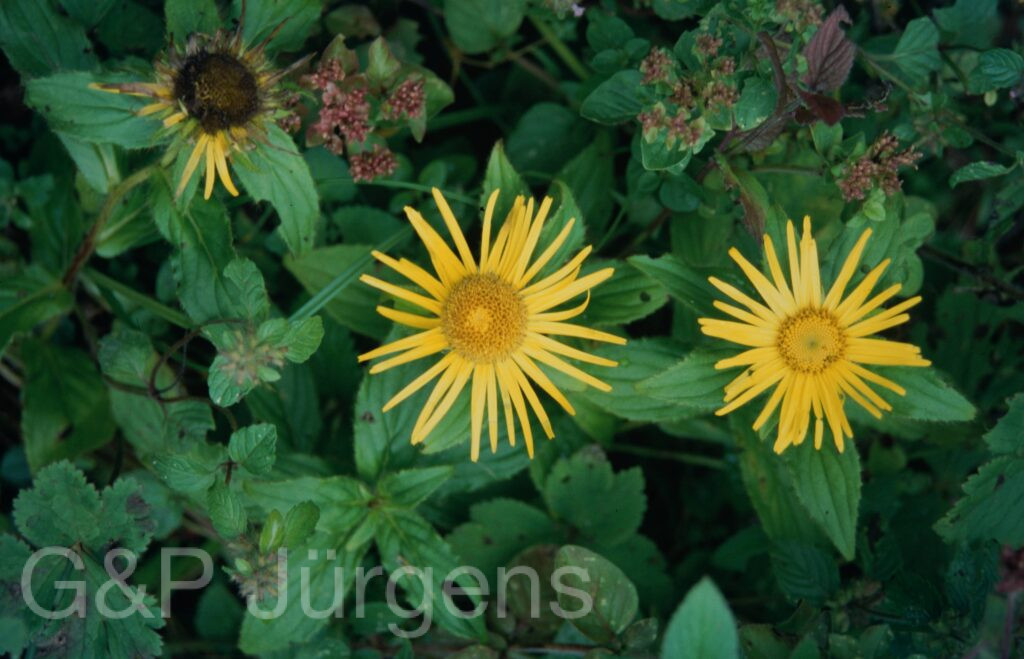
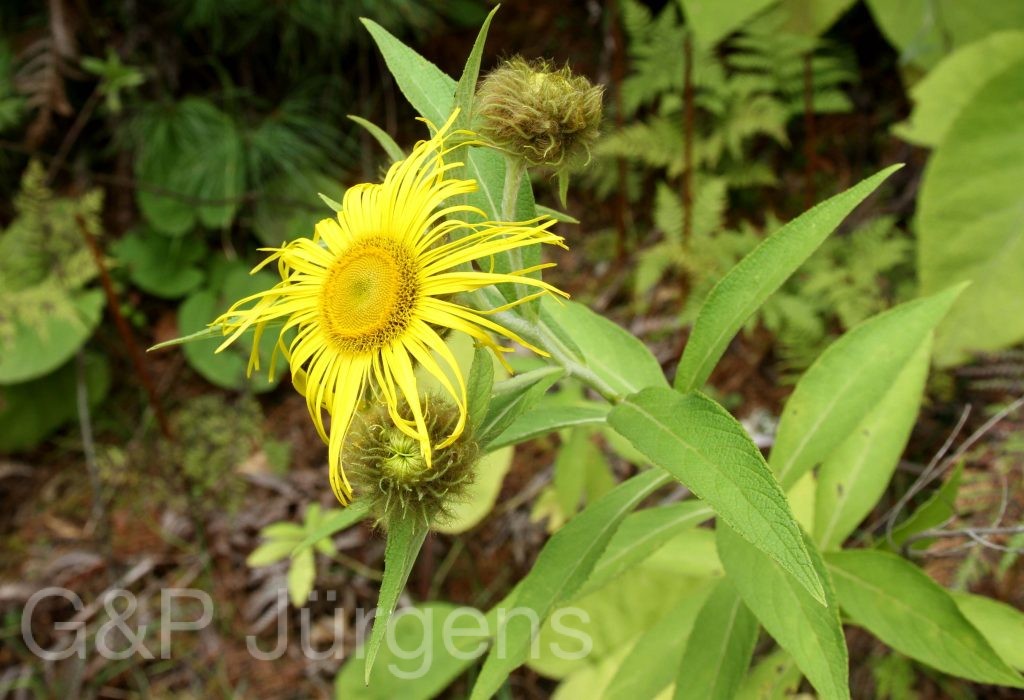
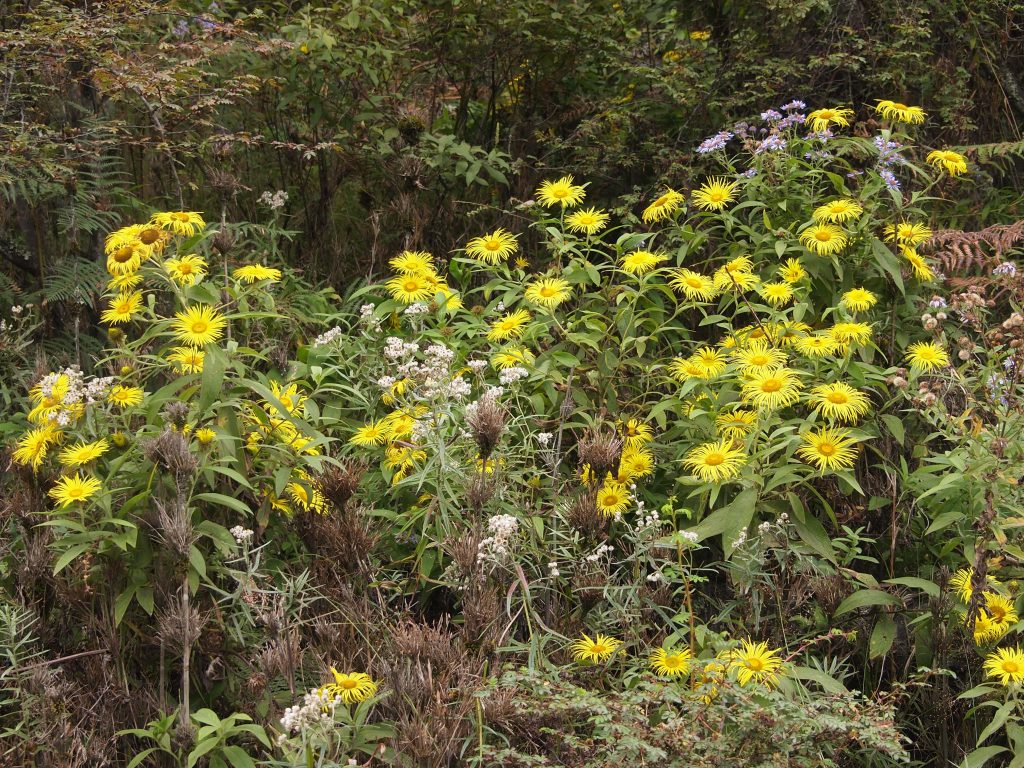
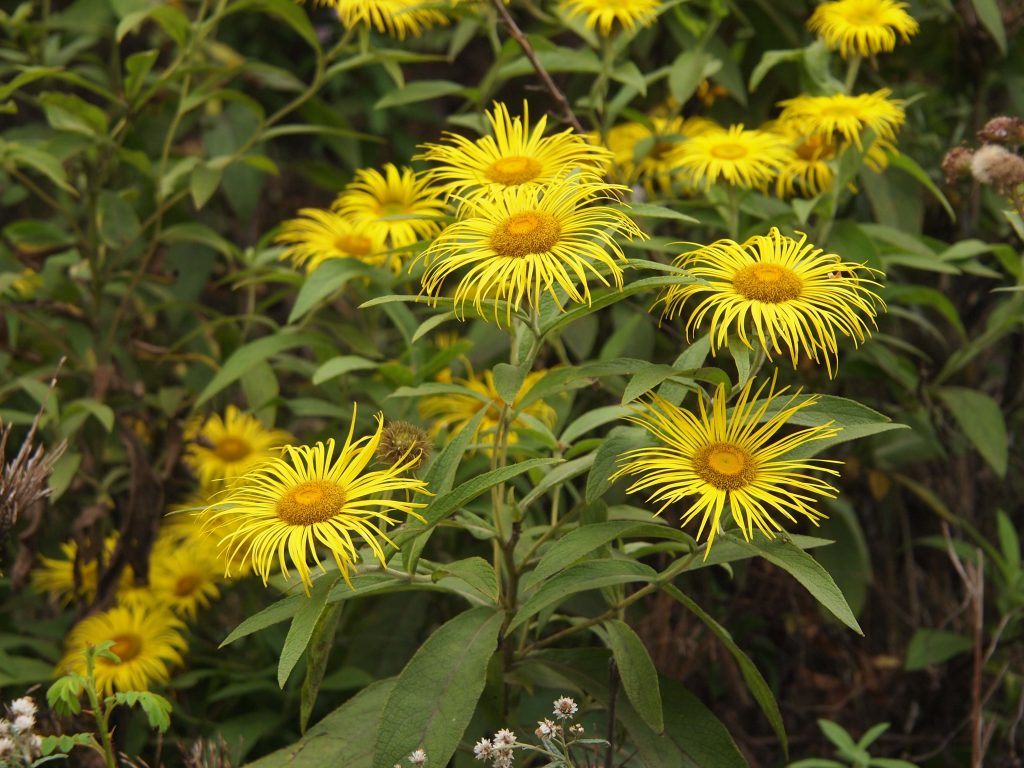
Inula grandiflora Willd. is a stout perennial composite of the western and central Himalaya, ranging from Pakistan and northern India through Nepal, with related records extending into the wider Irano-Turanian and Caucasian region (Turkey, Georgia, Armenia). It occupies open subalpine and alpine slopes, grassy meadows, forest clearings and rocky banks in the upper-temperate to alpine belt. The photographed plants from Garhwal in the Indian Himalaya at 2950 m, flowering in September, exemplify its preference for sunny, well-drained montane grassland where it flowers late in the season as the monsoon eases, frequently forming conspicuous stands on open hillsides.

The plant produces erect, leafy, often somewhat hairy stems from a woody rootstock. The alternate leaves are oblong to elliptic-lanceolate, sessile and frequently half-clasping the stem, with finely toothed margins and a roughened or pubescent surface. The inflorescence is a large, solitary or few-headed terminal capitulum (the epithet grandiflora referring to its size), subtended by overlapping herbaceous involucral bracts; the head bears numerous narrow, spreading golden-yellow ray florets surrounding a central disc of tubular florets. The fruit is a ribbed, cylindrical cypsela crowned by a pappus of fine bristles that aids wind dispersal.

Within the genus Inula (Asteraceae, tribe Inuleae) this is one of the showiest Himalayan species, valued horticulturally and used locally in traditional medicine. Its large, nectar- and pollen-rich heads attract bees, butterflies and other insects, making it an important late-season forage plant. Though not globally threatened and locally common, its alpine grassland habitats are subject to grazing and climate-driven upslope vegetation shifts.

Author: Willd. · Sources: POWO (Kew), GBIF, Flora of Pakistan, Annotated Checklist of the Flowering Plants of Nepal, Flora of China (Asteraceae), Compositae of the Himalaya

Inula hookeri

by GP Jürgens

C.B.Clarke

Bhutan2012 181
Bhutan Haar-Valley, 3200m September
Bhutan2012 846
Bhutan Nangsephal, 2700m October
Bhutan2012 848
Bhutan Nangsephal, 2700m October

Description

Inula hookeri is a showy yellow-flowered composite of the eastern Himalaya, native to China, Bhutan, Nepal, India and Myanmar, and frequently cultivated in temperate gardens, which accounts for British, Irish, North American and Antipodean records; GBIF lists about 383 occurrences. It grows in subalpine meadows, open forest, shrubby slopes and grassy clearings, mostly between about 2400 and 3600 m. The photographed plants are from the Haar valley in Bhutan at 3200 m in September and from Nangsephal at 2700 m in October, flowering through the late monsoon into autumn.

The plant is an erect, hairy perennial herb arising from a short rhizome, with leafy, softly pubescent stems. The leaves are alternate, oblong-lanceolate to elliptic, acuminate, finely toothed and clasping or sessile at the base, hispid on both surfaces. The capitula are large and solitary or few at the stem tips, radiate, with numerous very narrow, thread-like, pale to greenish-yellow ray florets spreading in a fringed circle around a disc of deeper yellow tubular florets; the involucre is hemispherical with linear, leafy, spreading phyllaries. The fruit is a small ribbed cypsela bearing a pappus of a single row of barbellate bristles.

Inula belongs to the tribe Inuleae, and I. hookeri, named for J. D. Hooker, is distinctive for its softly spidery, narrow-rayed heads that open from woolly buds. Valued in horticulture for its long flowering and attractiveness to pollinators, it is common in the wild and not considered threatened.

Author: C.B.Clarke · Sources: POWO (Kew), GBIF, Flora of Bhutan, Flora of China, Annotated Checklist of the Flowering Plants of Nepal, Systematics of Inula and allied genera (Inuleae)

(L.) Lam.

Bhutan2012 785
Bhutan Zemgang 1850m, October
Nepal 95 42 P74 ergebnis
Nepal Darondi-Khola 670m
Nepal 95 43 W75 ergebnis
Nepal Darondi-Khola 670m

Description

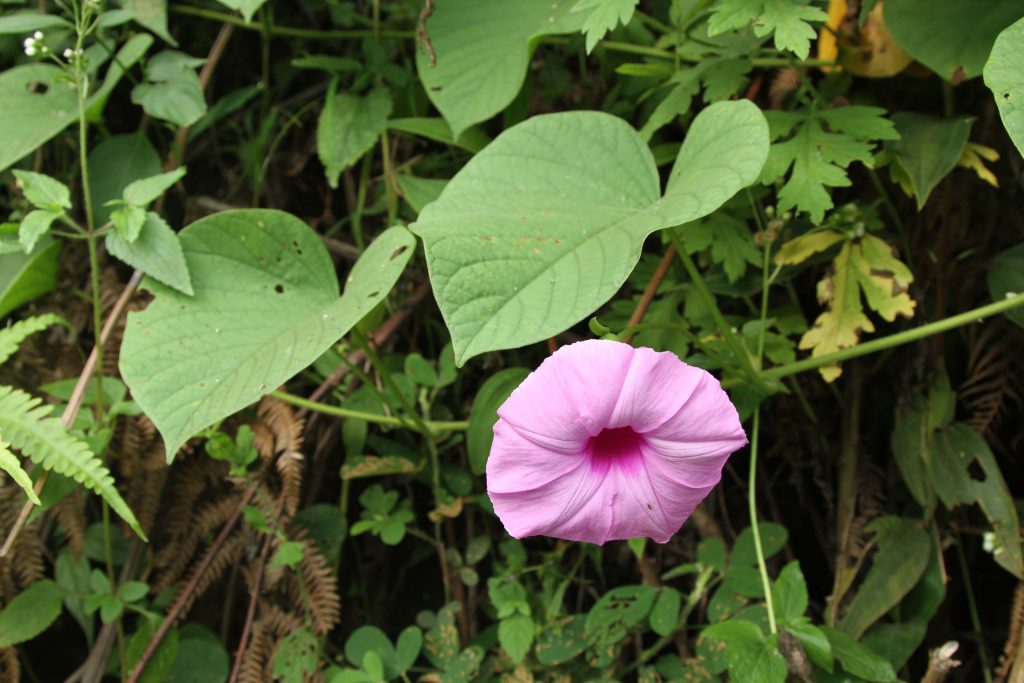
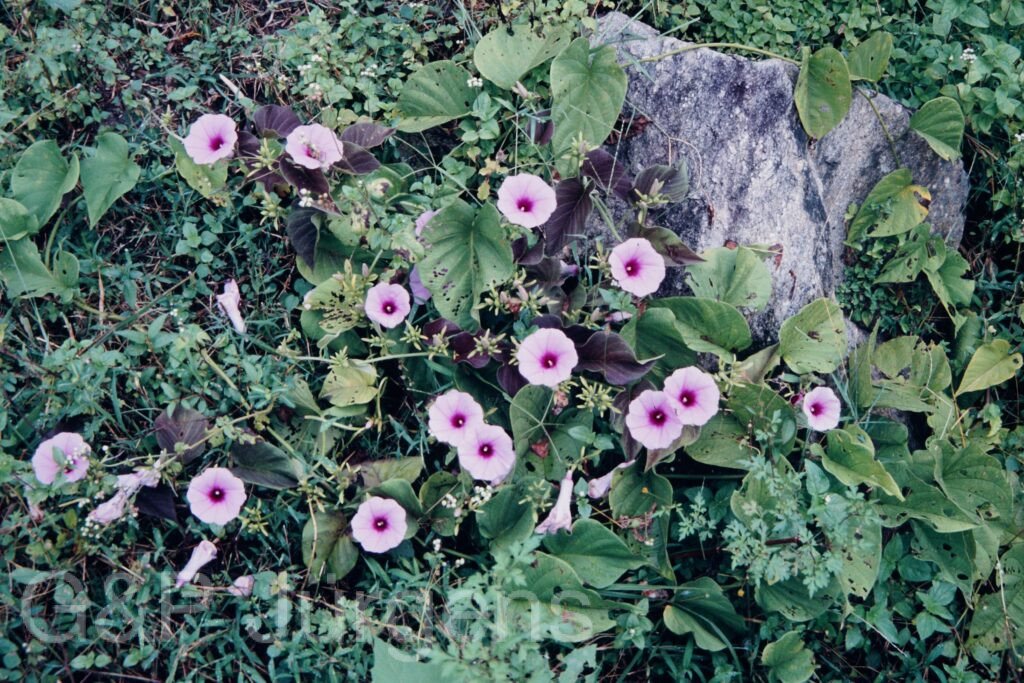
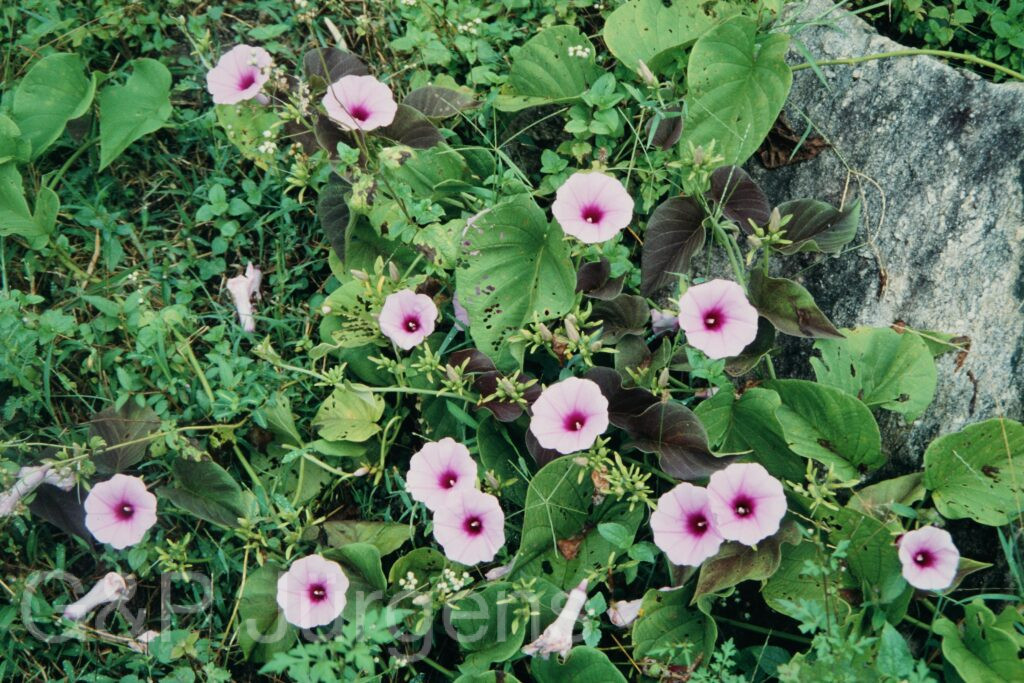
Ipomoea batatas, the sweet potato, is a cultigen of Neotropical origin now grown and naturalised throughout the tropics and warm-temperate world; GBIF records 38,679 occurrences spanning the Americas (Peru, Mexico, Brazil, the United States, Colombia, Ecuador and others) through to Asia and Oceania, including Thailand, Taiwan, the Philippines, Indonesia, China and Papua New Guinea. In the Himalaya it is a cultivated and escaped plant of village margins, terraced fields and warm valley bottoms. The illustrated material comes from Bhutan, Zhemgang, at about 1850 m in October, and from Nepal along the Darondi Khola at around 670 m, reflecting the sub-tropical farmed elevations where it is grown.

The plant is a perennial herbaceous vine with prostrate or twining stems that root at the nodes and arise from swollen, edible storage roots (tubers) of variable colour. Leaves are alternate, petiolate and highly variable, from broadly ovate-cordate to deeply palmately lobed, with an entire or sinuate margin. Flowers are borne in few-flowered axillary cymes; the corolla is funnelform and infundibuliform, lavender to pink-purple with a darker throat, subtended by a small calyx of unequal sepals. The five stamens are unequal and included, the ovary superior; the fruit is a small capsule, though many cultivars set seed poorly.

The sweet potato is a hexaploid of long domestication, its wild progenitors lying in Central America, and it ranks among the world's most important root crops. POWO and GBIF accept the name. Its trans-Pacific presence in pre-Columbian Oceania remains a celebrated biogeographic puzzle bearing on early human dispersal.

Author: (L.) Lam. · Sources: POWO (Kew), GBIF, Flora of China, Flora of Bhutan, Annotated Checklist of the Flowering Plants of Nepal, World Checklist of Convolvulaceae (Ipomoea monograph)

L.

Nepal 1994 231 ergebnis
Ost-Nepal Mewa-Khola 1800m April 

Description

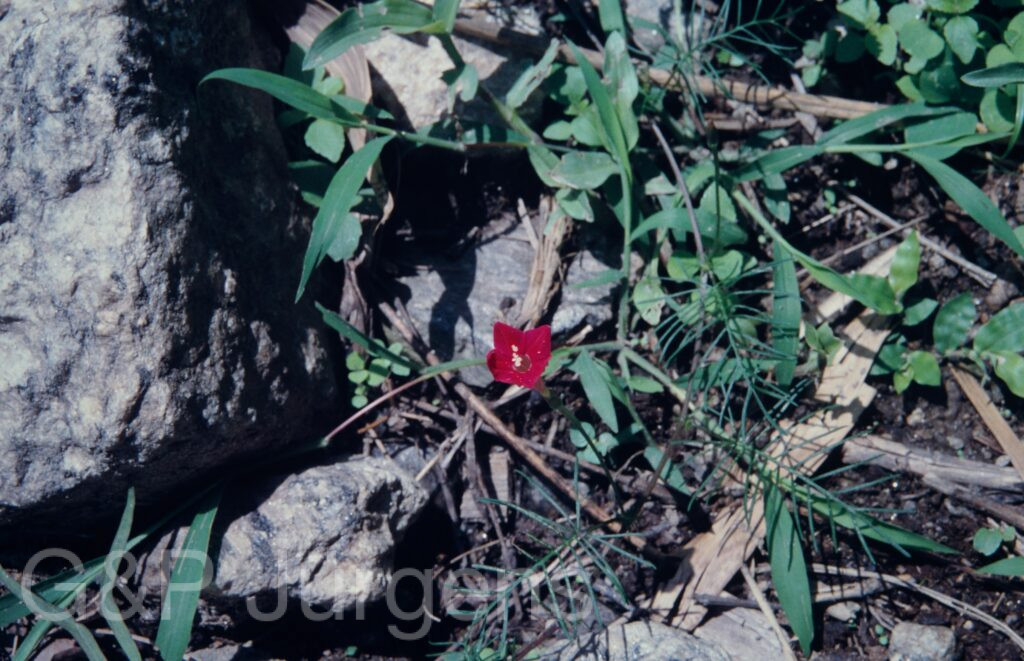
Ipomoea quamoclit, the cypress vine, is a twining annual of Neotropical origin now pantropically naturalised, with over 11,650 GBIF occurrences spanning the Americas (USA, Mexico, Brazil, Colombia, Ecuador, Peru, Venezuela), Asia (India, China, Taiwan, Korea, Japan, Indonesia, Thailand, Nepal), Australia and Africa. In its adventive Asian range it occupies disturbed ground, hedgerows, field margins, riverbanks and village thickets, frequently escaping from cultivation as an ornamental. The collection from the Mewa Khola in eastern Nepal at about 1,800 m in April reflects its establishment in warm low- to mid-montane situations.

It is a slender, glabrous, herbaceous climber to several metres. Its most distinctive feature is the foliage: the leaves are alternate, ovate in outline but pinnately divided almost to the midrib into numerous fine, filiform, parallel segments, giving a delicate feathery appearance. The flowers are solitary or few in axillary cymes, with a long, slender corolla tube expanding into a flat, five-angled, salverform limb about 1.5–2 cm across, brilliant scarlet (rarely white), with exserted stamens and style. The fruit is a small ovoid capsule containing few blackish, ovoid seeds.

The species, sometimes segregated as Quamoclit pinnata, is firmly placed within an enlarged Ipomoea, and GBIF treats the name as accepted. Its salverform red corolla and long tube reflect specialisation for pollination by hummingbirds in its native America and by butterflies and sunbirds elsewhere. Widely grown and self-seeding, it is locally weedy but of no conservation concern.

Author: L. · Sources: POWO (Kew), Flora of China Vol. 16, Flora of Nepal, GBIF, Austin & Huáman: A Synopsis of Ipomoea in the Americas (1996)

Iris clarkei

by GP Jürgens

Baker ex Hook.f.

BhutanPG2011 773 01 01
Bhutan Chele-La, 3900m June
Bh09 35 P65
Bhutan Dochu-La, 3000m June
Bh09 206 P346
Bhutan Dochu-La, 3000m June

Description

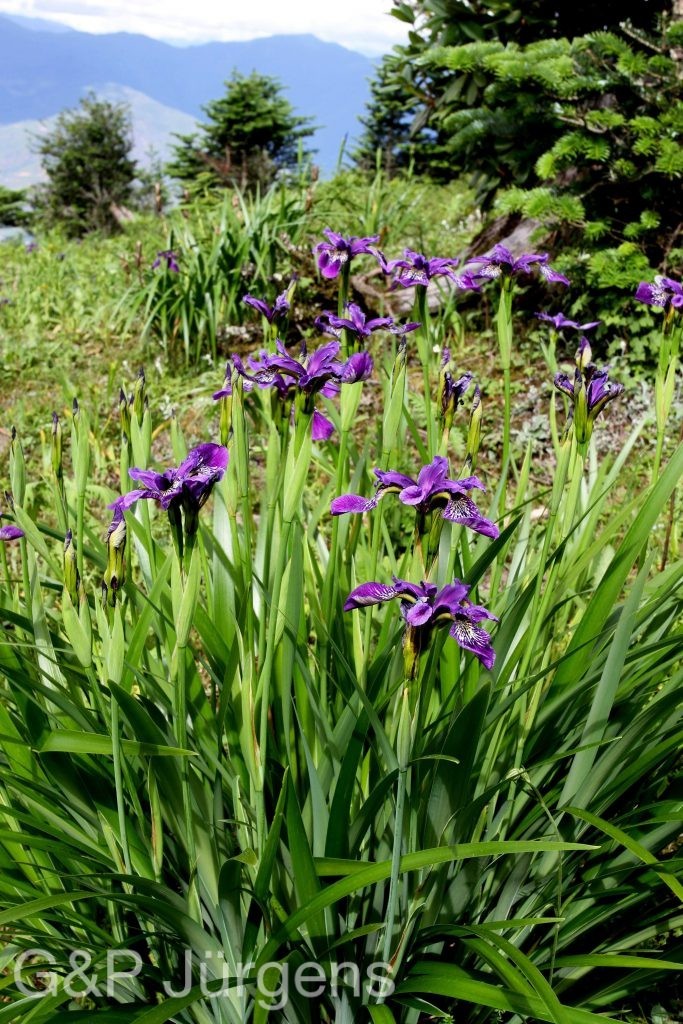
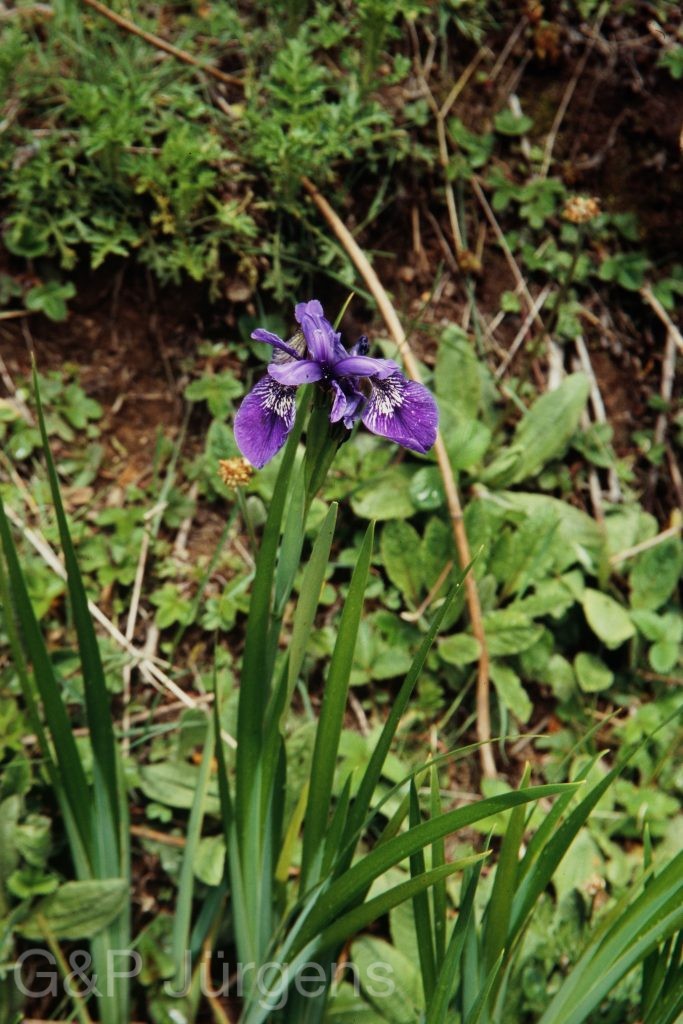
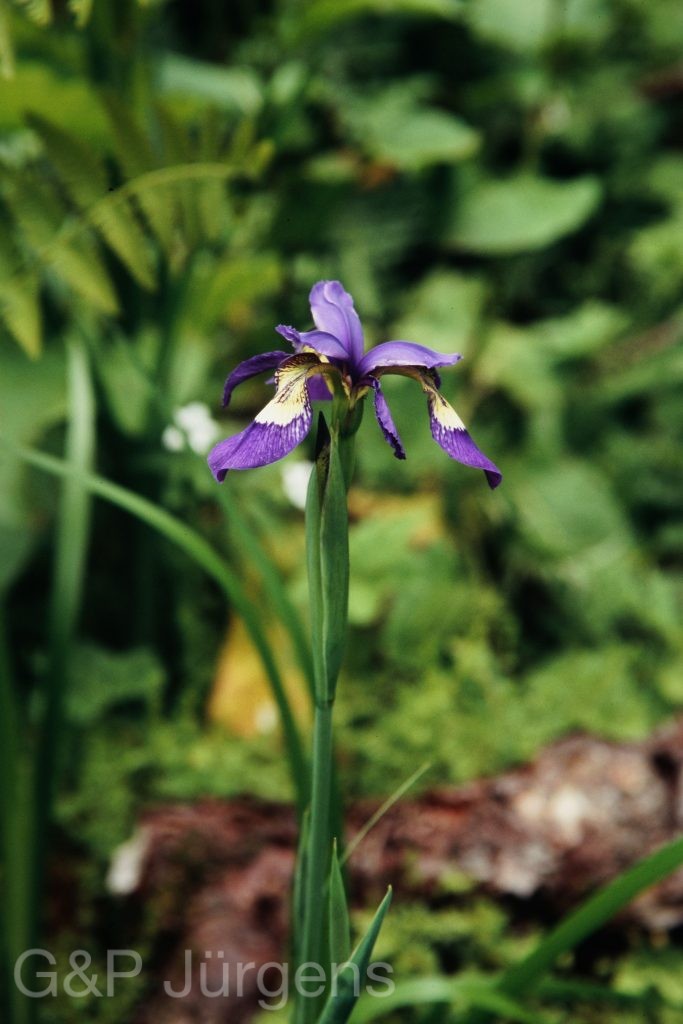
Iris clarkei is an eastern Himalayan beardless iris distributed through Bhutan, Sikkim and northeastern India, Nepal, southern Tibet (China) and northern Myanmar, with GBIF holding about 174 occurrences. It is a subalpine to alpine moisture-lover, recorded here from two Bhutanese passes, Chele-La at 3900 m and Dochu-La at 3000 m, both flowering in June. The species favours wet alpine meadows, marshy hollows, stream sides and seasonally flushed turf on slopes, typically between roughly 3000 and 4300 m, where it forms colonies in the open, moist grassland of the upper temperate and subalpine zones.

It is a tufted rhizomatous perennial of the Sibiricae group, with slender creeping rhizomes producing erect, solid (not hollow) flowering stems that are characteristically branched and bear a distinctive solid pith. The leaves are linear-ensiform, grass-like, ribbed and grouped in basal fans. Each stem carries one to several flowers; the perianth is blue-violet to reddish-purple, the spreading or deflexed falls bearing a paler, conspicuously veined and blotched signal patch, and the standards are smaller and more erect, the flowers beardless and crestless. The fruit is a three-angled loculicidal capsule containing flattened seeds.

Described by Baker (ex Hook.f.) and named for C. B. Clarke, the species belongs to series Sibiricae, the Asian relatives of Iris sibirica, and is of horticultural interest for its solid stems and richly marked falls. Though restricted to specialised wetland habitats, it remains locally common within its range; pressures such as grazing, trampling and drainage of montane mires are the principal local threats to its boggy habitat.

Author: Baker ex Hook.f. · Sources: POWO (Kew), GBIF, Flora of Bhutan, Flora of China, Mathew The Iris, British Iris Society A Guide to Species Irises

Iris collettii

by G & P Jürgens

Hook.f.

Nepal 99 413 ergebnis
West-Nepal Talphi 2830m, June
Nepal 99 414 ergebnis
West-Nepal Talphi 2830m, June
Nepal 99 415 ergebnis
West-Nepal Talphi 2830m, June

Description

Iris collettii is a Himalayan iris distributed from western Nepal through northeast India and northern Myanmar to southwest China (Yunnan, Sichuan) and northern Thailand. GBIF records approximately 349 occurrences, with the majority from China and Myanmar. The species favours open, grassy slopes, forest margins, and pine-oak woodland clearings at elevations of 1,800–3,200 m, typically on well-drained soils. At Talphi in western Nepal at 2,830 m, it grows in open montane grassland and along forest edges, flowering in June at the onset of the monsoon season — a period when the grassy slopes of the western Nepalese mid-hills support a rich herbaceous flora.
Iris collettii is a rhizomatous perennial herb, 20–40 cm tall. The rhizome is slender, creeping, and clothed in persistent fibrous leaf bases. Leaves are basal, linear-ensiform, 15–30 cm long and 5–10 mm wide, with a prominent midrib, often slightly falcate. The stem bears 1–3 terminal flowers subtended by a pair of spathaceous bracts. Flowers are 4–6 cm in diameter, blue-violet to deep purple; the falls are obovate with a prominent white and yellow signal patch and darker veining, while the standards are erect, oblanceolate, and slightly paler. The style branches are petaloid and arching over the stamens. The fruit is an ellipsoid capsule, trigonous, 2–3 cm long, containing brown angular seeds.
Iris collettii was described by J.D. Hooker and named in honour of Sir Henry Collett, who collected extensively in Myanmar and northern India. The species belongs to subgenus Limniris, section Lophiris (crested irises), and is distinguished from the related I. decora by its generally shorter stature, narrower leaves, and deeper violet flower colour. Its occurrence in western Nepal at Talphi represents the westernmost limit of its known Himalayan distribution. The species is of biogeographical interest as a link between the Sino-Himalayan and Indo-Burmese iris floras.

Author: Hook.f. · Sources: POWO (Kew), GBIF, Flora of China Vol. 24, Flora of Nepal Checklist, Mathew: The Iris (1981)